FiiO M33 R2R Review
FiiO M33 R2R Review
Introduction:
FiiO has been building toward this product for several years. The brand’s K11 R2R and K13 R2R desktop units demonstrated that the company had genuine engineering intent behind R2R conversion, and the DM15 R2R CD player brought that architecture into portable territory in a format most listeners had not considered. The M33 R2R is the next logical step: FiiO’s first R2R-based Android digital audio player, positioned directly below the flagship M27 and priced at $649.99. It is the point at which FiiO moves the R2R conversation from desktop and niche hardware into the mainstream Android DAP category, and that positioning carries both opportunity and scrutiny in equal measure.
The M33 R2R uses FiiO’s proprietary fully differential 24-bit R2R resistor array, developed originally for desktop equipment and adapted here for portable use. Rather than relying on an off-the-shelf delta-sigma DAC chip, FiiO built the conversion stage around 96 precision-matched resistors arranged in a ladder network, aiming for the natural, analog-leaning character that distinguishes well-executed R2R decoding from the more clinical presentation of mainstream delta-sigma designs. The amplification is handled by a multi-stage Texas Instruments op-amp layout, the clocking system inherits the M27’s proprietary DAPS (Digital Audio Purification System) with a high-capacity FPGA and dual custom femtosecond oscillators, and the digital interface uses an XMOS XU316 chip for USB audio duties. On the software side, Qualcomm’s Snapdragon 680 processor running Android 13 with 8GB of RAM and 128GB of UFS storage provides the platform.
The M33 R2R is not positioned as a budget compromise. It is FiiO making a principled argument that R2R decoding no longer requires a four-figure desktop investment to be genuinely worthwhile in daily portable use. Whether that argument holds up against the M23 it replaces in the lineup, and how it compares to the broader field of mid-tier DAPs, is what this review addresses.
Disclaimer:
I would like to thank FiiO for providing the M33 R2R as a review sample. I am not affiliated with FiiO beyond this review, and these words reflect my true and unaltered opinions about the product.
Price & Availability:
The FiiO M33 R2R is priced at $649.99 USD. It is available through the official FiiO website and authorized dealers worldwide, including Bloom Audio and Apos Audio. Three color options are offered: Black, Dark Blue, and Retro Gold. For more details or to purchase:
FiiO M33 R2R Portable Smart High-Res Audio Player
Package & Accessories:
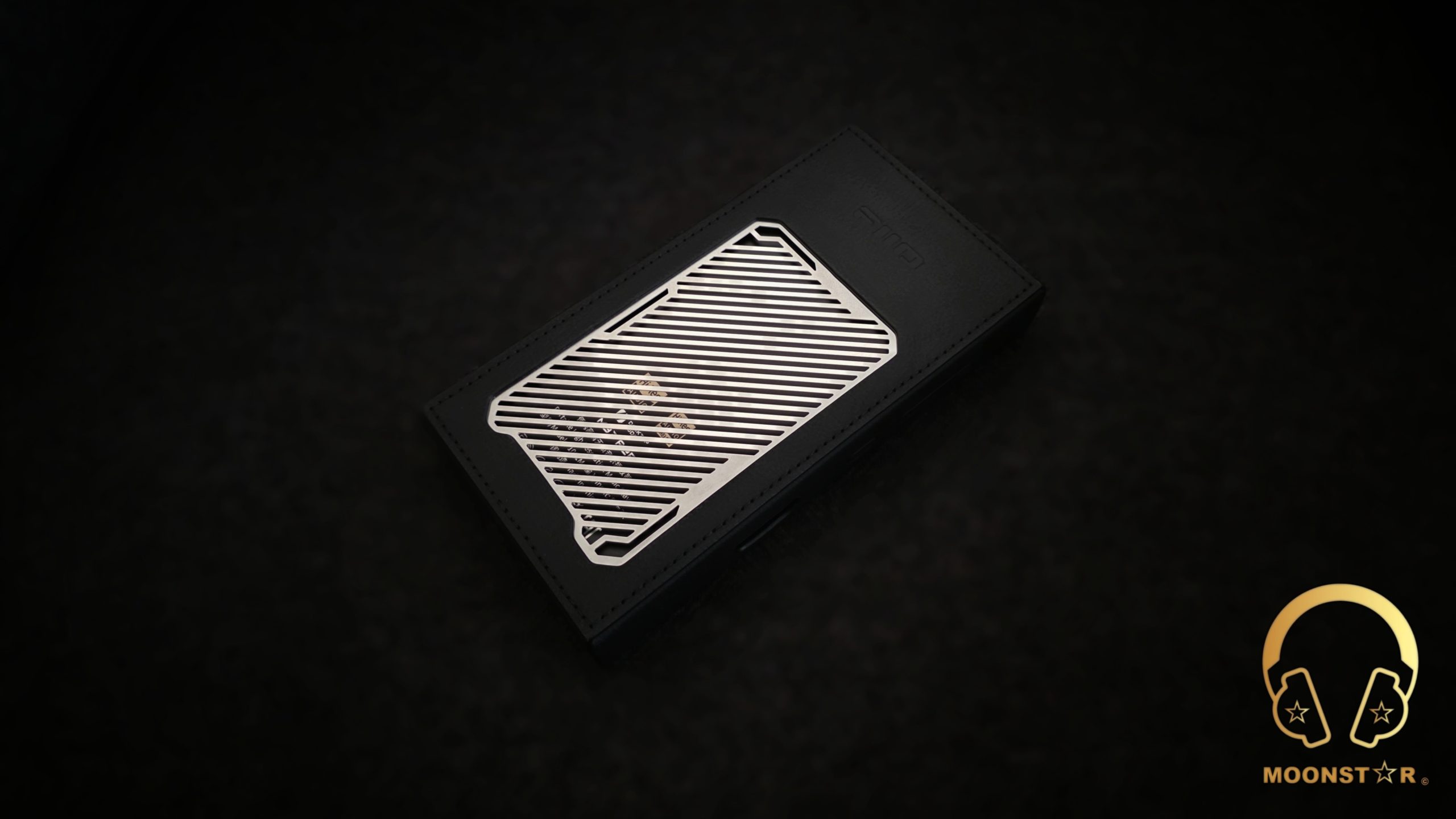
The M33 R2R ships in a medium-sized white box with a clean, restrained presentation. The front face carries a product photograph and minimal text. The box opens magnetically, revealing the player and accessories organized in EVA foam and cardboard separators. Notably, the leather protective case and the tempered glass screen protector arrive pre-installed on the device itself, which is a practical choice that protects the player from first contact with the owner.
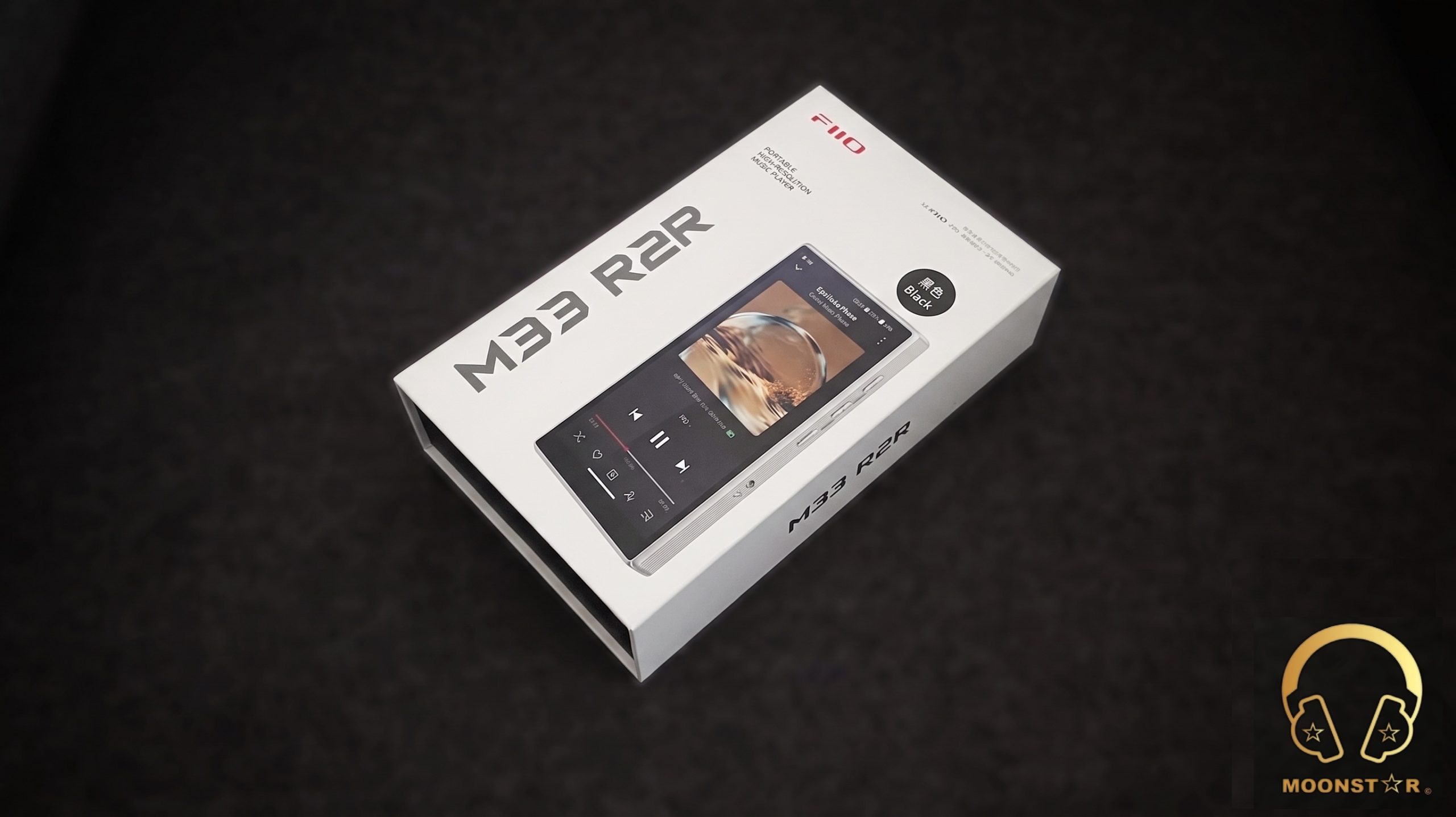
The full package includes:
- 1 x FiiO M33 R2R Digital Audio Player
- 1 x Leather Protective Case (pre-installed)
- 1 x Tempered Glass Screen Protector (pre-installed)
- 1 x USB Type-C Charging and Data Cable
- 1 x User Manual
- 1 x Warranty Card
The pre-installed tempered glass protector is a convenience appreciated by most users, saving the usual frustration of applying one cleanly after the fact. The cable supports both data transfer and charging. The bundle is sensible and complete without padding the contents unnecessarily.
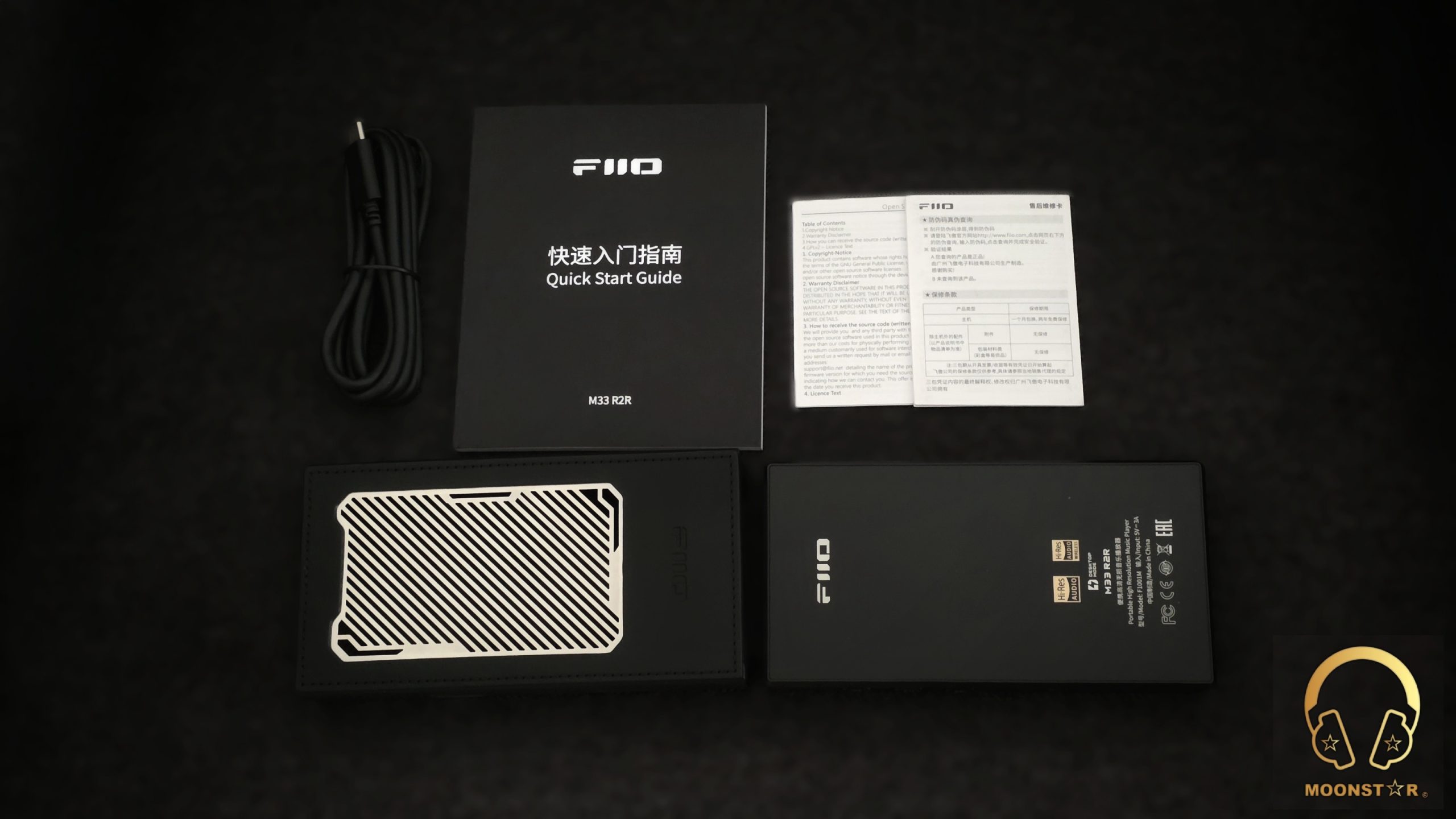
One common observation from owners is the absence of an additional coaxial cable, which might have been useful given the player’s digital output capabilities, but this is a minor note rather than a meaningful omission. The leather case is a practical inclusion that adds meaningful everyday protection.
Design & Build Quality:
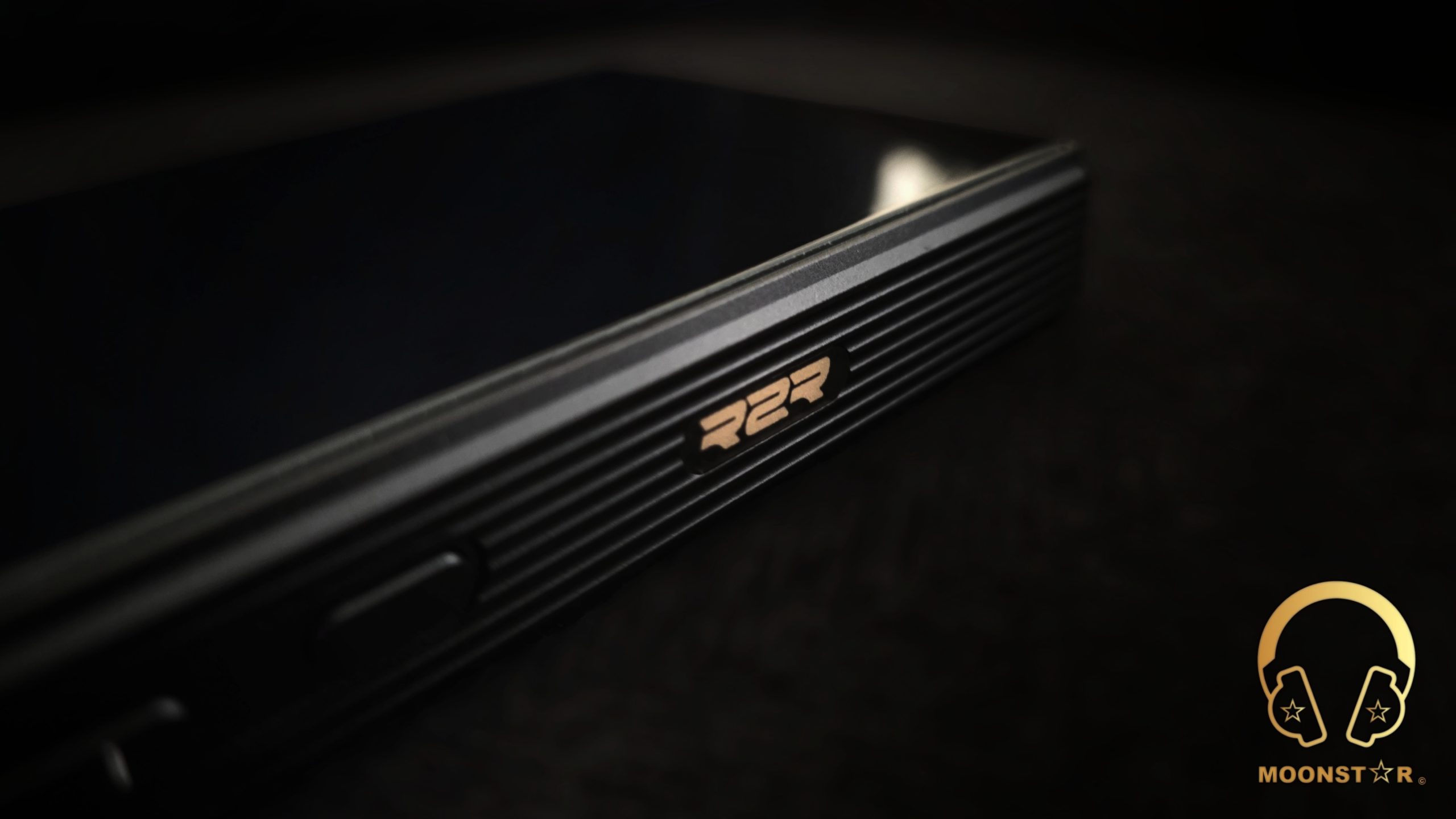
The M33 R2R takes a deliberately understated visual approach. Where the flagship M27 communicates its premium status through size and an assertive industrial aesthetic, the M33 R2R opts for a restrained identity closer in spirit to the M21. It is a compact device that does not announce its presence. At 258 grams and measuring approximately 138.2mm tall, 71.5mm wide, and 17mm deep, the M33 R2R is genuinely portable. It slips into a jacket pocket without bulk and sits comfortably in the hand during extended listening.
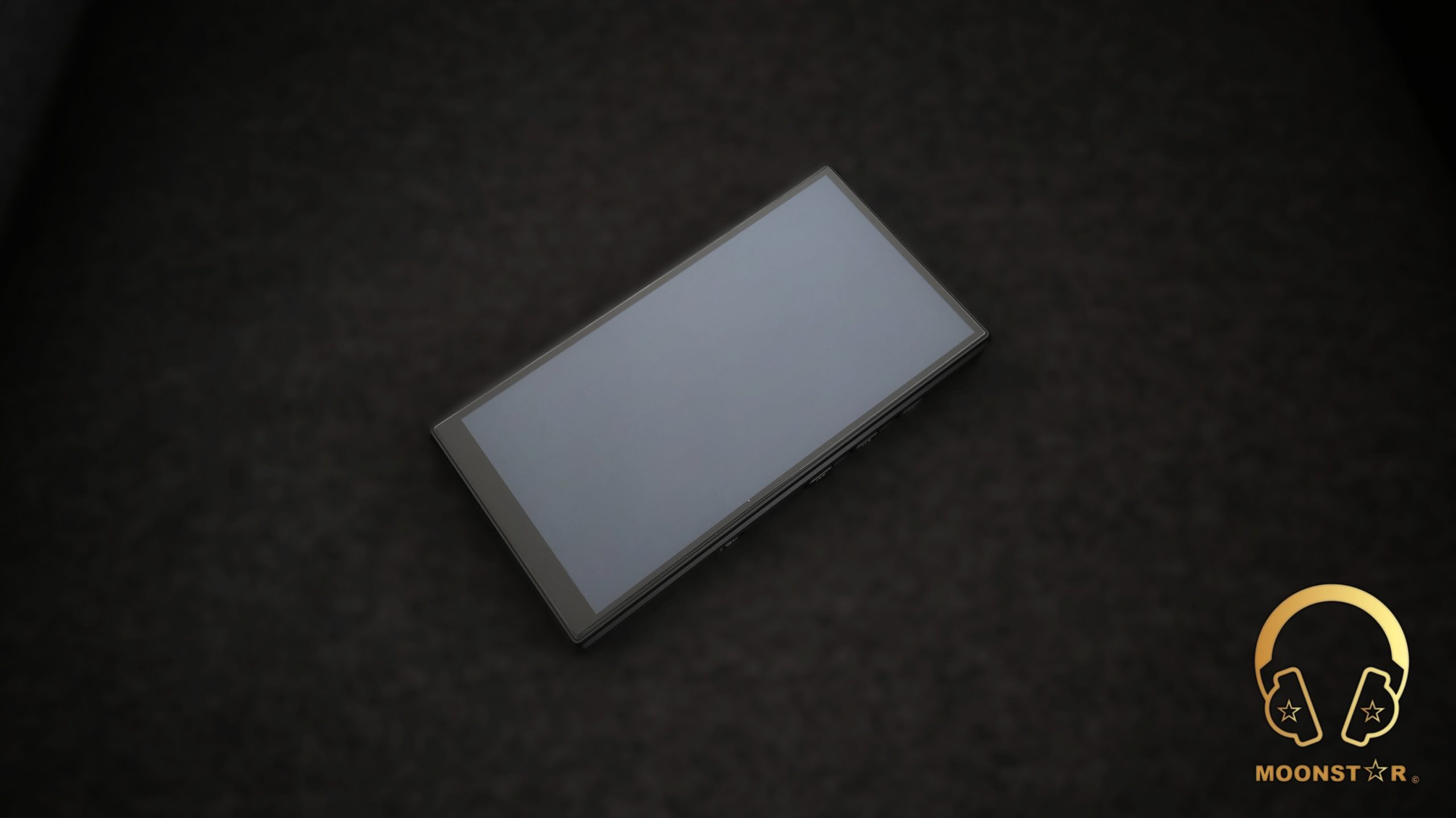
The chassis is constructed from CNC machined aluminum alloy with subtly chamfered corners. The finish is anodized, and the sides carry refined sculpted lines that break the otherwise flat profile. The assembly tolerances are tight throughout; nothing creaks or flexes under pressure. The Black variant is clean and professional, while the Dark Blue and Retro Gold options offer more personality for those seeking a more distinctive device.
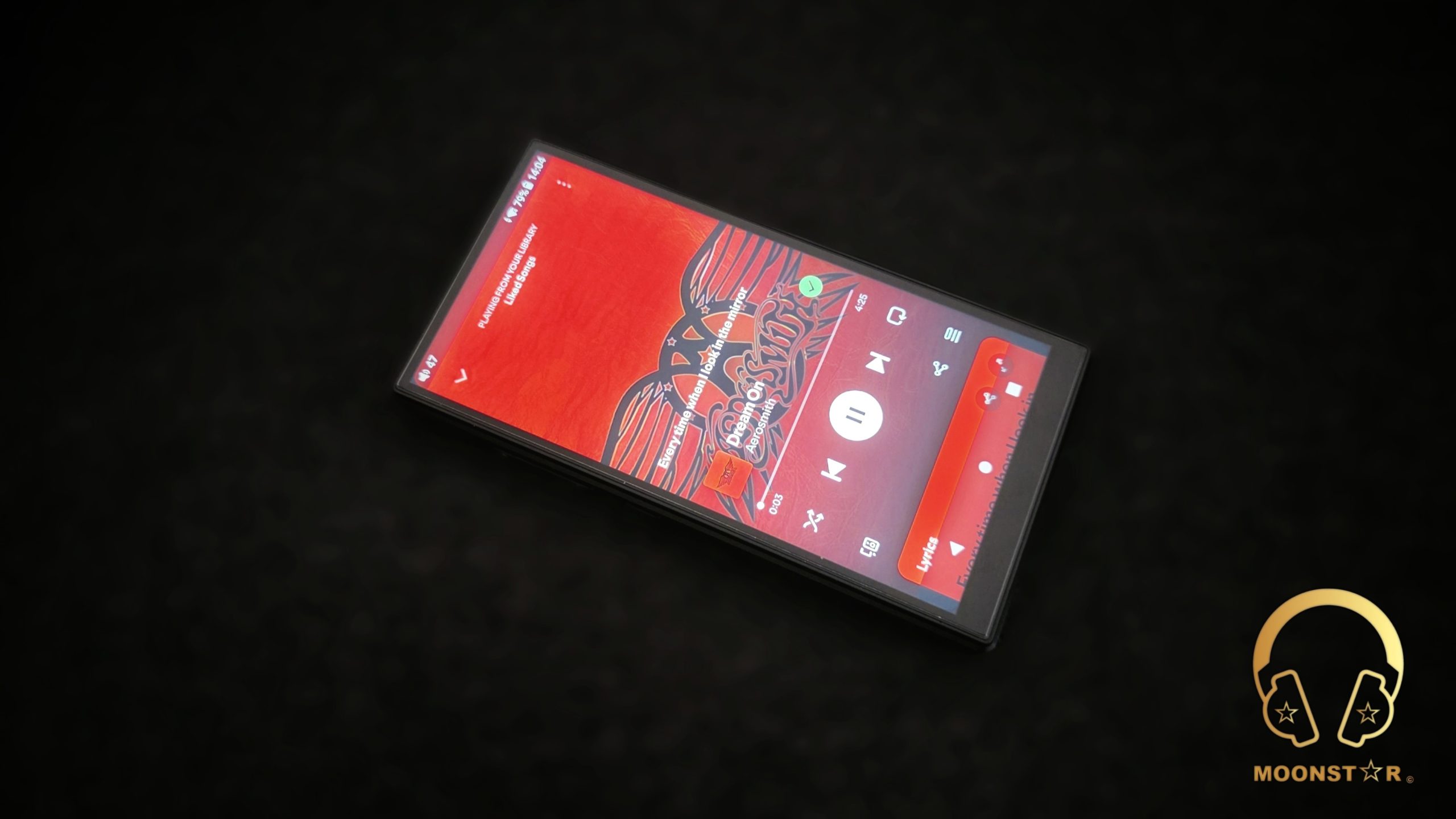
The front of the M33 R2R is dominated by its 5.5 inch fully laminated IPS display. The 1080 x 2160 resolution produces sharp text and album artwork. The lamination eliminates the air gap between the glass and the panel, which reduces reflections and improves perceived sharpness. Colors are ralative accurate, and brightness is sufficient for most indoor use. While the display loses some readability under direct bright sunlight, this is a common limitation at this price point. The screen is protected by Corning Gorilla Glass 3 with an oleophobic coating, and a factory applied screen protector adds further protection.
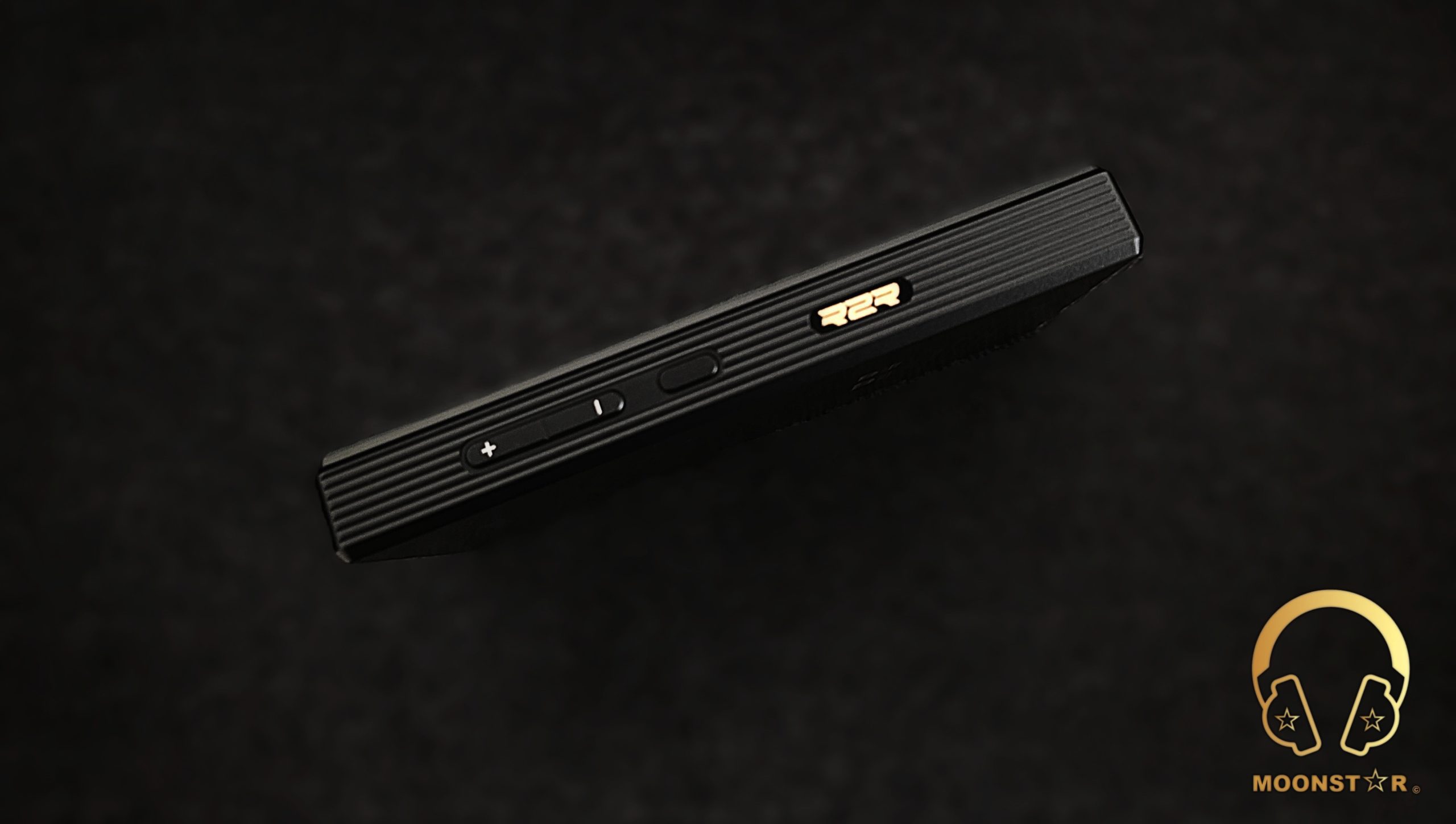
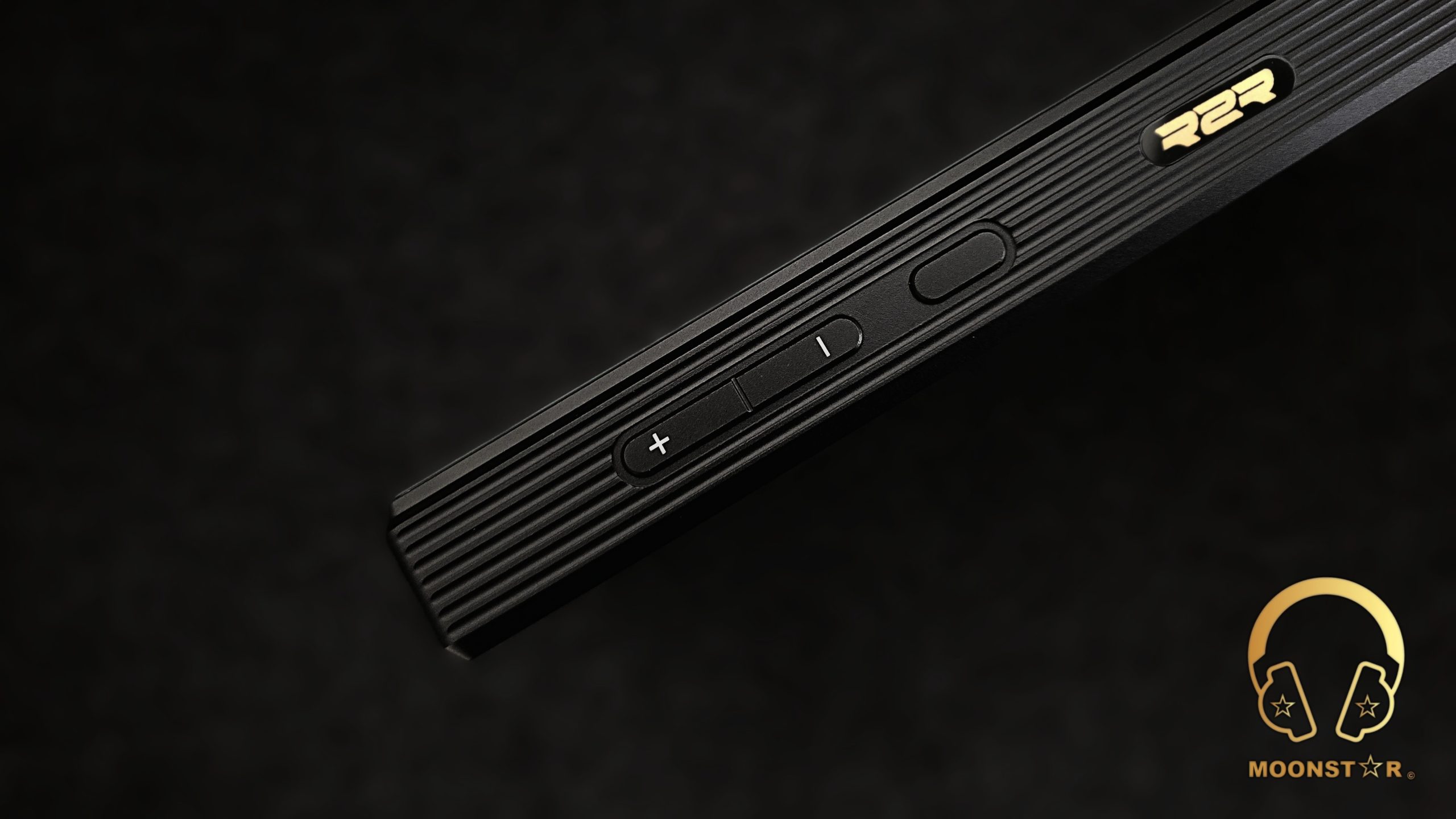
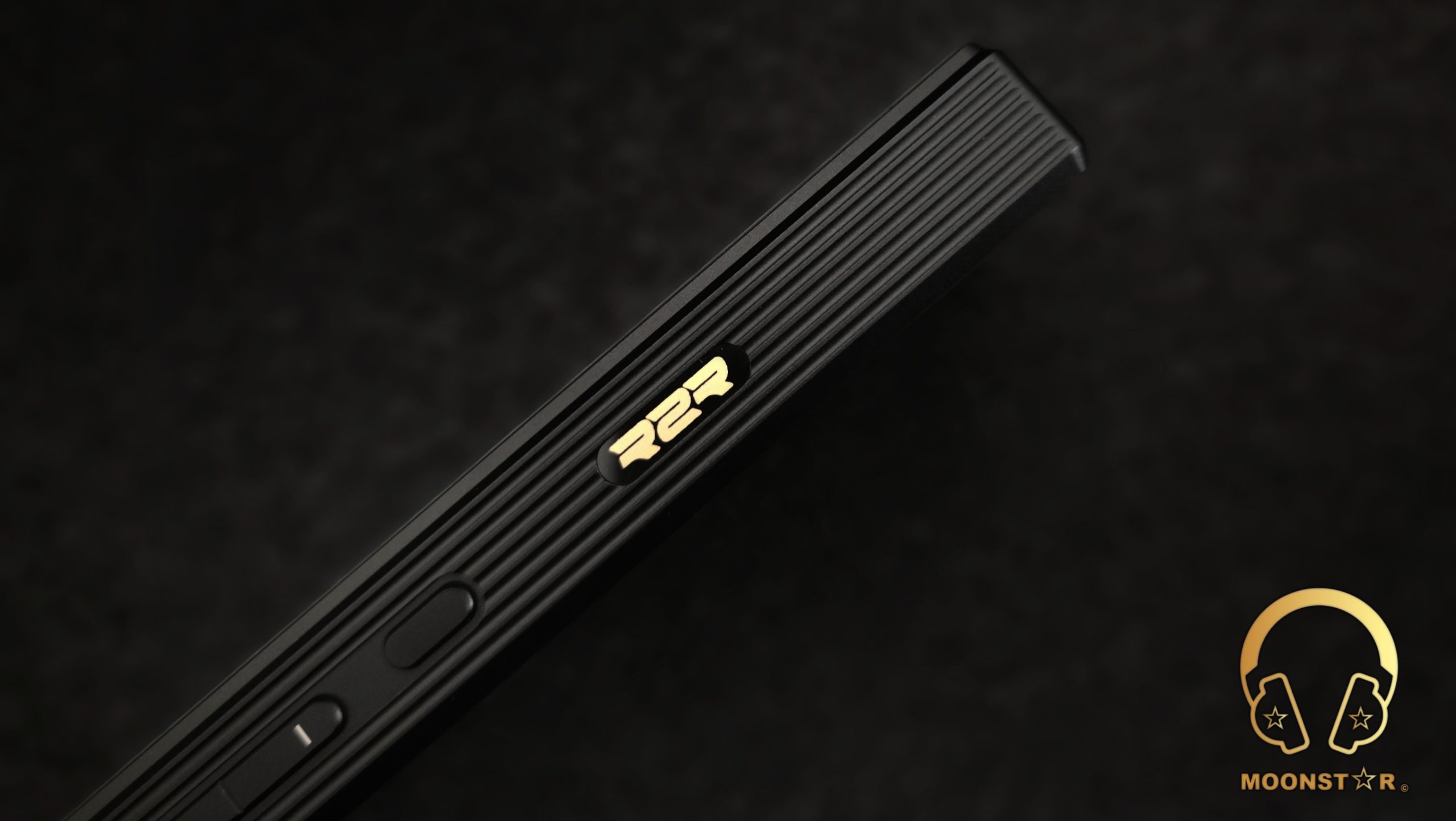
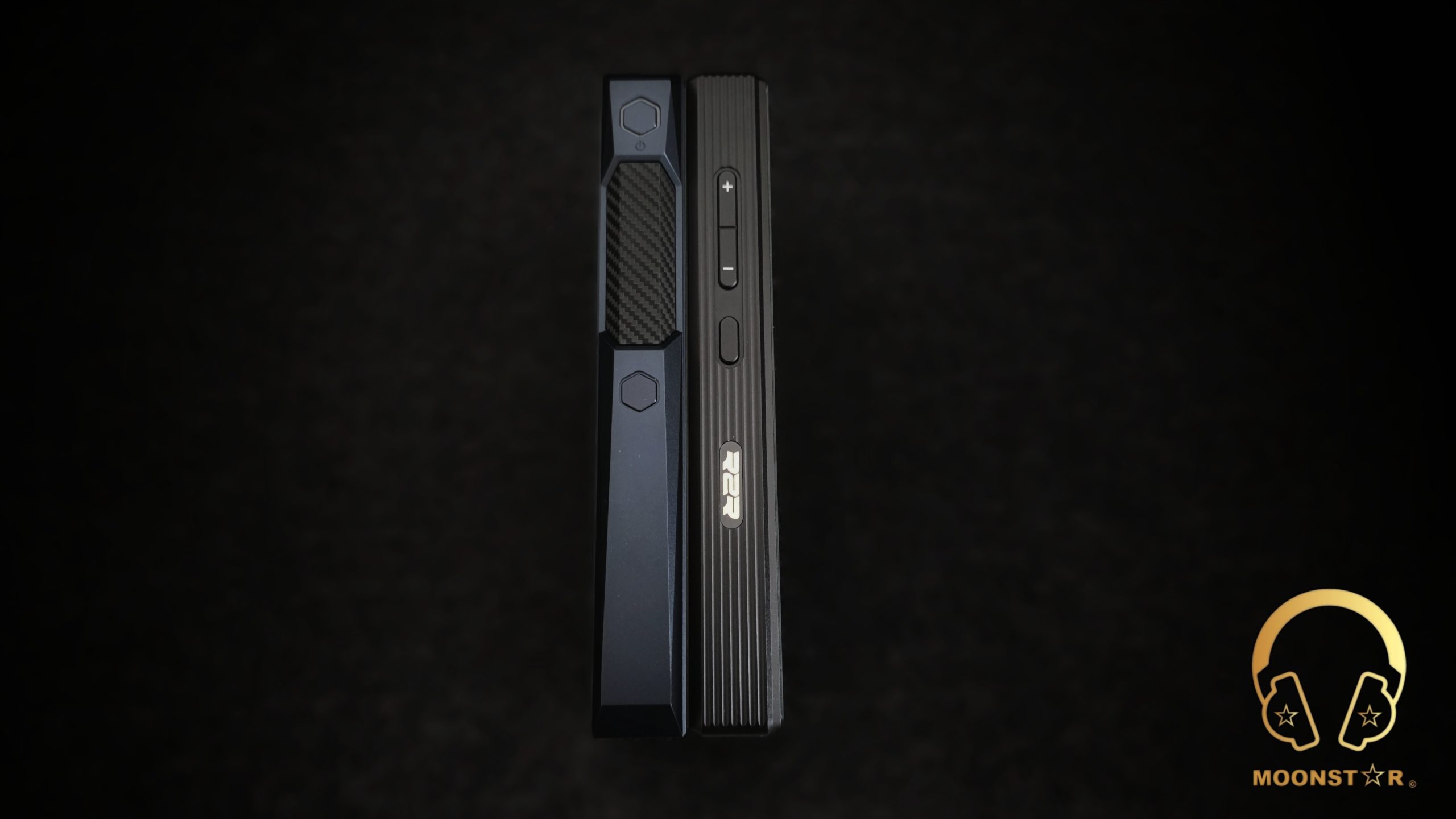
The right side carries the device’s primary physical controls in a logical vertical stack. The volume control is implemented as a pair of dedicated plus and minus buttons. The playback controls (previous track, play pause, and next track) are well separated and offer a satisfying click travel. A dedicated Desktop Mode button and a customizable multi function key complete the array, allowing for a useful degree of personalization.
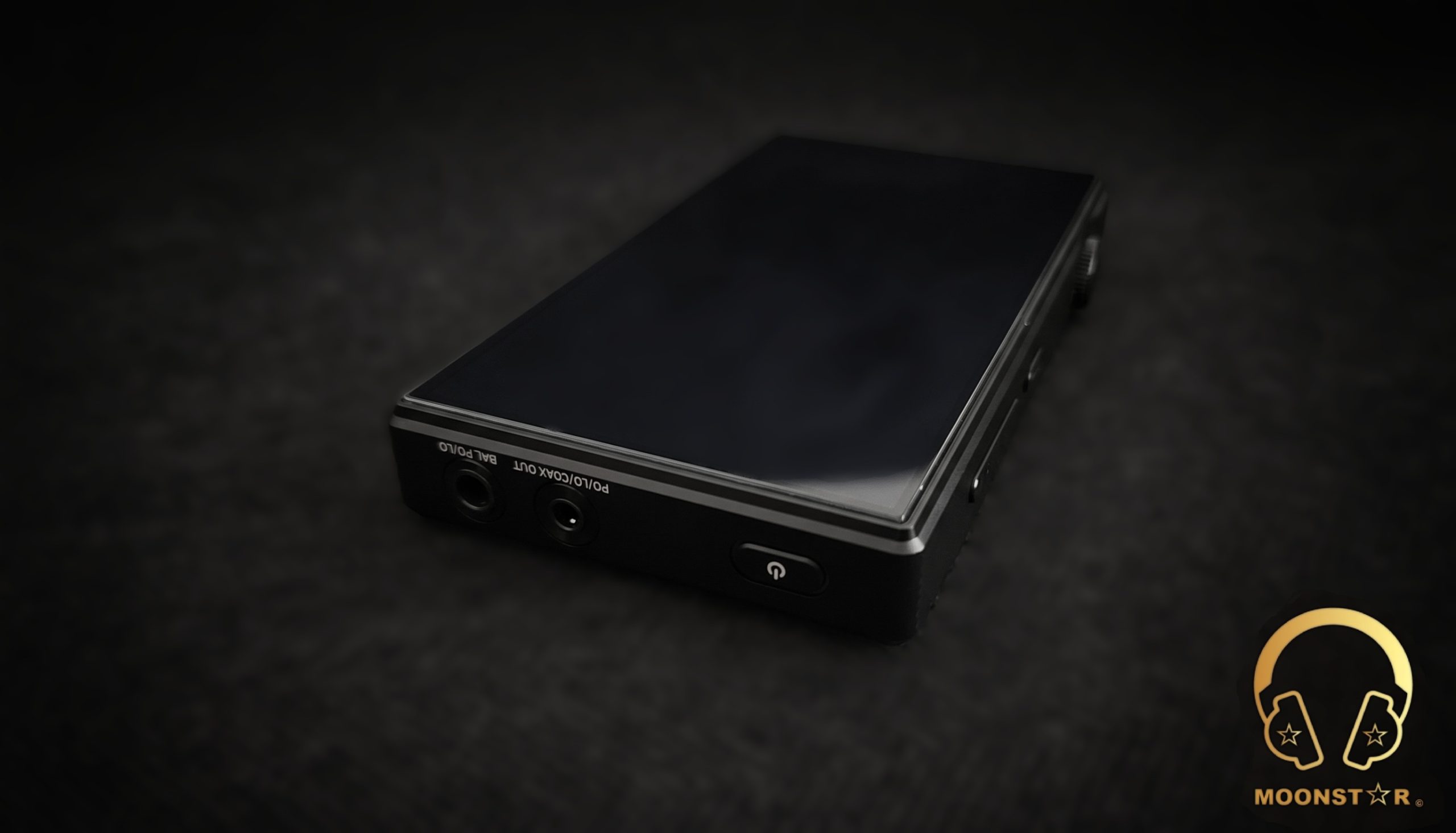
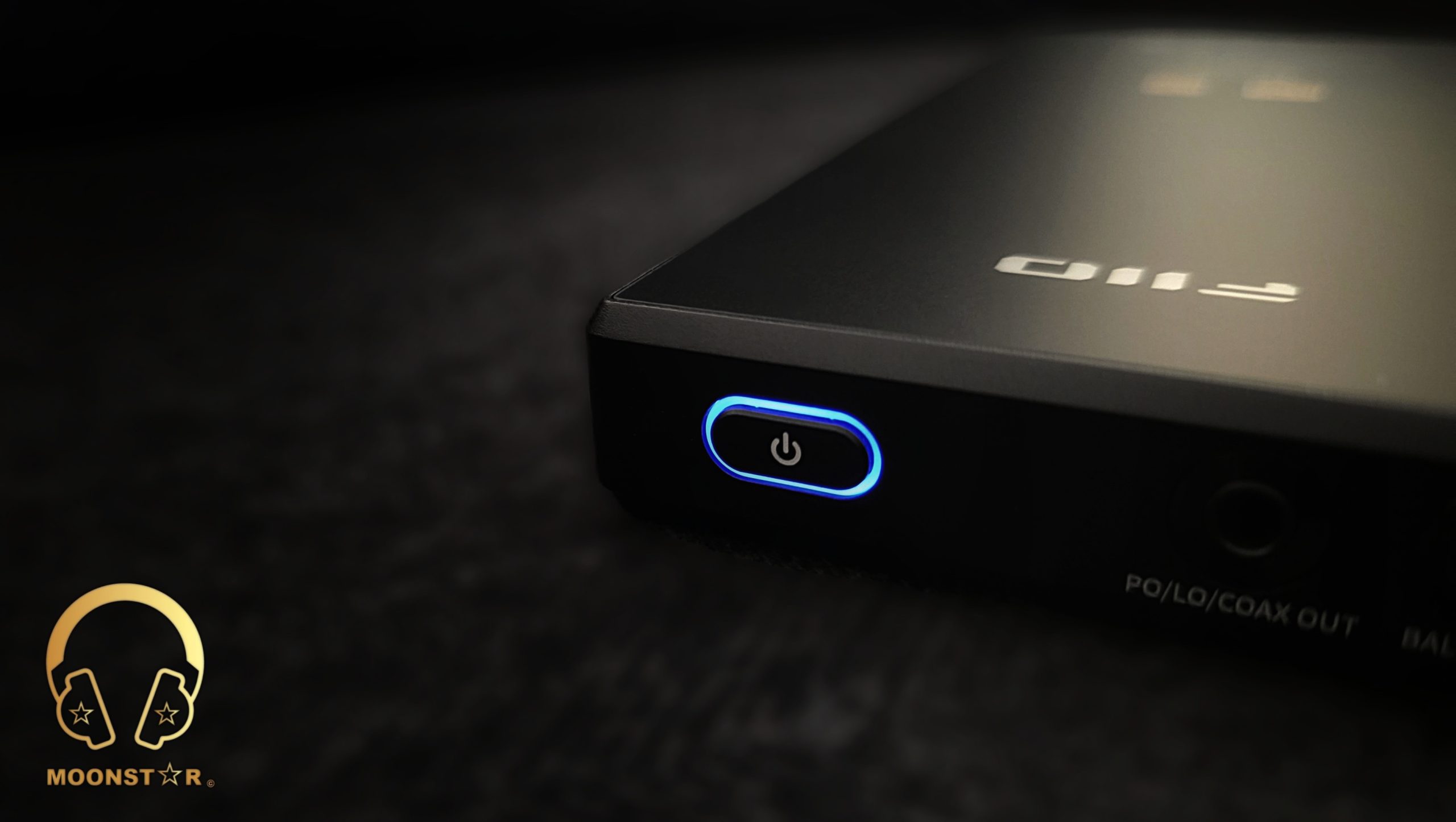
The top edge concentrates the audio connectivity and the power button with LED light. The 3.5mm single ended output is positioned on the left, followed by the 4.4mm balanced output. Both are software configurable for headphone playback or fixed line out modes. A 3.5mm coaxial output provides digital S/PDIF connectivity for external processors. Placing these outputs on the top edge keeps cables directed away from the player, reducing strain on connectors.
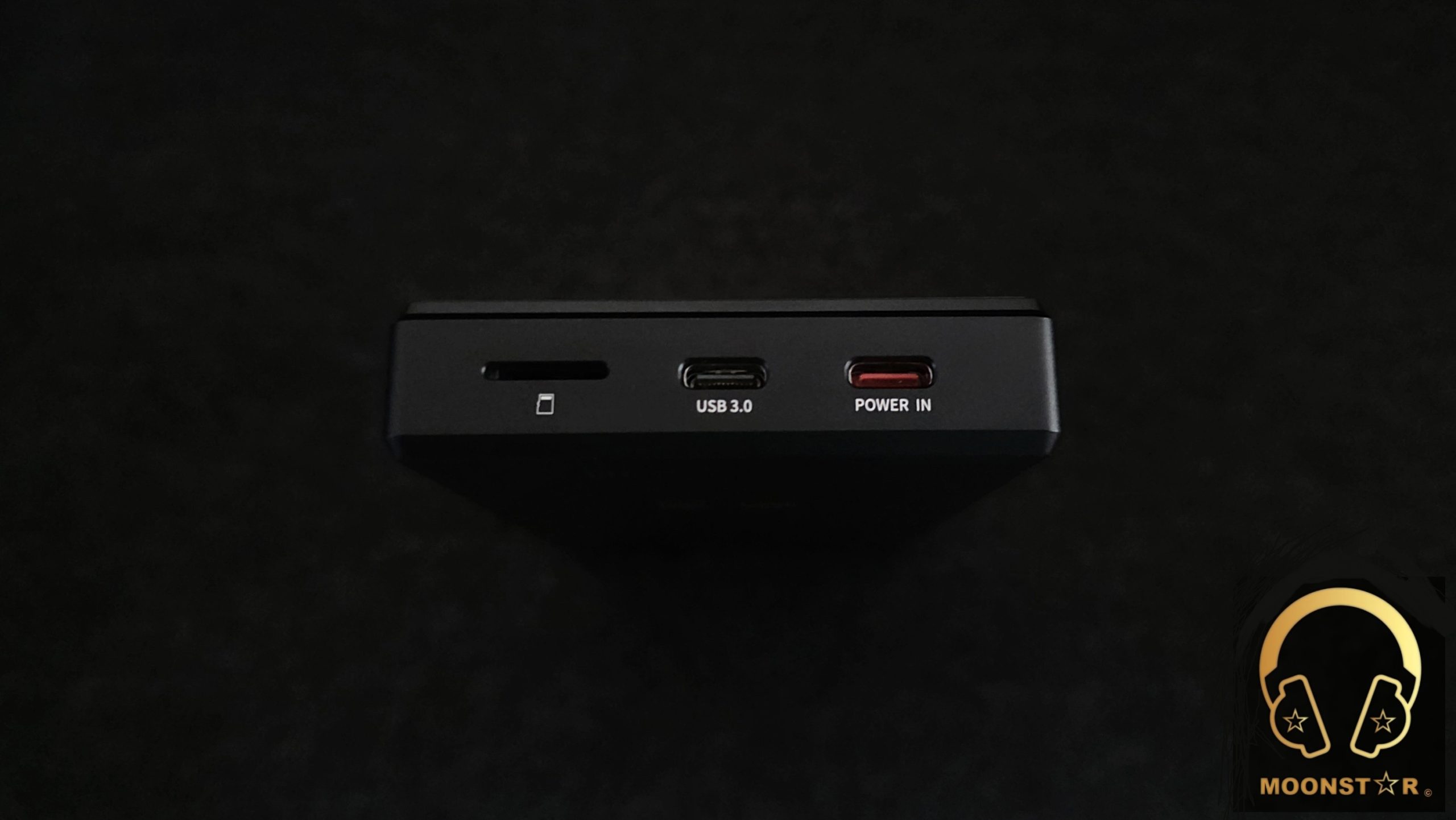
The bottom edge carries the microSD card slot which supports cards up to 2TB capacity and two USB Type C ports. The left port handles data transfer at USB 3.0 speeds and standard charging. The right port is dedicated exclusively to charging and external power for Desktop Mode. This separation allows the player to draw power from a dedicated path while using the data port for other purposes. This dual port arrangement enables Desktop Mode to bypass the internal battery, extending its lifespan during stationary sessions.
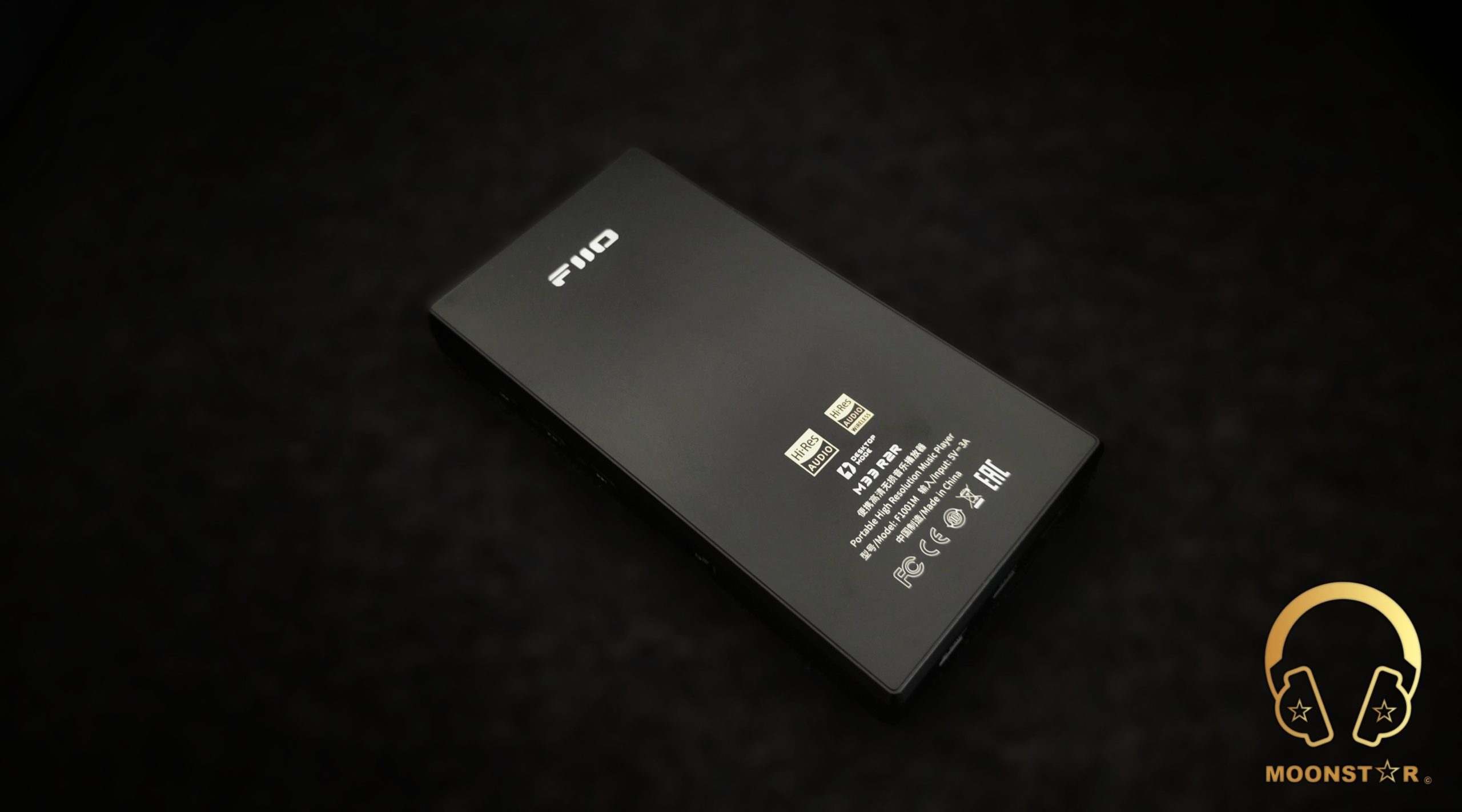
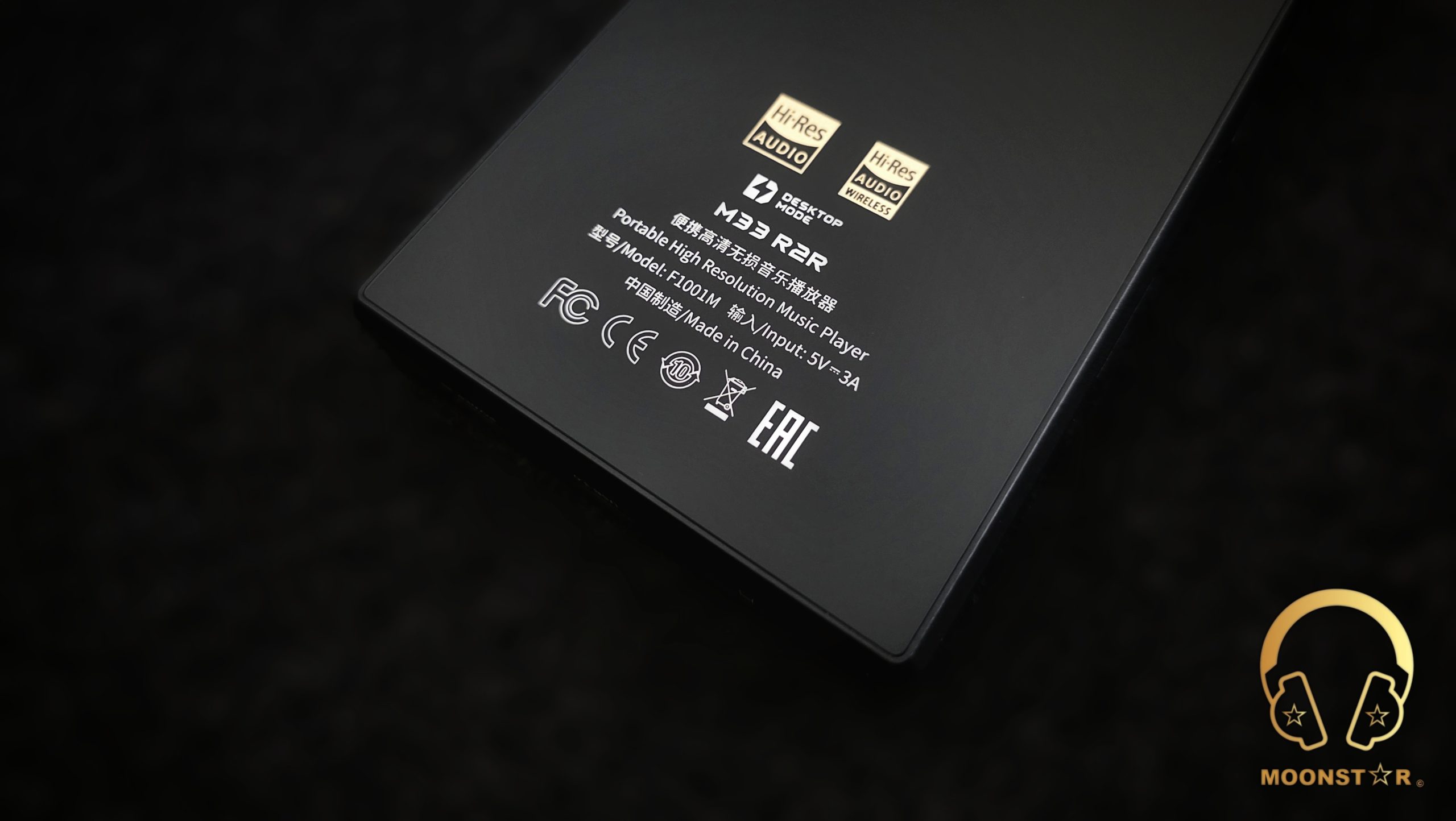
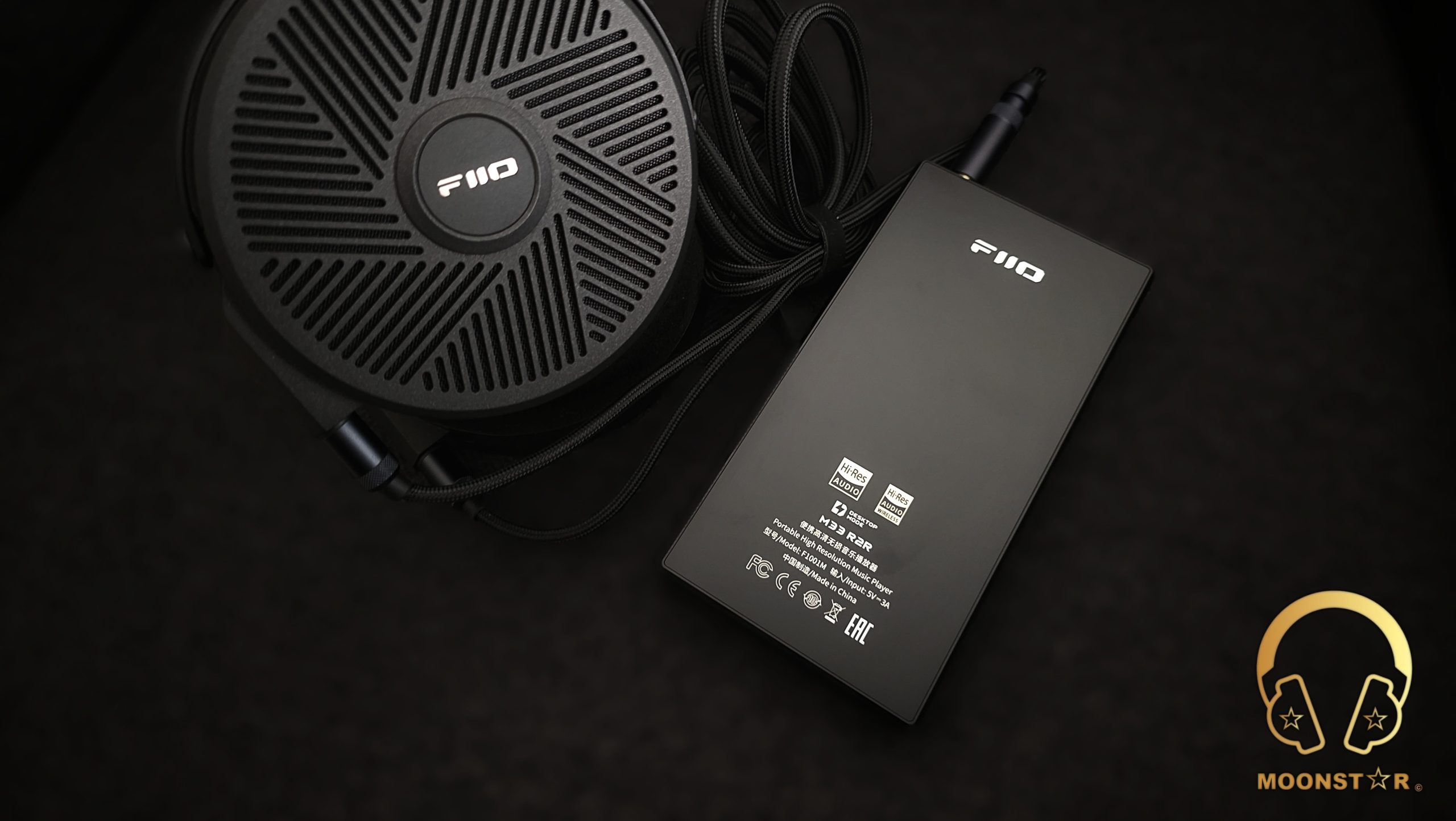
The rear of the M33 R2R uses an AG matte glass finish. This texture effectively resists fingerprints and smudges, keeping the device looking clean throughout the day. The matte character provides a refined appearance that suits the measured design philosophy. The FiiO logo and model designation are printed in a low contrast treatment. The included leather case covers most of the rear in daily use, adding a warm material contrast to the aluminum and glass chassis while protecting the surface from impacts.
Technical Specifications:
General
- Model: M33 R2R
- Operating System: Android 13
- CPU: Qualcomm Snapdragon 680
- RAM + Storage: 8GB RAM + 128GB ROM (approx. 112GB usable)
- MicroSD: Supports SDHC/SDXC up to 2TB
- Display: 5.5-inch (1080 x 2160) Fully Laminated IPS, Gorilla Glass 3
- Dimensions: approx. 138.2mm x 71.5mm x 17mm
- Weight: approx. 258g
- Colors: Black, Dark Blue, Retro Gold
Audio Hardware
- DAC: FiiO Proprietary Fully Differential 24-bit R2R Resistor Array (96 matched resistors)
- USB Interface: XMOS XU316
- Clock System: FiiO DAPS (Digital Audio Purification System), High-Capacity FPGA + Dual Custom Femtosecond Crystal Oscillators (M27-derived)
- Amplifier: Multi-Stage Texas Instruments Op-Amp Layout (TI OPA1637 + OPA1662 + OPA1632), Fully Symmetrical Architecture
- Decoding Modes: OS (Oversampling) and NOS (Non-Oversampling) selectable
- Sound Profiles: Flat and Warm (selectable)
- Gain Settings: 4 levels (Low, Medium, High, Super High)
- Local Playback: Up to 384kHz/32bit; DSD256 (Native)
- USB DAC: Up to 768kHz/32bit; DSD512 (Native)
- Coaxial Output: Up to 384kHz/24bit; DSD128 (DoP/D2P)
- Audio Formats: APE, FLAC, WAV, WMA, AAC, ALAC, AIFF, OGG, MP3, DFF, DSF, DXD
Output Specifications
- Output Ports: 3.5mm Single-Ended (PO/LO), 4.4mm Balanced (PO/LO), 3.5mm Coaxial
- Balanced Output Power (Super High Gain): 1100mW + 1100mW @32ohm (6Vrms, THD+N < 1%)
- Balanced Output Power (High Gain): 900mW + 900mW @32ohm (5.4Vrms, THD+N < 1%)
- Single-Ended Output Power (Super High Gain): 470mW + 470mW @32ohm (3.9Vrms, THD+N < 1%)
- Balanced Output Power @300ohm (Super High Gain): 240mW + 240mW (8.5Vrms, THD+N < 1%)
Battery and Connectivity
- Battery: 4400mAh Li-Polymer
- Battery Life: Up to 15.5 hours (3.5mm SE), Up to 13.5 hours (4.4mm Balanced)
- Charging: 25W low-temperature fast charging, approx. 1.5 hours to full
- Desktop Mode: Yes (POWER IN USB-C port bypasses battery, unlocks Super High Gain)
- USB: Dual USB Type-C (USB 3.0 data/charge port + POWER IN dedicated port)
- Wi-Fi: Dual-band 2.4GHz and 5GHz
- Bluetooth: V5.0 (LDAC, aptX, aptX HD, LHDC as receiver; LDAC, SBC as transmitter)
- Coaxial Output Jitter: approx. 71.5ps
Hardware & Software Features:
The M33 R2R’s platform is built around the Snapdragon 680 with 8GB of LPDDR4X RAM and 128GB of UFS storage. In day-to-day operation, this configuration provides noticeably smoother performance than the processors used in some competing players at similar price points. App launches are quick, library loading is responsive, and the Android 13 interface navigates without hesitation even when Tidal, Qobuz, or local playback apps are running simultaneously. The 8GB of RAM in particular gives the M33 R2R meaningful headroom for multitasking, which reduces the occasional app reload behavior that can be frustrating on players with less memory.
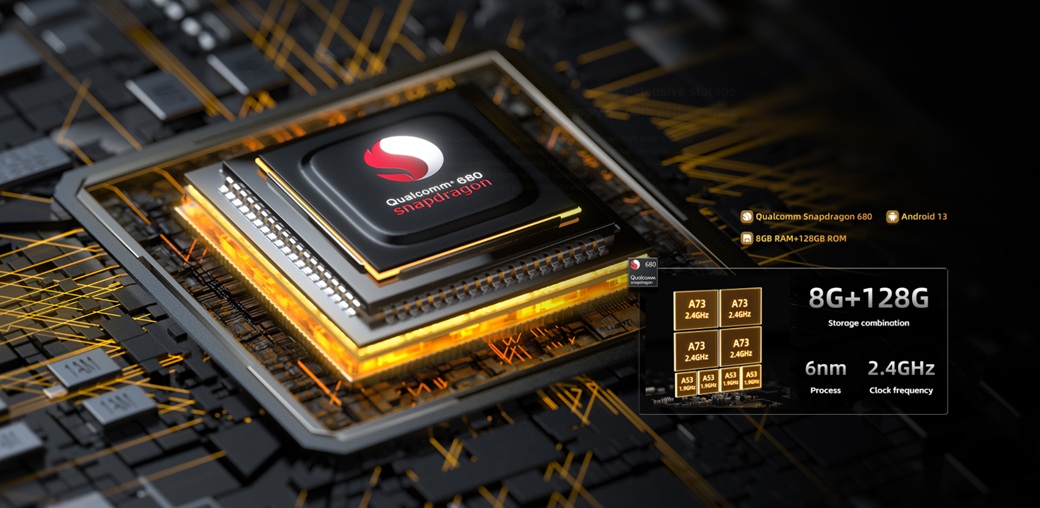
The audio hardware is the M33 R2R’s defining characteristic. FiiO’s fully differential 24-bit R2R resistor array uses 96 precision-matched resistors arranged in a complementary matrix that handles both positive and negative signal rails independently. This balanced topology inherently suppresses common-mode noise and reduces channel crosstalk compared to a single-ended R2R implementation. The manufacturing precision required for this approach is substantially higher than a standard delta-sigma chip solution, which is part of why R2R portable DAPs have historically carried significant price premiums. FiiO’s decision to bring this architecture into a sub-$700 product is the result of accumulated manufacturing refinement across their K-series R2R desktop products.
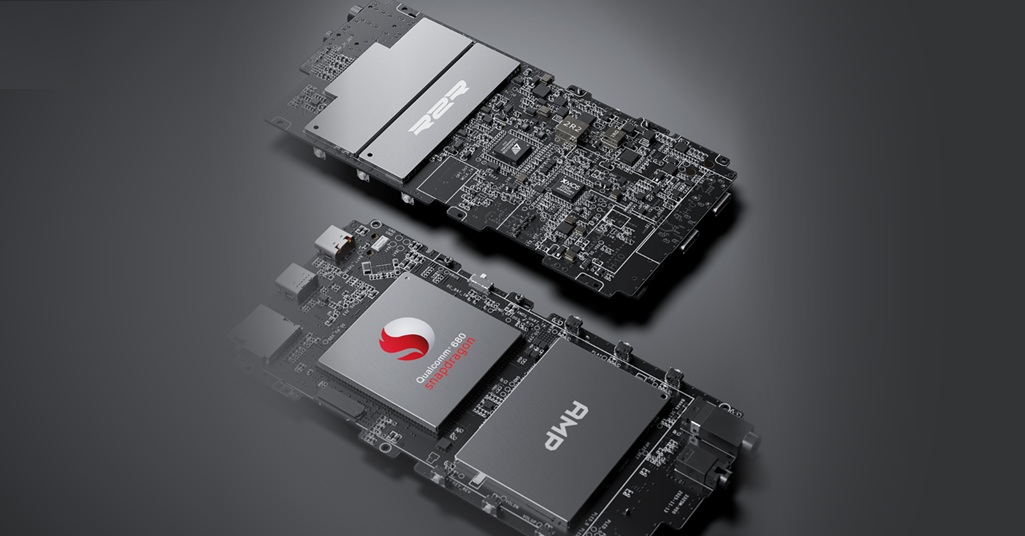
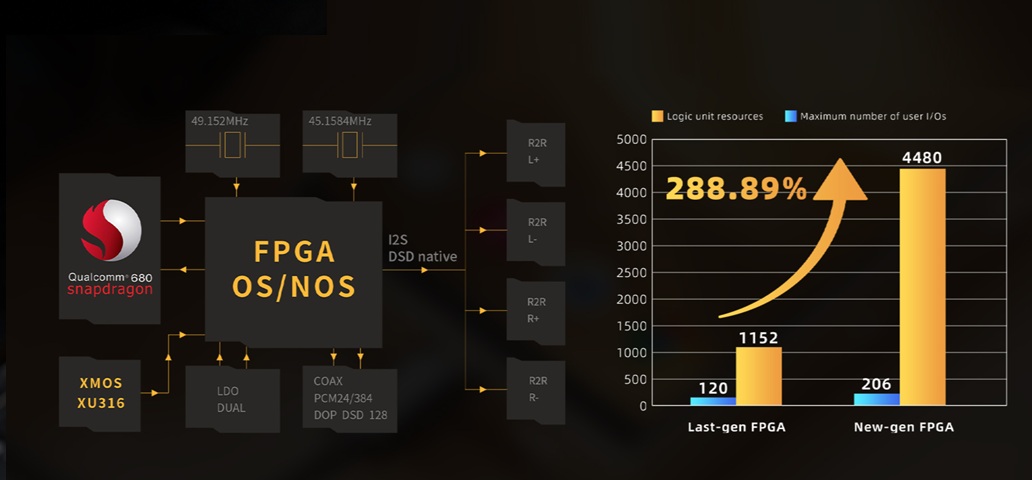
The clocking system deserves specific mention. FiiO’s DAPS clock architecture, borrowed directly from the M27 flagship, uses a high-capacity FPGA and dual femtosecond-grade crystal oscillators. The FPGA handles real-time jitter reduction and digital audio purification tasks, and the femtosecond oscillators provide an extremely precise and low-noise clock reference that directly affects timing accuracy in the R2R conversion process. For the coaxial digital output, FiiO claims jitter as low as 71.5 picoseconds, which places the M33 R2R in the same territory as dedicated digital transports considerably more expensive than this player.
The amplifier section uses a multi-stage Texas Instruments op-amp layout with a fully symmetrical architecture and eight op-amps total. The signal path routes through TI OPA1637 units for current-to-voltage conversion from the R2R array, then to OPA1662 op-amps for filtering, before the output stage. Independent power supplies are used for the digital processing section, the R2R array, the pre-amplifier stage, and the output amplifier stage, each housed in separately shielded zones within the chassis. This zoned isolation is intended to prevent digital noise from the processing hardware from coupling into the analog amplifier chain, contributing to the low noise floor the M33 R2R achieves with sensitive IEMs.
Two selectable decoding modes, OS (Oversampling) and NOS (Non-Oversampling), are available through the settings. OS mode applies digital filtering and upsampling before the R2R conversion, producing a presentation that is slightly more precise in high-frequency reproduction but less distinctively R2R in character. NOS mode bypasses this processing and passes the digital signal directly to the resistor ladder with no oversampling, which is where the M33 R2R’s most characteristic analog quality becomes most audible. Most serious listening for this review was conducted in NOS mode, which is the configuration that most clearly expresses the R2R architecture’s strengths. Two sound profiles, Flat and Warm, are available in both modes. Flat delivers a more neutral, transparent presentation; Warm adds a denser, more richly colored character to the midrange and treble. Both are meaningful options rather than superficial tone presets.
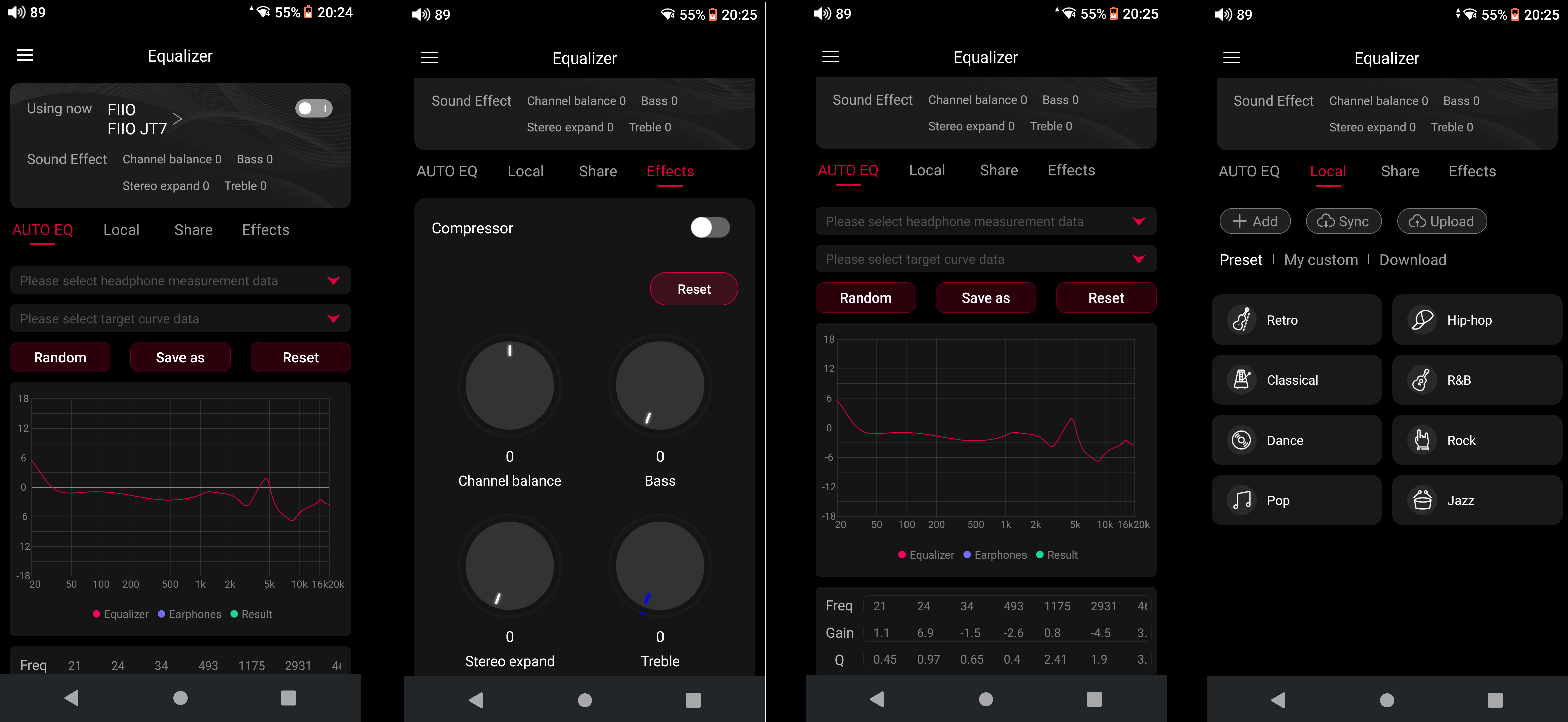
The 10-band parametric EQ with Auto EQ support is a practically useful feature. Auto EQ uses FiiO’s headphone compensation curves to automatically match the frequency response of compatible FiiO IEMs and headphones, providing a meaningful starting point that can be further adjusted manually. The 100-step volume control and four-level gain structure (Low, Medium, High, Super High) provide good resolution for matching output level to different transducer sensitivities, and the absence of channel imbalance at low volume positions is notable with sensitive IEMs in low gain mode.
Software Experience:
The FiiO M33 runs on a highly responsive Android 13 environment, customized specifically for its Snapdragon 6Gen1 chipset and 8GB of RAM. This hardware combination ensures a fluid user experience with boot times averaging around 12 seconds. The interface remains uncluttered, coming pre-installed with a suite of functional tools such as the Google Play Store, Chrome, and a specialized Technical Support portal. For those preferring a curated experience, FiiO’s proprietary Market provides easy access to frequently used audiophile applications and firmware management.

The heart of the software is the FiiO Music app, which integrates seamlessly with the M33’s R2R architecture. A standout feature is the 10-band Global EQ, which maintains signal integrity across all applications, whether using the 3.5mm single-ended or 4.4mm balanced outputs. Within the audio settings, users can toggle between Oversampling (OS) and Non-Oversampling (NOS) modes, which is a critical adjustment for tailoring the R2R DAC’s natural timbre. Gain settings are extensive, ranging from Low to Ultra High when the device is connected to a power source in Desktop Mode.
Versatility is managed through seven distinct operating modes, easily toggled via the notification shade:
- Android Mode: For full app compatibility and streaming services.
- Pure Music Mode: Disables background tasks to focus processing power entirely on local file playback.
- USB DAC Mode: Transforms the M33 into a high-end external processor for PCs or tablets.
- Bluetooth Receiving: Allows the device to act as a high-fidelity wireless bridge.
- AirPlay & DLNA: Specialized modes for seamless network streaming within home ecosystems.
- Roon Ready: Provides a dedicated interface for integrated Roon library management.
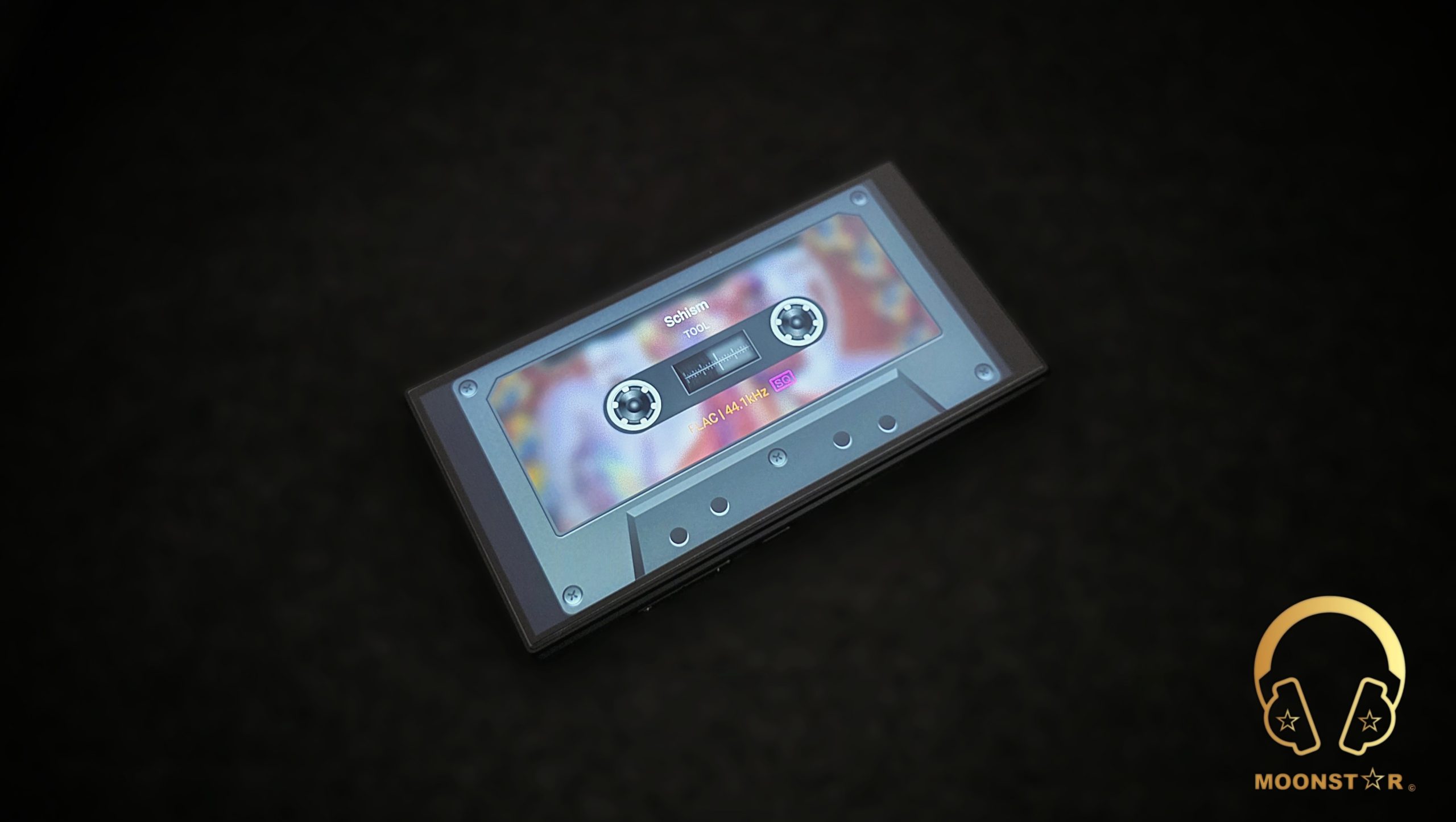
A nostalgic touch is found in the enhanced Retro UI, which includes various VU meter skins and a spinning reel-to-reel animation that mirrors the R2R hardware inside. A recent update has also added a dedicated iPod-style UI to the M33 R2R, which is a welcome addition. When paired with its magnetic leather case, the M33 can trigger a Sleep Timer interface, displaying a simplified playback screen that dims slowly to conserve battery life.
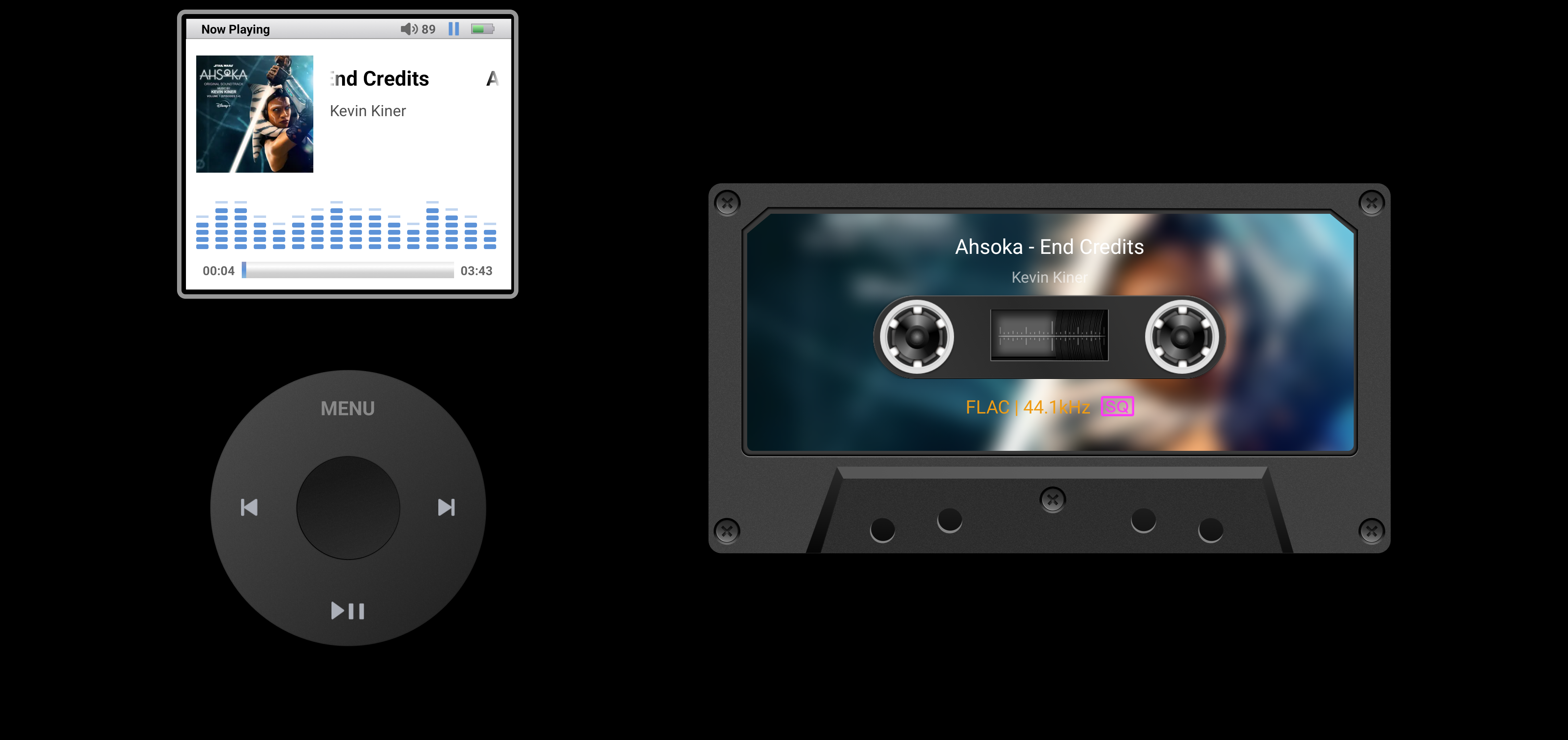
Firmware longevity is supported by an Over-the-Air (OTA) update system, with recent versions focusing on refining the R2R linearity compensation. Additionally, the M33 features an Intelligent Charging mode, which allows users to limit the maximum charge to 80% to prolong battery health during heavy desktop use, or utilize Bypass Charging to power the device directly from the USB port without cycling the internal battery.
Battery Life:
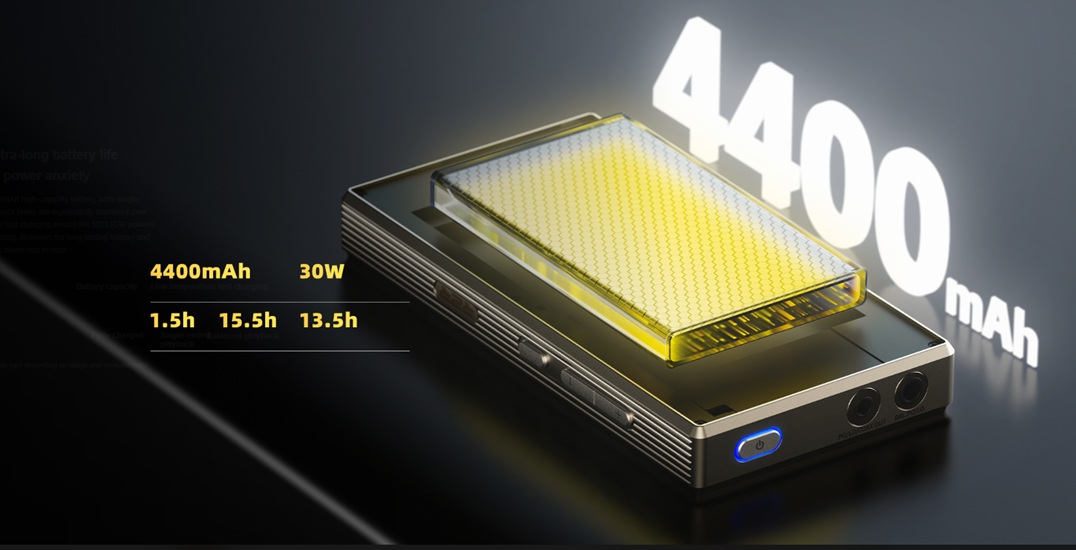
FiiO rates the M33 R2R for up to 15.5 hours via the 3.5mm single-ended output and up to 13.5 hours via the 4.4mm balanced output. The spec sheet figure of 12.5 hours for balanced playback is more conservative. Real-world testing places the practical range at approximately 11 to 12 hours with planars on high gain through the balanced output, and 14 to 15 hours with sensitive IEMs on low gain through the single-ended output. These are genuine improvements over the M23 across all configurations, which is a welcome result given that the M33 R2R handles a more complex DAC architecture at the same device weight.
Charging is handled by 25W low-temperature fast charging technology that FiiO has designed to minimize heat during the charge cycle. From near-empty to full charge takes approximately 1.5 hours, and the system’s thermally aware design helps preserve long-term battery health by avoiding the temperature spikes that can accelerate cell degradation. Desktop Mode, accessible by connecting a fast charger or power supply to the dedicated POWER IN USB-C port, bypasses the internal battery for amplification entirely. This means the battery is not discharged or charged during Desktop Mode operation, and the amplifier draws directly from the external power supply. This arrangement both extends battery lifespan and unlocks the Super High Gain mode, which pushes the balanced output to its full 1100mW per channel rating.
Equipment Used for This Review:
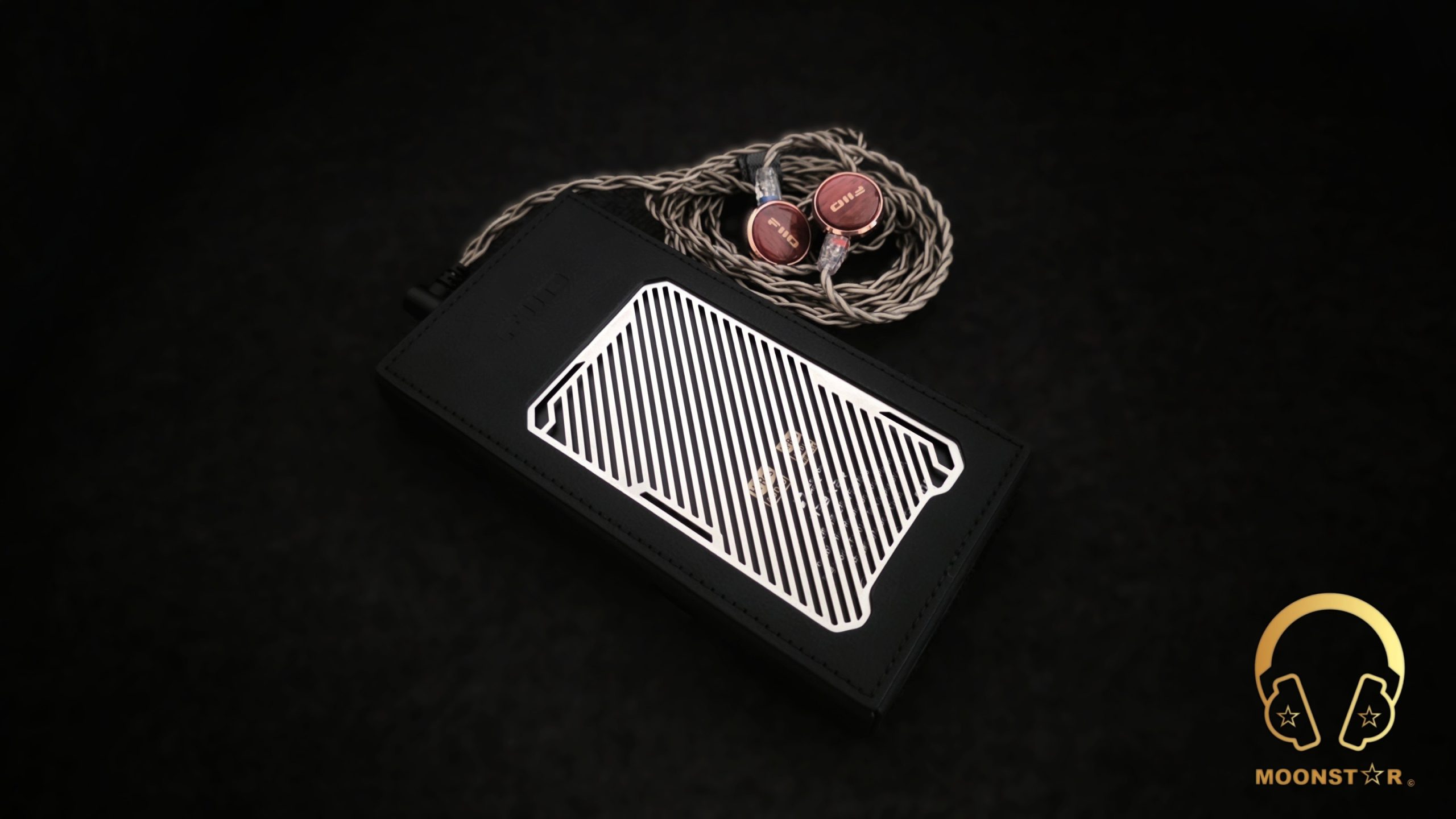
- DAPs : FiiO M33 R2R, FiiO M23
- IEMs&Heaphones : Noble Audio Knight, FiiO FH9, FiiO FP3, FiiO FT5
The Sound:
Sound impressions for this review were formed after a burn-in period of approximately 100 hours, which reviewers and community members familiar with R2R DAC technology consistently recommend before drawing firm conclusions. The primary listening configuration used the 4.4mm balanced output in NOS (Non Oversampling) mode with the Flat sound profile, unless otherwise noted. The Noble Audio Knight, FiiO FH9, FiiO FP3 planar, and FiiO FT5 were used across different listening sessions, with gain settings matched to each transducer’s sensitivity.
The M33 R2R’s overall character is shaped by its R2R architecture in a way that is genuinely distinguishable from delta sigma sources during listening rather than merely on paper. The presentation is smooth and organic, with a fullness to notes and a natural decay to instrument tails that gives music a sense of physical substance. There is a quality of ease to how the M33 R2R renders complex material that does not derive from softening detail or rolling off the top end, but rather from a lack of the digital edge that some listeners find tiring over extended sessions on sources using chip based delta sigma converters. It is a more relaxed, more cohesive presentation that puts musical flow ahead of analytic precision, without abandoning the latter entirely.
The NOS mode is where the M33 R2R’s R2R character is most fully expressed. In oversampling mode, the player sounds like a competent mid tier DAP with a slightly warmer character, which is pleasant but unremarkable. NOS mode reveals the character that genuinely sets the M33 R2R apart: the harmonic texture, the organic note decay, and the sense of natural timing that R2R enthusiasts have been seeking at portable price points.
Bass:
The bass of the M33 R2R is full, weighty, and well bodied without crossing into the bloated or loose presentation that undermines R2R implementations that lack proper amplifier control. The fully differential architecture of the resistor array and the multi stage TI op amp amplifier work together to produce a low end that has genuine physical substance while maintaining enough definition to track individual bass elements in complex arrangements.
Sub bass extension is present and meaningful. Listening to Massive Attack’s Angel, the sustained low frequency foundation that defines the track has a convincing sense of mass and pressure. It does not reach into the deepest registers with the same physical authority that desktop R2R amplifiers with significantly more headroom can produce, but at a portable level the sub bass is solid and communicates the intended atmospheric weight of the recording. Yosi Horikawa’s Bubbles reveals the M33 R2R’s ability to render sub bass texture with definition rather than presenting it as an undifferentiated rumble.
Mid bass is where the M33 R2R makes its most consistent impression in the low end. There is a warmth and fullness here that gives kick drums a genuine sense of drum skin and mechanical weight. On Metallica’s Sad but True, the kick pattern arrives with a natural thud rather than a synthetic click. Isaac Hayes’s Walk On By and Barry White’s Just The Way You Are showcase the M33 R2R’s low mid richness: the bass lines have a physical quality that grounds the arrangements and complements the vocal presence above them without competing with it.
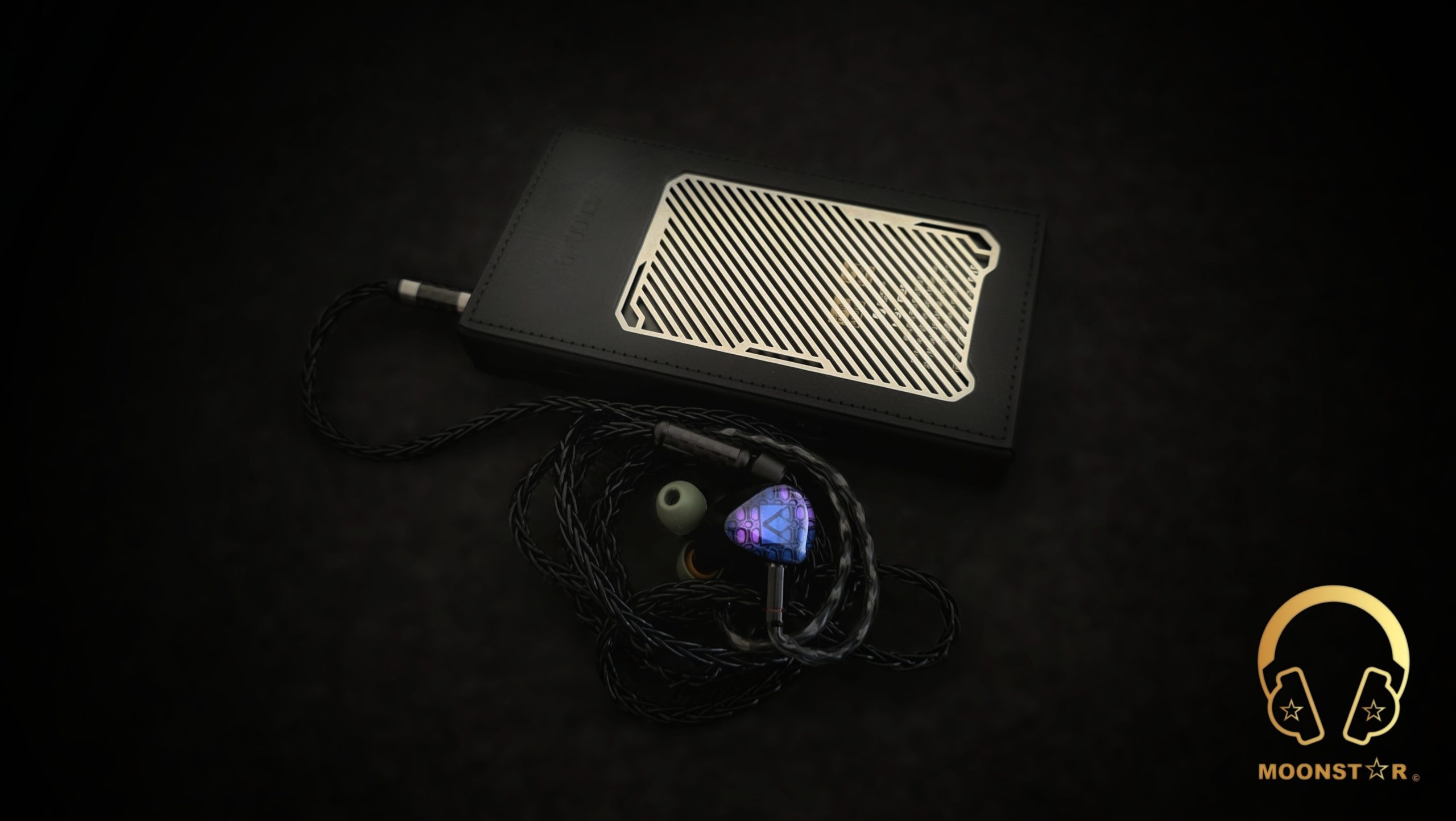
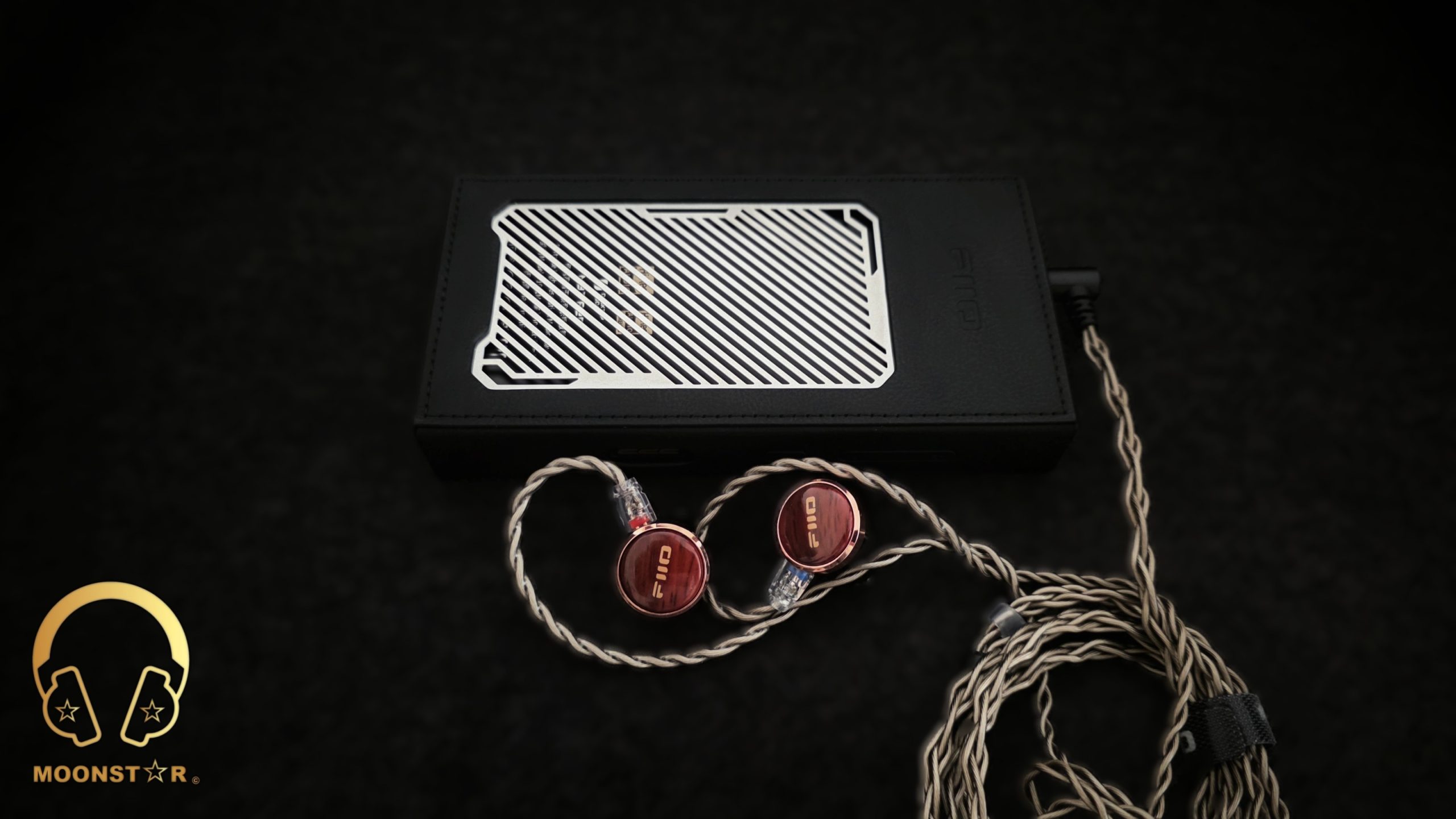
Coupled with the Noble Audio Knight, the Knight’s own dynamic driver bass response integrates well with the M33 R2R’s warm, full bodied character: the combination produces a low end that is engaging and weighty without crossing into excess. With the FiiO FP3 planar, the M33 R2R’s amplifier delivers controlled authority to the planar driver, producing tight and extended bass that benefits from the TI op amp chain’s grip on the transducer. The FiiO FT5 over ear headphone responds similarly, with the M33 R2R’s bass output giving the FT5’s dynamic driver a full, rounded character that suits longer listening sessions.
Midrange:
The midrange of the M33 R2R is where the R2R architecture makes its most compelling and consistent argument. Across all pairings and a diverse range of musical material, the midrange is characterized by a naturalness and tonal accuracy that distinguishes it from the more processed character of delta sigma designs. Voices benefit enormously; the way the M33 R2R renders the harmonic content around a sustained vocal note and the texture of breath is handled with a fidelity that makes extended listening genuinely more pleasurable.
Norah Jones on Come Away With Me illustrates this clearly. Her voice has a warmth and a roundness to it that the M33 R2R preserves with minimal processing artifact. Diana Krall’s So Wonderful in DSF format is similarly revealing: the jazz piano and vocal interplay is reproduced with a sense of physical presence. Edith Piaf’s Non Je Ne Regrette Rien is handled with tonal accuracy without sounding harsh in the presence region. Male vocals carry appropriate weight; Barry White and Isaac Hayes are delivered with a richness and tonal density that suits their laid back arrangements. Dave Gahan’s Kingdom benefits from the M33 R2R’s controlled warmth, where his baritone sits in a more natural register.
Instrumental midrange reproduction is equally strong. Acoustic guitar on Eric Clapton’s Wonderful Tonight has natural resonance and string texture. Piano in the Chopin Nocturne has the appropriate key weight and harmonic depth. In conjunction with the FiiO FH9’s multi driver configuration, which is particularly revealing in the midrange, the M33 R2R communicates with excellent tonal accuracy and a sense of instrument body. The Noble Audio Knight’s Sonion BA midrange driver produces its most musically satisfying results with this source, demonstrating that the M33 R2R’s R2R midrange character is particularly well matched to quality balanced armature drivers.
Treble:
The treble of the M33 R2R is smooth, extended, and fatigue free. It does not use treble emphasis to create an impression of detail, nor does it roll the top end off aggressively in pursuit of warmth. What it delivers is a high frequency range that extends convincingly and communicates the essential character of cymbals and strings without introducing a brittle edge or metallic quality.
Cymbal reproduction, as heard on Charly Antolini’s Duwadjuwandadu, arrives with a natural metallic shimmer and realistic decay. String treble in orchestral material, such as Tchaikovsky’s Symphony No. 5, is rendered with a smooth, woody texture that carries the bowed character of the strings without introducing stridency. Vivaldi’s The Four Seasons provides a similar test, and the M33 R2R communicates the projection of solo passages while maintaining a natural tonal register.
When used alongside the FiiO FH9, which has extended high frequency reach from its electrostatic tweeter, the FH9 benefits from the M33 R2R’s treble restraint. The M33 R2R provides a clean, low noise signal that allows the FH9’s upper frequency range to express itself naturally. The Noble Audio Knight’s piezoelectric super tweeter is kept in appropriate control by the M33 R2R, producing a smooth and detailed top end. With the FiiO FP3, the treble control pays dividends in planar specific behavior, ensuring a clean, unforced presentation. Sibilance is not a significant concern; across vocal recordings with known sibilance potential, no uncomfortable sounds emerged during extended listening.
Soundstage and Imaging:
The soundstage of the M33 R2R is proportionate and believable rather than artificially expanded. Its natural timing characteristics contribute to a stable, well anchored sense of space where instruments occupy consistent positions. Width is adequate, depth has a pleasing sense of front to back layering, and the background is clean and quiet enough to allow low level spatial information to emerge clearly.
Complemented by the Noble Knight’s soundstage, which tends toward more depth than width, the M33 R2R allows instrument positions to remain stable and well defined during complex orchestral passages. Ferit Odman’s Look, Stop & Listen showcases accurate lateral placement and depth cues. Radiohead’s Live in Berlin gains from the clean background: reverb tails and distant crowd elements sit at their correct distances rather than being pulled forward into the primary mix.
Comparison:
FiiO M33 R2R vs. FiiO M23:
The M23 is the model the M33 R2R most directly replaces in FiiO’s lineup, and the comparison between them is the most practically relevant one for anyone considering the upgrade from an existing FiiO device or evaluating the M33 R2R against what $200 less would buy. Both players use Android, share a broadly similar physical form factor, and are positioned within FiiO’s portable DAP range for serious listeners rather than the casual market.
The difference between them is most audible in the midrange. The M23’s delta-sigma implementation produces a cleaner, more analytically precise midrange that separates individual elements with clinical efficiency. The M33 R2R’s midrange has more tonal character, more warmth around instrument bodies, and a naturalness to vocal reproduction that the M23 simply does not achieve regardless of EQ adjustment. Vocalists who sound slightly sterile or processed on the M23 acquire presence and tonal authenticity on the M33 R2R. This is not a small difference in practice; it is the fundamental argument for the M33 R2R’s existence as a product.
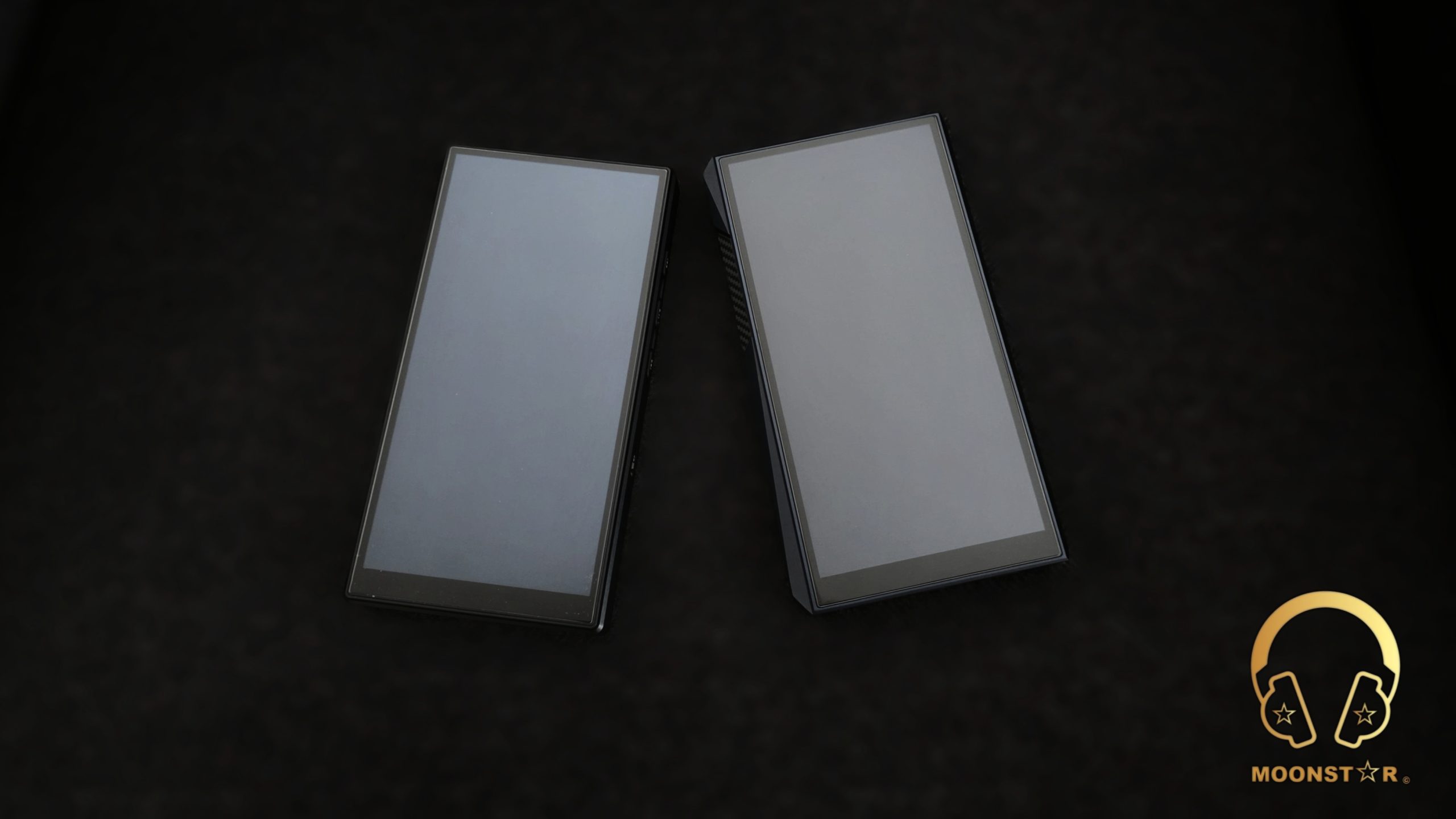
In the bass region, the M33 R2R is fuller and warmer, with more density around bass notes. The M23 produces a more linear, less colored bass response that is faster in recovery but thinner in tonal body. For bass-heavy genres where physical impact is the priority, the M23’s tighter character can be preferable. For jazz, classical, and vocal music where bass body and natural warmth contribute meaningfully to the overall listening experience, the M33 R2R is clearly the superior choice. Treble is broadly similar in extension between the two, though the M33 R2R’s smoother, more organic character makes it less fatiguing over long sessions than the M23, which can develop a slight analytic edge on bright recordings. The M33 R2R’s platform advantages, including the Snapdragon 680 processor, 8GB of RAM, and Android 13, translate into a meaningfully more responsive and stable user experience compared to the M23’s older hardware.
Conclusion:
The FiiO M33 R2R delivers on its core promise: genuine R2R decoding in a compact, Android-based portable player at a previously inaccessible price point. The fully differential 24-bit resistor array, M27-derived clocking system, and multi-stage Texas Instruments amplifier produce a sonic character audibly distinct from delta-sigma alternatives, more musical and less fatiguing over extended listening.
The strengths are clear. The midrange is the standout attribute, natural and harmonically rich, particularly rewarding with balanced armature IEMs and dynamic driver headphones like the FH9 and FT5. Bass is full-bodied and controlled, with genuine physical weight. Treble is smooth and extended with no sibilance or artificial edge. The platform is fast, battery life is competitive, and Desktop Mode adds real utility for home listening.
A few limitations are worth noting. Listeners prioritizing analytical precision may find the presentation slightly soft, sub-bass quantity is measured rather than generous, and the display loses some brightness outdoors. NOS mode is where the R2R character fully expresses itself.
At $649.99, the M33 R2R is a well-considered choice for listeners who want the musical qualities of R2R decoding in a practical portable format, a genuine step forward from its delta-sigma predecessors.
Pros & Cons:
- + Genuine R2R architecture delivers organic, natural midrange clearly superior to delta-sigma alternatives at this price
- + Full-bodied, controlled bass with good tonal density and no bloat
- + Smooth, extended, fatigue-free treble with no sibilance
- + M27-derived DAPS clocking system for a low noise floor
- + 1100mW balanced output with independent power supply stages for control over demanding headphones
- + Desktop Mode (battery bypass) extends battery lifespan and unlocks Super High Gain + Snapdragon 680 / 8GB RAM delivers a fast, stable Android 13 experience
- + 128GB UFS storage generous for the price tier
- + Dual USB-C ports separate data and power input
- + 10-band parametric EQ with Auto EQ support for FiiO curves
- + Leather case and screen protector pre-installed
- + Compact at 258g for its capability level
- – Slightly softer in analytic edge definition than delta-sigma alternatives
- – Sub-bass is measured rather than generous
- – No volume wheel; button-based control is functional but less tactile
- – OS mode is less distinctive; R2R character is primarily expressed in NOS mode
Thank you for the Read!