Fosi Audio MD3 Review
Fosi Audio MD3 Review
Introduction:
Most dongle DAC/amps arrive with the same solution to the same problem: a small box that hangs from a cable at the bottom of your phone, occasionally snagging on pockets and pulling against the port under the weight of connected headphones. Fosi Audio looked at this problem from a different angle with the MD3, and the result is a device that physically integrates with your phone rather than dangling beneath it. Sixteen N52 neodymium magnets embedded in an aluminum backplate attach the MD3 flush to the rear of a MagSafe-compatible iPhone, or to any phone equipped with a magnetic ring accessory, turning what would otherwise be a separate device to manage into something closer to a mounted audio upgrade.
The MD3 is built around the same ESS ES9039Q2M DAC chip and four ESS ES9603Q amplifier chips as Fosi’s DS3, organized in a true balanced circuit and housed in a 6063 aluminum alloy chassis. It weighs 50 grams and delivers 180mW from its balanced 4.4mm output. A 1.28-inch circular LCD display with rotatable orientation shows volume level, sample rate, and a selection of animated visual content. Dual USB-C ports allow simultaneous audio playback and phone charging. A 100-step digital volume control with memory, a dedicated Ease Button for navigation, and support for custom image uploads on the display complete a specification list that combines genuine audio engineering with a user experience that no other device in this price class attempts. The MD3 was launched at CanJam Singapore 2026 on 16 May and went on global sale on 25 May 2026.
Disclaimer:
I would like to thank Fosi Audio for providing the MD3 as a review sample. I am not affiliated with Fosi Audio beyond this review, and these words reflect my true and unaltered opinions about the product.
Price & Availability:
The Fosi Audio MD3 is priced at $149.99 USD and retailers in two colorways: Anodized Silver and Anodized Black, both with orange leather back panel.
Package & Accessories:
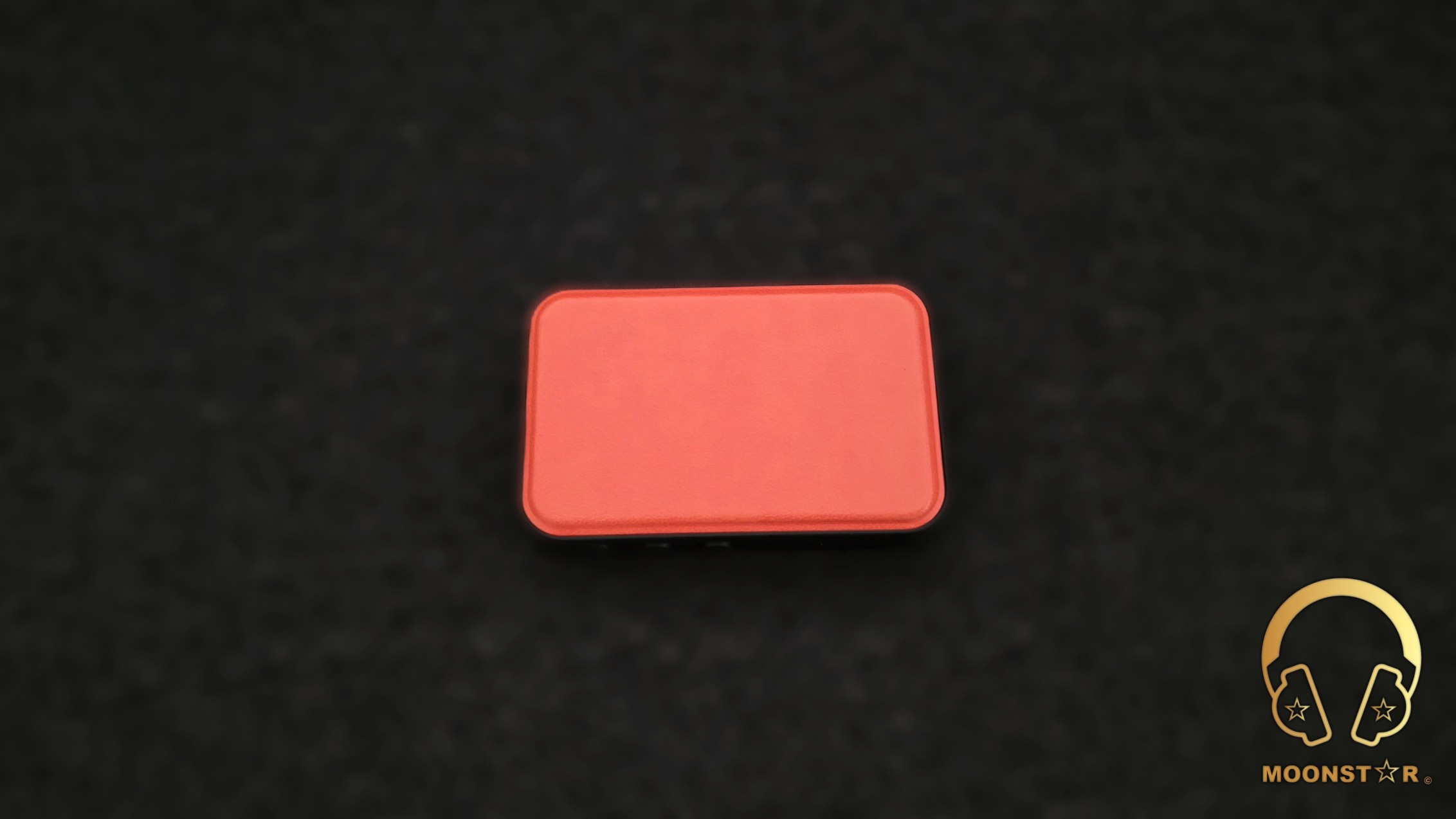
The MD3 ships in compact, clean packaging consistent with Fosi Audio’s current retail presentation. The device arrives with the leather back panel pre-installed, which is both a practical protection measure and a meaningful first-impression detail: the contrast between the anodized aluminum chassis and the orange leather immediately communicates that this is not a standard dongle DAC. The accessory set is minimal but covers the necessary bases.
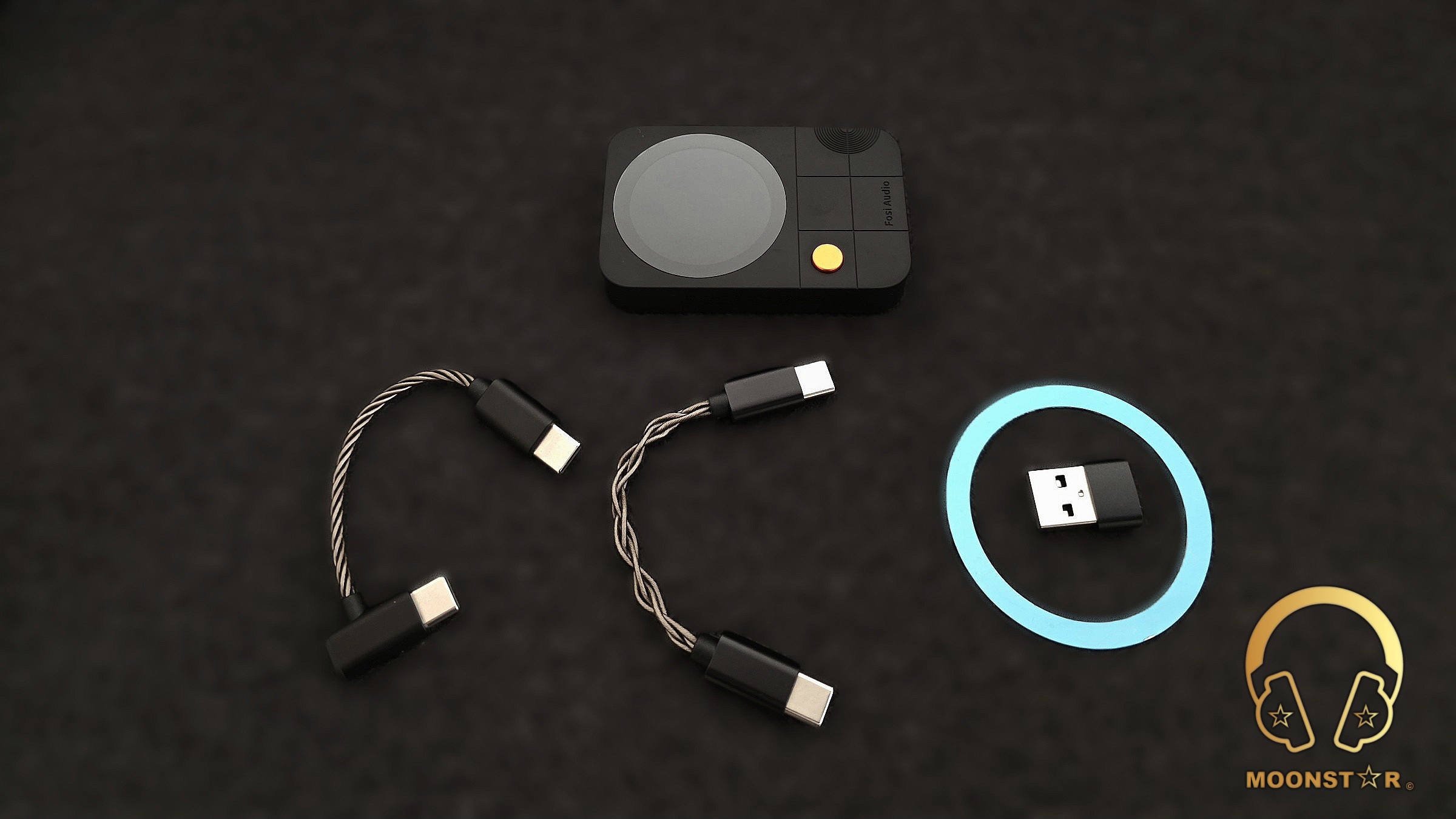
The full package includes:
- 1 x Fosi Audio MD3 MagDAC Portable DAC/AMP
- 1 x Orange Leather Back Panel (pre-installed)
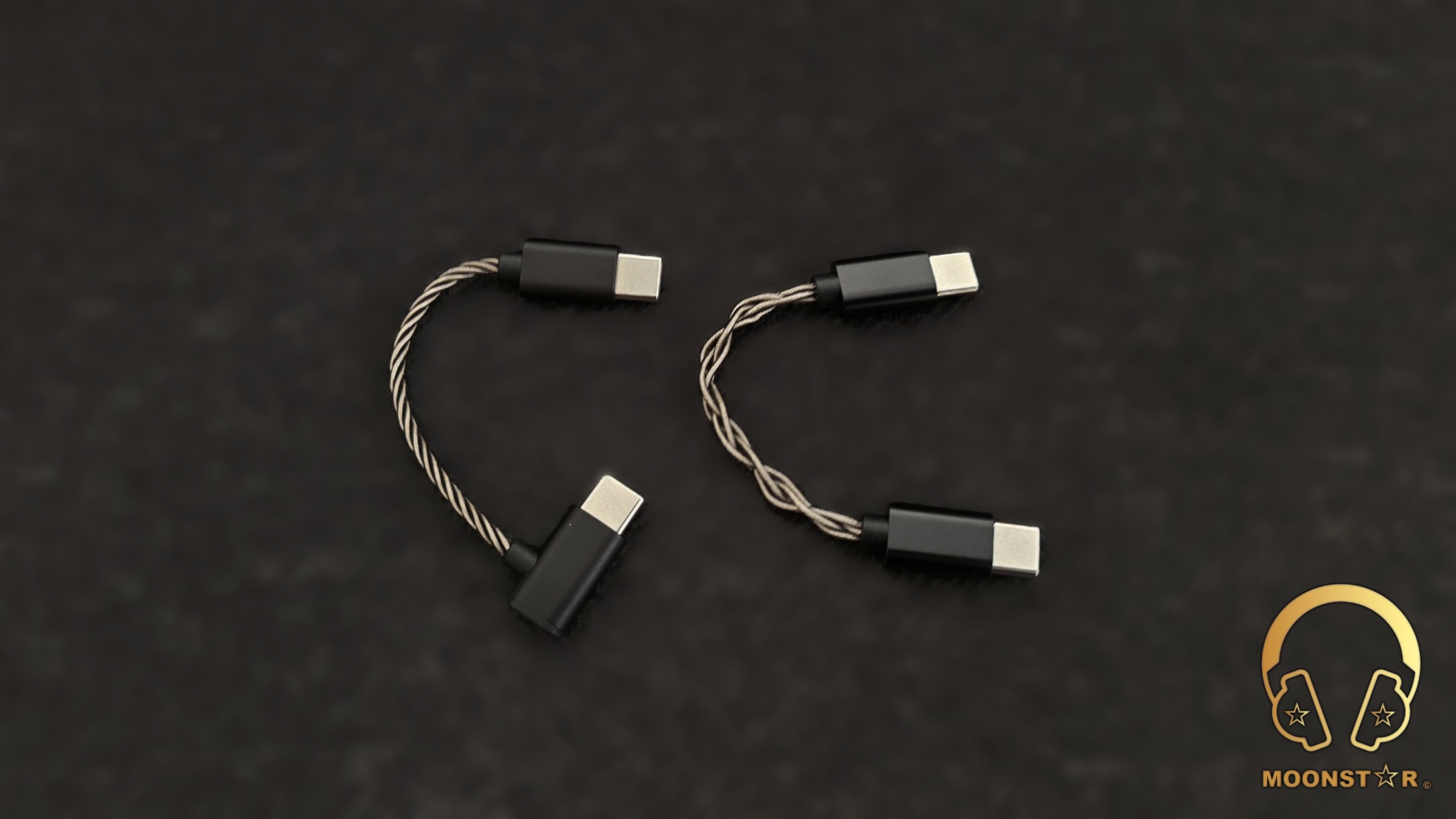
- 1 x USB Type-C to USB Type-C Cable (short OTG)
- 1 x USB Type-C to USB Type-A Adapter
- 1 x Quick Start Guide
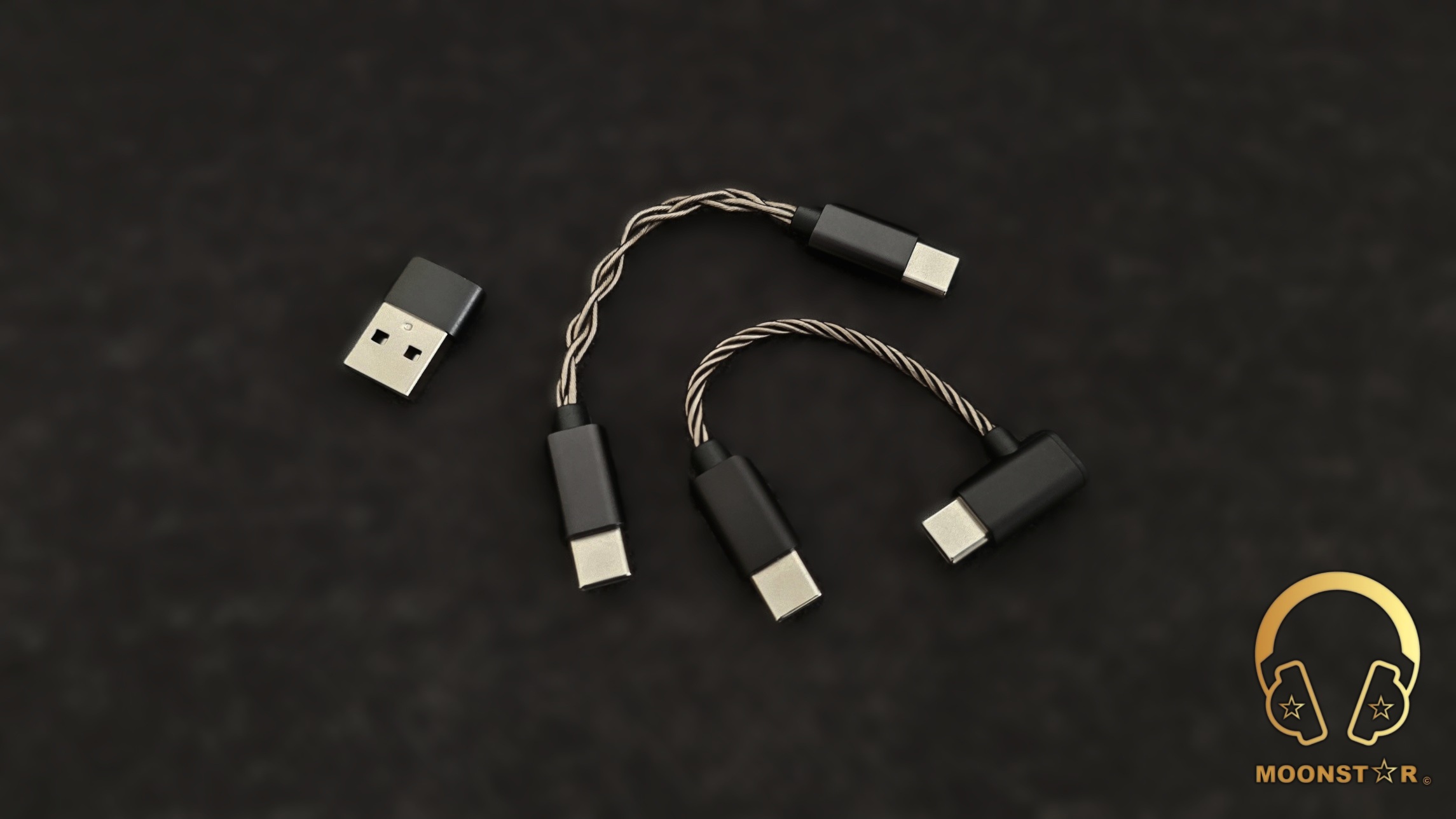
The short OTG cable is purpose-designed for the MD3’s magnetic use case: long enough to route from the phone’s USB-C port to the MD3’s bottom input port while the device sits on the phone’s rear, without creating excess cable slack. It is a practical detail that reflects how the product is intended to be used rather than a generic inclusion. The USB-A adapter covers desktop and laptop use. There is no carrying pouch or protective case included, which is consistent with a device designed to travel attached to a phone rather than stored separately. The leather back panel is available as a replaceable accessory for users who want different colors or who need to replace a worn panel after extended use.
Design & Build Quality:
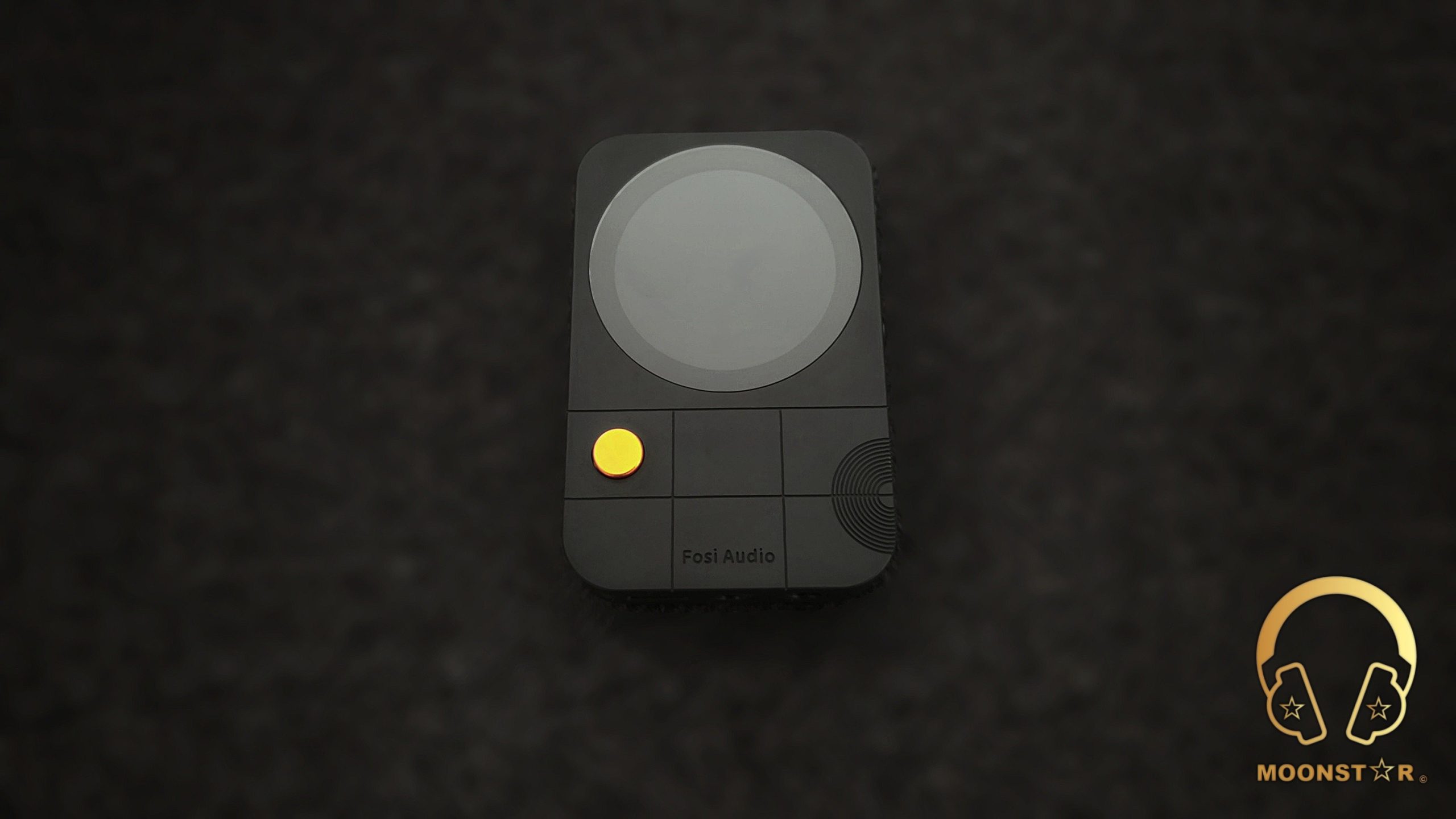
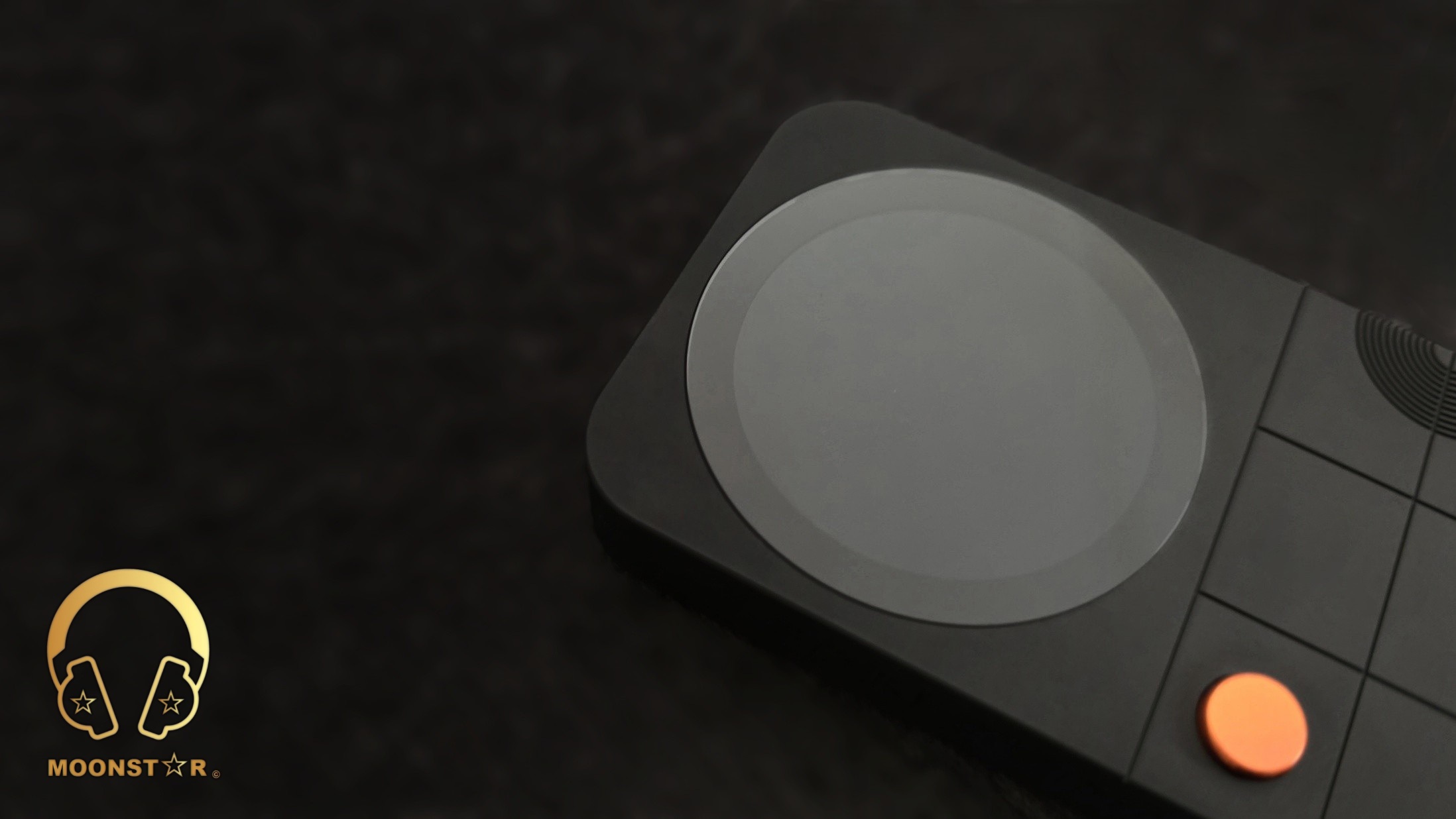
The MD3 is the most visually considered portable DAC/amp in Fosi Audio’s current lineup and one of the more distinctive products in the broader dongle category. The combination of precision-machined aluminum, a hand-stitched leather back panel, and a circular LCD display with animated content gives it a character that sits outside the conventional industrial language of the category. This is not a device that will appeal to every listener; those who prefer their audio equipment unobtrusive will find it too visually present. For those who respond positively to the combination of craft materials, mechanical precision, and a degree of personality, it is genuinely well-executed. The device measures 70 x 45 x 12mm and weighs around 50 grams, which is a bit on the heavy side for a dongle.
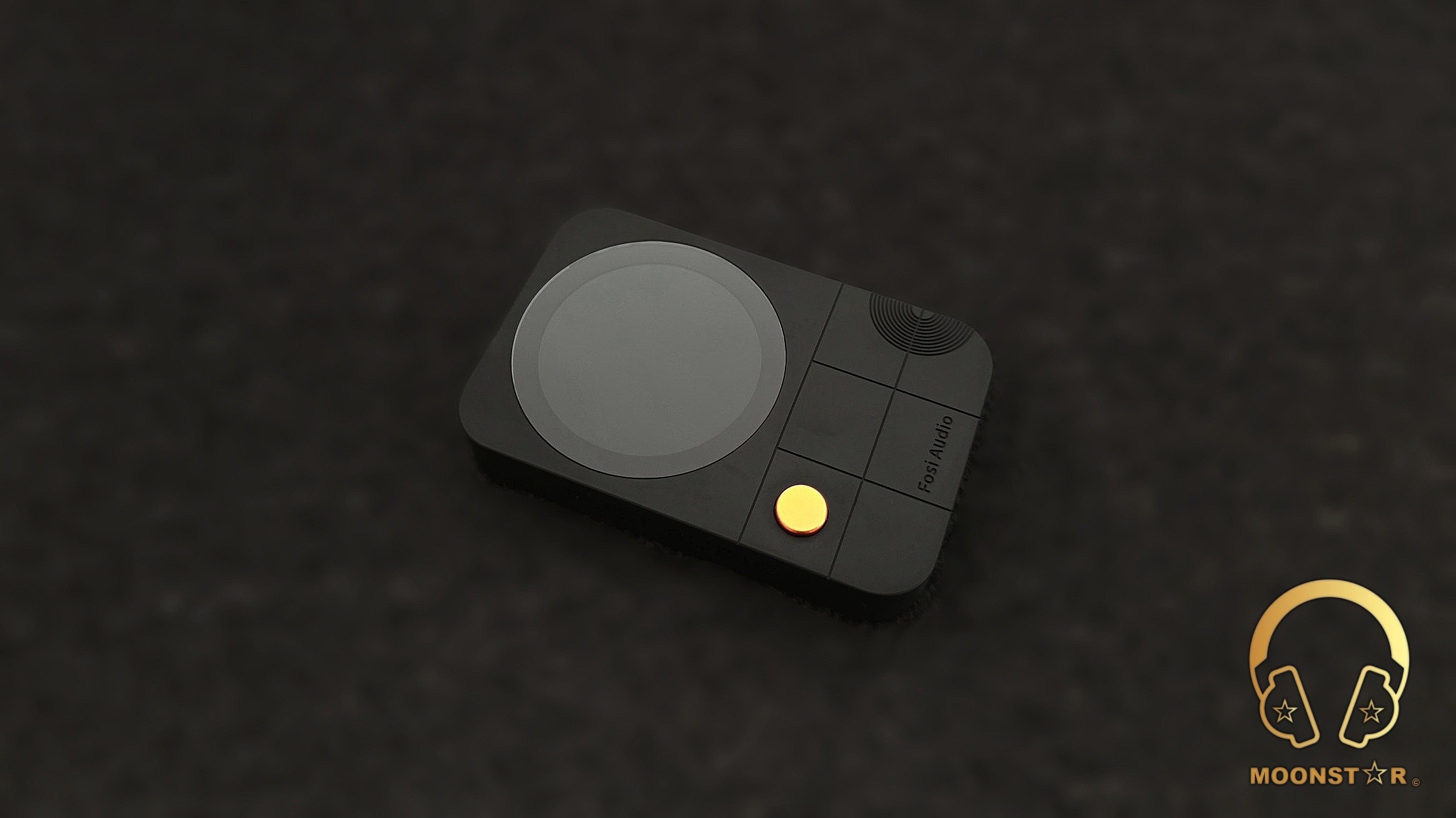
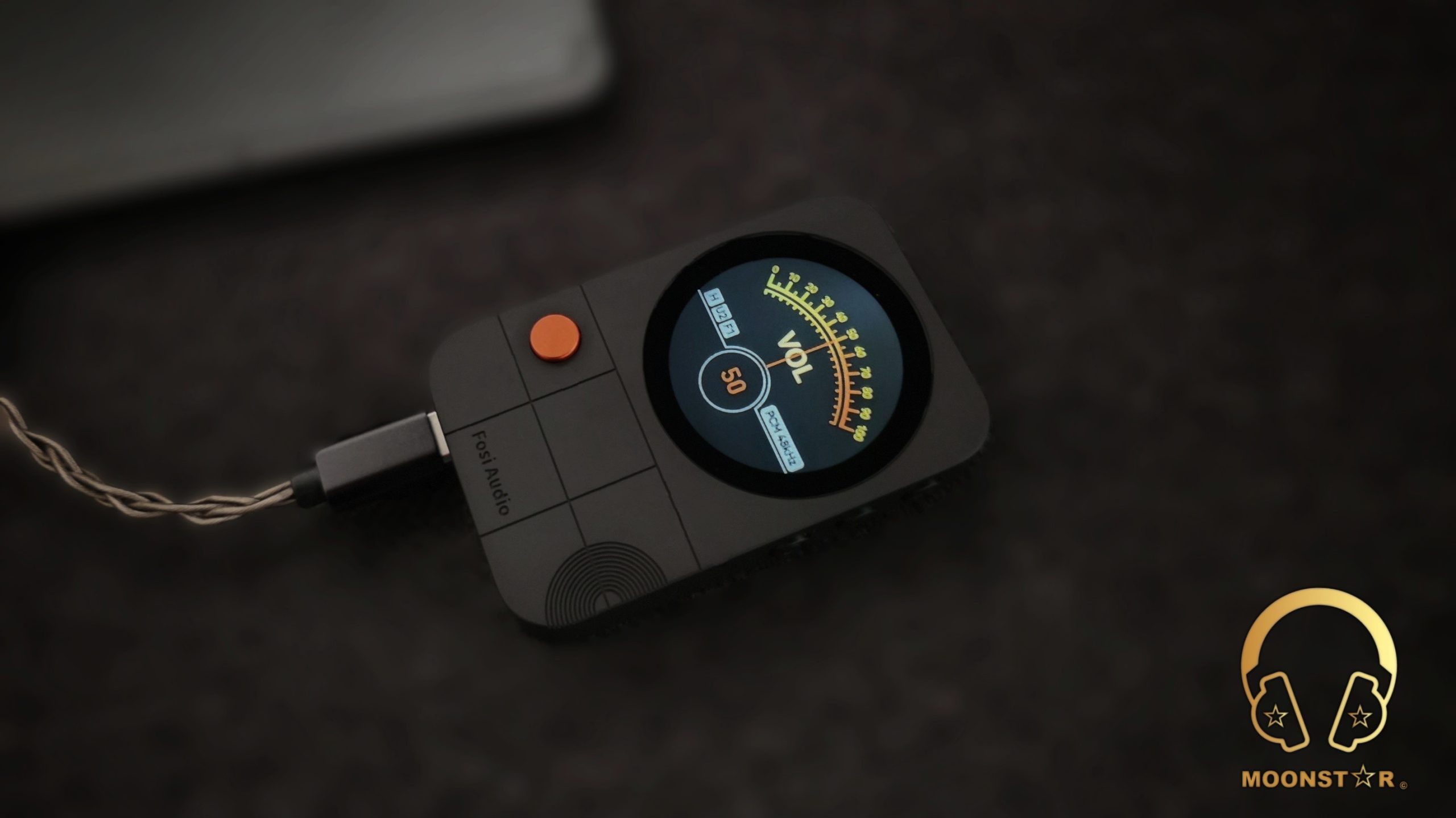
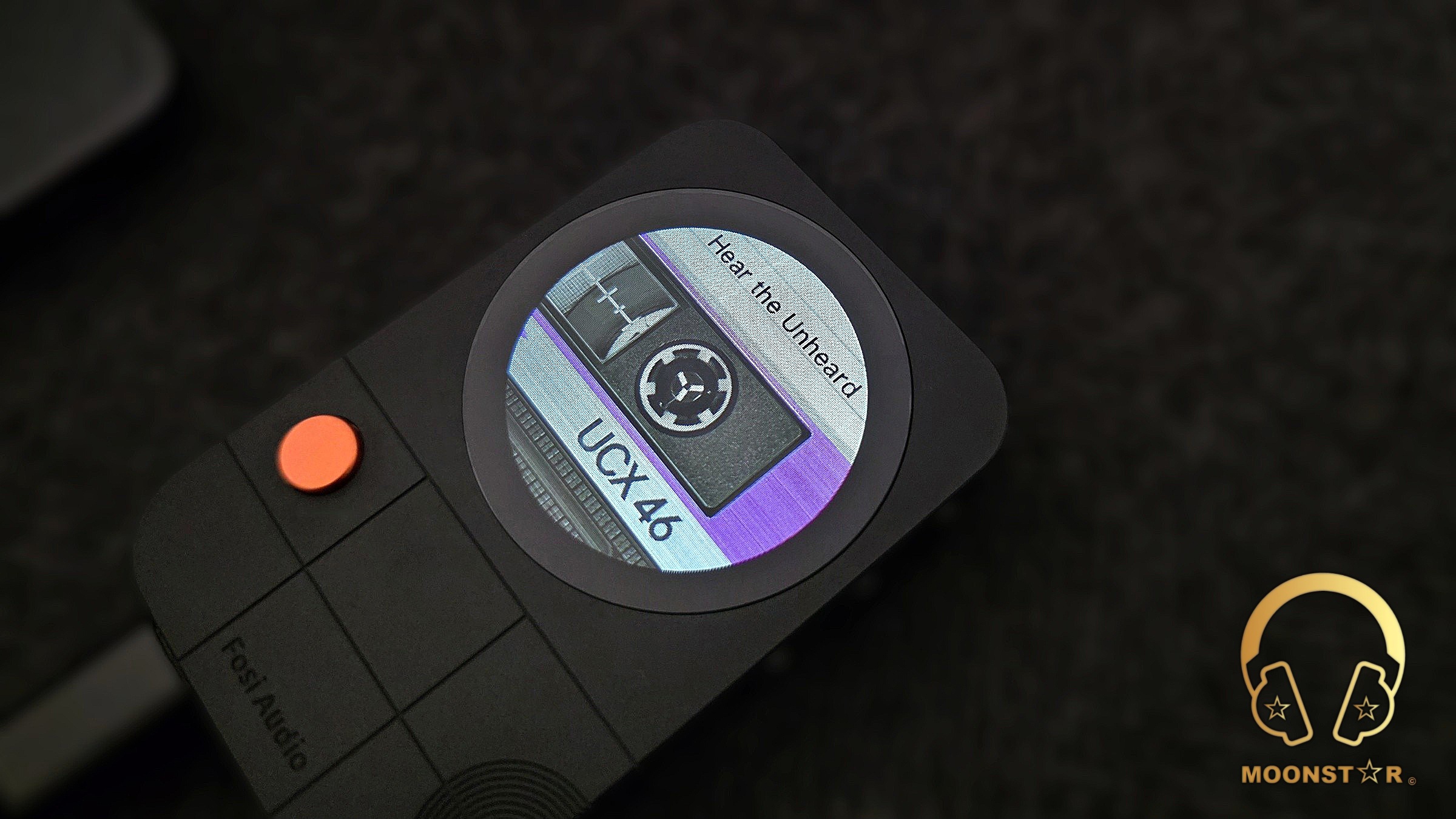
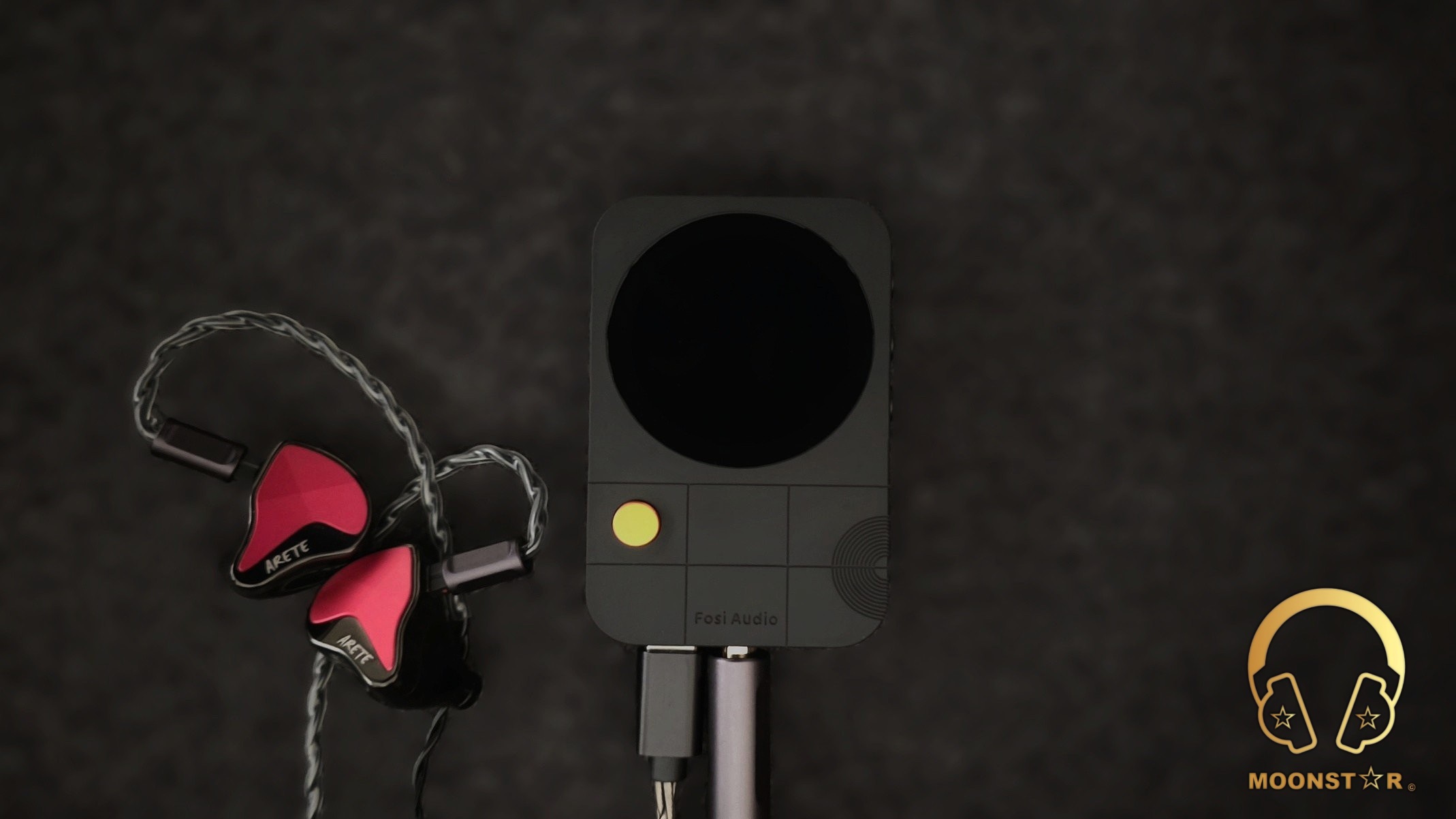
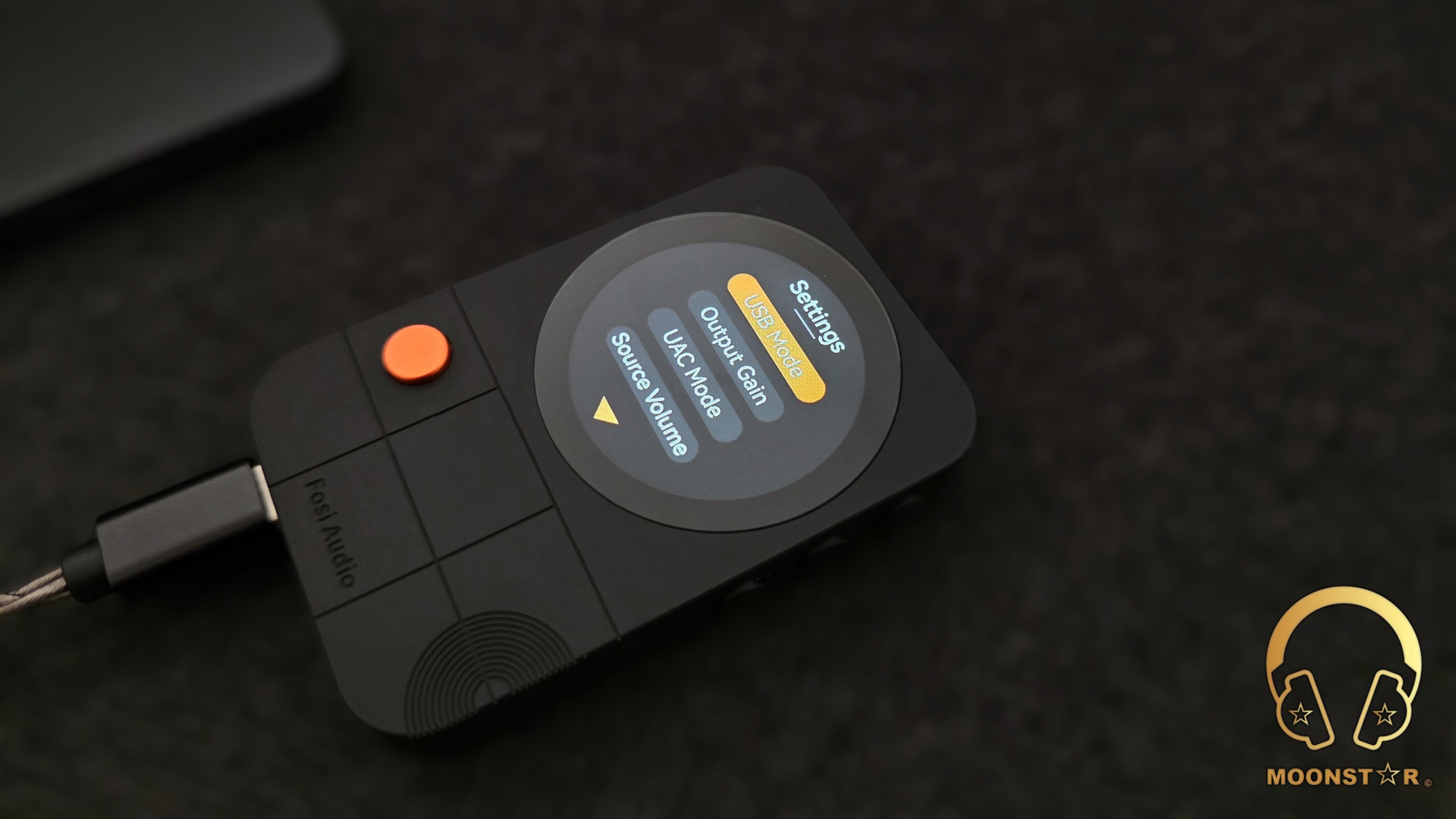
The circular 1.28-inch LCD display occupies the center of the MD3’s front face and is its most immediately attention-holding feature. The display is fully laminated, bright, and readable in typical lighting conditions. Volume level is shown as a numerical readout and a circular progress indicator, and the current sample rate appears in a smaller text field below it. The display’s orientation rotates automatically when the device is flipped, which is practically useful given that the MD3 may be attached to a phone in either landscape or portrait orientation depending on the listening context.
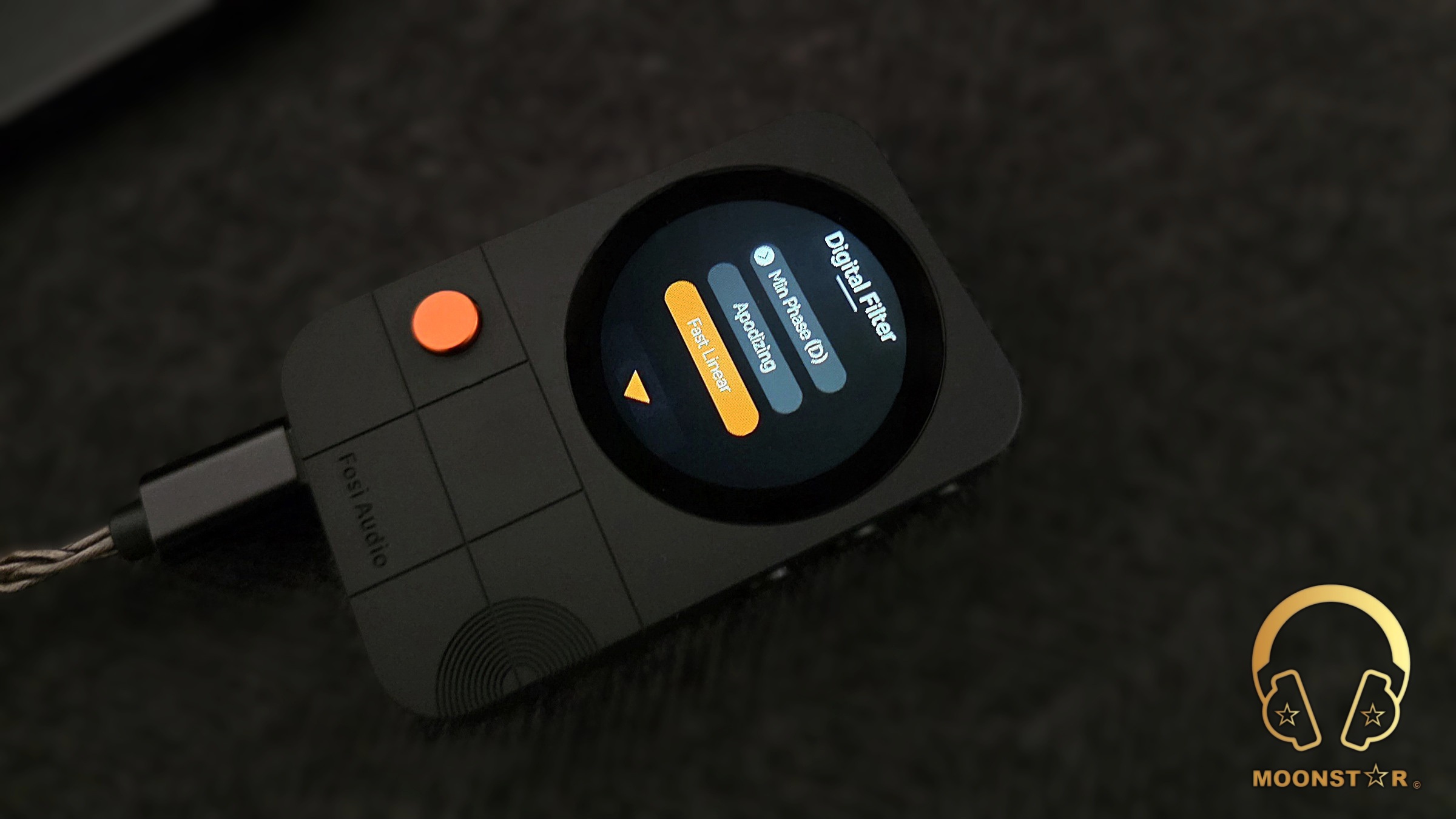
Beyond its functional role, the display runs a selection of animated visuals: a spinning turntable with a vinyl record, a rotating tape reel, a VU meter animation, and a small number of simple games including a dice roller and rock-paper-scissors. These are cosmetic additions that serve no audio purpose but give the device a presence and personality that straightforward volume displays do not. Fosi has also included support for uploading custom images to the display, allowing users to set a personal photo, artwork, or other image as the display background. The VU meter animation is a static loop rather than a dynamic real-time response to audio signal, which is a limitation worth noting for those expecting live metering. The overall display presentation is bright and consistent, and the circular form factor integrates visually with the round chassis profile in a way that feels deliberate rather than incidental.
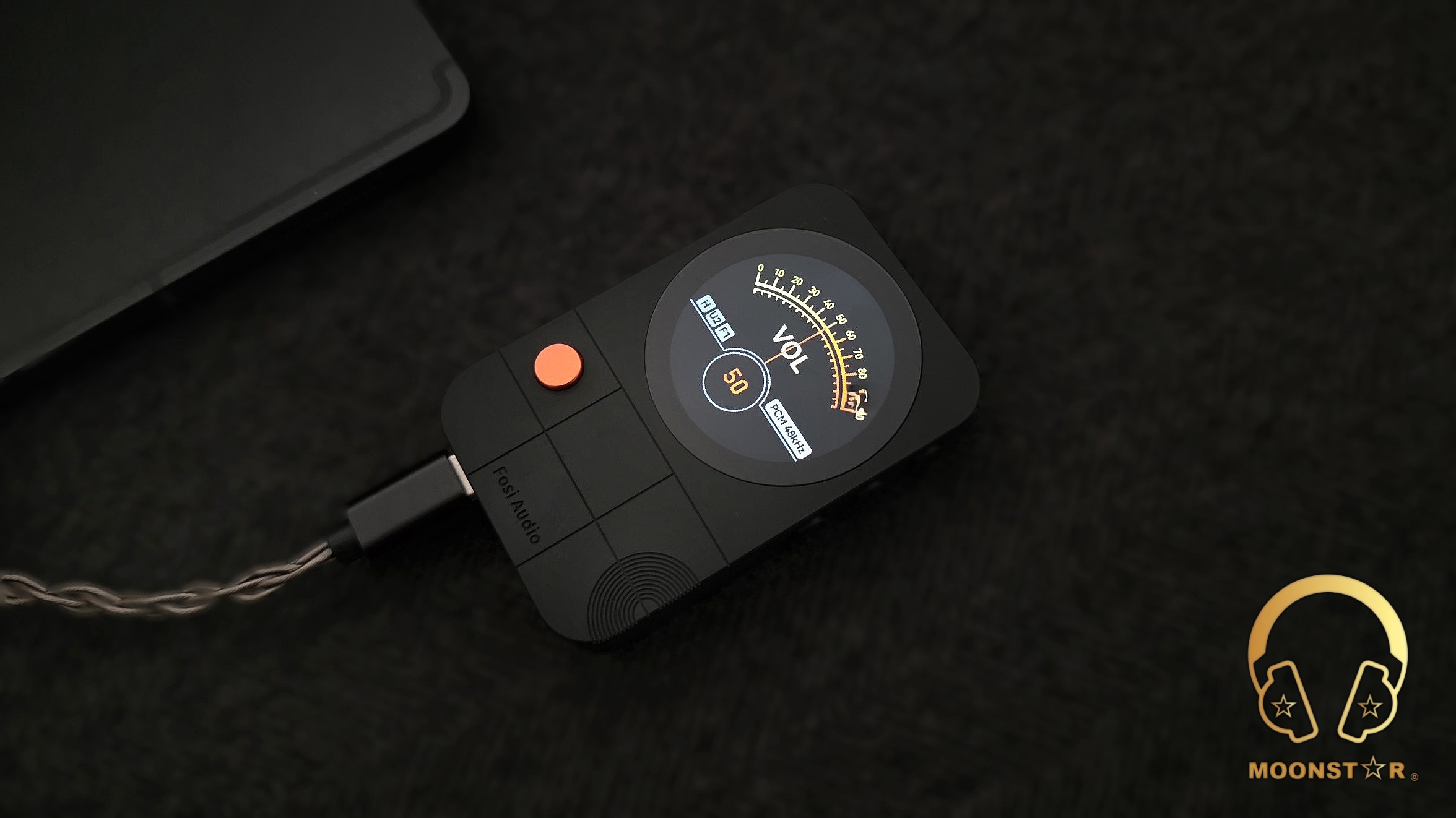
The top edge of the MD3 carries the power input USB-C port for pass-through charging. Connecting an external charger or power bank here allows the MD3 to simultaneously supply power to the connected iPhone through the bottom port, eliminating the listen-or-charge trade-off that affects every standard dongle setup. This dual-port arrangement is one of the MD3’s most practically significant attributes for daily use, and it removes a meaningful practical objection to using a wired DAC/amp as a daily driver on a phone that no longer has a headphone jack.
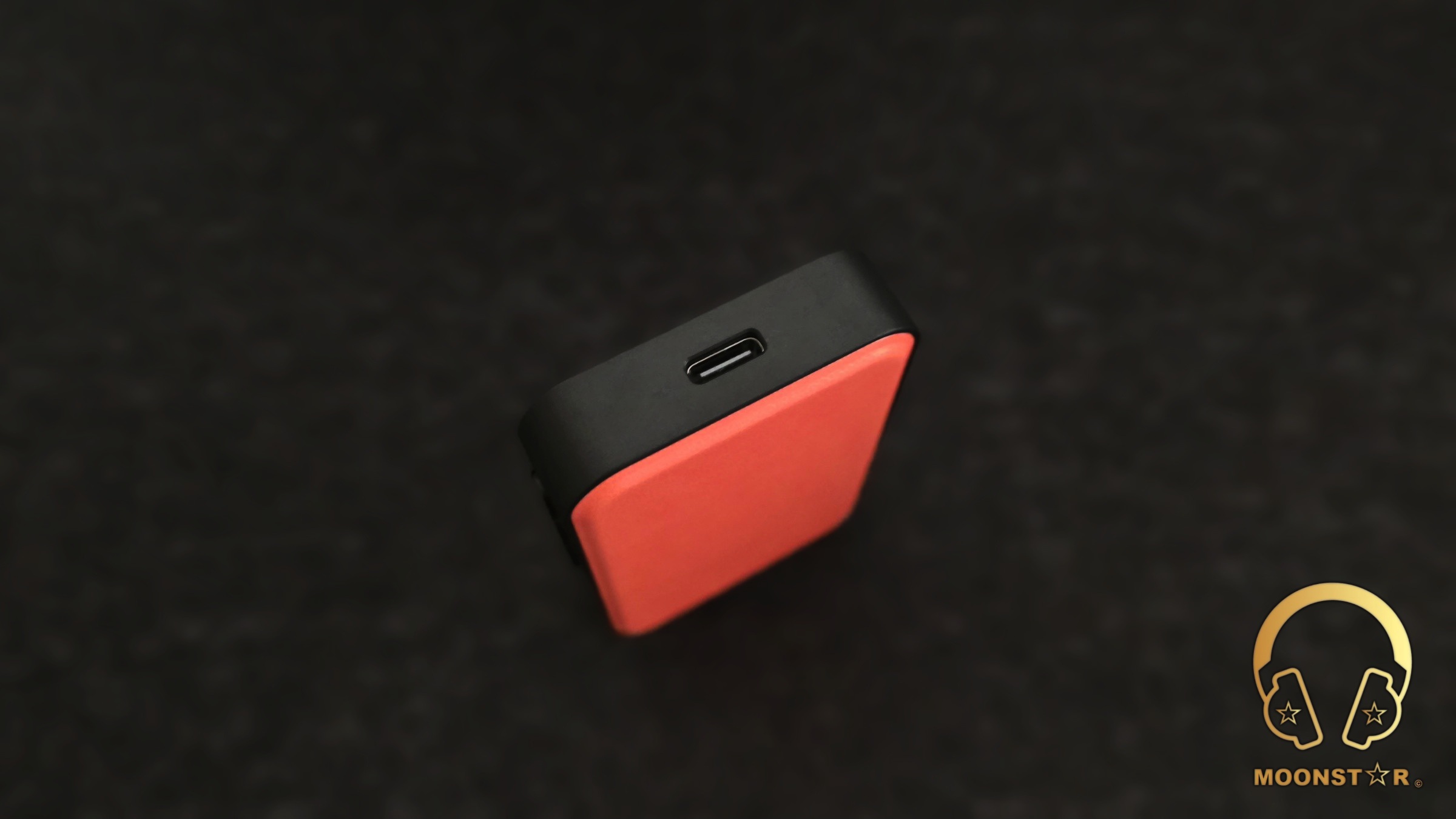
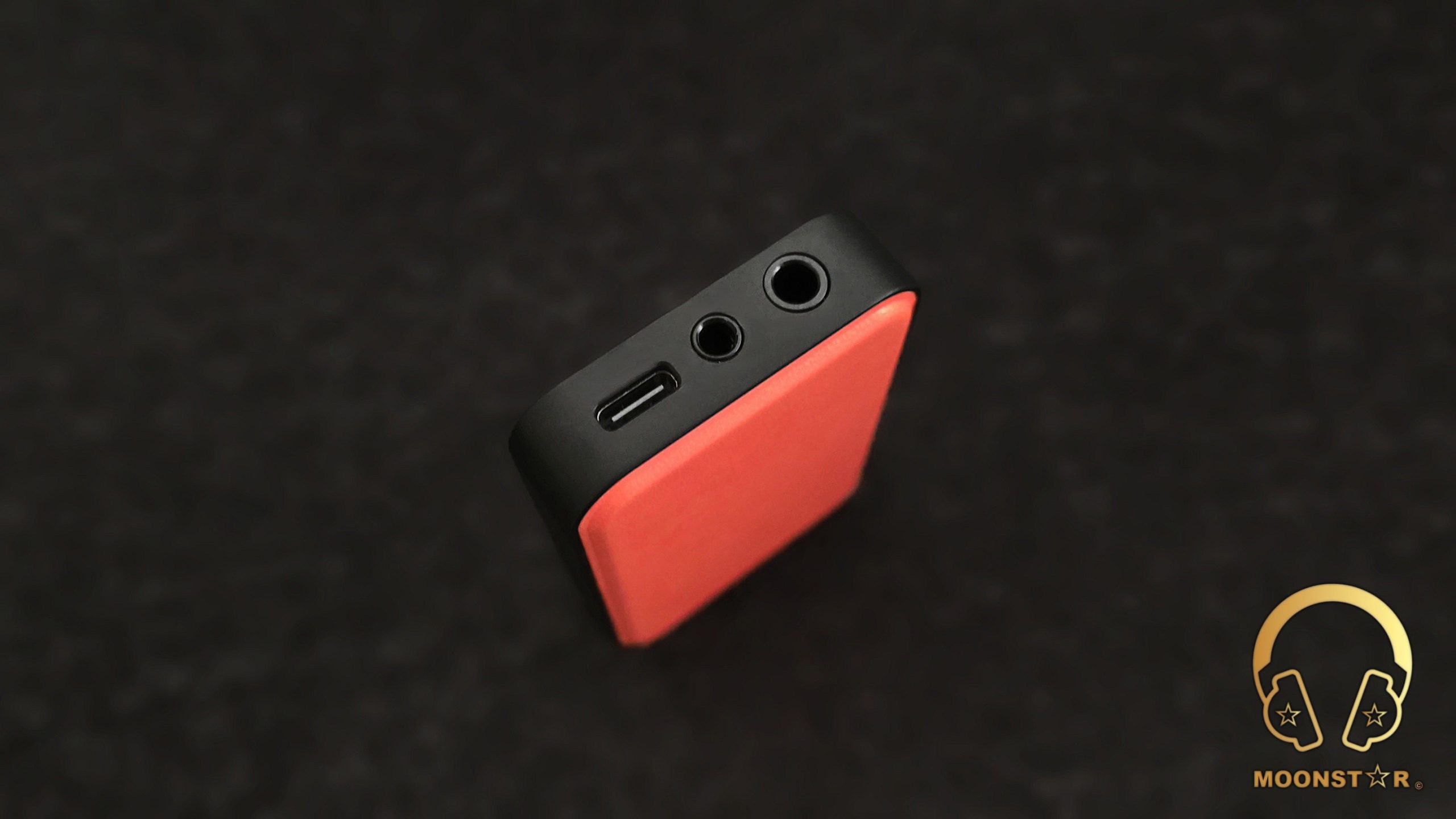
The bottom edge carries the audio input USB-C port, through which the digital audio signal routes from the phone to the ES9039Q2M DAC, alongside the two headphone outputs: the 3.5mm single-ended jack and the 4.4mm balanced jack. Both output ports are cleanly integrated into the edge with tight tolerances and standard compatibility with straight and right-angle plugs.
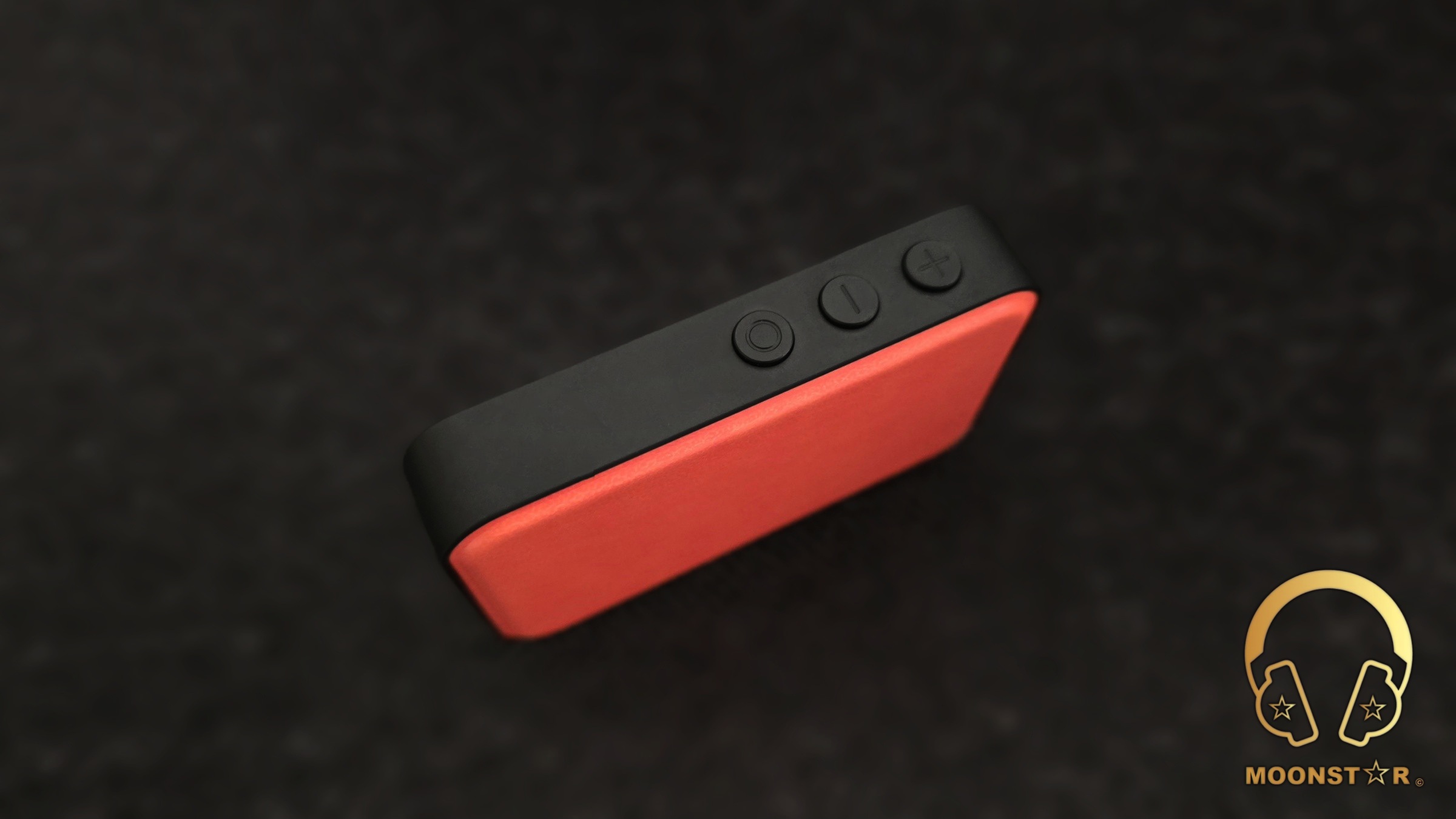
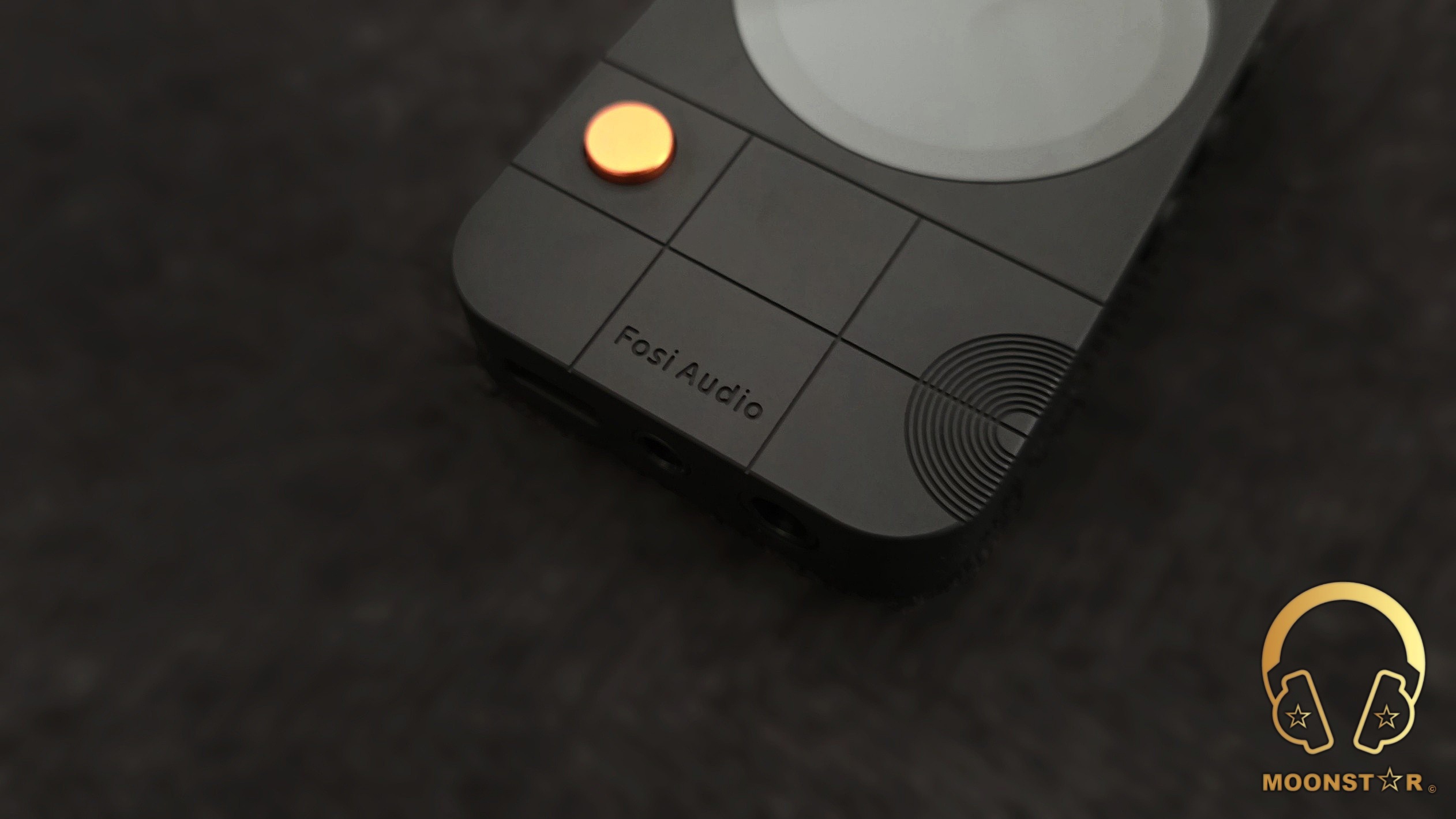
Physical controls on the MD3 are minimal but well-positioned. The Ease Button, a small tactile button located on one of the side edges, navigates through the display’s settings and visual modes with a satisfying click response. The 100-step digital volume control is managed through the Ease Button in combination with the display interface, and volume memory retains the last set level between connections so that reconnecting to a new device does not require readjustment from zero. The button’s click travel is short and defined, and its positioning on the side edge allows operation without obstructing the display or the output port area. The limited physical control set reflects the MD3’s identity as a device designed for uncomplicated daily use rather than deep real-time adjustment.
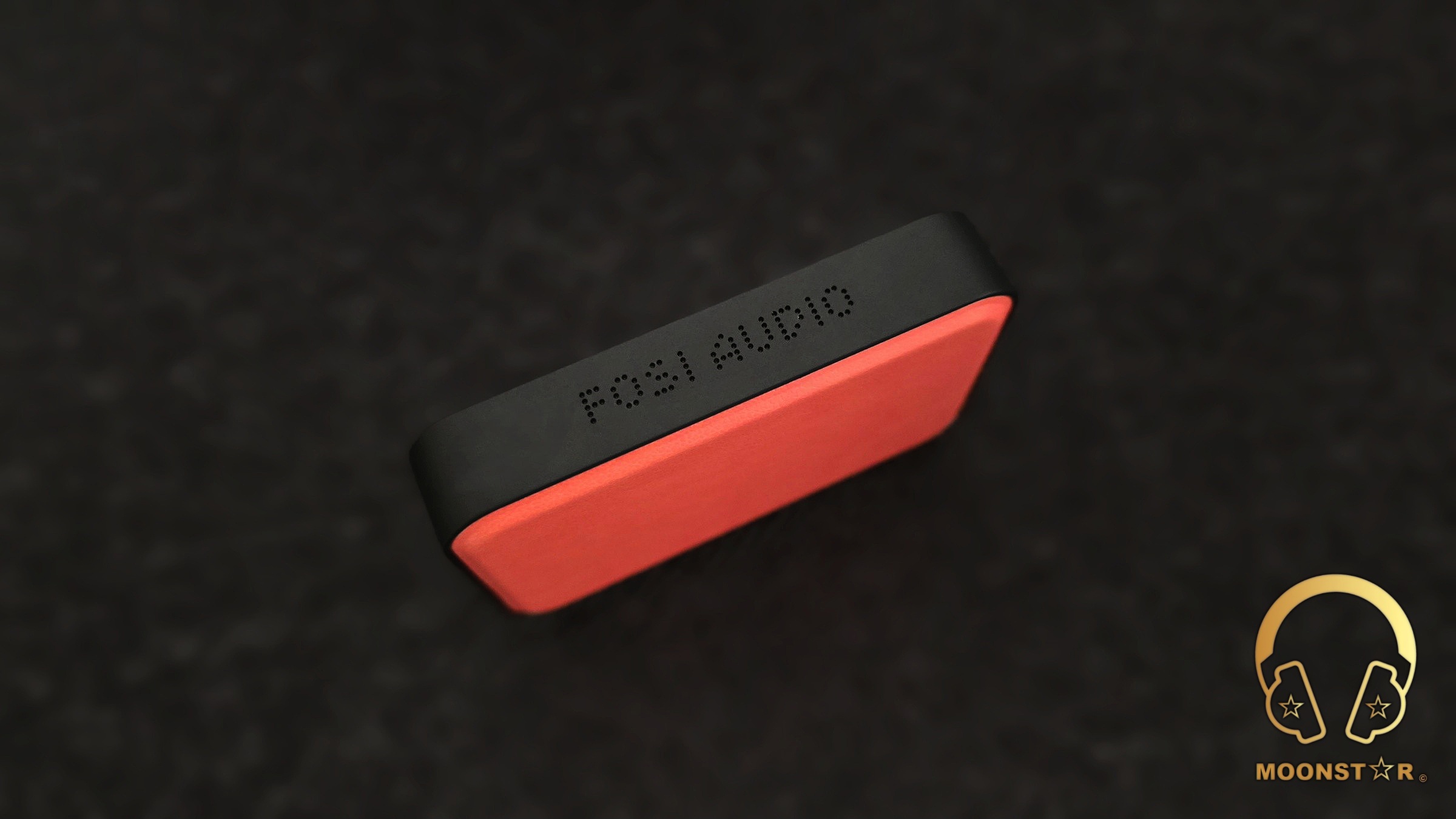
The opposite surface features a perforated Audi branding, showcasing the attention to detail.
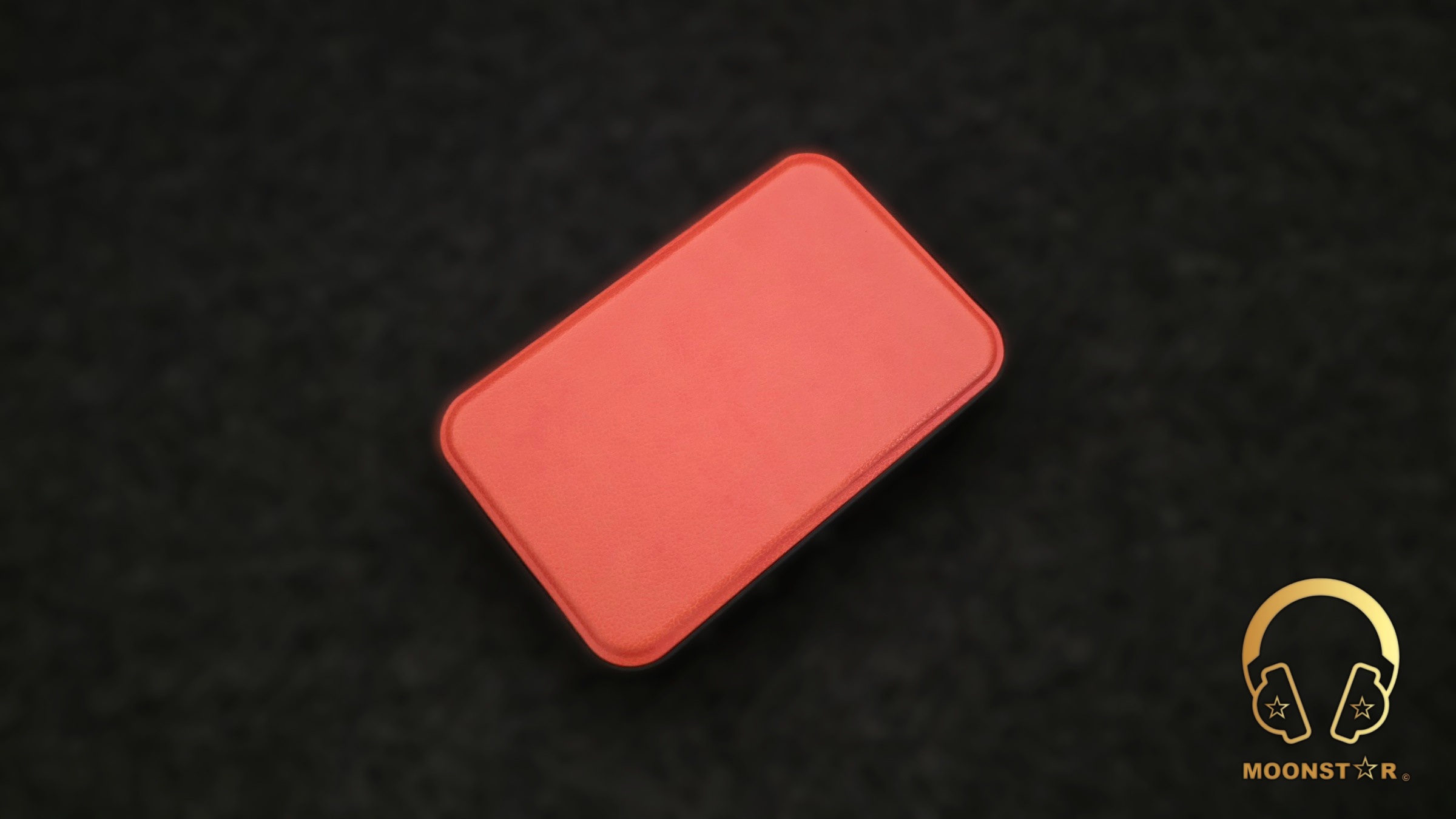
The rear of the MD3 is covered by the hand-stitched orange leather panel, a material choice that provides a warm, tactile contrast to the aluminum front and sides. The stitching is consistent and precise, and the leather’s thickness adds a small but noticeable degree of thermal and acoustic isolation between the device body and the phone rear panel when magnetically attached. The leather panel attaches to the MD3 chassis mechanically and can be removed and replaced without tools, which means it is serviceable if it shows wear over time.
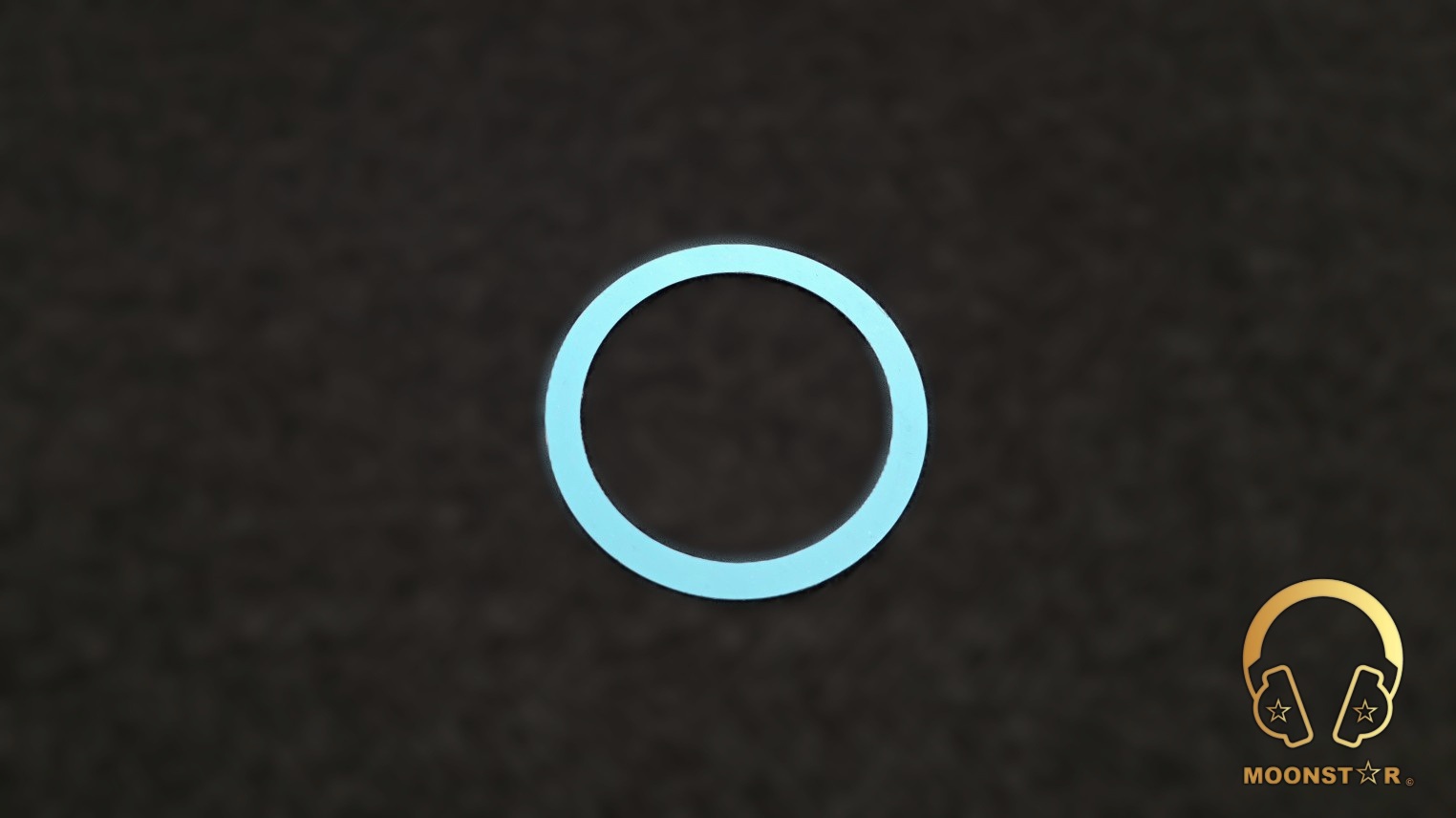
Beneath the leather panel, the sixteen N52 neodymium magnets are arranged in a configuration that is MagSafe-compatible with modern iPhones from iPhone 12 onward. The attachment strength is firm enough to hold the MD3 securely during typical commuting and active use, with no tendency to slide or detach under normal movement. A precision-cut aluminum alloy shielding plate is positioned between the magnet array and the internal PCB to prevent magnetic field interference with the audio circuitry. Fosi’s published measurements indicate no measurable degradation in SNR or THD+N attributable to the magnetic system, which is the expected outcome of an adequately sized and correctly positioned shielding plate. For Android users without native MagSafe compatibility, a magnetic ring adhesive applied to the phone back achieves an equivalent result, though the alignment precision is lower than with a MagSafe-equipped iPhone.
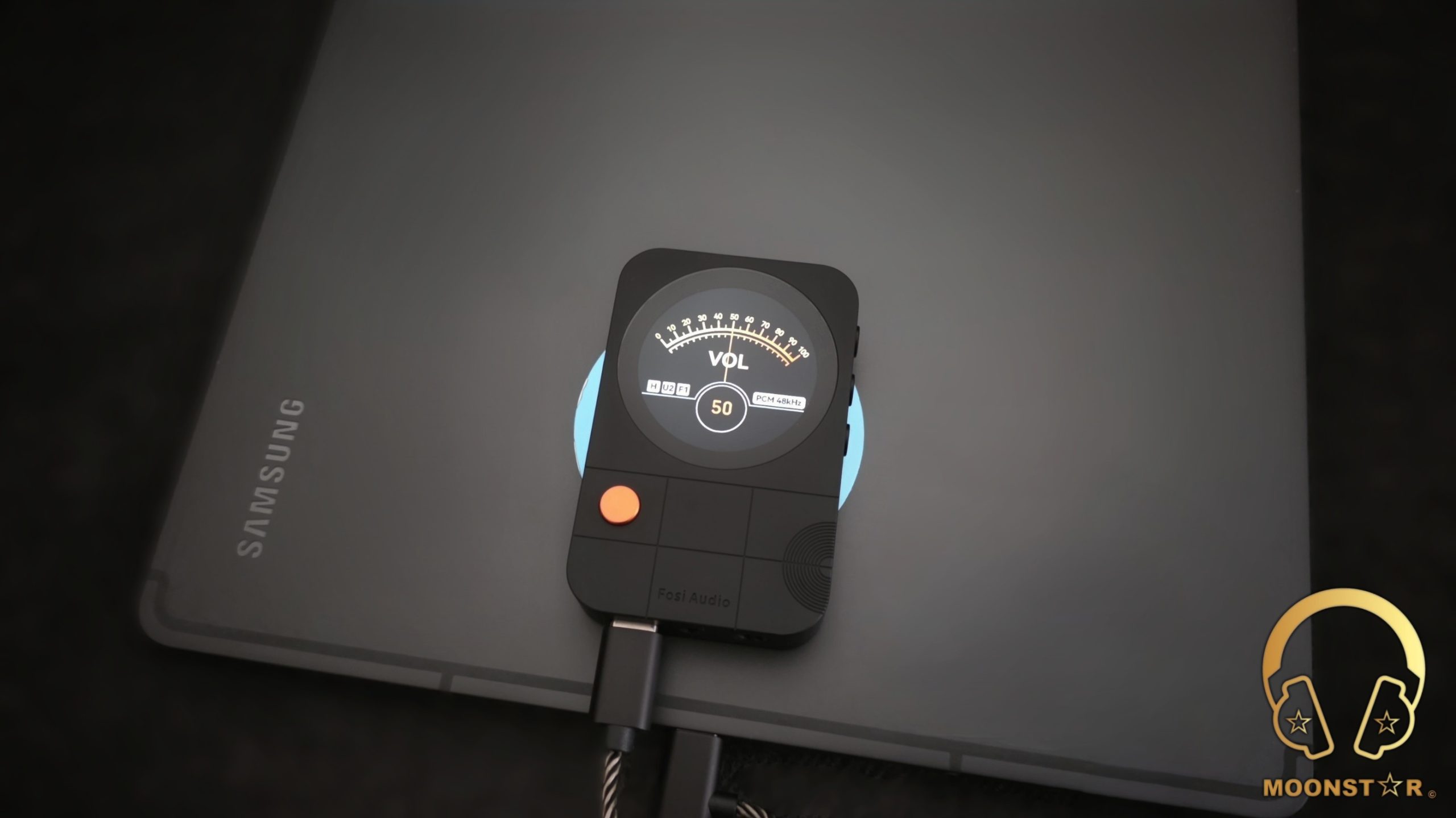
The 6063 aluminum alloy chassis is processed with a 220-grit zirconium sandblasting treatment that produces a fine, uniform matte texture with good fingerprint resistance. The corner radius treatment follows what Fosi describes as an Apple-inspired approach, with smooth, consistent curves at every edge transition that give the device a coherent and refined silhouette. The precision logo engraving on the front face is achieved through five-axis CNC machining and is cleanly executed without burrs or misalignment. The two colorways, Anodized Silver and Anodized Black, are both offered with the same orange leather back panel, a combination that is deliberately distinctive and that will read as either tastefully bold or slightly over-styled depending on the viewer’s sensibilities. Build rigidity is excellent: there is no flex in the chassis, no play between the display glass and the aluminum frame, and no audible resonance from the body under handling.
Technical Specifications:
- Model: MD3 MagDAC
- DAC Chip: ESS ES9039Q2M
- Amplifier Chips: 4 x ESS ES9603Q (True Balanced Circuit)
- USB Interface: SA9312L USB Controller
- PCM Decoding: Up to 32-bit/384kHz
- DSD Support: Native DSD256
- 5mm Single-Ended Output Power: 80mW at 32 Ohms
- 4mm Balanced Output Power: 180mW at 32 Ohms
- SNR: 116dB
- THD+N: 0.00075%
- Output Impedance: below 1 Ohm
- Volume Control: 100-step digital, with memory
- Magnetic Attachment: 16 x N52 Neodymium Magnets, MagSafe compatible (iPhone 12 and later)
- Magnetic Shielding: Aluminum alloy isolation plate between magnets and PCB
- Display: 1.28-inch circular LCD, fully laminated, rotatable orientation
- Display Content: Volume, sample rate, animated visuals (turntable, tape reel, VU meter), games (dice, rock-paper-scissors), custom image upload
- Physical Controls: Ease Button (navigation and settings), volume via display interface
- Dual USB-C Ports: Bottom port for audio input; top port for pass-through charging
- Pass-Through Charging: Yes (charge phone while listening)
- Platform Compatibility: iOS (iPhone 12 and later native MagSafe), Android (with magnetic ring), Windows, macOS
- iOS Audio Ceiling Note: iOS routes USB audio through a system mixer fixed at 44.1kHz or 48kHz regardless of hardware capability; hi-res PCM above 48kHz and DSD are inaccessible on iOS
- Chassis: CNC-Machined 6063 Aluminum Alloy, 220-grit Zirconium Sandblasted Anodized Finish
- Back Panel: Hand-Stitched Orange Leather (replaceable)
- Dimensions: 70mm x 45mm x 12mm
- Weight: 50g
- Colors: Anodized Silver / Anodized Black (both with orange leather)
Features & Connectivity:
The MD3’s hardware architecture is built around a true balanced signal path from the ES9039Q2M DAC through four ES9603Q amplifier chips, one per channel in a fully symmetrical arrangement. This configuration is identical in its balanced output stage logic to the DS3, but the MD3 differs in two important ways: it uses the SA9312L USB controller rather than an XMOS Powered processor, and its maximum PCM decoding ceiling is 384kHz rather than the DS3’s 768kHz. The SA9312L is a capable and reliable USB audio interface that handles the DAC’s input requirements accurately at the MD3’s supported sample rates. The absence of an XMOS Powered processor means the MD3 does not carry the DS3’s dual-core processing headroom or its UAC 1.0/UAC 2.0 gaming mode structure, but for a device whose primary design context is phone-attached music listening, this is an appropriate scope limitation rather than a meaningful omission.
The dual USB-C port arrangement deserves specific attention because it addresses one of the most consistent practical complaints about dongle DACs on smartphones: the inability to charge the phone and use the audio output simultaneously. On a phone without a headphone jack, connecting any wired audio device occupies the single USB-C port and prevents charging. The MD3 solves this by providing a dedicated top-port power input that, when connected to a charger or power bank, routes charging current to the phone through the audio input port. The mechanism does not require any special cable or adapter beyond a standard USB-C charger, and it functions without interrupting audio playback. For listeners who use wired audio during commuting or extended daily sessions, this is a genuinely practical capability that changes the terms of the wired-versus-wireless trade-off.
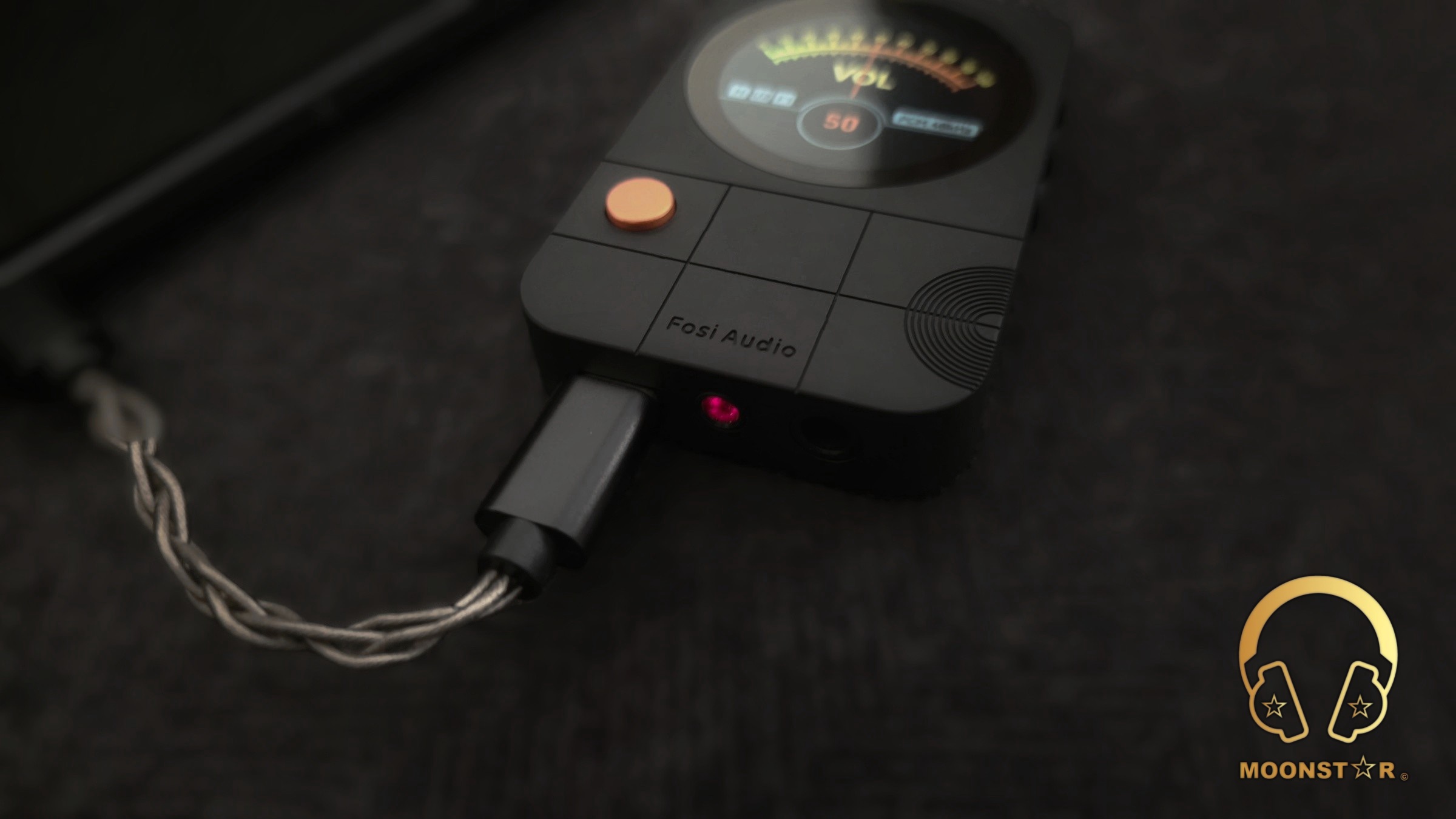
The circular display’s custom image capability is more than a cosmetic feature. Because the device stores uploaded images internally and displays them regardless of which phone or computer it is connected to, the personalization persists across the MD3’s entire use history. The upload process is straightforward through Fosi’s web interface, and images are scaled to the circular display’s resolution automatically. The animated content supplied by default, including the spinning turntable and rotating tape reel, is well-suited to the display’s size and circular shape. The built-in games serve no audio function but contribute to the MD3’s identity as a device intended for daily companionship rather than purely functional utility.
One iOS-specific limitation is worth addressing directly. Apple’s iOS audio architecture routes all USB audio through a fixed-rate system mixer that caps output at 44.1kHz or 48kHz regardless of the connected hardware’s native capability. The MD3 supports PCM up to 384kHz and native DSD256 at the hardware level, but iOS users will receive 44.1kHz or 48kHz audio regardless. This is an Apple platform constraint rather than a hardware limitation of the MD3, and it affects every USB DAC connected to an iPhone equally. For Android users and for desktop computer use via USB-A adapter, the full 384kHz PCM and DSD256 capability is accessible without restriction.
Equipment Used for This Review:
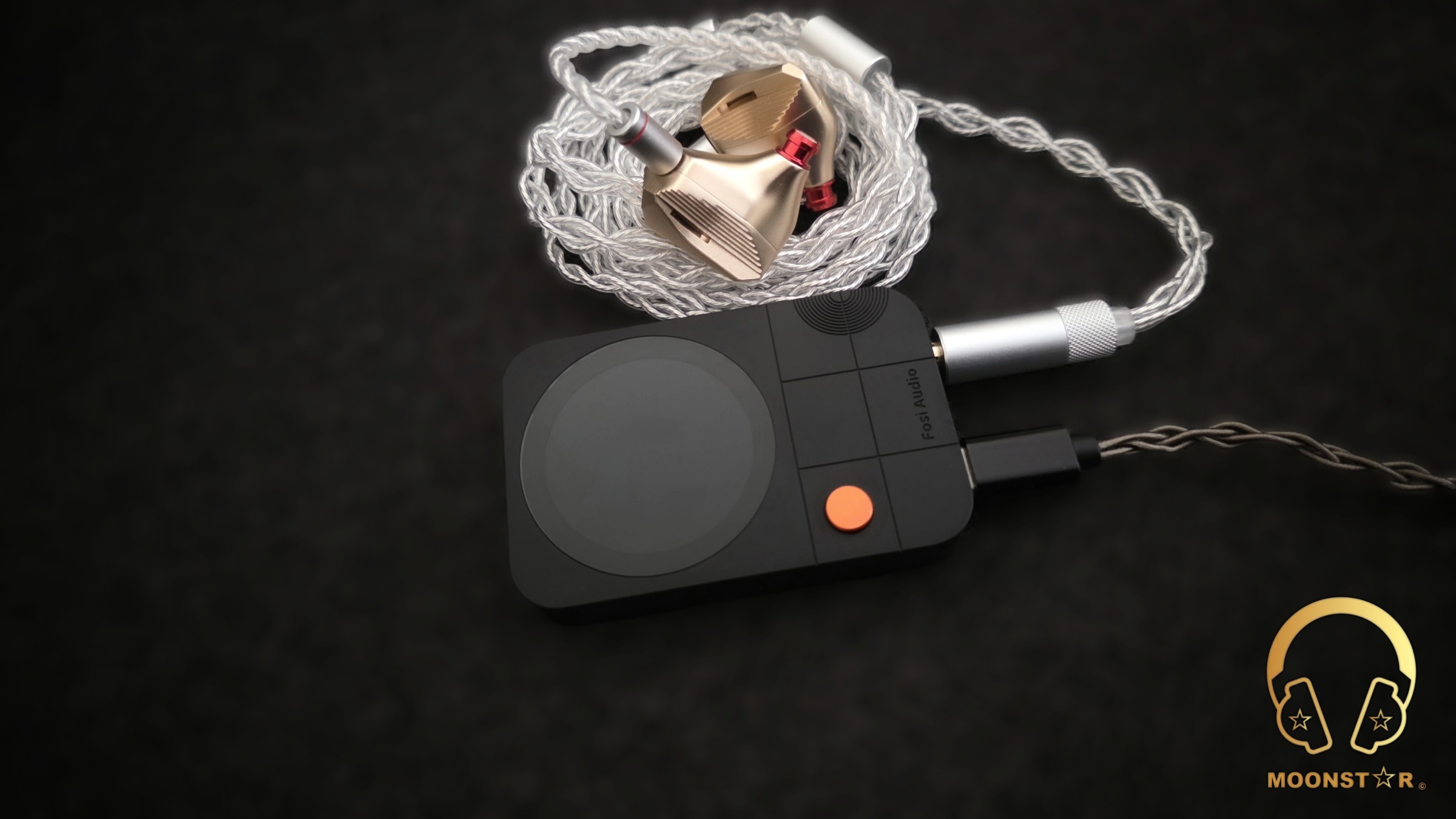
- DAC/AMP Dongles : Fosi Audio MD3, Fosi Audio DS3, Cayin RU3
- IEMs : Hidizs MP145 Pro, ZiiGaat x Fresh Reviews Arete II
Albums & Tracks Used for this Review:
Vocal Jazz / Smooth Jazz
- Norah Jones – Come Away With Me (Flac 24bit/96kHz)
- Diana Krall – So Wonderful (DSF)
- Barry White – Just The Way You Are (Flac 24bit/48kHz)
- Isaac Hayes – Walk On By (Flac 16bit/44.1kHz)
- Sting – Englishman in New York (Flac 24bit/48kHz)
- Otto Liebert & Luna Negra – The River (Flac 24bit/192kHz)
- Ferit Odman – Look, Stop & Listen (Flac 24bit/192kHz)
- Charly Antolini – Duwadjuwandadu (Flac 24bit/192kHz)
Soul / R&B
- Aretha Franklin – I Say A Little Prayer (Flac 24bit/96kHz)
- Adele – My Little Love (Apple Lossless)
- George Michael – Don’t Let the Sun Go Down on Me (Flac 24bit/192kHz)
- Eric Clapton – Wonderful Tonight (Flac 24bit/96kHz)
Pop / Rock Classics
- Michael Jackson – Billie Jean (Flac 24bit/96kHz)
- Elton John – Rocket Man (Flac 24bit/96kHz)
- David Bowie – Heroes (Flac 24bit/192kHz)
- U2 – Sunday Bloody Sunday (Flac 16bit/44.1kHz)
- Lorde – Royals (Flac 24bit/48kHz)
- Dave Gahan – Kingdom (Apple Lossless)
Electronic / Experimental
- Daft Punk – Instant Crush (Flac 24bit/96kHz)
- Daft Punk – Doin’ it Right (Flac 24bit/96kHz)
- Bro Safari, UFO! – Drama (Apple Lossless)
- Armin Van Buuren – Vini Vici (Flac 16bit/44.1kHz)
- Yosi Horikawa – Bubbles (Apple Lossless)
- Toutant – Rebirth (Apple Lossless)
Alternative / Indie / Art Rock
- Radiohead – Live in Berlin “Album” (Apple Lossless)
- Radiohead – Pyramid Song (Apple Lossless)
- Muse – Hysteria (Flac 24bit/96kHz)
- Red Hot Chili Peppers – Nobody Weird Like Me (Flac 24bit/48kHz)
- Lunatic Soul – The Passage (Flac 16bit/44.1kHz)
- Portishead – It Could Be Sweet (Apple Lossless)
- Gogo Penguin – Raven (Flac 24bit/192kHz)
- Gogo Penguin – Murmuration (Flac 24bit/192kHz)
- Massive Attack – Angel (Flac 24bit/48kHz)
- Bear McCreary – Valkyries (Apple Lossless)
Classical / Orchestral
- Max Richter – On the Nature of Daylight (Flac 24bit/96kHz)
- Chopin – Nocturne No. 20 in C-Sharp Minor (Flac 16bit/44.1kHz)
- Clair de Lune – Claude Debussy (Apple Lossless)
- Tchaikovsky – Symphony No. 5 (Flac 16bit/44.1kHz)
- Vivaldi – Le Quattro Stagioni “The Four Seasons” (Apple Lossless)
- Fazıl Say – Nazım Oratoryosu (Live) (Flac 16bit/44.1kHz)
Jazz / Instrumental
- Miles Davis – So What (Apple Lossless)
World / Traditional
- Sertap Erener – Aşk (Flac 16bit/44.1kHz)
- Edith Piaf – Non Je Ne Regrette Rien (Flac 16bit/44.1kHz)
Metal / Progressive Rock
- Metallica – Dyers Eve (Flac 24bit/96kHz)
- Metallica – Sad but True (Flac 24bit/96kHz)
- Megadeth – Sweating Bullets (Apple Lossless)
- Opeth – Windowpane (Flac 16bit/44.1kHz)
- Deftones – My Own Summer (Shove It) (Flac 16bit/44.1kHz)
- Rush – Tom Sawyer (Flac 16bit/44.1kHz)
- Slayer – Angel of Death (Apple Lossless)
The Sound:
The MD3’s sonic character is built upon a fundamental philosophy of accurate, low-coloration conversion. Utilizing the ES9039Q2M, the resulting presentation is clean, transparent, and tonally honest. Fosi’s specific tuning goal for the MD3 was to achieve a character suitable for all-day listening, resulting in a sound that is present yet subtle.
This signature adds a modest degree of tonal density to the lower midrange and bass regions, which does not compromise transparency but rather provides a refined, approachable baseline. The MD3 is not a “warm” device in the traditional sense of R2R-based sources; instead, it remains clean and precise, applying a degree of tonal gentleness at the margins. This reduces the sense of clinical edge that more strictly neutral implementations can occasionally produce, making it an excellent choice for sustained, fatigue-free engagement.
All sound impressions were formed via the 4.4mm balanced output on an Android source device, where the MD3’s full 32-bit/384kHz and native DSD256 decoding capability is accessible without the iOS system mixer ceiling. The 100-step volume control was matched by ear against the DS3 and Cayin RU3 before direct comparisons were conducted. The Hidizs MP145 Pro and the ZiiGaat x Fresh Reviews Arete II were used across all listening sessions.
Bass:
The bass of the MD3 is clean, well-extended, and controlled, with the slight warmth of its overall tuning most audible in the mid-bass region. Here, the ES9039Q2M’s output is given a gentle tonal filling-in that makes bass lines feel physically grounded. Sub-bass reaches down convincingly into the lower registers with good structure and appropriate weight. On electronic music with sustained deep bass content, the MD3 communicates the energy and resonance of the low end with a sense of ease that reflects the DAC chip operating well within its performance envelope. The planar driver of the Hidizs MP145 Pro, which produces an inherently fast and lean mid-bass, receives a modest degree of tonal body from the MD3’s character; this improves the sense of physical grounding in bass lines on acoustic genres without altering the transient speed that the planar driver produces by nature.
Mid-bass has a rounded, natural character that is tonally forgiving rather than analytically precise, yet it never veers into looseness or bloom. Kick drums land with a full, well-shaped impact and a decay that resolves cleanly. Acoustic double bass in jazz contexts has appropriate pitch definition and body resonance, with the string character audible as a distinct textural quality.
The MD3’s mid-bass does not add the kind of aggressive warmth that makes bass-heavy electronic genres feel physically visceral, but it provides enough tonal presence to prevent acoustic and vocal-centric genres from feeling thin. With the Arete II’s bass switch engaged, the combination adds a further layer of sub-bass body that suits late-night and lower-volume listening particularly well. The MD3’s own gentle warmth and the Arete II’s switch work in the same tonal direction, enhancing the experience without overloading the low end.
Midrange:
The midrange of the MD3 is smooth, natural, and slightly warm in the lower-midrange register, and this is where Fosi’s stated tuning goal translates most directly into an audible characteristic. The very slight tonal density in the 200 to 500Hz region gives acoustic instruments and voices a quality of physical presence. This is not a pronounced coloration; it is a modest departure from flat that serves all-day listening by reducing the sense of dryness that the most analytically precise implementations can exhibit on material recorded with lean production values.
Female vocals benefit from this midrange treatment in a way that is immediately perceptible. The warmth and physical fullness of a mezzo-soprano or soprano voice in its lower register is communicated with significant tonal body, and the result sits closer to how vocals sound in a room rather than how they measure on a frequency response chart. The upper midrange remains accurate and free of artificial emphasis: the clarity and presence of upper-register female voices is maintained without the forward push that can make bright IEMs fatiguing over extended sessions. The MD3’s management of the upper midrange is one of its stronger sonic attributes for all-day listening, where the combination of tonal body below and restrained presence above produces a presentation that invites sustained engagement without discomfort.
Male vocals from bass-baritone through tenor are equally well-served. Deep voices have genuine tonal weight and resonance in the lower midrange, communicating the physical character of the voice rather than a dimensionally thin reproduction. The fundamental pitch of a deep male voice carries impressive presence at standard output levels, which makes the combination with the Arete II particularly satisfying on classic soul and vocal jazz recordings where the weight of a bass-baritone voice is part of the intended listening experience. Mid-baritone voices sit at a natural prominence in the mix with good intelligibility and tonal definition, with no tendency for the warm lower-midrange character to pull these voices back or reduce their clarity.
Acoustic instrumental midrange is reproduced with warmth and good tonal accuracy. Guitar body resonance has a satisfying physical density. Piano retains its key weight across the full keyboard range without the upper registers sounding thin or the lower registers becoming congested. Strings in orchestral contexts sit in a slightly warm but tonally honest register that favors musical enjoyment over analytical correctness. The MD3’s midrange is the aspect of its performance most likely to be subjectively preferred by listeners who spend most of their time with vocal-forward genres and acoustic recordings, where warmth is its primary differentiating appeal.
Treble:
Treble on the MD3 is extended, smooth, and tuned with a gentle touch at its upper extremes. The ES9039Q2M’s high-frequency performance is technically capable within this implementation, offering adequate resolution and detail without the metallic edge that less careful delta-sigma designs can introduce. Cymbal transients have natural texture and defined leading edges with a realistic harmonic decay. Hi-hat patterns in jazz and acoustic music sit at a natural position in the mix, contributing rhythmic and textural information without demanding attention above other elements. Upper-register string content in orchestral material is handled with a smooth, accurate character that avoids both excessive warmth and analytical hardness.
The MD3’s overall presentation has a cohesive, unified quality that suits all-day listening well. The treble does not assert itself separately from the rest of the frequency range; instead, it sits as part of a continuous, even presentation rather than a distinct or prominent “top end.” While listeners who prefer a brighter, more forward treble character may find the MD3’s top end restrained, those who find extended treble energy tiring over long sessions will appreciate the balance.
Sibilance is not a concern with the pairings used in this review. The MD3 does not emphasize the presence region in a way that pushes sibilance-prone recordings toward discomfort; even the Arete II’s brighter treble character is handled with control, maintaining a clean, low-coloration output.
Soundstage and Imaging:
The MD3 presents a soundstage that is appropriately wide and organized, with a clean background and a genuine sense of depth that goes beyond the purely lateral presentation that some compact sources produce. Instrument separation is clear and consistent, and positions within the soundfield are stable during complex multi-layered arrangements. Through the MP145 Pro, the planar driver’s inherently wide soundstage is communicated fully, and the imaging precision that the ES9039Q2M’s conversion provides allows the planar’s spatial characteristics to express themselves without source-level limitation. The Arete II’s more moderate stage dimensions are reproduced accurately, with the balanced armature midrange drivers’ imaging capability coming through clearly. The background is quiet with both IEMs at all listening volume positions, with no audible noise floor even at the Arete II’s 120dB sensitivity.
Comparisons:
Fosi Audio MD3 vs. Fosi Audio DS3:
The DS3 and MD3 share the same core DAC and amplifier chips, the ES9039Q2M and four ES9603Q units, in a true balanced circuit topology. This makes the comparison between them a direct evaluation of what differs at the implementation and tuning level when the same hardware is applied to two distinct design briefs. The DS3 is built for maximum technical performance, feature breadth, and dual HiFi/Gaming context. The MD3 is built for phone integration, daily companion appeal, and all-day listening comfort. The hardware differences reflect these briefs accurately.
The DS3’s XMOS Powered processor raises its USB processing capability above the MD3’s SA9312L controller, enabling 768kHz PCM and native DSD512 versus the MD3’s 384kHz and DSD256 ceiling. In practice, the material that most listeners play regularly does not exceed 192kHz and DSD128, which means the gap between the two ceilings is largely irrelevant for day-to-day use. The DS3’s eight digital filters and hardware-level 8-band PEQ offer more tonal customization than the MD3 provides with no EQ capability of its own. The DS3’s 220mW output versus the MD3’s 180mW balanced gives the DS3 marginally more headroom, which is audible only with demanding transducers. The MD3’s pass-through charging, magnetic phone attachment, circular display, and slightly warm tuning are the features the DS3 does not provide.
Sonically, the MD3 is the warmer and more tonally gentle of the two. The DS3’s baseline is more analytically precise and slightly leaner in the lower midrange. For vocal-forward and acoustic listening, the MD3’s character is the more immediately enjoyable. For critical evaluation and varied genres where tonal neutrality serves better than character, the DS3’s precision is the more appropriate tool. Neither is objectively superior; they are genuinely different listening experiences from essentially the same hardware, shaped by tuning choices and feature priorities that reflect the intended use of each product.
Fosi Audio MD3 vs. Cayin RU3:
The Cayin RU3 at $99.99 uses a single ESS ES9069Q in a quad-balanced configuration with TI OPA1602 and SGM8262 amplification, delivering 560mW from its balanced output in Hyper mode. It is warmer, more tonally engaging, and more immediately flattering than the MD3 on first contact, with a presentation that prioritizes musical enjoyment and tonal density over neutral accuracy. The RU3’s output power advantage is its most significant quantitative advantage, and for listeners who use full-size headphones alongside IEMs, the 560mW headroom is a practical consideration that the MD3’s 180mW cannot match.
In direct comparison on IEM listening with the MP145 Pro and the Arete II, the RU3 and MD3 differ more in the degree of warmth than in its presence. Both are warmer than the DS3’s more neutral baseline, but the RU3 carries more mid-bass body and lower-midrange density that makes bass-heavy recordings feel physically richer and more viscerally engaging. The MD3’s warmth is more measured and sits closer to the upper edge of neutral, while the RU3’s warmth is a more deliberate tonal character that colors the lower half of the frequency range more consistently. For listeners who find the RU3 enjoyable but occasionally over-warm on bright IEMs, the MD3 offers a similar musical orientation with less excess. The MD3’s magnetic phone attachment, pass-through charging and larger display are features where the RU3 falls short. The RU3’s higher output power, physical display with dedicated volume readout, and three-level gain switching are features the MD3 does not match. They are products for different primary use contexts rather than direct substitutes, and the choice between them depends more on usage pattern than on sonic hierarchy.
Conclusion:
The Fosi Audio MD3 is a product that takes a specific problem seriously: how to make wired high-fidelity audio on a phone a genuinely integrated daily experience rather than a managed inconvenience. The magnetic phone attachment, the pass-through charging, the compact dimensions, and the personality of the circular display are all directed toward the same goal. They are not gimmicks layered on top of a capable DAC; they are the design context within which the capable DAC operates, and the engineering behind each of them is competent enough to deliver on the concept rather than merely proposing it.
The sonic character that results from the ES9039Q2M implementation and Fosi’s stated slightly warm tuning goal is appropriate for the device’s intended use. It is not the most analytically precise presentation available from hardware in this price class, and listeners who want maximum tonal neutrality and the deepest feature set will find the DS3 a more complete answer. But for the listener whose primary use case is a phone-attached listening partner for long daily commutes, office sessions, or extended casual listening where comfort matters as much as precision, the MD3’s character is a more considered and more honest fit. The device does what it promises, it sounds genuinely good, and it brings something to the dongle DAC category that nothing else in the market currently offers in the same configuration.
Pros & Cons:
- + Clean and pleasant sound with a subtle warm tilt ideal for long sessions
- + Natural and rich midrange that makes vocals sound lifelike and engaging
- + Well controlled bass with good extension and satisfying weight
- + Strong magnetic attachment with 16 N52 magnets for secure MagSafe style use
- + Pass through charging via dual USB Type-C ports
- + Android ring accessory enables equivalent magnetic attachment on non-MagSafe phones
- + 1.28-inch circular LCD with rotatable orientation
- + 100-step digital volume with memory
- + Premium aluminum build and attractive hand stitched leather panel
- driver IEMs without tonal mismatch
- – iOS restricts audio to 44.1/48kHz only
- – 80mW single-ended output is modest; 180mW balanced is adequate for IEMs but limiting for demanding full-size headphones
- – No digital filter selection: the DS3’s eight-filter flexibility is absent
- – 50g weight feels noticeable on light phones
Thank you for the Read!