ZiiGaat x Fresh Reviews Arete II Review
ZiiGaat x Fresh Reviews Arete II Review
Introduction:
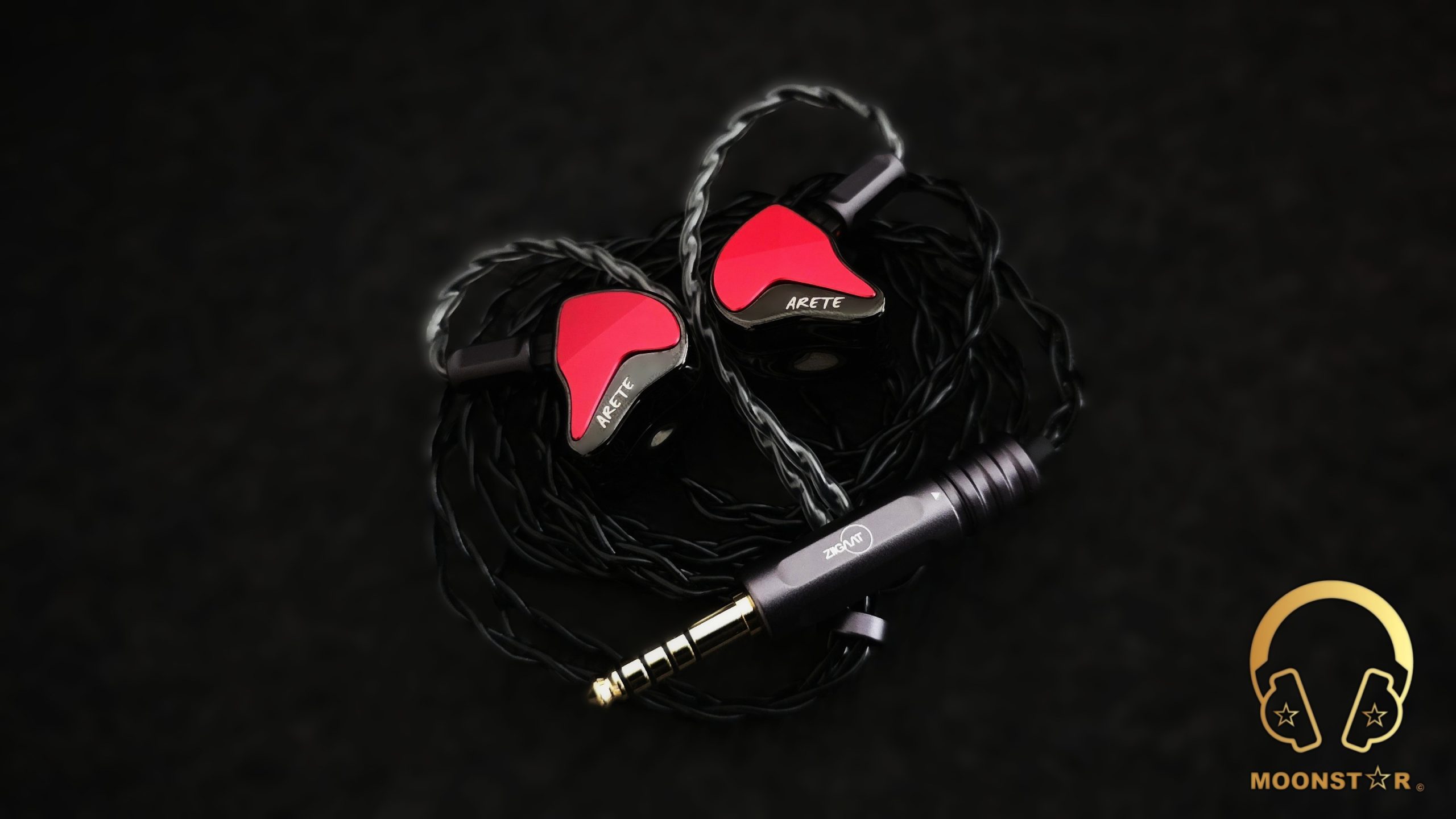
ZiiGaat is a brand that has moved through the competitive mid-fi IEM market with a degree of methodical consistency that is not always easy to maintain under the pressure of constant new releases. The original Arete, a collaboration with YouTuber Fresh Reviews, performed well enough to generate genuine market traction and encouraged both parties to develop a follow-up with more deliberate engineering input behind it. The Arete II is the result: a refined, more technically capable successor that retains the driver topology of the original but reworks each element of the signal chain from the driver diaphragm outward.
The core configuration is a 1DD plus 4BA hybrid, five drivers per side. The dynamic driver is a second-generation 10mm unit with a composite diaphragm featuring a liquid silicone suspension, carrying a stronger neodymium magnetic array than its predecessor to improve sub-bass authority. The four balanced armature drivers are all Knowles components: two ED 29689 units handle the midrange, a driver with a well-established reputation in the IEM market for consistent and reliable vocal texture, and two SWFK 31736 dual tweeters manage the treble and upper extension. The crossover network has been revised with more precise frequency separation, and the nozzle tube geometry has been widened to improve upper-treble airflow.
This review will assess the Arete II’s design, comfort, and sonic performance through thorough testing to determine its standing in the highly competitive sub-$500 IEM market.
Disclaimer:
I would like to thank Linsoul and ZiiGaat for providing the Arete II for review purposes. I am not affiliated with any of these brands beyond this review, and these words reflect my true and unaltered opinions about the product.
Price & Availability:
The ZiiGaat x Fresh Reviews Arete II is available for around $279 USD. More information can be found under the link below:
Package & Accessories:
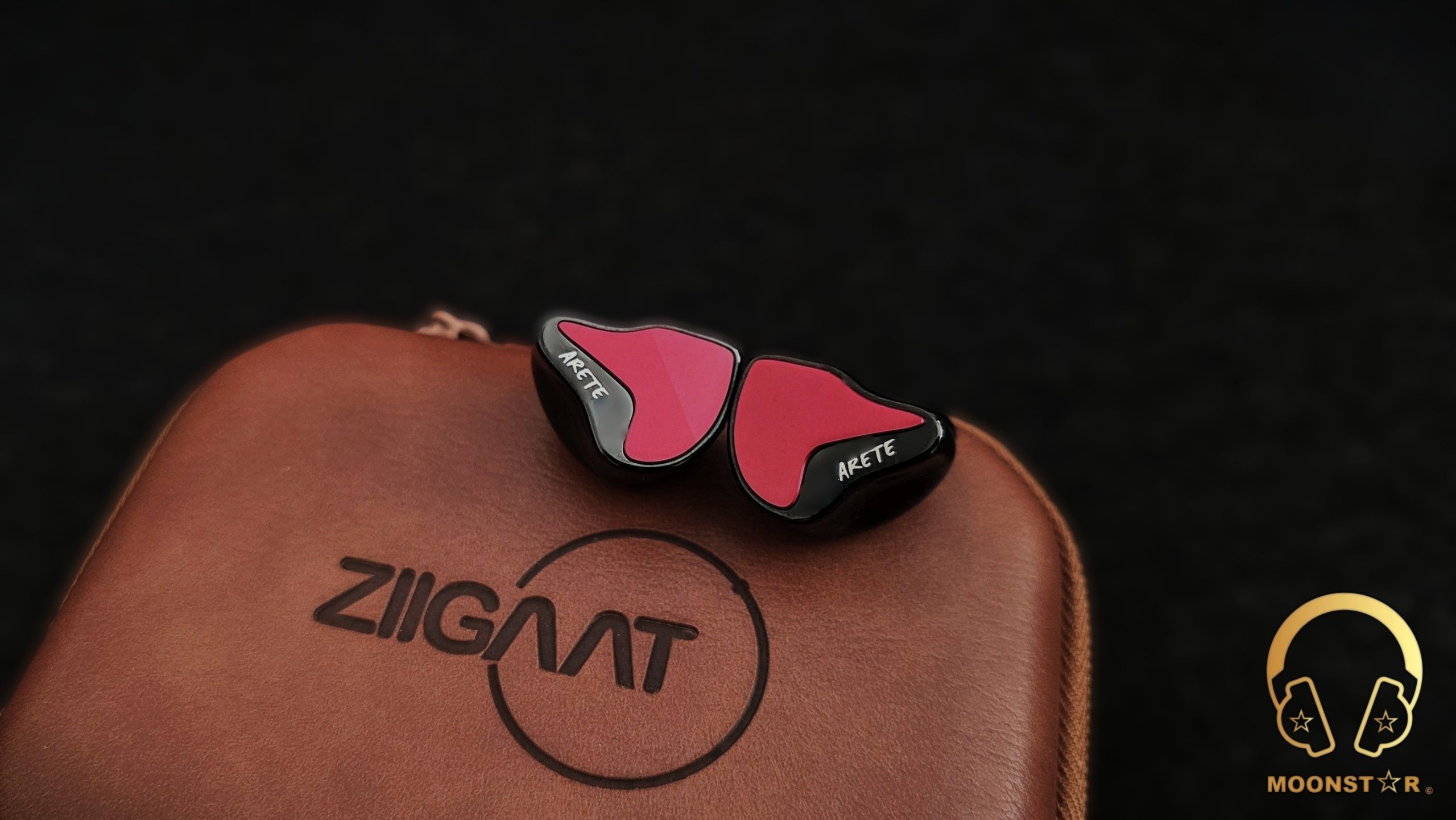
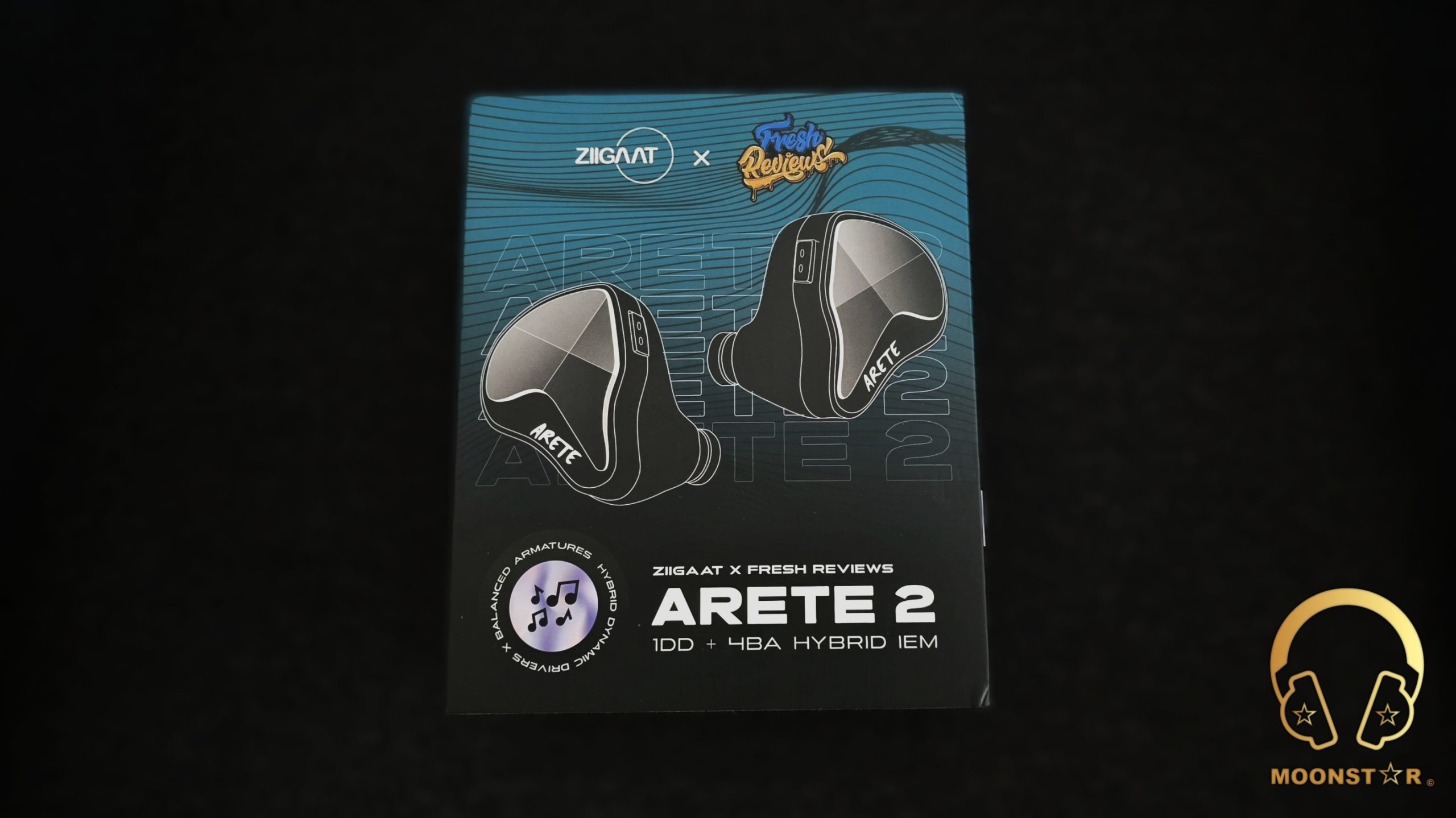
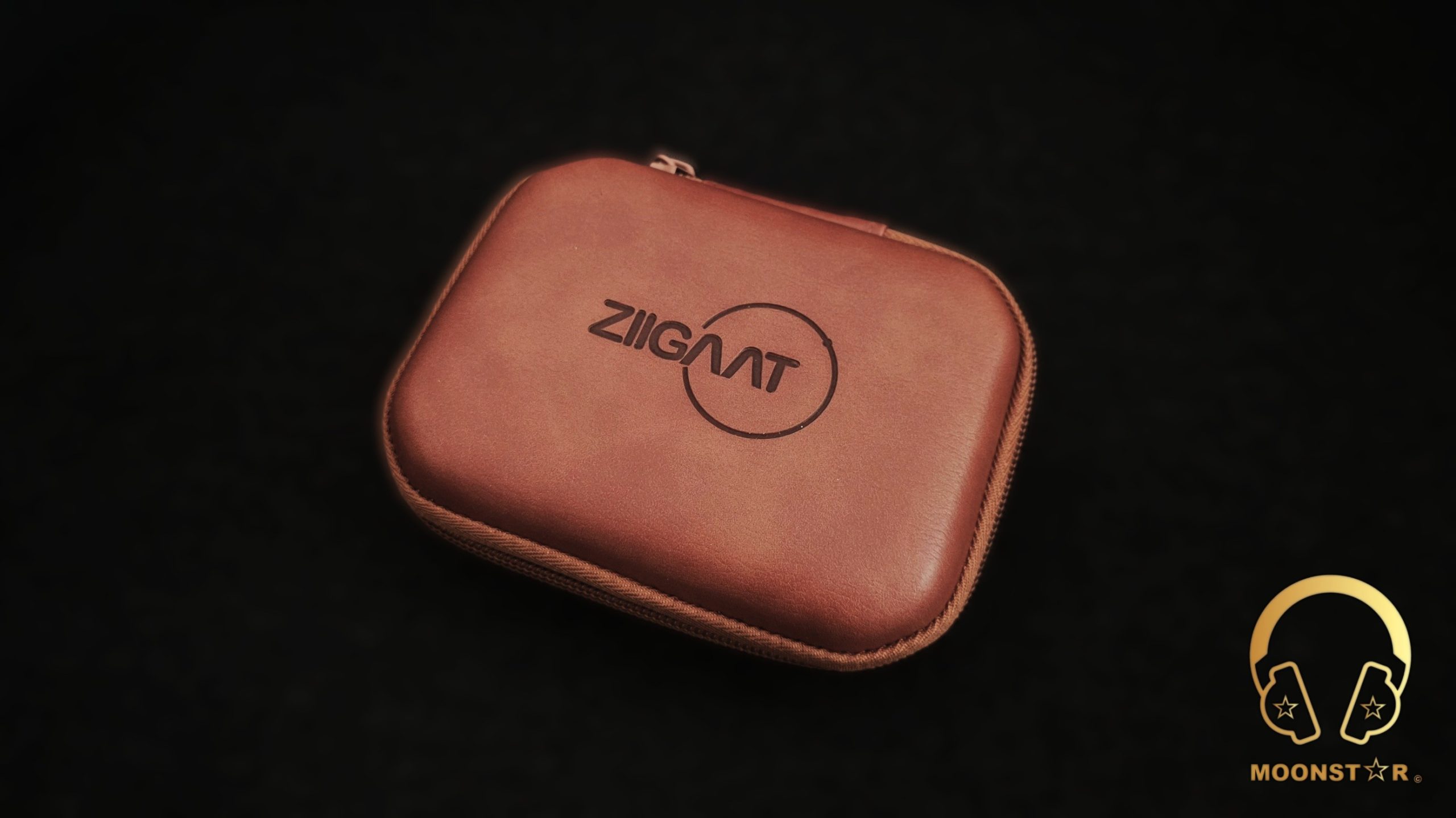
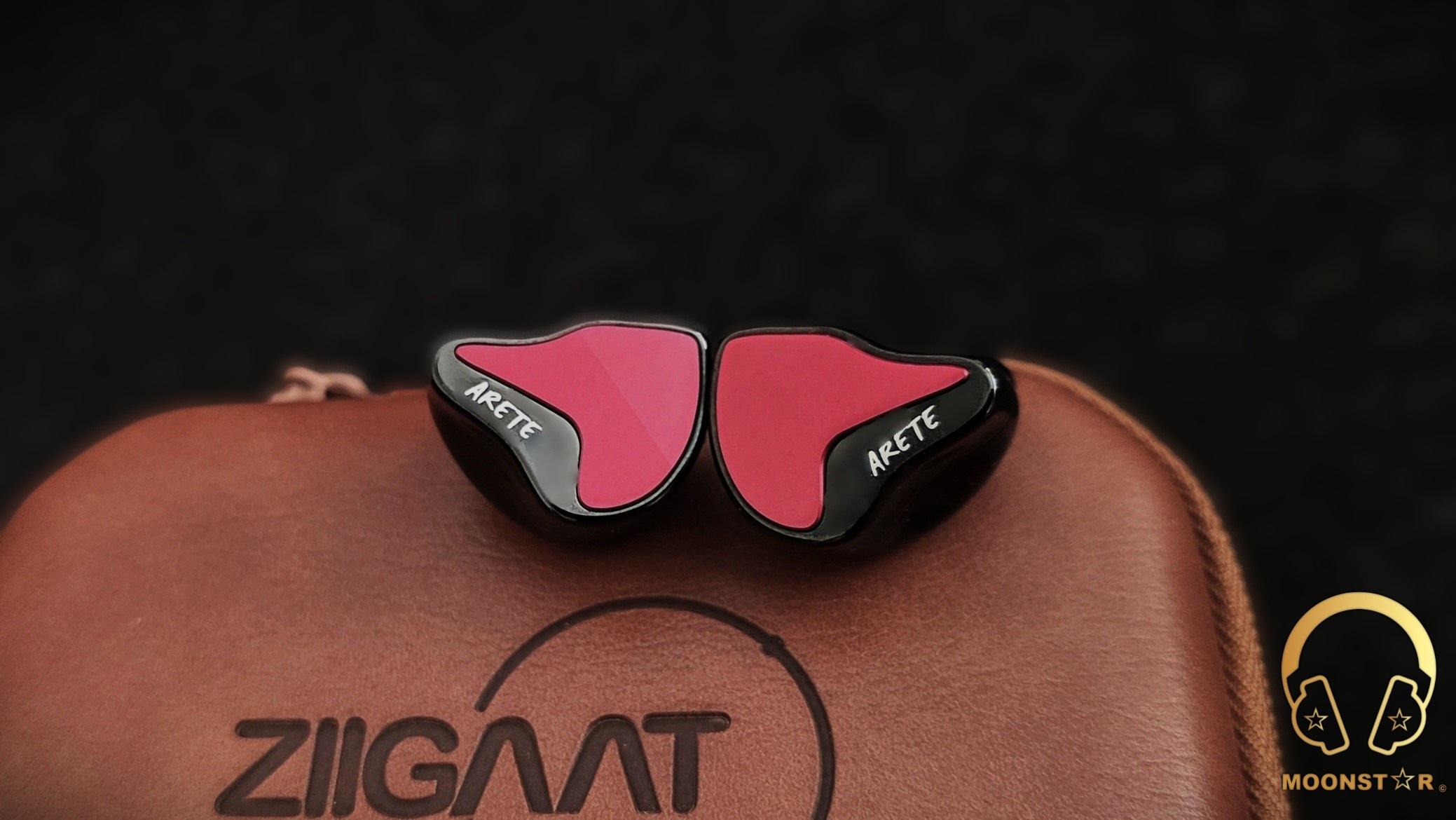
The Arete II ships in a presentation box that is appropriately sized for its price tier. The outer packaging communicates the collaboration branding clearly, and the internal layout keeps the IEMs and accessories organized without the kind of layered unboxing experience that adds nothing of practical value. A genuine leather carrying case with ZiiGaat embossed on the exterior is the standout accessory inclusion, providing solid protection and a premium material that suits an IEM at this price level considerably better than a fabric or synthetic pouch would.
Included in the box:
- 1 x ZiiGaat x Fresh Reviews Arete II IEMs (1 pair)
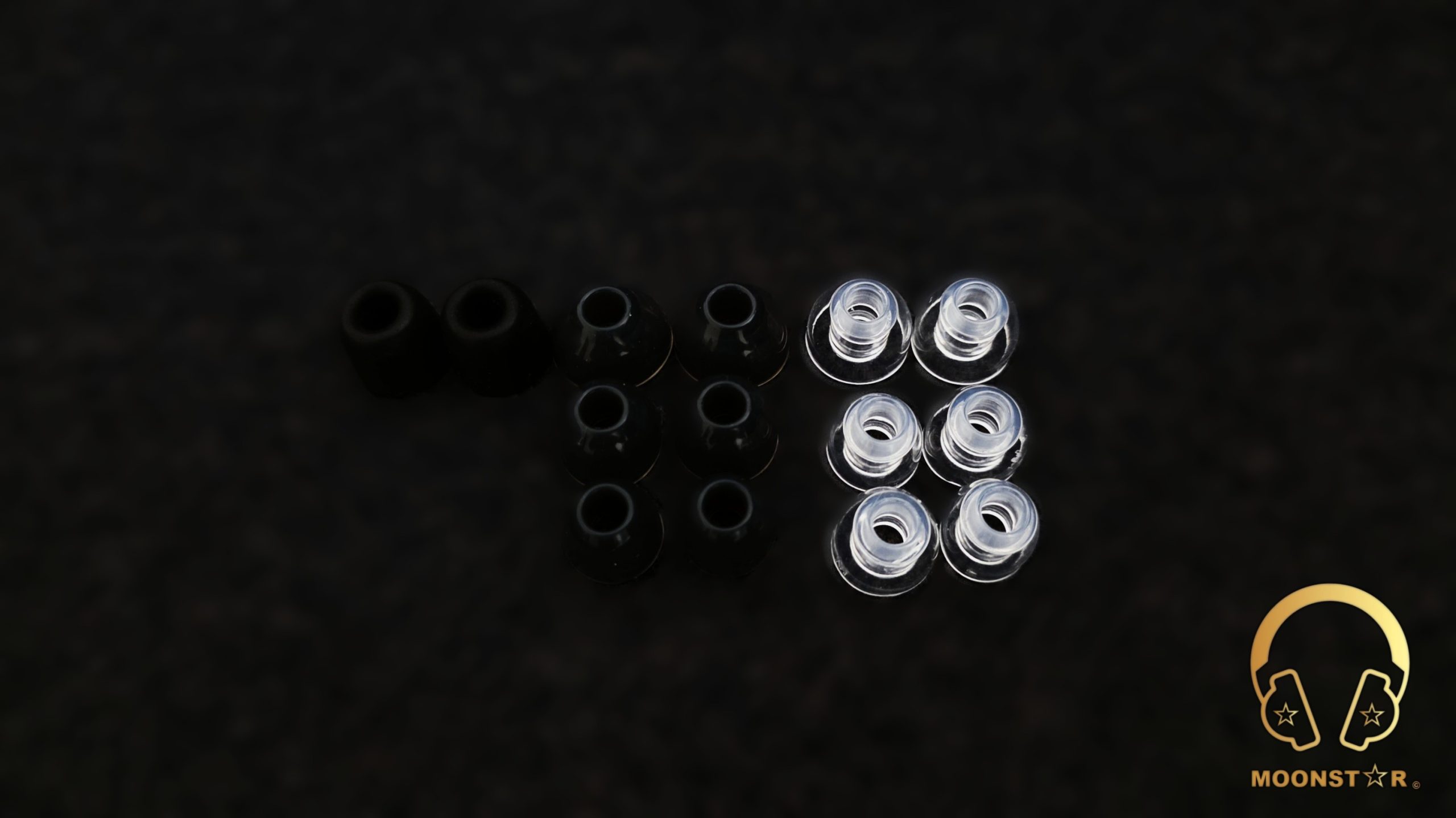
- 6 × Pairs of silicone ear tips (S/M/L, black and transparent)
- 1 × Pair of foam ear tips (S/M/L)
- 1 × High-Performance 4-Core OFC + Silver Litz Cable
- 2 x Pairs of replaceable filters
- 1 × Premium carrying case
- 1 × 3.5mm plug
- 1 x 4.4mm plug
- 1 × Warranty card
- 1 × Wearing diagram/user instruction card
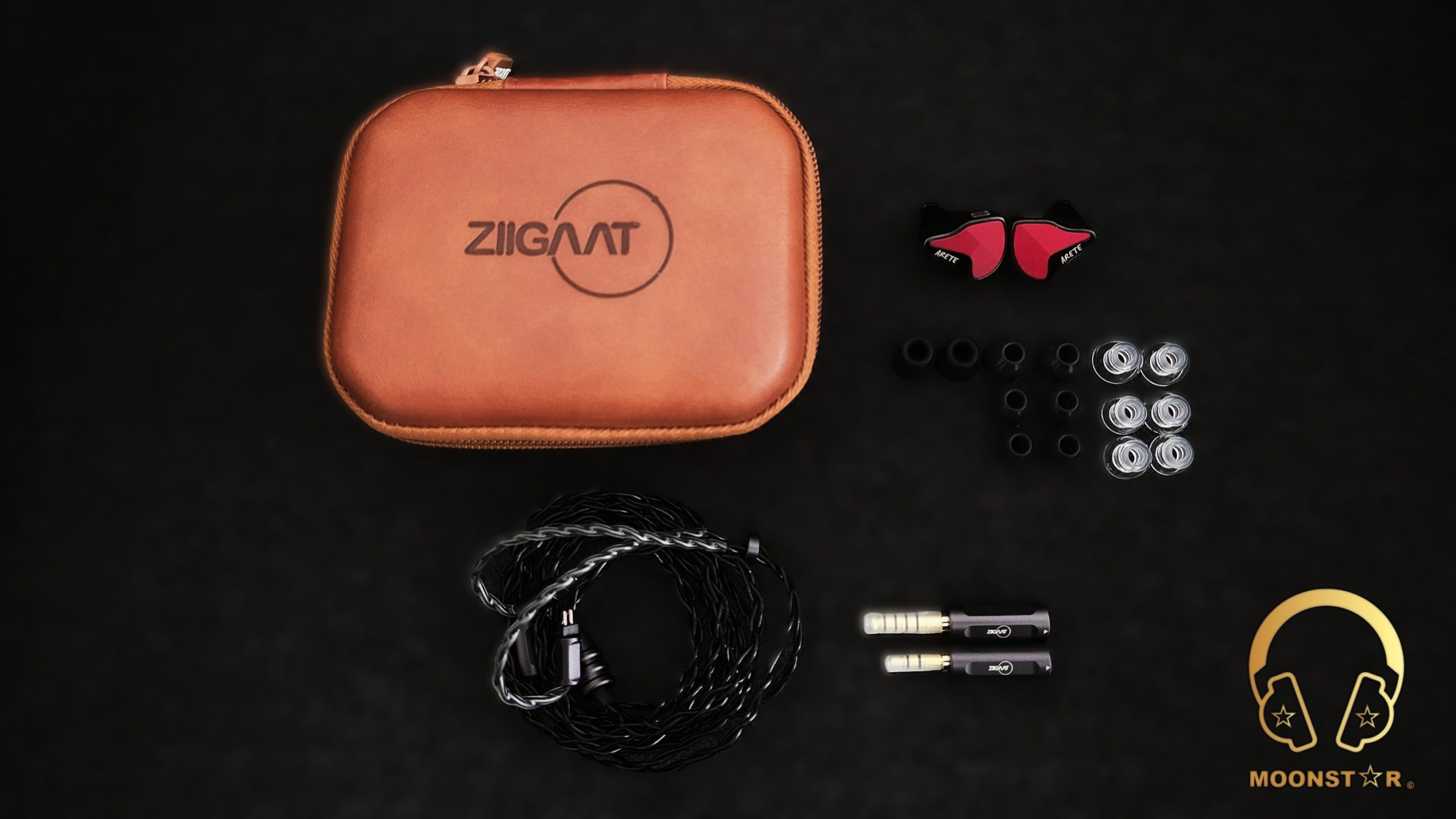
The modular cable, with interchangeable 3.5mm and 4.4mm terminations, supports connectivity with various audio sources.
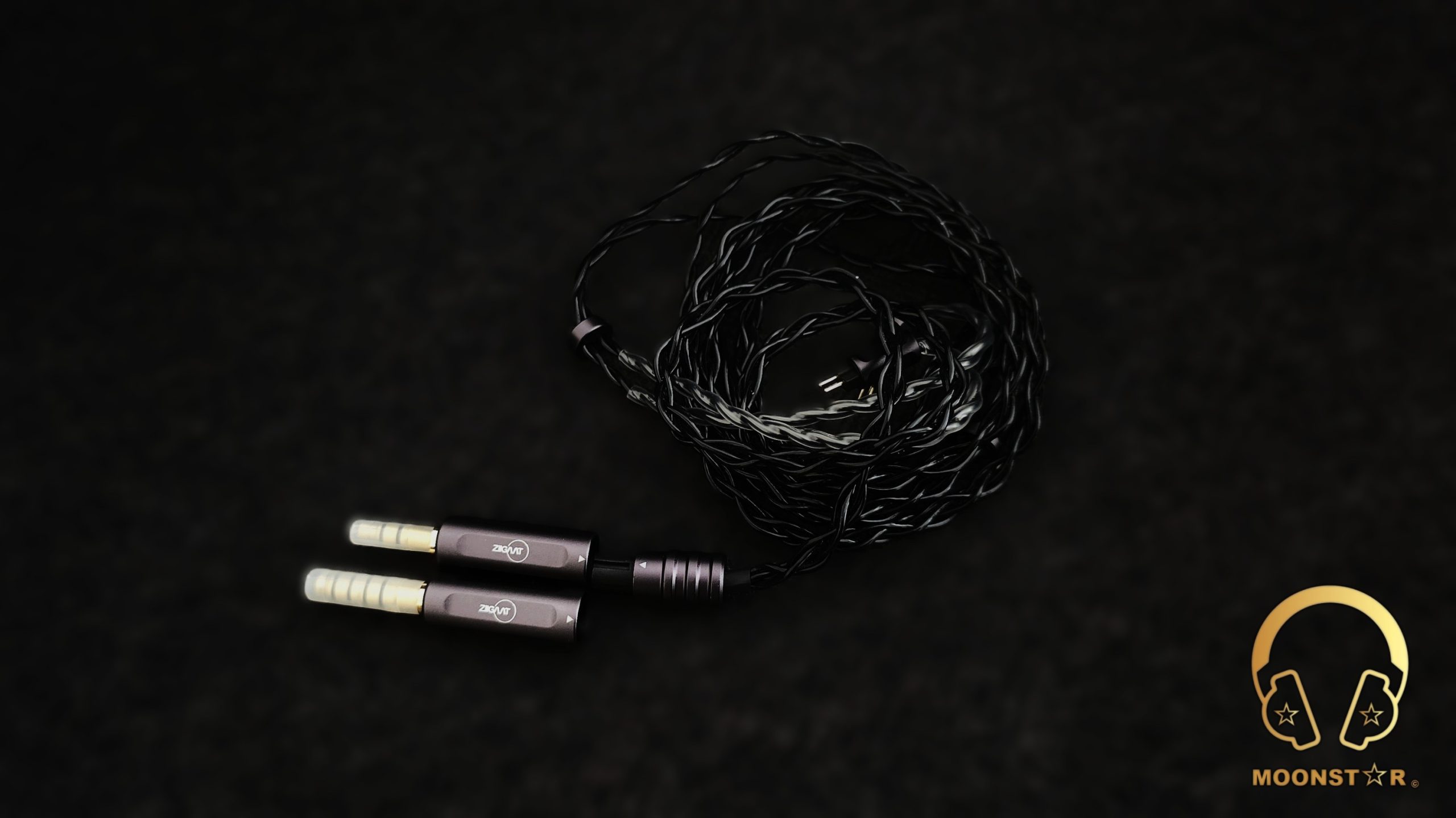
The generous assortment of ear tips enables customization of fit and sound characteristics.
The carrying case provides practical storage and complements the premium presentation of the package.
Design & Build Quality:
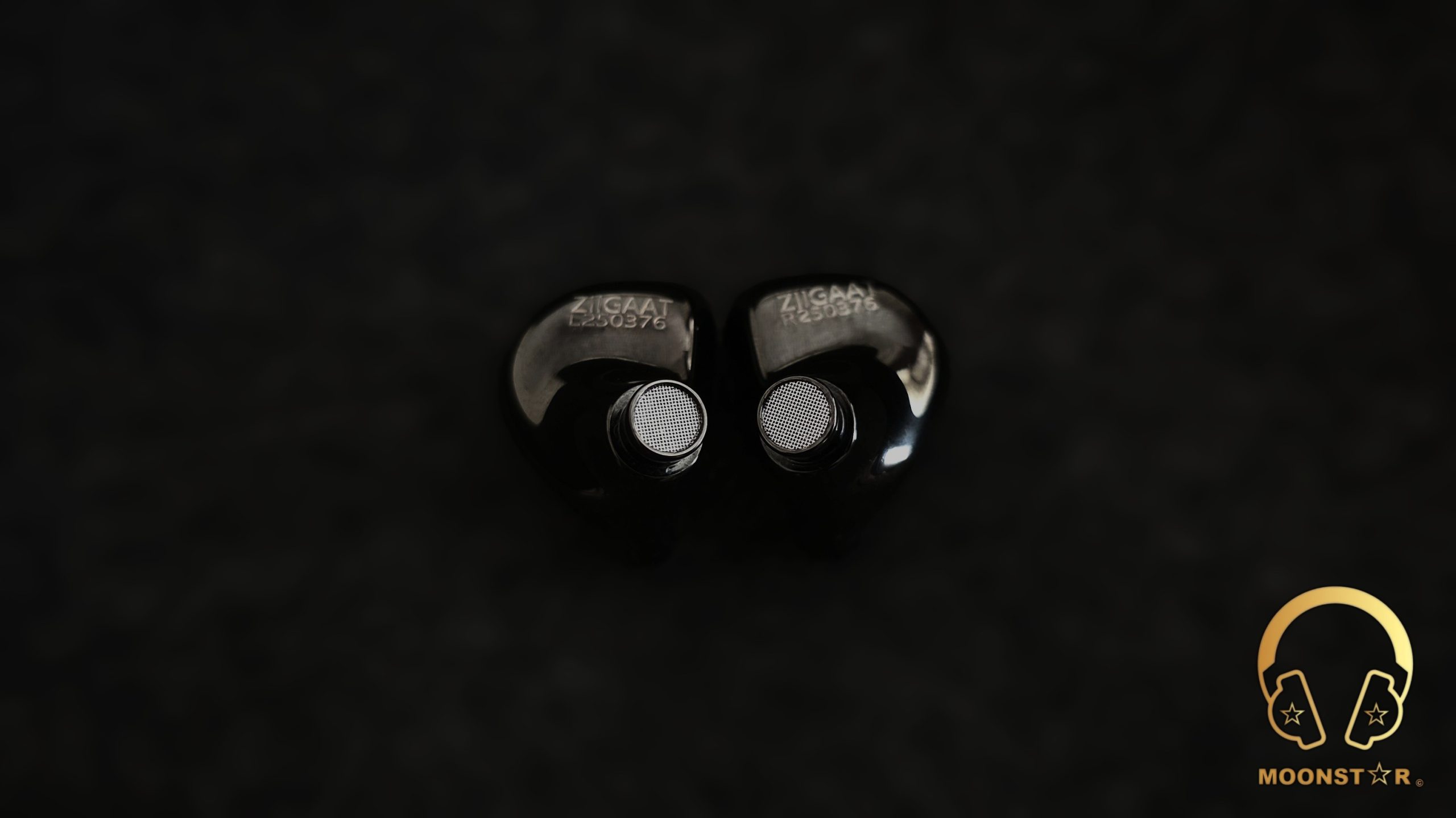
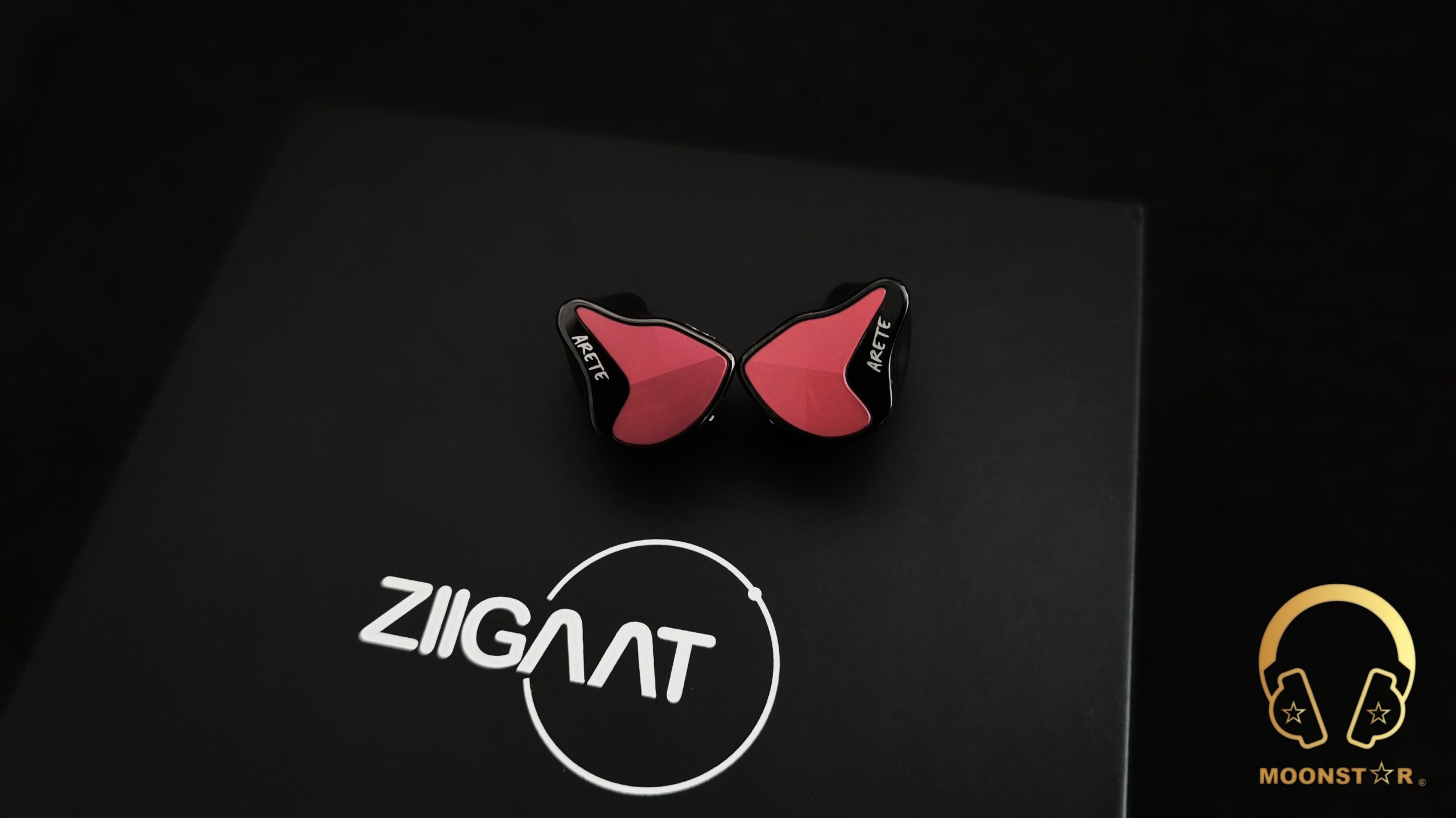
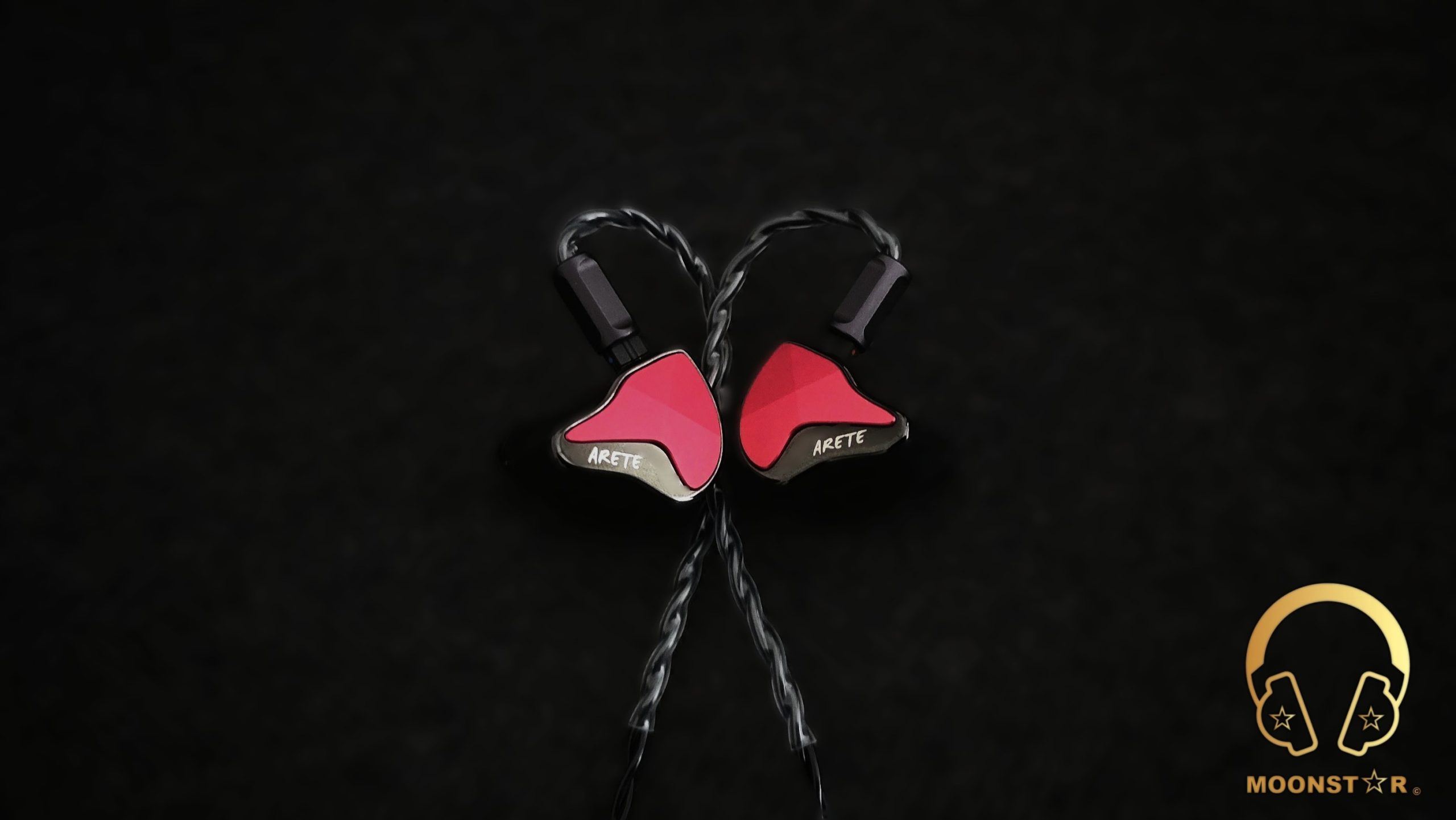
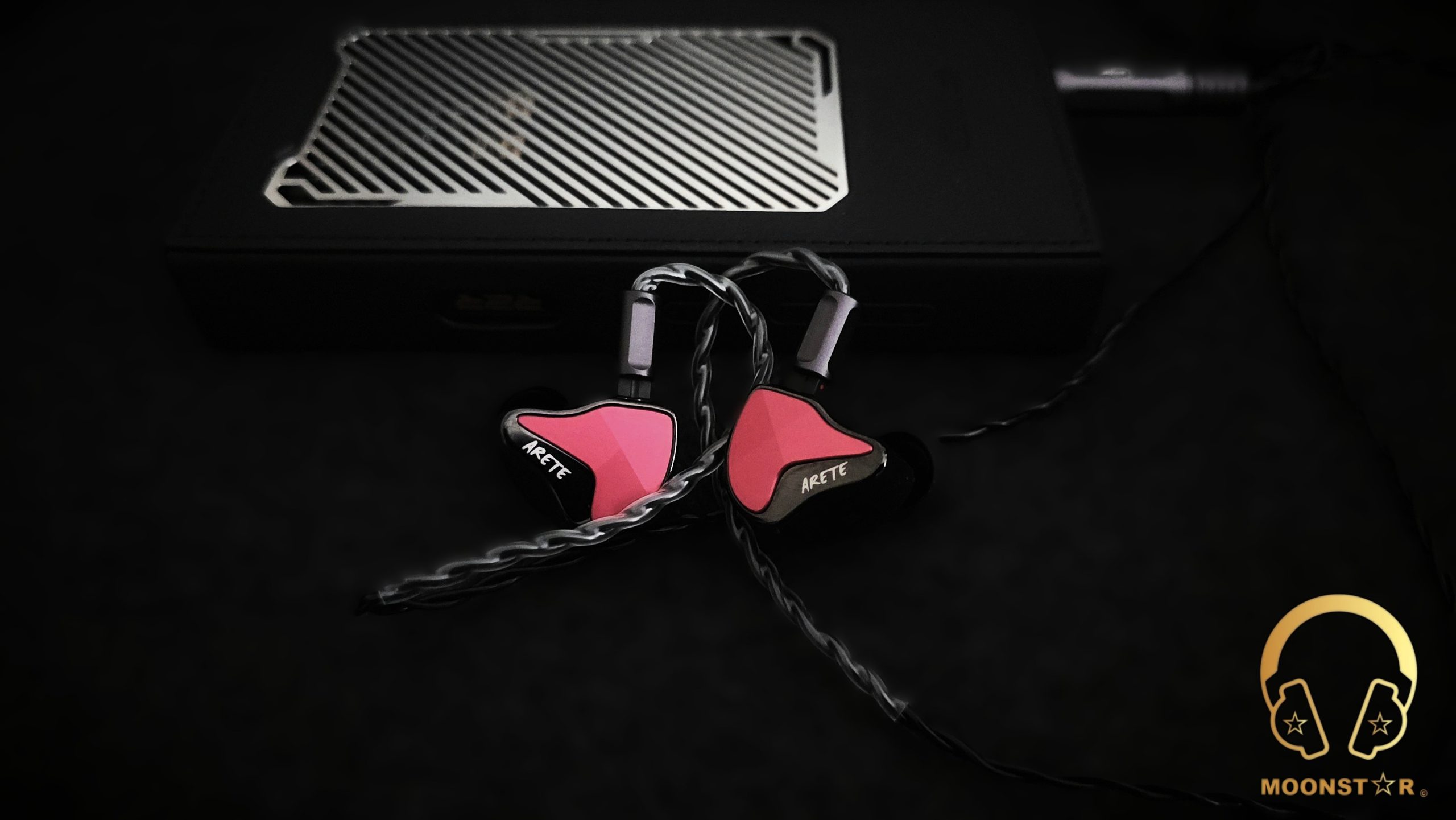
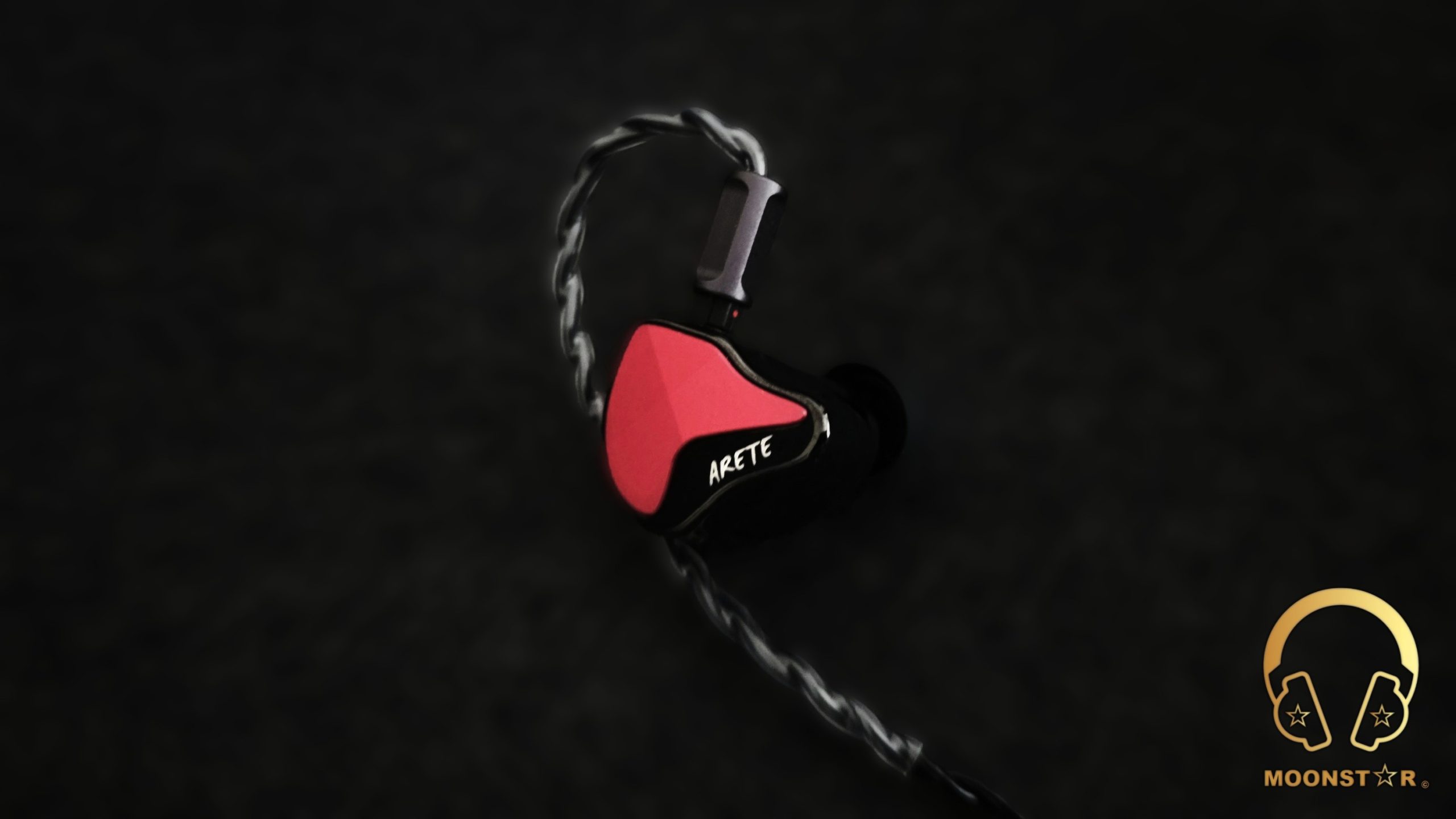
The Arete II is built around a fully CNC-machined aluminum alloy shell, and this choice of material has an immediate and tangible effect on the impression the IEM makes before a single note is played. The shell is dense, rigid, and consistent in its surface finish, with no flex, no seam misalignment, and no areas of the construction that feel softened or provisional. For a $279 IEM, the absence of 3D-printed resin or thin-sheet metal housing is a genuine quality statement, and the Arete II makes it convincingly.
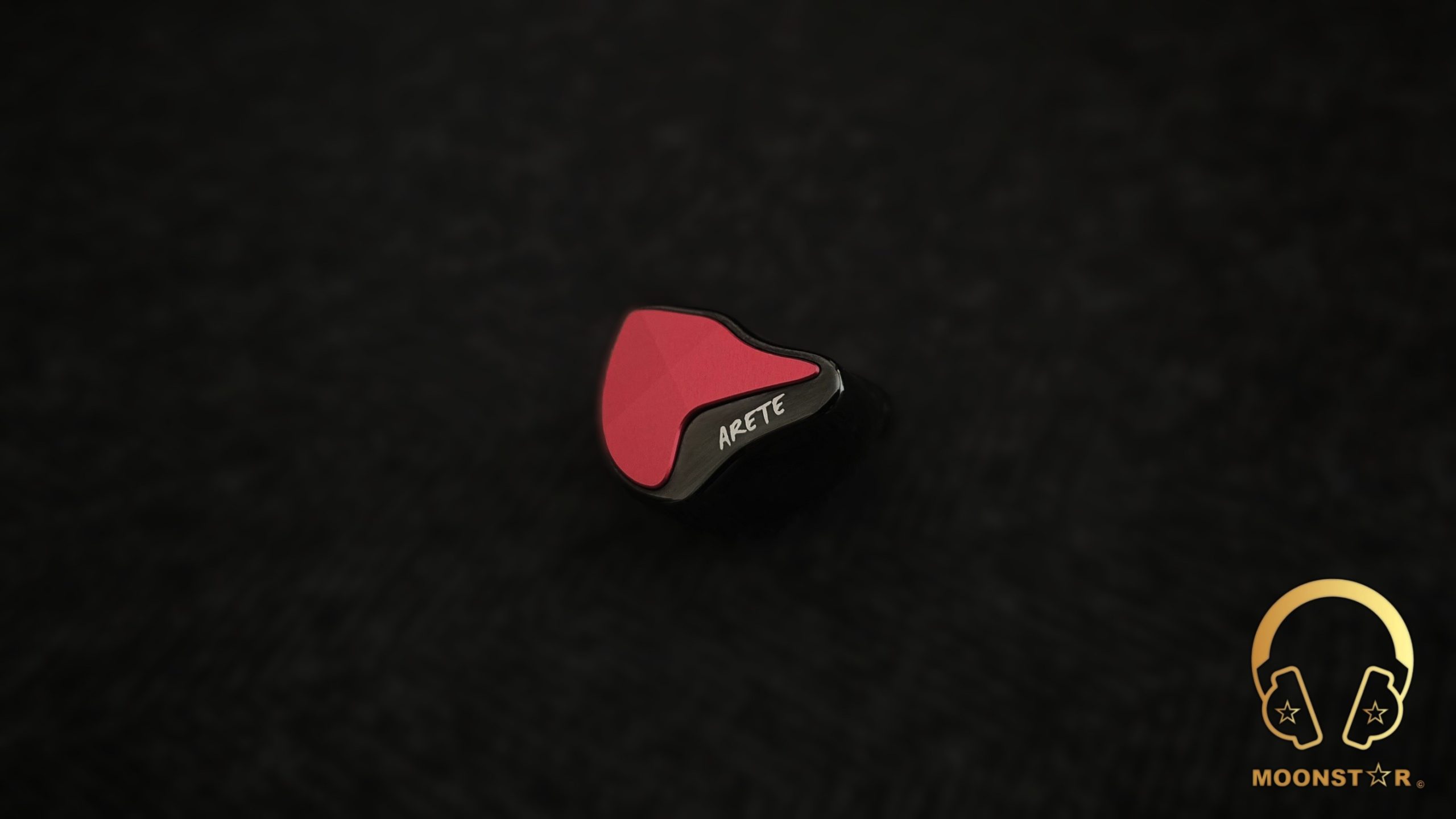
The faceplate of the Arete II is machined from the same aluminum alloy as the shell body, giving the earphone a fully unified exterior material character. The ZiiGaat and Fresh Reviews branding is rendered on the faceplate in a clean, low-profile treatment that does not interrupt the material’s visual coherence.
Two color variants are available: Blue and Red. Both are anodized with a consistent, fingerprint-resistant finish that holds its appearance well under handling. The Blue variant has a deep, slightly muted quality that reads as professional and understated. The Red variant is more immediately attention-holding and suits listeners who want the IEM to make a visual statement. Neither color is excessive in its presentation, and the all-metal construction gives both variants a visual weight that resin alternatives cannot match.
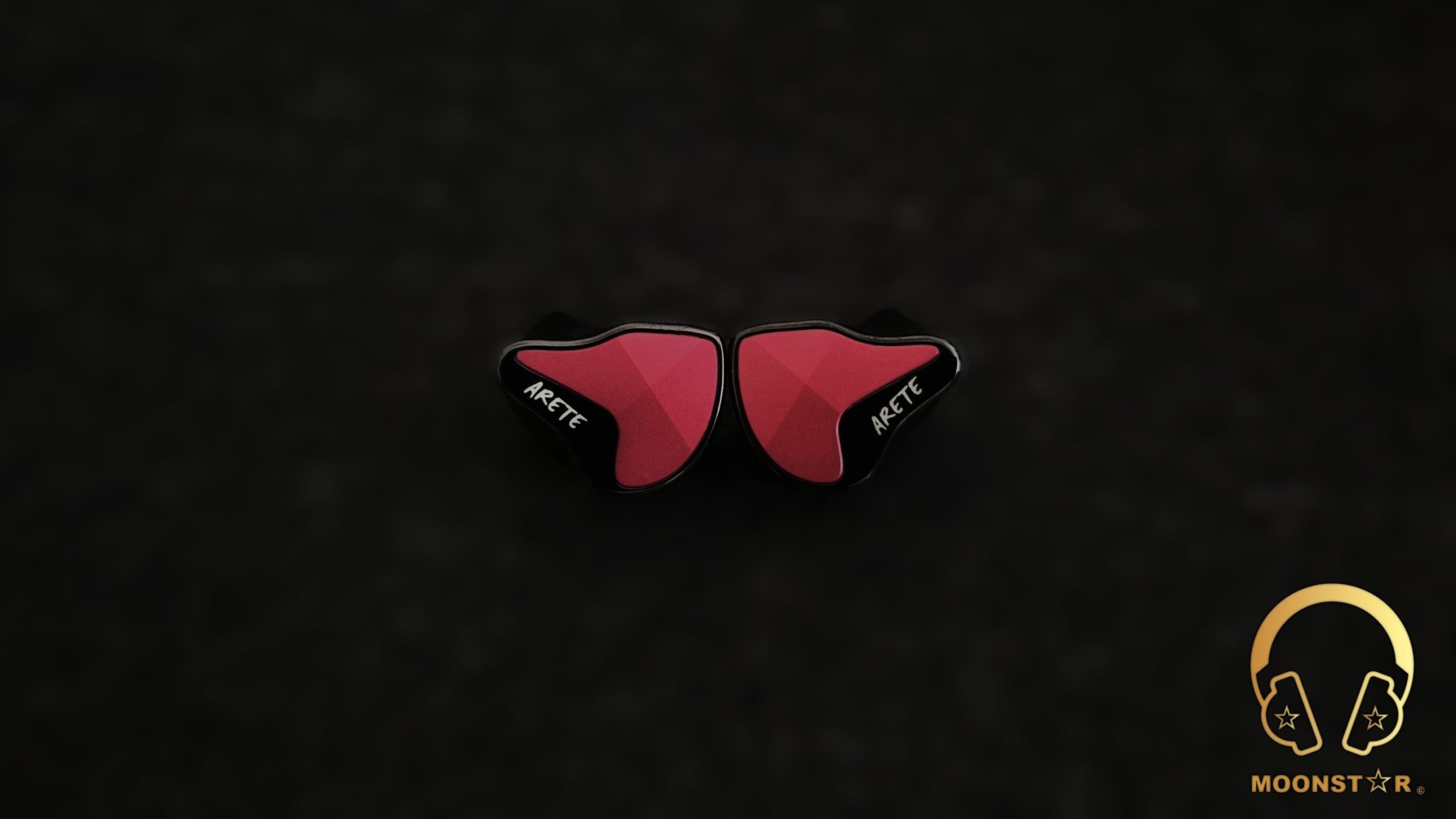
The stainless-steel nozzle includes a mesh filter for protection and consistent output, with a standard diameter compatible with a wide range of aftermarket ear tips.
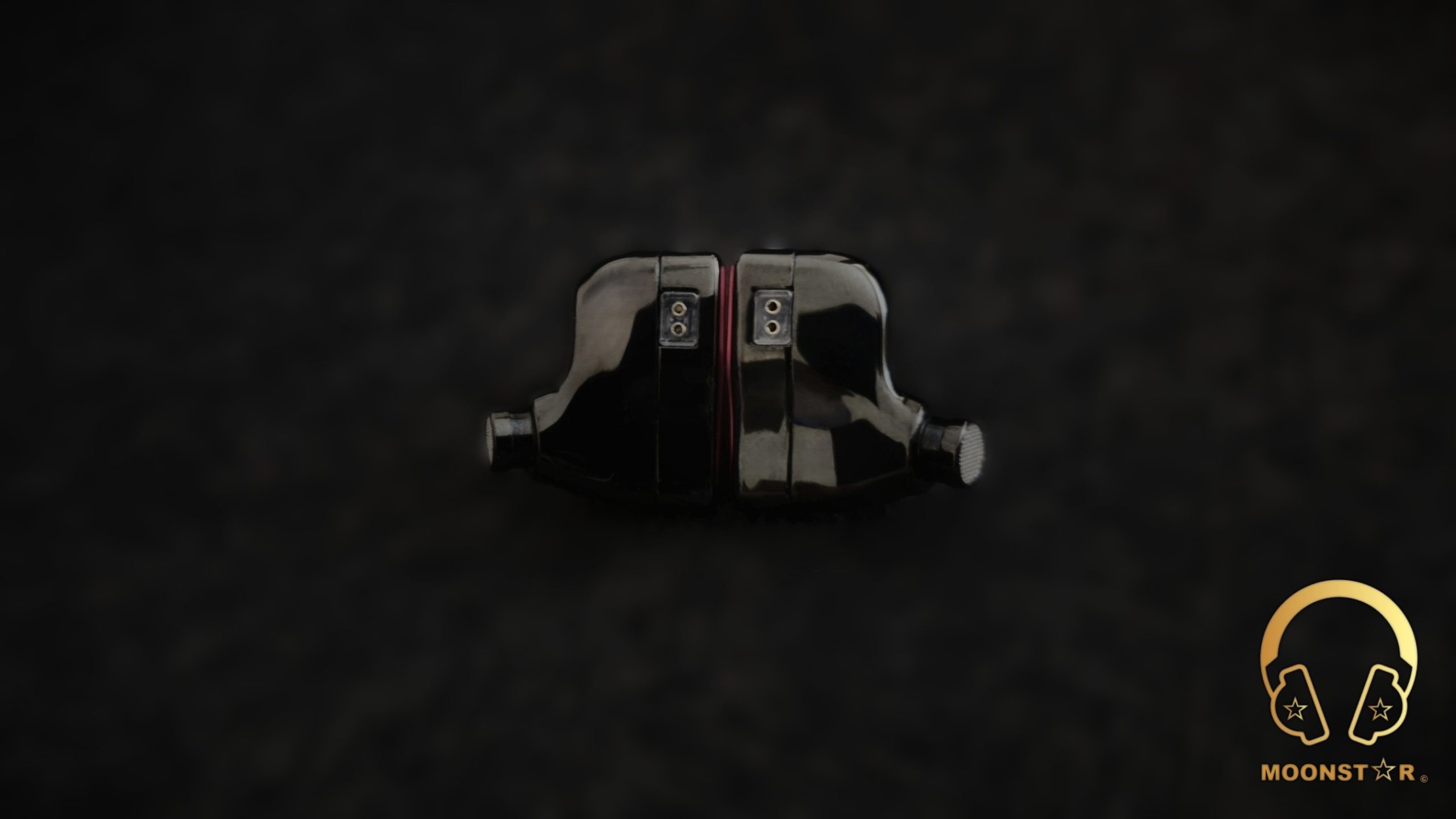
Recessed 0.78mm 2-pin connectors ensure secure cable attachment and easy swapping.
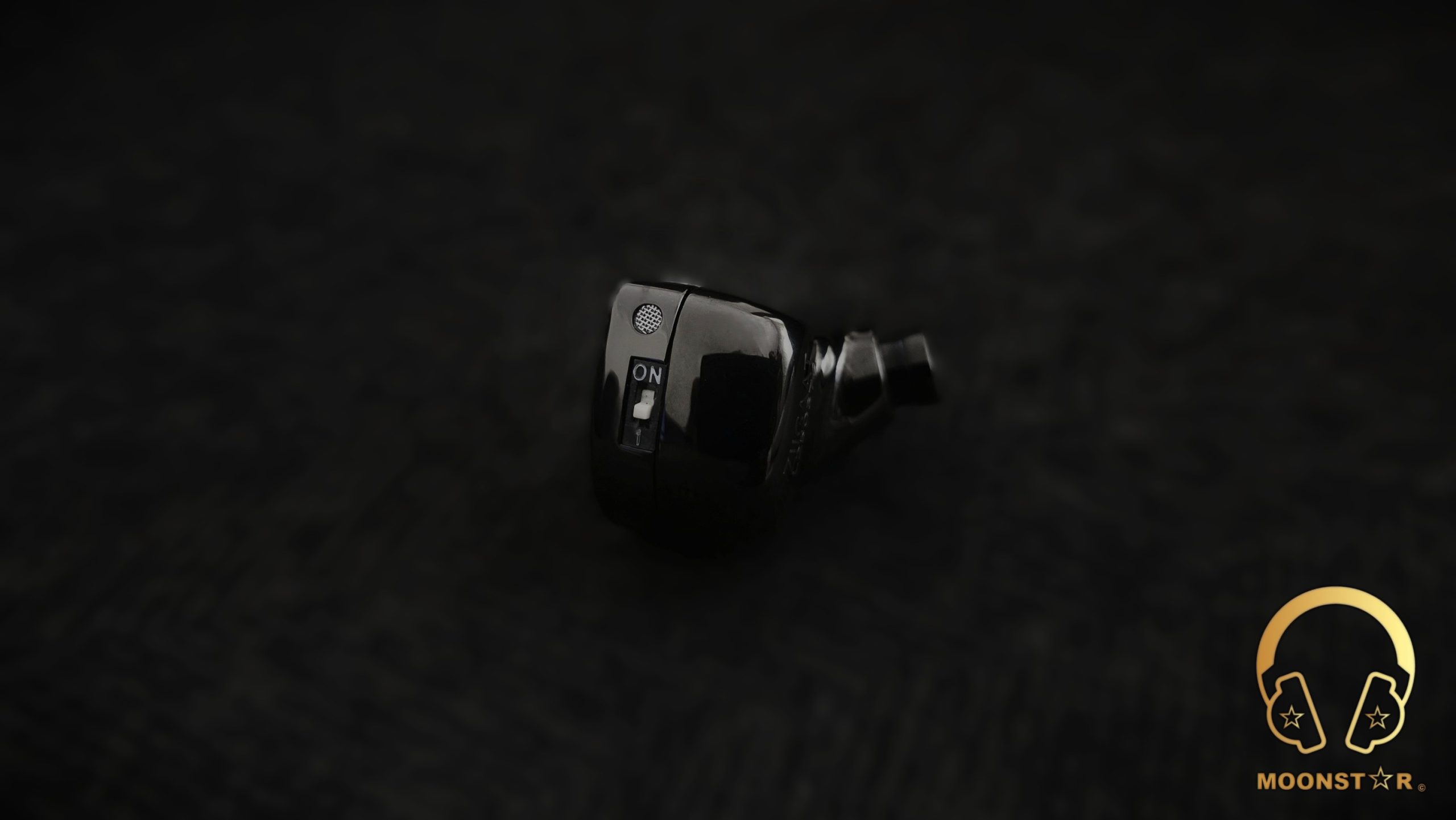
The standout feature is the easily accessible bass switch located on the shell. This tool-free switch allows users to toggle between two distinct sound signatures: a more neutral and detailed mode when off, and a boosted bass and lower-midrange mode when on. The switch mechanism is solid and provides clear tactile feedback, making it simple to adjust on the fly without removing the IEMs. This versatility makes the Arete II adaptable for different listening scenarios, from critical listening to energetic genres, without needing external EQ or multiple IEMs.
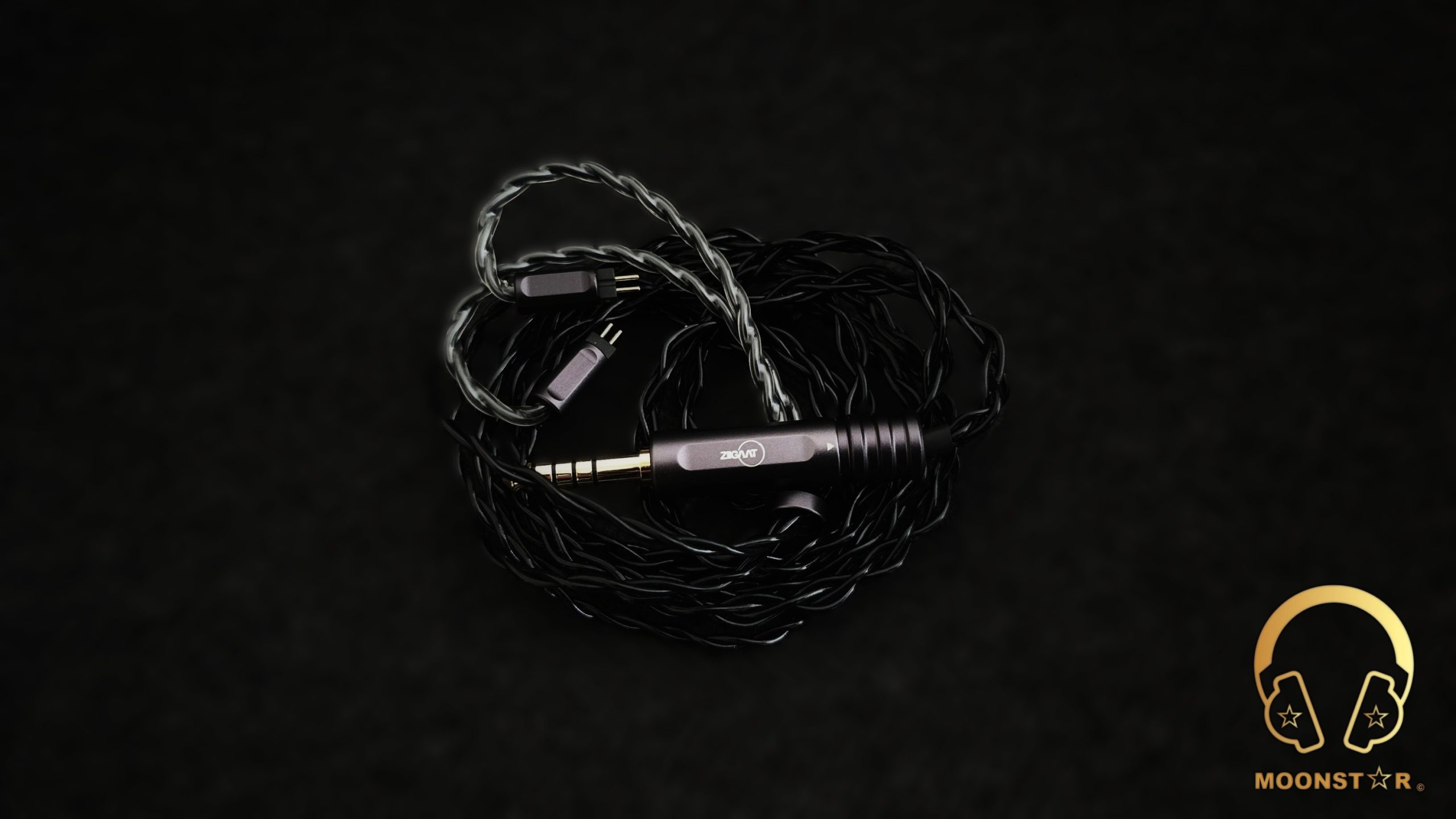
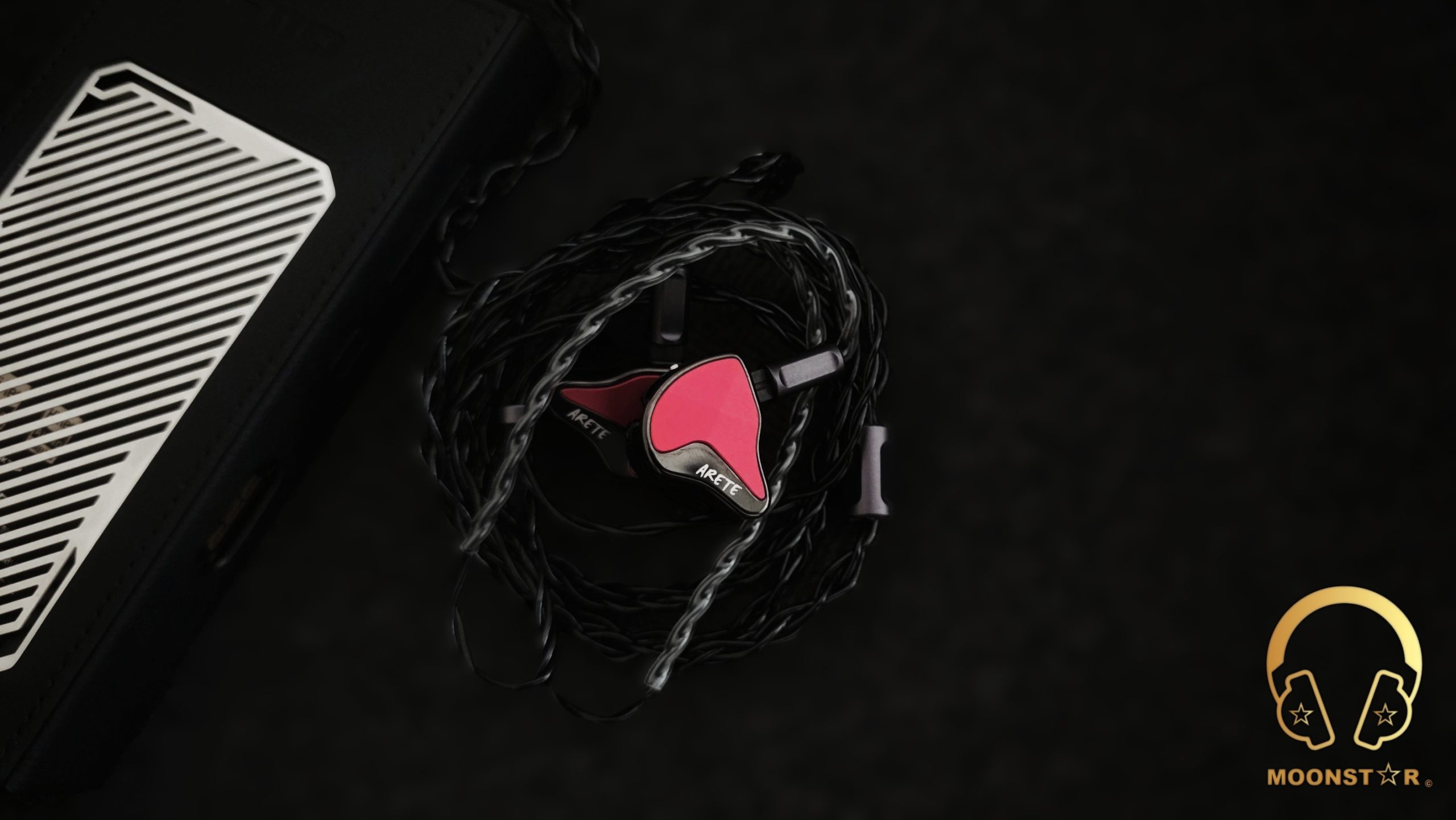
The included modular cable is crafted from high-purity OCC copper with excellent flexibility and low microphonics. It offers reliable signal transmission and comfortable wear thanks to its lightweight build, pre-formed ear hooks, and thoughtful ergonomics. The cable’s modular plugs are robust and easy to swap, adding practical value for users with different sources.
Overall, the Arete II’s build quality reflects careful craftsmanship, combining durability, thoughtful features like the bass switch, and visual appeal in its price segment. The combination of resin shells, precise driver implementation, and user-friendly tuning options makes it feel more premium than its price suggests.
Fit, Comfort & Isolation:
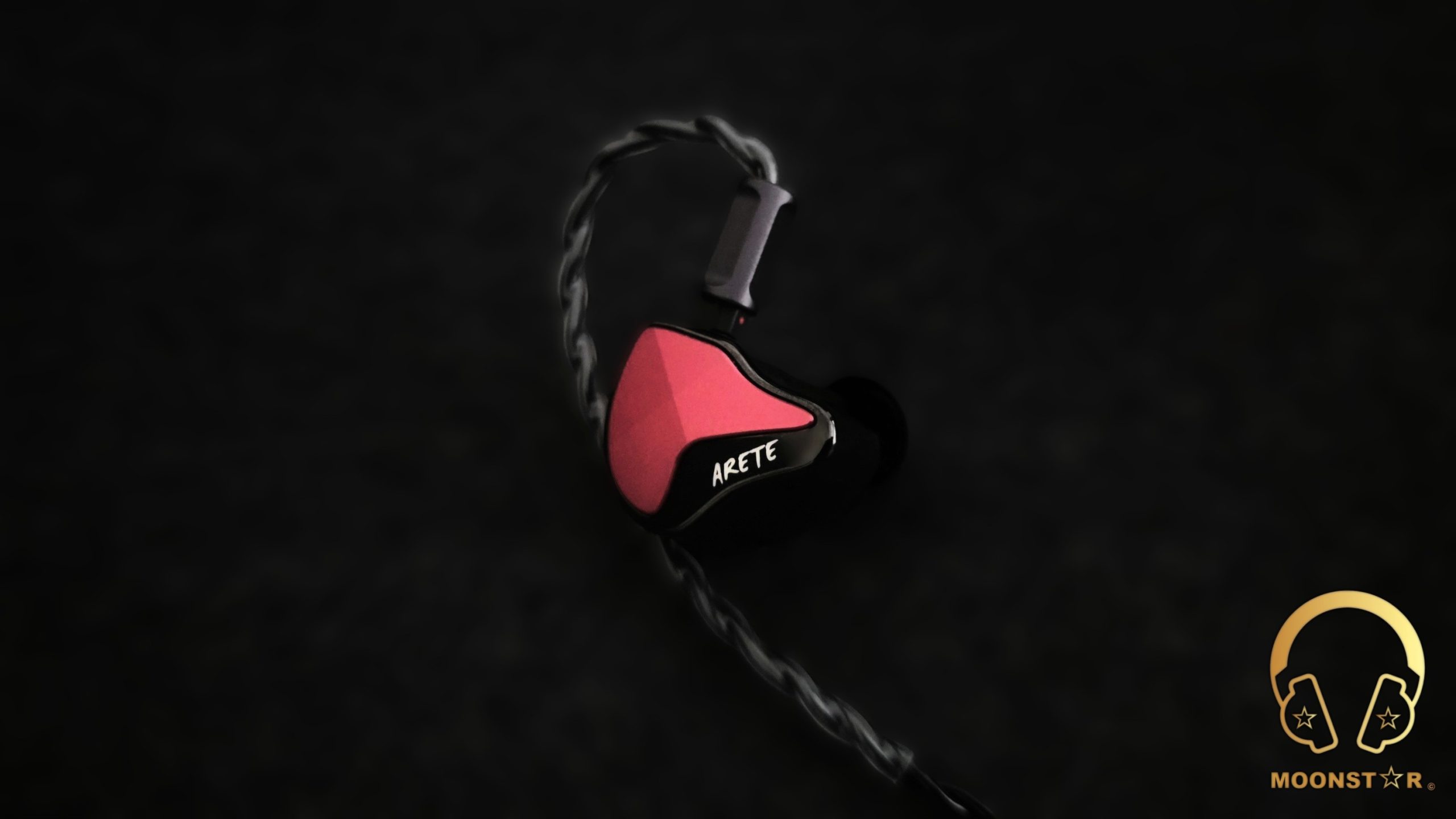
The Arete II’s compact aluminum shell fits well for users with average to larger ear canals. The ergonomic inner face contour and the nozzle angle combine to produce a secure, settled fit that holds its position during movement without requiring the listener to reposition the shell. At approximately 7 to 8 grams per earpiece, the all-metal construction is marginally heavier than a resin shell of equivalent size, but the weight difference is not perceptible during normal listening sessions. Extended wear across three to four hours produces no meaningful discomfort at the concha contact points or at the canal entry, which is a good result for a fully metal housing.
Ear tip selection has a direct effect on both isolation quality and sonic character. The Balanced silicone tips seal consistently for most ear shapes and are the recommended starting point for listeners evaluating the Arete II’s stock character. The Bass tips add isolation depth alongside the tonal warmth they contribute, and for users whose ear canal geometry produces a partial seal with the Balanced tips, the Bass tips’ slightly different material compliance can improve the acoustic contact. Foam tips provide the deepest isolation but also the most bass-heavy presentation of the three included options. Passive isolation with a proper seal is good, providing effective attenuation of office, transit, and street noise that makes the Arete II a practical commuting companion.
Technical Specifications:
- Model: ZiiGaat x Fresh Reviews Arete II
- Driver Configuration: 1DD + 4BA Hybrid, 5 Drivers Per Side
- Dynamic Driver: 10mm 2nd Generation, Composite Diaphragm with Liquid Silicone Suspension, Stronger Neodymium Magnetic Array
- Midrange BA: 2 x Knowles ED 29689
- Treble BA: 2 x Knowles SWFK 31736 (wider nozzle tube geometry for improved upper-treble extension)
- Crossover: Revised multi-way passive crossover with three independent acoustic sound tubes per side
- Frequency Response: 10Hz to 40kHz
- Impedance: 24 Ohms at 1kHz
- Sensitivity: 104 dB SPL / mW
- Shell Material: Fully CNC-Machined Aluminum Alloy
- Bass Switch: Physical slider switch on outer shell face, engages bass and lower-midrange boost
- Connector: Standard 0.78mm 2-Pin (Flush Mount)
- Cable: Silver-Plated OFC, 4-Core Braid, Modular 3.5mm SE and 4.4mm Balanced Termination
Drivability & Pairing:
At 24 ohms impedance and 104dB sensitivity, the Arete II is well-suited to a broad range of portable sources. It reaches comfortable listening levels from smartphone outputs, dongle DACs, and entry-level DAPs without difficulty, and it does not expose background hiss from most modern low-noise portable sources. The sensitivity does make it mildly responsive to output impedance in sources that exceed approximately 2 ohms, where a slight warmth shift in the bass and lower midrange may be audible. This is a manageable characteristic rather than a source-selection constraint for most users.
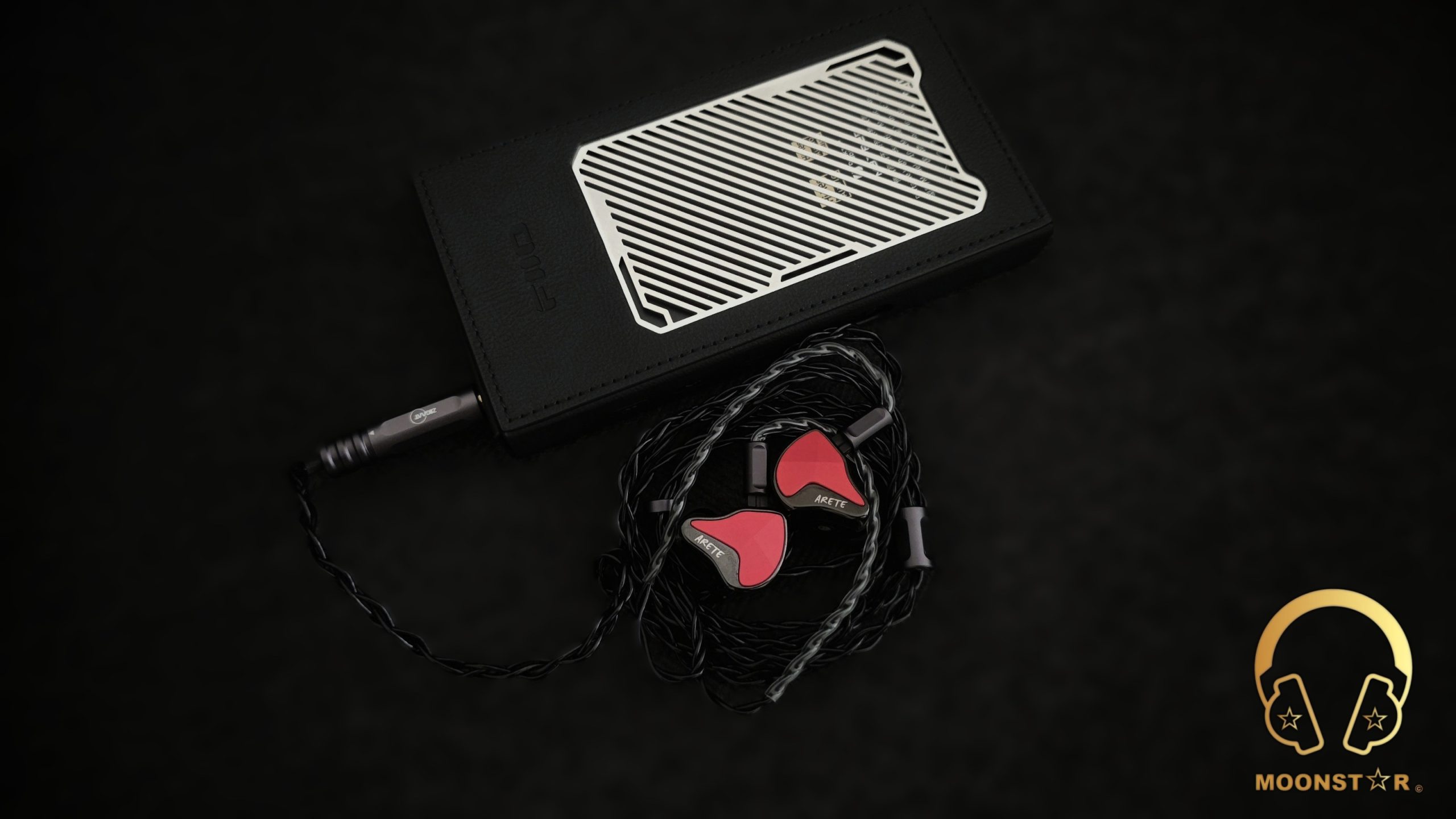
The FiiO M33 R2R, with its 24-bit discrete resistor array and TI multi-stage amplifier, delivered a slightly more weighted lower-midrange character that served male vocal recordings with convincing physical presence. Both sources demonstrated that the Arete II scales meaningfully beyond minimum drivability requirements and rewards the investment in a capable source.
The iBasso DC04 Ultra, a powerful and clean USB DAC/AMP, unlocks the Arete II’s full technical potential. Its neutral and detailed sound signature brings out excellent resolution, wide soundstage, and precise imaging, making the pairing ideal for critical listening sessions. Both sources scale the IEM beautifully, with the DC04 Ultra offering greater transparency and the M33 providing a more engaging, musical flow. The Arete II responds positively to better sources, revealing more of its refinement and dynamic range.
Equipment used for this review:
- IEMs : ZiiGaat x Fresh Reviews Arete II, NOBLE Knight, SIMGOT SuperMix5
- DAPs & DACs : FiiO M33 R2R, iBasso DC04 Ultra
- Burn-in Period : 50 hours
- Ear Tips : Stock silicone tips
- Cable : Stock modular cable
Albums & Tracks Used for this Review:
Vocal Jazz / Smooth Jazz
- Norah Jones – Come Away With Me (Flac 24bit/96kHz)
- Diana Krall – So Wonderful (DSF)
- Barry White – Just The Way You Are (Flac 24bit/48kHz)
- Isaac Hayes – Walk On By (Flac 16bit/44.1kHz)
- Sting – Englishman in New York (Flac 24bit/48kHz)
- Otto Liebert & Luna Negra – The River (Flac 24bit/192kHz)
- Ferit Odman – Look, Stop & Listen (Flac 24bit/192kHz)
- Charly Antolini – Duwadjuwandadu (Flac 24bit/192kHz)
Soul / R&B
- Aretha Franklin – I Say A Little Prayer (Flac 24bit/96kHz)
- Adele – My Little Love (Apple Lossless)
- George Michael – Don’t Let the Sun Go Down on Me (Flac 24bit/192kHz)
- Eric Clapton – Wonderful Tonight (Flac 24bit/96kHz)
Pop / Rock Classics
- Michael Jackson – Billie Jean (Flac 24bit/96kHz)
- Elton John – Rocket Man (Flac 24bit/96kHz)
- David Bowie – Heroes (Flac 24bit/192kHz)
- U2 – Sunday Bloody Sunday (Flac 16bit/44.1kHz)
- Lorde – Royals (Flac 24bit/48kHz)
- Dave Gahan – Kingdom (Apple Lossless)
Electronic / Experimental
- Daft Punk – Instant Crush (Flac 24bit/96kHz)
- Daft Punk – Doin’ it Right (Flac 24bit/96kHz)
- Bro Safari, UFO! – Drama (Apple Lossless)
- Armin Van Buuren – Vini Vici (Flac 16bit/44.1kHz)
- Yosi Horikawa – Bubbles (Apple Lossless)
- Toutant – Rebirth (Apple Lossless)
Alternative / Indie / Art Rock
- Radiohead – Live in Berlin “Album” (Apple Lossless)
- Radiohead – Pyramid Song (Apple Lossless)
- Muse – Hysteria (Flac 24bit/96kHz)
- Red Hot Chili Peppers – Nobody Weird Like Me (Flac 24bit/48kHz)
- Lunatic Soul – The Passage (Flac 16bit/44.1kHz)
- Portishead – It Could Be Sweet (Apple Lossless)
- Gogo Penguin – Raven (Flac 24bit/192kHz)
- Gogo Penguin – Murmuration (Flac 24bit/192kHz)
- Massive Attack – Angel (Flac 24bit/48kHz)
- Bear McCreary – Valkyries (Apple Lossless)
Classical / Orchestral
- Max Richter – On the Nature of Daylight (Flac 24bit/96kHz)
- Chopin – Nocturne No. 20 in C-Sharp Minor (Flac 16bit/44.1kHz)
- Clair de Lune – Claude Debussy (Apple Lossless)
- Tchaikovsky – Symphony No. 5 (Flac 16bit/44.1kHz)
- Vivaldi – Le Quattro Stagioni “The Four Seasons” (Apple Lossless)
- Fazıl Say – Nazım Oratoryosu (Live) (Flac 16bit/44.1kHz)
Jazz / Instrumental
- Miles Davis – So What (Apple Lossless)
World / Traditional
- Sertap Erener – Aşk (Flac 16bit/44.1kHz)
- Edith Piaf – Non Je Ne Regrette Rien (Flac 16bit/44.1kHz)
Metal / Progressive Rock
- Metallica – Dyers Eve (Flac 24bit/96kHz)
- Metallica – Sad but True (Flac 24bit/96kHz)
- Megadeth – Sweating Bullets (Apple Lossless)
- Opeth – Windowpane (Flac 16bit/44.1kHz)
- Deftones – My Own Summer (Shove It) (Flac 16bit/44.1kHz)
- Rush – Tom Sawyer (Flac 16bit/44.1kHz)
- Slayer – Angel of Death (Apple Lossless)
The Sound
The Arete II’s tonal balance is best described as V-shaped with a moderately elevated midrange: it has genuine sub-bass extension and impact, a midrange that is boosted enough to give vocals presence without recessing them behind the low end, and a treble that extends with energy and air from the SWFK 31736 drivers without consistent harshness. The presentation is engaging and immediately accessible rather than analytically restrained, which reflects the collaboration’s origins in content creation and gaming audio while remaining genuinely enjoyable for extended music listening.
Sound impressions were formed after approximately 50 hours of burn-in, using the stock cable in 4.4mm balanced configuration with the Balanced silicone ear tips and the bass switch disengaged as the primary listening configuration. The iBasso DX270 R2R Ultra served as the primary source, with the FiiO M33 R2R used for cross-referencing. Bass switch comparisons were conducted throughout all listening sessions to evaluate the character change across both source pairings.
Bass:
The second-generation dynamic driver is the most substantive engineering improvement the Arete II makes over its predecessor, and the bass performance is the region where this investment is most directly audible. The liquid silicone suspension diaphragm and the stronger magnetic array work in combination to produce a bass response that has genuine sub-bass depth and controlled mid-bass punch without the loose, slow character that dynamic drivers with weaker magnetic circuits can exhibit when pushed into their lower registers.
Sub-bass extension reaches convincingly into the low registers with a sense of physical resonance that gives electronic music, cinematic soundtracks, and orchestral double bass their intended atmospheric weight. There is real pressure and depth here: recordings that were engineered with sub-bass as a structural element communicate that energy with a visceral quality that single-driver IEMs and multi-BA designs rarely match without a dedicated dynamic driver working in this range. The liquid silicone suspension contributes a natural elasticity to the diaphragm’s movement that results in a controlled, well-resolved sub-bass decay rather than a resonant ring that persists beyond the note. With the DX270’s R2R Ultra output, the sub-bass gains additional tonal body from the source’s organic character, and the combination produces a low end that is both technically controlled and musically engaging.
Mid-bass punch is satisfying and well-timed. Kick drums land with a defined impact and a natural skin-and-air character rather than a synthesized thud, and the recovery between consecutive hits is fast enough to keep the bass from congesting in uptempo material. Bass lines in rock, jazz, and acoustic genres have the body and pitch definition that allow individual notes to be tracked within a mix rather than dissolving into a generalized warmth. The transition from mid-bass to lower midrange is handled cleanly by the revised crossover, with the Knowles ED 29689 midrange drivers receiving a clear handoff rather than a frequency overlap that could produce a thick, congested lower-midrange character.
With the bass switch engaged, the sub-bass and lower-midrange gain a meaningful additional lift. The character change is substantial enough to constitute a different tuning rather than a minor adjustment: bass-heavy electronic music, rock, and gaming material benefit from the additional impact and physicality, while acoustic and vocal-centric genres can feel over-weighted. The switch is best understood as a genre-specific tool rather than a permanent adjustment, and the ability to engage it without tools or app navigation makes it genuinely practical for users who rotate between musical contexts throughout a listening session.
Midrange:
The midrange of the Arete II is its most carefully tuned region and the one that most clearly reflects the design intent behind the Knowles ED 29689 driver selection. The ED 29689 has a long-established reputation in the IEM market for consistent, reliable midrange performance with a particular strength in the vocal presence region. In the Arete II, the two ED 29689 drivers are positioned in a slightly boosted configuration relative to a flat reference, and this boost is what gives the Arete II its forward, present midrange character without recessing vocals behind the elevated bass layer below.
Female vocals sit in a clear, forward position that makes them immediately engaging across a wide range of musical genres. The upper midrange presence that the ED 29689 drivers contribute gives mezzo-soprano and soprano voices a quality of projection and tonal definition that does not require attentive critical listening to appreciate: it is immediately audible and consistently present. Female vocal recordings with intimate, breath-forward production styles communicate the physical closeness of the microphone clearly. Voices in the upper reaches of the soprano range carry brightness and projection without crossing into the sibilant or edgy character that an unmanaged upper-midrange boost can produce. The Arete II’s 3kHz region, which the revised crossover has been specifically tuned to clarify, handles the transition from midrange to treble with enough precision that the area where many IEMs develop a peaky, uneven character remains controlled and listenable.
Male vocals from bass-baritone through tenor are handled with appropriate tonal weight in the lower midrange and good intelligibility in the fundamental pitch range. Deep voices have the resonance and body that gives them physical presence, sitting at a natural level in the mix despite the elevated bass content below them. The crossover transition between the dynamic driver and the Knowles ED 29689 is clean enough that the handover between bass body and vocal fundamental frequencies does not produce a tonal discontinuity: voices feel unified across their full range rather than occupying two different sonic zones depending on where in the register they are singing. Mid-baritone voices, which occupy the central Knowles operating range, are the most convincingly reproduced of the male vocal registers, with a tonal directness and definition that makes them immediately identifiable within complex arrangements.
Acoustic instrumental midrange is reproduced with good tonal accuracy and a sense of natural body that reflects the dynamic driver’s contribution to the lower midrange. Guitar resonance has warmth and string texture. Piano in classical contexts retains key weight and harmonic depth across the register. String instruments in orchestral settings sit in a slightly warm, physically convincing register. The Arete II is not an analytically inclined IEM in the midrange; it favors musical engagement over clinical precision, and this orientation suits the listening contexts for which it was designed better than a reference-flat midrange would.
Treble:
The Knowles SWFK 31736 dual tweeter drivers handle the Arete II’s treble, and the widened nozzle tube geometry is intended to improve the airflow path that allows these drivers to extend into the upper frequencies without the constriction that narrower tube designs can impose. The result is a treble character that is energetic, well-extended, and capable of genuine upper-frequency air and sparkle, with the caveat that the energy level is occasionally higher than neutral in the lower treble region around 8 to 10kHz.
Cymbal reproduction demonstrates the SWFK 31736’s strengths and its area of sensitivity simultaneously. The leading edge of cymbal transients is defined and metallic, with a sense of physical texture and shimmer that communicates the character of different cymbal types clearly. The decay of each strike is natural and appropriately extended. At the frequency region where hi-hat and crash cymbal energy concentrates in the upper treble, the Arete II is more forward than a neutral target would place these elements, which means that recordings with prominent cymbal work will be rendered with more presence than some listeners prefer. This characteristic is most audible on bright or closely mic’d recordings and is less apparent on recordings mixed with a moderate or relaxed top end. The SWFK 31736’s upper extension above this region is clean and capable of genuine air and openness, which gives recordings with wide-bandwidth acoustic environments a sense of spatial breath that narrower-treble IEMs cannot replicate.
Female vocal sibilance requires honest evaluation. The Arete II’s elevated presence in the lower treble means that recordings with inherently sibilant vocal content will be reproduced with that sibilance intact rather than softened. For listeners with treble sensitivity, this is a characteristic worth evaluating before committing to the Arete II for library-wide use. With the R2R sources used in this review, and particularly with the DX270’s smooth, organically voiced treble character, the sibilance risk is measurably lower than it would be through more analytically bright solid-state sources. The FiiO M33 R2R produced a similar effect: the R2R architecture’s natural treble smoothness acts as a complementary counterbalance to the Arete II’s forward lower-treble character. For users pairing the Arete II with more analytically tuned sources, the Bass silicone tips, which tend to soften the upper frequencies slightly through their altered acoustic coupling, may provide a more comfortable treble balance.
Extension above the lower-treble peak is genuine and contributes meaningfully to the Arete II’s spatial character. The upper air frequencies carry a brightness and openness that gives recordings of acoustic instruments in natural environments a sense of physical dimensionality. Orchestral string passages in their upper registers have the harmonic content and bowed texture that separate them from a generic treble sweep, and the SWFK 31736’s speed ensures that fast high-frequency transients remain clearly articulated rather than blurring together. Sibilance management aside, the Arete II’s treble extension is a genuine technical strength of the configuration.
Soundstage & Imaging:
The Arete II presents a soundstage that is wider than average for a closed hybrid IEM at this price, with a lateral extension that gives complex arrangements a sense of physical breadth. The three independent acoustic sound tubes per side contribute to driver separation that reduces crosstalk within the housing, and the result is a soundfield where bass, midrange, and treble elements are placed with a degree of separation that makes the presentation feel less congested than a single-tube design at comparable frequency responses. Depth is moderate: the front-to-back layering is present and readable but does not match the three-dimensional sense of depth that open-back designs or larger-driver IEMs with more developed acoustic architectures produce.
Imaging precision is good for the price tier. Instrument positions are stable and clearly defined across dynamic passages, and the lateral placement of elements in well-recorded stereo material is communicated with enough accuracy to make the spatial structure of recordings readable and informative. The background is clean and quiet with both R2R sources used in this review, with no audible noise floor at any listening volume through either source at reasonable gain settings. The treble’s forward energy contributes to the sense of air and openness in the upper part of the soundstage, which broadens the perceived spatial ceiling of the presentation above the midrange and bass content.
Comparisons:
ZiiGaat x Fresh Reviews Arete II vs. Noble Knight:
The Noble Audio Knight at $289 is a tribrid IEM using a 10mm dual-magnet dynamic driver, a Sonion 23 Series balanced armature, and a piezoelectric super tweeter in a CNC-machined anodized aluminum shell with a 3D-effect acrylic faceplate. The two IEMs share a price tier and an all-metal shell commitment but represent distinctly different approaches to driver configuration, tonal philosophy, and the hierarchy of listening priorities.
In the bass region, both IEMs use a single dynamic driver for the low end, but the character they produce is meaningfully different. The Knight’s dual-magnet design delivers a controlled, natural bass with good texture and transient definition that sits closer to neutral in terms of quantity. The Arete II’s second-generation dynamic driver produces more sub-bass extension and more mid-bass impact, operating in a more V-shaped overall balance that places the bass more prominently in the presentation. For listeners who prioritize physical bass impact and sub-bass authority, the Arete II is the more immediately satisfying of the two. For those who value a more balanced, naturally weighted bass that stays out of the way of the midrange, the Knight presents a more accurate picture.
The midrange comparison is where the Knight earns its most significant advantage. The Sonion 23 Series balanced armature driver, one of the more capable midrange-dedicated BA units available in this price bracket, produces a midrange clarity and tonal transparency that the Arete II’s Knowles ED 29689 pair, while competent and reliable, does not fully match. The Knight’s midrange is more analytically resolved, more tonally neutral in the lower midrange, and more consistent in tonal color from the lower to the upper vocal register. The Arete II’s midrange is more energetic and forward in character, with a presence that makes it immediately engaging but slightly less tonally even than the Knight across demanding material. For vocal fidelity as a primary priority, the Knight is the stronger performer. For engagement and presence in a wider range of genres including gaming and bass-heavy electronic music, the Arete II is more broadly suitable.
Treble on the Arete II extends further and with more energy than the Knight’s piezoelectric tweeter, which is smooth and refined but less assertive in the upper-treble region. The Arete II’s wider spatial presentation contrasts with the Knight’s stronger imaging precision and deeper imaging background. Build quality is comparable between the two metal-shelled IEMs, though the Knight’s stock cable with its 4.4mm balanced termination and 8-core construction is a clearer advantage over the Arete II’s modular cable. The bass switch on the Arete II provides a degree of tonal flexibility that the Knight does not match.
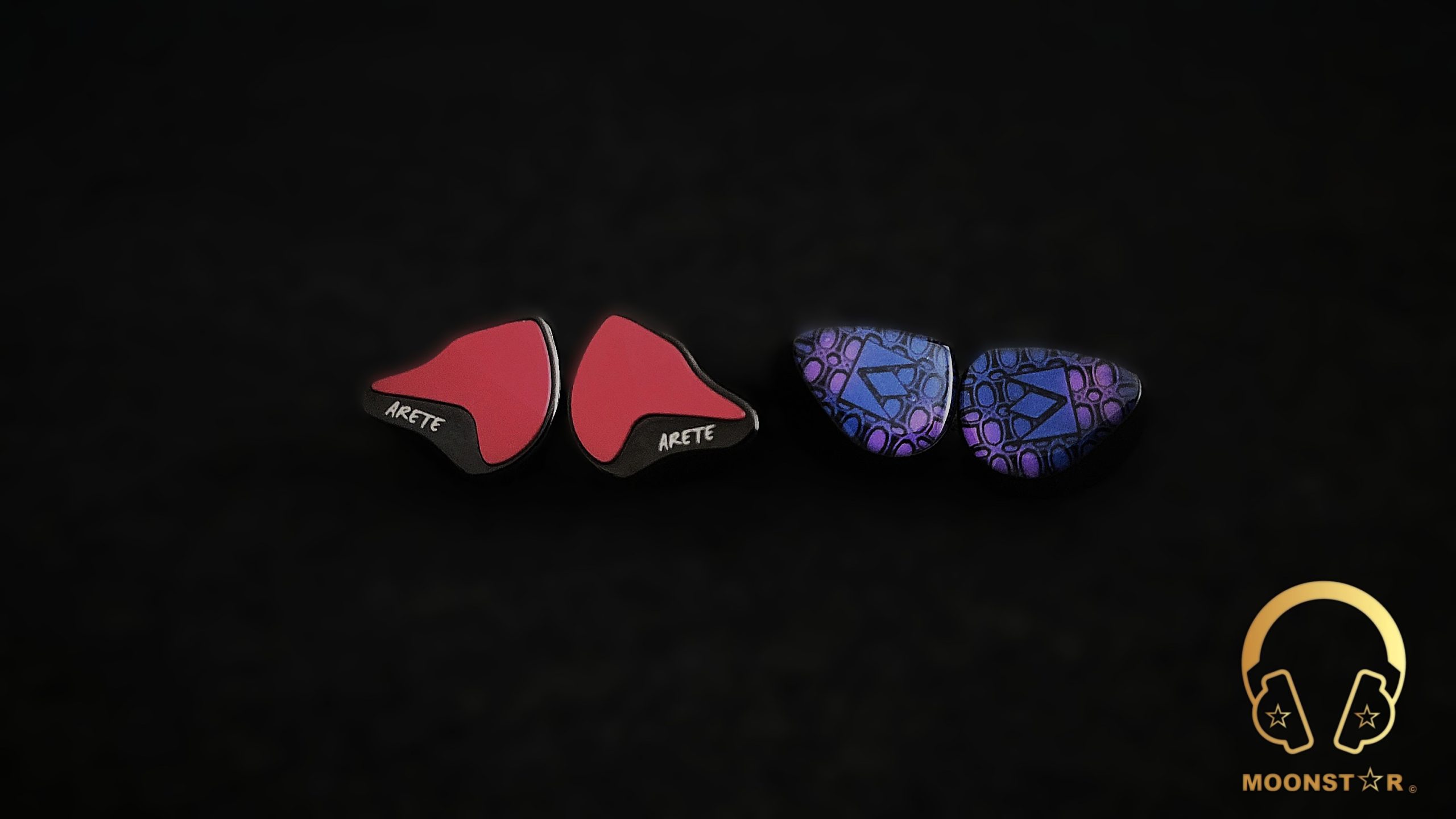
ZiiGaat x Fresh Reviews Arete II vs. SIMGOT SuperMix 5:
The SIMGOT SuperMix 5 at $219 is a five-driver quadbrid using a DLC dynamic driver, two custom balanced armatures, a micro planar magnetic driver, and a 10mm bone conduction driver, all operating through a four-way passive crossover. The bone conduction driver operates across a broad 200Hz to 7kHz range and adds a tactile, physically differentiated quality to the lower midrange and upper bass that conventional air-conduction drivers cannot replicate. The SuperMix 5 is $60 less expensive than the Arete II and approaches the mid-fi bracket from a technically more ambitious driver configuration.
In the bass region, the Arete II and SuperMix 5 both produce elevated, impactful low ends, but the nature of the bass character differs meaningfully. The Arete II’s dynamic driver delivers conventional acoustic bass with better sub-bass extension and a more viscerally physical impact character. The SuperMix 5’s bone conduction driver adds a mechanical tactility and tonal density to the upper bass and lower midrange that has no acoustic equivalent in the Arete II’s configuration. The SuperMix 5’s bass is more physically differentiated in its texture; the Arete II’s bass is more conventionally impactful. Neither is strictly superior: they suit different aspects of bass-focused listening.
In the midrange, both IEMs place vocals forward in the mix and deliver an engaging, present vocal character. The SuperMix 5’s bone conduction driver’s broad operating range adds additional density and physical presence to the midrange, giving acoustic instruments and voices a weight and tactile quality that the Arete II’s ED 29689 pair does not produce through conventional air conduction alone. The Arete II’s midrange is more analytically even and better at communicating the specific textural detail of the Knowles BA drivers; the SuperMix 5’s midrange has more physical character but a slightly less even tonal balance across its operating range.
Treble on the Arete II is more energetic and has more upper extension than the SuperMix 5’s micro planar, which is smooth and controlled but somewhat more relaxed in the upper registers. Soundstage width favors the SuperMix 5 through its bone conduction contribution; the Arete II offers better treble-driven air and spatial openness. Build quality is comparable between the two metal-shelled products. At $60 less, the SuperMix 5 offers a technically more complex driver configuration with the bone conduction element as a genuinely distinctive feature; the Arete II is the more immediately accessible and genre-versatile option with its bass switch and more conventionally satisfying sub-bass impact.
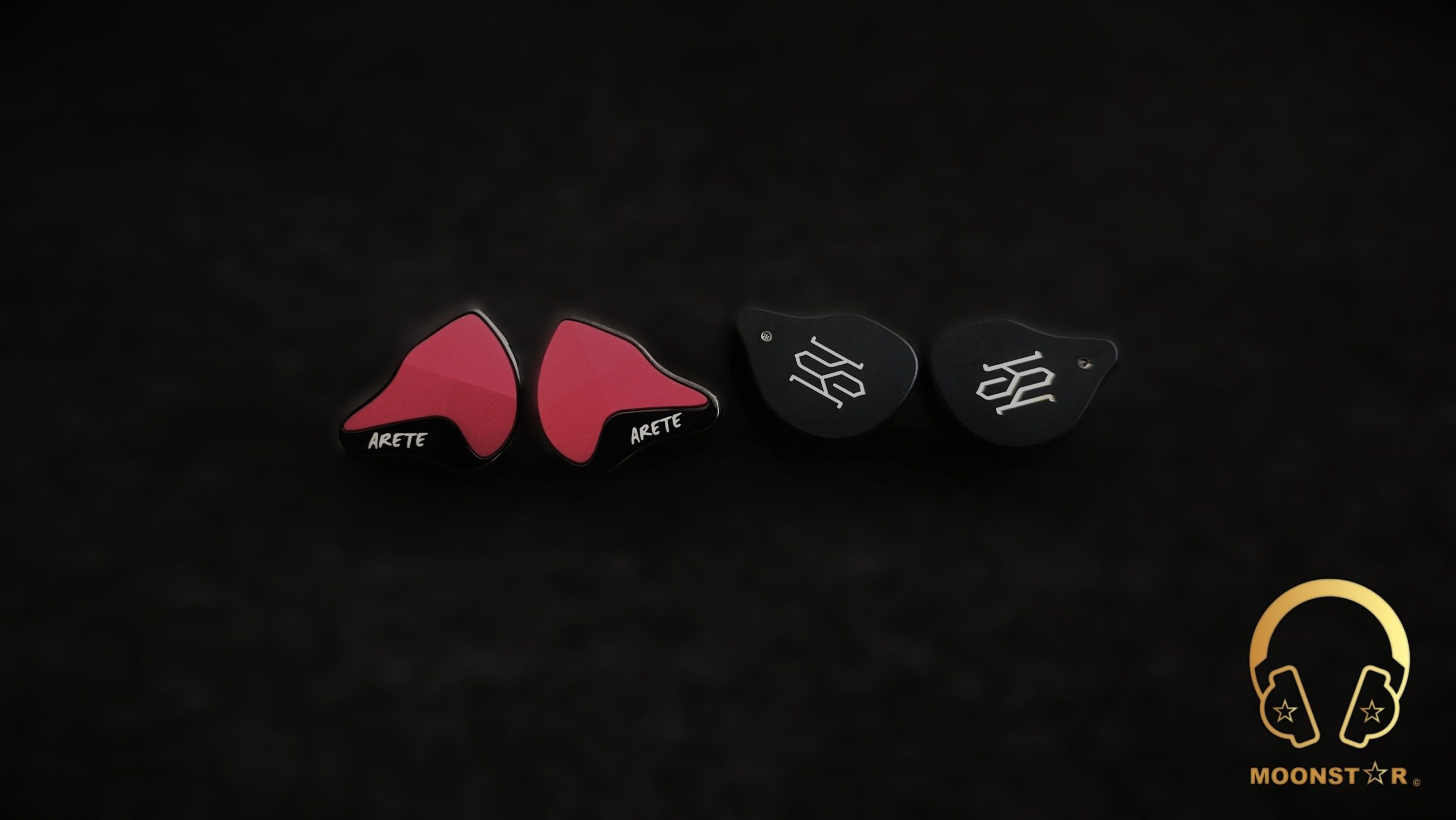
Conclusion:
The ZiiGaat x Fresh Reviews Arete II carves a strong position in the IEM market with its refined hybrid tuning that successfully blends musical enjoyment with technical competence. Its multi-driver setup, combined with the convenient bass switch, delivers impactful yet controlled bass, natural mids, and smooth extended treble, making it a versatile daily driver suitable for a wide range of genres. The premium build, comfortable fit, and thoughtful accessories further enhance its appeal. Priced competitively, the Arete II offers excellent value and stands out as a well-rounded choice for audiophiles seeking balance, clarity, and musicality in a single package.
Pros & Cons
- [+] Balanced and versatile sound profile with dual-personality bass switch
- [+] Highly natural, clear, and engaging midrange performance
- [+] Smooth, non-fatiguing treble with excellent extension and air
- [+] Expansive three-dimensional soundstage with pin-point imaging accuracy
- [+] Highly comfortable ergonomic shell design for long listening sessions
- [+] High-quality modular cable system out of the box
- [+] Exceptional technical value for its performance bracket
- [-] Requires a proper source pairing to truly unlock its full transient speed and resolution
- [-] Matte finish on the inner shell resin is prone to showing minor scuffs or dust over time
- [-] Physical tuning switch is quite small and can be a bit tricky to toggle quickly without using a small tool or fingernail
Thank you for the Read!