
Cayin RU3 Review
Cayin RU3 Review
Introduction:
The Cayin RU3 represents a significant entry into the highly competitive market of portable Digital-to-Analog Converter (DAC) and amplifier dongles. Following the success of Cayin’s previous portable units, the RU3 is engineered for the discerning audiophile who demands high-fidelity audio without the constraints of desktop gear. It distinguishes itself by employing the new generation ESS ES9069Q DAC chip and a robust, quad-balanced amplification stage, all housed within an exceptionally compact chassis. Designed to seamlessly integrate with modern mobile source devices, the RU3 aims to deliver an organic, musical, and high-powered performance. This comprehensive review explores its unique design philosophy, detailed technical specifications, and, most importantly, its ability to elevate the listening experience across a variety of demanding audio gear, including high-efficiency In-Ear Monitors (IEMs) and relative power-hungry Planar Magnetic Headphones.
This review will thoroughly explore the Cayin RU3’s features and performance, offering personal impressions of this ultra-portable DAC/Amplifier.
Disclaimer:
I would like to thank Cayin for providing me RU3 Portable DAC/Amplifier sample for review purposes. I am not affiliated with Cayin beyond this review and these words reflect my true, unaltered opinions about the product.
Price & Availability:
The Cayin RU3 is positioned in the highly competitive entry-to-mid-level segment of portable dongle DAC/AMPs, generally priced around $99.00 USD. This highly aggressive pricing, given its robust feature set (ES9069Q DAC and 560mW output), places it as an exceptional value proposition in the market, offering features typically reserved for significantly more expensive units.
More information’s can be found under the link below;
Package & Accessories:
The Cayin RU3 arrives in a presentation that is both elegant and practical, signaling the premium nature of the device without unnecessary embellishment. The compact box is efficiently designed, ensuring the unit is well-protected during transit.
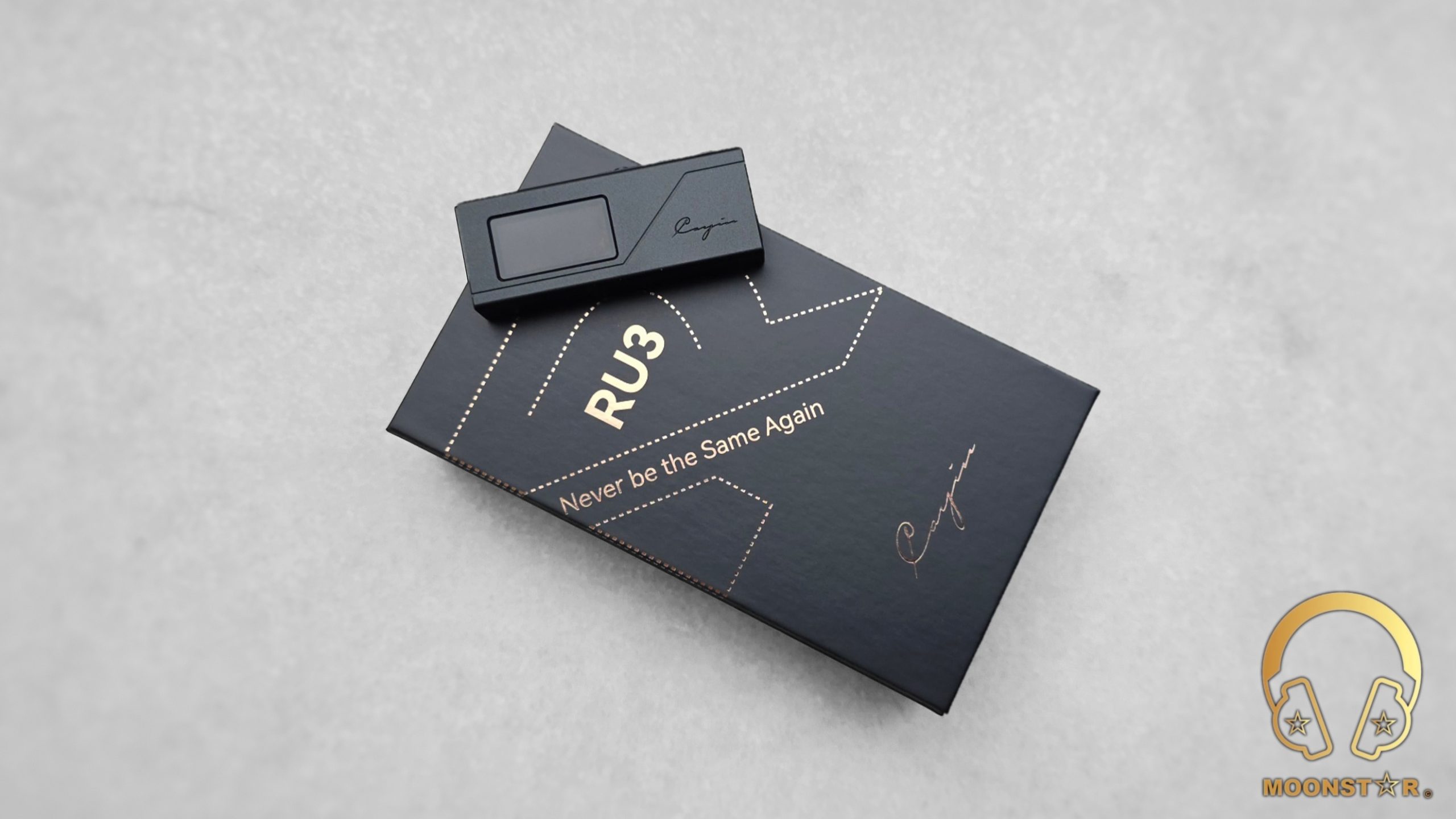
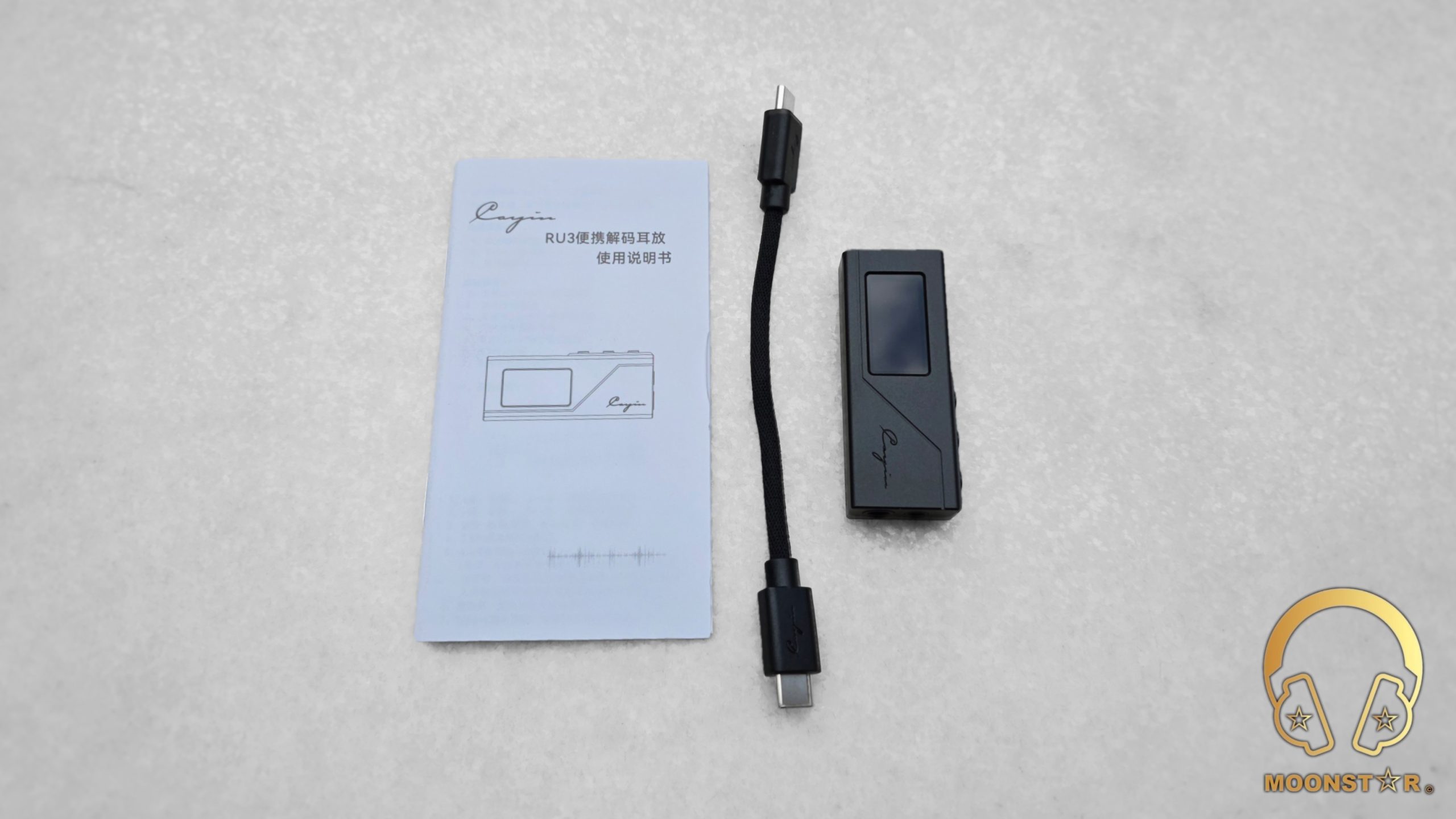
Inside the package, the user will find the main RU3 unit, accompanied by a modest but essential collection of accessories:
- 1x Cayin RU3 USB DAC/Amplifier Dongle
- 1x USB-C to USB-C Interconnect Cable
The overall presentation is focused on core functionality and universal compatibility, providing everything necessary to begin listening immediately across common source platforms. However, a dedicated leather case for the device is sold separately; given the competitive price tag of the unit, this omission is not deemed unreasonable.
Design and Build Quality:
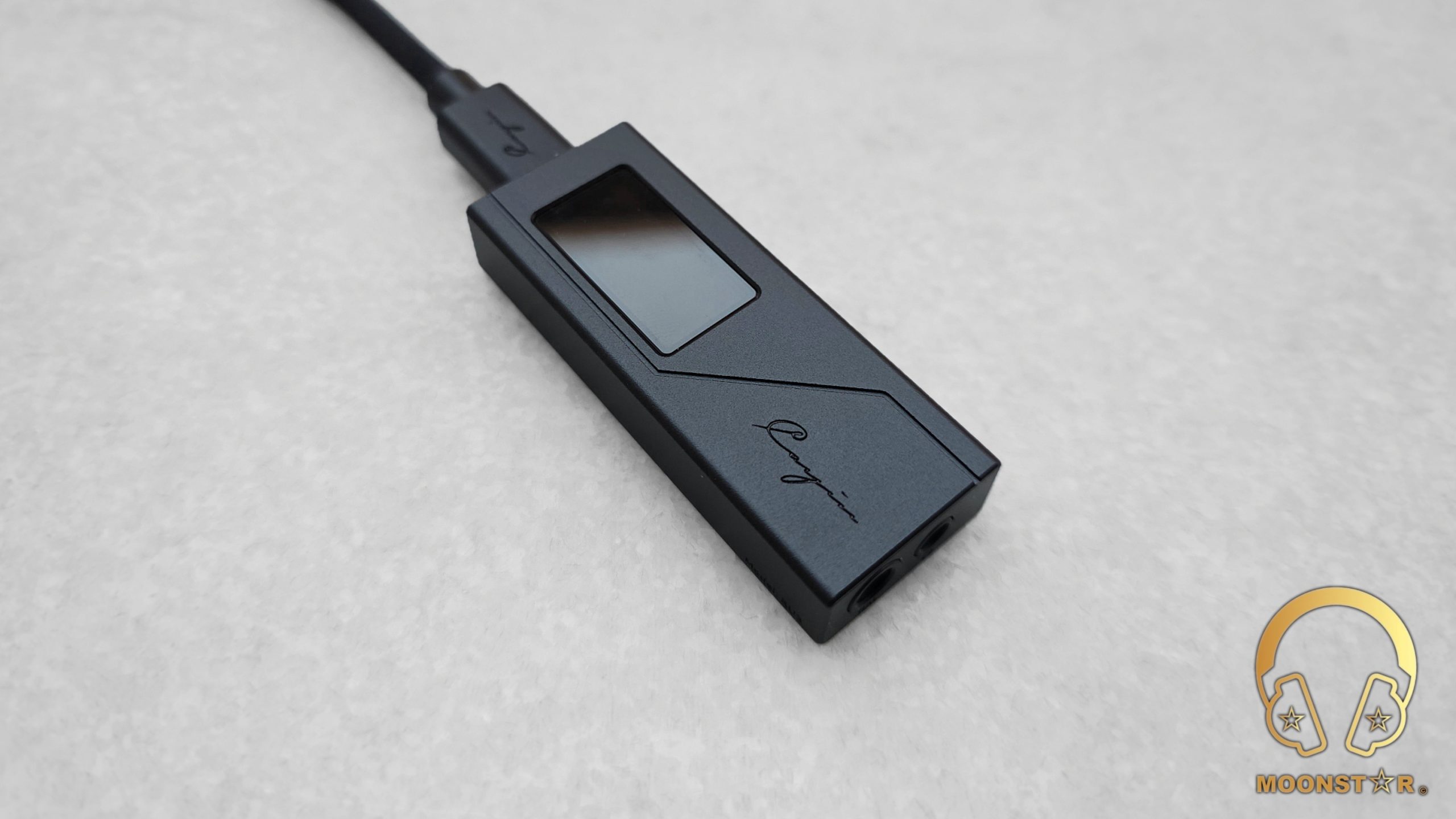
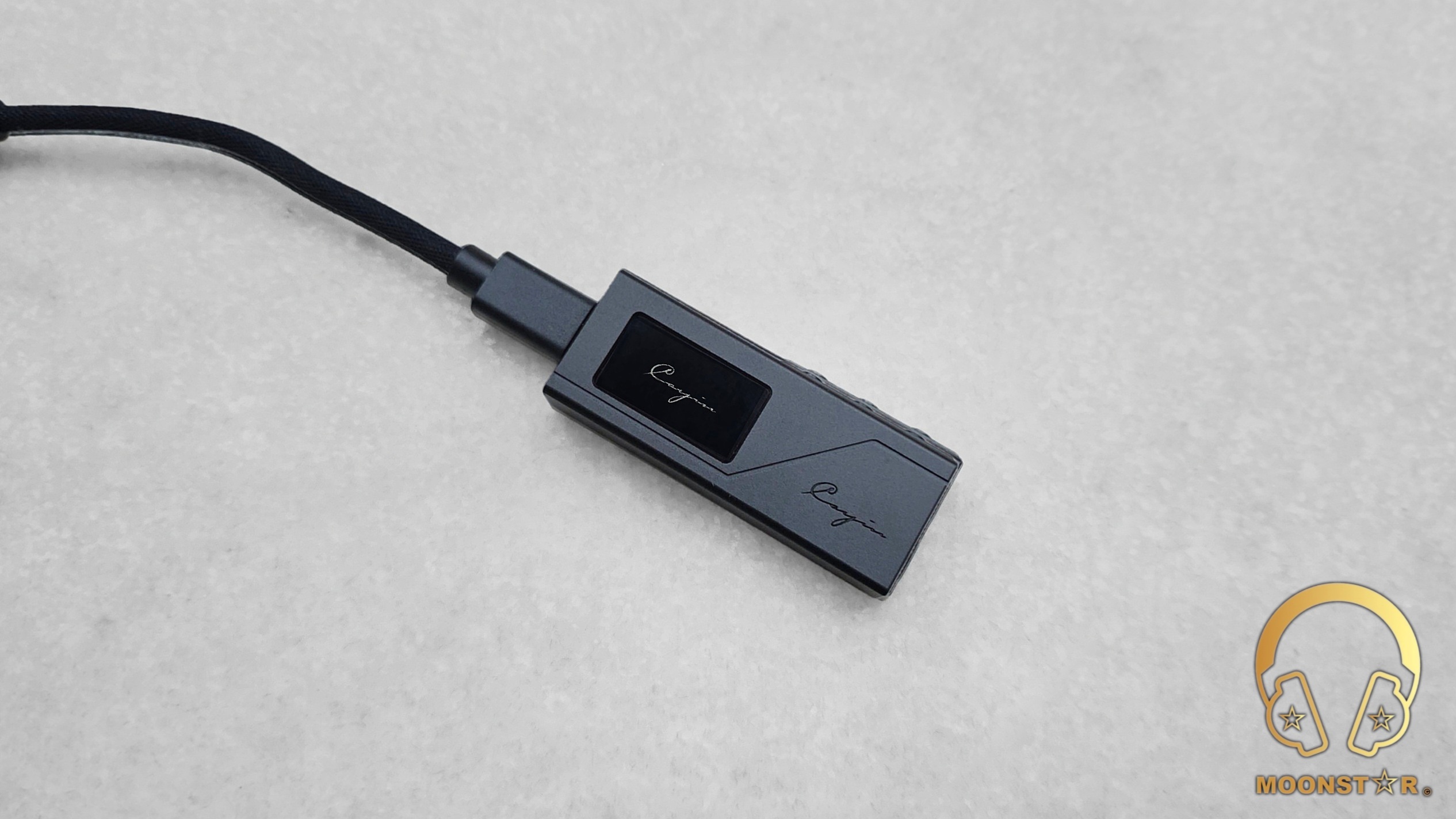
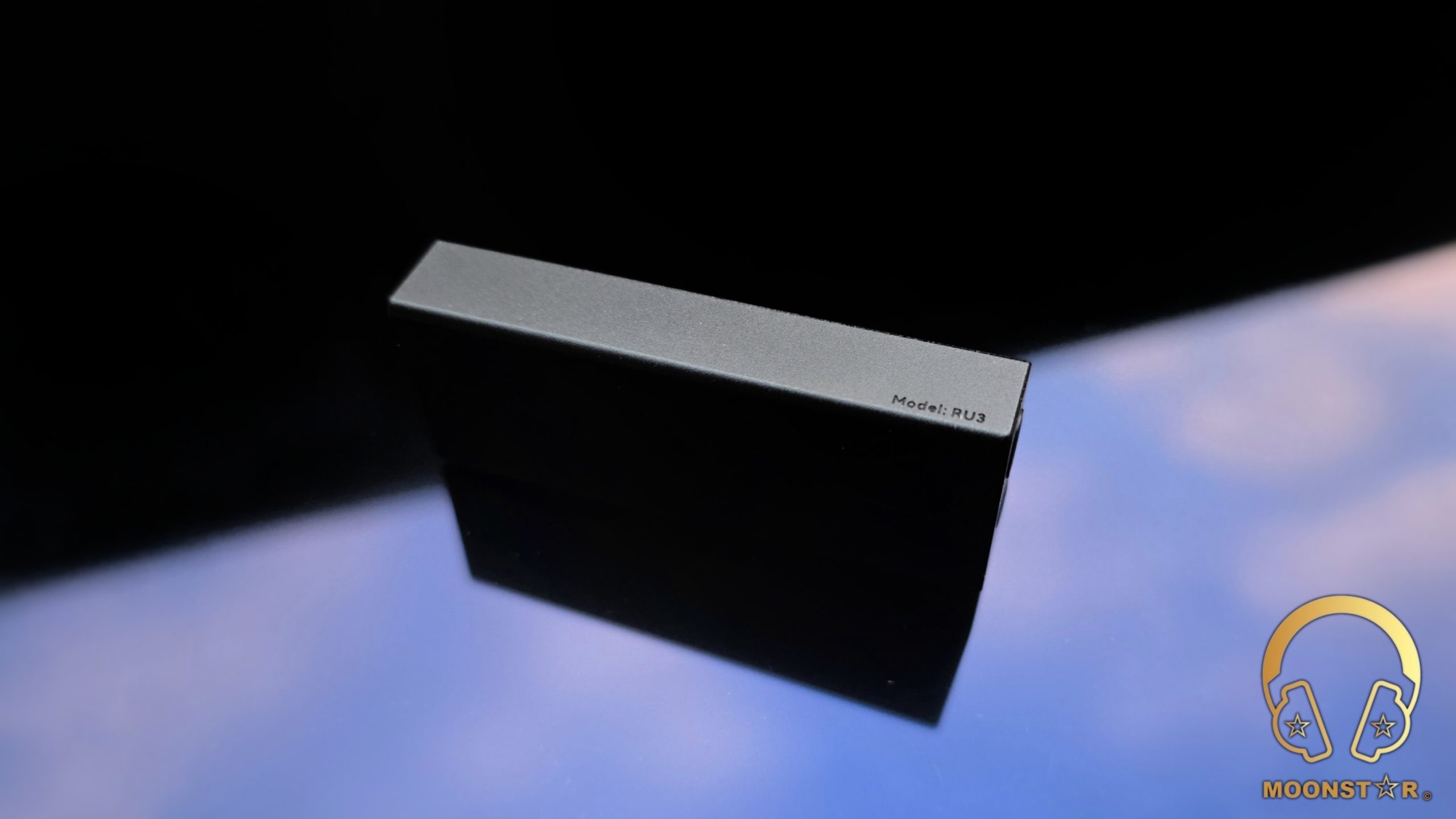
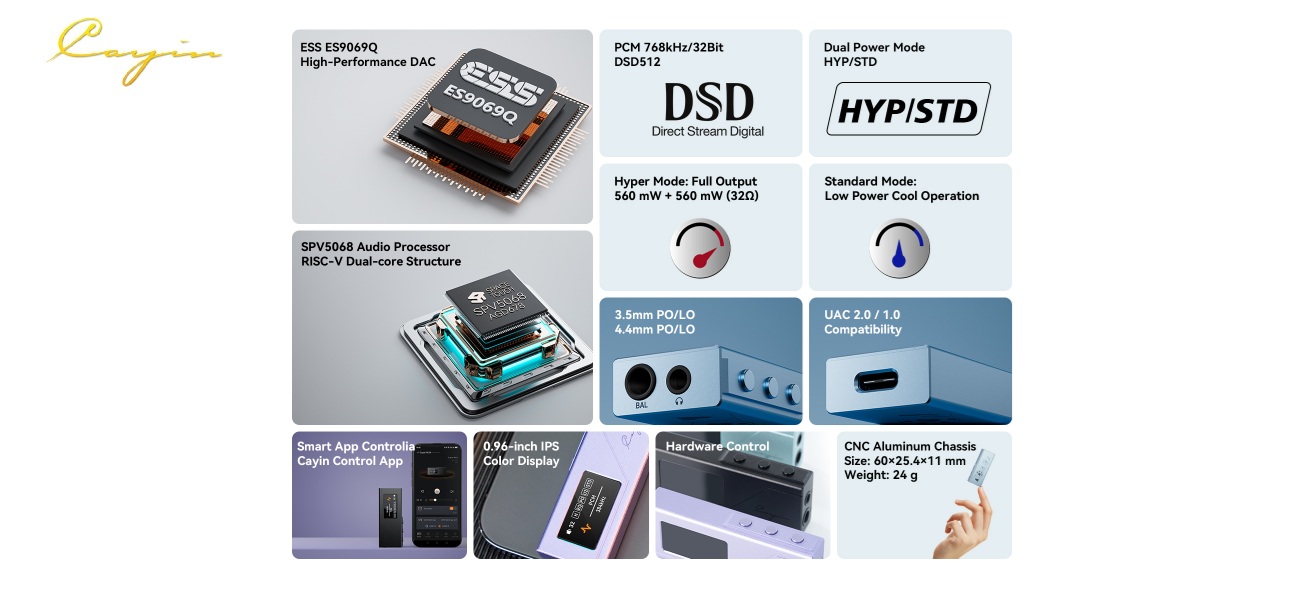
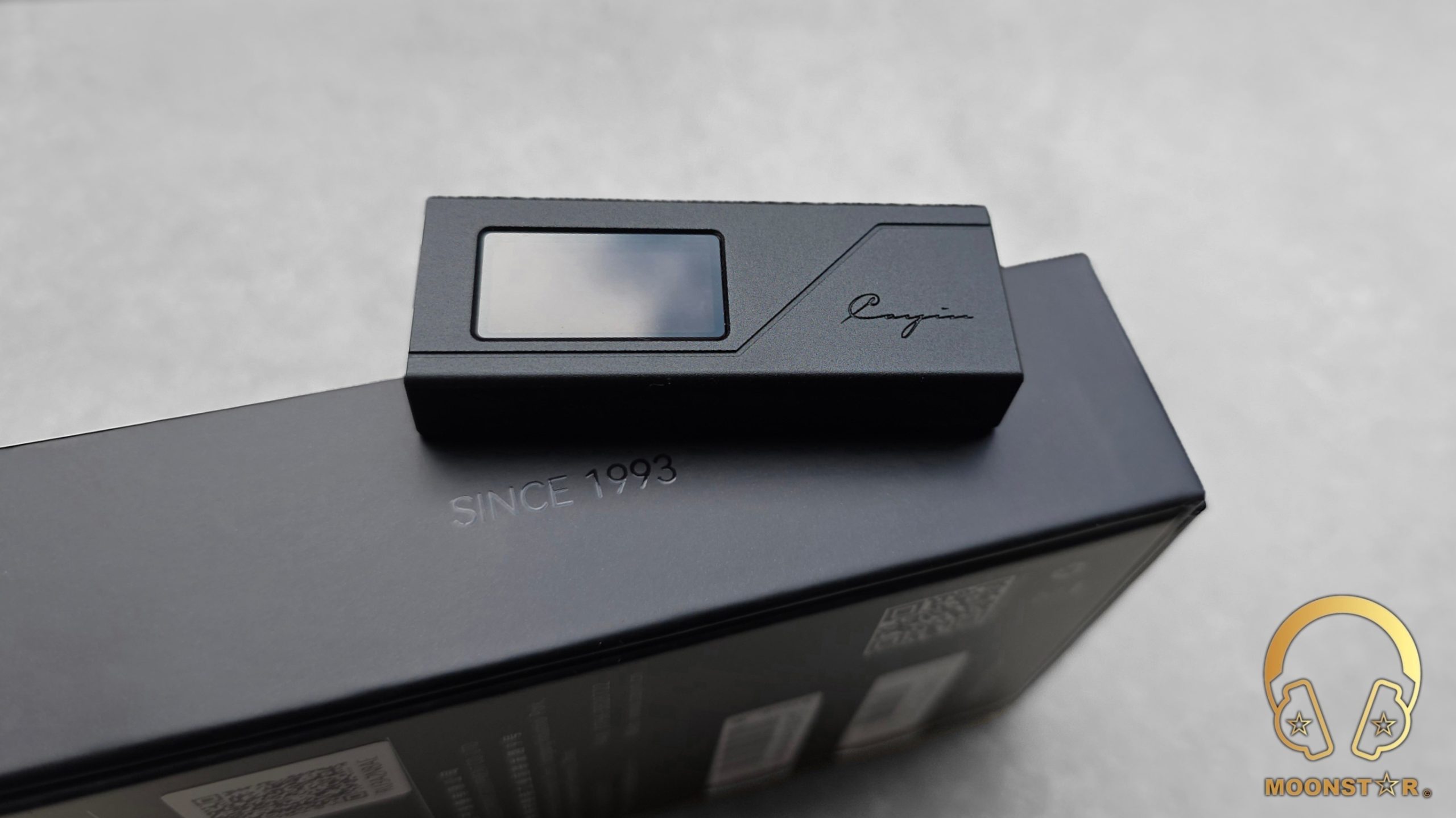
The Cayin RU3 features a functional yet refined design, centered around a compact, rectangular chassis made from CNC-machined aluminum. The build feels purposeful and sturdy, avoiding unnecessary bulk. Despite its robust capabilities, the RU3 maintains an exceptionally portable profile, measuring just 60mm x 25.4mm x 11mm. This compact form factor ensures it remains unobtrusive when paired with a mobile device or tucked into a pocket. Weighing only 24g, the device strikes an ideal balance between lightweight portability and the premium, dense feel of its CNC-machined aluminum construction. This choice of high-grade metal not only provides a rigid shell for the internal circuitry but also aids in heat dissipation during high-resolution playback, ensuring the device remains cool and stable during extended listening sessions.
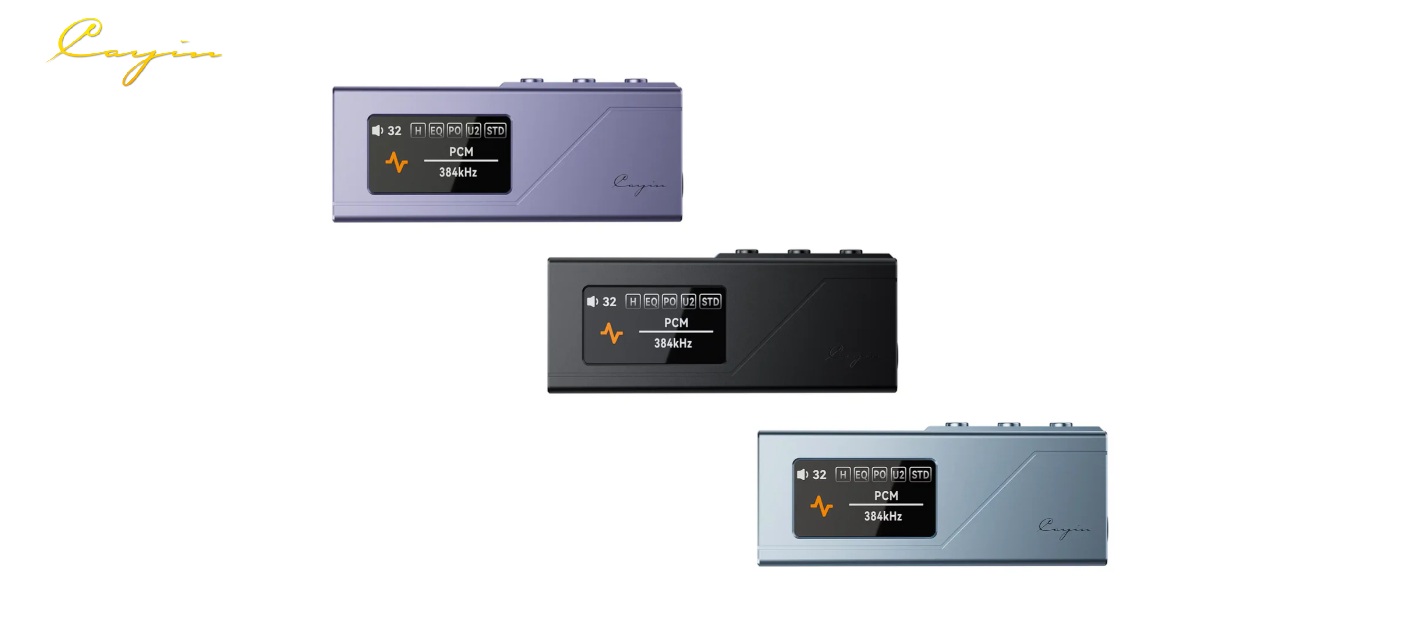
It is offered in a few different colorways, including Space Black, Light Blue (Cyan), and Purple.
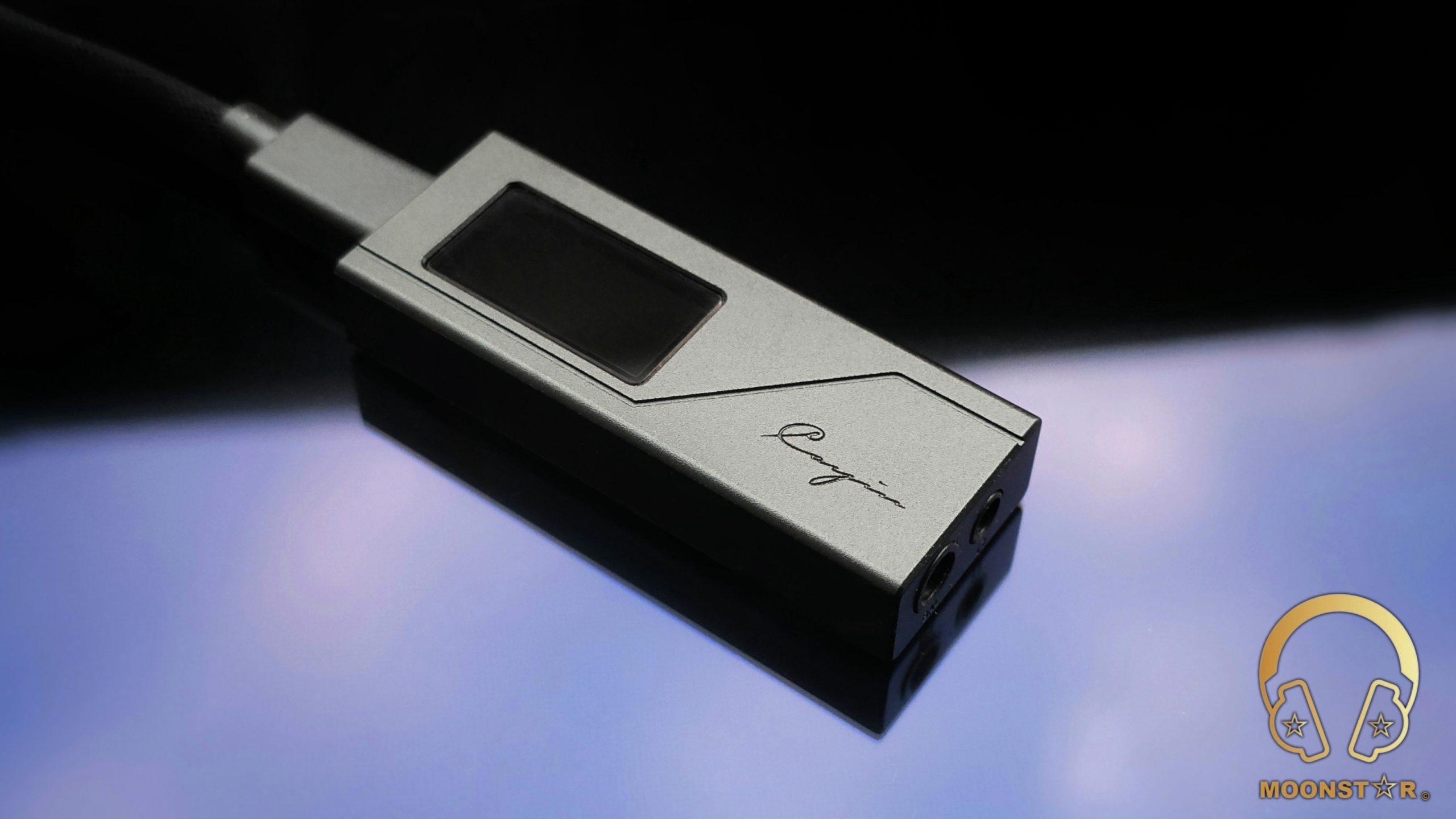
The matte finish on the RU3 is practical; it effectively resists fingerprints and gives the device a solid, durable feel in the hand. Its small footprint is a key design choice, allowing it to sit flush against a smartphone without the awkwardness common in larger portable DACs.
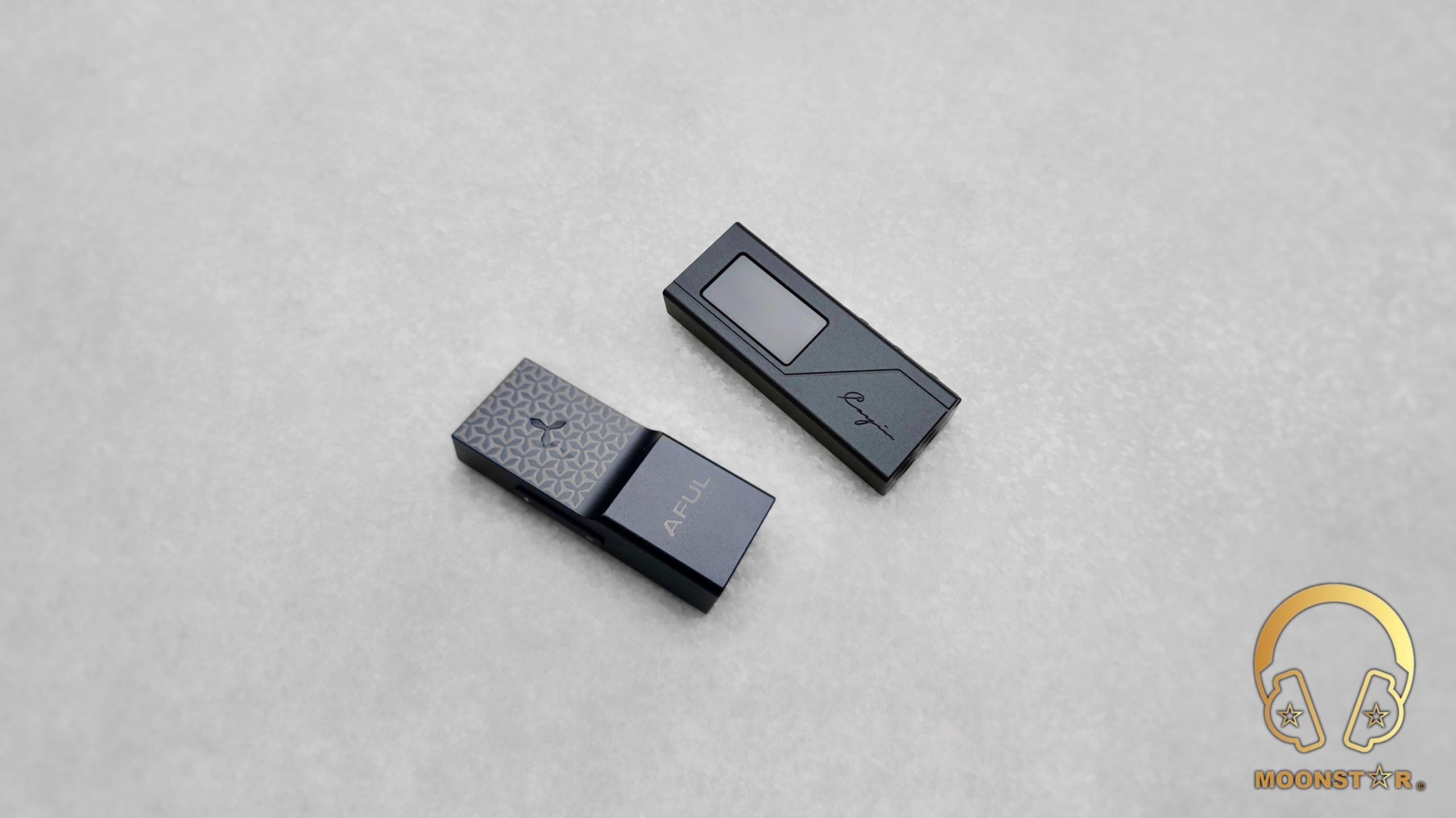
On the rear panel, Cayin has included a geometric, polygonal pattern etched directly into the metal. While this adds a bit of visual character, it also serves a functional purpose by improving grip and giving the device a more tactile, textured feel compared to smooth-surfaced alternatives.

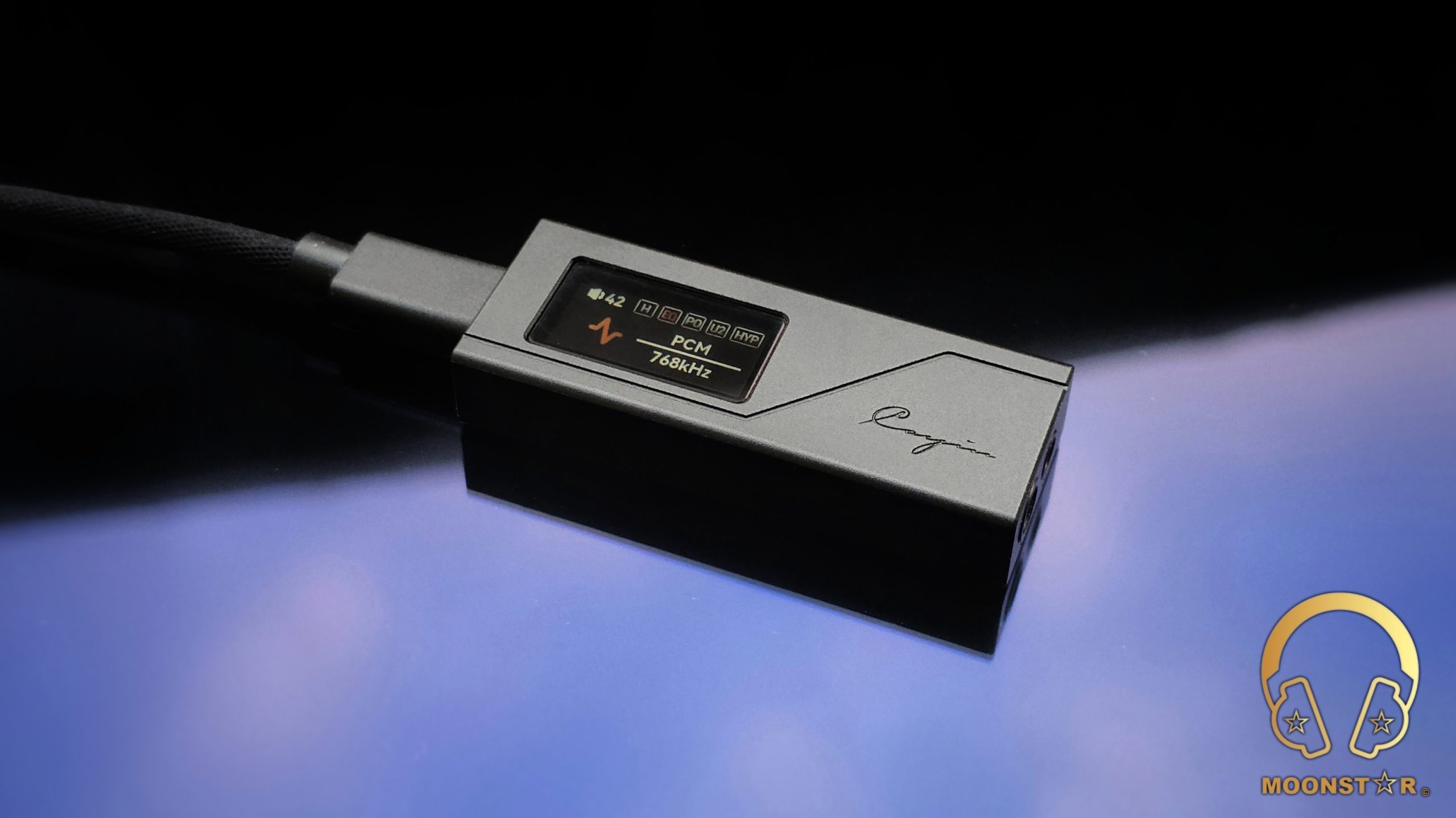
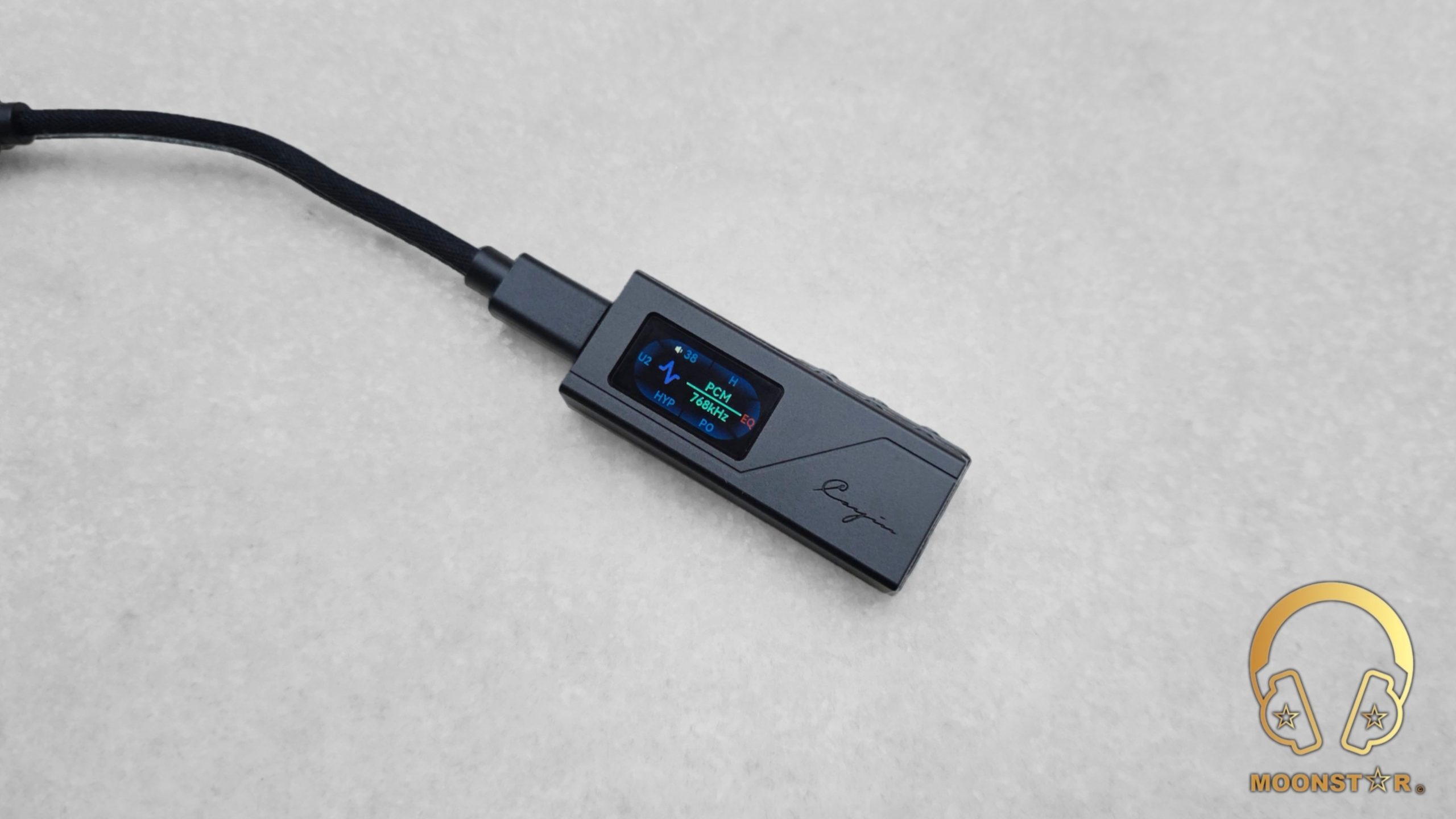
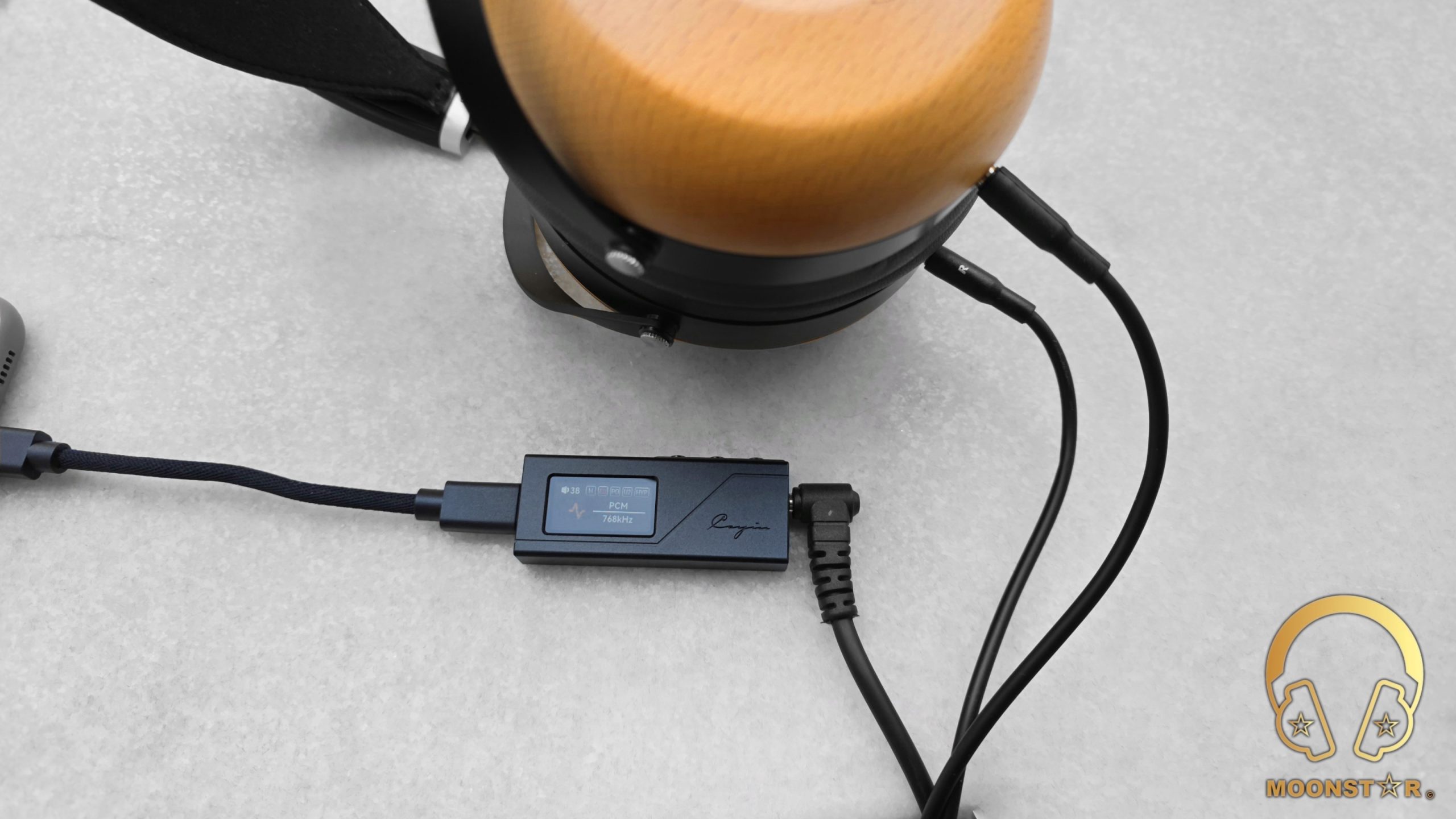
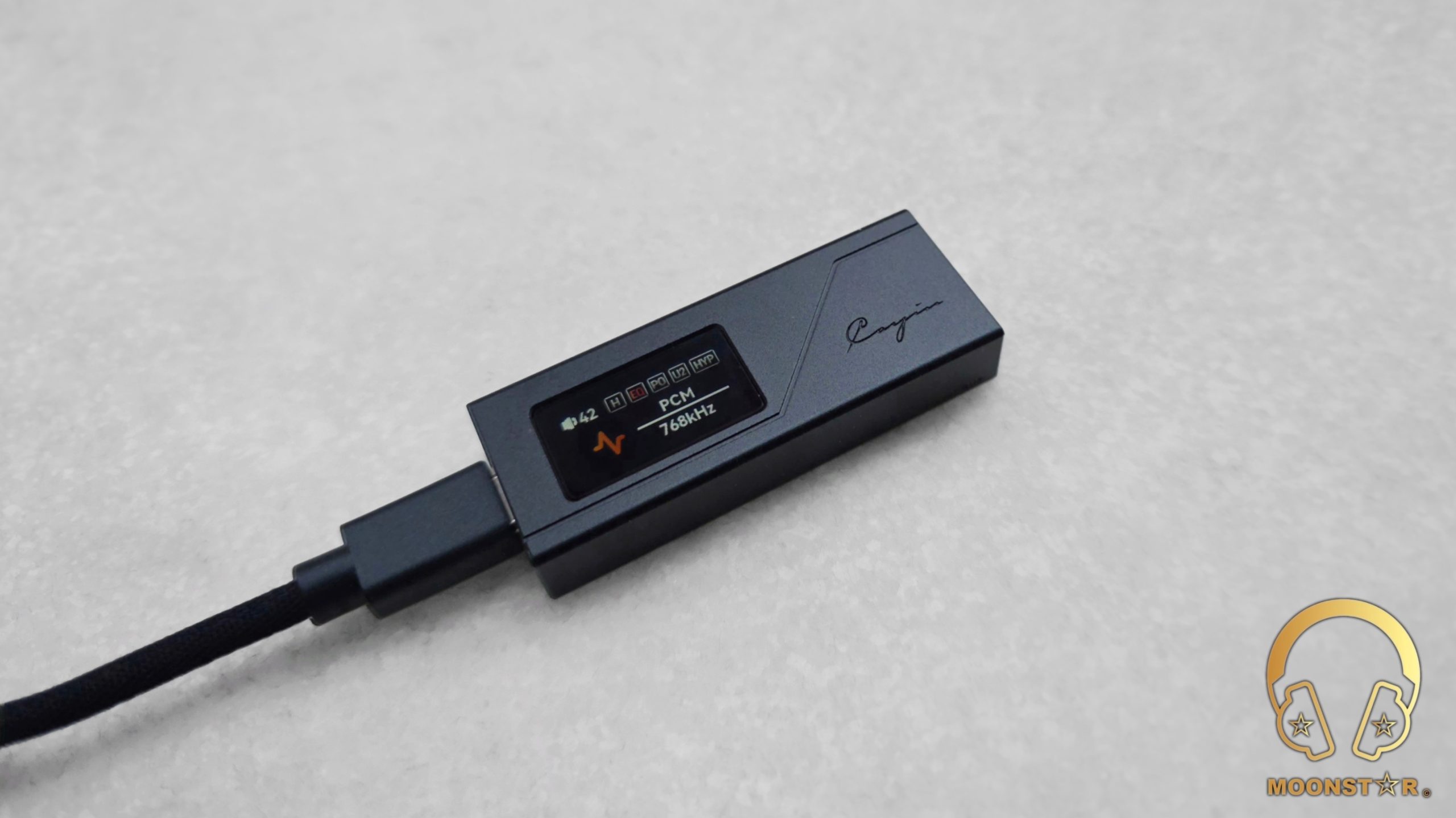
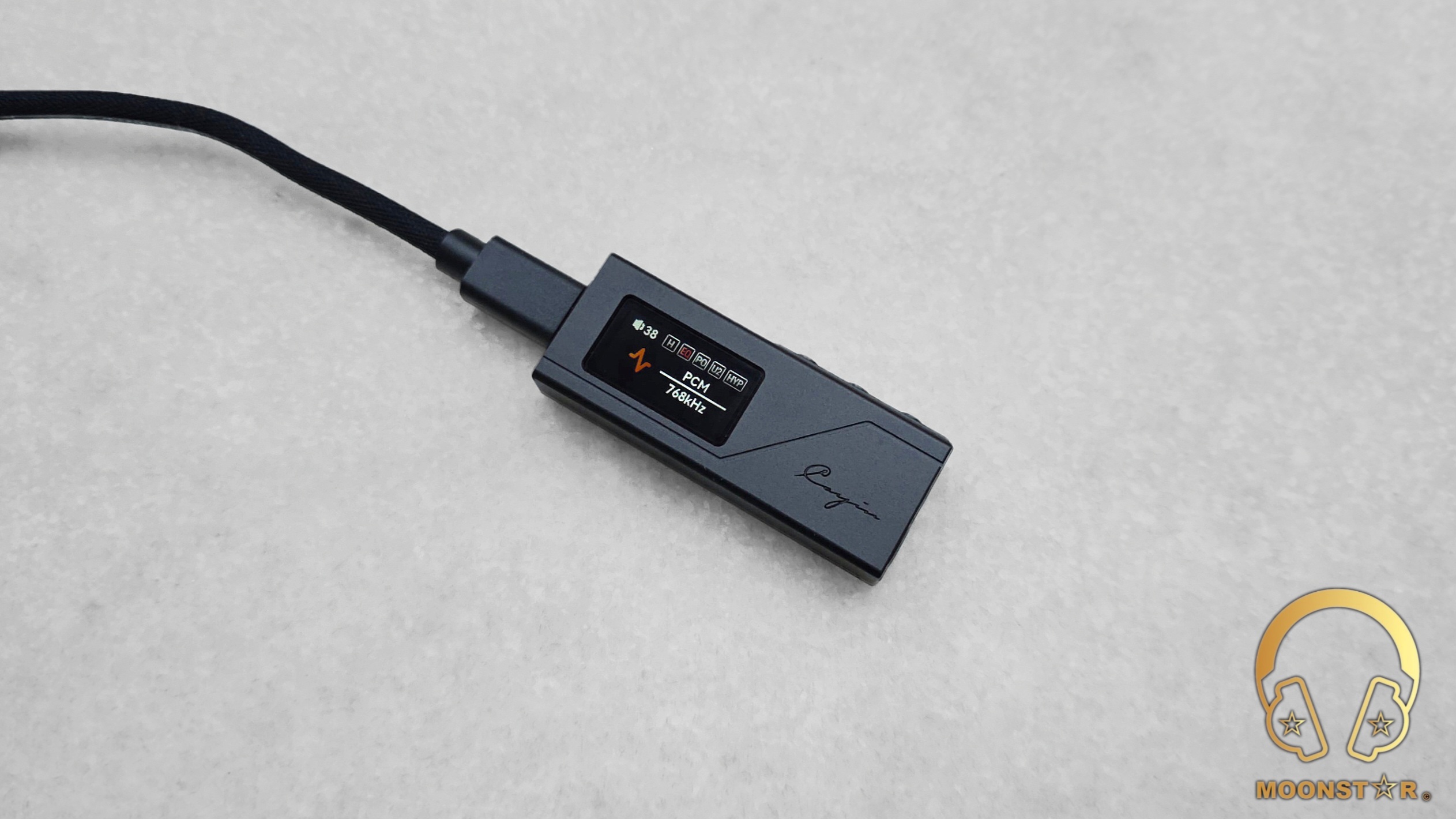
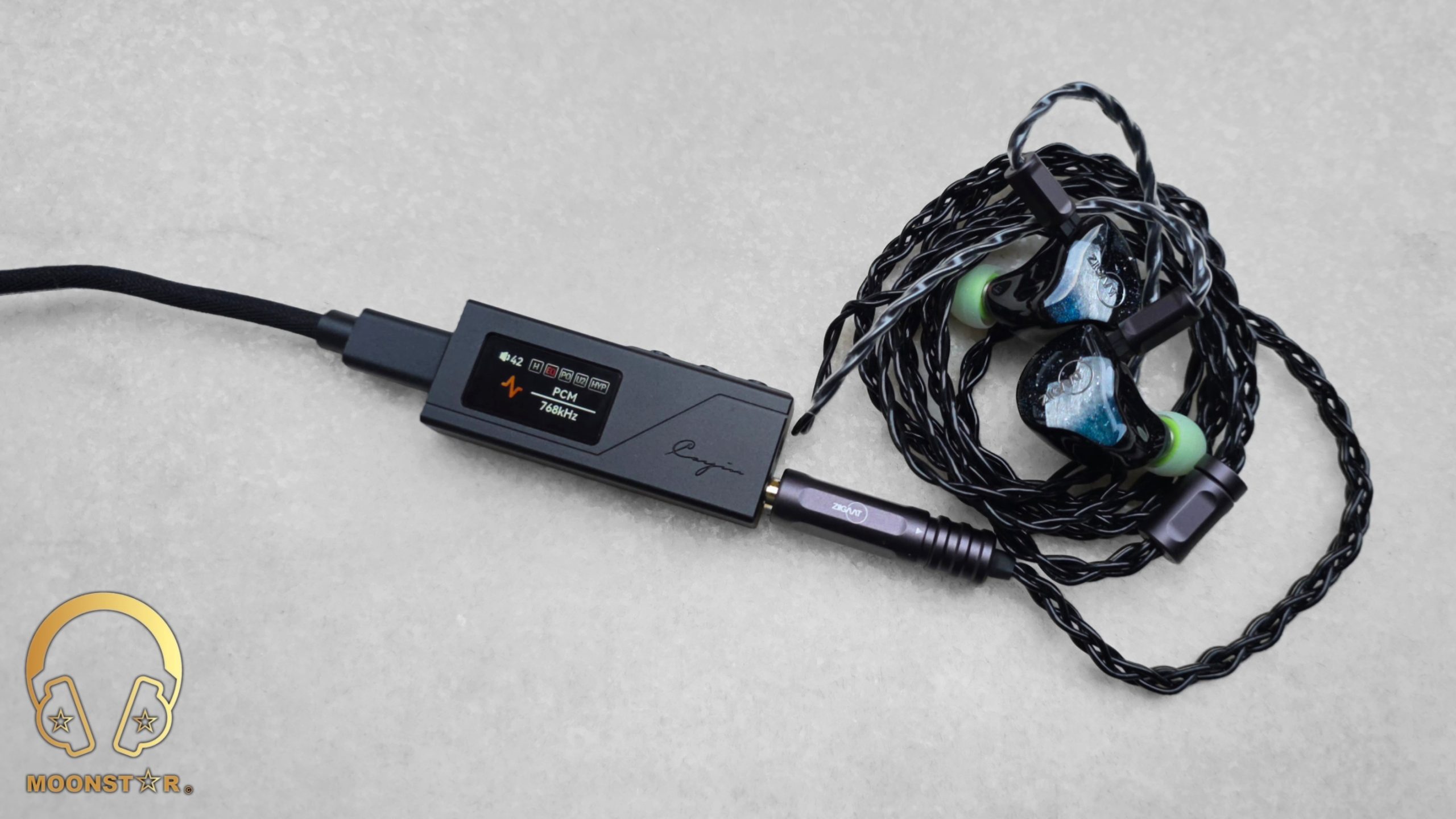
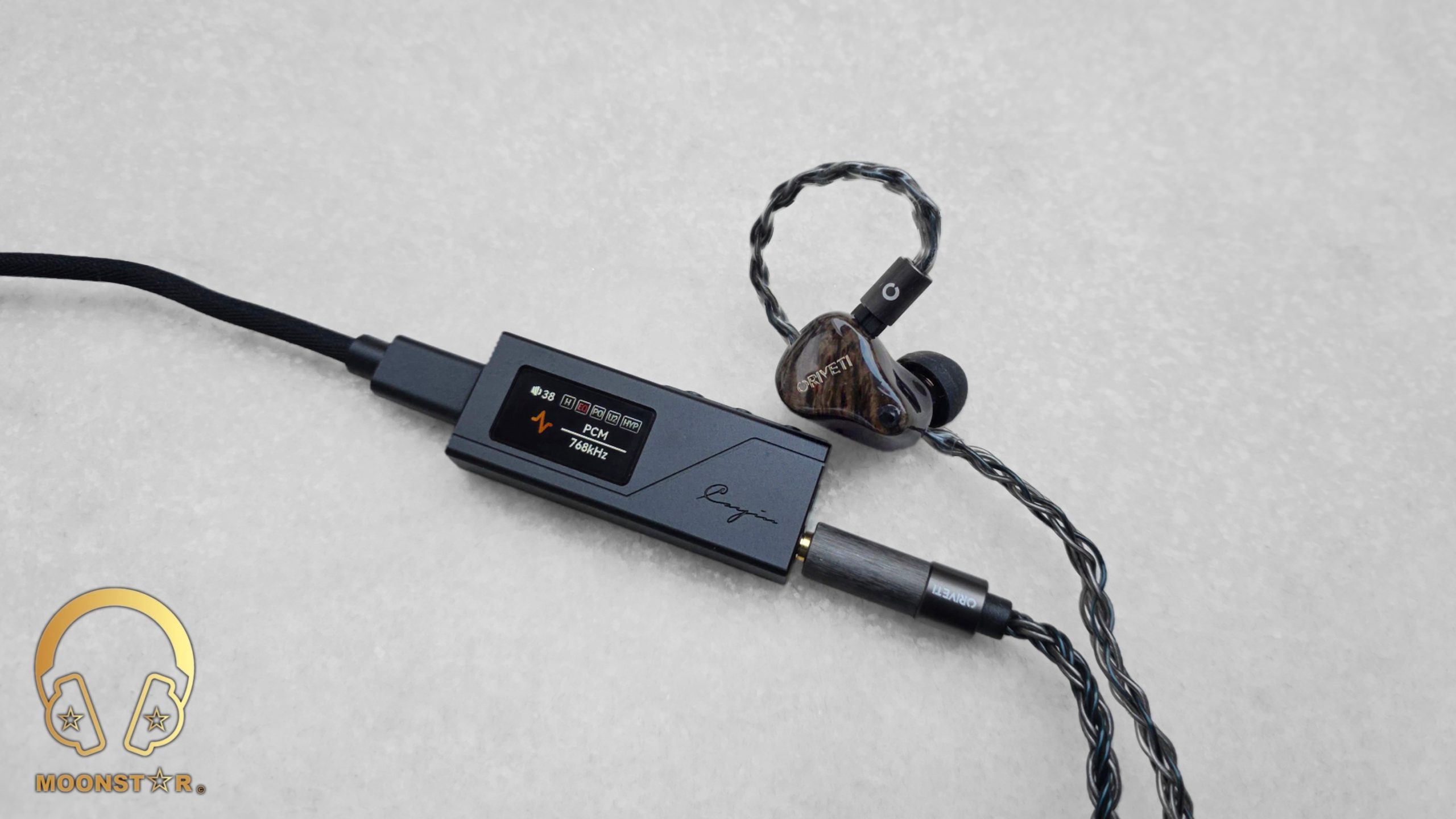
The front of the unit houses a 0.96-inch IPS color display. This screen is more informative than standard LED indicators, providing clear, real-time data on volume levels, sample rates, and the active power mode (STD or HYP). The display is bright enough to remain legible in most lighting conditions, making it easy to monitor settings.
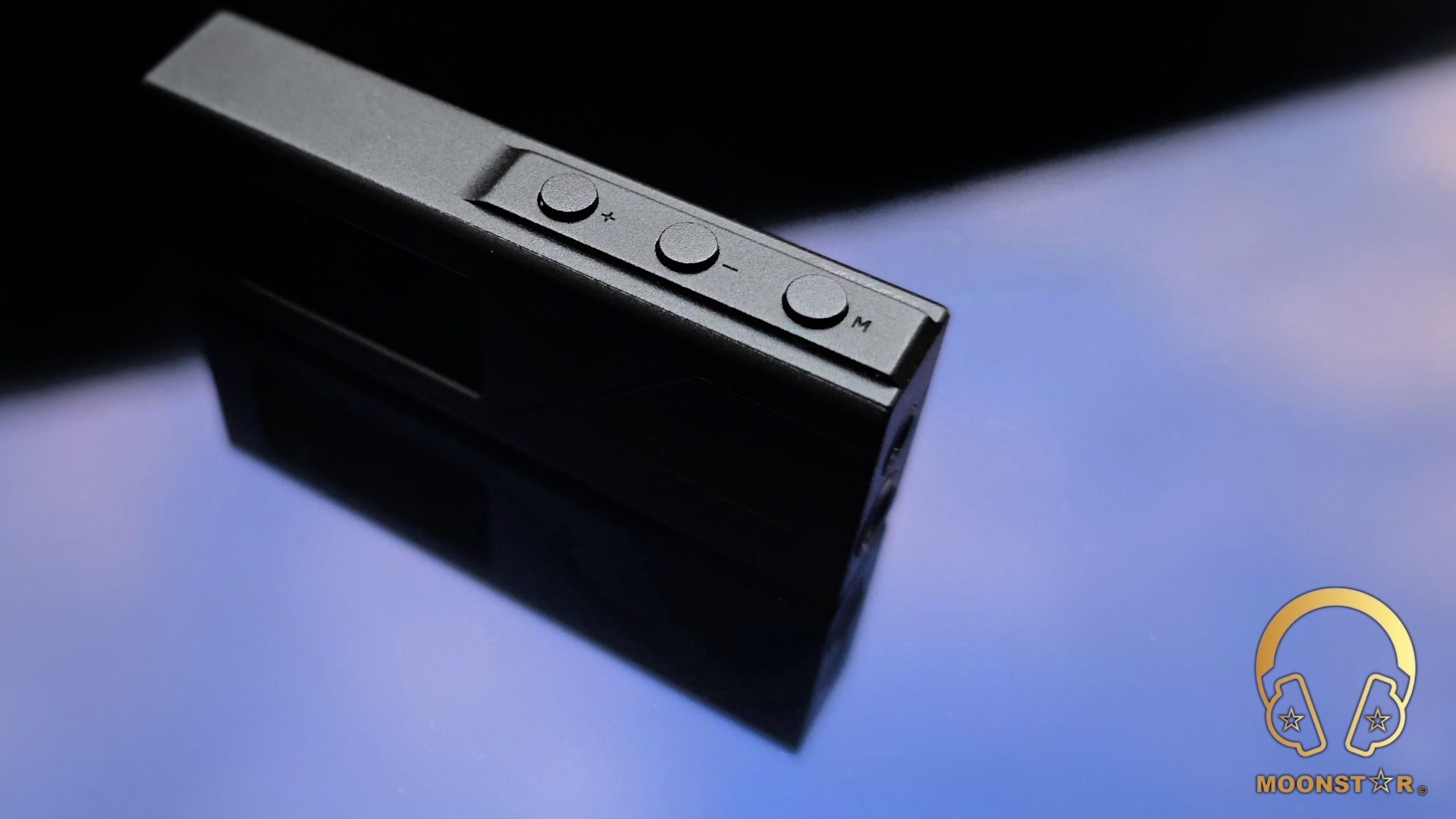
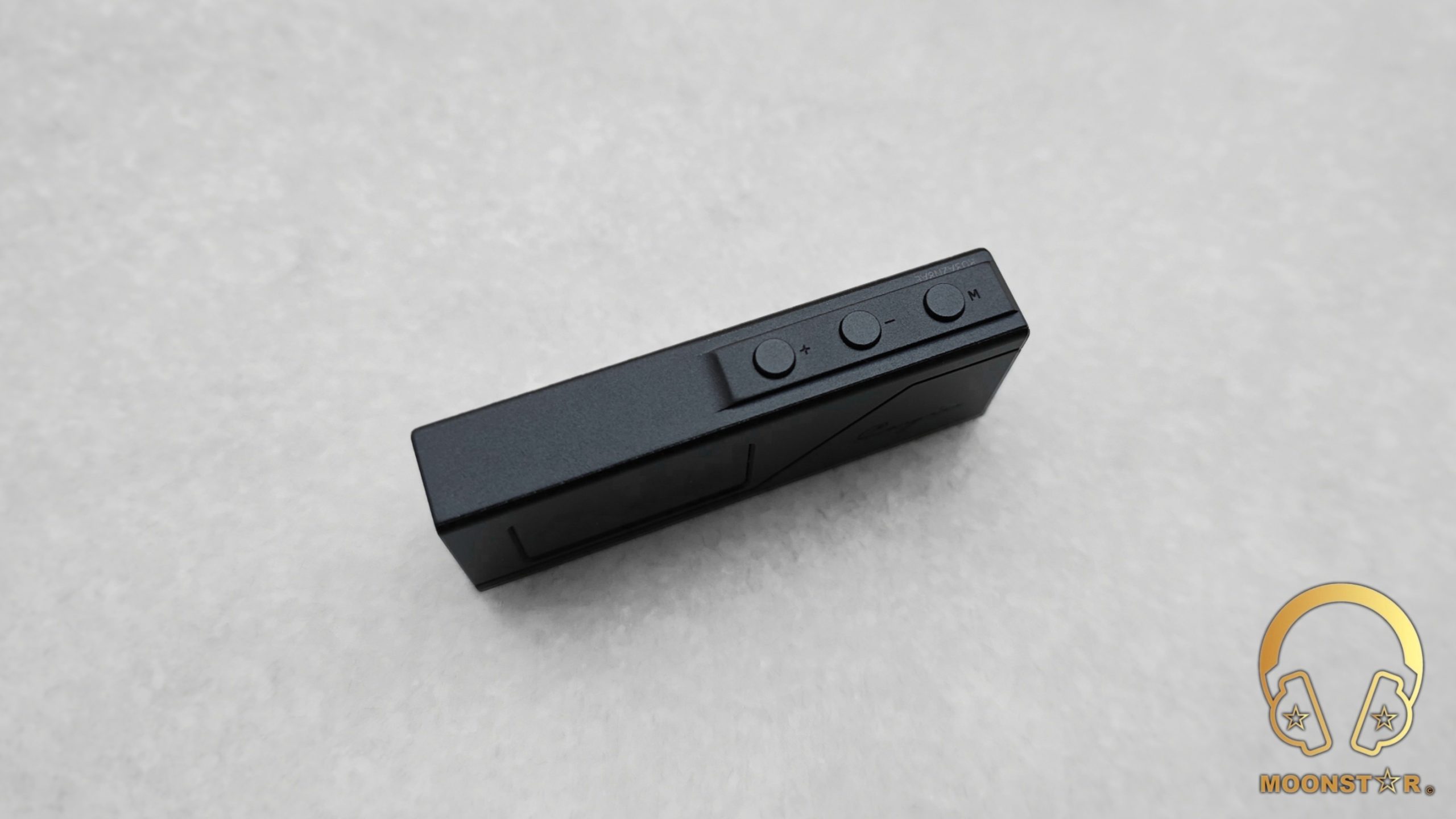
The sides of the device feature low-profile physical buttons that don’t interrupt the clean lines of the chassis:
- Volume Controls: Two tactile buttons provide hardware-based volume adjustment. This allows for more precise control (typically in 100 steps) than the standard volume steps on a smartphone.
- Multi-function Button: This button handles navigation; a short press selects menu items, while a long press opens the settings menu to adjust gain, digital filters, and power modes.
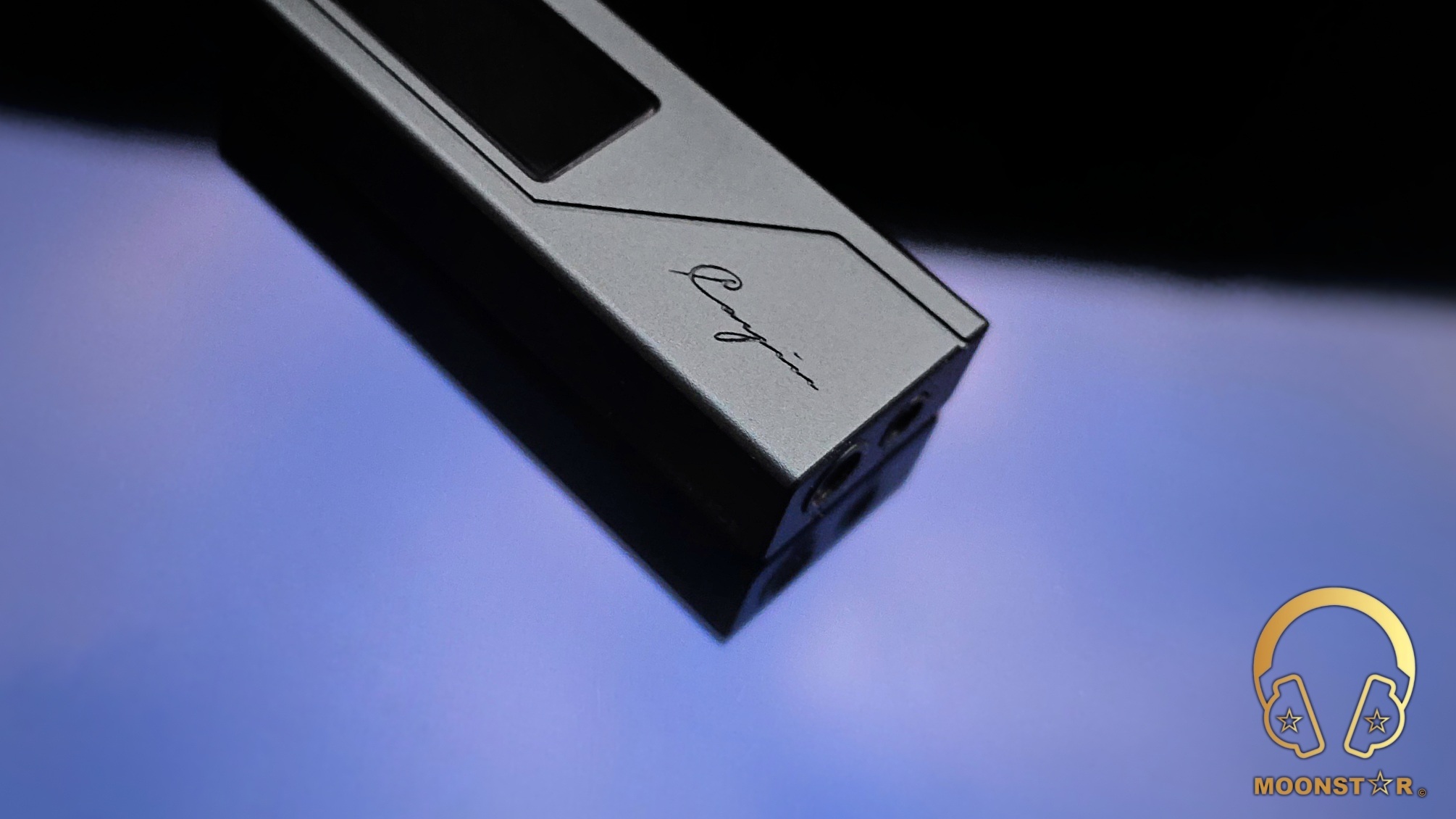
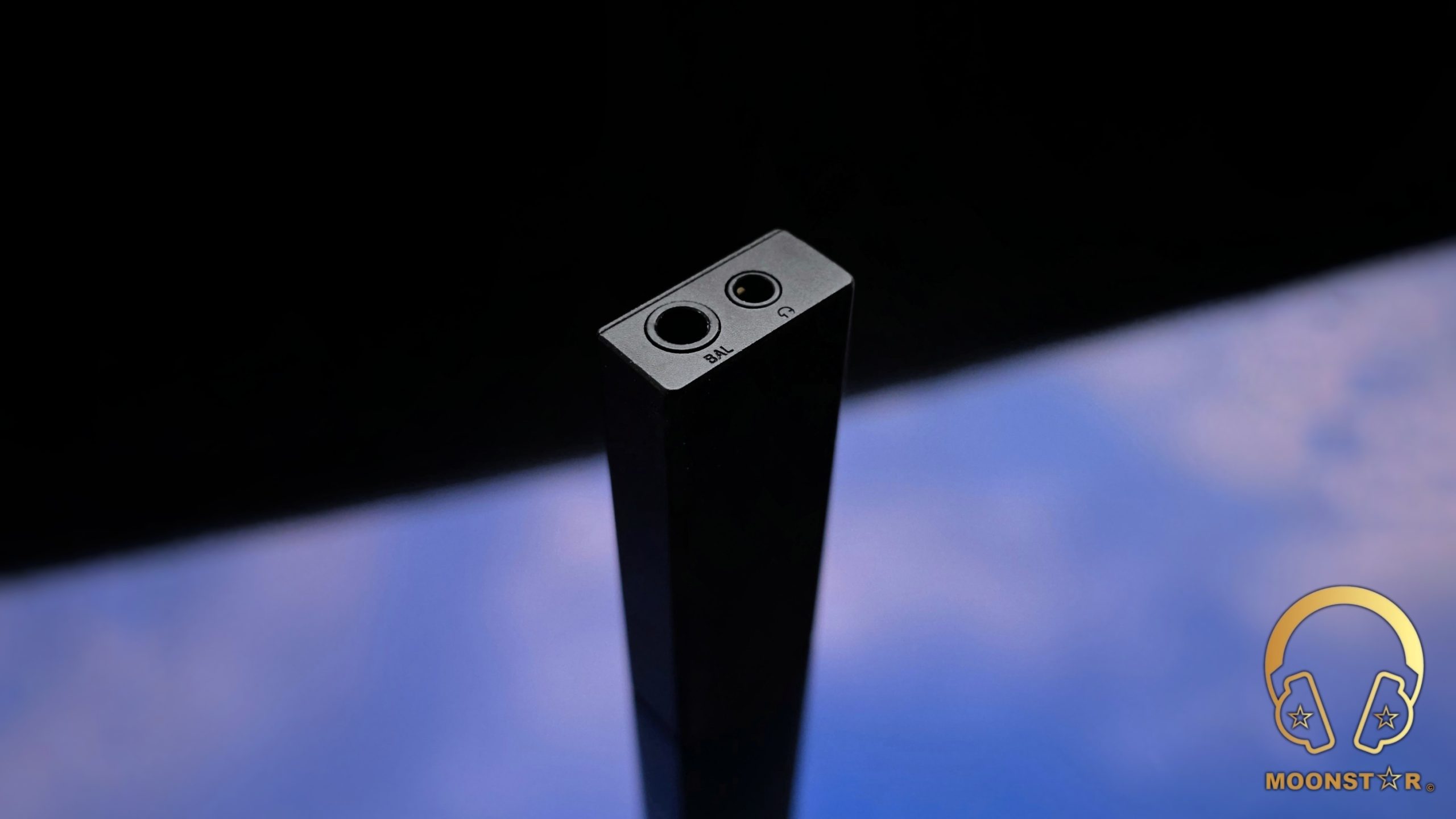
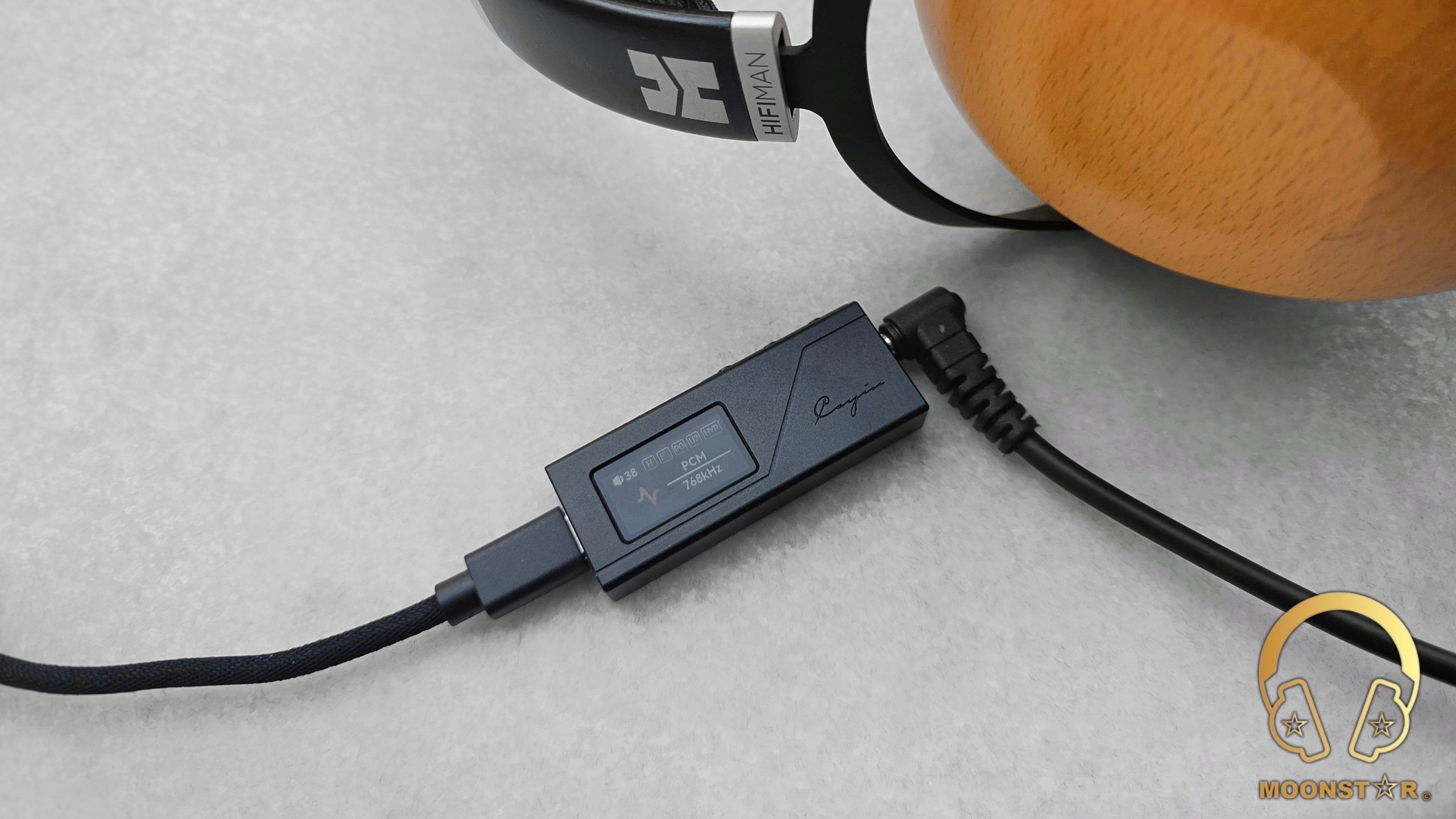
The bottom edge contains two output options: a standard 3.5mm single-ended port and a 4.4mm balanced Pentaconn port. Both can be configured as either a headphone output (PO) or a fixed-level line-out (LO) for external amplifiers. The 4.4mm jack is noticeably reinforced to ensure a stable connection over time.
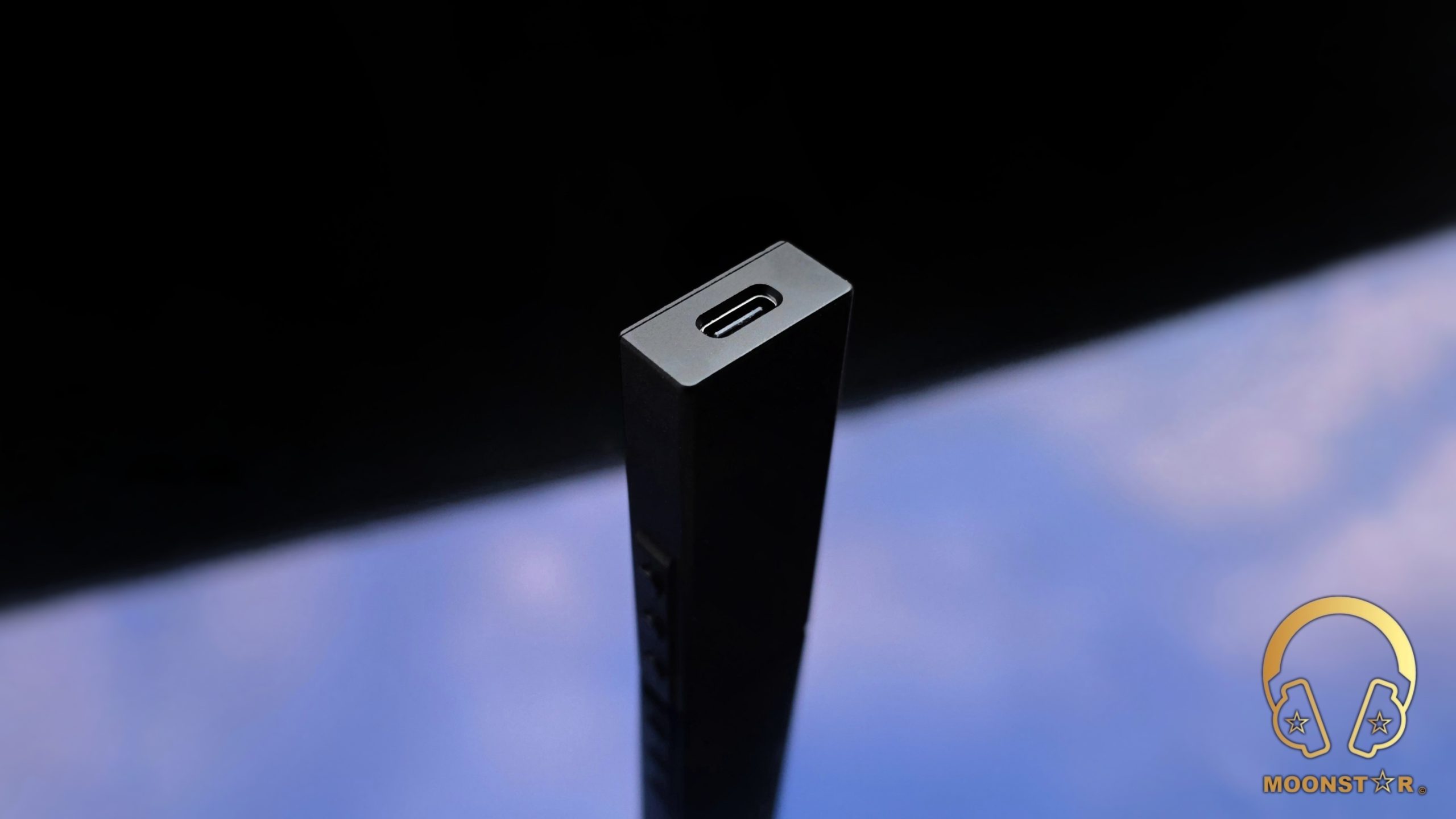
The top edge is reserved for a standard USB-C port for both data and power.
Cayin also pays attention to the accessories, including a shielded USB-C to USB-C cable. This interconnect is designed to minimize interference and signal loss, which is consistent with the device’s focus on clean audio transmission.
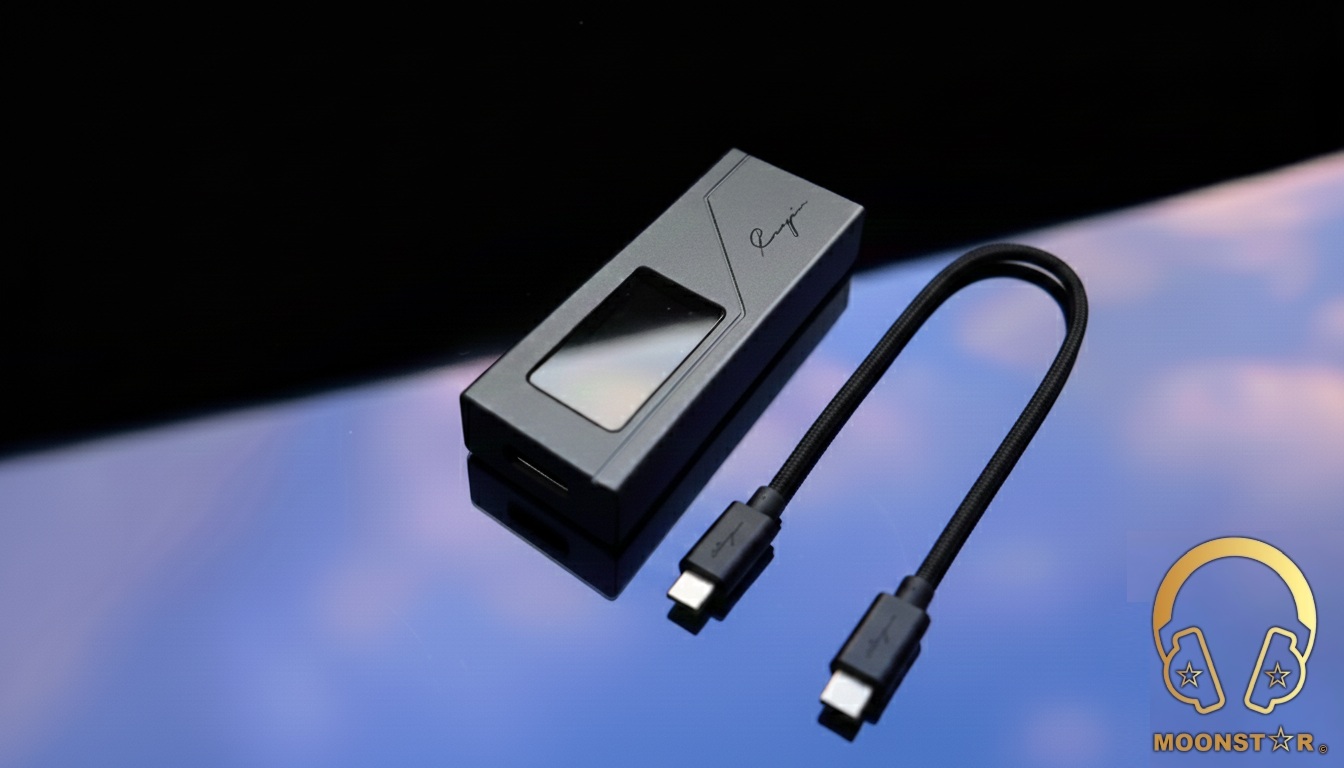
Overall, the build quality is high. The fit and finish between the aluminum body and the glass screen are seamless, and the device has a reassuring weight that suggests it is built to handle daily portable use.
Technical Specifications:
| Model | RU3 |
| USB Audio Bridge | SPV5068 (RISC-V Dual-Core) |
| DAC Chip | ESS ES9069Q ×1 |
| Output | 3.5mm Single-Ended / 4.4mm Balanced (PO/LO shared) |
| Power Output | 3.5mm: 180 mW + 180 mW (32Ω) 4.4mm: 560 mW + 560 mW (32Ω) |
| Output Impedance | 3.5mm: 0.6Ω 4.4mm: 1.2Ω |
| Supported Formats | PCM 32-bit/768 kHz, Native DSD512 |
| SNR | 115 dB (SE) / 117 dB (BAL) |
| THD+N | 0.0018% (SE) / 0.0015% (BAL) |
| Frequency Response | 20 Hz – 50 kHz (±0.2 dB) |
| Dimensions | 60 × 25.4 × 11 mm |
| Weight | 24 g |
| Colors | Black / Light Cyan / Purple |
Hardware & Software Features:
DAC & Amplification Architecture:
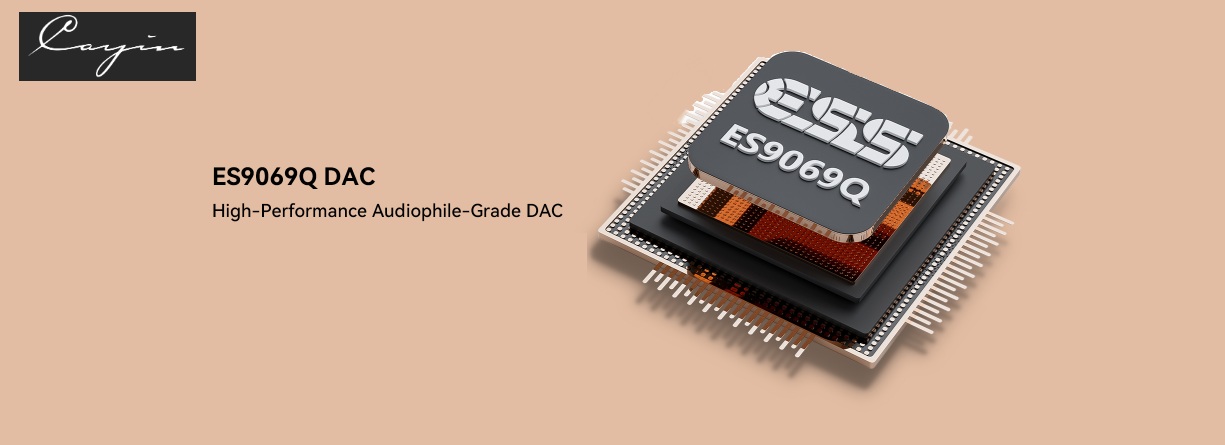
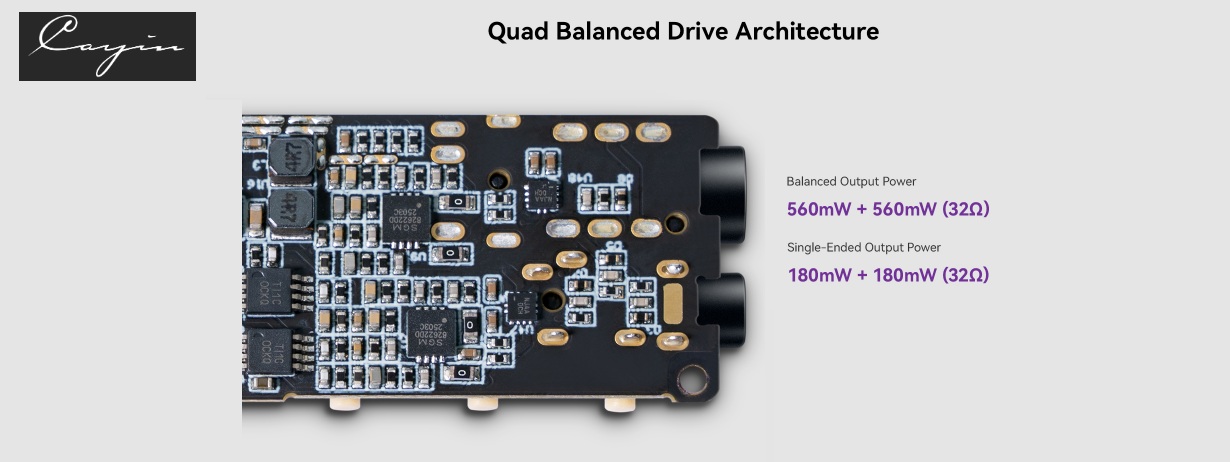
The heart of the RU3 is the single ESS ES9069Q DAC chip, utilizing the new HyperStream IV architecture. This advanced chipset is responsible for the device’s ability to handle high-resolution formats up to PCM 32-bit/768kHz and native DSD512. This is paired with an exceptionally robust analog stage, featuring a Quad Balanced design built around Texas Instruments OPA1602 (used for signal processing) and SGM8262 operational amplifiers (acting as output buffers/drivers). This fully differential architecture maximizes channel separation and significantly reduces Total Harmonic Distortion (THD).
RISC-V Processor:
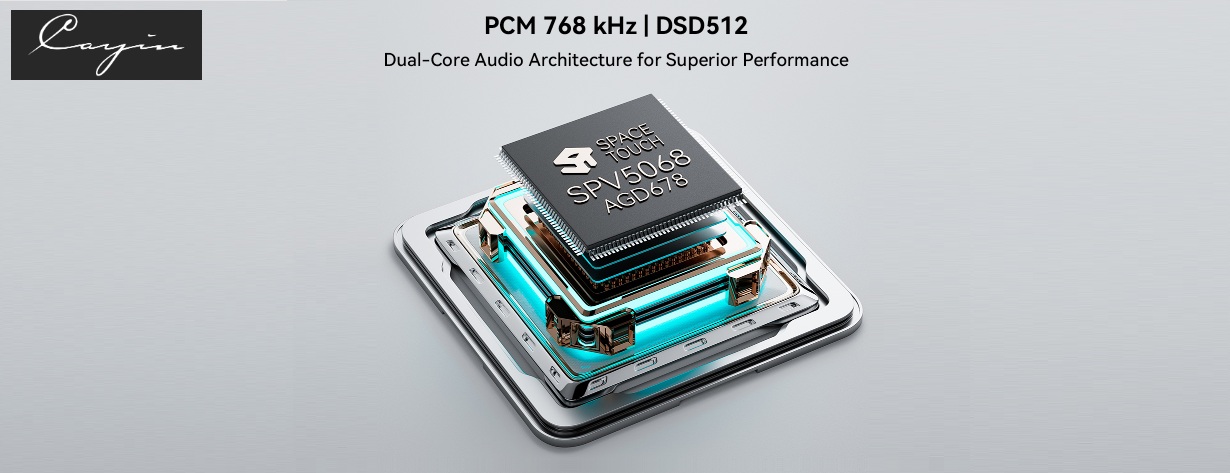
The RU3 is powered by the SPV5068 processor, which utilizes a high-performance RISC-V dual-core audio architecture. This specific design is engineered to provide low latency and high compatibility while maintaining excellent energy efficiency. By optimizing these technical parameters, the processor significantly reduces distortion and noise, resulting in a cleaner background and more detailed audio reproduction. Furthermore, the SPV5068 enables the device to support high-resolution playback, including 32-bit / 768 kHz PCM and native DSD512, catering to the performance standards required for high-fidelity listening.
Power Management and Output (Amplification):
As a bus-powered device, the RU3’s power consumption directly affects the source device’s battery life. Performance in this area is predictable and ties directly to the selected mode:
- In STD Mode: Power draw is efficiently managed, allowing for moderate battery life on standard smartphones (runtime varies but is typically competitive with leading dongles).
- In HYP Mode: The necessary increase in current draw to support the 560mW output will result in a measurable and expected reduction in source device battery life. Users are advised to select this mode strictly for demanding headphone loads where the increased power is acoustically necessary.
Noise Floor and Gain Control:
The effectiveness of the Quad Balanced topology is evident in the device’s noise performance. The RU3 maintains a near pitch-black background, with objective measurements demonstrating extremely low audible hiss even when connected to highly sensitive IEMs like the ZiiGaat Horizon in STD mode. While trace noise may be minimally detectable in the high-gain HYP mode with extremely sensitive balanced IEMs (due to the higher operating voltage), the overall noise floor remains exceptionally low, a testament to the robust differential circuit design.
Connectivity & Software Control:
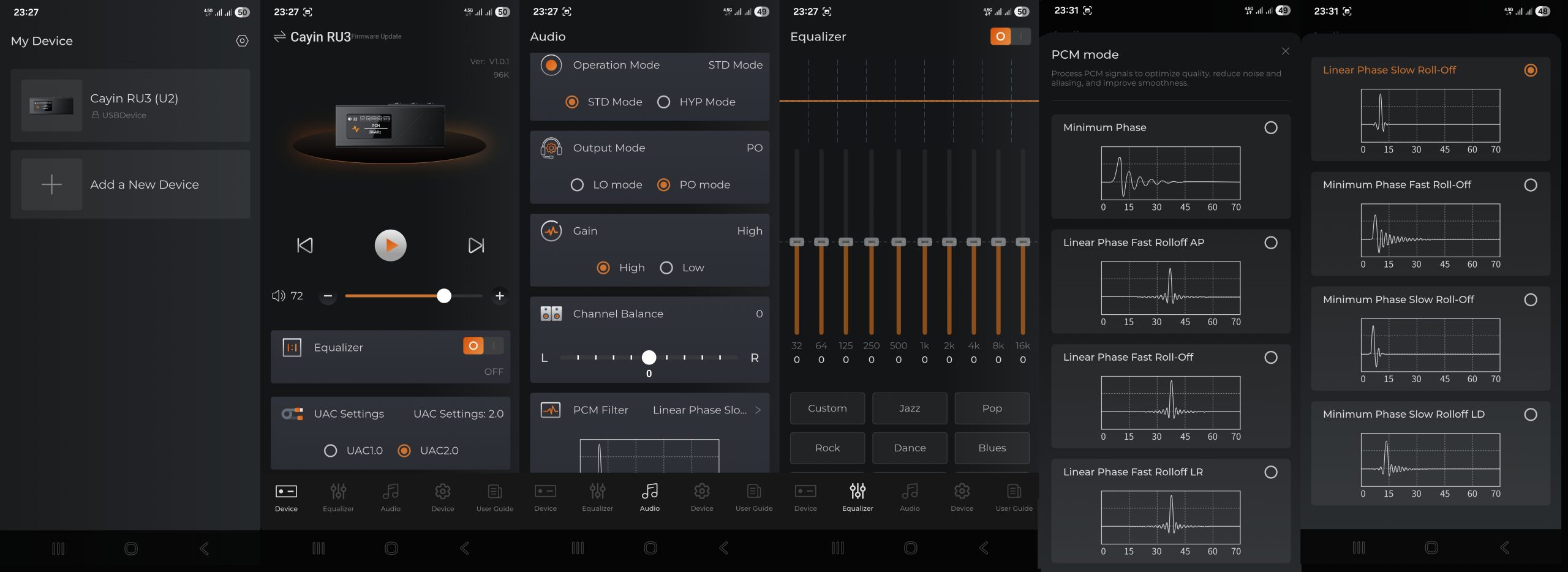
The RU3 supports the standard UAC 2.0 protocol for plug-and-play functionality across Windows, macOS, Android, and iOS. Beyond basic operation, the device introduces the Cayin Control Application, an optional feature that allows users to fine-tune the listening experience. This application provides access to a precise 10-band high-sensitivity lossless EQ, offering unparalleled sound customization directly from the connected smartphone. This feature significantly enhances the utility of the RU3, moving beyond a simple “plug-and-play” experience to a personalized tuning platform.
Equipments used for this review:
- DAC’s : Cayin RU3, ddHiFi Eye3, AFUL SnowyNight
- Source Devices : Samsung Galaxy Tab S25 Ultra, MSI Vector GP68HX
- IEMs : Oriveti OH700VB, Campfire Audio Fathom, ZiiGaat Horizon
- Headphones : HiFiMAN Sundara CB
Albums & Tracks Used for this Review:
Vocal Jazz / Smooth Jazz
- Norah Jones – Come Away With Me (Flac 24bit/96kHz)
- Diana Krall – So Wonderful (DSF)
- Barry White – Just The Way You Are (Flac 24bit/48kHz)
- Isaac Hayes – Walk On By (Flac 16bit/44.1kHz)
- Sting – Englishman in New York (Flac 24bit/48kHz)
- Otto Liebert & Luna Negra – The River (Flac 24bit/192kHz)
- Ferit Odman – Look, Stop & Listen (Flac 24bit/192kHz)
- Charly Antolini – Duwadjuwandadu (Flac 24bit/192kHz)
Soul / R&B
- Aretha Franklin – I Say A Little Prayer (Flac 24bit/96kHz)
- Adele – My Little Love (Apple Lossless)
- George Michael – Don’t Let the Sun Go Down on Me (Flac 24bit/192kHz)
- Eric Clapton – Wonderful Tonight (Flac 24bit/96kHz)
Pop / Rock Classics
- Michael Jackson – Billie Jean (Flac 24bit/96kHz)
- Elton John – Rocket Man (Flac 24bit/96kHz)
- David Bowie – Heroes (Flac 24bit/192kHz)
- U2 – Sunday Bloody Sunday (Flac 16bit/44.1kHz)
- Lorde – Royals (Flac 24bit/48kHz)
- Dave Gahan – Kingdom (Apple Lossless)
Electronic / Experimental
- Daft Punk – Instant Crush (Flac 24bit/96kHz)
- Daft Punk – Doin’ it Right (Flac 24bit/96kHz)
- Bro Safari, UFO! – Drama (Apple Lossless)
- Armin Van Buuren – Vini Vici (Flac 16bit/44.1kHz)
- Yosi Horikawa – Bubbles (Apple Lossless)
- Toutant – Rebirth (Apple Lossless)
Alternative / Indie / Art Rock
- Radiohead – Live in Berlin “Album” (Apple Lossless)
- Radiohead – Pyramid Song (Apple Lossless)
- Muse – Hysteria (Flac 24bit/96kHz)
- Red Hot Chili Peppers – Nobody Weird Like Me (Flac 24bit/48kHz)
- Lunatic Soul – The Passage (Flac 16bit/44.1kHz)
- Portishead – It Could Be Sweet (Apple Lossless)
- Gogo Penguin – Raven (Flac 24bit/192kHz)
- Gogo Penguin – Murmuration (Flac 24bit/192kHz)
- Massive Attack – Angel (Flac 24bit/48kHz)
- Bear McCreary – Valkyries (Apple Lossless)
Classical / Orchestral
- Max Richter – On the Nature of Daylight (Flac 24bit/96kHz)
- Chopin – Nocturne No. 20 in C-Sharp Minor (Flac 16bit/44.1kHz)
- Clair de Lune – Claude Debussy (Apple Lossless)
- Tchaikovsky – Symphony No. 5 (Flac 16bit/44.1kHz)
- Vivaldi – Le Quattro Stagioni “The Four Seasons” (Apple Lossless)
- Fazıl Say – Nazım Oratoryosu (Live) (Flac 16bit/44.1kHz)
Jazz / Instrumental
- Miles Davis – So What (Apple Lossless)
World / Traditional
- Sertap Erener – Aşk (Flac 16bit/44.1kHz)
- Edith Piaf – Non Je Ne Regrette Rien (Flac 16bit/44.1kHz)
Metal / Progressive Rock
- Metallica – Dyers Eve (Flac 24bit/96kHz)
- Metallica – Sad but True (Flac 24bit/96kHz)
- Megadeth – Sweating Bullets (Apple Lossless)
- Opeth – Windowpane (Flac 16bit/44.1kHz)
- Deftones – My Own Summer (Shove It) (Flac 16bit/44.1kHz)
- Rush – Tom Sawyer (Flac 16bit/44.1kHz)
- Slayer – Angel of Death (Apple Lossless)
The Sound:
The Cayin RU3 offers a clear, well-controlled and naturally balanced presentation that combines good resolution with a moderate degree of warmth. It stays away from the sharp, overly analytical character that some ESS-based dongles can show, and instead provides a sound that is detailed yet easy to listen to for long periods. The background remains consistently quiet, dynamic steps are handled cleanly, and small details come through without being forced or exaggerated. The overall tuning leans slightly toward musicality while still keeping transparency and speed intact.
Bass:
Bass extension reaches deep into the sub-bass region with real presence and authority. The lowest octaves carry weight and physical impact, yet the RU3 keeps everything tight and free from bloat. When driving the Campfire Audio Fathom, sub-bass shows powerful, layered character and delivers a strong sense of rumble and texture. With the HiFiMAN Sundara Closed-Back in Hyper mode via 4.4 mm balanced, the RU3 supplies enough current to maintain firm control over the planar driver, removing any sluggishness and delivering fast, articulate bass with excellent damping even during demanding passages.
Mid-bass is quick and well defined. The Oriveti OH700VB benefits from a moderate warmth that gives the low end satisfying fullness without losing speed or definition. Kick drums and bass guitars gain proper body and snap, while texture reproduction stands out: the pluck of strings and the natural decay of notes are clearly rendered. Even during busy sections the bass stays composed, showing that the amplifier section has sufficient grip and current delivery for most portable needs. There is no noticeable bleed into the lower midrange, so the transition from bass to mids remains clean and uncluttered.

Midrange:
This is the area where the RU3 most clearly reveals its musical personality and where the synergy with the tested IEMs becomes particularly evident. The midrange is natural, full-bodied and tonally convincing across a wide range of material. Instruments and voices show realistic weight and harmonic richness without ever sounding heavy, congested or artificially enhanced.
With the Campfire Audio Fathom, the RU3 feeds the multi-BA configuration a clean, low-noise signal that allows every driver to perform at its best. Vocals, both male and female, sit forward in a very natural way: breath sounds, lip texture, throat resonance and small inflection changes are all clearly audible, yet nothing feels over-emphasised or spotlighted. The result is an intimate, almost conversational presentation that draws the listener into the performance. Acoustic guitars have proper string resonance and body; violins and cellos carry realistic rosin texture and bow weight; piano notes possess the correct balance of attack, sustain and wooden warmth.
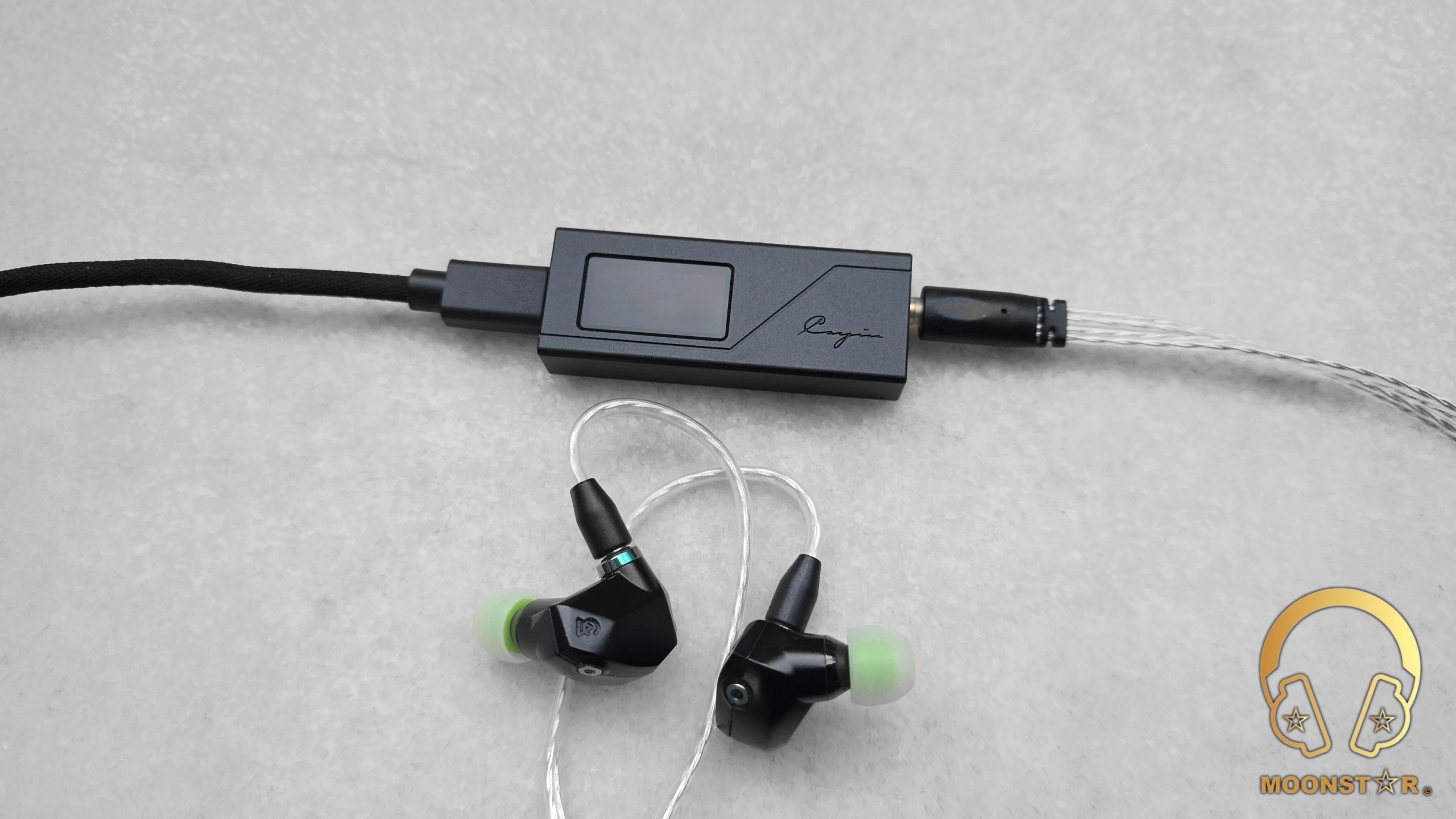
The ZiiGaat Horizon, which already has a smooth and slightly relaxed midrange character, gains an extra layer of liquidity and harmonic density when paired with the RU3. The combination produces a tone that feels exceptionally organic: female vocals become silky and emotionally connective, male vocals gain chest authority without thickness, and mid-focused instruments like saxophone or trumpet acquire a natural, breathy quality that is rare at this price level. Complex layering is handled with ease: overlapping horn sections, multiple guitar lines, or dense string quartets maintain clear separation and individual timbre while still blending into a coherent whole. The transition from lower midrange (cellos, baritone voices, lower piano register) to upper midrange (female vocals, violins, lead guitars) is seamless and free of any dips or peaks, preserving warmth where it belongs and clarity where it is needed.
Even after hours of continuous listening, the midrange never becomes tiring or clinical. The slight warmth the RU3 adds works as a gentle counterbalance to the inherent speed of the ESS chip, creating a presentation that feels honest to the recording yet forgiving enough to remain enjoyable across different mastering styles. In short, the midrange performance is mature, refined and deeply satisfying, easily the strongest and most memorable aspect of the RU3’s overall sound.
Treble:
Treble is detailed and well extended, yet remains smooth and completely free of harshness or fatigue. Upper frequencies show sufficient energy and sparkle when the recording calls for it, but the RU3 applies careful, well-judged control that prevents any grain, metallic edge or excessive brightness from appearing. Hi-hats, ride cymbals and violins are reproduced with realistic metallic timbre and natural decay length; there is no blurred splash effect or artificial emphasis.
With the Oriveti OH700VB, which can sometimes highlight treble energy, the RU3 keeps everything perfectly balanced: detail retrieval is high, yet the top end stays comfortable for extended sessions. The Campfire Audio Fathom benefits from clean upper-treble air that adds a subtle sense of space and ambience without pushing the sound forward aggressively. Percussion attacks remain fast and precise, reverb tails decay naturally, and high-pitched harmonics (flutes, violin overtones, cymbal shimmer) are clearly audible without ever becoming piercing. Even on recordings that contain strong high-frequency content, the RU3 maintains composure and avoids sibilance completely. The overall treble tuning is one of refinement and restraint: it offers all the resolution needed for critical listening while staying relaxed and fatigue-free in daily use.
Soundstage & Imaging:
The soundstage is moderately wide, with good depth and height for a dongle of this size. Imaging is precise, placing instruments accurately within the stereo field, where the solo instruments occupy a central, focused position amid subtle acoustics. Separation between channels is strong, aided by the balanced output, though the single-ended port offers slightly less expansiveness, which was apparent when switching connections during tests, where instrument placement remained pinpoint despite the change.
Comparisons:
Cayin RU3 versus ddHiFi Eye3 (TC44Pro E3):
The Cayin RU3 and the ddHiFi Eye3 (TC44Pro E3) are two capable portable DACs that cater to different sonic preferences within the entry-level enthusiast market. The RU3 is designed with a single ESS ES9069Q chip, offering a sound that leans toward an organic and weighted presentation with the added benefit of a built-in screen for menu navigation. The ddHiFi Eye3 uses a dual Cirrus Logic CS43198 setup, focusing on a clean, balanced, and energetic delivery within a compact, direct-plug design. While both provide a significant upgrade over standard headphone jacks, the RU3 is built for those who want a thicker tonal balance and more power, while the Eye3 is suited for listeners who value transparency and a lightweight form factor.
The most notable performance difference is found in their power handling and low-frequency response. The Cayin RU3 is one of the more powerful options in this segment, providing 560mW through its balanced output in Hyper Mode. This allows for a bass response that feels grounded and well-controlled, even when used with moderately demanding over-ear headphones. The low end on the RU3 is characterized by its texture and a slight warmth. The ddHiFi Eye3 is also quite capable with a 510mW output, delivering a bass that is tight, fast, and punchy. While the Eye3 offers plenty of impact for most IEMs, it focuses more on speed and rhythmic precision, whereas the RU3 provides a more substantial sense of weight and sub-bass presence.
In the Midrange, the Cayin RU3 focuses on providing an organic density that gives vocals a natural sense of body. The tuning avoids a thin or analytical character, opting instead for a smooth and cohesive sound that makes acoustic instruments feel realistic. This results in a presentation that is easy to listen to without losing the core details of the recording. The ddHiFi Eye3, by comparison, offers a more neutral and transparent midrange. It provides a high level of clarity that allows the listener to easily distinguish between different layers of a track. While it lacks the slight warmth found in the RU3, the Eye3 excels at presenting an uncolored and honest version of the midrange that works well for those who prefer a clear, monitor-like quality.
In the Treble, the two devices diverge in their approach to detail and extension. The RU3 offers a smooth and relaxed treble that maintains a natural decay. It is designed to be fatigue-free, making it a good pairing for IEMs that might otherwise sound too sharp. The detail is present, but it is integrated into the overall sound rather than being pushed forward. The ddHiFi Eye3 provides a more energetic treble with a noticeable sense of air and sparkle. It highlights transients and high-frequency nuances with more clarity, giving the music a more vibrant feel. This makes the Eye3 appear slightly more revealing in the upper registers, whereas the RU3 prioritizes a liquid and smooth transition across the frequency range.
Regarding Soundstage and Imaging, the Cayin RU3 provides a holographic spatial experience with a good sense of depth and height. Its high power output helps maintain a stable stage even during complex musical passages. The ddHiFi Eye3 offers a wide and well-organized soundstage with sharp instrument separation. Because of its clean and energetic signature, the imaging feels very precise, allowing for a clear sense of where each performer is located. While the RU3 feels slightly more immersive and three-dimensional, the Eye3 provides a very focused and stable image that is impressive for its size. The Cayin RU3 is a versatile choice for those seeking a powerful and weighted sound, while the ddHiFi Eye3 is a strong performer for listeners who want a transparent and lively experience.

Cayin RU3 versus AFUL SnowyNight:
The Cayin RU3 and the AFUL SnowyNight are two popular portable audio solutions that appeal to distinct listener preferences. The RU3 utilizes an advanced architecture emphasizing musical texture and dynamic authority, providing an engaging sound, while the SnowyNight offers a strictly neutral and highly controlled output ideal for those who prioritize transparency above all else. Both units deliver excellent performance for their price bracket, but the RU3 holds critical advantages in power delivery and sonic weight.
The most significant performance distinction lies in power reserve and low frequency handling. The Cayin RU3 possesses a commanding edge with its substantial 560mW balanced output, making it undeniably superior for efficiently driving high impedance and particularly demanding planar magnetic headphones. This immense power translates directly into a low end performance defined by authoritative dynamic punch and superior grip, ensuring solid control even under strain. The AFUL SnowyNight, conversely, provides a highly precise and articulate low end that is excellent for accuracy, but its power delivery simply cannot replicate the dynamic force and effortless headroom that the RU3 provides when faced with truly current hungry drivers.
Moving into the Midrange and Treble, the RU3 architecture imparts a distinctive sonic signature, adding a desirable organic density and natural texture to the midrange. This results in vocals and acoustic instruments having a more palpable weight, lending the presentation a touch of musical richness. The AFUL SnowyNight stands firm in its design philosophy, delivering pristine clarity and uncolored smoothness. Its midrange is superb for technical transparency; however, this dedication to clinical accuracy means it inherently avoids the harmonic richness and sonic weight that makes the RU3 sound immediately more textured and emotionally appealing. In the treble, the SnowyNight excels at control and fatigue free extension, while the RU3 offers a slightly more crisp and dynamically layered presentation.
Finally, regarding Soundstage and Imaging, the RU3 often provides a more expansive and dynamically holographic spatial experience, benefiting from the clean power that allows drivers to move freely and quickly. This results in sharp, confident imaging across a wide field. The AFUL SnowyNight provides an accurate and well defined soundstage, consistent with a reference level device; yet, for sheer volume and three dimensional layering, the RU3 robust presentation typically offers a more immersive experience. Given its superior power reserves and the engaging, textured nature of the sound, the Cayin RU3 is arguably the more potent and versatile choice for an enthusiast seeking to maximize performance across a diverse and demanding headphone collection in this price segment.
Conclusion:
The Cayin RU3 is a technically advanced and acoustically mature portable DAC/AMP that performs at a level exceeding its price category. Its core value rests on the synthesis of the high-resolution ES9069Q DAC, a powerful 560mW quad-balanced amplifier, and functional design elements such as the IPS display and dual power modes. The RU3 is more than just a component for basic audio conversion; it is a high-fidelity tool designed to reliably power and optimize demanding portable and semi-portable headphones. It is an excellent choice for audiophiles seeking verified technical performance, robust power reserves, and a refined, engaging acoustic signature in a compact form factor and accessible price.
Pros & Cons:
- + Organic and natural sound with a full-bodied midrange and smooth treble
- + Built-in IPS color screen for real-time status and menus
- + 560mW output drives demanding planar headphones easily
- + Impressive output power for its size, especially on balanced connections
- + Premium CNC-machined aluminum with unique textured back
- + Clean background, suitable for sensitive IEMs
- + Solid specs (ES9069Q DAC, IPS Display, SPV5068 Processor) at a very competitive $99 price point
- – High-power “HYP” mode noticeably depletes phone battery
- – Protective case is not included in the box (leather case is optional)
Thank you for the Read!
















Where did you get the Ferit Odman 24/192🙏