iBasso DX270 Review
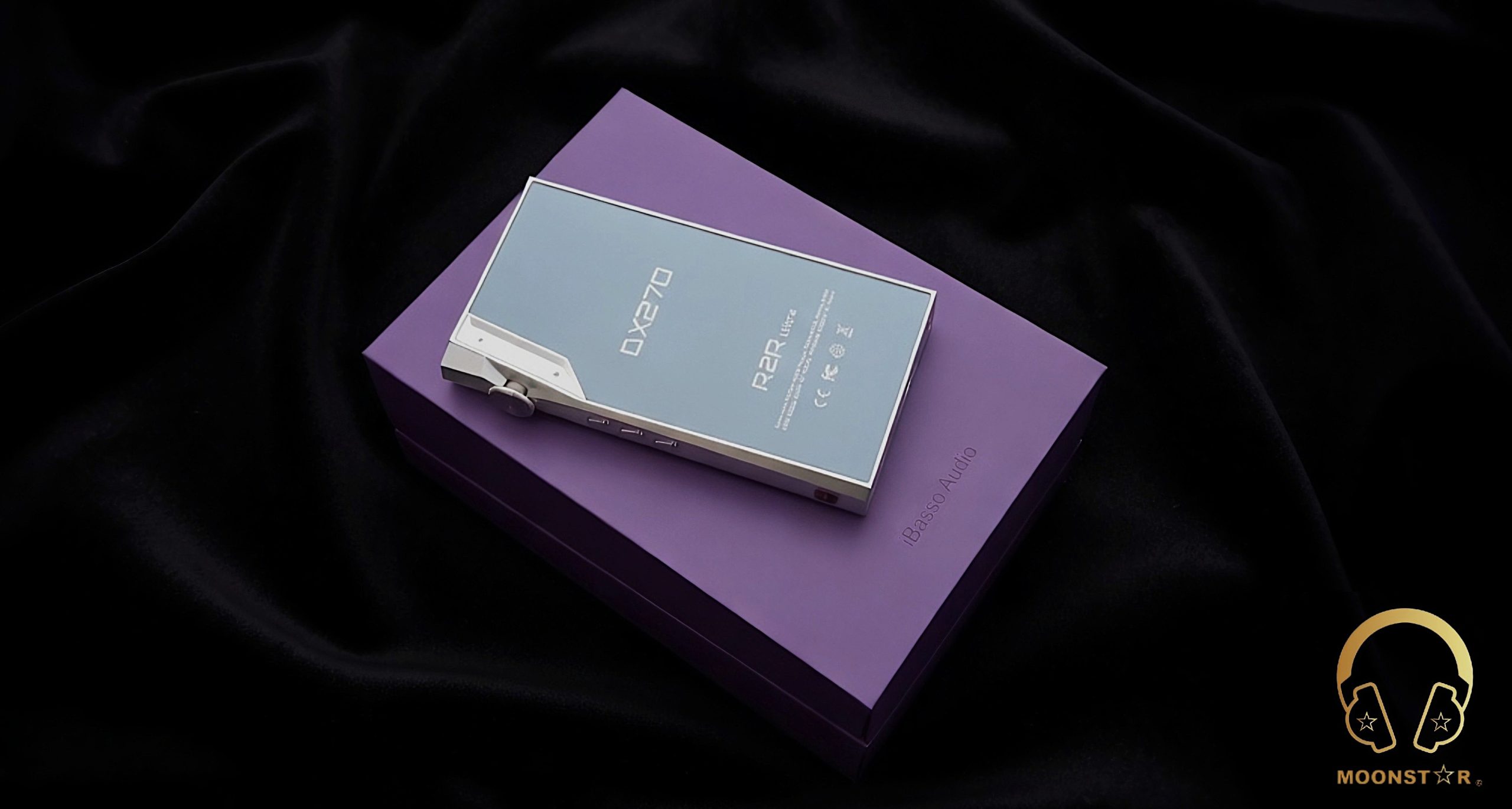
iBasso DX270 Review
Introduction:
The iBasso DX270 is not an incremental product update. Rather than refining an established formula, iBasso has built this player around a wholly different DAC topology: a proprietary 8-channel, fully differential discrete R2R ladder DAC controlled by the new FPGA-Master 3.0. This is a deliberate shift in sonic philosophy, one that prioritizes analog-like tonal texture and organic musical presentation over the clinical precision that defines most modern delta-sigma designs.
Priced at $1,149.00 USD, the DX270 sits firmly in the upper tier of the portable DAP market. Its platform uses an 11nm Qualcomm Snapdragon 665 SoC with 4GB LPDDR4X RAM and 128GB UFS storage, and the dual-OS structure combining Android 13 and Mango OS provides both streaming versatility and a dedicated audio-focused environment. What sets this player apart is what happens inside the signal chain: 344 high-precision resistors, two R2R arrays per channel operating in balanced mode, and an FPGA algorithm that actively corrects component deviations in real time.
The DX270 makes a compelling case for listeners who have found themselves gravitating toward the warmth and physical density of analog gear. It bridges that gap in a way that remains technically capable and practically well-featured, without requiring a compromise on connectivity, battery life, or day-to-day usability.
Disclaimer:
The iBasso DX270 used for this review was provided as a loan unit. I am not affiliated with iBasso beyond this review, and all opinions expressed here are entirely my own, formed through independent listening and use.
Price & Availability:
The iBasso DX270 is priced at $1,149.00 USD and is available through the official iBasso website as well as authorized dealers worldwide. The device was officially released on December 26, 2025.
Package & Accessories:
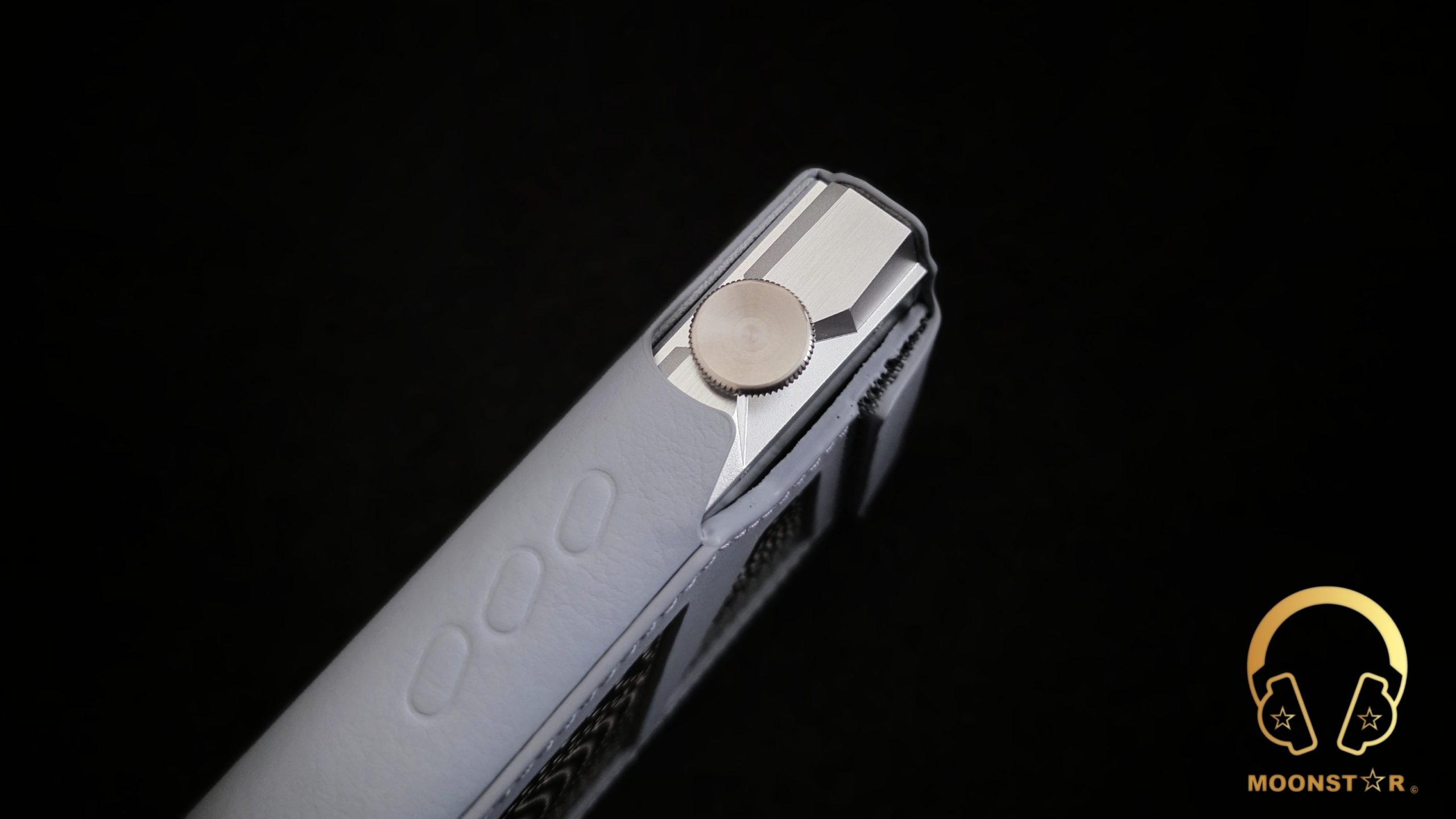
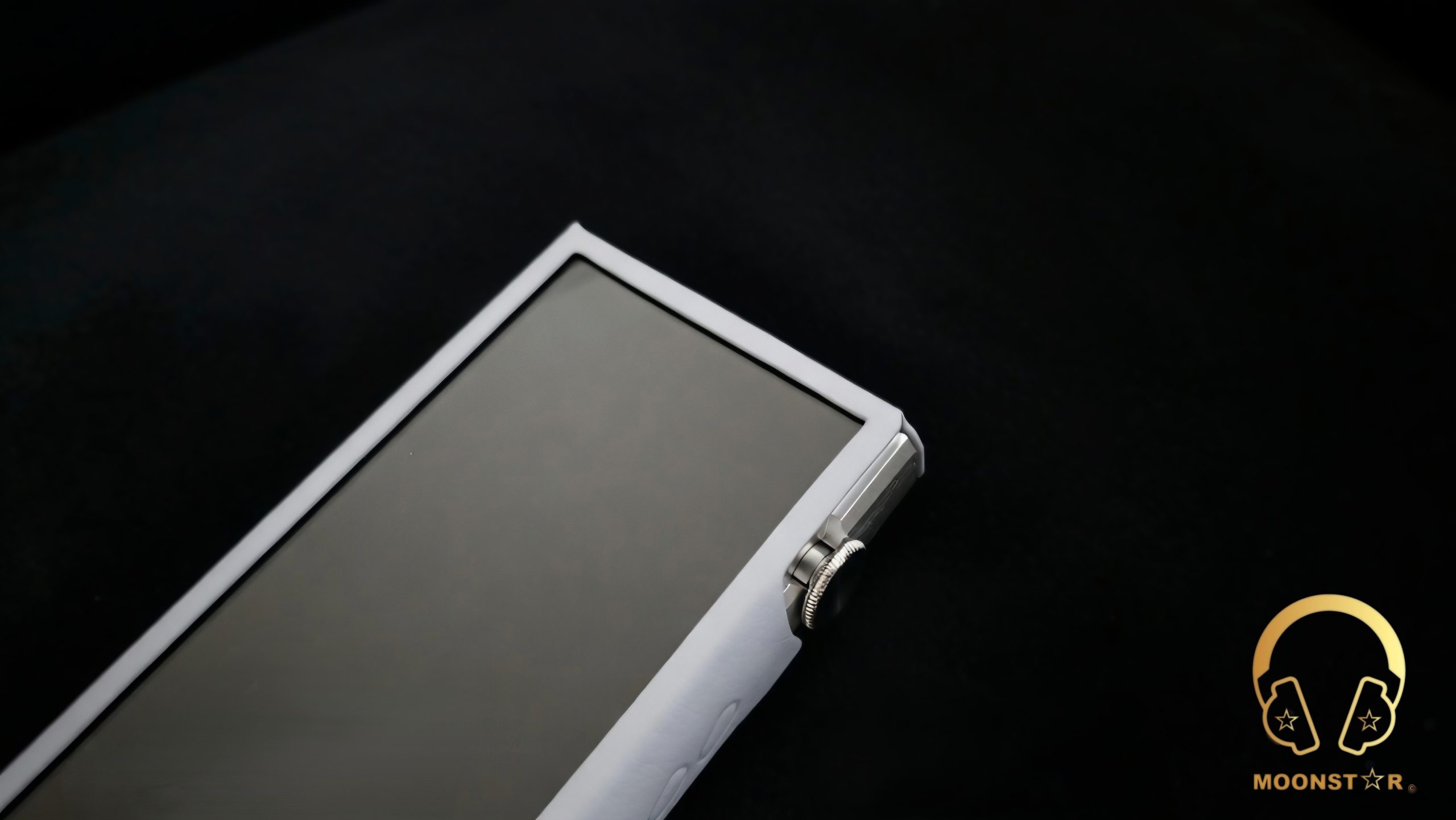
The DX270 arrives in packaging consistent with iBasso’s current presentation standards. Inside, the unit is secured in a well-organized foam-lined compartment alongside its accessories. A noteworthy inclusion is the leatherette protective case, which features a velcro closure and provides a level of protection and presentation that suits a player in this price range considerably better than a basic silicone sleeve would. A magnetic clasp would have been a welcome touch, but the case is functional and looks the part.
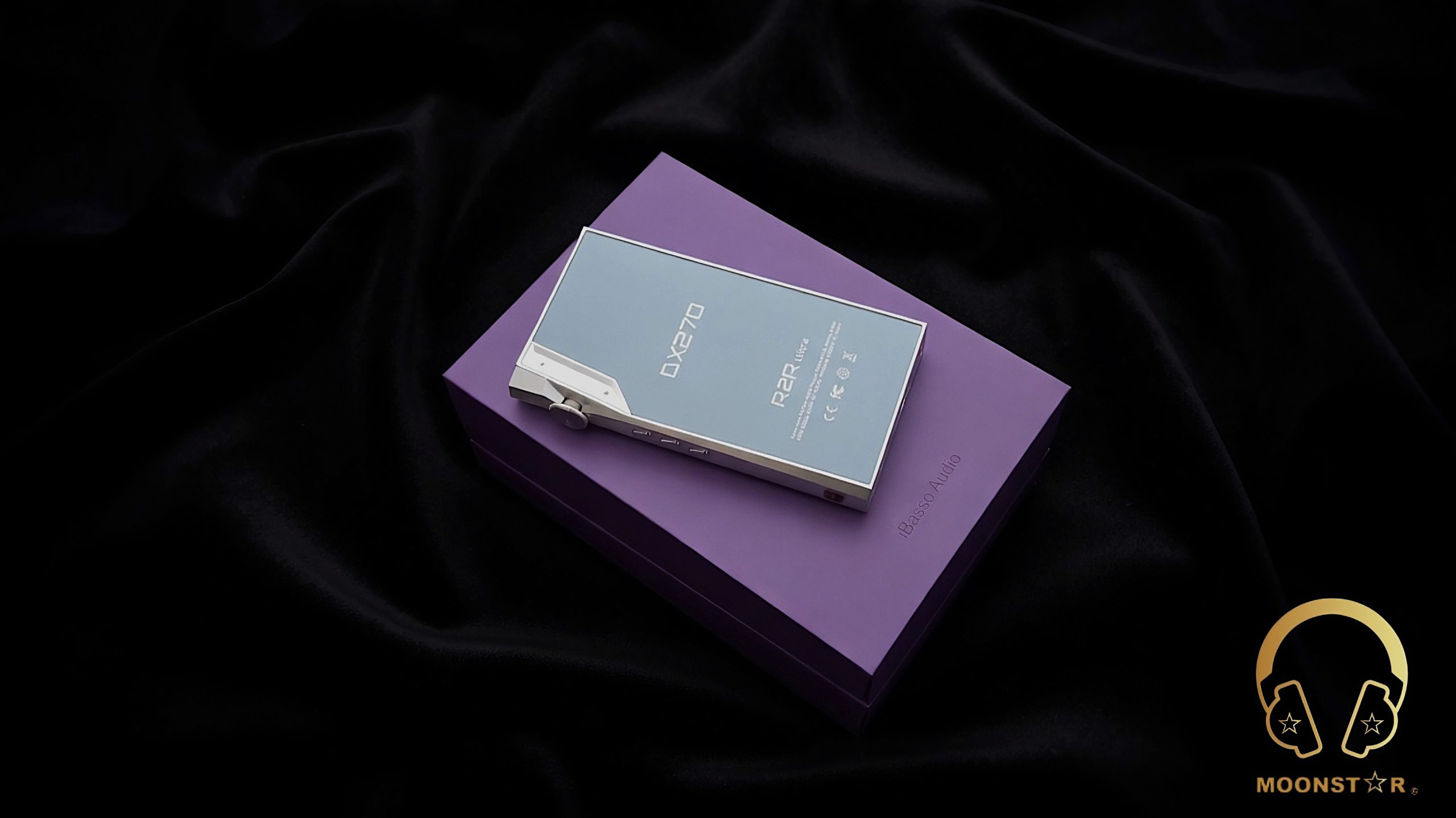
The package includes:
- 1 x iBasso DX270 Digital Audio Player
- 1 x Leatherette Protective Case (with velcro closure)
- 1 x USB Type-C Data/Charging Cable
- 1 x Coaxial (SPDIF) Cable
- 1 x 4.4mm Burn-In Cable
- 1 x 12V DC Power Adapter
- 2 x Screen Protectors (front and rear)
- 1 x User Manual
- 1 x Warranty Card / Quick Start Guide
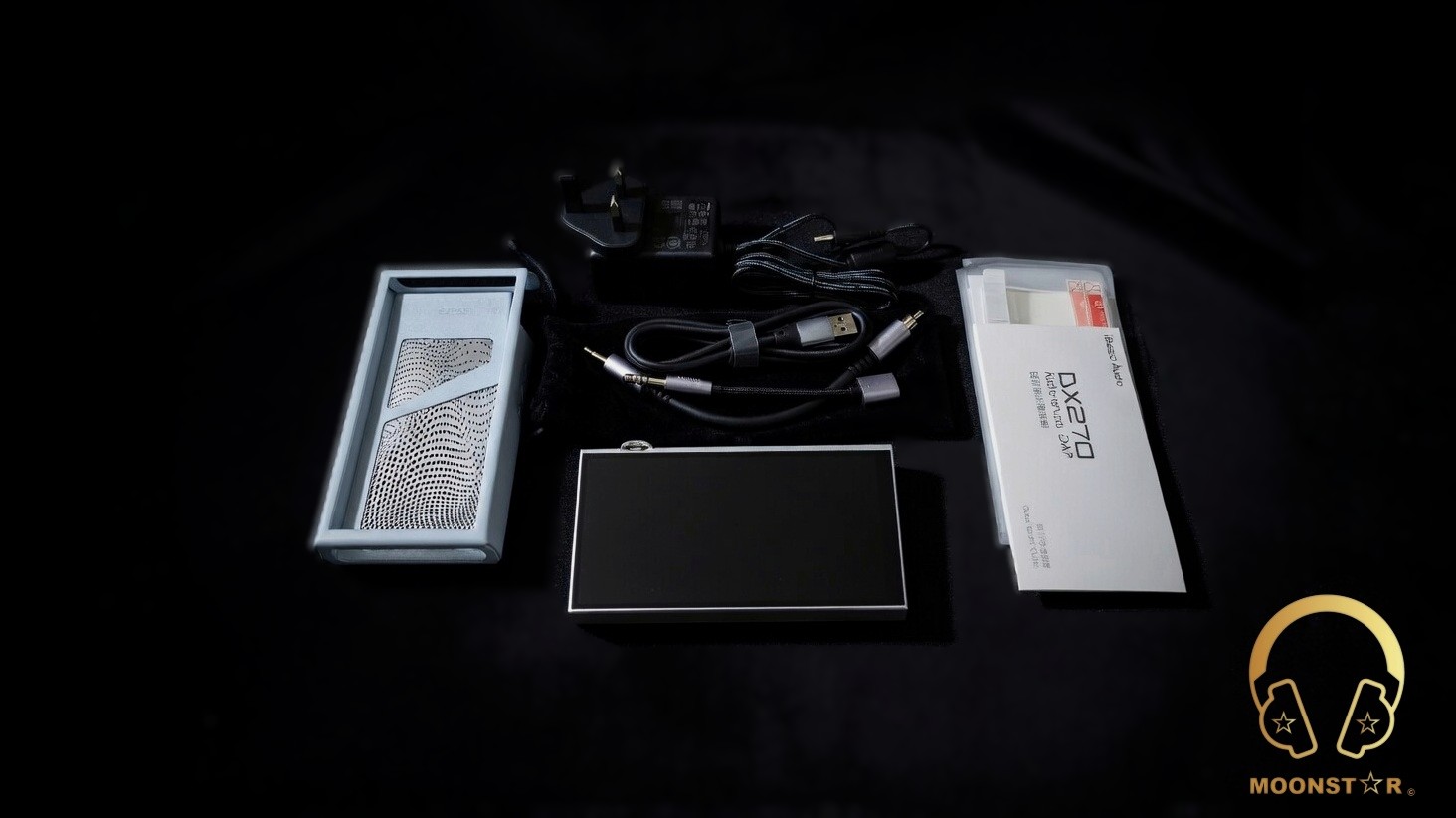
The 12V DC power adapter is a particularly meaningful inclusion, as it enables Super Gain desktop mode and unlocks the player’s maximum output potential when connected to mains power. Screen protectors for both the front and rear panels are also a thoughtful touch given the glass surfaces involved. Overall, the accessory bundle is practical, complete, and appropriate for the device’s positioning.
Design & Build Quality:
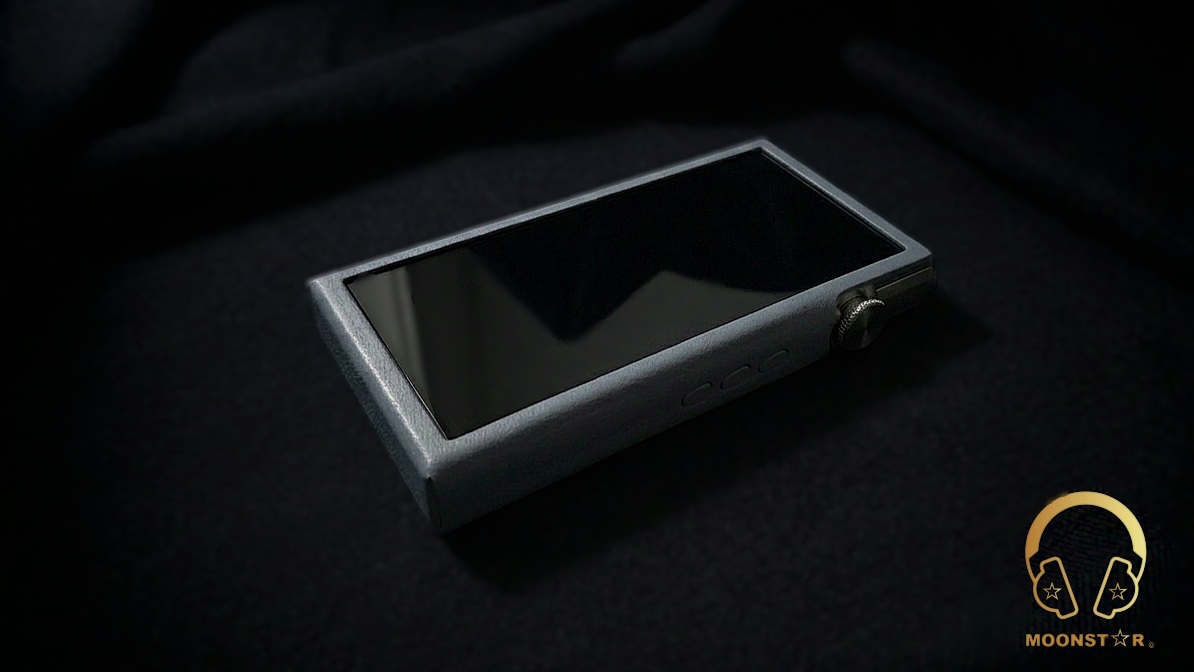
The DX270 presents a design that is self-assured and restrained in equal measure. Its CNC-machined aluminum chassis follows clean, angular lines without resorting to exaggerated styling cues, striking a balance between the functional and the refined that suits a serious listening instrument. At 265 grams and measuring 136mm in height, 73.5mm in width, and 19mm in depth, the device is compact enough to carry comfortably in a jacket pocket while carrying a weight that conveys solidity rather than bulk. The two color options, Silver and Grey, are both understated: the Silver catches light with a polished brightness, while the Grey offers a more contemporary and subdued aesthetic.
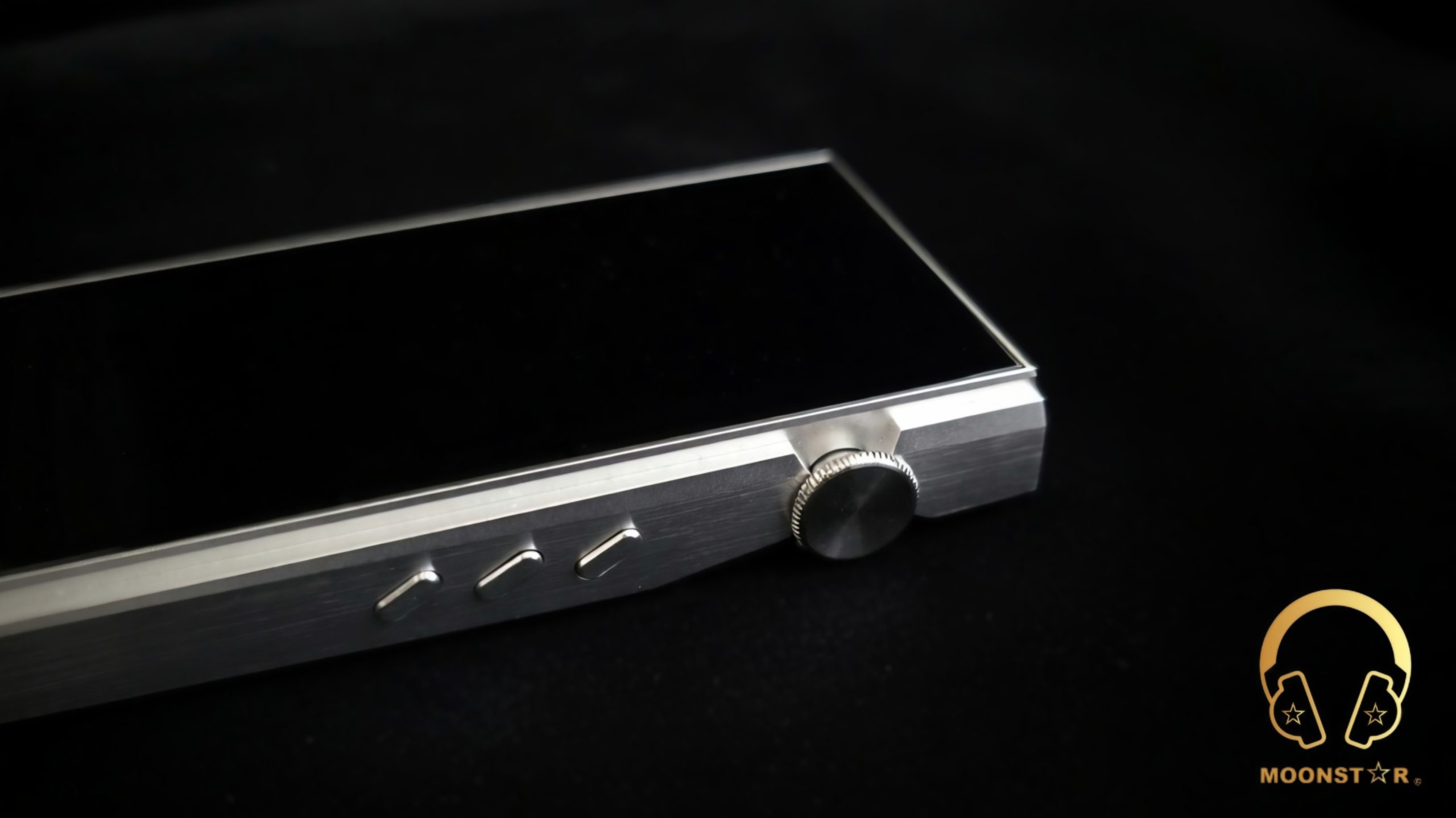
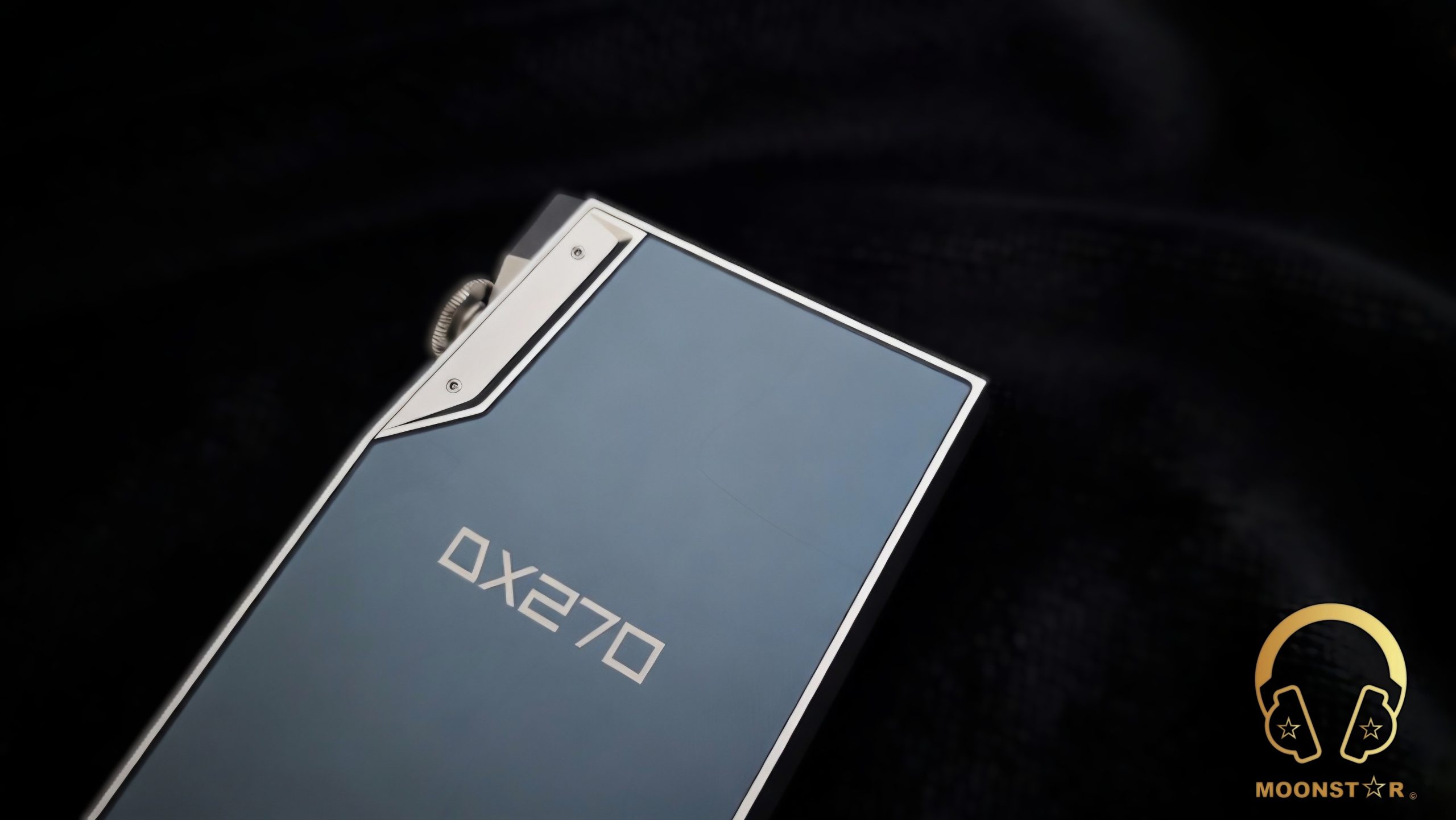
The front of the DX270 is dominated by a 5.5-inch in-cell capacitive touchscreen with a 1080 x 2160 resolution. The in-cell construction integrates the touch layer directly into the display panel, producing a slightly thinner profile and improved touch accuracy. The screen is bright and readable across a wide range of lighting conditions, with album artwork and interface text rendered at a comfortable scale. Visibility under direct sunlight at peak intensity can be reduced, as with most IPS panels in this category, but for indoor and shaded outdoor use the display performs well. The bezels surrounding the screen are moderate in width, providing adequate structural support without taking excessive real estate from the display area.
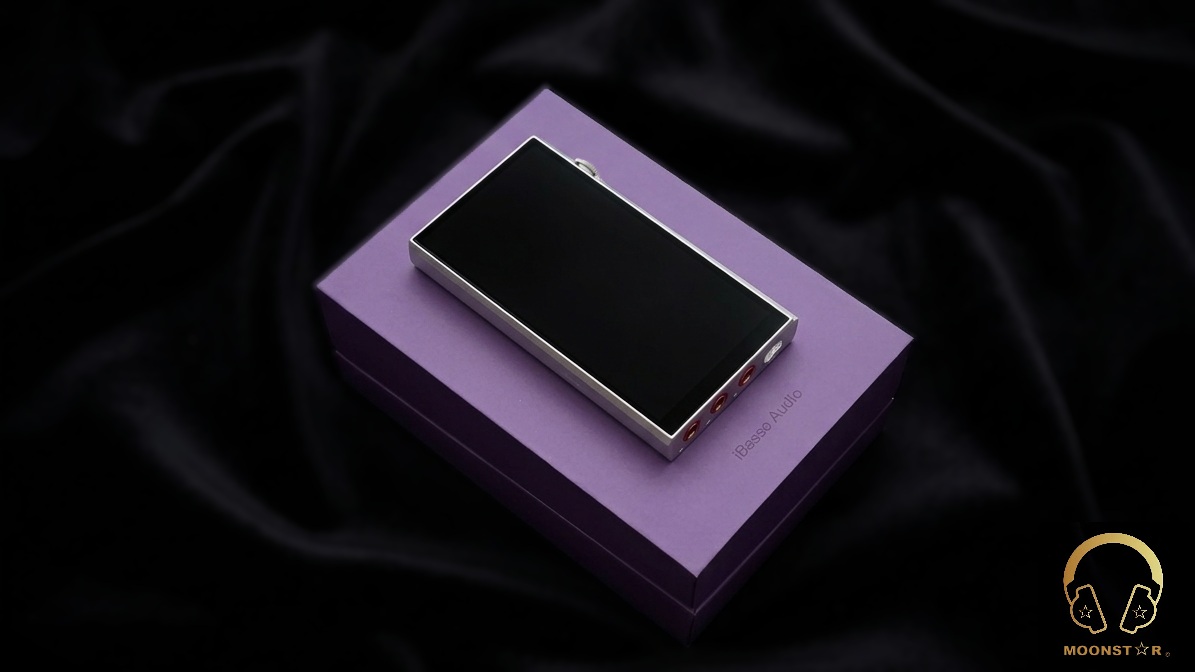
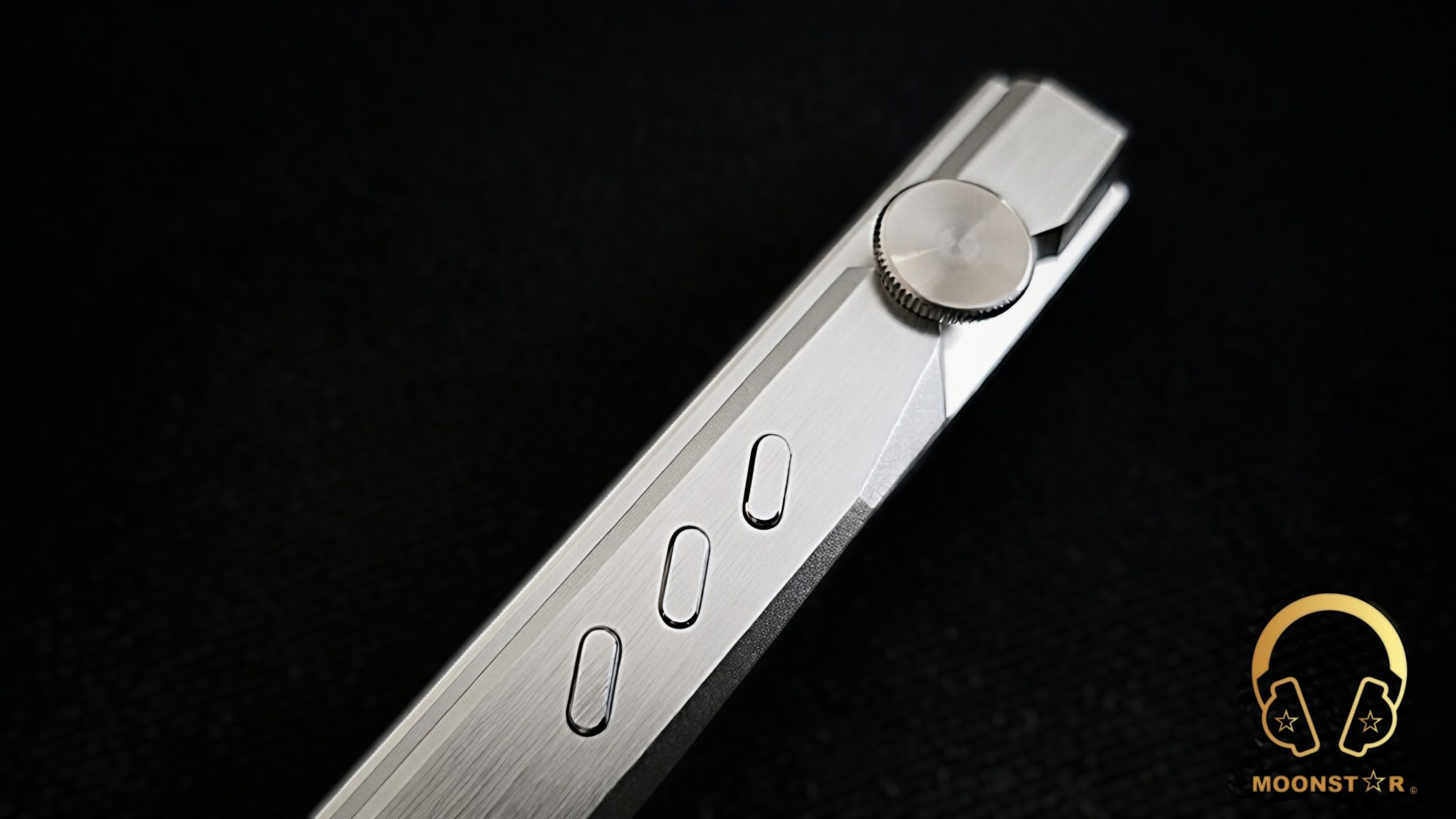
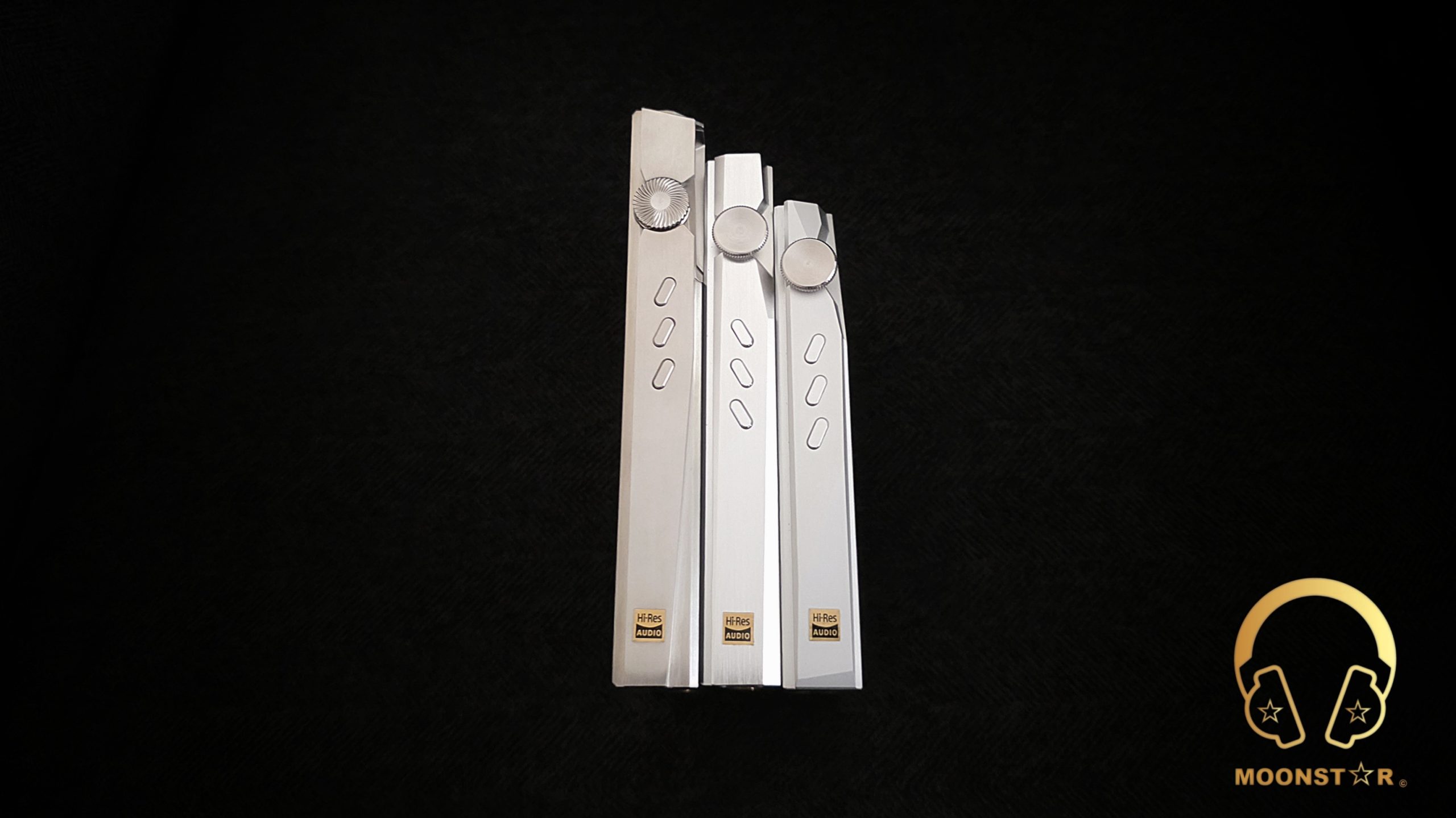
The right side of the DX270 carries the device’s primary physical controls. The volume and power wheel occupies the central position, machined with a knurled gear-like texture that provides firm grip and tactile feedback during rotation. Its resistance is measured and dampened, making fine volume adjustments straightforward to execute without overshooting. Below the wheel, three dedicated playback buttons handle previous track, play/pause, and next track in a vertically stacked arrangement.
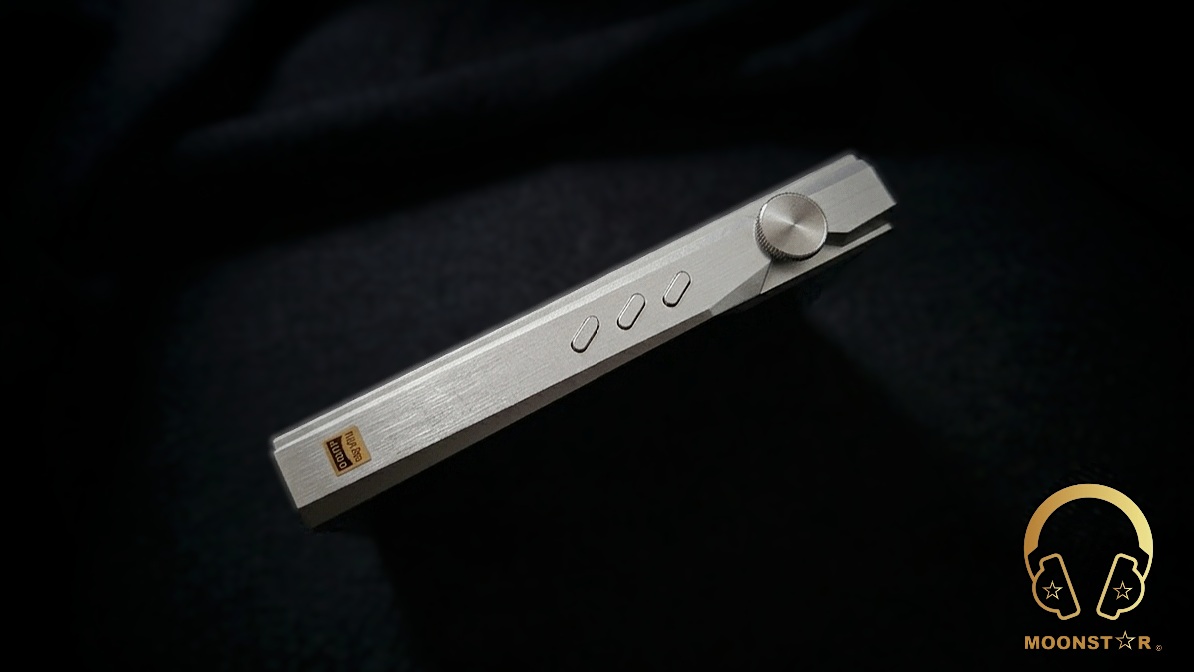
Their placement is well-considered for one-handed operation without requiring a significant grip adjustment. Button travel is on the shorter side, which is worth noting for users who carry the device in bags where accidental presses could occur.
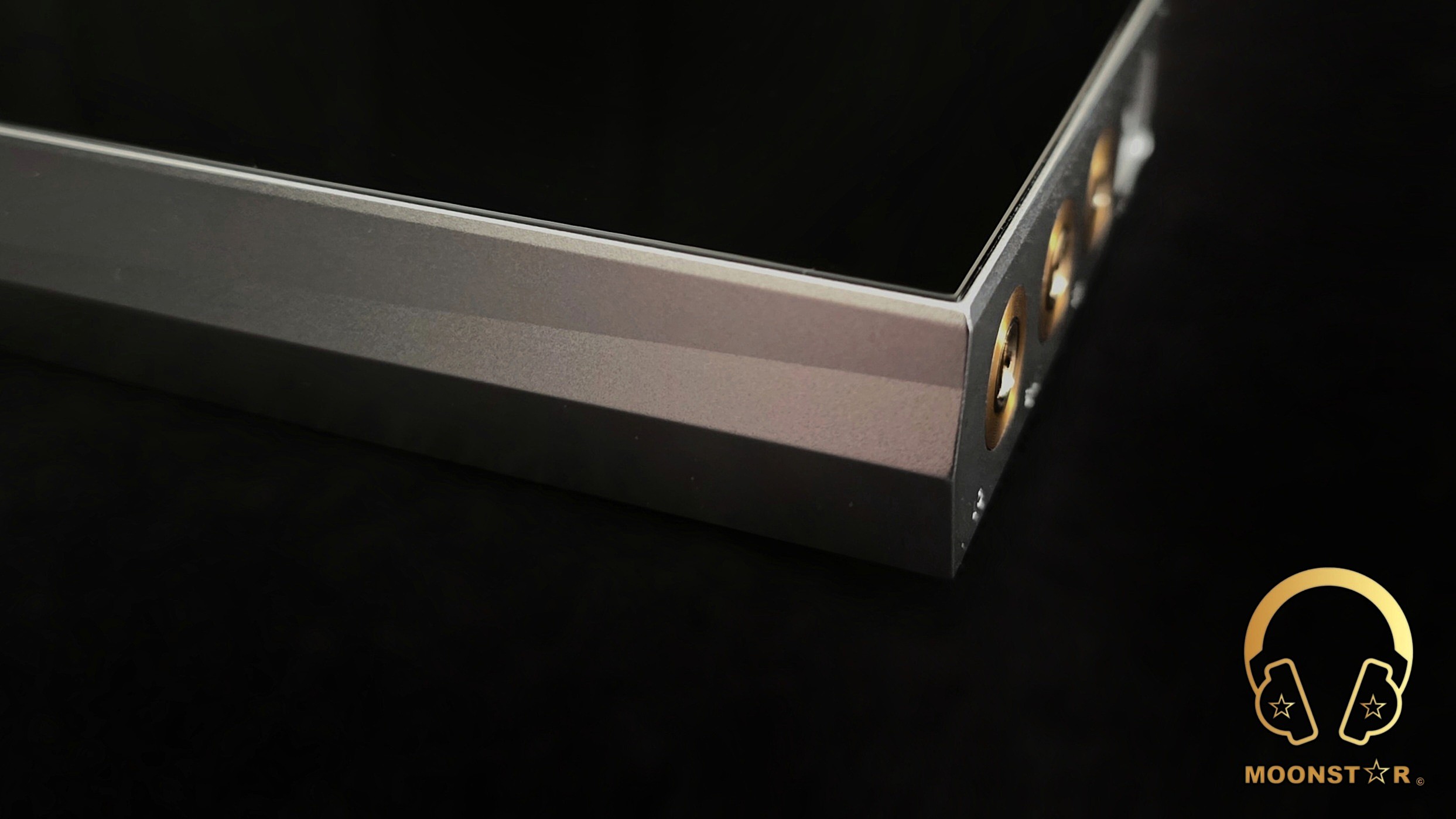
The left side presents an uninterrupted aluminum surface with no buttons, ports, or other protrusions. This minimalist approach keeps the device comfortable to hold in the left hand and contributes to the overall visual cleanliness of the design. Some users may wish for a hardware screen lock or secondary function button on this side, but the absence of controls here is a considered choice that prioritizes handling comfort and aesthetic simplicity.
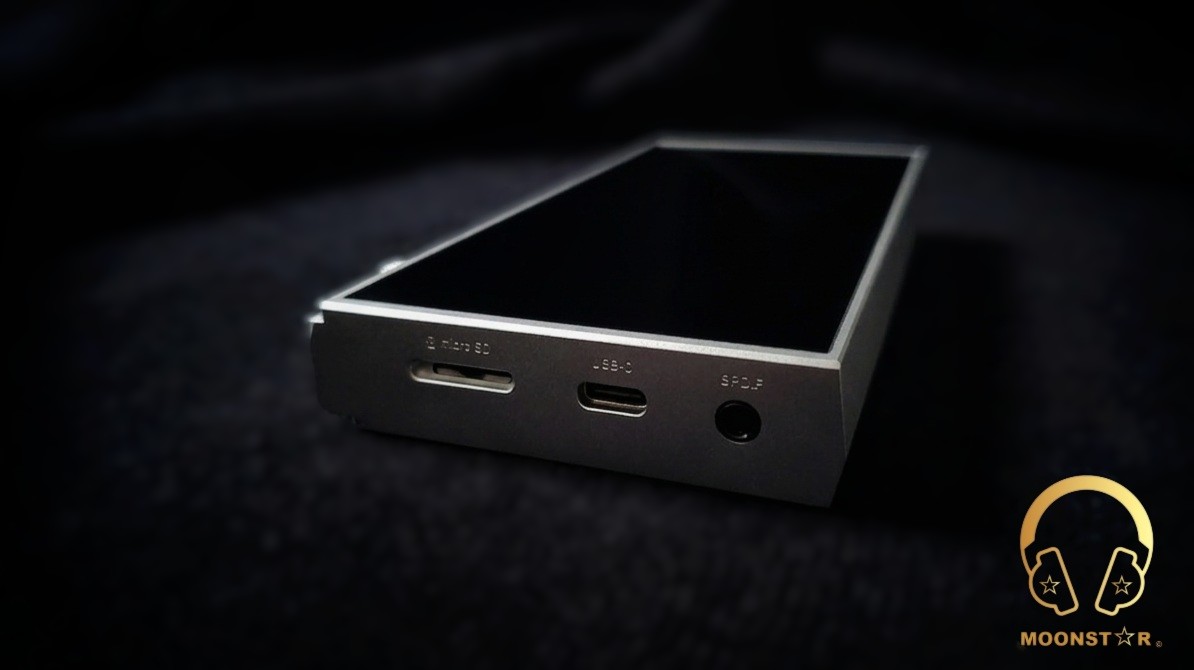
The top edge is the most feature-dense surface on the device. A microSD card slot supports SDHC and SDXC cards up to 2TB, positioned conveniently for easy card swaps. A USB 3.1 Type-C port handles data transfer, charging via USB Power Delivery, USB DAC input for connecting to a computer or phone, and digital transport output. The 12V DC power input sits alongside these, enabling the Super Gain desktop amplification mode and allowing the DX270 to draw power from an external supply rather than the battery during stationary listening. A mini coaxial S/PDIF output completes the top edge, providing a digital passthrough connection to external processors or DACs.
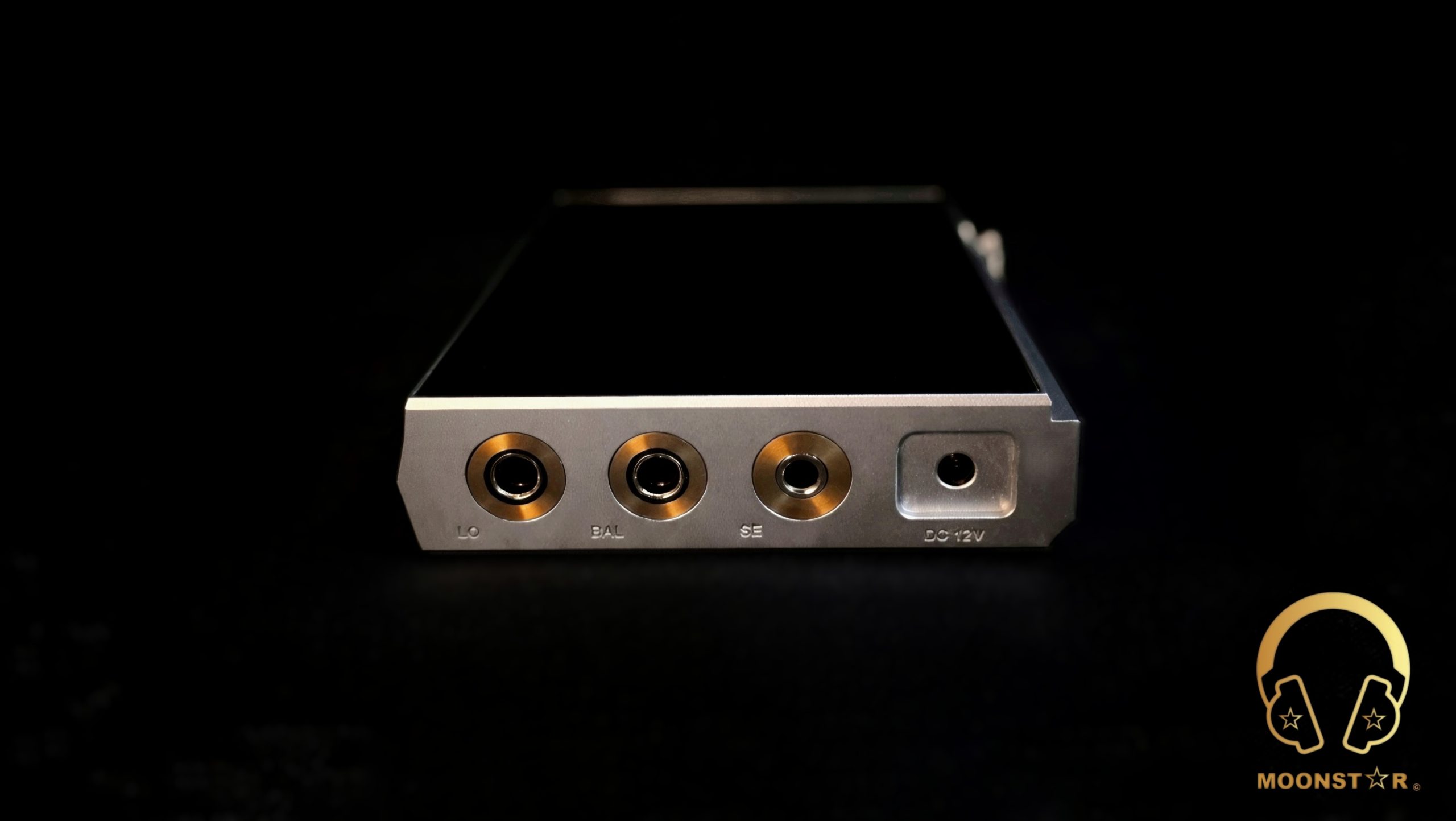
The bottom edge is where the DX270’s output configuration becomes practically meaningful. Three audio jacks are present: a 3.5mm single-ended headphone output that can also be set to line-out mode in software, a 4.4mm balanced headphone output, and a dedicated 4.4mm balanced line output. The separation of the balanced headphone and balanced line outputs into distinct physical jacks is a convenience that eliminates the need for software mode switching when transitioning between headphone listening and connection to an external amplifier. Each jack is clearly labeled and well-spaced, with no practical issue in accessing them alongside typical IEM or headphone cables.
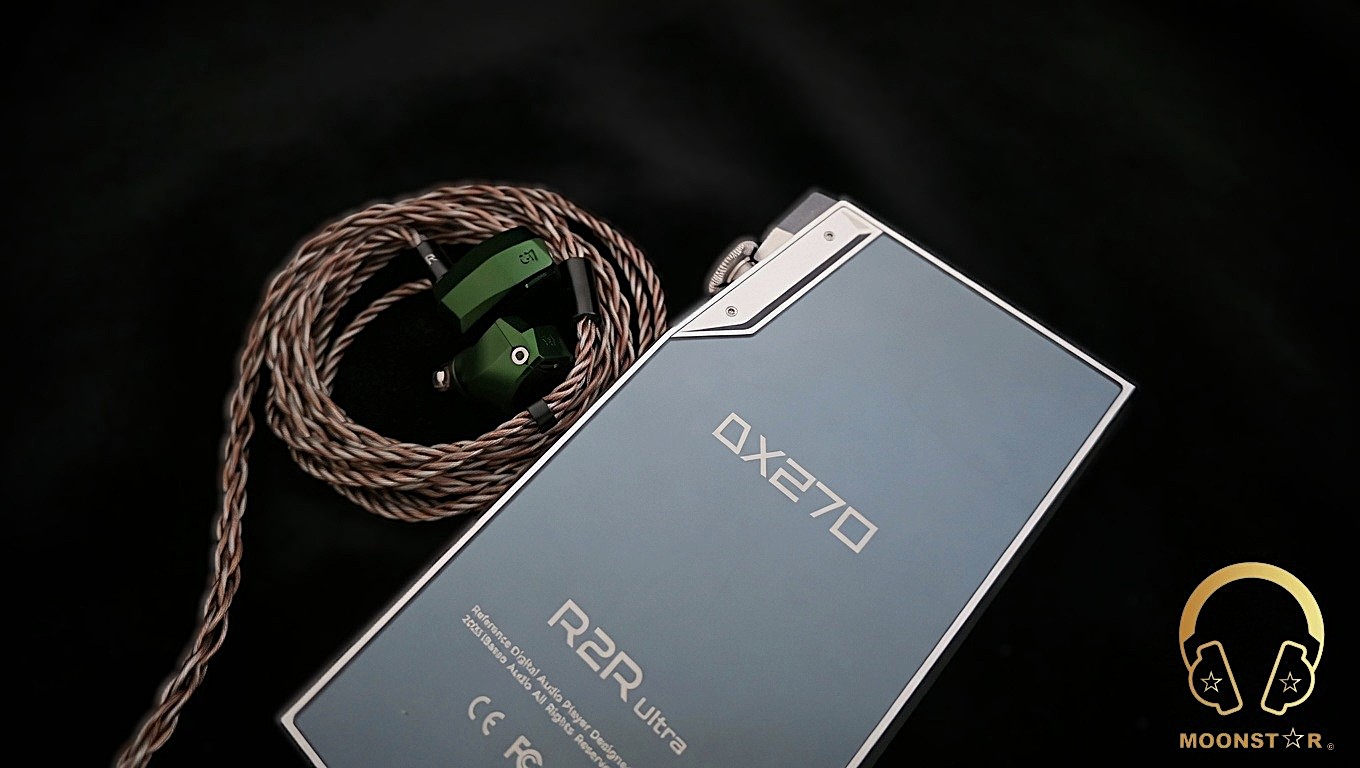
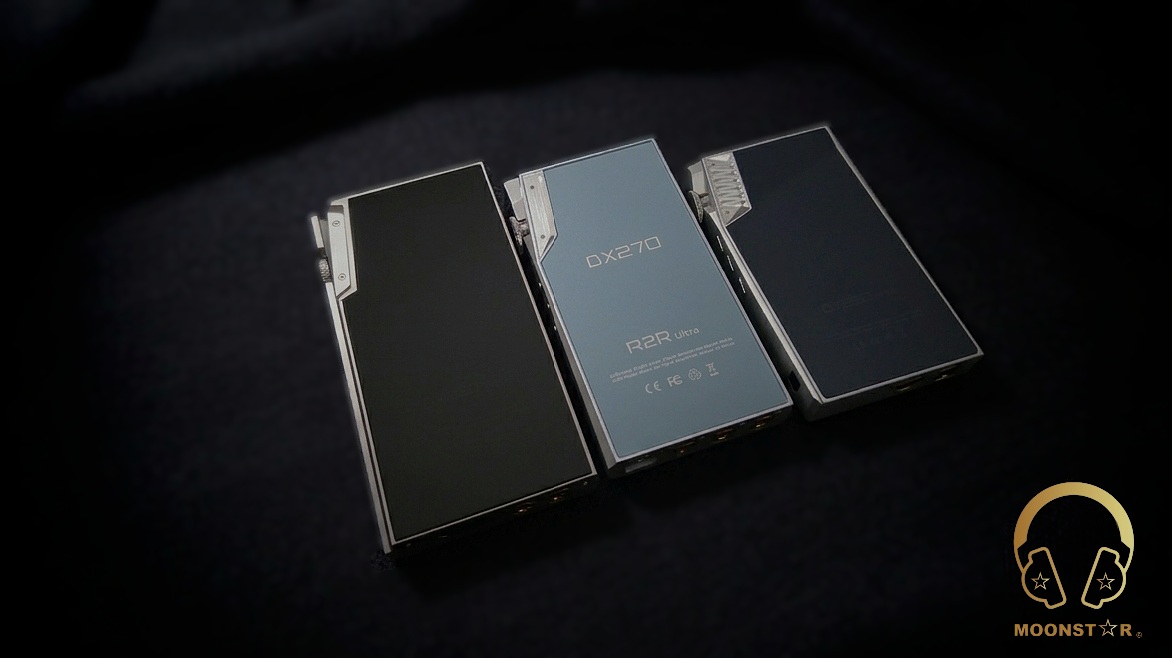
The rear panel is finished in glass, a material choice that brings a visual refinement to the device and creates a contrast with the aluminum body that reads as premium without being ostentatious. In practical use, the glass rear will collect fingerprints with regular handling, and the included rear screen protector is a functional solution to this. The panel is removable using a quick-release tool provided in the package, giving access to the user-replaceable battery beneath. This remains one of the more genuinely useful long-term ownership features available on any DAP in this price range, allowing the battery to be swapped by the owner without factory service.
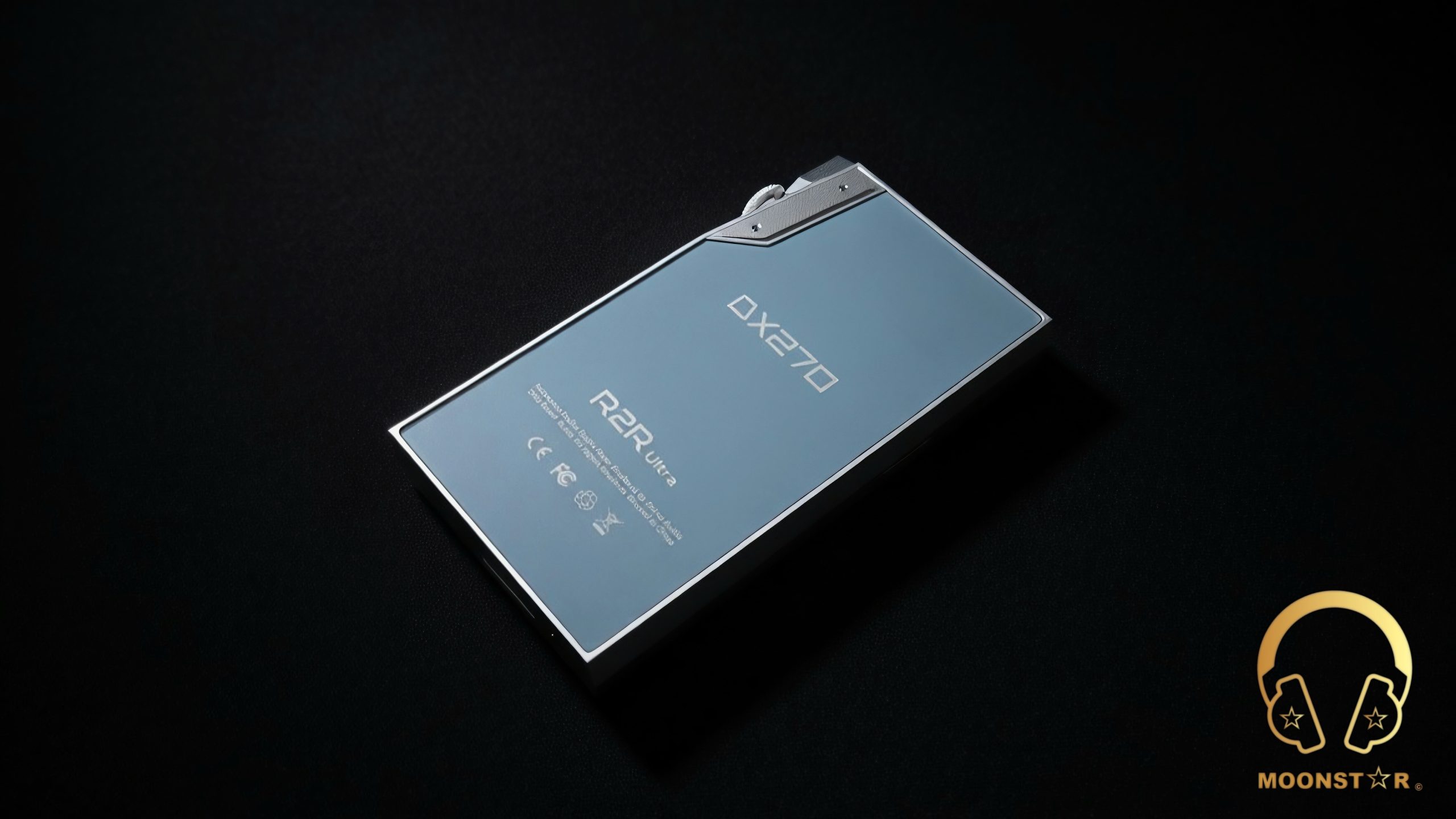
Taken as a whole, the DX270’s build quality is confident and consistent. There are no assembly irregularities, no areas of softness or flex in the chassis, and no details that feel inconsistent with its price point. It is a device that communicates its quality through material and tolerance rather than through decorative excess.
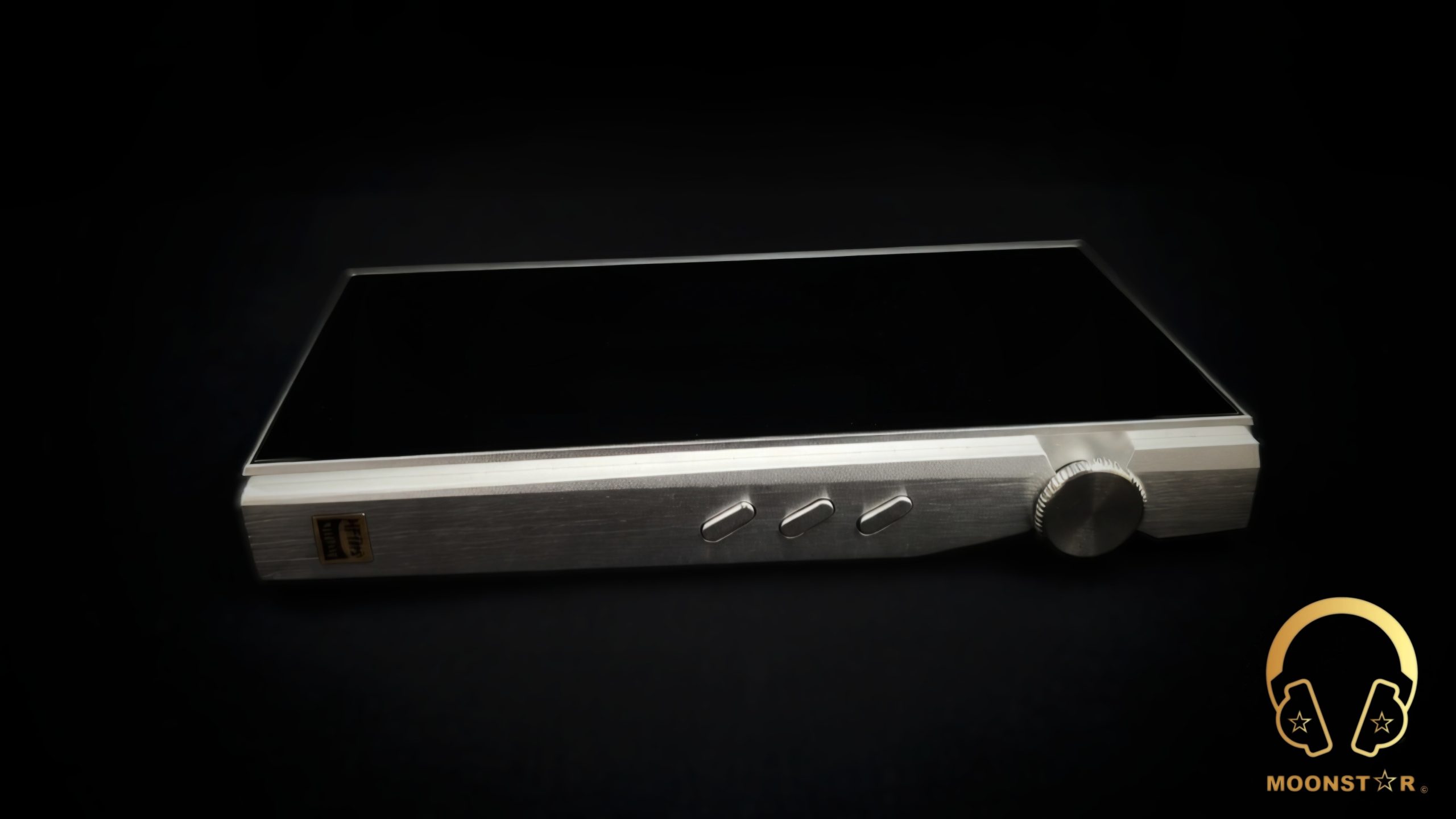
Technical Specifications:
General:
- Model: DX270
- Operating System: Android 13 + Mango OS Dual System
- CPU: 11nm Octa-Core Qualcomm Snapdragon 665 SoC
- RAM + Storage: 4GB LPDDR4X RAM + 128GB UFS internal storage
- Colors: Silver, Grey
- Display: 5.5-inch, 1080 x 2160 resolution, in-cell capacitive touchscreen
- Dimensions: 136mm x 73.5mm x 19mm
- Weight: approx. 265g
- Battery: User-replaceable Li-Polymer
- Playback Time: Up to 13.5 hours (balanced headphone output)
- Charging Time: Approx. 2.3 hours
- MicroSD: Supports SDHC/SDXC up to 2TB
Audio Hardware:
- DAC Architecture: 8-Channel, Fully Differential Discrete R2R (20-bit R2R + 4-bit String DAC hybrid)
- Total Resistors: 344 high-precision resistors
- Controller: FPGA-Master 3.0 with real-time hardware calibration
- Oscillators: Dual Femtosecond Accusilicon Clocks
- Digital Filters: 4 selectable filters + NOS mode
- Audio Formats: APE, FLAC, WAV, WMA, AAC, ALAC, AIFF, OGG, MP3, DFF, DSF, DXD, DST (via CUE), ISO, M3U, M3U8
- PCM Decoding: Up to 32-bit / 768kHz
- DSD Support: Native DSD512
Output Specifications:
- Output Ports: 4.4mm Balanced Phone Out, 4.4mm Balanced Line Out, 3.5mm Single-Ended Phone Out, 3.5mm Coaxial Output
- Output Power (Balanced, 12V DC-IN, Super Gain): 1575mW + 1575mW @32ohm, THD < 0.1%
- Output Power (Balanced, Battery): 1050mW + 1050mW @32ohm, THD < 0.1%
- Dynamic Range (Line Out): 130dB
- Dynamic Range (Phone Out): 128dB
- THD+N: Better than -97dB
- Zero-Crossing Distortion: -120dB
- Resistor Accuracy: 1.4 parts per 100,000
Connectivity:
- USB: USB 3.1 Type-C (charging, data transfer, USB DAC input, digital transport output)
- Wi-Fi: Dual-band 2.4GHz and 5GHz (802.11ac)
- Bluetooth: V5.0 (aptX, aptX-HD, LDAC, AAC, SBC as transmitter; AAC, SBC in Bluetooth DAC mode)
- External Power Input: 12V DC (enables Super Gain mode)
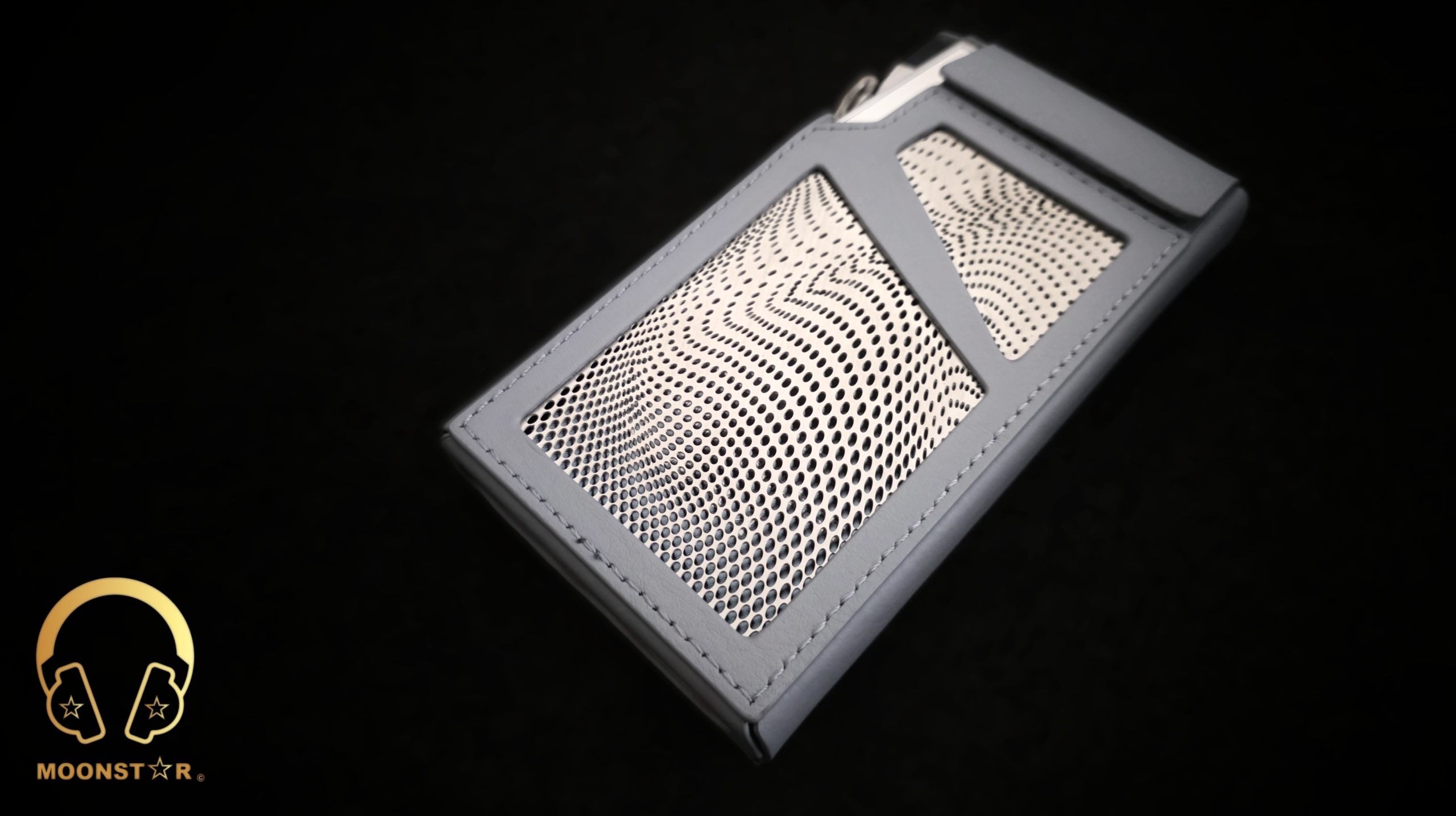
Hardware & Software Features:
The DX270 runs on the Snapdragon 665 SoC paired with 4GB of LPDDR4X RAM and 128GB of UFS storage, a configuration that handles daily operation with ease. Navigating the Android interface, loading streaming apps, and switching between Mango OS and Android all feel quick and purposeful. Boot times are reasonable, and the device manages concurrent tasks such as playing music while managing a library or adjusting settings without any perceptible hesitation. Users familiar with players in this performance tier will find the experience immediately comfortable.
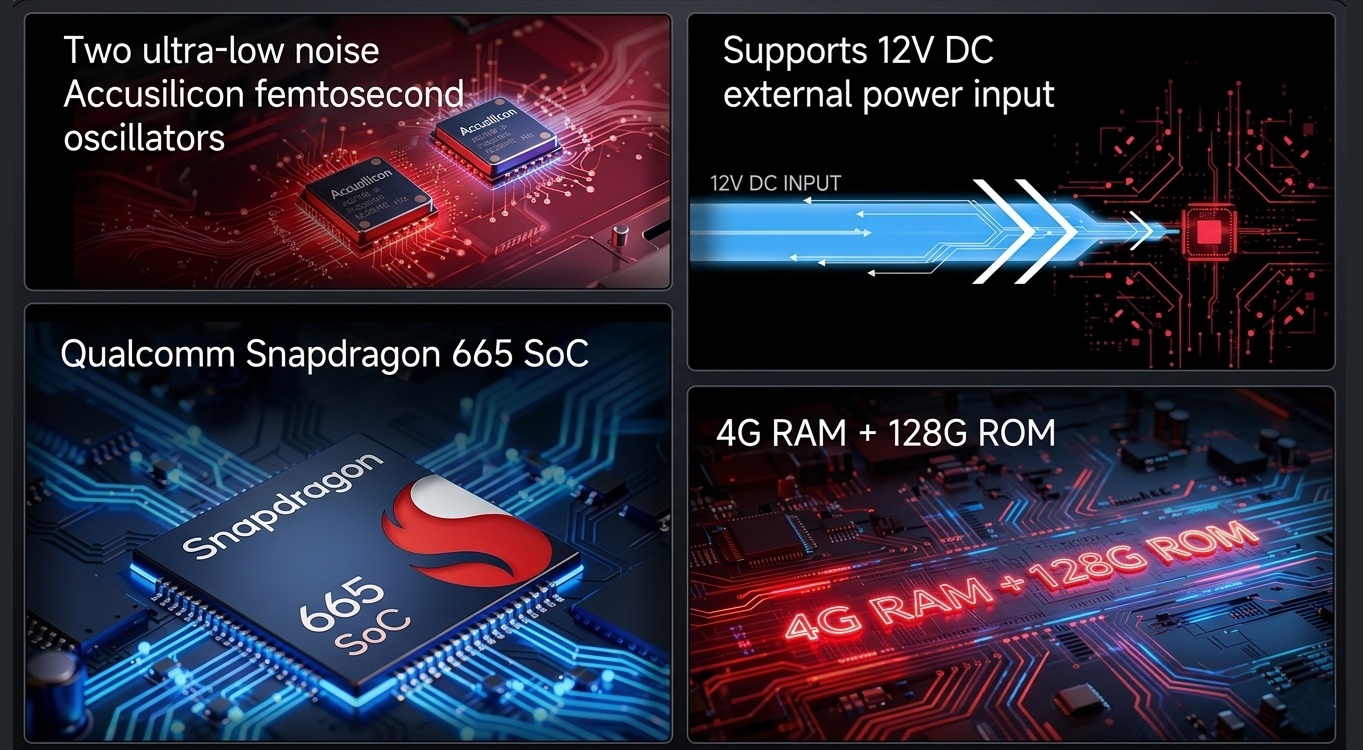
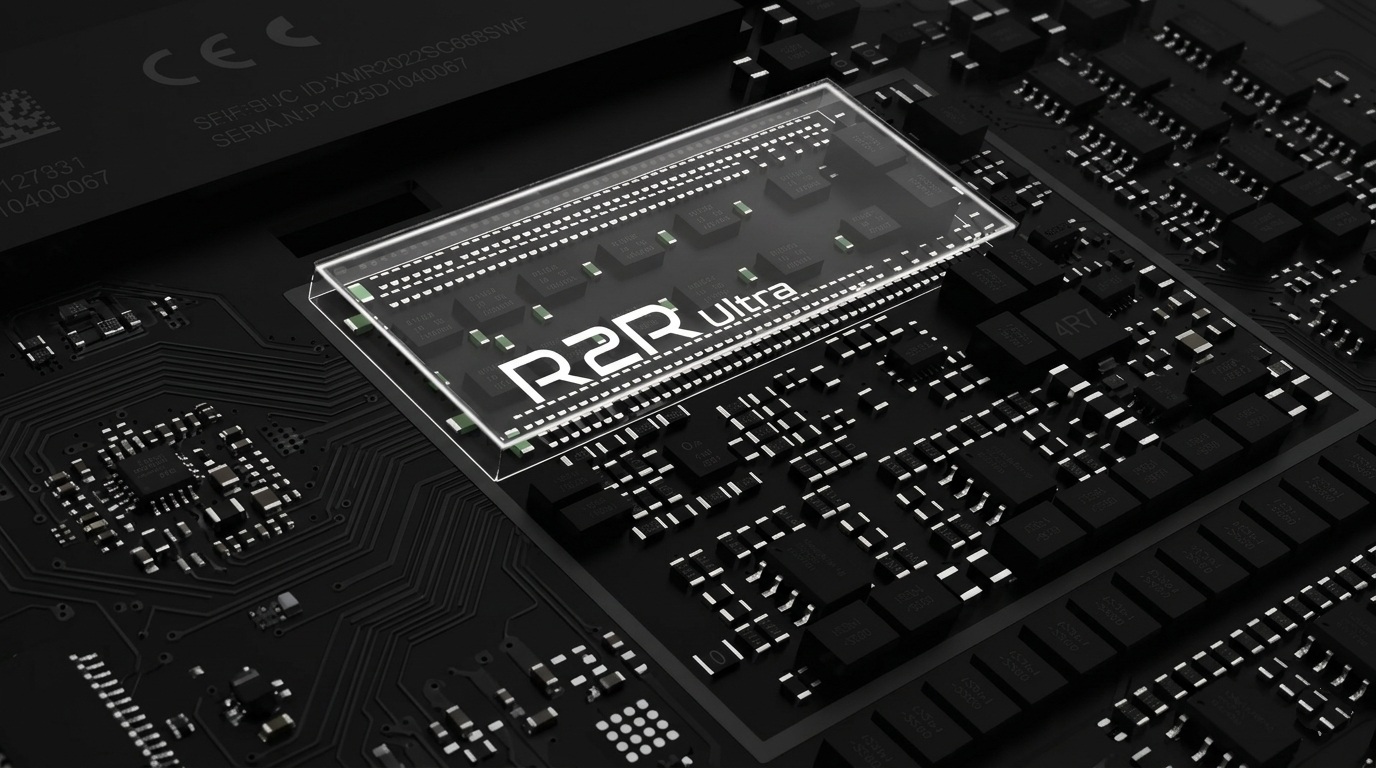
The heart of the DX270’s design is its audio hardware, built around what iBasso calls the R2R Ultra architecture. At its core is a hybrid structure pairing a 20-bit R2R DAC with a 4-bit String DAC. The String DAC handles the most significant bits, where accuracy is most critical, while the R2R section manages the remainder of the signal. Each channel uses two independent R2R arrays in a fully differential balanced configuration, a topology that suppresses common-mode noise and lowers the noise floor more effectively than a single-ended R2R design would allow. In total, 344 high-precision resistors are involved in the conversion process.
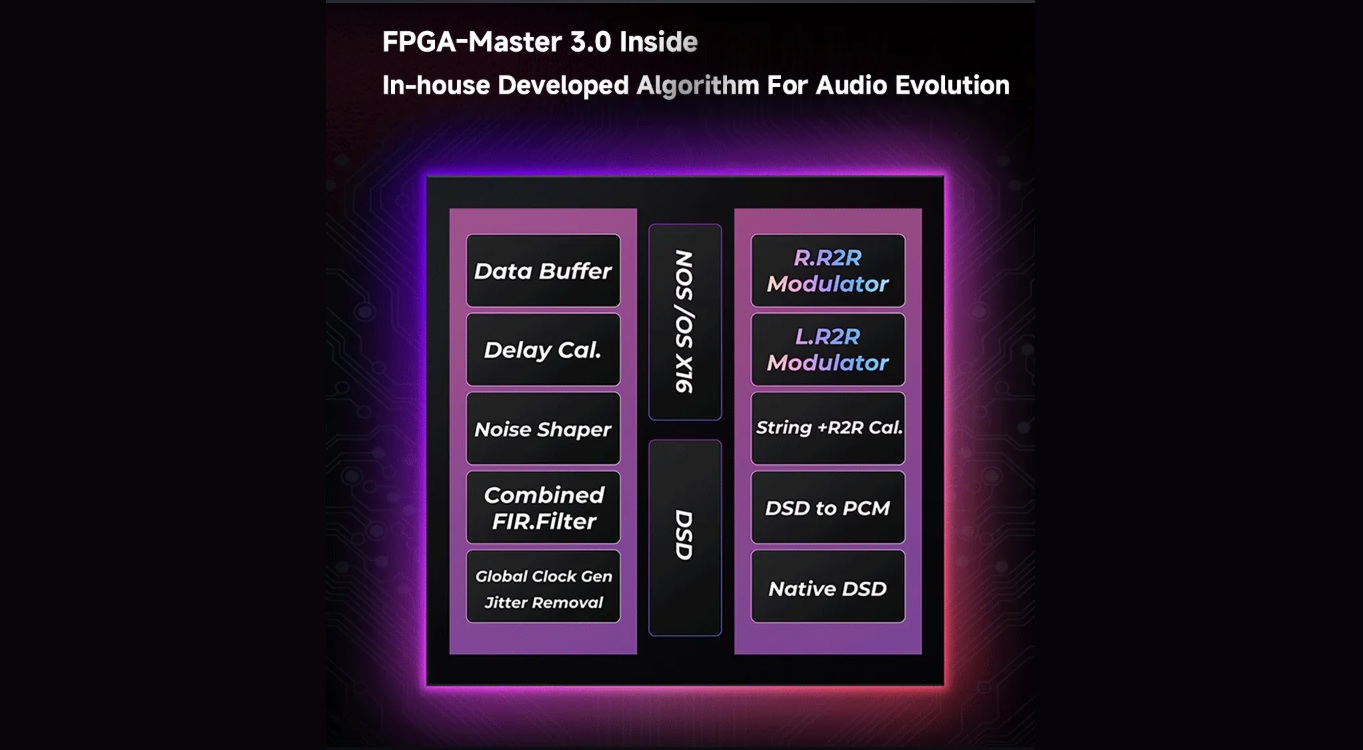
The FPGA-Master 3.0 controller carries 7.5 times the logic resources of its predecessor and performs real-time hardware calibration by actively compensating for component deviations across the resistor network. This continuous correction is what allows the R2R Ultra design to achieve a dynamic range of 130dB at the line output alongside a zero-crossing distortion figure of -120dB, values that speak to the robustness of the implementation. Zero-crossing distortion is a known challenge in discrete R2R designs, where signal transitions near zero can introduce subtle noise or smearing at low-level detail. The differential architecture and calibration strategy address this directly, preserving the harmonic subtleties and micro-dynamic texture that give the DX270 much of its musical character.
Output power is substantial. Running from battery, the balanced 4.4mm headphone output delivers 1050mW per channel into 32 ohms. With the 12V DC adapter engaged in Super Gain mode, this rises to 1575mW per channel. These figures extend the DX270’s capability well beyond typical IEM-centric portable players, making it a credible driving source for demanding full-size headphones, including planar magnetic designs that typically require dedicated desktop amplifiers.
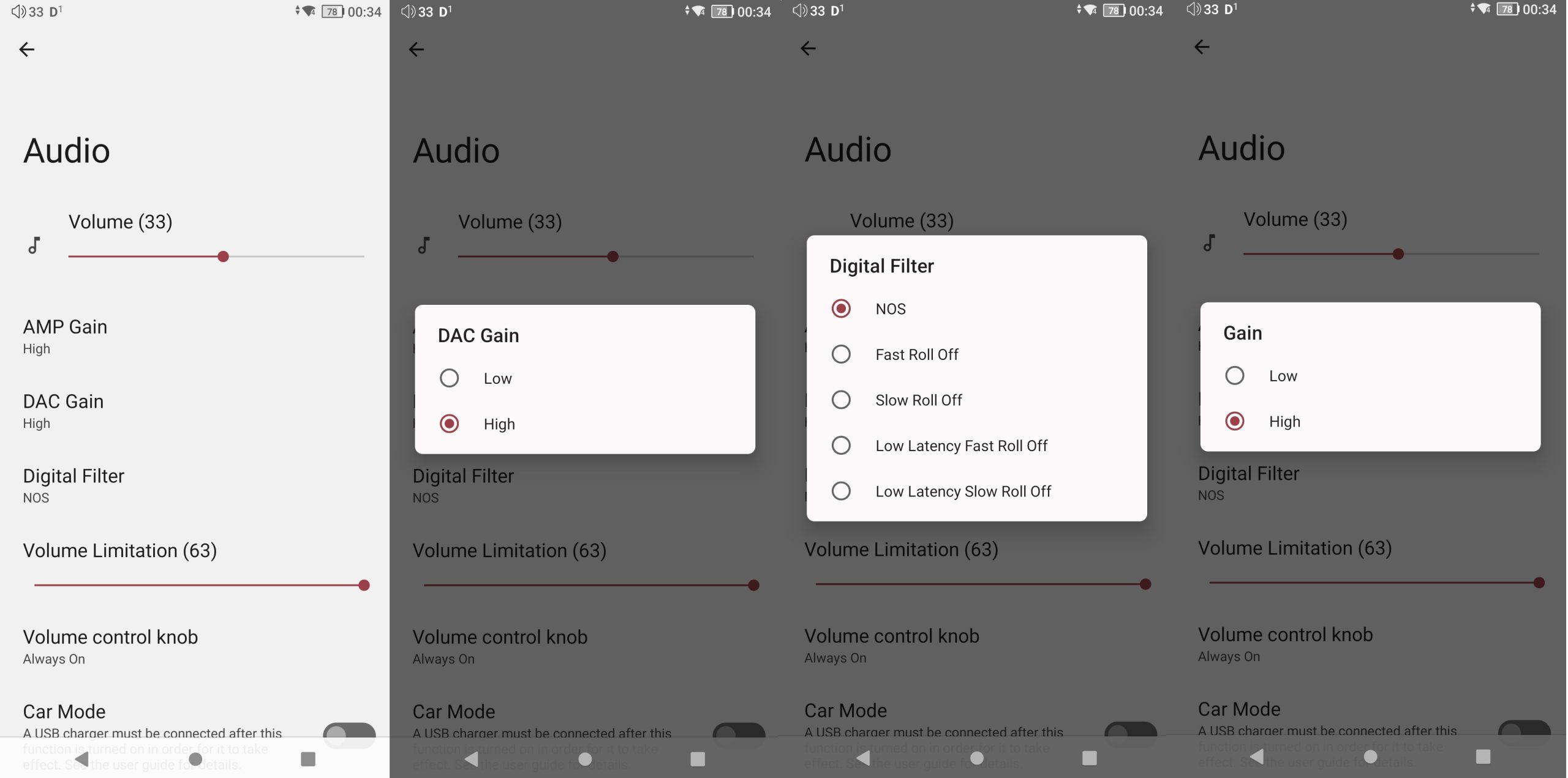
Four selectable digital filters and a NOS (Non-Oversampling) mode are available through the FPGA-Master 3.0. NOS mode bypasses oversampling and the digital filter entirely, applying only the resistor conversion directly. It produces the most analog-weighted presentation of the available options, with a slightly rolled-off top end and a relaxed, warm character. The four digital filter options provide progressively different approaches to pre- and post-ringing control, and spending time comparing them across different headphone pairings yields genuinely meaningful differences that reward attentive listening.
Android OS and Pure Audio Mode:
The DX270 runs Android 13 alongside Mango OS, a Linux-based playback environment designed to eliminate the processor overhead and RF interference associated with a fully running Android instance. Android 13 benefits from a system-level modification that routes audio around Android’s sample-rate conversion engine for both the native Mango Player app and third-party applications installed from the Play Store. This preserves the native sample rate end-to-end through the R2R DAC, meaning that Tidal, Qobuz, Spotify, Deezer, Foobar2000, and USB Audio Player Pro all deliver bit-accurate output without requiring additional configuration from the user.
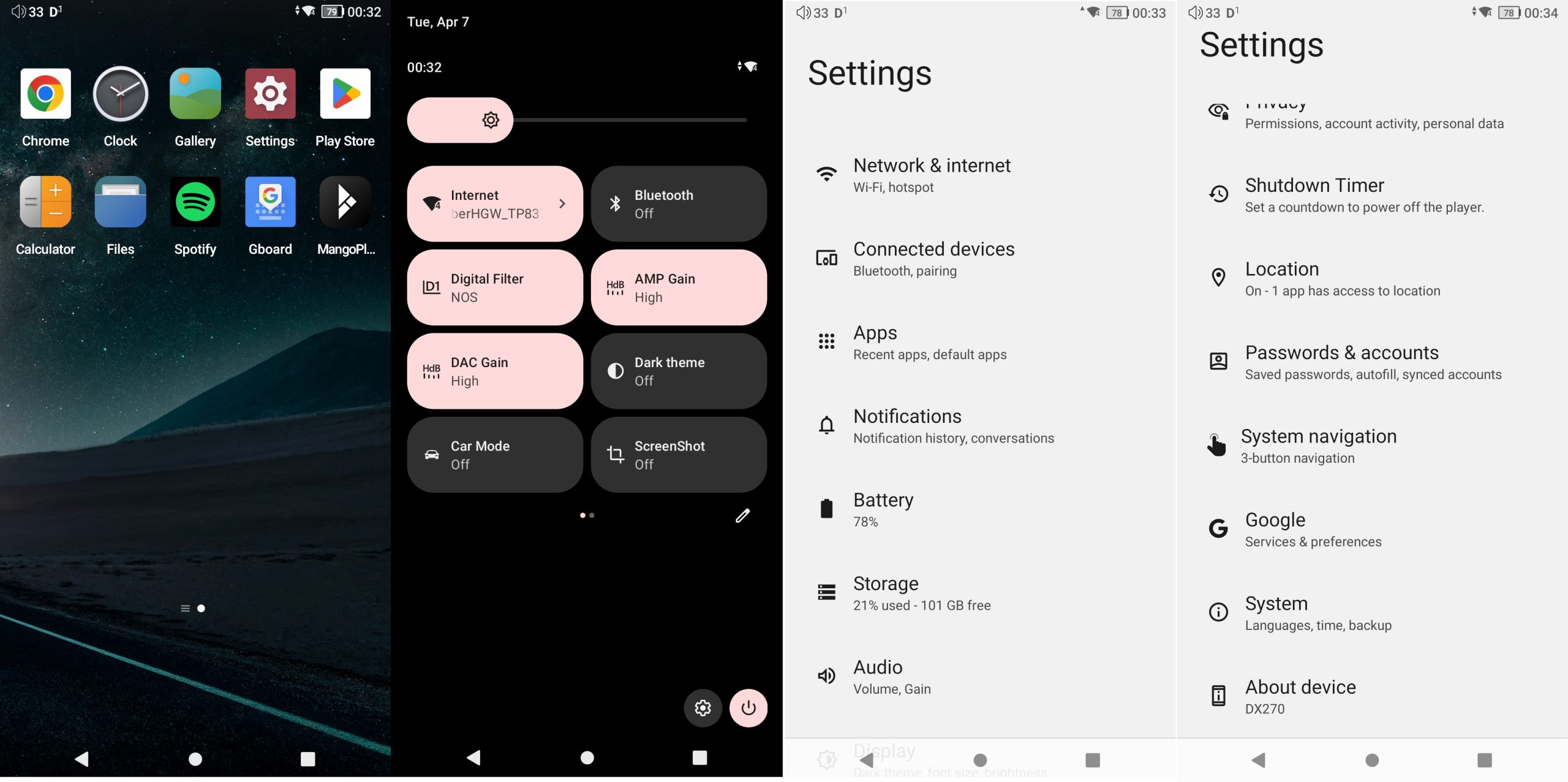
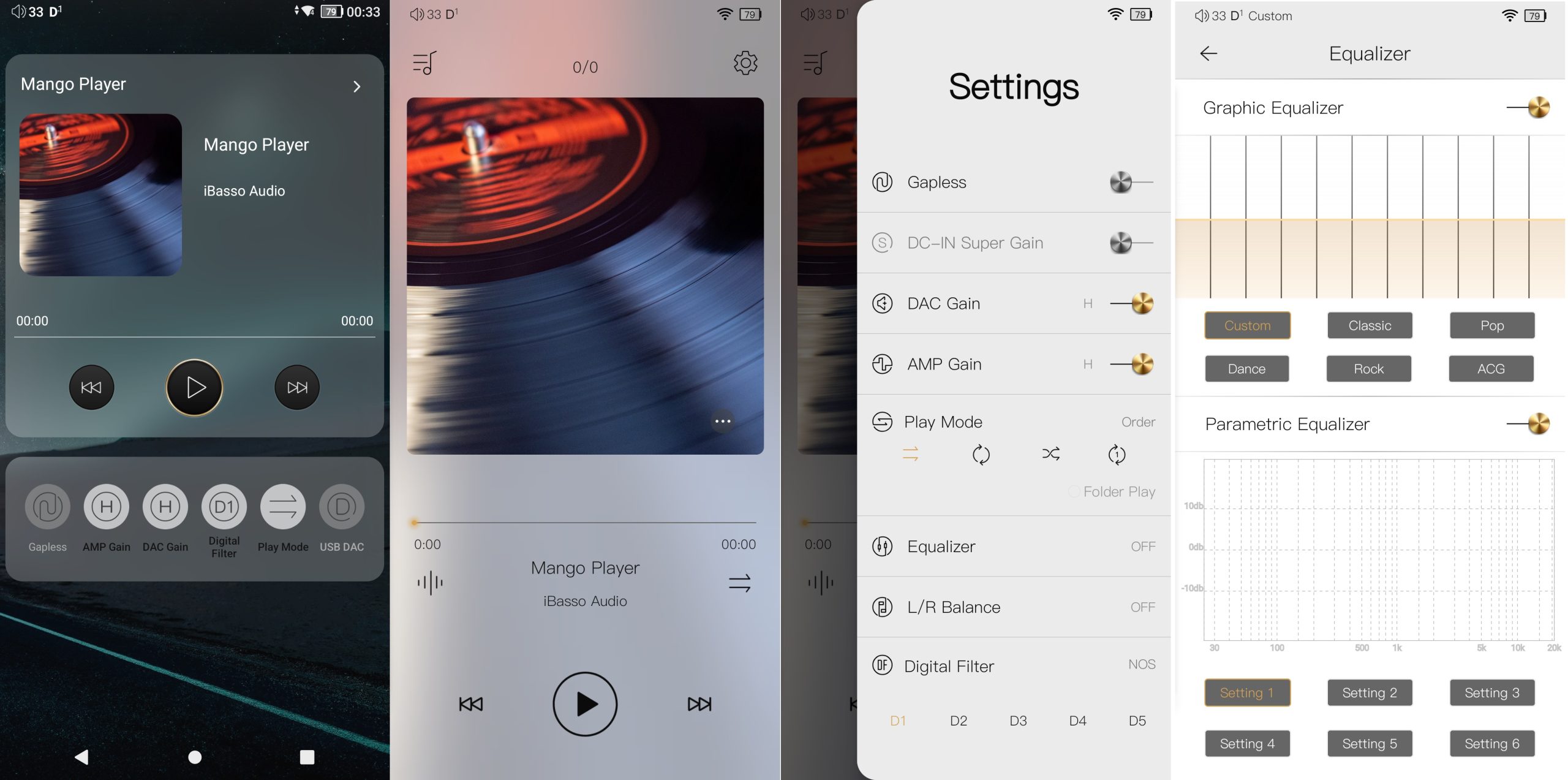
The home screen presents a clean interface with the Mango Player widget displaying album artwork, track metadata, and playback controls. The settings menu is comprehensive, covering gain adjustment across three levels, five digital filter selection including NOS mode, output port assignment, a customizable equalizer, gapless playback, and volume limit settings. Streaming applications perform smoothly; even graphics-intensive platforms like Qobuz operate without lag in regular use.
Mango OS is accessible via a reboot triggered from within Android settings or through a hardware button sequence. Once loaded, it presents a stripped-down library-focused interface that prioritizes minimal background activity. With Wi-Fi, Bluetooth, and all non-audio processes suspended, the environment delivers a measurably lower-noise playback floor that becomes audibly beneficial with sensitive IEMs. App installations and streaming services are unavailable in this mode, limiting it to locally stored files. For critical listening sessions from a well-organized local library, Mango OS remains the preferred environment.
Battery Life:
iBasso rates the DX270 for approximately 13.5 hours of balanced headphone output playback from battery. Real-world testing with efficient IEMs under controlled conditions has come close to this figure. In mixed use, incorporating screen-on time, streaming, and higher gain settings, a range of 10 to 13 hours is a practical expectation depending on headphone load and screen brightness. Line-out playback extends battery life further as the headphone amplifier stage is largely bypassed.
Charging from near-empty to full takes approximately 2.3 hours, with USB Power Delivery support. The user-replaceable battery is one of the DX270’s most practically valuable long-term ownership features, allowing the owner to extend the device’s usable life without factory service. When the 12V DC adapter is connected, the internal battery is not drawn upon for amplification, effectively removing battery life as a concern during stationary desktop listening sessions.
Equipment Used for This Review:
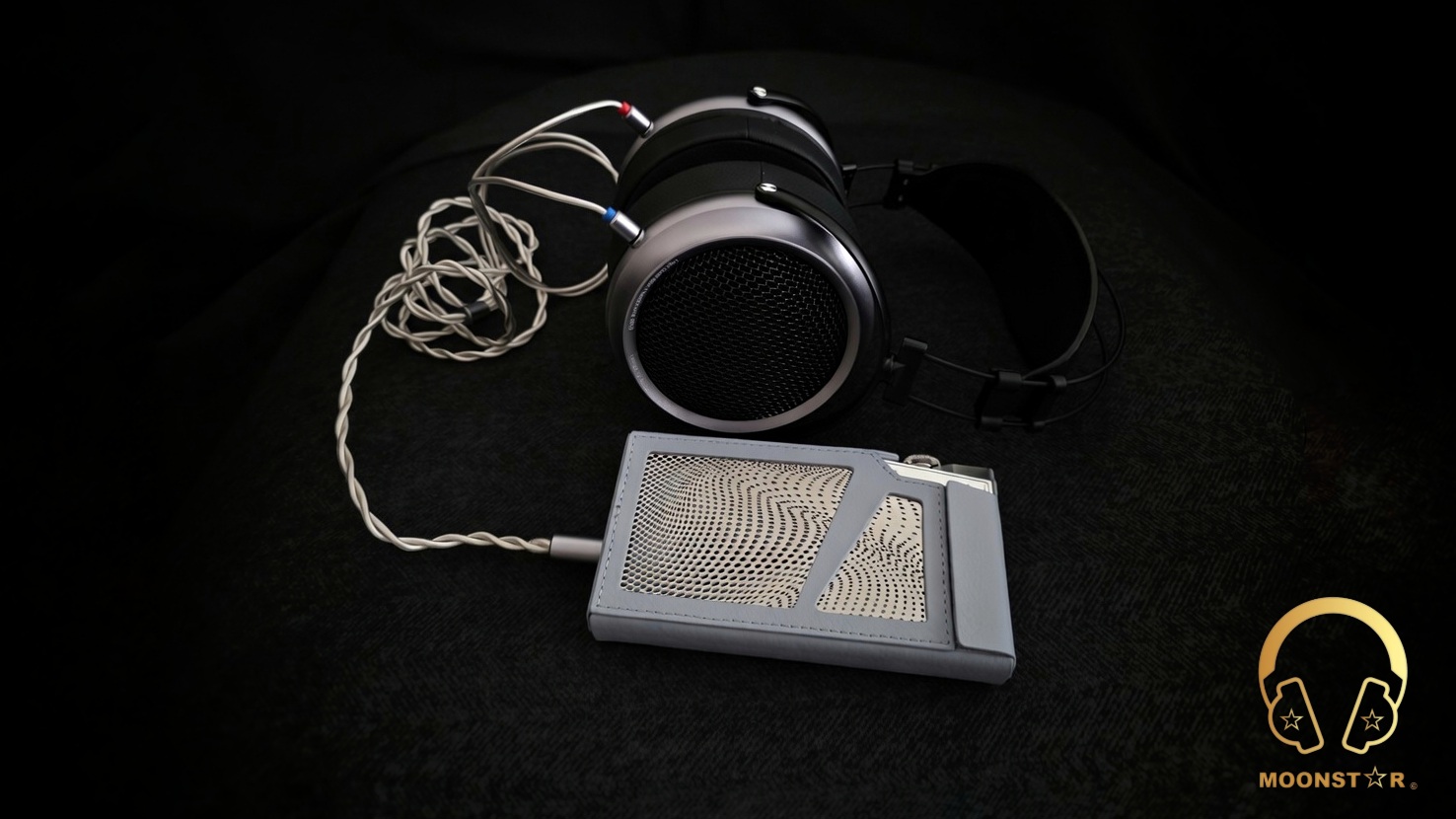
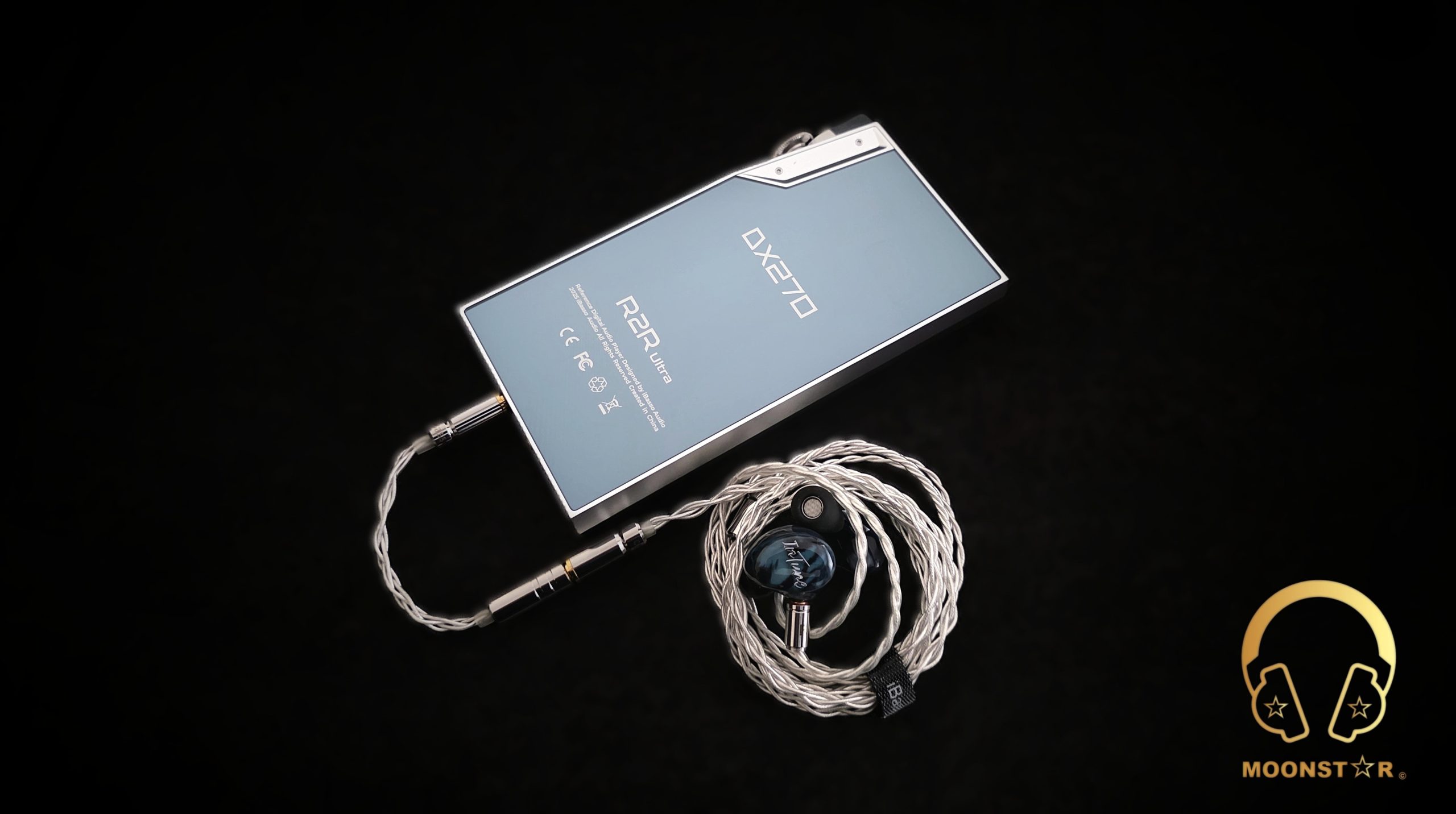
- DAPs: iBasso DX270, iBasso DX260 MK2, iBasso DX340
- IEMs: iBasso IT07, iBasso Epitome, Campfire Audio Andromeda 10
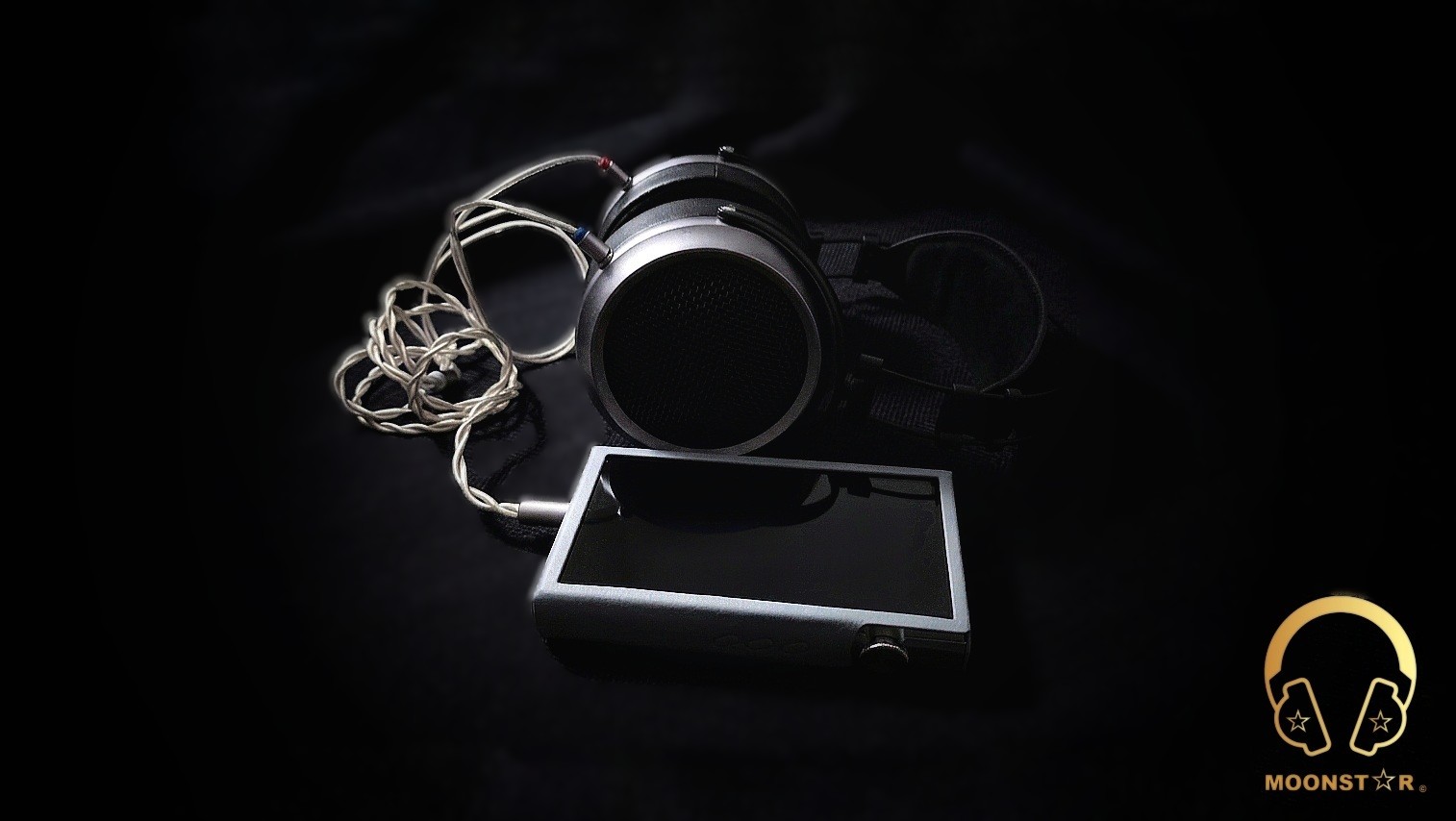
- Headphones: iBasso SR3
Albums & Tracks Used for this Review:
Vocal Jazz / Smooth Jazz
- Norah Jones – Come Away With Me (Flac 24bit/96kHz)
- Diana Krall – So Wonderful (DSF)
- Barry White – Just The Way You Are (Flac 24bit/48kHz)
- Isaac Hayes – Walk On By (Flac 16bit/44.1kHz)
- Sting – Englishman in New York (Flac 24bit/48kHz)
- Otto Liebert & Luna Negra – The River (Flac 24bit/192kHz)
- Ferit Odman – Look, Stop & Listen (Flac 24bit/192kHz)
- Charly Antolini – Duwadjuwandadu (Flac 24bit/192kHz)
Soul / R&B
- Aretha Franklin – I Say A Little Prayer (Flac 24bit/96kHz)
- Adele – My Little Love (Apple Lossless)
- George Michael – Don’t Let the Sun Go Down on Me (Flac 24bit/192kHz)
- Eric Clapton – Wonderful Tonight (Flac 24bit/96kHz)
Pop / Rock Classics
- Michael Jackson – Billie Jean (Flac 24bit/96kHz)
- Elton John – Rocket Man (Flac 24bit/96kHz)
- David Bowie – Heroes (Flac 24bit/192kHz)
- U2 – Sunday Bloody Sunday (Flac 16bit/44.1kHz)
- Lorde – Royals (Flac 24bit/48kHz)
- Dave Gahan – Kingdom (Apple Lossless)
Electronic / Experimental
- Daft Punk – Instant Crush (Flac 24bit/96kHz)
- Daft Punk – Doin’ it Right (Flac 24bit/96kHz)
- Bro Safari, UFO! – Drama (Apple Lossless)
- Armin Van Buuren – Vini Vici (Flac 16bit/44.1kHz)
- Yosi Horikawa – Bubbles (Apple Lossless)
- Toutant – Rebirth (Apple Lossless)
Alternative / Indie / Art Rock
- Radiohead – Live in Berlin “Album” (Apple Lossless)
- Radiohead – Pyramid Song (Apple Lossless)
- Muse – Hysteria (Flac 24bit/96kHz)
- Red Hot Chili Peppers – Nobody Weird Like Me (Flac 24bit/48kHz)
- Lunatic Soul – The Passage (Flac 16bit/44.1kHz)
- Portishead – It Could Be Sweet (Apple Lossless)
- Gogo Penguin – Raven (Flac 24bit/192kHz)
- Gogo Penguin – Murmuration (Flac 24bit/192kHz)
- Massive Attack – Angel (Flac 24bit/48kHz)
- Bear McCreary – Valkyries (Apple Lossless)
Classical / Orchestral
- Max Richter – On the Nature of Daylight (Flac 24bit/96kHz)
- Chopin – Nocturne No. 20 in C-Sharp Minor (Flac 16bit/44.1kHz)
- Clair de Lune – Claude Debussy (Apple Lossless)
- Tchaikovsky – Symphony No. 5 (Flac 16bit/44.1kHz)
- Vivaldi – Le Quattro Stagioni “The Four Seasons” (Apple Lossless)
- Fazıl Say – Nazım Oratoryosu (Live) (Flac 16bit/44.1kHz)
Jazz / Instrumental
- Miles Davis – So What (Apple Lossless)
World / Traditional
- Sertap Erener – Aşk (Flac 16bit/44.1kHz)
- Edith Piaf – Non Je Ne Regrette Rien (Flac 16bit/44.1kHz)
Metal / Progressive Rock
- Metallica – Dyers Eve (Flac 24bit/96kHz)
- Metallica – Sad but True (Flac 24bit/96kHz)
- Megadeth – Sweating Bullets (Apple Lossless)
- Opeth – Windowpane (Flac 16bit/44.1kHz)
- Deftones – My Own Summer (Shove It) (Flac 16bit/44.1kHz)
- Rush – Tom Sawyer (Flac 16bit/44.1kHz)
- Slayer – Angel of Death (Apple Lossless)
The Sound:
The DX270 was evaluated after an initial burn-in period of approximately 100 hours, using the iBasso Eptiome, iBasso IT07, Campfire Audio Andromeda 10 IEMs, and iBasso SR3 headphones across both the 3.5mm single-ended and 4.4mm balanced outputs. Digital filter comparisons were performed across all four digital filter options and the NOS mode, with the bulk of listening completed using the default filter. Gain was adjusted per pairing: the IT07 and Andromeda 10 were evaluated primarily in low and medium gain, the SR3 in medium and high gain.
The character of the DX270 is immediately distinctive. The R2R Ultra architecture introduces a quality that is difficult to describe purely in technical terms but easy to identify during listening: a density and cohesion in the tone that makes instruments sound less like isolated data points in a mix and more like physical objects producing sound in a shared acoustic space. This is the quality most commonly associated with well-implemented R2R designs, and the DX270 achieves it while avoiding the most common pitfall of the topology, which is an overly rolled-off treble and congested high-frequency presentation. The result is a warmer, more textured experience than most delta-sigma players in this price range provide, while retaining sufficient extension and air to remain satisfying across a wide range of musical material.
Bass:
The bass on the DX270 carries body and physical weight that gives low frequencies a tangible, present quality. Sub bass extension is solid, reaching deeply into the lower registers with a sense of pressure and mass that adds genuine physicality to electronic music, orchestral low brass, and deep vocal recordings. The texture within bass notes is pronounced: plucked bass strings, bowed cellos, and synthesized low tones carry apparent grain and tonal complexity rather than being rendered as smooth but featureless frequency content. This textural richness is one of the most immediately enjoyable qualities of the R2R conversion process, and it is consistently present across different musical contexts.
Mid bass punch is rounded rather than sharply defined. Kick drums strike with weight and warmth, decaying naturally rather than cutting off abruptly. This quality benefits music that relies on rhythmic feel over rhythmic precision: jazz, soul, and classic rock respond very naturally to this presentation. On tracks where tight, staccato low end transients are essential, such as certain electronic genres or technically demanding progressive metal, the attack is present but carries a slight bloom that gives kick and bass a more analog adjacent character. This is a consistent property of the R2R architecture rather than a deficiency, and whether it suits a listener’s preferences will depend on their musical diet and reference points.
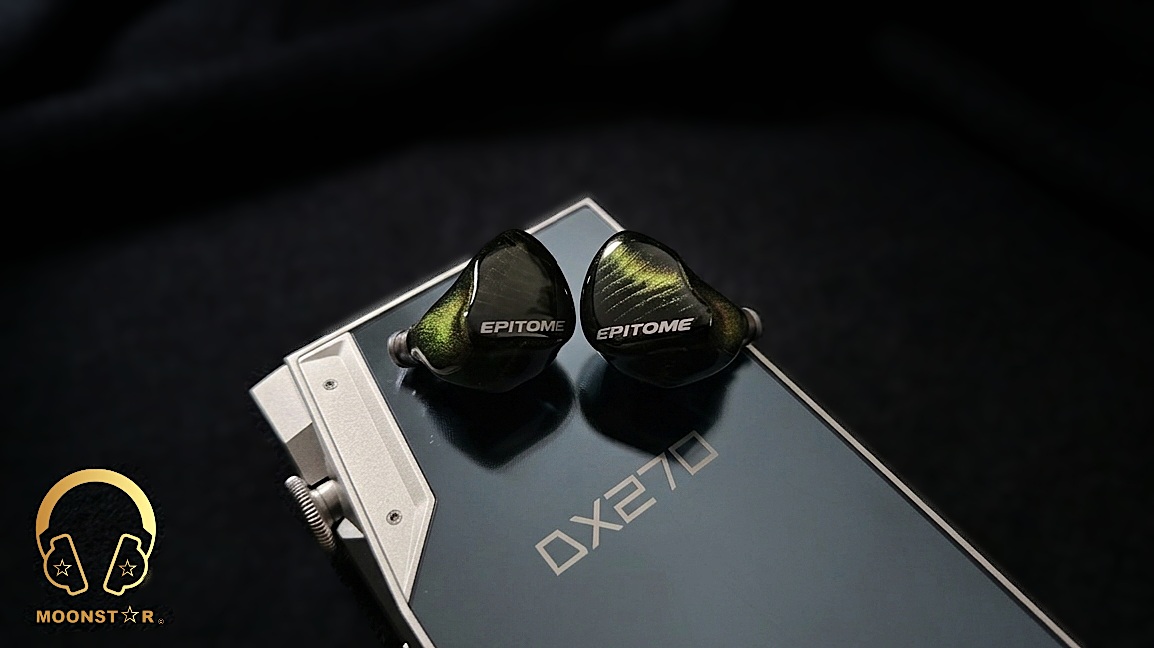
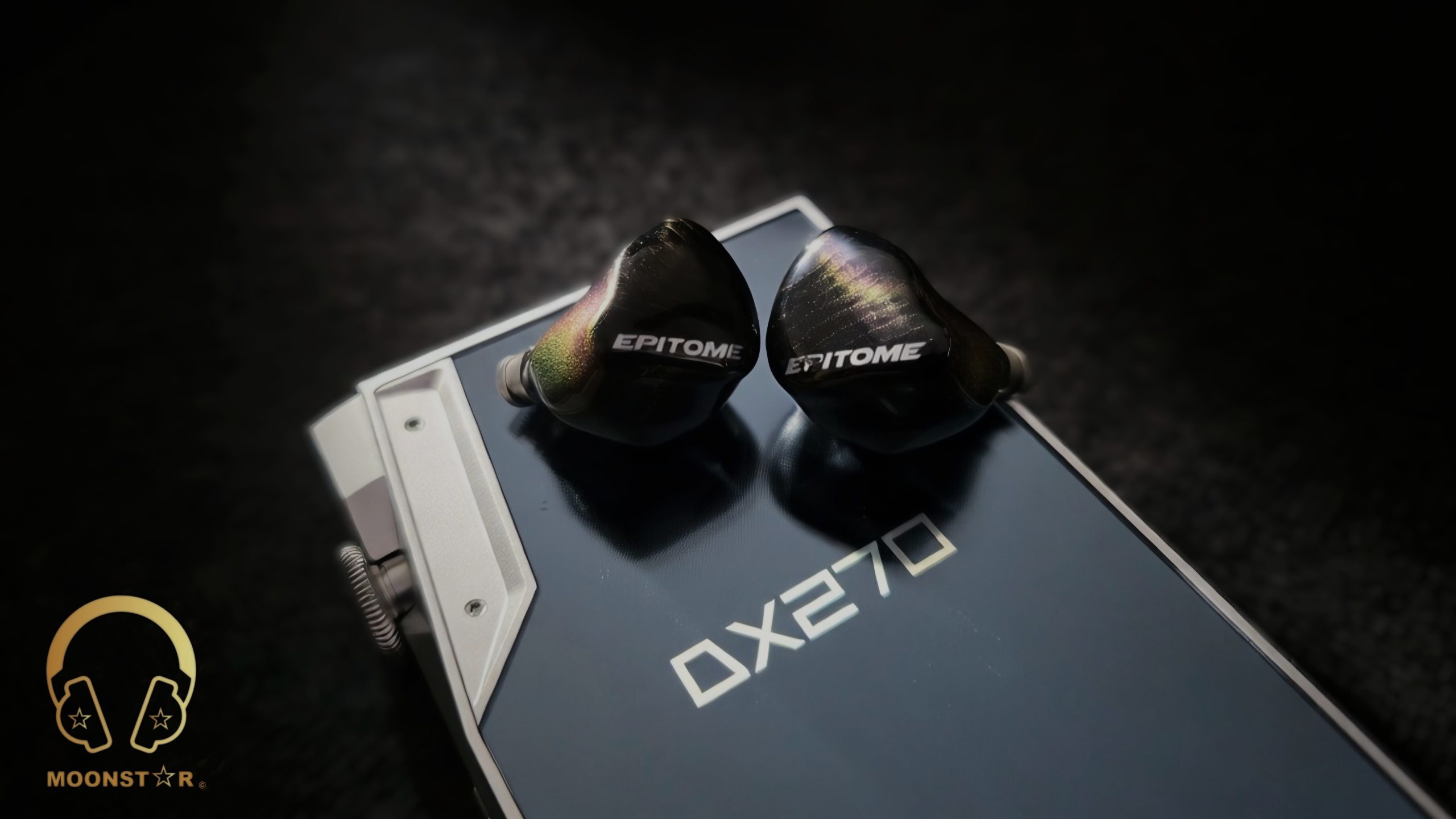
Coupled with the iBasso Epitome, the bass gains a new level of authority and structural integrity. The Epitome tightens the low end response, offering better control over the sub bass extension while maintaining that characteristic R2R weight. The result is a presentation that feels both more visceral and more technically refined. With the iBasso IT07, bass delivery is lively and energetic. The IEM’s fast character keeps transients well defined while the DX270 contributes tonal richness, and tracks like Massive Attack’s Angel take on a more immersive, physically engaging quality with the sub bass drone occupying a larger portion of the perceived space. The Campfire Audio Andromeda 10 leans naturally toward warmth, and in this pairing the low end becomes genuinely enveloping, with jazz bass and acoustic double bass carrying a fullness more reminiscent of a live listening experience. The SR3 brings the most controlled and articulate rendering of the low end, with well separated bass layers in orchestral recordings coming through clearly while retaining the characteristic density that defines the DX270’s tonal contribution.
Listeners who spend time with bass heavy genres will find the DX270’s low end treatment satisfying and genuinely enjoyable. The added weight integrates naturally into the overall presentation rather than sitting as an isolated excess, and it contributes to the sense of musical cohesion that characterizes the player throughout the frequency range.
Midrange:
The midrange is where the DX270 makes its most persuasive argument. Vocals exhibit a presence and texture that is engaging without being artificially enhanced. There is no frequency boost pushing voices forward; instead, the tonal density produced by the R2R architecture gives vocals a natural richness that sounds unprocessed and immediate. Listening to Norah Jones on Come Away With Me, the warmth and breath in her voice carries a quality that feels preserved rather than smoothed over during conversion. Similar qualities emerge with Edith Piaf and Diana Krall: a graininess that is not unpleasant but is simply the texture of a voice recorded in a real room, reproduced without the glassy sheen that lesser players can introduce.
Instrumental midrange fares equally well. Acoustic guitars carry body and string resonance that can be followed individually within a mix. Piano reproduction has a density that matches what a physical instrument produces, with each note carrying weight at its core that decays naturally. Strings in orchestral contexts (violins, violas, cellos) are rendered with a woody, bowed character that smaller or lighter players can lose in favor of a cleaner but less physically convincing tone. On Tchaikovsky’s Symphony No. 5 and on Max Richter’s On the Nature of Daylight, the sense of physical instruments performing in an acoustic space comes through with a conviction that is genuinely affecting.
Separation within the midrange is good and operates in an organic manner: instruments are clearly distinguishable, but they seem to share the same air and acoustic environment rather than each occupying a sterile, bounded zone. For acoustic music, jazz, and classical material, this quality is particularly well suited. It contributes to a sense of ensemble cohesion that technically precise players sometimes sacrifice in pursuit of individual detail extraction.
When paired with the iBasso Epitome, the midrange reaches a pinnacle of transparency and effortless detail. The Epitome manages to strip away any remaining veils, allowing the R2R textures of the DX270 to shine with even greater clarity and a more expansive stage. With the IT07, the midrange arrives with high resolution and a fine granularity of texture that makes solo vocal performances compelling. The Andromeda 10 adds lusciousness to the presentation, particularly in jazz vocal recordings and small acoustic ensembles, where instruments crowd gently around each other in a way that feels spatially natural. With the SR3, the midrange opens up further, providing the most spacious and dynamically differentiated rendering of the pairings. Complex orchestral passages and live recordings benefit most from this combination.
Genre coverage in the midrange is broad. Jazz, classical, acoustic, and vocal centric music are the natural home of this player’s midrange character, but it also serves rock and pop well. Electric guitar tones have bite and sustain without sounding harsh, and contemporary pop vocals benefit from the DX270’s natural rendering rather than being pushed into glare. Heavier material (Deftones, Opeth, Metallica) comes across with a weight and grit that suits the music rather than flattening it.
Treble:
Treble is the frequency range where R2R designs most commonly fall short, with traditional implementations often producing a noticeably soft and rolled-off presentation above 10kHz. The DX270 does not follow this pattern. Extension into the upper registers is genuine and appreciable, and the treble retains both air and definition in a way that allows cymbal overtones, string harmonics, and the upper presence of wind instruments to be communicated with a convincing sense of openness.
The character of the treble is smooth rather than sharp. Cymbal strikes have texture and shimmer rather than the pointed, metallic cut that can emerge from players where high frequency content is reproduced with excessive edge. High hat patterns in jazz and electronic music are rendered with a pleasing sense of spread and decay. Orchestral strings in their upper registers carry a natural sheen without tipping into stridency. Soprano vocal recordings, always a reliable test for treble handling, maintain warmth and roundness at the top that avoids sibilance and hardness.
Digital filter selection has its most audible impact in the treble. NOS mode produces the most relaxed and analog weighted high frequencies, with a noticeably softer presentation above 15kHz that suits warmer or brighter headphones well as a counterbalance. Among the four filters, the differences are more subtle but remain discernible in direct comparison, with variations in transient edge sharpness and the sense of air around high frequency instruments. Listeners who appreciate a brighter treble character will gravitate toward the sharper filter settings, while those accustomed to warmer sources will likely find any of the filter options sufficiently extended for their needs.
With the iBasso Epitome, the treble becomes exceptionally transparent and articulate. The Epitome extracts a level of micro detail that reveals the finest nuances of the DX270’s high frequency extension, providing a crystalline clarity that remains entirely organic. With the IT07, treble is crisp and precise; cymbals in live recordings have a realistic sense of dimensionality. The Campfire Audio Andromeda 10 rounds off some upper frequency detail and in this pairing the treble takes on a relaxed quality that suits jazz, ambient, and acoustic folk very comfortably. The SR3 sits between these extremes, rendering high frequency content with good articulation and natural decay, particularly well suited to orchestral material where upper strings and brass need both control and air to sound convincing.
The conclusion from extended treble focused listening is that the DX270 avoids the two most common treble failings of R2R players: the excessive roll off and the overly soft top end. What it delivers is naturally extended high frequencies that reach where they need to without calling attention to themselves through either deficiency or harshness. This quality, more than any measurement, is what gives the DX270 its musical character across extended listening sessions.
Overall Cohesion and Dynamics:
The three frequency bands described above integrate in a way that gives music a sense of coherent physical reality. The connection between bass body and midrange warmth is seamless, with no thinning as frequencies climb through the lower midrange. The transition from midrange to treble carries through without any artificial dip or emphasis that would disrupt the sense of a continuous, unified soundfield. This cohesion is one of the DX270’s most consistent qualities and is audible across all pairings and genres.
Dynamics are handled with confidence. Orchestral crescendos build with genuine energy and arrive with impact, while solo piano passages in quiet moments retain their fragility and intimacy. The perceptual dynamic range, not just the measured specification but the experience of contrast between quiet and loud, is one of the more convincing aspects of the DX270’s presentation. Micro-dynamic behavior, the subtle amplitude variations within sustained notes and phrases, is also strong. This is an area where R2R designs can struggle if zero-crossing distortion is not well controlled, but the DX270’s differential architecture and calibration strategy address this effectively, preserving the kind of low-level tonal breathing that gives music its sense of being performed rather than rendered.
Soundstage & Imaging:
The soundstage of the DX270 is wide and has a convincing sense of depth. Instruments are placed within it with good lateral precision, and the front-to-back layering is well developed, giving complex recordings a genuine sense of spatial hierarchy. Live recordings are a particular strength; the sense of a physical room with a front, back, and sides comes through with enough clarity to be spatially informative rather than merely suggestive. On the Radiohead Live in Berlin album, the ambient reverb of the venue, the positioning of instruments across the stage, and the space between the audience and the performers are rendered with a scale and placement that contributes meaningfully to the listening experience.
Imaging is solid and musically natural. Instrument positions are stable and clearly defined, occupying a region of space with realistic spread rather than infinitely small pinpoints. The background is quiet and clean, with no floor noise audible with any of the headphones used in this review. This allows quiet passages and fine detail at the edges of the soundfield to emerge without competition, contributing to the sense of a well-controlled and well-resolved presentation.
Comparisons:
iBasso DX270 vs iBasso DX260 MK2:
These two players share a very similar platform hardware foundation but represent two fundamentally different sonic philosophies. The DX260 MK2 is built around an array of eight CS43198 DAC chips and prioritizes absolute resolution, surgical separation, and a neutral, uncolored presentation. The DX270, by contrast, prioritizes tonal density, organic texture, and musical cohesion through its complex R2R Ultra architecture.
In practical listening terms, the DX260 MK2 resolves individual details with a cleaner, more analytical presentation. It excels at the technical deconstruction of a track, making it easy to identify hidden artifacts or subtle production choices within a recording. The note trailing edges are sharper and the transients have a faster, more instantaneous quality. The DX270 takes a different path by embedding what it resolves into a more convincing and lifelike musical context. Instead of presenting details as isolated data points, it makes instruments sound more like their physical counterparts vibrating in a real acoustic space.
Bass on the DX270 has significantly more weight and a “chewy” texture that adds a sense of authority to low frequencies. The DX260 MK2 offers a more linear, fast, and strictly controlled low end response that some professionals might find more accurate for monitoring or critical assessment. In the treble region, both players are extended and airy, but the DX270 delivers high frequencies with a smoother, more liquid character. The DX260 MK2 provides a sharper transient attack that emphasizes the “click” of a drumstick or the “pluck” of a string with more aggressive definition. Ultimately, the DX270 is not a straightforward upgrade over the DX260 MK2. It is a sophisticated lateral move that trades away some degree of clinical precision in exchange for a deeply satisfying musicality and an analog soul that is rare in this price bracket.
iBasso DX270 vs iBasso DX340:
The iBasso DX340 serves as the flagship reference in the lineup, and the step up in technical authority is immediately apparent upon the first few minutes of listening. While the DX270 offers a unique and beautiful R2R texture that many will prefer for its emotional and “sweet” musicality, the DX340 dominates the conversation when it comes to absolute transparency, massive soundstage dimensions, and micro dynamic precision. The DX340 provides a noticeably blacker background and a more holographic imaging capability that can make the DX270 sound slightly more intimate and condensed by comparison.
However, the DX270 holds its own by offering a specific analog weight and a physical presence to the notes that even the flagship struggles to replicate in exactly the same way. The R2R Ultra architecture gives the DX270 a “thicker” sound signature that can be more forgiving with older or poorly mastered recordings. The DX340 is the ultimate technical tool, providing a wide and crystal clear window into the exact parameters of a recording session. The DX270, on the other hand, is the ultimate musical companion, focusing more on the natural flow and harmonic richness of the performance rather than the technical boundaries of the file.
When comparing layering, the DX340 is more defined and surgically separated, allowing the listener to peer deep into the back of the stage with ease. The DX270 offers a sense of “togetherness” and tonal cohesion that is incredibly addictive for long, fatigue free listening sessions. For those who prioritize the specific timbre of an R2R ladder DAC and the realistic, fleshy reproduction of acoustic instruments, the DX270 remains a specialized and highly rewarding alternative to the clinical perfection and massive scale of the flagship DX340. It offers a flavor of sound that is distinct and complementary to the flagship, rather than just being a lesser version of it.
Conclusion:
The iBasso DX270 is a technically ambitious product that takes a clear position on what a high-quality portable audio source should prioritize. Its R2R Ultra architecture, with 344 high-precision resistors, a fully differential 8-channel design, and FPGA-Master 3.0 real-time calibration, is a genuine engineering achievement within the constraints of a portable player, and its sonic contributions are audible and meaningful throughout the frequency range.
The practical case is equally strong. Battery life is competitive at up to 13.5 hours, the user-replaceable battery supports long-term ownership, the 12V DC input opens a genuine desktop-capable mode at up to 1575mW per channel, and the dual-OS structure balances Android streaming flexibility with the audio-purity focus of Mango OS. The 5.5-inch in-cell display is a comfortable upgrade in display real estate, the leatherette case and DC adapter reflect well on the product’s accessory bundle, and the build quality throughout is solid and consistent.
The DX270 is best suited to listeners who value tonal density, organic texture, and musical cohesion over clinical analytical resolution. Those who spend significant time with acoustic music, jazz, classical, and vocal recordings will find it particularly well-matched to their material. It also makes a strong case for users who want a single device capable of serving both portable IEM use and desktop full-size headphone listening without a separate amplifier. At $1,149.00, it is a deliberate and rewarding choice for the listener it is designed to serve.
Pros & Cons:
- + Distinctive R2R Ultra architecture delivers organic, tonally rich sound
- + Excellent bass texture and mid-bass body with genuine sub-bass depth
- + Naturally rendered midrange; vocals and acoustic instruments sound convincing and immediate
- + Treble is genuinely extended and airy, avoiding the roll-off common to many R2R designs
- + High output power: 1050mW balanced from battery, 1575mW in Super Gain with DC input
- + 12V DC external power input enables genuine desktop DAC/amp capability
- + Dual-OS (Android 13 + Mango OS) with system-level SRC bypass for bit-accurate third-party streaming
- + User-replaceable battery supports long-term ownership
- + Solid CNC-machined aluminum chassis with confident build quality
- + Leatherette case and DC adapter included in the accessory bundle
- – Bass warmth and slight mid-bass bloom will not suit listeners who prefer a flat, analytically controlled low end
- – No swappable amplifier module system
- – Short playback button travel may increase risk of accidental presses in bags or pockets
Thank you for the Read!