
NOBLE Sceptre Review
NOBLE Sceptre Review
Introduction:
Noble Audio has spent well over a decade building its name through precision IEM engineering, with John Moulton’s design philosophy earning consistent recognition across the audiophile community. The Sceptre marks a deliberate expansion of that work into new territory: rather than another addition to the headphone lineup, it targets the Bluetooth transmission layer itself. That layer sits between the source device and the headphone and, in the vast majority of modern hardware, quietly imposes a ceiling on the quality of audio that actually reaches the listener.
That ceiling is a genuine and well-documented frustration. iOS devices transmit Bluetooth audio over AAC regardless of what the connected headphones are capable of processing. Many Android devices nominally support LDAC or aptX Adaptive but manage codec negotiation inconsistently across firmware iterations and manufacturer configurations. The result is that a substantial portion of listeners using capable wireless headphones are hearing a bandwidth-limited version of their music without realizing it.
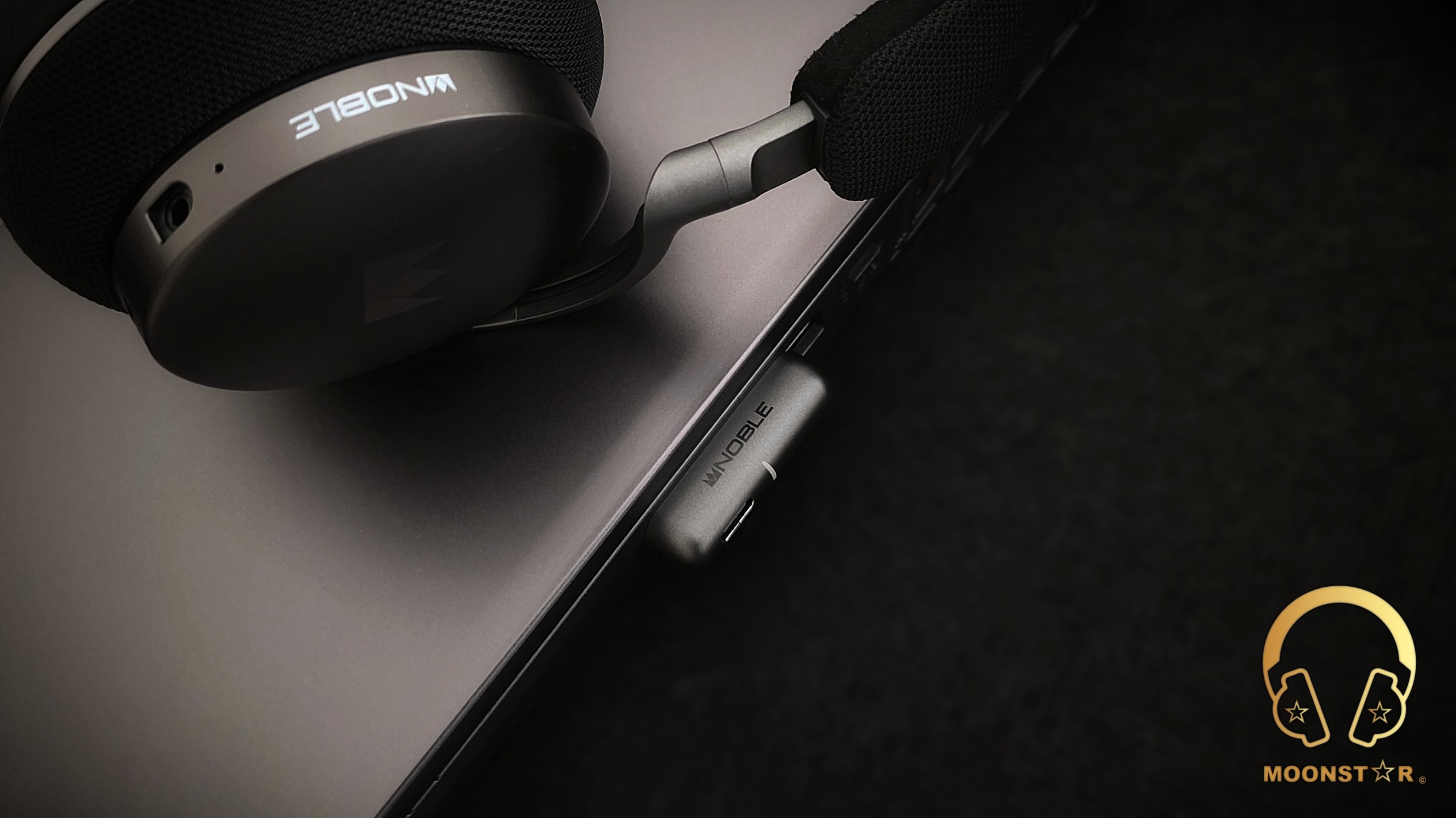
The Sceptre is Noble Audio’s direct answer to that problem: a compact USB-C dongle that removes Bluetooth transmission from the source device’s native hardware and places it under the dedicated control of a Qualcomm QCC5181 chipset with full support for the major high-resolution codecs. This review examines how well Noble has executed that concept in practice, with the difrrent TWS earphone and headphones, driven from both mobile and desktop sources.
Disclaimer:
I would like to thank NOBLE and Jackrabbit for providing me the Spectre USB-C Bluetooth Transmitter as review sample. I am not affiliated with NOBLE and Jackrabbit beyond this review and these words reflect my true and unaltered opinions about the product!
Price & Availability:
The Noble Audio Sceptre is priced at $69.99 / £64.99 / €69.99 and has been available since February 6, 2026, through nobleaudio.com and selected authorized retailers worldwide. At that price point, the Sceptre occupies a genuinely competitive position within the Bluetooth transmitter segment, delivering a Qualcomm QCC5181 chipset, Bluetooth 5.4 connectivity, LDAC and aptX Adaptive codec support, and passthrough USB-C charging within a well-constructed compact housing. The value proposition is strong, and the pricing does not require the kind of justification that a premium-tier accessory typically demands.
Further product details are available through Noble Audio’s official channels:
Package & Accessories:
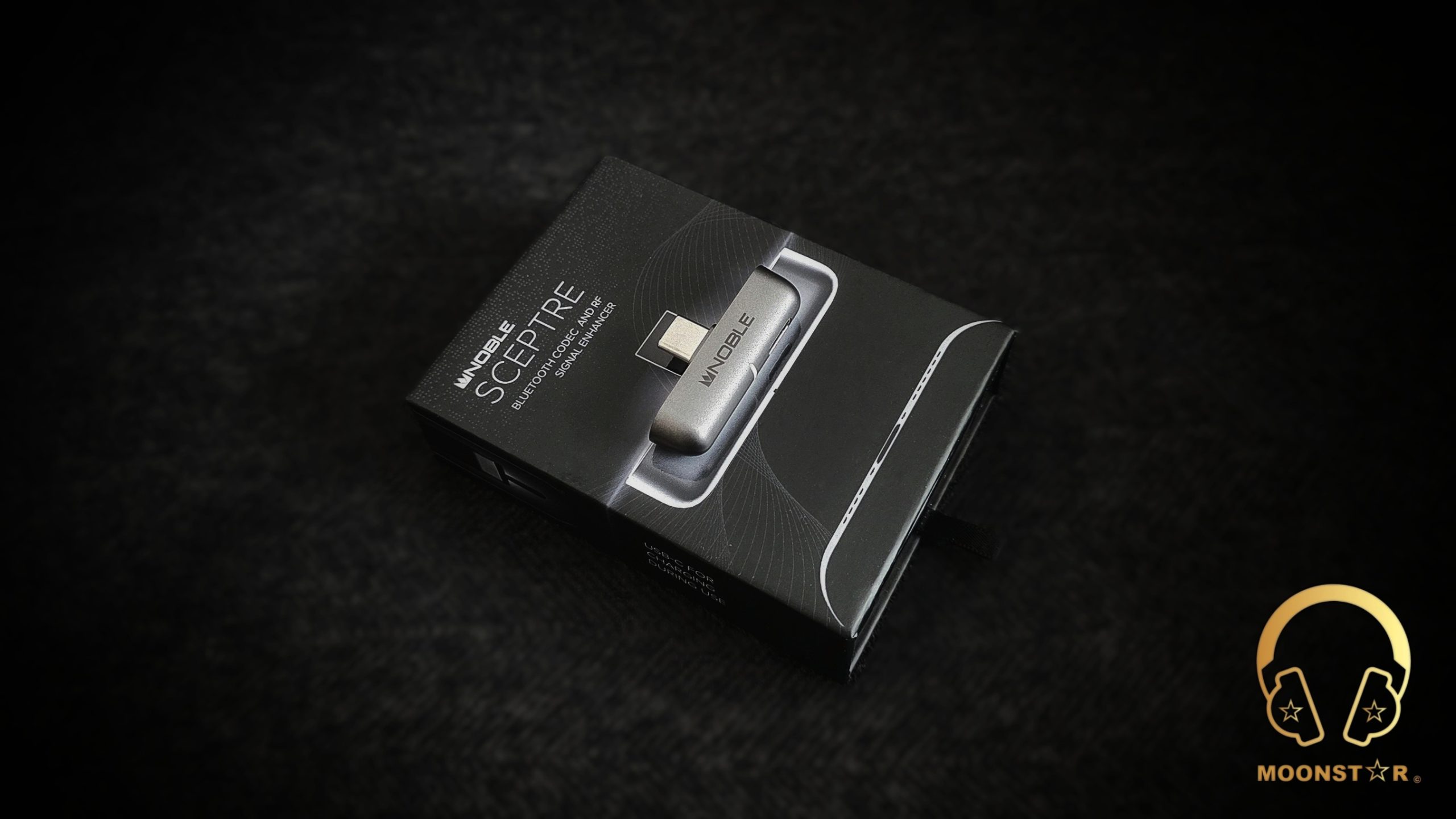
The Sceptre arrives in a clean, minimal black box that reflects Noble Audio’s broader product aesthetic: restrained, professional, and focused on what the listener actually needs rather than elaborate presentation. The contents are purposeful and directly relevant to daily use.
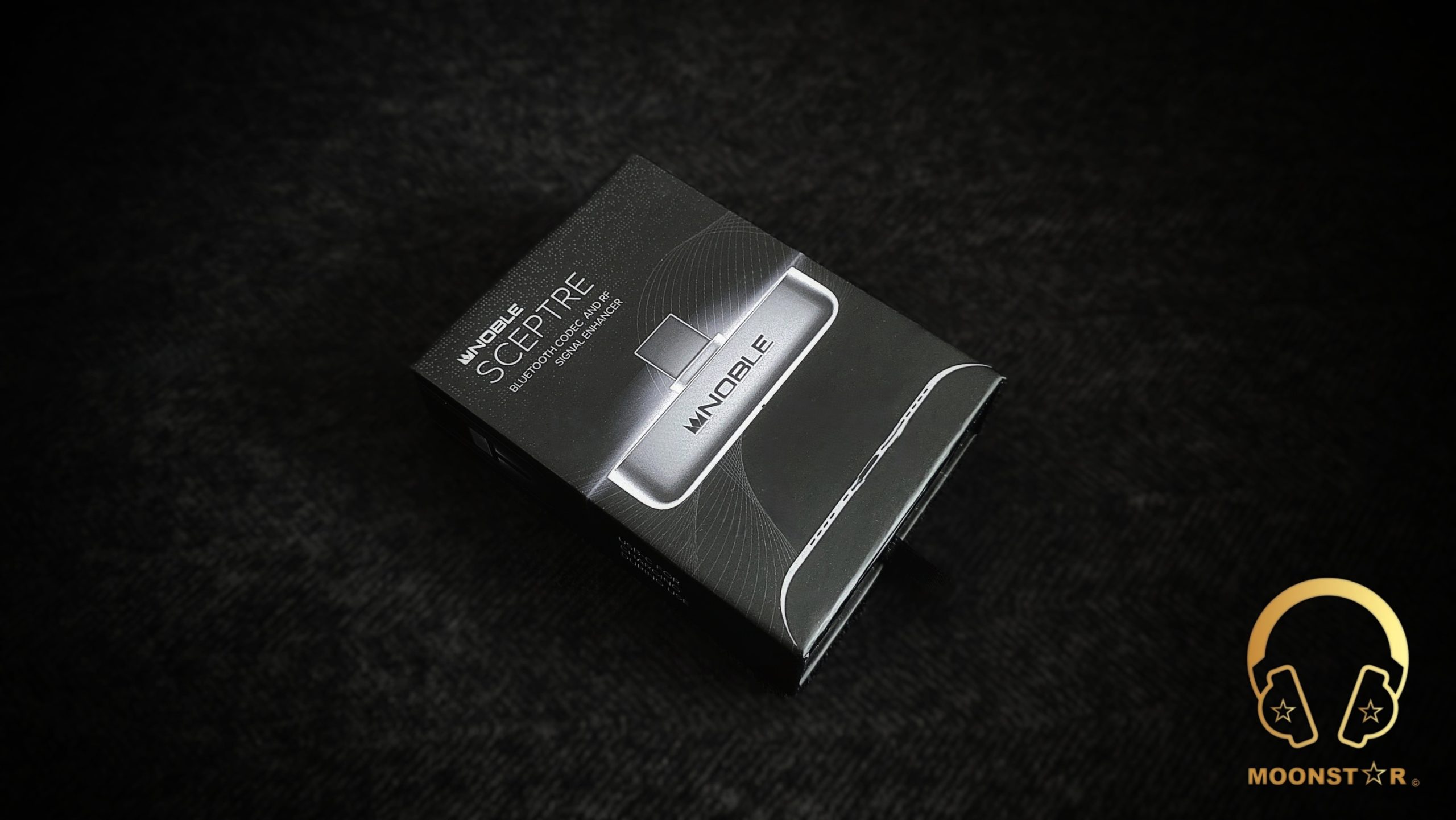
The package includes:
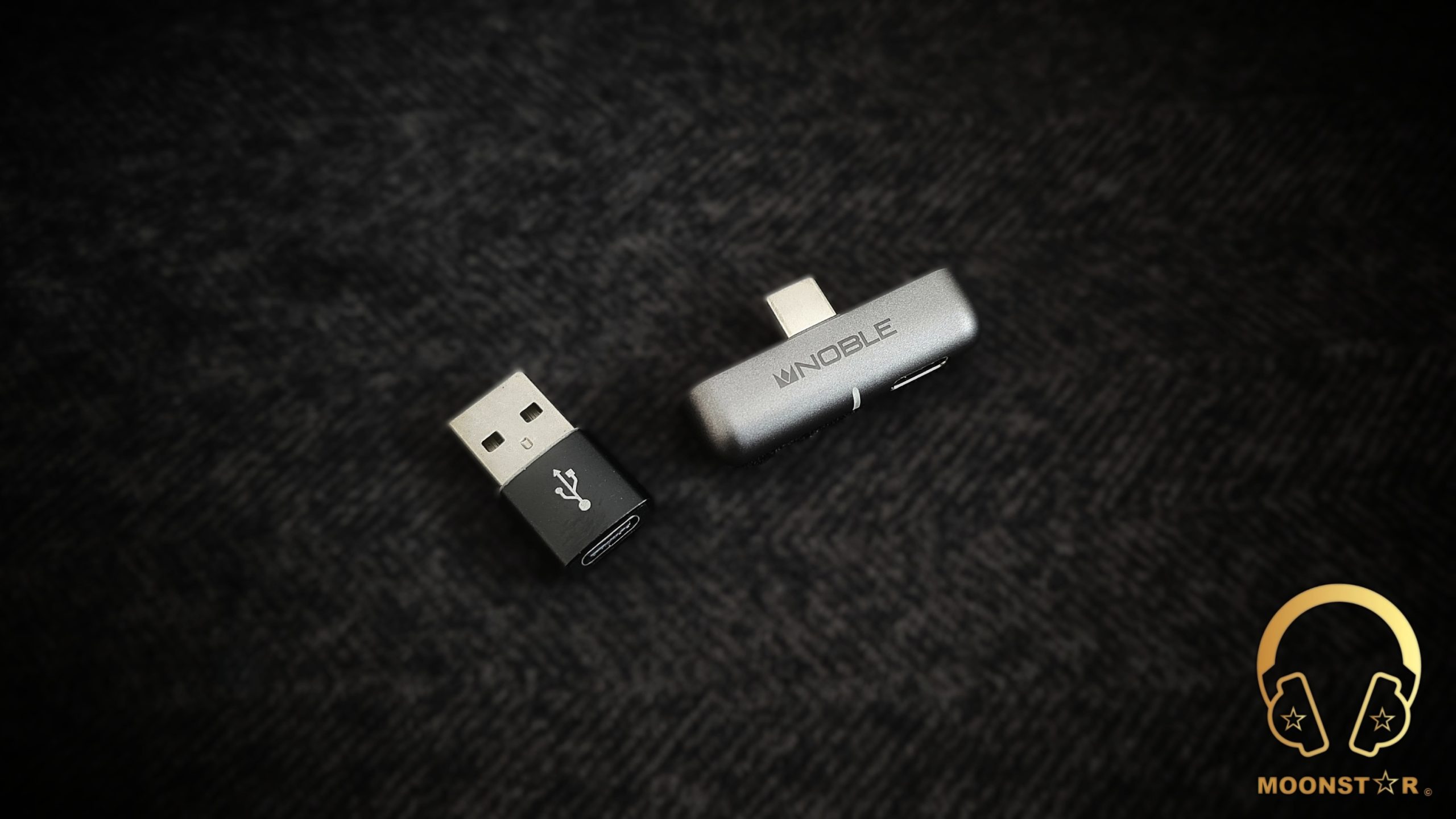
- 1x Noble Audio Sceptre Bluetooth Transmitter Dongle
- 1x USB-C to USB-C Extension Cable
- 1x Velvet Carry Pouch
- 1x Quick Start Guide
The USB-C extension cable is a genuinely practical inclusion. It creates physical clearance between the dongle and the port, which becomes relevant for users with protective phone cases that can block a direct connection. The velvet pouch adds portability protection appropriate for the price and consistent with how most users will carry a small, high-value accessory. Relative to competitors at this price tier, the accessories package is well-considered and complete.
Design & Build Quality:
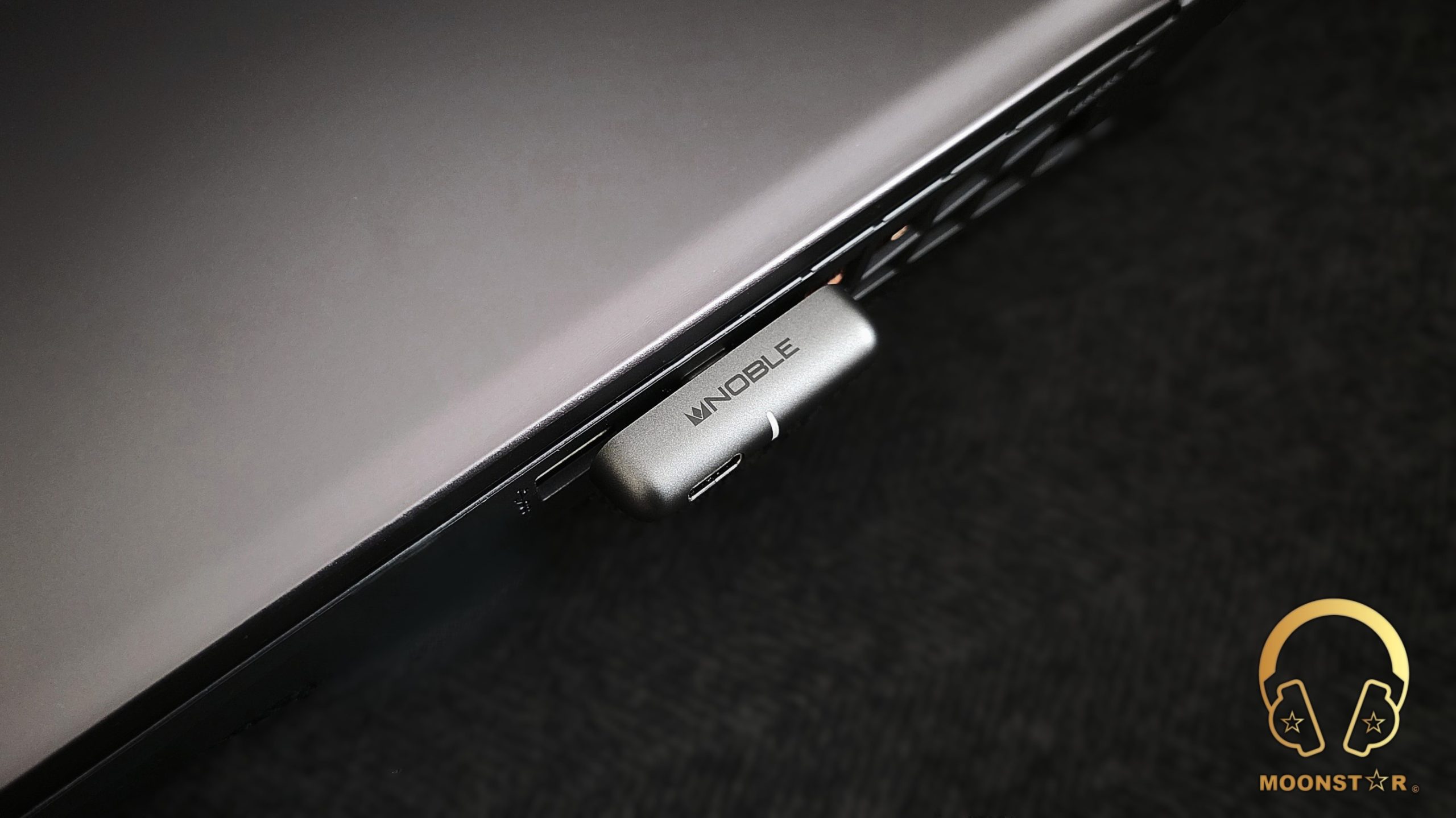
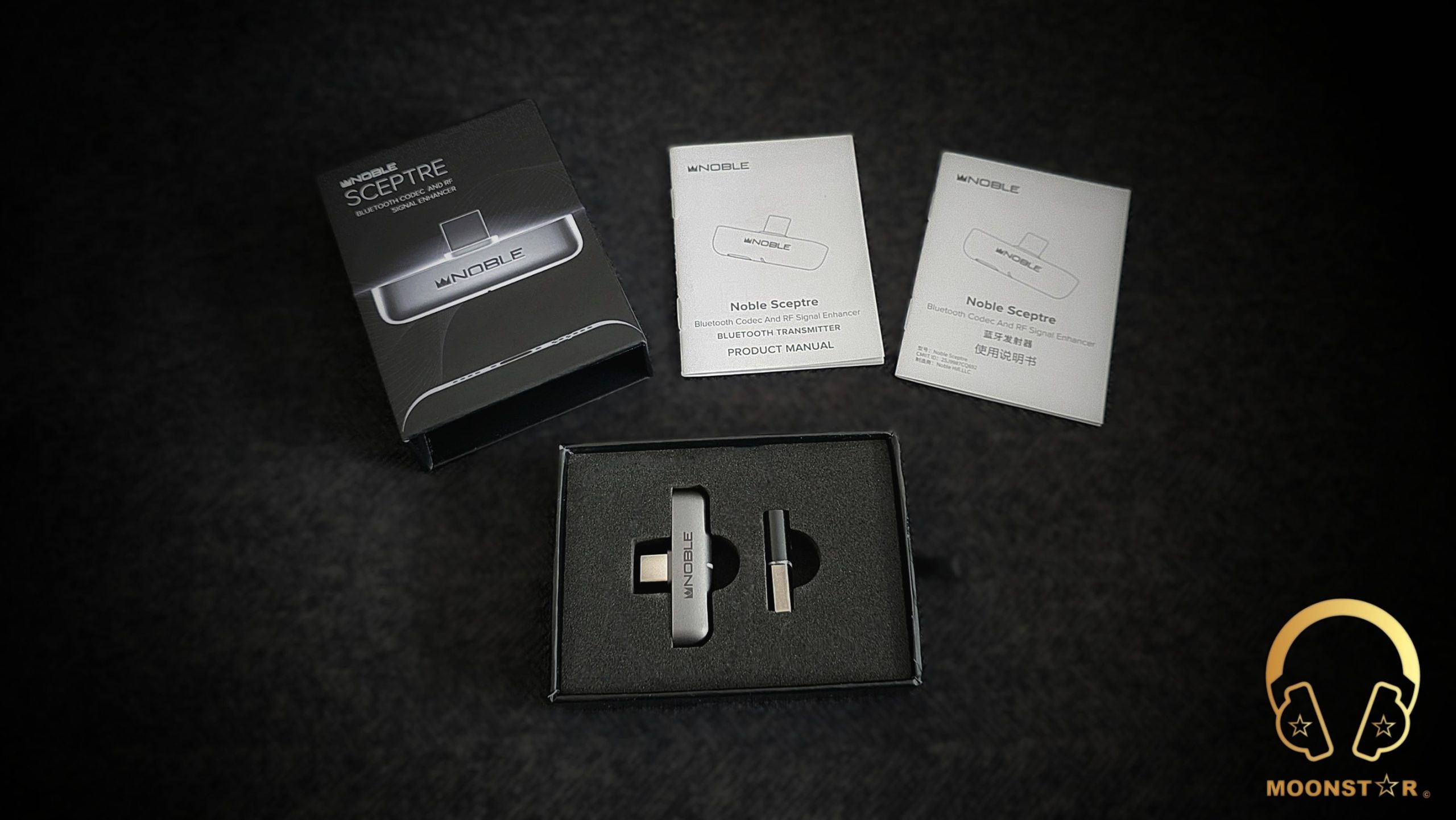
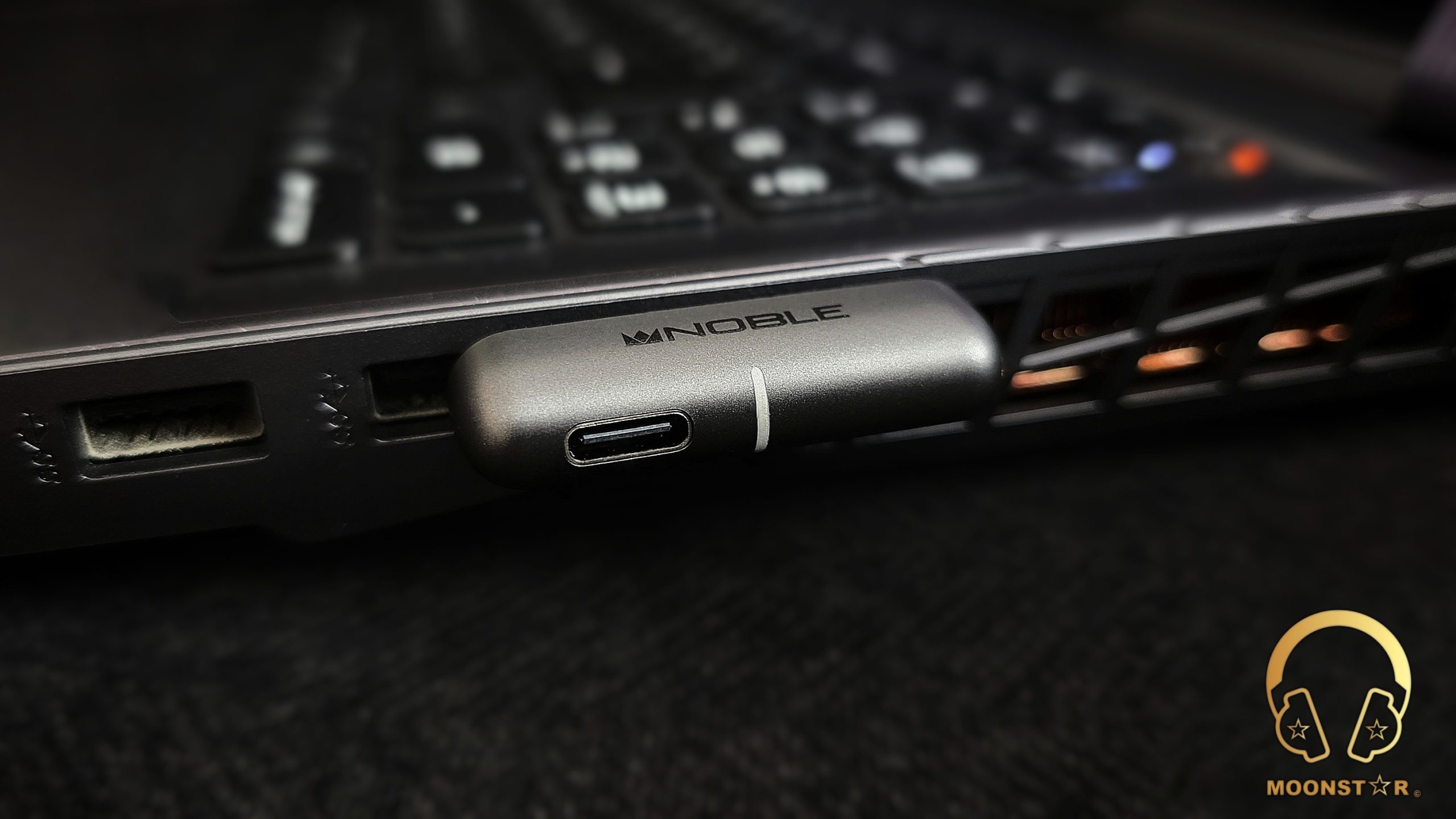
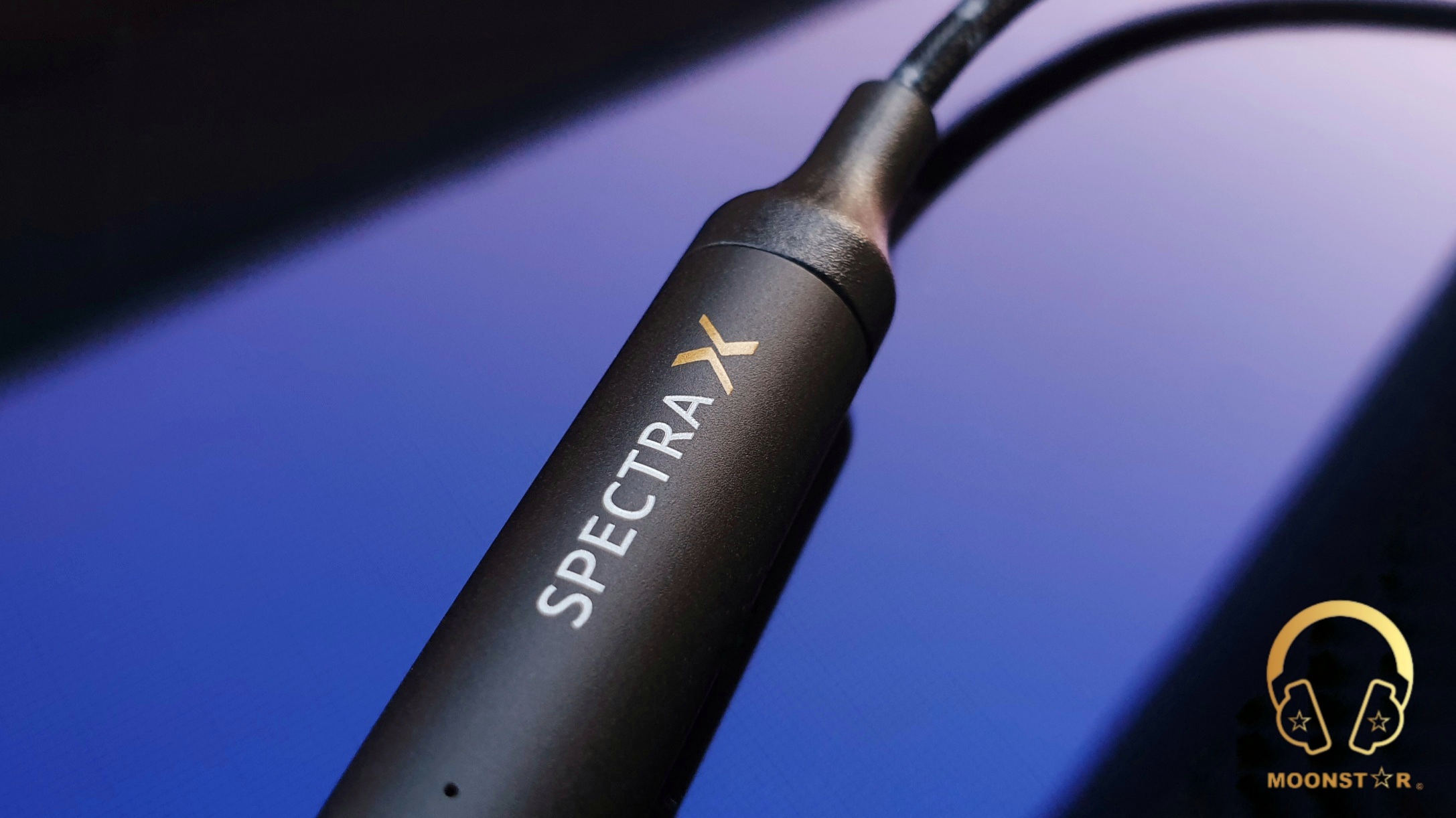
The Sceptre’s physical construction is compact and purposefully engineered. The housing is CNC-machined aluminum alloy with a matte obsidian finish that communicates premium build quality immediately, resists fingerprinting in daily handling, and serves a legitimate functional role by dissipating the heat generated during sustained high-bitrate transmission. The surface treatment and material choice are not cosmetic decisions alone; they serve the device’s intended use case in an environment where thermal management matters.
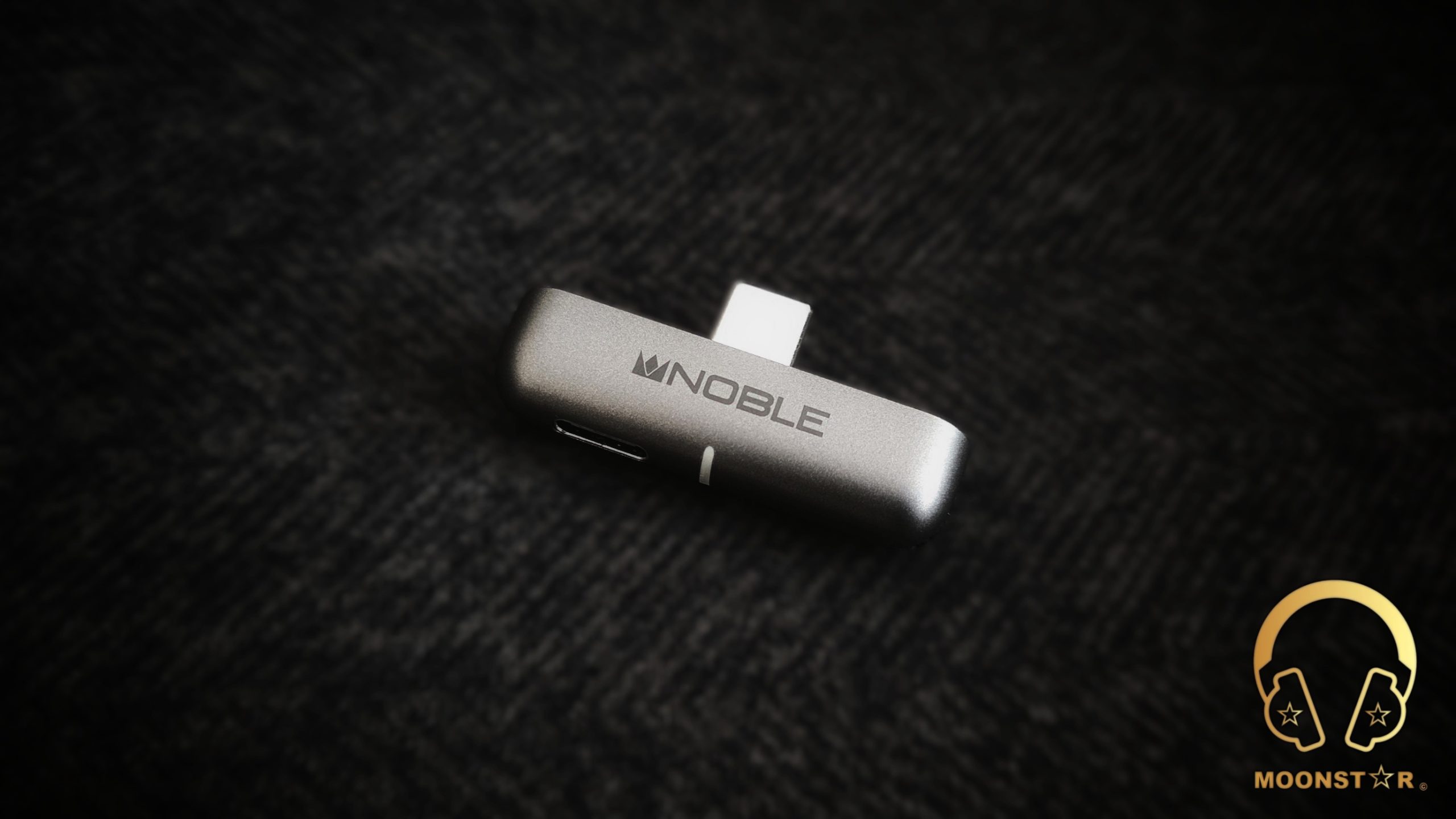
At 45mm x 18mm x 9mm and 12 grams, the Sceptre is among the more compact units in its category. When connected to a smartphone, it adds negligible bulk and avoids the unbalanced protrusion that larger transmitters can create.
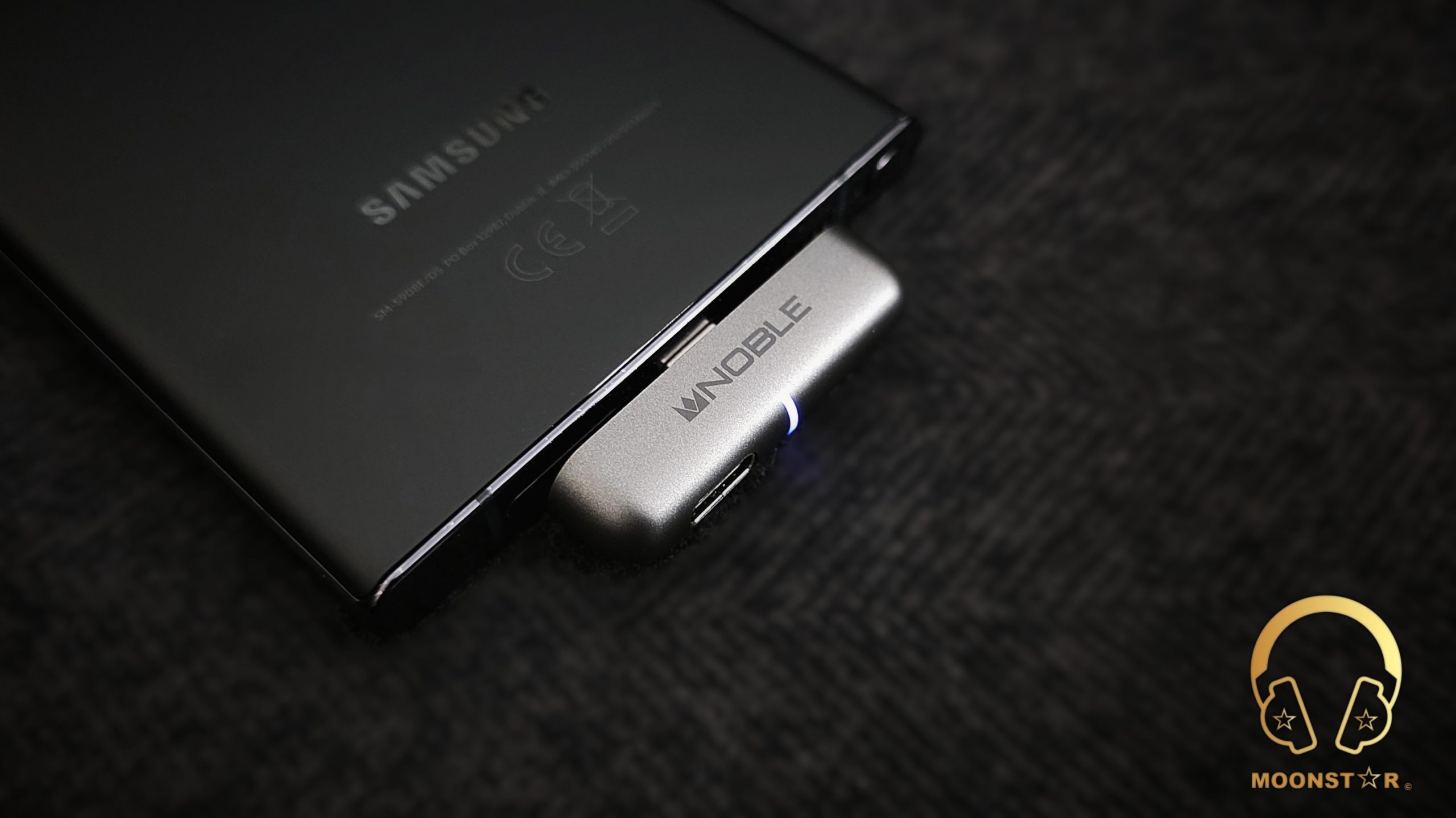
The beveled edges align with the visual language of other Noble Audio products, and the overall form factor reflects a considered effort to make the dongle feel like part of a deliberate system rather than an afterthought accessory.
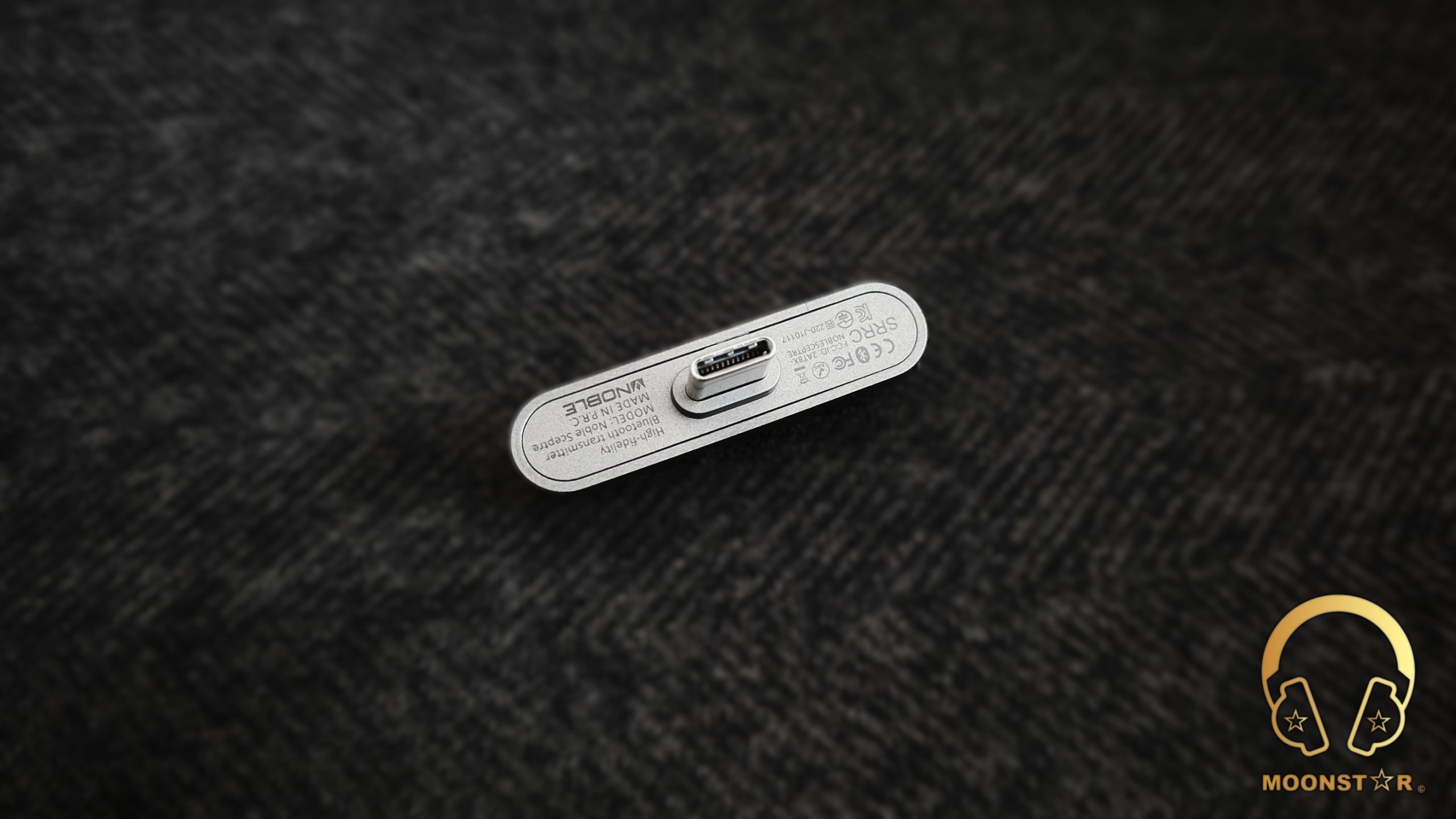
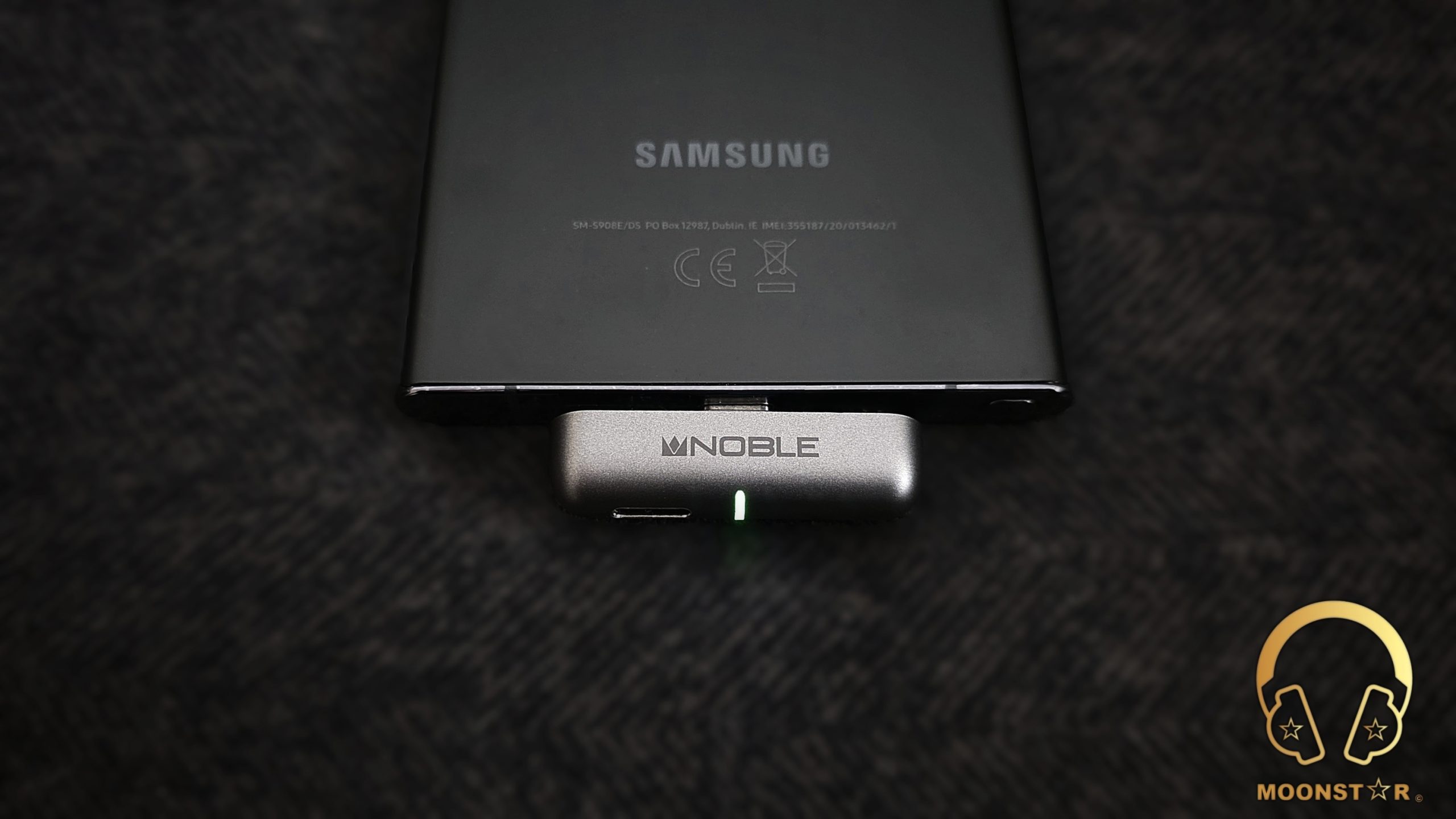
The multicolor LED indicator on the chassis provides real-time codec status feedback without requiring the Noble App to be open. That immediacy is more useful than it might initially appear: knowing whether the device is actively transmitting over LDAC or has quietly defaulted to a lower codec changes how the listener interprets the experience, and having that confirmation available at a glance is a sensible design choice.
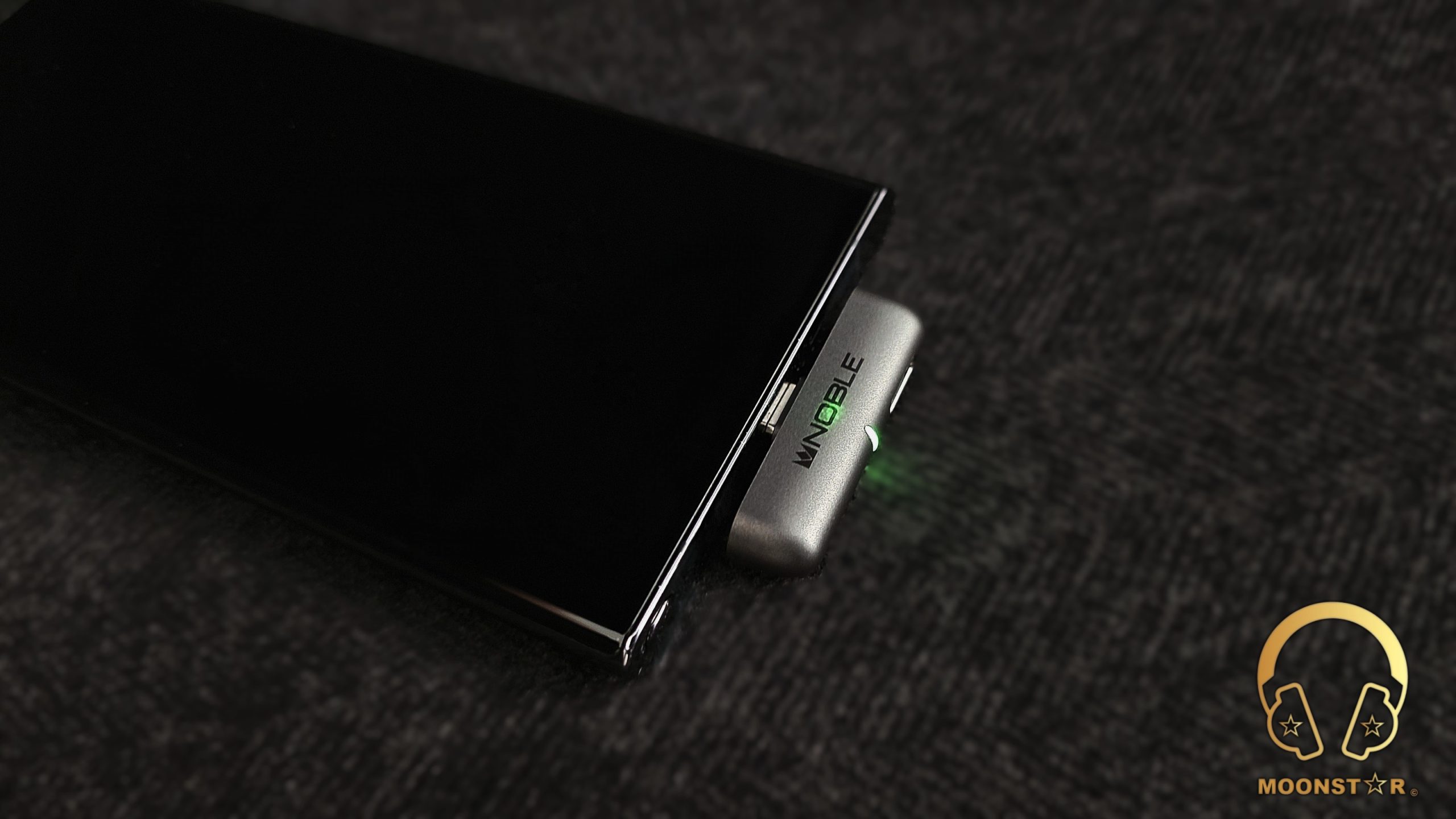
The secondary USB-C female port on the side of the chassis is the most consequential design feature Noble has included here. Passthrough charging resolves one of the most persistent real-world frustrations with Bluetooth transmitter dongles: the scenario in which the device occupies the source device’s only USB-C port and simultaneously drains its battery.
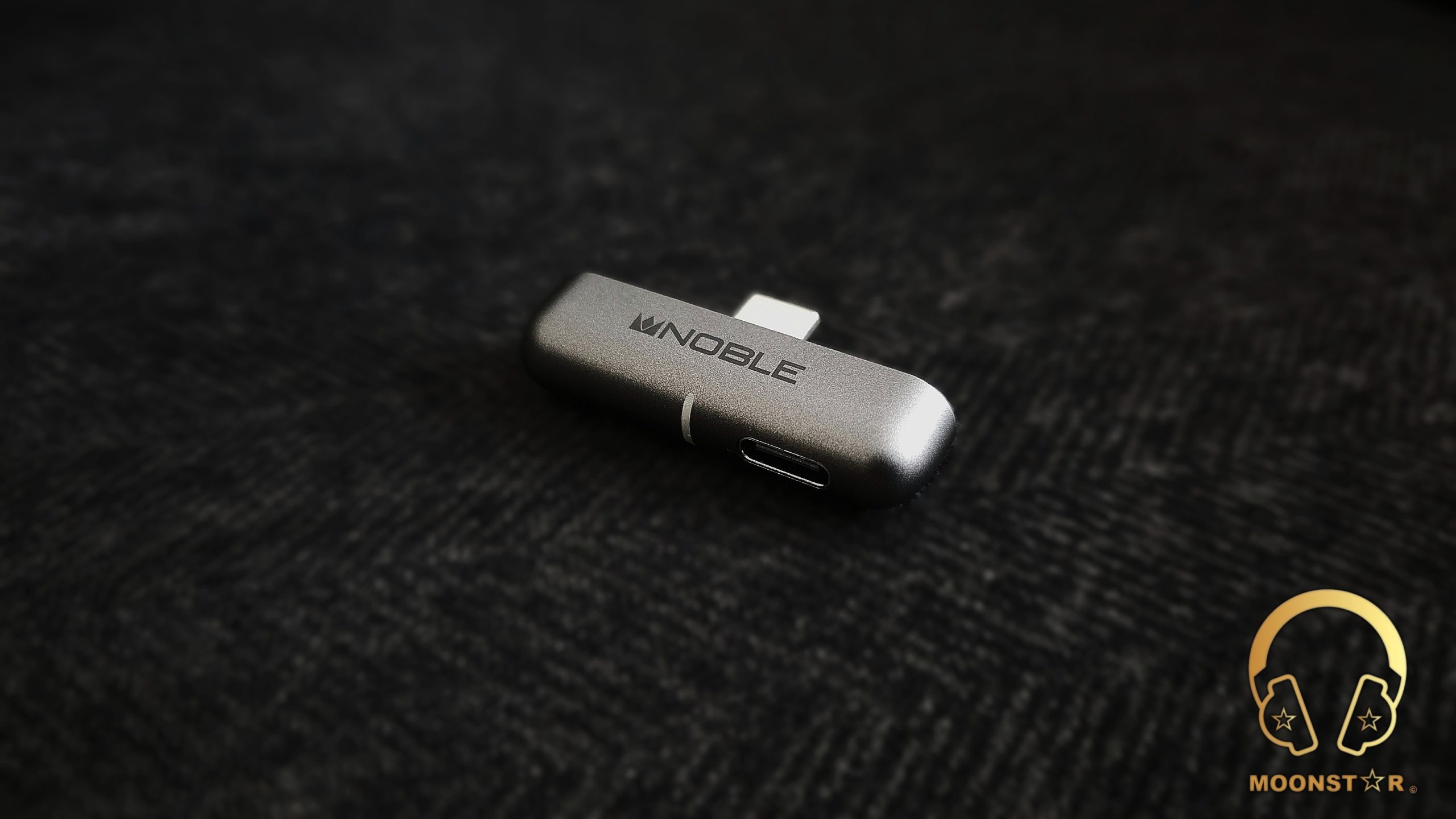
The Sceptre eliminates that trade-off entirely, supporting fast charging protocols so that a Samsung Galaxy S25 Ultra or Samsung TAB 8 Ultra connected to a power source charges at a useful rate while audio transmission continues without interruption.
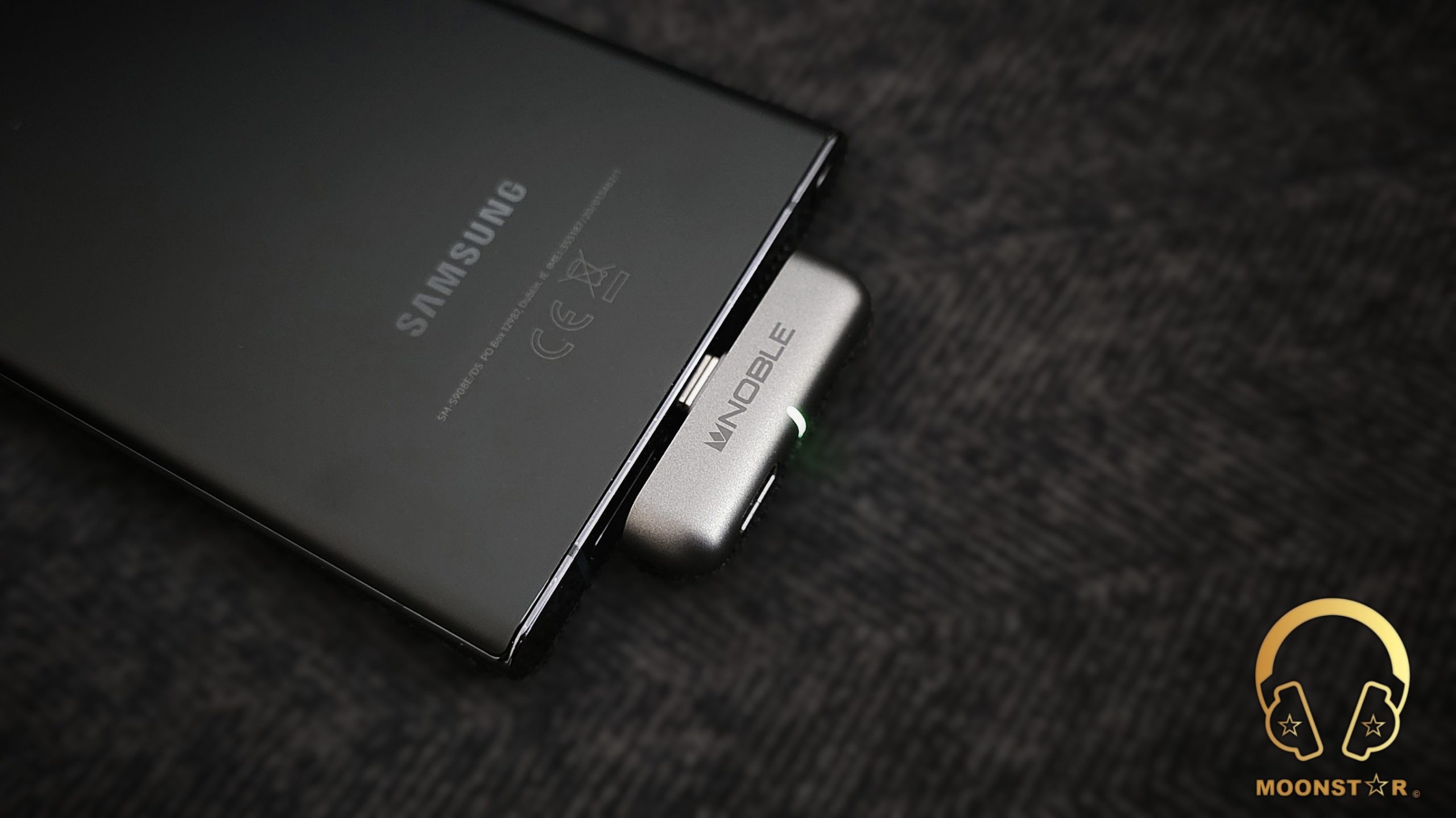
Thermal performance across extended testing sessions was consistent and well-managed. The aluminum chassis remained warm during sustained LDAC transmission from the MSI Vector 16HX but never reached a temperature that suggested throttling or internal stress. The passive dissipation architecture handles its role effectively across real-world usage patterns.
Technical Specifications:
- Model : Sceptre
- Bluetooth Chipset : QCC5181
- Bluetooth Version : 5.4
- Compatible Platforms : iOS, Android, Windows
- Supported Codecs : LDAC, aptX Adaptive, SBC, AAC
- Supported Profiles : HFP, A2DP, AVRCP
- Transmission Range : 20m
- Connector : USB-C (data) + USB-C Passthrough Charging
- Compatibility : iOS (iPhone 15 and above), Android, Windows
- Dimensions : 45 x 18 x 9 mm
- Weight : approx. 12g
Hardware & Software Features:
1. Bluetooth Architecture and Qualcomm QCC5181:
The QCC5181 is Qualcomm’s current flagship audio SoC for high-fidelity Bluetooth applications. Its presence here goes beyond headline specification value: the chip provides a dedicated, low-jitter signal processing environment that operates independently of the computational demands, power management compromises, and thermal constraints of a general-purpose smartphone processor. In practical terms, this architectural separation results in more consistent codec negotiation behavior, cleaner RF transmission, and reduced sensitivity to the background noise that a host device’s general workload would otherwise introduce into the signal path.
Bluetooth 5.4 provides faster initial connection establishment, stronger performance in RF-congested environments, and more efficient idle power behavior compared to earlier generations. During testing in a busy open office environment with high Wi-Fi density, the Sceptre held stable codec connections without the dropout behavior or forced downgrade to SBC that mobile source devices commonly exhibit under the same conditions.
2. Codec Support:
The Sceptre’s codec roster covers LDAC, aptX Adaptive, AAC, and SBC. LDAC operates at up to approximately 990 kbps and has become the primary high-resolution wireless codec across the Android ecosystem and a growing range of premium headphones. aptX Adaptive brings variable bitrate management and lower latency, making it well-suited for video and gaming contexts where timing precision matters alongside audio fidelity. AAC and SBC provide compatibility fallback across devices that do not support the higher-bandwidth options.
For iOS users, the practical significance of this codec stack is immediate and concrete. The iPhone’s Bluetooth transmission is locked to AAC at the hardware level. Connecting the Sceptre to an iPhone 15 or later opens access to LDAC and aptX Adaptive in a way that no software update or settings change within iOS can replicate. That change in transmission quality ceiling is the Sceptre’s most direct and consequential value proposition for a large portion of its intended market.
However, it is important to note that while the QCC5181 chipset is capable of it, the Sceptre does not currently support AptX Lossless. [Edit 24.03.2026]
3. Passthrough Charging:
The secondary USB-C port handles concurrent data and power delivery without interference between the two functions. Fast charging protocol support ensures that source devices charge at a useful rate during active transmission sessions, not merely trickle. Throughout testing, there were no observable interactions between charging activity and codec stability: no transmission dropouts, no codec downgrade events, and no audible artifacts attributable to the charging circuit operating in parallel with audio transmission.
4. NOBLE App:
The Noble App manages initial pairing and codec priority settings through a clean and well-organized interface. Once pairing is established, the Sceptre connects automatically on plug-in and the app recedes from daily use entirely. The initial pairing process has been reported as inconsistent for some users, occasionally requiring multiple attempts or a reset before achieving a stable first connection. This is a software-side issue that Noble should prioritize in future updates. Post-pairing connection reliability throughout the review testing period was consistent and without any notable fault.
Equipment’s used for this review:
- Bluetooth Transmitter : Noble Audio Sceptre
- Source Devices : MSI Vector 16HX, Samsung Galaxy S25 Ultra, Samsung TAB 8 Ultra
- Wireless IEM’s/HEadphones : Noble FoKus Apollo, Final Audio Tonalite
Performance & Codec Quality:
Evaluating a Bluetooth transmitter requires a different framework than assessing a DAC or amplifier. The Sceptre does not color the signal, apply any filtering, or alter the tonal character of the audio. Its contribution is defined entirely by the integrity of the wireless link it establishes, and the relevant measure is how much of the source material’s original resolution and dynamic structure survives the transmission to the receiving headphone.
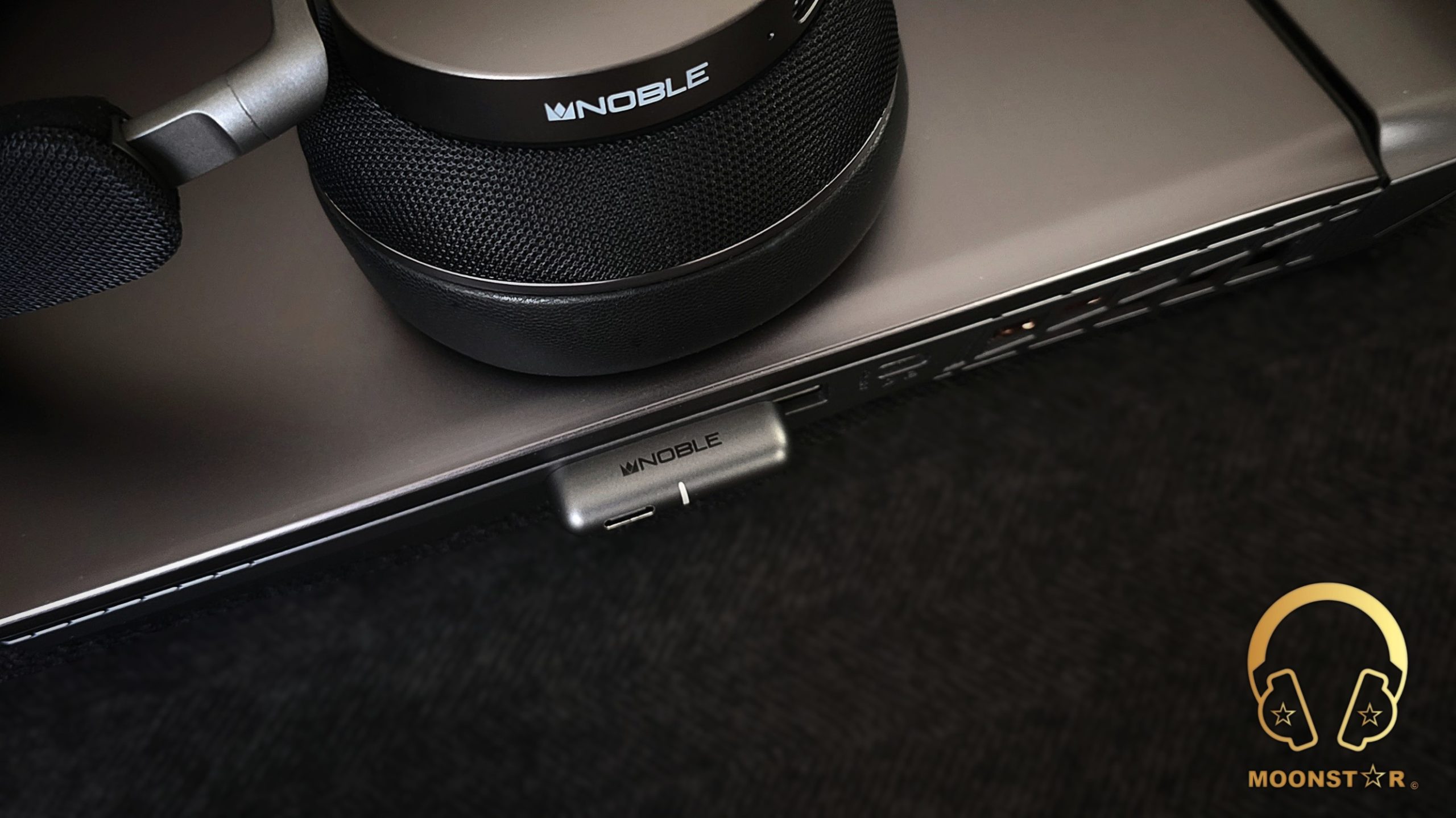
With the Noble FoKus Apollo and Final Audio Tonalite paired over LDAC, the gap between native AAC transmission from an iOS device and what the Sceptre delivers is not subtle. LDAC at 990 kbps carries roughly four times the data of AAC’s ceiling, and that difference translates directly into how much resolving work the headphone can actually perform. Fine transient structure, low-level detail, and the spatial layering of complex recordings are all contingent on that bandwidth being available; when it is not, the headphone compresses those qualities regardless of how capable its drivers are.
aptX Adaptive, tested primarily on the Samsung Galaxy S25 Ultra and Samsung TAB 8 Ultra, performed consistently under varying conditions. The variable bitrate architecture handled real-world signal fluctuations without the audible quality dips or forced codec downgrades that fixed-rate transmission systems can produce in congested RF environments. On the MSI Vector 16HX, where the Sceptre operated across longer distances and through multiple walls, connection stability under both LDAC and aptX Adaptive remained solid throughout testing. There were no dropouts, no stutter events, and no instances of the codec reverting to SBC during normal use.
The FoKus Apollo, which is built to operate at a genuinely high resolution level, benefited measurably from the increased transmission bandwidth. The same is true of the Tonalite: a headphone’s wireless performance ceiling is set by the codec it receives, and the Sceptre ensures that ceiling is as high as the hardware supports rather than being determined by the limitations of the source device’s built-in Bluetooth stack.
Comparison:
Noble Audio Sceptre vs. FiiO BT11:
The FiiO BT11 is the most frequently cited alternative in the Bluetooth transmitter segment and represents a meaningful contrast in both pricing and feature set. At approximately half the Sceptre’s retail price, the BT11 offers LDAC and aptX Adaptive support within a similarly compact form factor, alongside multipoint connectivity for simultaneous pairing with two source devices. Crucially, the BT11 leverages its chipset to support AptX Lossless, allowing for bit perfect CD quality audio transmission. This is a technical advantage the BT11 holds over the Sceptre, which currently lacks Lossless support despite using the same Qualcomm QCC5181 hardware. For users whose priority is dual device flexibility or bit perfect wireless transmission at a lower price, the BT11 presents a straightforward argument on specification value. [Edit: 24.03.2026]
The Sceptre differentiates on passthrough charging, which the BT11 does not provide, and on the overall quality of physical construction. Noble’s aluminum chassis and build precision are noticeably higher, the accessories package is more complete, and the Noble App integration adds firmware update longevity that ensures continued compatibility with evolving wireless standards. The decision between the two ultimately depends on whether premium construction, passthrough charging, and Noble ecosystem cohesion justify the price differential. For listeners who have already invested in Noble Audio headphones and prioritize sustained daily usability, the Sceptre’s case is a strong one.
Conclusion:
The Noble Audio Sceptre is a technically accomplished and practically well-considered solution to a real problem in the high-performance wireless audio chain. Its core argument is straightforward: the Bluetooth transmission layer is a meaningful limiting factor that is worth addressing directly, and the improvement available through dedicated external hardware is consistent and reproducible across different source devices and headphone pairings.
The passthrough charging implementation is seamless and addresses a genuine usability gap in the category. The build quality exceeds what the price demands. The $69.99 retail position makes the Sceptre accessible to a broad range of listeners rather than requiring the justification that a premium-tier accessory typically demands, and that accessibility strengthens the overall recommendation considerably.
For iOS users whose wireless headphones are being capped by AAC transmission, for Android users whose devices handle high-resolution codecs inconsistently, and for anyone who has invested in capable wireless transducers and wants to hear what those headphones are actually capable of delivering, the Sceptre addresses that frustration directly and without caveats.
Pros & Cons:
- + Qualcomm QCC5181 with full Bluetooth 5.4 for stable, high-quality transmission
- + LDAC and aptX Adaptive support for genuine high-resolution wireless audio
- + Opens LDAC access on iOS (iPhone 15 and above) without any workaround
- + Passthrough USB-C charging with fast-charge protocol support
- + Consistent codec stability even in dense RF environments
- + Premium CNC-machined aluminum chassis with matte obsidian finish
- + Noble App: codec priority control and ongoing firmware update support
- – No aptX Lossless support: bit perfect CD quality transmission is unavailable
- – No multipoint connectivity for simultaneous dual-device pairing
- – Noble App initial pairing can require multiple attempts on first setup
Thank you for the Read!














Hi. Very nice write up (thanks) and I while I very much enjoy the Sceptre and agree with most of what you presented; but if I may, your comparison to the BT11 is missing one of the cons of the Sceptre…the BT11, which uses the same chip, supports AptX lossless, while, at this point (hopefully, this changes) the Sceptre doesn’t seem to.
Thank you for your feedback! You noticed a very specific technical detail. It is unfortunate that the Sceptre does not support AptX Lossless, especially since it shares the same chipset as the BT11. I plan to highlight this limitation in my review to ensure potential users are fully informed. Hopefully, a future software update might address this discrepancy.