Final UX5000 Review
Final UX5000 Review
Introduction:
Final Audio is a Japanese brand with a reputation built almost entirely on wired earphones and headphones, a company that has spent years earning audiophile respect through products tuned for musical honesty rather than consumer-friendly excess. The UX5000 represents its current flagship in the UX wireless series and sits at the upper end of what the brand has offered in this category. It builds on acoustic research developed for Final’s high-end A-series products and pairs that knowledge with a practical modern feature set: Bluetooth 5.4, LDAC and aptX Adaptive codec support, hybrid active noise cancellation, and a claimed battery life of up to 65 hours. At $249.99 USD, it positions itself as a mid-to-premium proposition in a competitive segment occupied by established names such as Sony, Sennheiser, and Bose.
What makes the UX5000 genuinely interesting is not the specifications alone, but the philosophy behind it. Final has designed this headphone to last, with user-replaceable ear pads attached magnetically, a user-detachable headband via a USB Type-C connector, and a battery that can be swapped through official service. In a market segment that often treats headphones as disposable electronics with a two-year lifespan, this approach stands out. The acoustic tuning also reflects Final’s house approach: a neutral, transparent presentation that favors precision and tonal correctness over the bass-heavy V-shaped signatures most wireless headphones in this price range default to. Whether that combination of durability philosophy and measured tuning translates into a compelling everyday listening experience is what this review aims to address.
Disclaimer:
I would like to thank Final and JackRabbit Media for providing the UX5000 as a review sample. I am not affiliated with Final Audio beyond this review, and these words reflect my true and unaltered opinions about the product.
Price & Availability:
The Final UX5000 is priced at $249.99 USD / £199.99 / €229.99. It is available from Amazon and selected retailers worldwide.
Package & Accessories:
The UX5000 arrives in a large, understated black box with a magnetic lid. The presentation is restrained and deliberate, consistent with Final’s tool-like design philosophy. Key features such as hybrid noise cancellation, Hi-Res Audio Wireless certification, and LDAC and aptX Adaptive support are printed on the exterior without elaborate visual embellishment. Inside, the headphones are secured cleanly alongside their accessories.
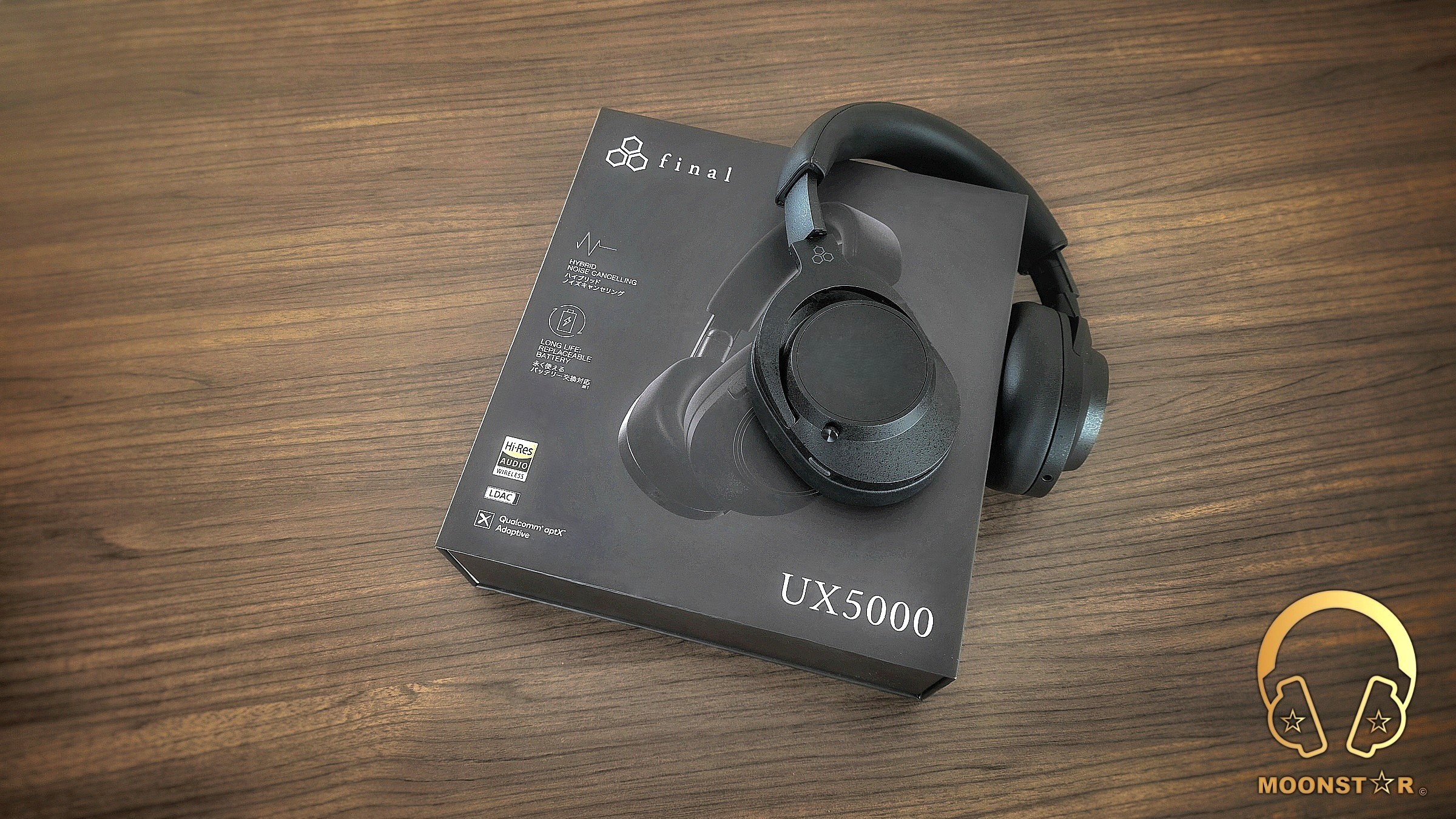
The package includes the following:
- 1 x Final UX5000 Wireless Headphones
- 1 x Carrying Case
- 1 x USB Type-C Charging Cable
- 1 x 3.5mm Analog Audio Cable
- 1 x User Manual

The carrying case is a welcome inclusion. It is rigid enough to provide real protection and its quality is consistent with what brands at twice the price typically bundle. The 3.5mm audio cable enables wired listening with the DSP active, meaning the headphone’s sound processing remains engaged in wired mode, which preserves tonal consistency between wireless and wired use. The accessory package is practical rather than elaborate, which suits the product’s overall character.

Design & Build Quality:
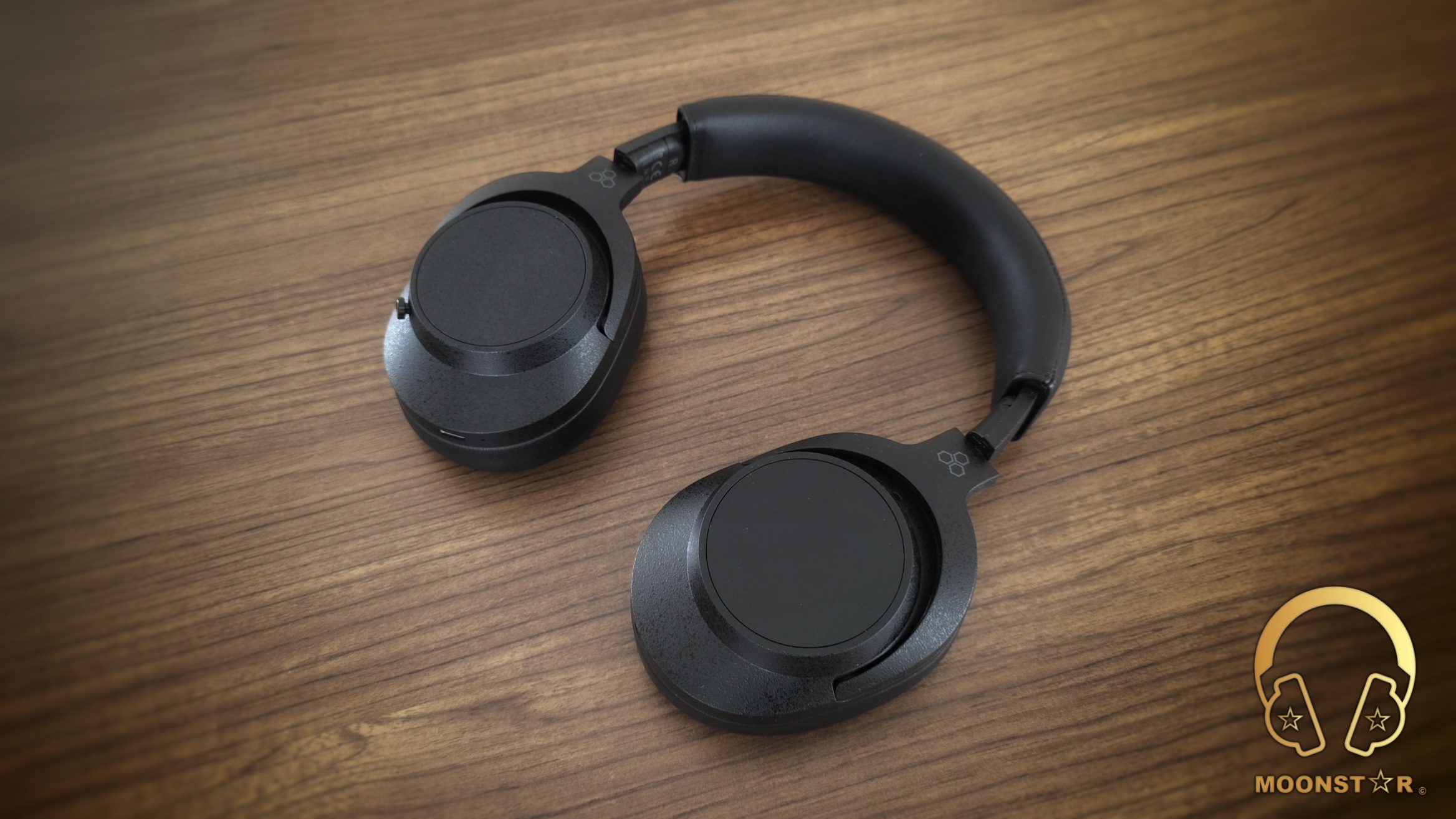
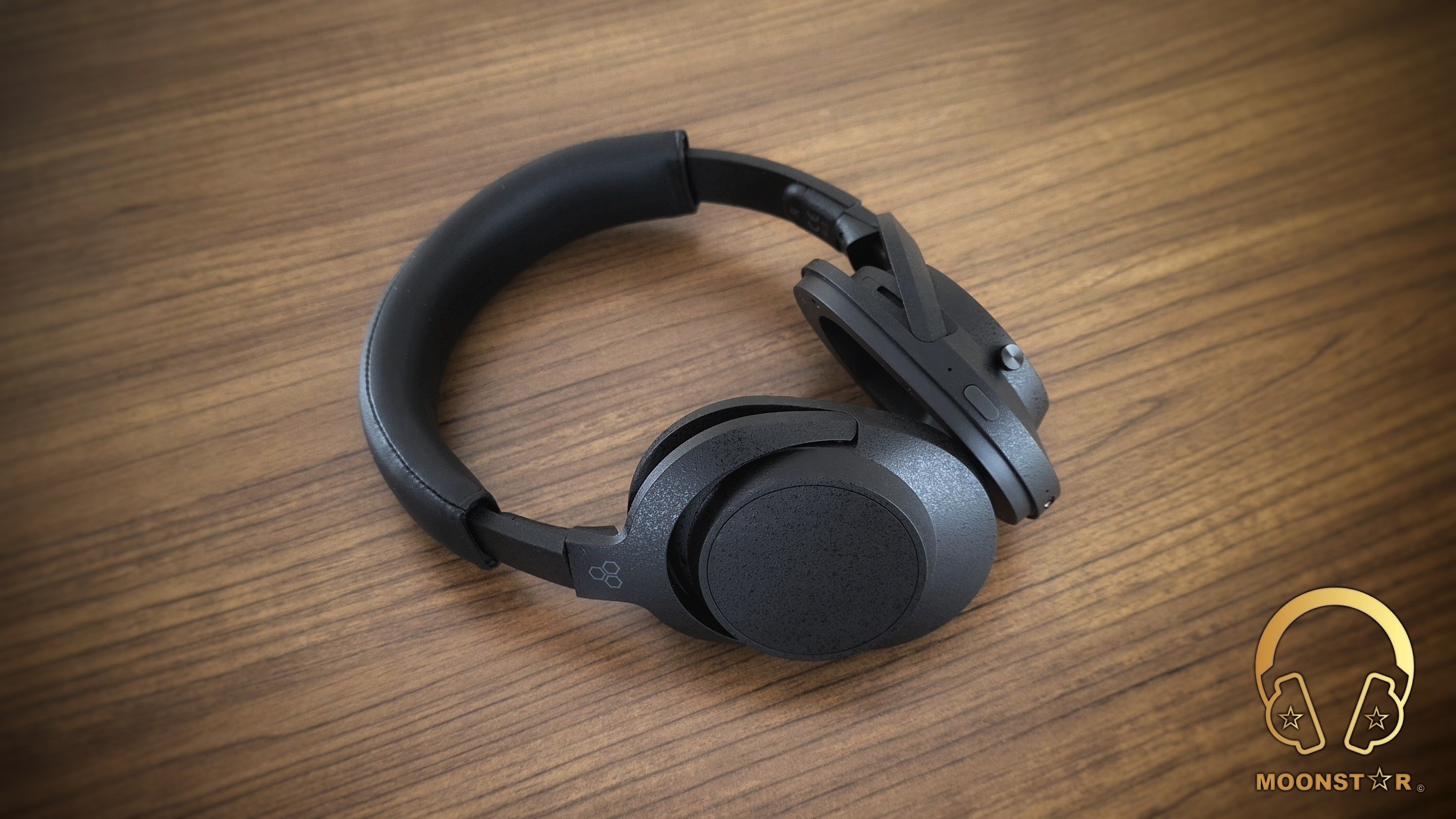
The design of the Final UX5000 is guided by what Final calls a “tool” philosophy: an object built for sustained daily use, one whose appearance should not date with fashion cycles or degrade noticeably with use. It is a headphone that makes a quiet, confident impression rather than a loud visual statement. There is no RGB lighting here, no glossy plastic, and no exaggerated geometric styling. What you get instead is a product that looks and feels like it was built with the intention of being used and kept rather than replaced within two years.

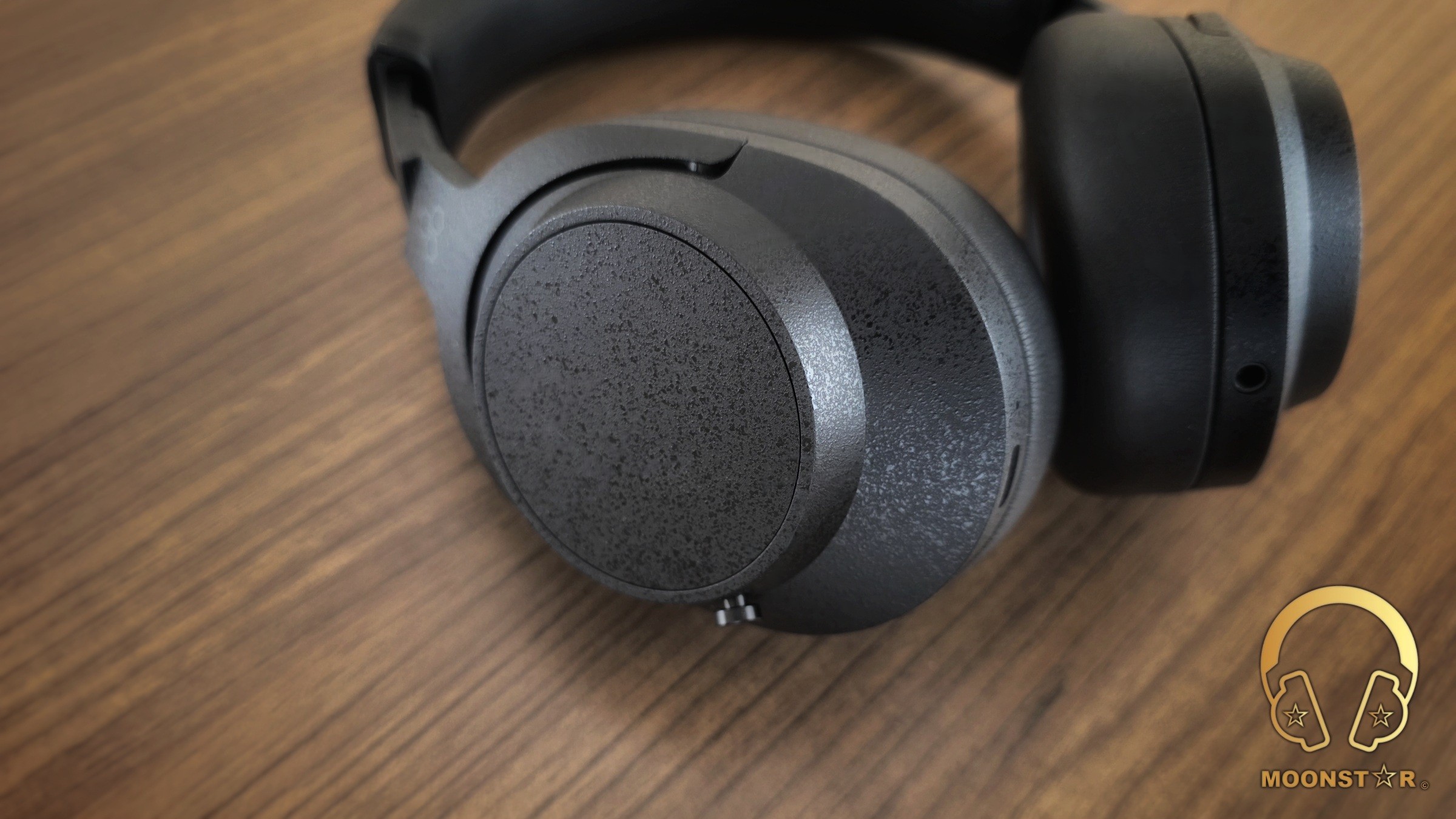
The most immediately distinctive feature of the UX5000’s exterior is the Shibo coating. This granular, matte-textured finish covers the outer surfaces of the earcups and gives the headphone a tactile character that resembles the grip surface of a professional camera body. It resists fingerprints, oil, and minor scratches effectively. Hydrolysis, a common cause of surface deterioration in textured plastics, is also addressed in the material formulation. The coating is available in black only, which suits the utilitarian aesthetic, and after extended handling it shows no loss of texture quality. It is a detail that rewards close examination and serves a practical purpose simultaneously.
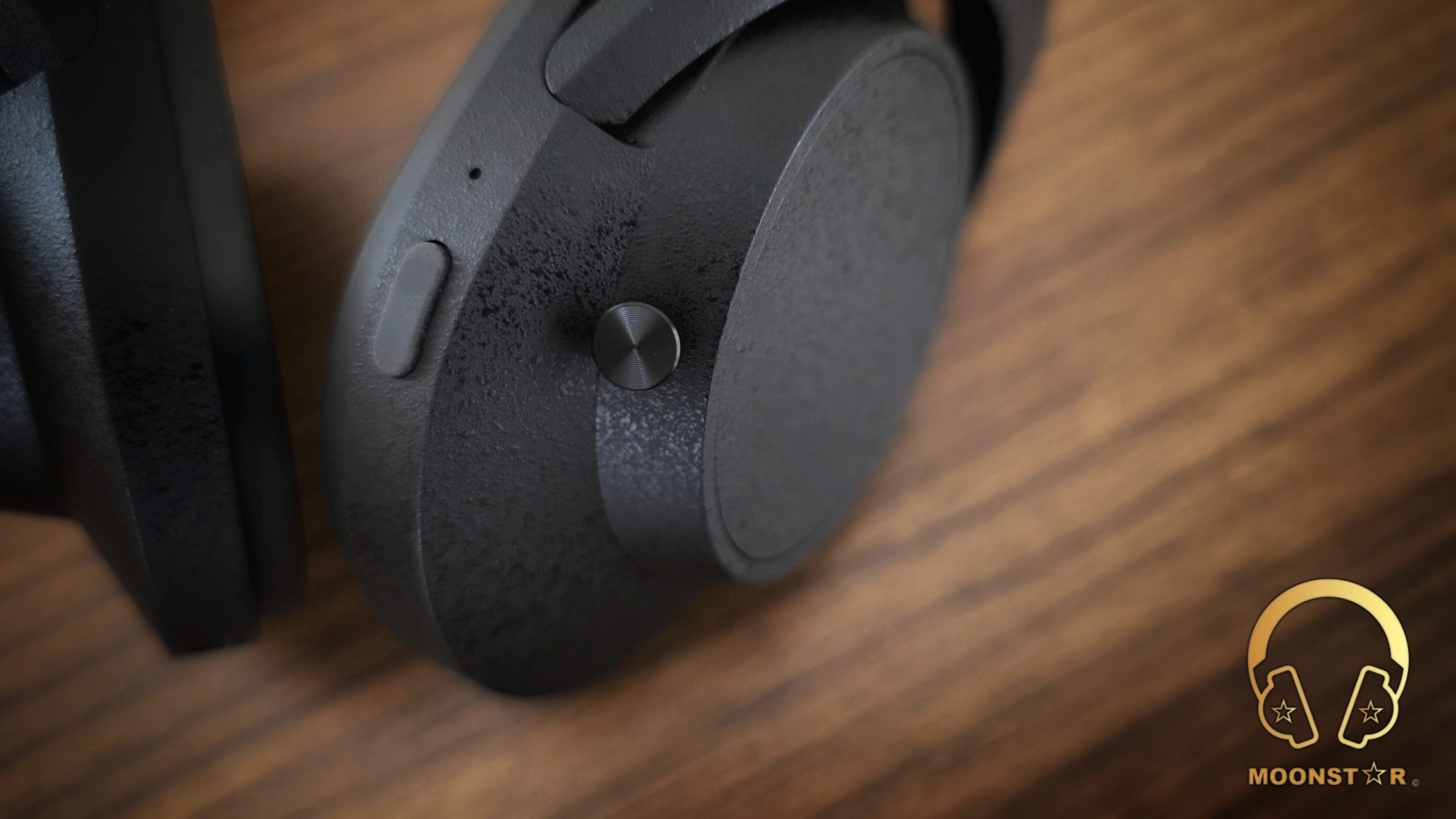
The earcups are moderately sized and oval in shape, giving the UX5000 a relatively compact profile for a circumaural over-ear headphone. The outer face of each cup is finished entirely in the Shibo-coated plastic, with the Final logo rendered subtly at the center in a slightly raised treatment that integrates cleanly into the surface texture. There are no visible screws, ports, or decorative elements on the outer face. The design is deliberately plain, and this restraint gives the cups a certain solidity of appearance. On the right earcup, the stick button and ANC button are positioned on the lower rear edge, and their placement integrates so naturally with the cup’s geometry that they are nearly invisible at first glance. The cups are designed to flex and rotate in multiple directions via the Multi-Fit Housing system, accommodating a wide range of head shapes and allowing the pad to seal properly even around the rear of the ear, an area where many headphones struggle to maintain consistent contact.
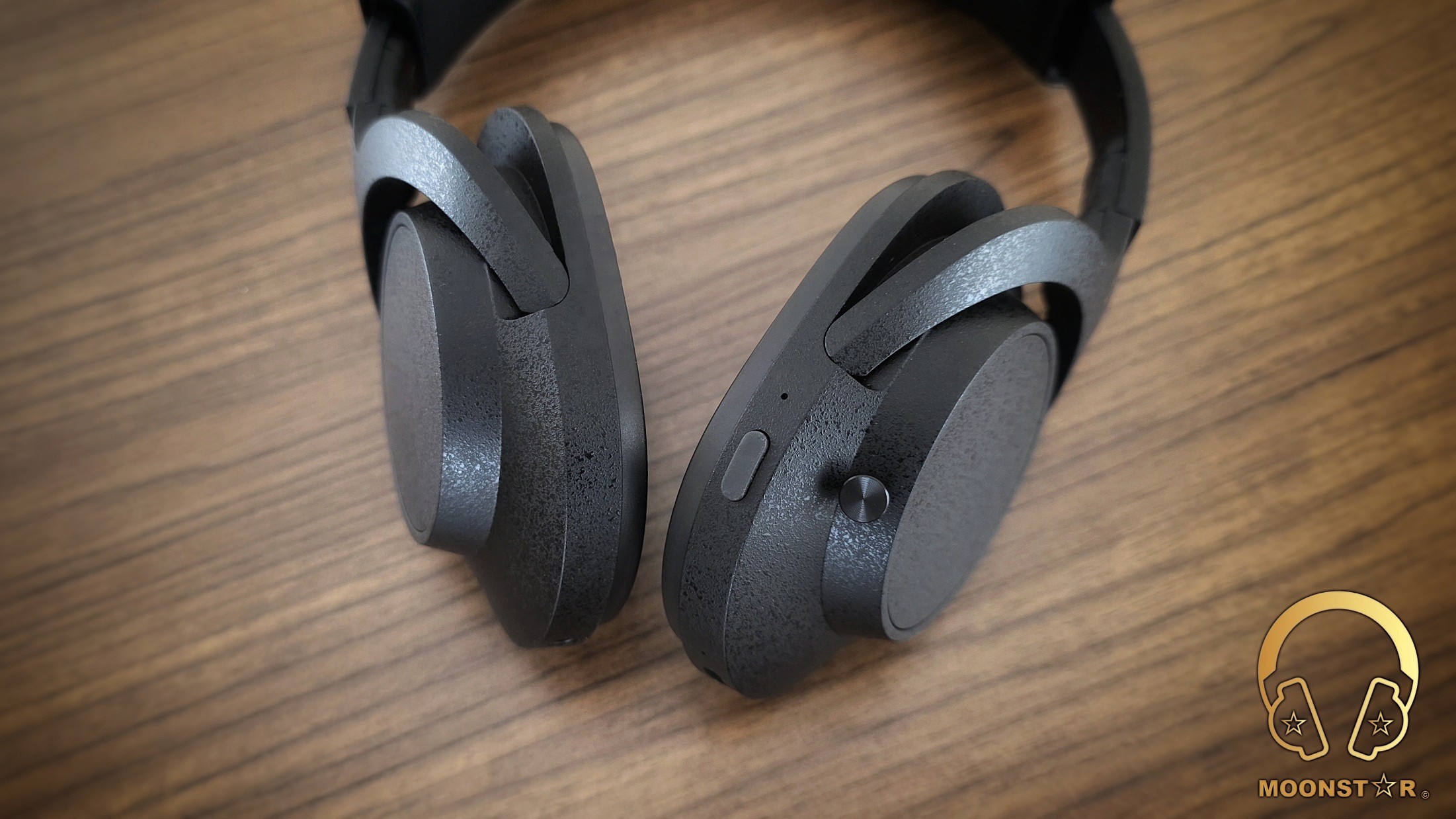
All primary controls are concentrated on the right earcup. The main control is a stick button, a small joystick-style element mounted on the rear lower edge of the cup. It handles power on/off (long press), play/pause (single press), track navigation (forward/back tilt), and volume (up/down tilt). The execution is confident: the stick has a short, precise travel and a click that distinguishes directional presses clearly without requiring visual confirmation. It responds well even during physical activity, which is a practical advantage over touch-sensitive panels that can misread contact or sweat. Adjacent to the stick is a dedicated ANC button that cycles through Noise Cancelling, Ambient Mode, and Off. Having this as a separate physical button is a sensible decision that allows noise control mode switching without interrupting playback or navigating any interface.
The left earcup carries the device’s connection ports. A USB Type-C port handles charging and also serves as the detachment point for the headband, which connects to the cups via a Type-C connector system that allows tool-free removal and replacement of the entire band. This is not a standard arrangement and reflects Final’s design philosophy around longevity. The 3.5mm analog input also resides on the left cup, accepting the included cable for wired DSP-active listening. There are no additional buttons or features on the left cup’s exterior face, keeping the surface clean and symmetrical with the right side.

The headband is built with a dual-material approach. A high-resilience foam core is used, rather than the low-resilience memory foam type found in the ear pads. This choice is intentional: high-resilience foam returns to its original shape quickly under pressure, distributing force more evenly across the crown of the head without creating localized pressure points during extended sessions. The outer surface is covered with synthetic leather on both the top and underside of the band, with stitching that is precise and consistent.

The foam density is graduated, with greater thickness toward the center of the band where crown pressure is highest. Adjustment is handled through a standard sliding extension mechanism built into each arm, with stepped increments that hold position reliably. The headband detaches from both cups via the USB Type-C connector system, making it user-replaceable without tools, a genuinely practical feature for a product intended to last five or more years.

The ear pads use low-resilience memory foam, a material chosen for its ability to conform slowly to ear shape and maintain a consistent acoustic seal. The outer surface is covered with synthetic leather, with clean seaming and a density that feels substantial rather than thin. The pads attach to the earcups magnetically, a departure from the friction-fit or screw-attachment systems commonly found in this price range. The magnetic attachment is secure during use but allows the pads to be detached with a straightforward pull and repositioned without any tools.

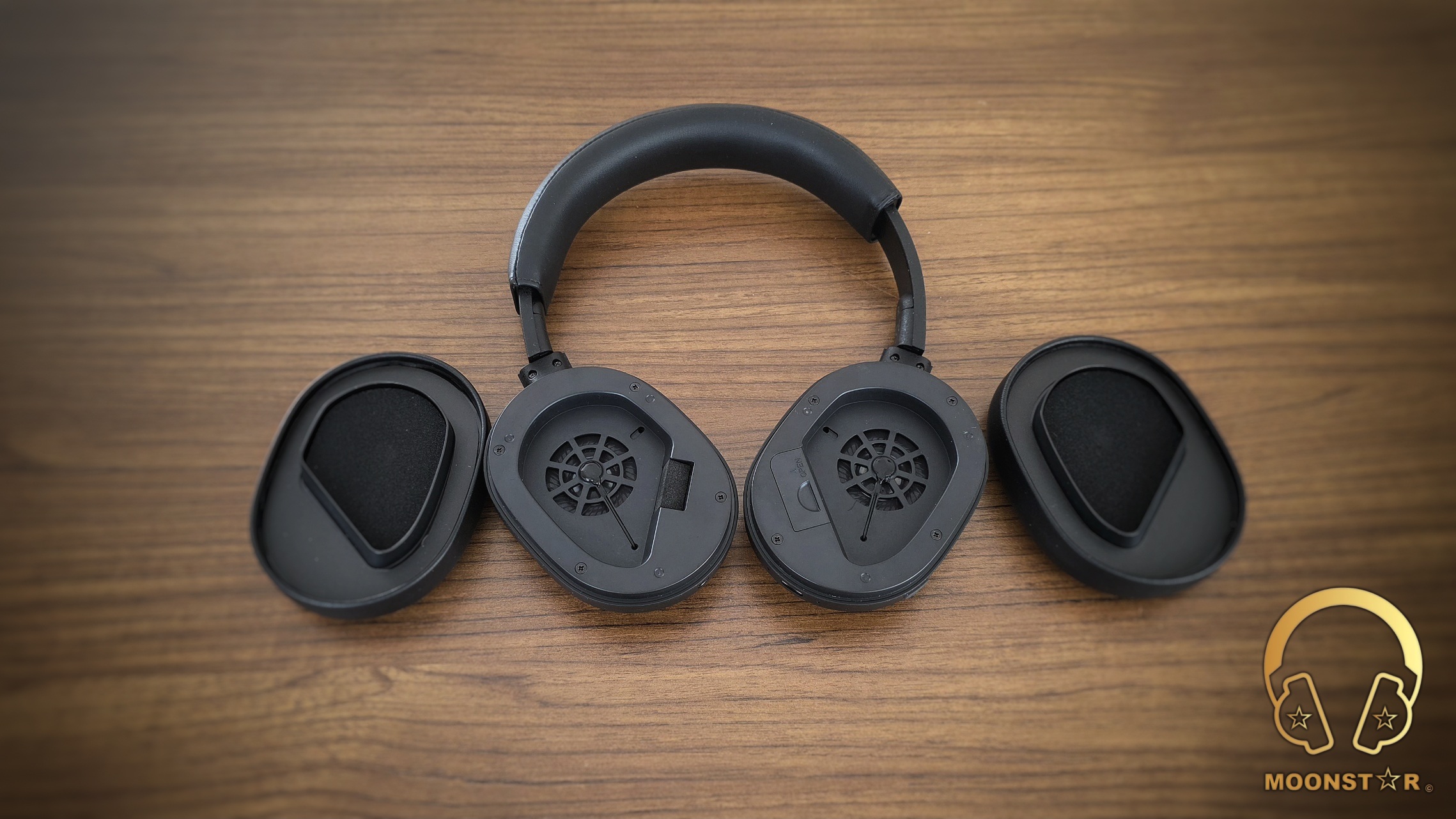
This matters because ear pad degradation is one of the most common causes of premature headphone retirement, and having a simple replacement path addresses that directly. The pad opening is on the smaller side, which may mean that users with larger ears find the pads sitting partly on the outer ear rather than fully around it. This is worth trying before purchase if possible, as the acoustic seal and comfort experience will vary based on fit.


The rear-facing surfaces of the earcups share the same Shibo-coated plastic as the front, maintaining a consistent material presentation throughout. There is no glass rear panel, no secondary texture zone, and no decorative hardware. The arms connecting the cups to the headband are also finished in the same matte black, contributing to a fully cohesive appearance. The assembly feels solid throughout: there is no flex, no creak, and no areas of the construction that feel soft or provisional. At 310 grams, the UX5000 sits in a reasonable weight range for a headphone of this specification. Weight distribution is even, and the combination of a well-shaped headband and conforming ear pads means that the headphone settles comfortably during extended sessions without inducing fatigue at the crown. The UX5000 is not foldable, but the carrying case accommodates it without difficulty, and the overall footprint when worn is compact enough that it does not feel oversized for daily commuting or travel use.

Technical Specifications:
- Model: UX5000
- Driver: 40mm Dynamic Driver (newly developed, acoustic damping and advanced filtering)
- Frequency Response: 20Hz to 40kHz
- Sensitivity: 100 to 110 dB SPL @1kHz / 1mW
- Bluetooth: Version 5.4
- Wireless Chipset: Qualcomm QCC3095
- Codec Support: LDAC, aptX Adaptive, aptX, AAC, SBC
- Noise Cancellation: Hybrid ANC (feedforward + feedback microphones, proprietary algorithm)
- Ambient Mode: Transparency passthrough
- Battery Capacity: 700mAh (user-replaceable via official service)
- Playback Time: Up to 65 hours (ANC off), up to 45 hours (ANC on)
- Charging Time: Approx. 2 hours (USB Type-C)
- Multipoint: 2 devices simultaneously
- Wired Input: 3.5mm analog (DSP active)
- App: Final UX5000 App (10-band EQ, noise control modes, multipoint, firmware updates)
- Ear Pad Attachment: Magnetic (user-replaceable without tools)
- Headband Attachment: USB Type-C connector (user-removable, replaceable without tools)
- Housing Adjustment: Multi-Fit system (up, down, left, right rotation)
- Color: Black only
- Weight: 310g
- Certification: Hi-Res Audio Wireless

Active (ANC) and Passive Noise Cancellation:
The UX5000 uses a hybrid ANC system that combines feedforward microphones mounted on the outside of each earcup with feedback microphones positioned inside, closer to the ear. This dual-microphone topology gives the system a broader picture of both incoming ambient noise and the acoustic signal actually reaching the ear, allowing the algorithm to intervene across a wider range of frequencies than a single-microphone approach would permit. Final has developed a proprietary processing algorithm with a specific goal in mind: to minimize the equalization correction that the headphone applies in response to ANC activation. Many ANC systems apply heavy low-frequency compensation to counteract the perceived effects of noise cancellation, which can subtly alter the sound signature depending on whether ANC is on or off. Final’s approach is to design the driver and housing to be mechanically robust enough under ANC conditions that heavy correction is not required, which helps keep the tonal presentation consistent.
The practical result is that ANC on the UX5000 performs well in typical commuting and travel environments. Low-frequency noise such as aircraft engine drone, train rumble, and ambient office hum is reduced effectively. Mid and high-frequency noise is attenuated more modestly, which is typical of most hybrid ANC implementations at this price point. The ANC cannot match the outright performance of Sony’s top-tier offerings in this regard, but it performs competitively with comparable headphones from Bowers & Wilkins and Sennheiser. Crucially, the tonal character of the headphone changes very little when ANC is engaged. There is a modest noise floor introduced by the system, but it sits low enough to be inaudible once music is playing at any reasonable listening level. This consistency between ANC-on and ANC-off presentations is one of the stronger practical attributes of the UX5000.
Ambient Mode functions as a transparency passthrough, using the microphones to relay external sound to the listener. The mode works reliably and remains free of the processing artifacts and tonal distortion that can make some implementations uncomfortable. However, the reproduction of ambient sound is slightly muffled compared to natural hearing, giving it a soft, filtered quality. It is useful for brief awareness checks during commuting or to catch announcements without removing the headphones, but it is not the most transparent implementation available in this class. For sustained outdoor use where awareness of traffic and surroundings is important, the ambient mode delivers adequate function without being exceptional.
Passive isolation from the combination of low-resilience memory foam pads and the Multi-Fit Housing seal is good. When ANC is switched off entirely, the earcup design and pad seal reduce a meaningful amount of ambient noise passively, which contributes to the overall impression of a quiet listening environment regardless of mode.
Connectivity & App:
Bluetooth connectivity on the UX5000 is handled by the Qualcomm QCC3095 chipset, which supports Bluetooth 5.4 and offers efficient power management alongside expanded codec support. The codec list is one of the strongest available at this price point: LDAC at up to 990kbps, aptX Adaptive, aptX, AAC, and SBC are all supported. For Android users, this means high-resolution wireless audio is accessible without additional hardware. LDAC in particular makes a noticeable difference to spatial perception and fine detail compared to AAC or SBC. iOS users are limited to AAC, which yields a leaner, less resolved presentation. Users without a source capable of generating LDAC or aptX Adaptive output will find the experience notably less polished, which is worth considering before purchase. The QCC3095 platform also supports LE Audio and aptX Lossless for capable devices, though compatibility with these standards depends on the connected source.
Multipoint connectivity allows two devices to remain paired simultaneously, with the headphone managing audio routing between them. Pairing is straightforward on initial setup, and reconnection to previously paired devices is reliable. Bluetooth range is consistent with modern Bluetooth 5.4 implementations: stable within a typical domestic environment and adequate for typical portable use. The connection holds without interruption under normal conditions.
The Final UX5000 companion app is available for both iOS and Android. It provides access to a 10-band equalizer, noise control mode selection (including the ability to turn both ANC and Ambient Mode off entirely, which the physical button alone does not allow in a single press), multipoint connection management, and firmware updates. The EQ offers a meaningful range of adjustment per band and responds cleanly to changes. Early units shipped with older firmware that caused initial pairing difficulties with the app, requiring a somewhat circular process to complete the first firmware update.
Post-update, stability and responsiveness improve considerably. The app itself is functional without being feature-rich, and it lacks the sophisticated preset management and sound personalization tools offered by Sennheiser or Sony. For users who wish to leave the EQ flat, the app is largely optional.
Wired operation via the included 3.5mm cable keeps the headphone’s DSP active, meaning the internal processing and sound signature are maintained in wired mode. This is a departure from passive wired modes used by some competitors, and it means that the wired presentation is consistent with the wireless one. The 3.5mm analog connection provides a reliable fallback for low-latency use cases such as gaming and video, where wireless latency might otherwise create synchronization issues.
The built-in microphone for calls performs adequately. Voice pickup is clear and stable, with usable intelligibility in moderately noisy environments. It is not the strongest microphone performance in its class for active noise suppression during calls, but it handles typical phone conversation and voice communication without difficulty.

Battery Life:
Final rates the UX5000 for up to 65 hours of playback with ANC disabled and up to 45 hours with ANC enabled. Real-world testing aligns closely with these figures. Reviewer testing with the 4.4mm output via LDAC and ANC on has produced results around 12 to 13 hours per session in careful individual tests, with figures closer to the claimed maximums achievable at lower volume with ANC off. In mixed daily use, combining wireless streaming, periodic ANC engagement, and moderate listening levels, a user can reasonably expect several days of listening between charges.
Charging from flat to full takes approximately 2 hours via USB Type-C, which is a practical charging window for overnight or work-desk charging. The UX5000 does not support wireless charging, which may disappoint users accustomed to that convenience in this price segment, but the wired charging speed compensates for its absence to a reasonable degree.
The replaceable battery is a meaningful long-term ownership feature. The replacement must be performed by Final’s official service rather than by the user directly, which introduces a dependency on service availability in the owner’s region. For users outside markets with strong Final service coverage, this is worth researching before purchase. The intent, however, reflects Final’s ethos of building products for longevity rather than planned obsolescence, and it extends the useful life of the headphone in a way that most wireless models at this price point simply do not offer.

Equipment Used for This Review:
- Headphones: Final UX5000
- Sources: FiiO M23, Samsung Galaxy S25 Ultra, MSI Vector GP68 HX
Albums & tracks used for this review:
- Gogo Penguin – Raven
- Lorde – Royal Massive Attack – Angel
- Toutant – Rebirth
- Really Slow Motion – Deadwood
- Massive Attack – Angel
- Muse – The Handler
- Twerl – Lishu
- U2 – Sunday Bloody Sunday
- Lunatic Soul – The Passage
- Metallica – Sad but True
- Megadeth – Sweating Bullets
- Rush’s – Leave That Thing Alone
- Slayer – Angel of Death
- Liquid Tension Experiment 2 – Acid Rain
- Edith Piaf – Non Je Ne Regrette Rien
- Diana Krall – So Wonderful
- Aretha Franklin – I Say a Little Prayer
- Hayley Westenra – Odyssey Album
- Dionne Warwick – Walk On By
- Sarah McLachlan – Angel
- Sting – Englishman in New York
- Barry White – Just The Way You Are
- Isaac Hayes – Walk On
- Elton John – Rocket Man
- Eric Clapton – Wonderful Tonight
- Sting – Englishman in New York
- Casey Abrams – Robot Lovers
- Fazıl Say – Nazım Oratoryosu (Live)
- Chopin – Nocturn No. 20 In C-Sharp Minor
- Vivaldi – Le QuarttroStagioni “The Four Seasons”
- Otto Liebert & Luna Negra – The River
The Sound:
The UX5000 is tuned with a priority on tonal correctness rather than crowd-pleasing color. It does not push bass to the forefront to impress on first listen, nor does it sharpen the treble to manufacture a sense of detail. The overall balance is neutral-to-slightly-warm, with a presentation that feels even-handed across all listening contexts. This is a headphone for those who want to hear what is actually in a recording rather than a manufacturer’s “exciting” interpretation. This orientation feels rewarding to listeners who prefer accuracy, though it may feel reserved to those accustomed to consumer-voiced wireless headphones.
Via LDAC, the presentation gains a sense of air and spatial depth that brings the UX5000 meaningfully closer to the fidelity of a wired experience. This codec advantage is a strong argument for choosing the UX5000 over competitors that cap out at aptX or AAC. Via AAC alone, the sound becomes noticeably thinner and more congested, which is a real limitation for iOS users. The sound character itself remains consistent regardless of genre: jazz, classical, electronic, and rock all receive the same even-handed treatment without artificial flattery.

Bass:
The bass on the UX5000 is a controlled, linear low end with a measured approach to emphasis rather than the bloated mid-bass shelf that most wireless headphones at this price add to create an impression of impact and power. Sub-bass extension is solid; listening to Massive Attack’s Angel, the low drone that forms the backbone of the track is reproduced with genuine weight and physical presence, reaching down into the lower registers without rolling off prematurely. The pressure and density of that foundation are there, but rendered with restraint rather than exaggeration. For electronica where sub-bass energy is the primary structural element, the UX5000 delivers enough to be satisfying without overstating the case.
Mid-bass is where the character most distinguishes itself from the competition. There is no artificial mid-bass hump adding warmth and punch beyond what the recording contains. Kick drums land with a sense of actual skin and mechanical impact rather than the padded, rounded thud that bass-boosted headphones produce. On Metallica’s Sad but True, the kick pattern stays dry and precise, which is exactly what the recording requires. Barry White’s Just The Way You Are benefits similarly: the upright bass has body and authority without blurring into the vocal range. This absence of mid-bass excess prevents low-frequency content from bleeding into the lower midrange, keeping the overall presentation cleaner and more transparent across complex, layered mixes.

Midrange:
The midrange is where the UX5000 makes its most assured statement. It is clear, slightly forward, and transparent to the degree that the 40mm driver allows. This is the frequency region that Final Audio has historically prioritized, and the attention to midrange intelligibility is evident from the first serious listening session. There is no recession in the critical 1kHz to 3kHz range that would push vocals back in the mix, nor is there an artificial peak adding forward energy that would make voices sound processed or edgy. The midrange sits where it should and delivers exactly what the recording intended.
Vocals are the UX5000’s most immediately impressive attribute. Norah Jones on Come Away With Me arrives with warmth, breath, and texture that communicate a sense of physical presence. The subtle inflections in her phrasing and the slight chest resonance at the bottom of her range are reproduced with fidelity. Male vocals are equally well served; Barry White’s bass-baritone has the appropriate weight and resonance without letting the bass frequencies bleed upward and muddy the delivery. Instrumental midrange fares equally well: on Miles Davis’s So What, the interplay between the upright bass, piano, and muted trumpet is rendered with clear spatial definition, retaining individual tonal identities without a homogenizing warmth across the register.
Treble:
The treble on the UX5000 is well-extended, controlled, and presented with enough energy to feel genuinely alive without tipping into the kind of brightness that causes listening fatigue. Final’s acoustic research heritage is most audible here: the upper frequencies have the airy, open quality of a well-tuned dynamic driver rather than an artificially sharpened peak in the 8kHz to 10kHz range. The distinction is between real extension and simulated sharpness, and the UX5000 consistently stays on the right side of that line. Cymbals are handled with a natural metallic texture that includes shimmer and harmonic decay rather than just a flat, bright ping.
String reproduction in the upper registers also performs well, avoiding the gritty, harsh edge that poorly damped drivers can introduce. Vivaldi’s The Four Seasons benefits from this treatment: the solo violin has brilliance and detail without being fatiguing over a full movement. The high-frequency extension to 40kHz speaks to the engineering investment in the driver and housing tuning, likely contributing to the absence of high-frequency harshness. Sibilance is not an issue, as no track produced the harsh ‘s’ or ‘t’ sounds that many wireless headphones introduce in the 6kHz to 8kHz range. This treble management is one of its strongest practical virtues for long listening sessions.
Soundstage & Imaging:
The soundstage is wide for a closed-back wireless headphone and carries a meaningful sense of depth that distinguishes it from headphones that create width alone. The Multi-Fit Housing system contributes here by allowing the cups to conform precisely to each listener’s head shape, optimizing the acoustic seal and the consistency of the internal space. Listening to Radiohead’s Live in Berlin, the spatial scale of the venue and the placement of instruments across the stage come through with a convincing sense of physical distance and lateral width.
Instrument separation and imaging precision are strong. Individual instruments in complex arrangements are clearly positioned within the soundfield and do not blur into adjacent elements. On Ferit Odman’s Look, Stop & Listen, the jazz ensemble is placed convincingly across a wide lateral field, with the piano clearly to one side and the drums given a sense of depth behind the other instruments. Via LDAC, the soundstage gains a perceptible quality of air and definition that broadens the sense of space and sharpens the placement of individual elements compared to the slightly more compressed AAC presentation.

Conclusion:
The Final UX5000 rewards the listener who approaches it on its own terms. It delivers a consistent, honest, and well-considered product: neutral tuning backed by genuine acoustic engineering, a build quality that takes long-term ownership seriously, and a wireless implementation that makes full use of LDAC to bring the experience closer to wired fidelity. The sound is the central strength, with controlled bass, a transparent midrange, and fatigue-free treble that allows for sessions measured in hours rather than minutes.
The practical case is also solid, with 65 hours of battery life and a build featuring replaceable ear pads and headband reflecting a commitment to longevity. While the app’s initial firmware update process is a friction point and the Ambient Mode is functional rather than excellent, the overall performance represents good value for the price. At $249.99, the UX5000 is best suited to listeners who prioritize tonal accuracy and build quality over a maximum feature set or extreme ANC performance, offering a headphone that will likely remain in regular use for a long time.
Pros & Cons:
- + Neutral, transparent tuning with honest tonal accuracy across the full frequency range
- + Controlled, pretty well-defined bass with genuine sub-bass extension and no mid-bass bloom
- + Exceptionally clear and natural midrange
- + Well-extended, fatigue-free treble with good amount of air and detail
- + Fairly deep soundstage with good imaging for a closed-back wireless headphone
- + LDAC, aptX Adaptive, and aptX Adaptive HQ support for genuine high-resolution wireless audio
- + Excellent battery life: 65 hours ANC off, 45 hours ANC on
- + User-replaceable magnetic ear pads and detachable headband without tools
- + Shibo coating is genuinely durable and resistant to fingerprints and scratches
- + Replaceable battery via official service extends long-term ownership lifespan
- – ANC performance is average
- – Ambient Mode is functional but slightly muffled
- – Performance via AAC is noticeably weaker: thinner, less resolved, and less spacious
- – Stock neutral tuning may feel understated or uninvolving
- – Ear pad opening is on the smaller side and may not fully envelop larger ears
Thank you for the Read!