FINAL VR3000 Recable Review
FINAL VR3000 Recable for Gaming Review
Introduction:
Final’s VR3000 for Gaming has been one of the more durable success stories in the budget gaming in-ear segment, with the line passing 160,000 units sold since it first appeared in 2021. In February 2026 the company added two new variants built around a detachable cable system: the VR3000 Recable for Gaming and the VR3000 +Condenser Mic for Gaming. This review covers the VR3000 Recable specifically, the base detachable cable model with an in-line three-button controller and microphone. It is not the original fixed-cable VR3000 from 2021, not the +Condenser Mic version with its dedicated boom microphone, and not the wireless VR3000 EX that Final released separately in late 2025. Keeping these straight matters more than usual here, since all of them share a visual family resemblance and overlapping naming.
The driver and the underlying tuning carry over unchanged from the original VR3000, so this revision is not really a sound update. It is a build-quality and ownership update, aimed squarely at the most common complaint leveled at wired gaming in-ears: a cable that cannot be replaced once it frays, kinks, or gets caught on a chair leg one too many times.
Disclaimer:
I would like to thank Final Audio and Jackrabbit Media for providing the VR3000 Recable headphone for review purposes. I am not affiliated with either company beyond this review, and these words reflect my true, unaltered opinions about the product.
Price & Availability:
The FINAL VR3000 Recable for Gaming is priced at $84.99 / €84.99 / £69.98. It has been available since 19 February 2026 through Final’s official webstore and through authorized audio retailers worldwide. For more details or to purchase:
Package & Accessories:
The VR3000 Recable ships in Final’s usual compact retail box, with the earphones and accessories held in a fitted insert rather than loose packaging. The bundle sticks to the essentials a budget gaming earphone needs rather than padding the box to justify a higher price.
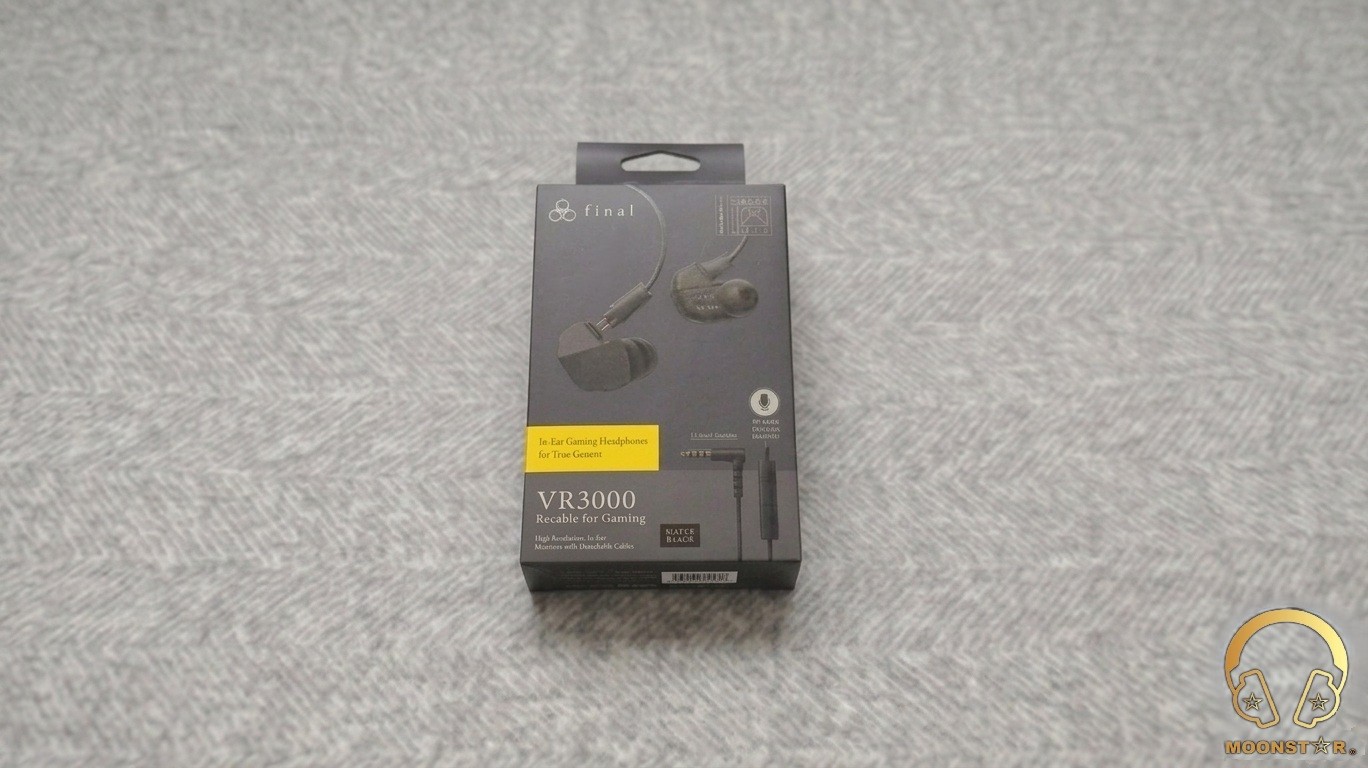
The full package includes:
- 1 pair x VR3000 Recable for Gaming earphones
- 1 x detachable 1.2m black OFC cable, 0.78mm 2-pin connectors, in-line 3-button controller and microphone
- 5 pairs x Type E silicone eartips (XS/S/M/L/XL)
- 1 pair x Type B ear hooks
- 1 x carrying pouch
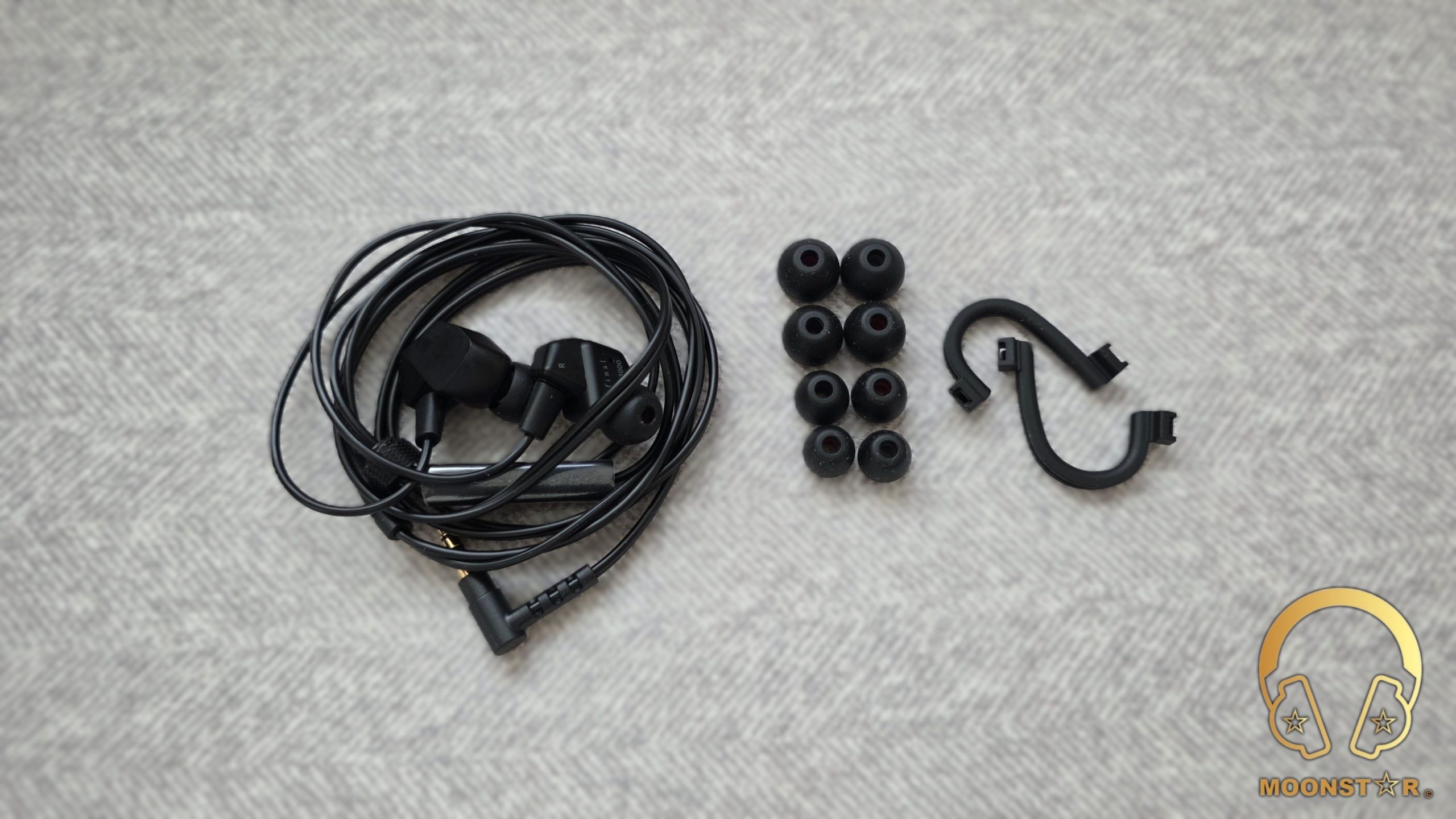
The eartip range covers more sizes than most competitors bother including at this price, and the ear hooks are a genuinely useful addition for anyone planning to wear the VR3000 Recable during fast-paced sessions rather than seated listening. The carrying pouch is basic but does its job for tossing the earphones into a bag between sessions.
Design & Build Quality:
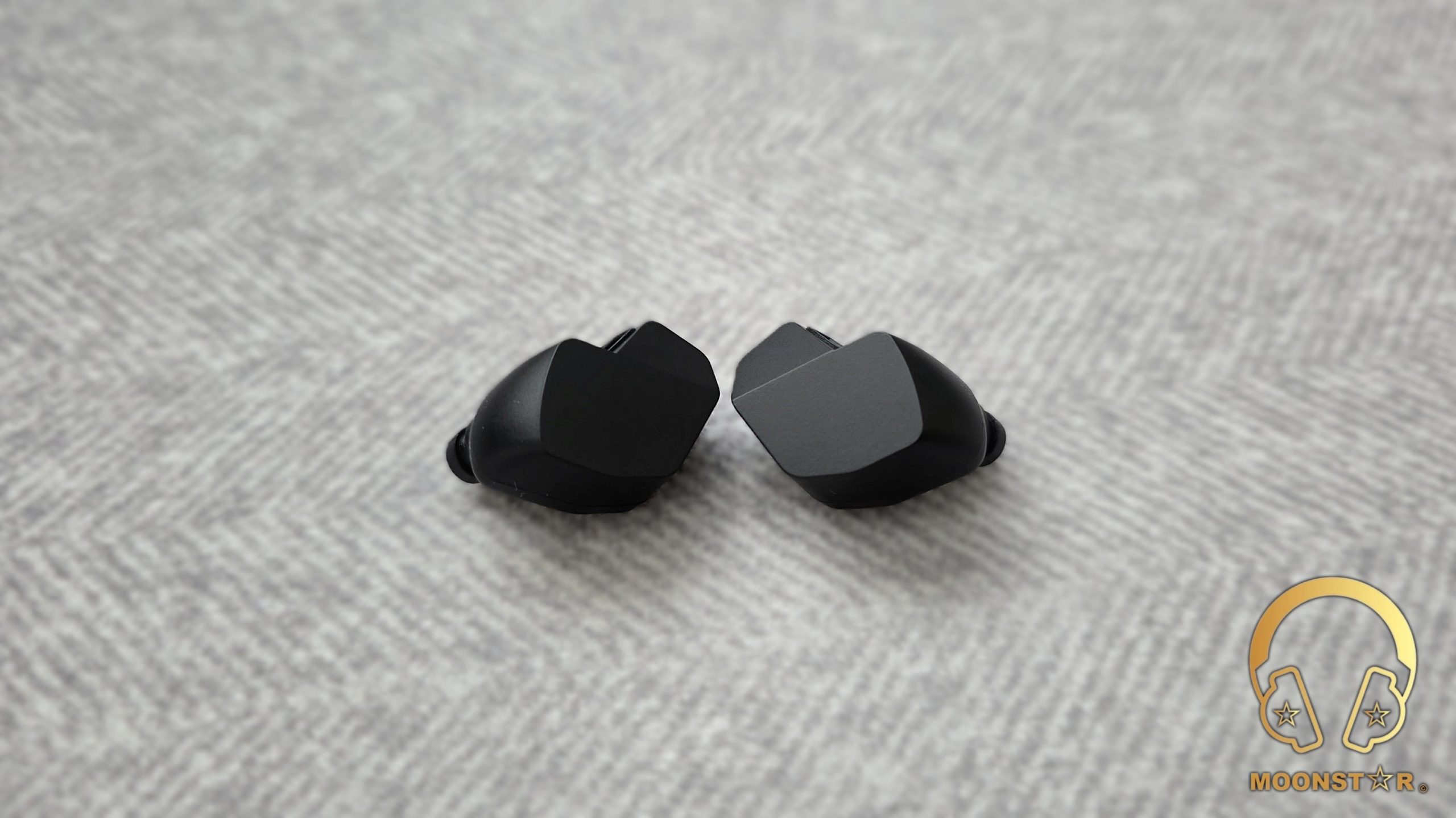
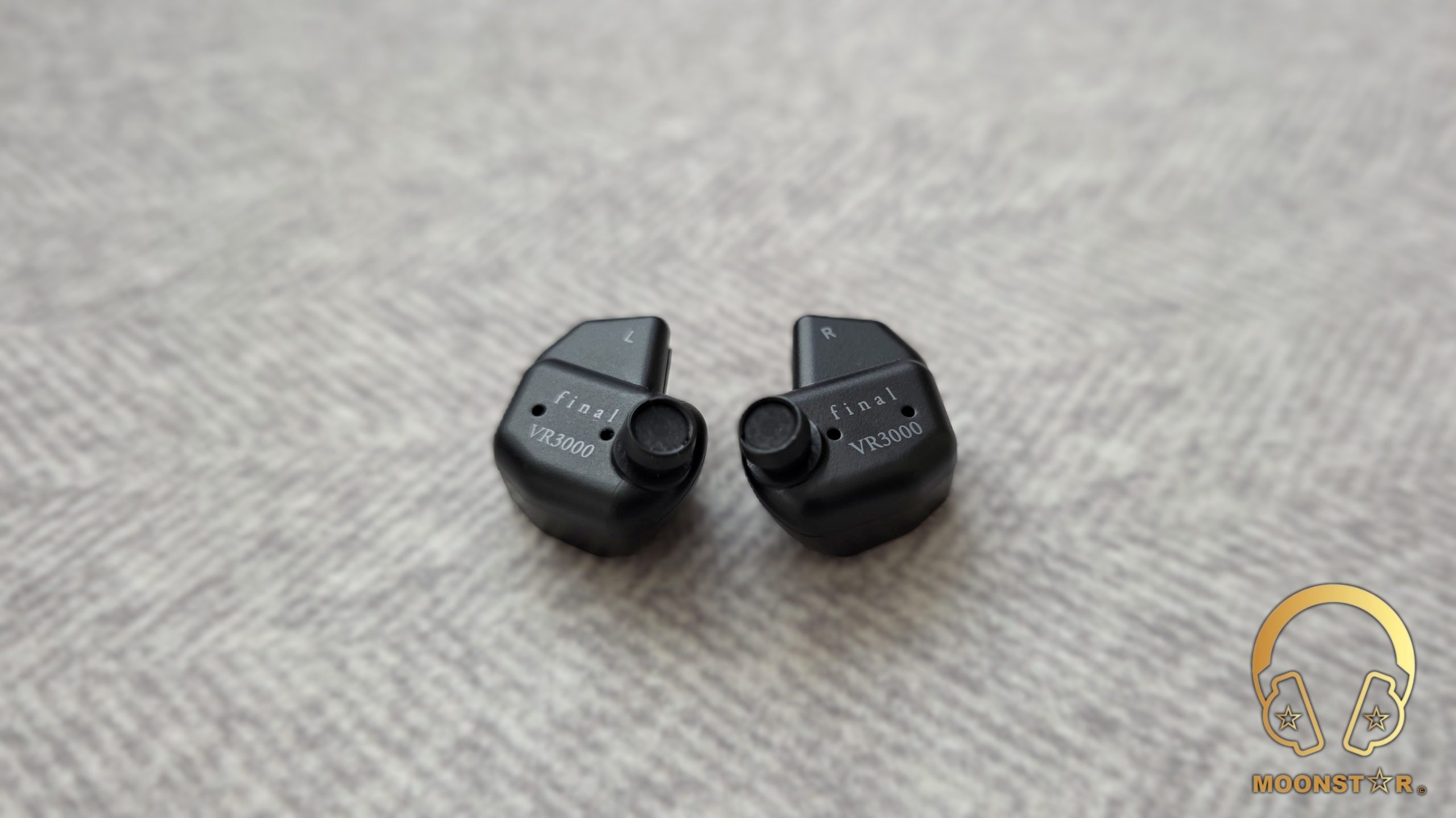
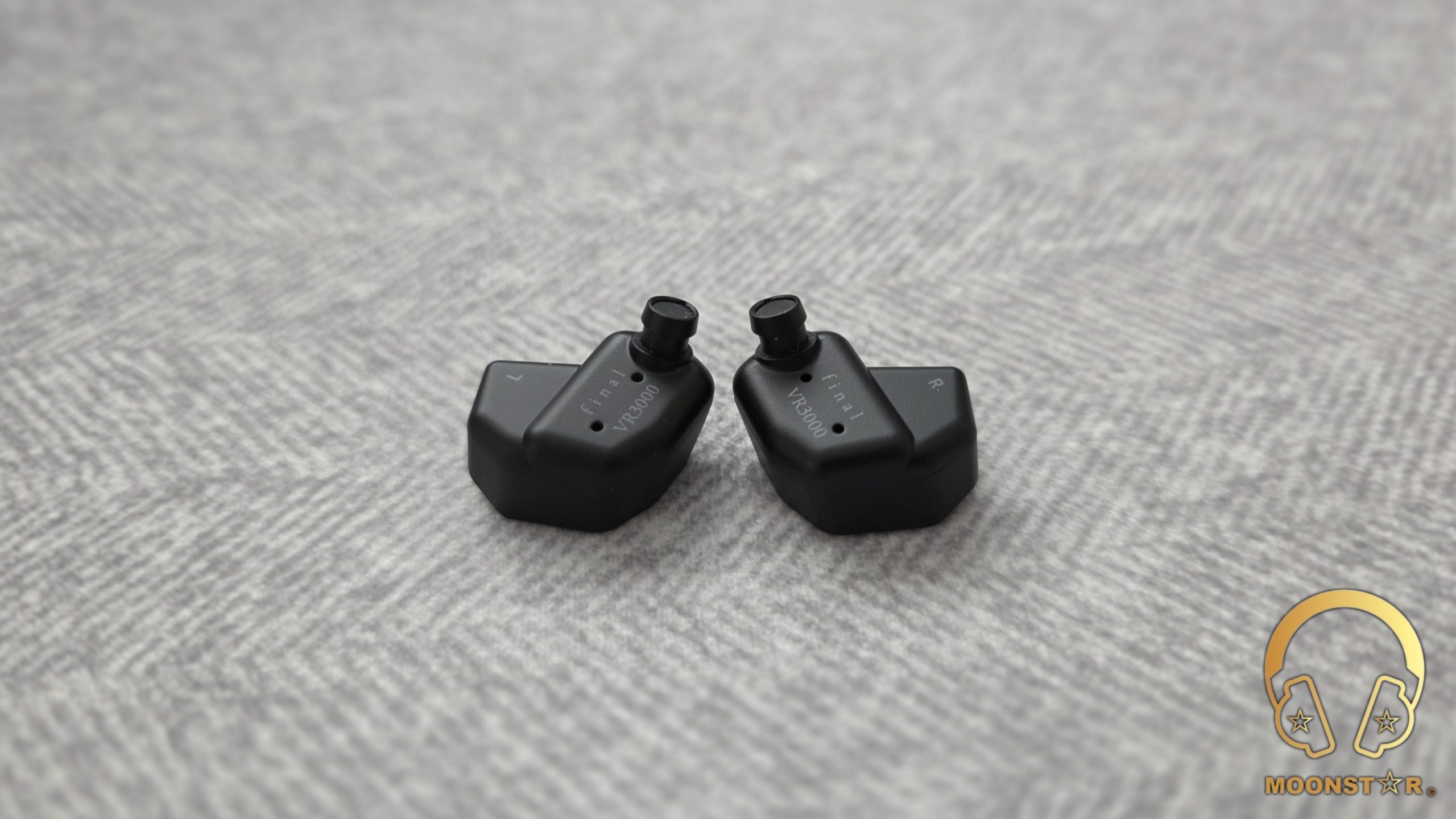
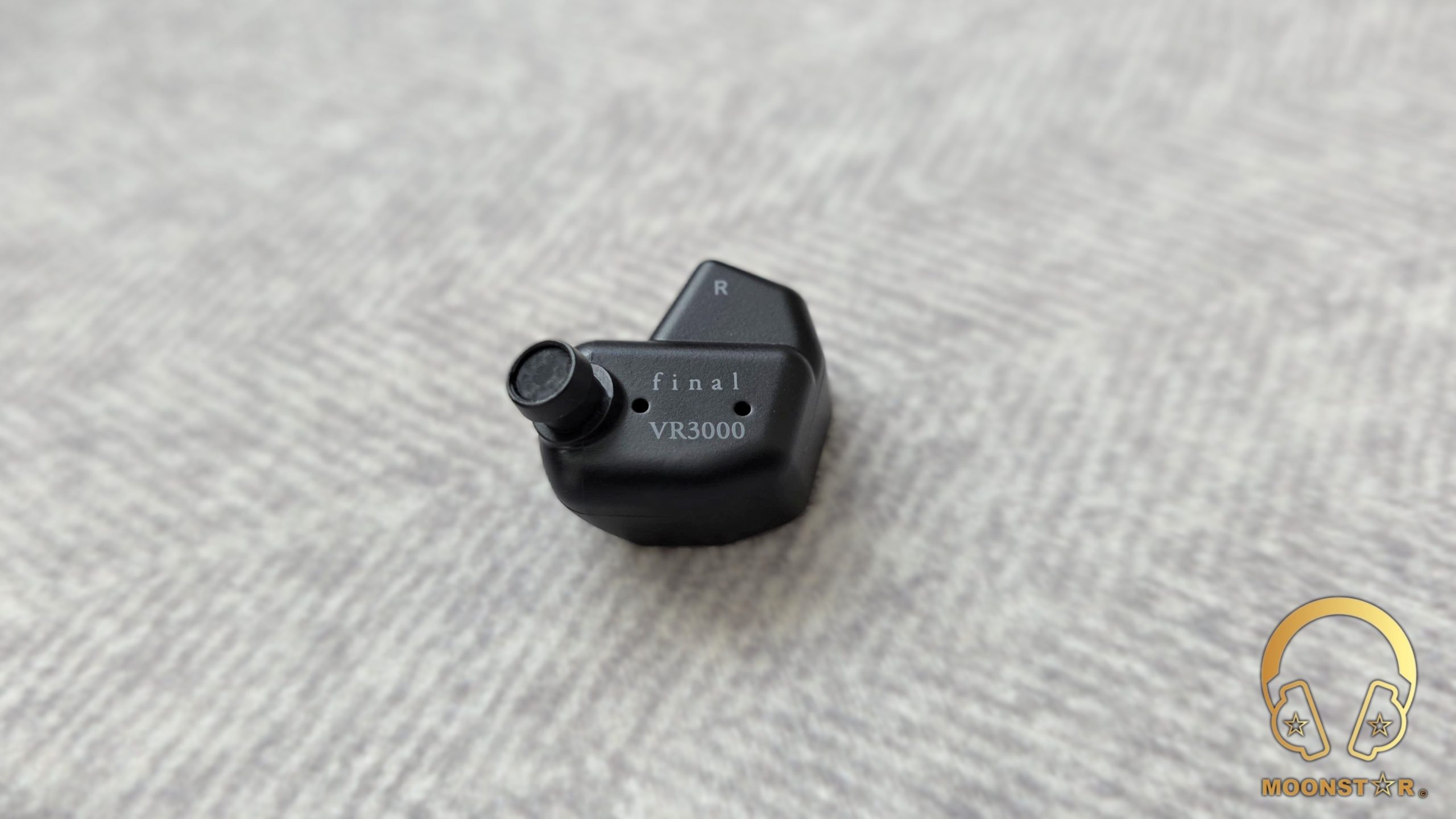
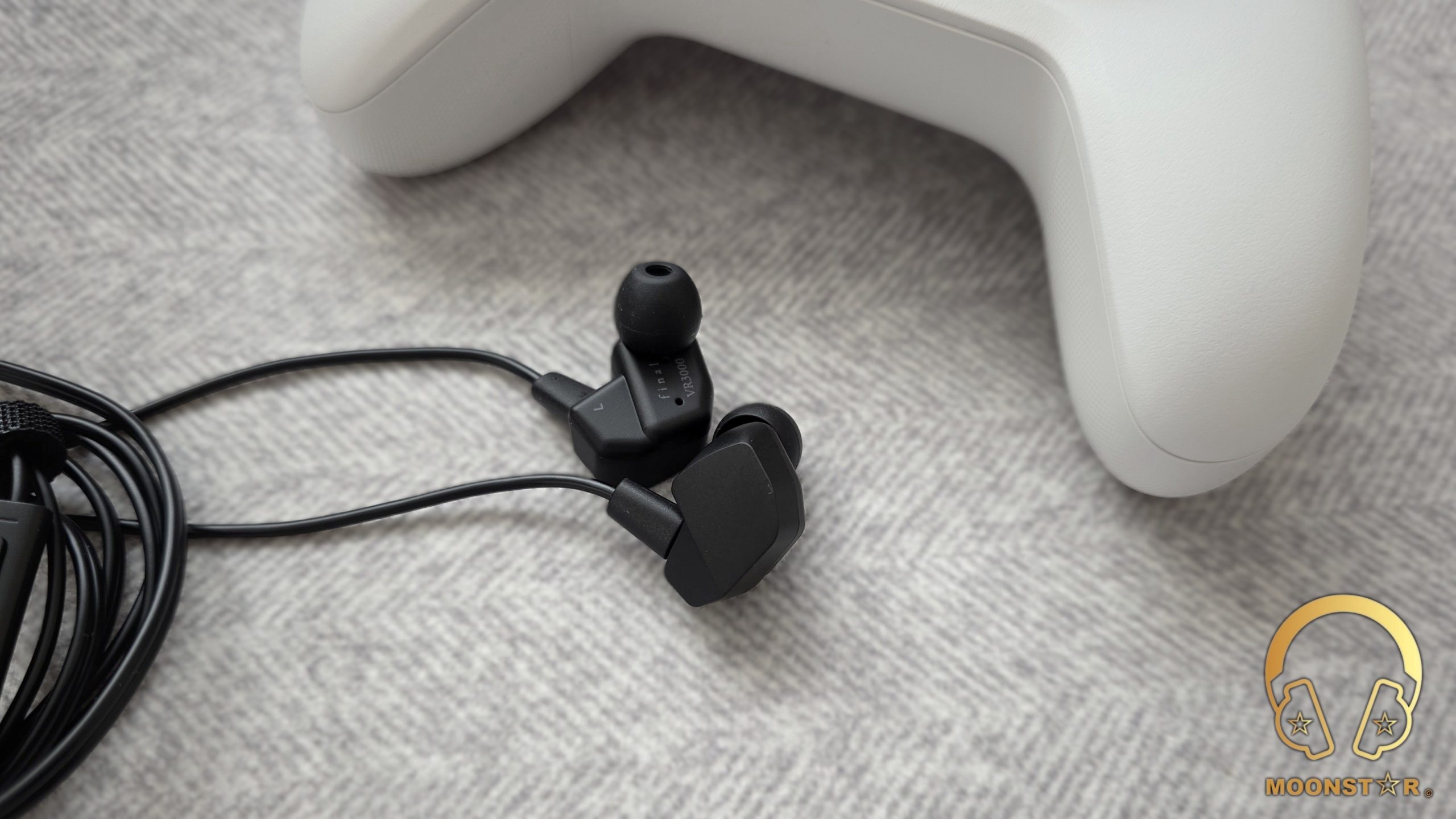
The housings are molded from ABS thermoplastic in the same standard-fit shape used across Final’s VR2000 and VR3000 family, sitting in the outer ear rather than sealing deep in the canal. At 20 grams for the pair, the shells settle in quickly and stay out of the way, and the shape holds its position well once paired with the included ear hooks.
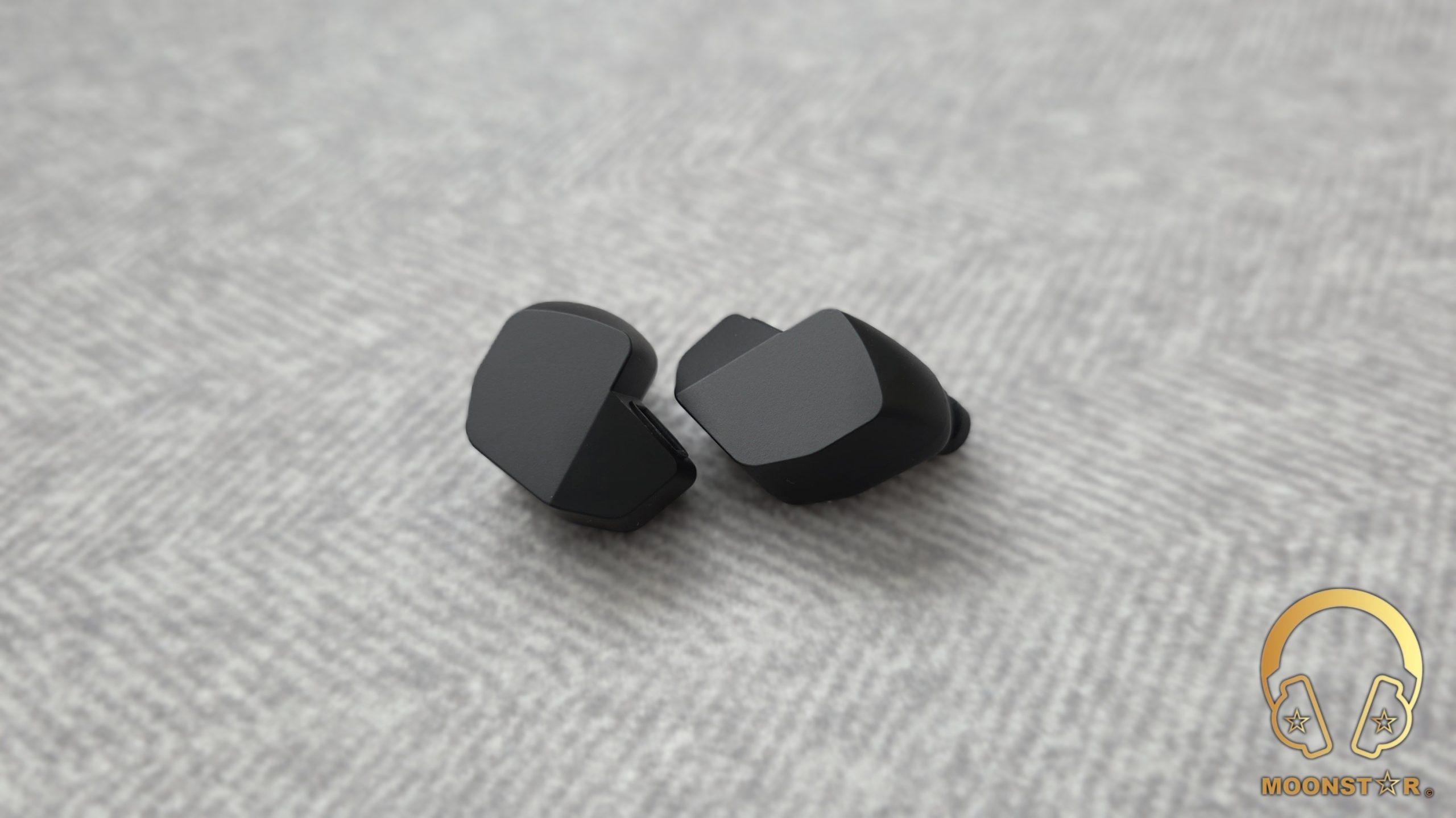
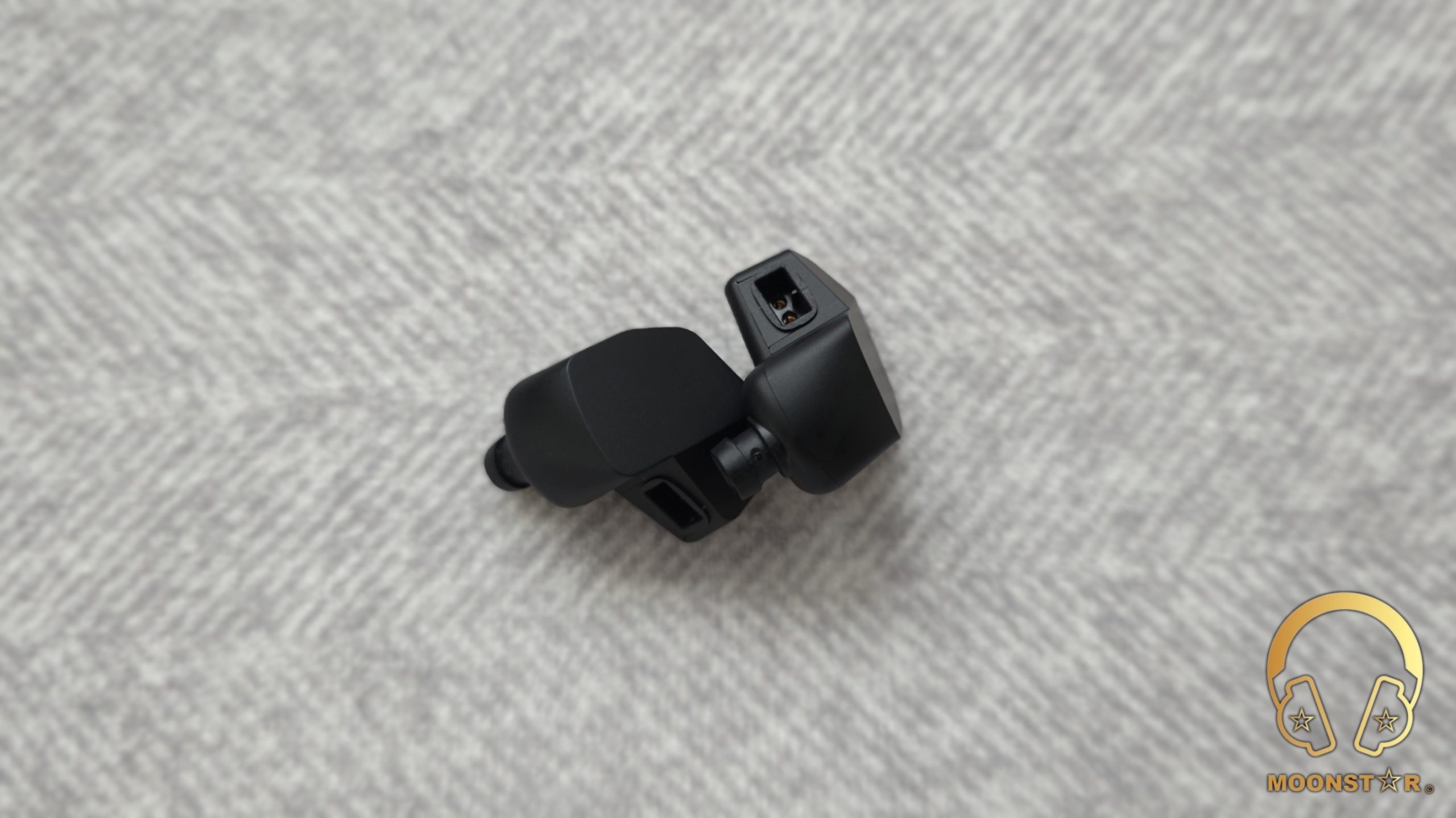
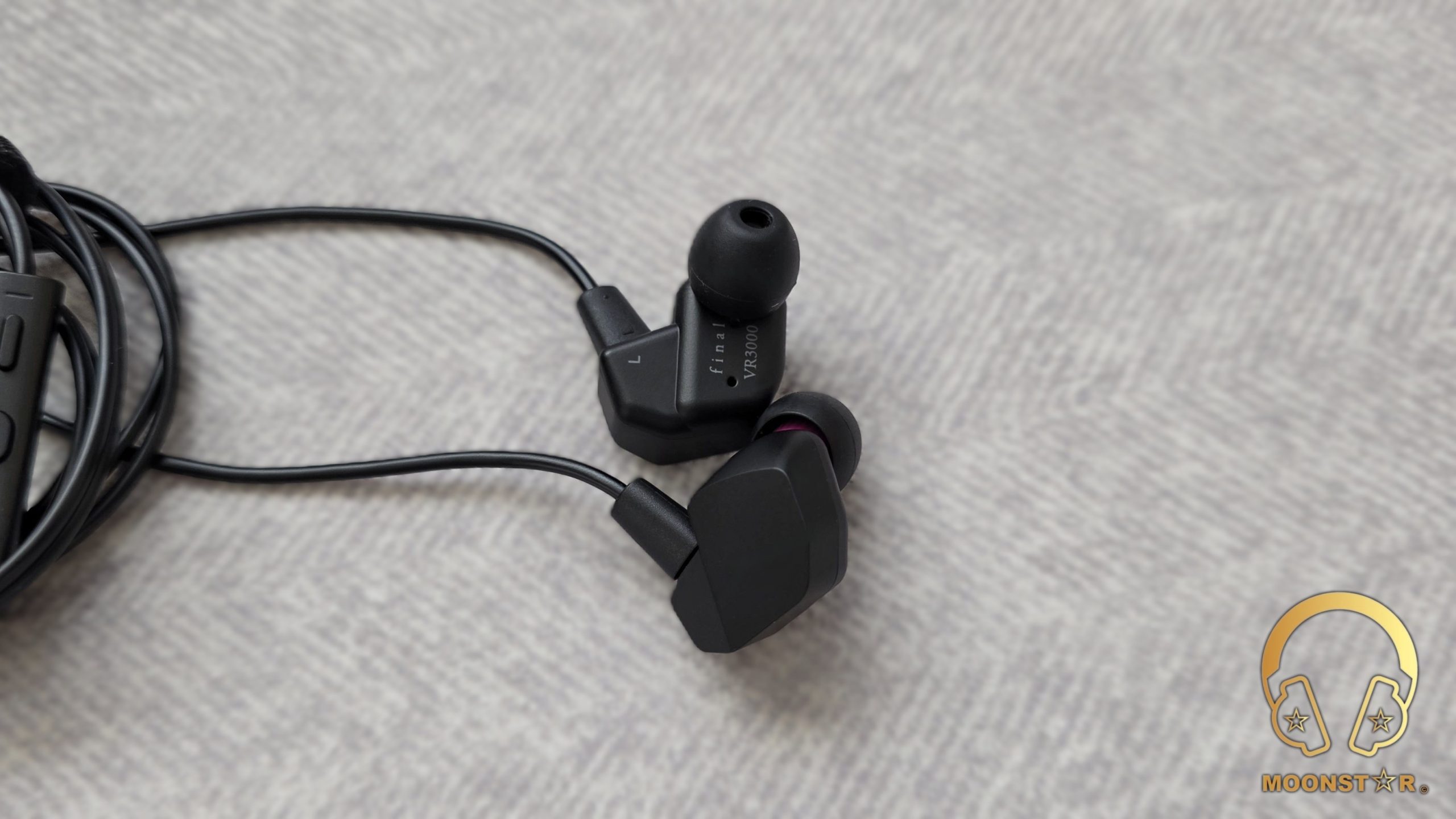
The change that defines this revision sits at the base of each housing, where Final has fitted a 0.78mm 2-pin socket into a flat, reinforced section of the shell. The connector is described by Final as an in-house, high-precision design, chosen specifically because the 0.78mm standard is the most widely supported one on the aftermarket cable market, which means the VR3000 Recable is not locked into Final’s own cable for the life of the product. Insertion is firm, the connector clicks into place without play once seated, and there is no looseness during normal handling or removal on the review unit.
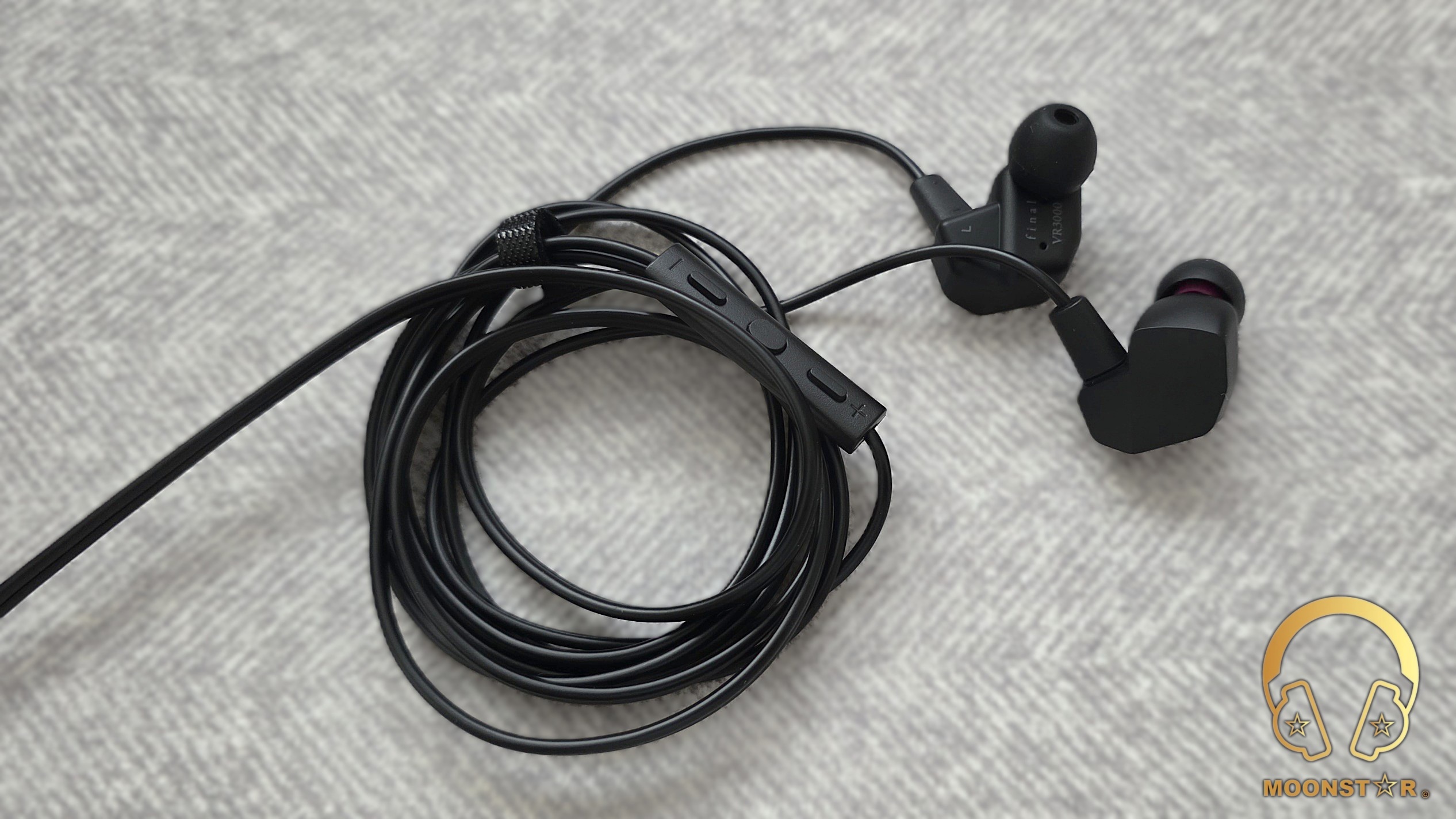
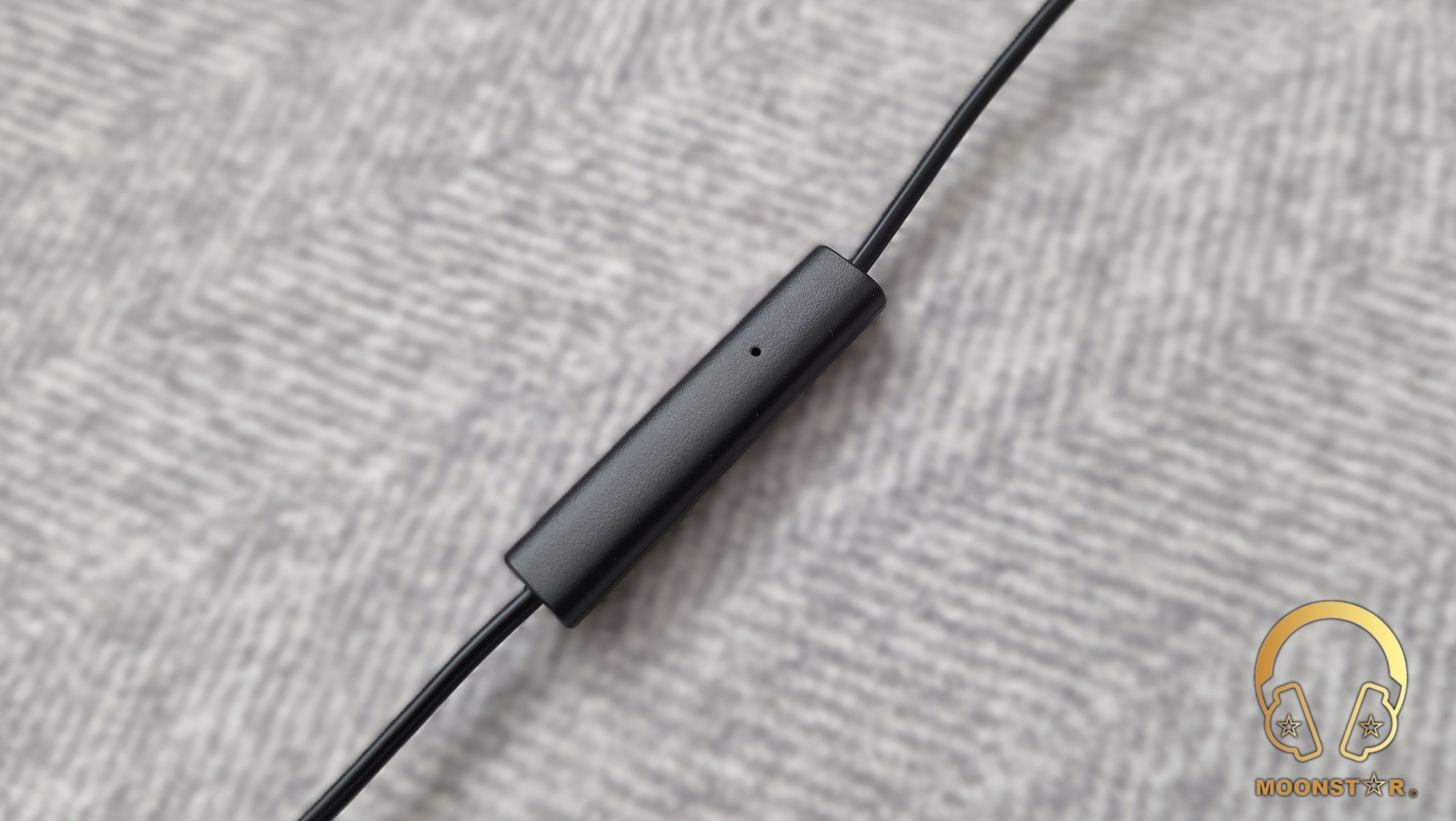
The bundled cable is finished in black OFC copper with a softer outer jacket aimed specifically at reducing touch noise, the thumping and rustling that travels up into the ear canal when a cord brushes against clothing or a desk edge.
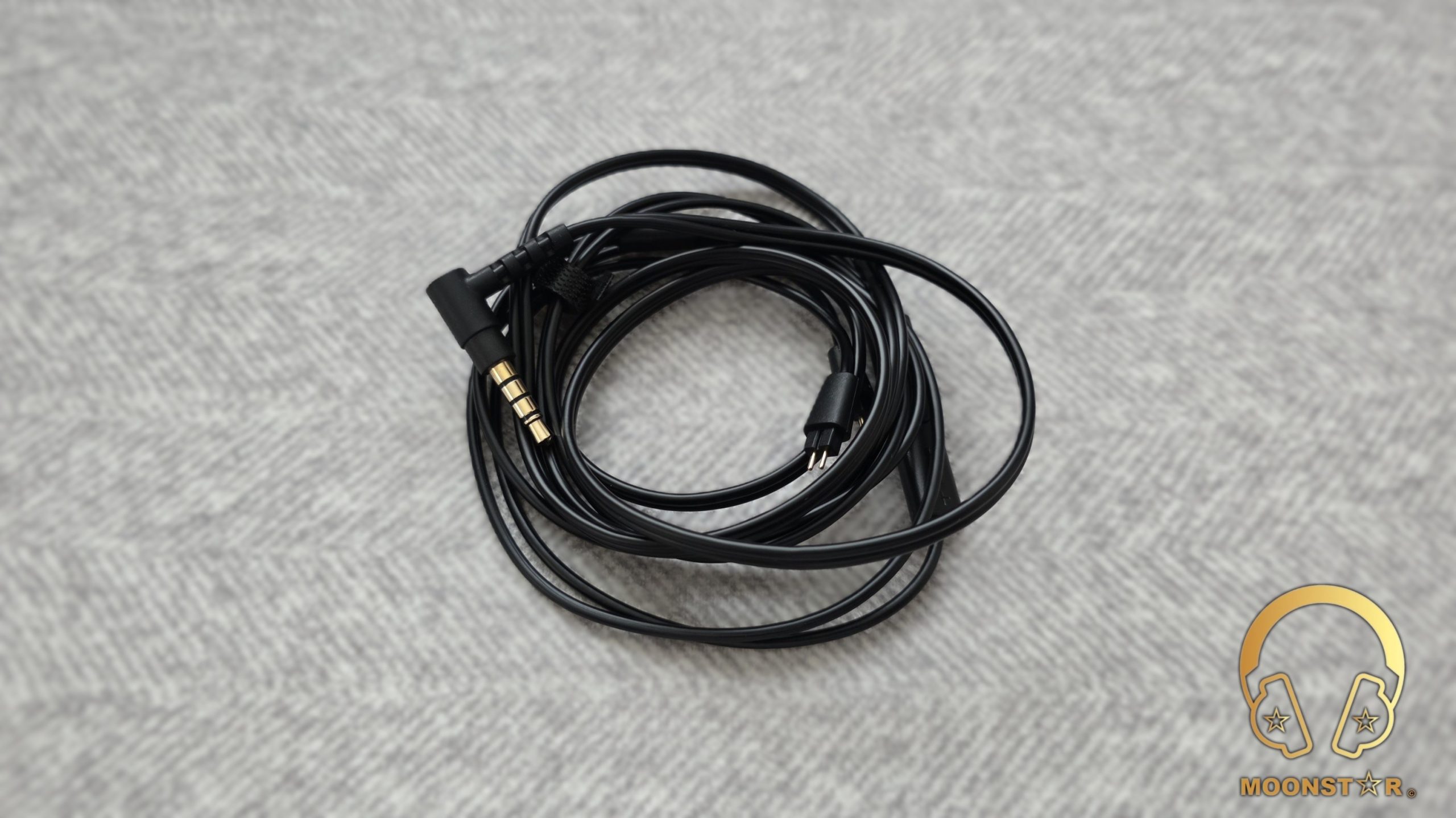
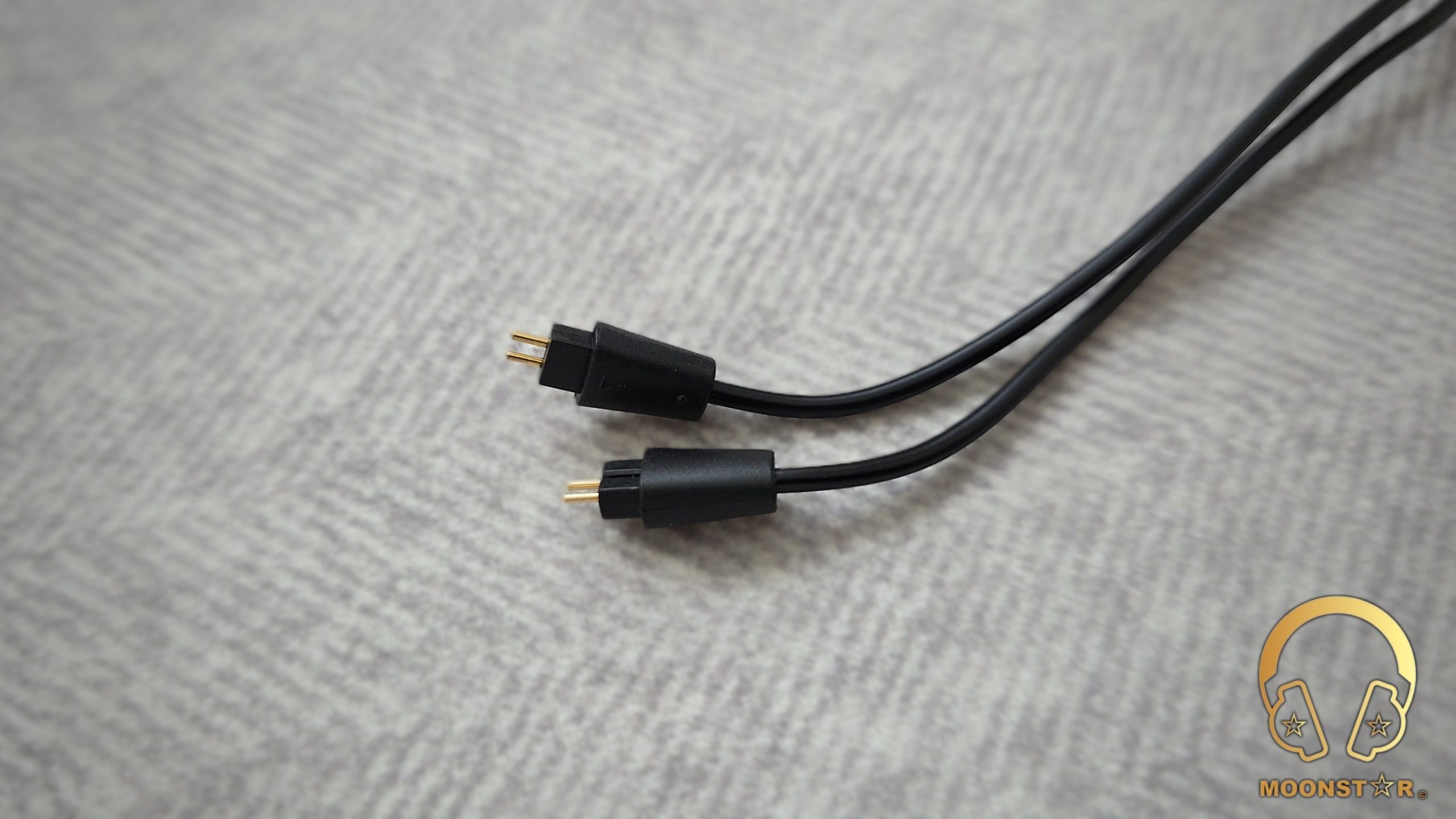
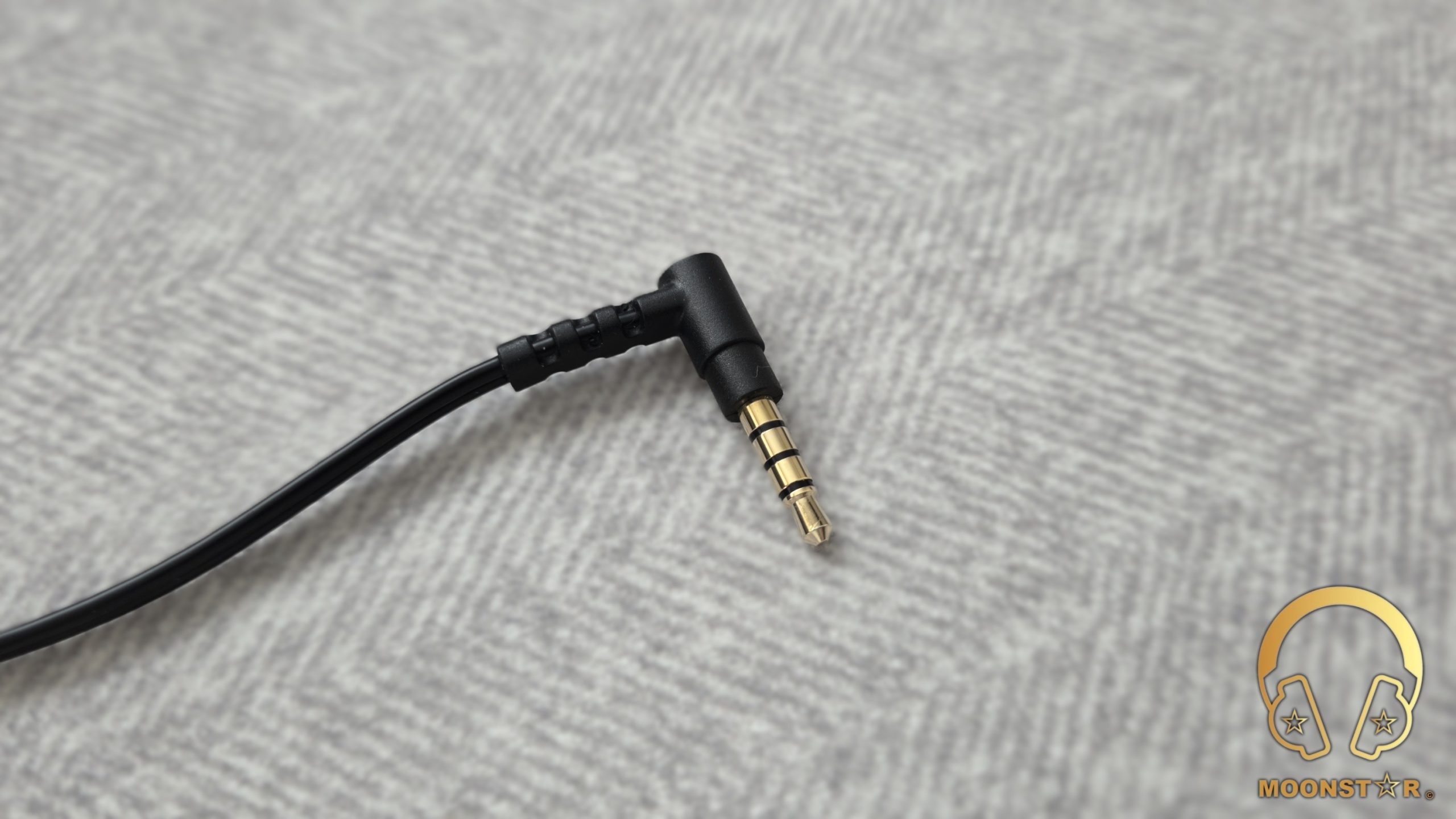
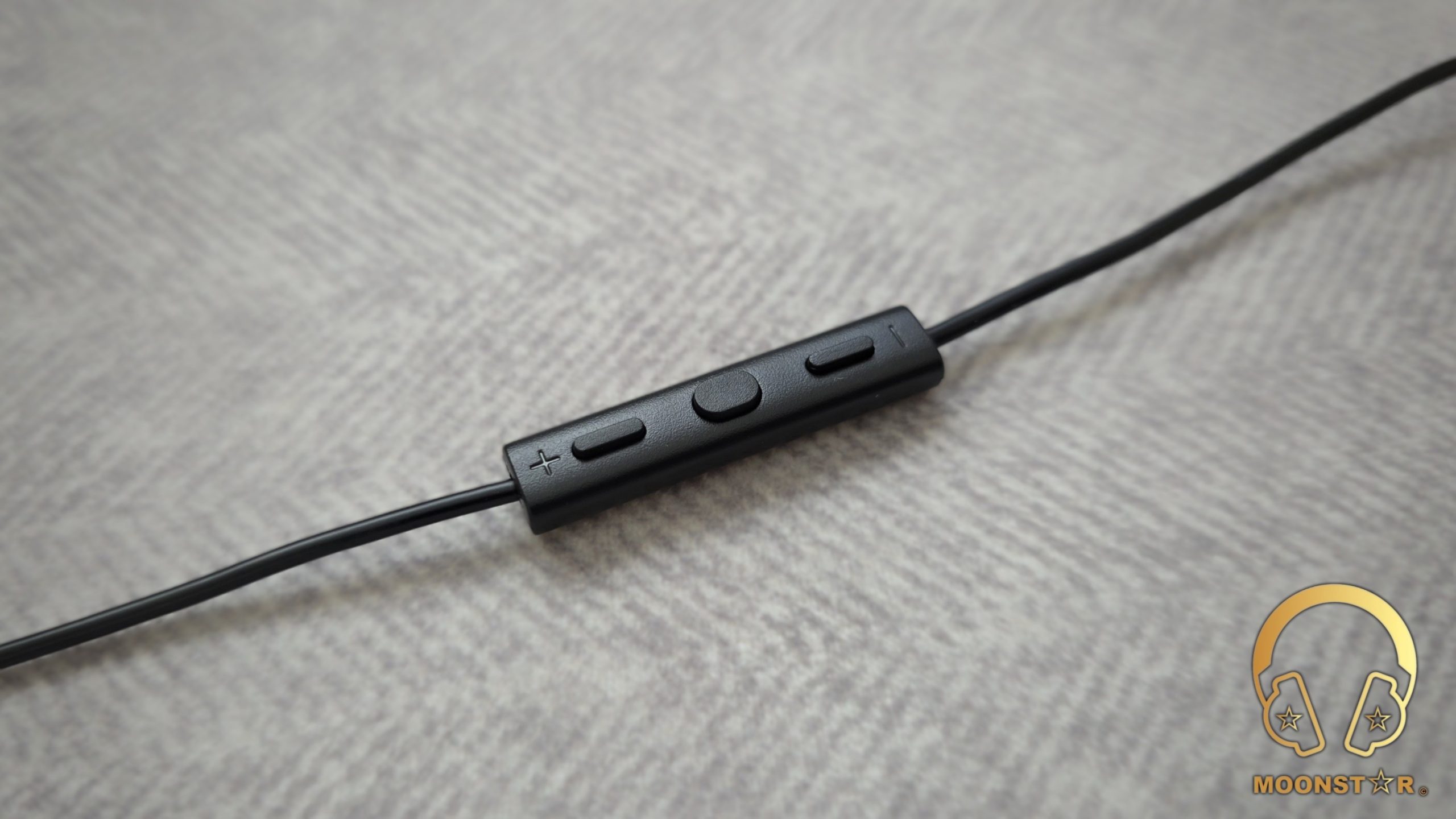
A three-button in-line controller sits at roughly chin height and handles playback, volume, and call functions alongside a basic in-line microphone, without adding meaningful weight or bulk to the cable run.
Fit, Comfort & Isolation:
The VR3000 Recable fits comfortably across a range of ear sizes thanks to the wide eartip selection and the standard-fit shell shape, which rests in the outer ear rather than requiring deep insertion. The light overall weight keeps fatigue from building during long sessions, and the ear hooks earn their place here: without them the housings can work loose during fast head movement, and with them properly seated the fit is stable through hours of continuous wear.
Passive isolation is moderate rather than strong, in keeping with the standard-fit housing style and the vented design that a dynamic driver of this size typically needs. That trade-off is a deliberate one for a gaming earphone, since some awareness of the surrounding room is often preferable to a full seal, particularly for anyone gaming while also keeping half an ear on a household or a voice chat running through a separate speaker.
Technical Specifications:
- Model: VR3000 Recable for Gaming
- Driver: 6mm Dynamic Driver (f-CORE DU)
- Housing Material: ABS Thermoplastic
- Connector: 0.78mm 2-Pin (Detachable, in-house design)
- Cable: 1.2m Black OFC, In-Line 3-Button Controller and Microphone
- Sensitivity: 101 dB
- Impedance: 18 Ohms
- Weight: 20 g (pair)
- Included Eartips: Type E Silicone, 5 Sizes
Drivability & Pairing:
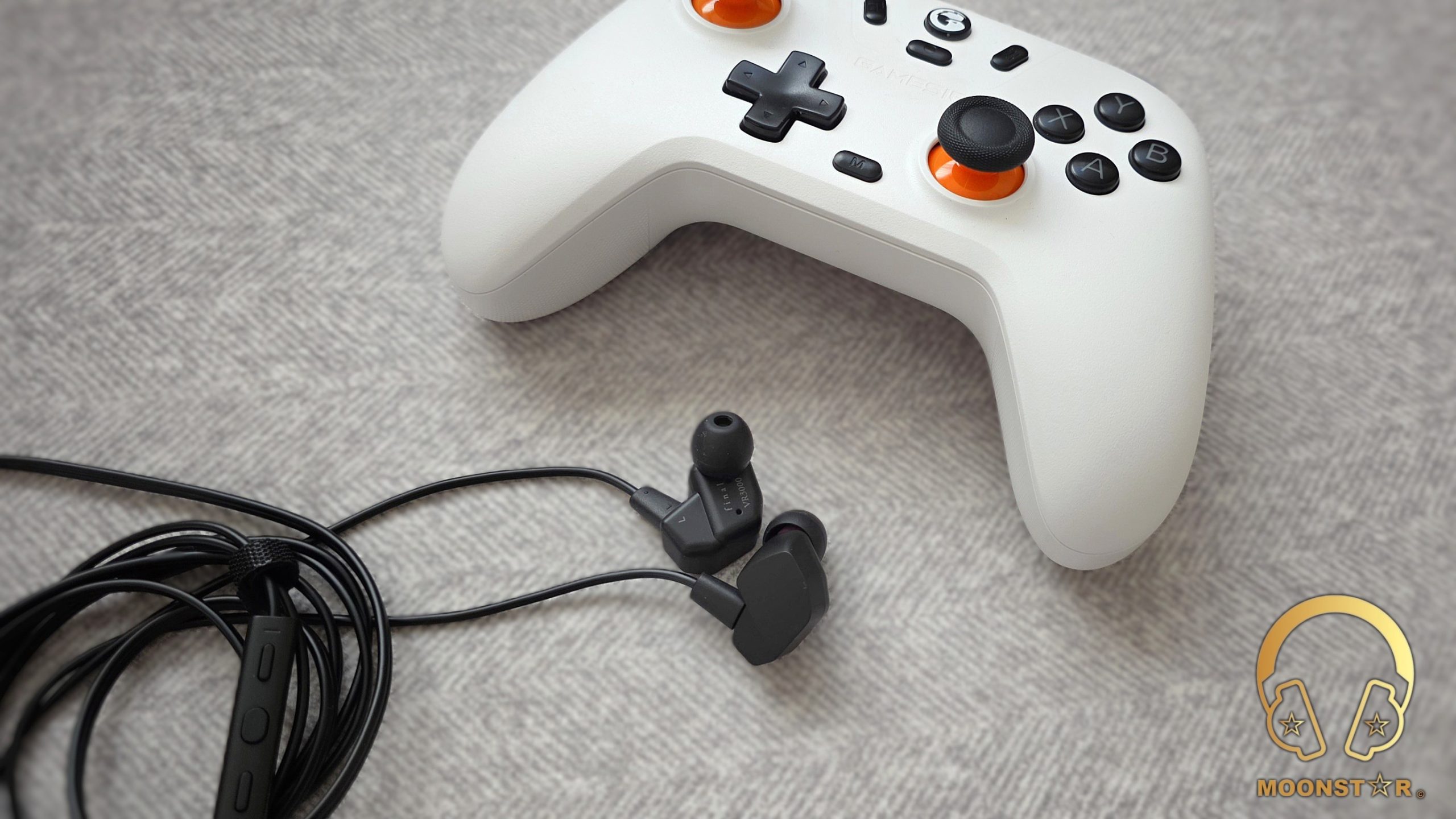
At 18 ohms and 101dB sensitivity, the VR3000 Recable is easy to drive from almost any source, including phone outputs and entry-level dongles, without requiring meaningful amplification headroom. There is little practical penalty for using it straight out of a laptop or console controller jack, which is consistent with its positioning as a grab-and-go gaming earphone rather than a source-dependent audiophile product.
Critical listening for this review used the FiiO M33 R2R, an Android-based digital audio player built around a discrete 24-bit R2R ladder DAC and a fully balanced amplification stage rated up to 1100mW per channel from its 4.4mm output. At the VR3000 Recable’s low impedance and reasonably high sensitivity, the M33 R2R operates well inside its comfort zone, which makes it a useful tool for isolating the earphone’s own character rather than any limitation introduced by the source. The MSI Vector GP68 HX’s onboard 3.5mm output, used for the gaming sessions described above, drove the VR3000 Recable to comfortable listening levels without strain, confirming that no dedicated amplification is necessary for everyday gaming use.
Gaming Performance and Spatial Audio:
Final builds the VR3000 line around binaural sound reproduction rather than an artificially boosted bass or treble response, with the stated goal of reproducing a game’s intended spatial cues rather than simply making certain sounds louder for effect. That distinction is the whole point of the gaming pitch: the VR3000 Recable is not trying to make footsteps unnaturally loud, it is trying to place them in a believable position around the listener.
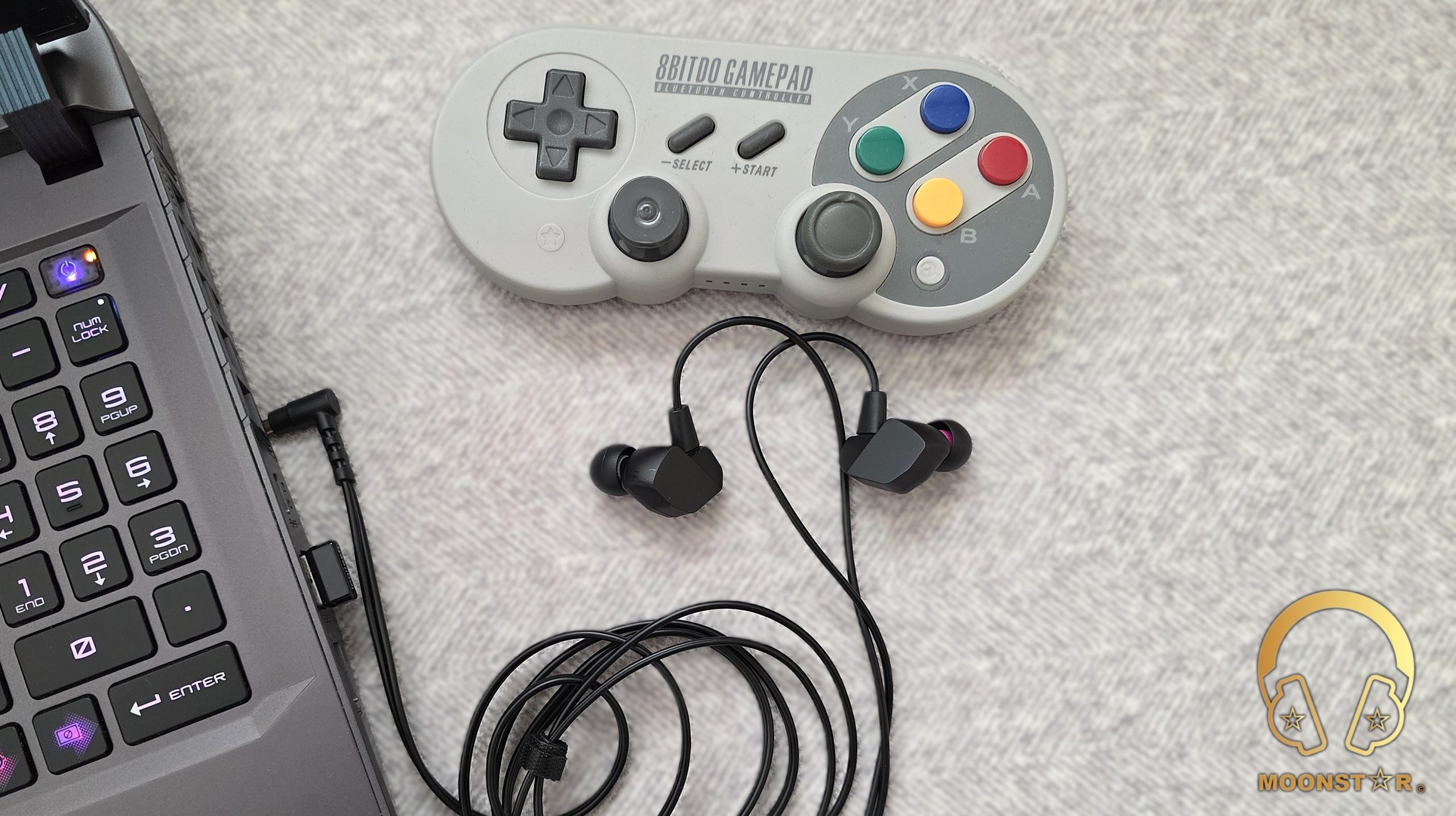
Testing for this section paired the VR3000 Recable directly with the MSI Vector GP68 HX over its 3.5mm jack, a gaming laptop built around an Intel Core i9 HX-series processor and an NVIDIA RTX 4080 laptop GPU, running through a series of first-person shooter sessions with the laptop’s Nahimic-driven audio output engaged. Horizontal positioning of footsteps and gunfire was consistently easy to read, with a clean separation between sounds approaching from the front and the rear. Vertical placement, relevant in titles built around multi-level environments, came through less precisely, which is a reasonable outcome for a single 6mm dynamic driver at this price rather than a shortcoming specific to this unit.
Because the connection is wired rather than wireless, there is no transmission latency to account for between an audio cue and the action on screen, an advantage that becomes more noticeable the more a game rewards fast reaction. The detachable cable supports the gaming use case in a less obvious way as well: the softer jacket means less noise is introduced into the ear canal when reaching for a mouse or shifting position mid-session, and the in-line controller makes it possible to trim chat volume against game audio without leaving a match to open a system mixer. Combined with the 20 gram weight and the stability the ear hooks provide, the fit held through multi-hour sessions without needing to be reseated.
Equipment Used for This Review:
- Sources : MSI Vector GP68 HX, FiiO M33 R2R
- IEM’s : FINAL VR3000 Recable, FINAL VR3000, SIMGOT EM6L
Albums & Tracks Used for this Review:
Vocal Jazz / Smooth Jazz
- Norah Jones – Come Away With Me (Flac 24bit/96kHz)
- Diana Krall – So Wonderful (DSF)
- Barry White – Just The Way You Are (Flac 24bit/48kHz)
- Isaac Hayes – Walk On By (Flac 16bit/44.1kHz)
- Sting – Englishman in New York (Flac 24bit/48kHz)
- Otto Liebert & Luna Negra – The River (Flac 24bit/192kHz)
- Ferit Odman – Look, Stop & Listen (Flac 24bit/192kHz)
- Charly Antolini – Duwadjuwandadu (Flac 24bit/192kHz)
Soul / R&B
- Aretha Franklin – I Say A Little Prayer (Flac 24bit/96kHz)
- Adele – My Little Love (Apple Lossless)
- George Michael – Don’t Let the Sun Go Down on Me (Flac 24bit/192kHz)
- Eric Clapton – Wonderful Tonight (Flac 24bit/96kHz)
Pop / Rock Classics
- Michael Jackson – Billie Jean (Flac 24bit/96kHz)
- Elton John – Rocket Man (Flac 24bit/96kHz)
- David Bowie – Heroes (Flac 24bit/192kHz)
- U2 – Sunday Bloody Sunday (Flac 16bit/44.1kHz)
- Lorde – Royals (Flac 24bit/48kHz)
- Dave Gahan – Kingdom (Apple Lossless)
Electronic / Experimental
- Daft Punk – Instant Crush (Flac 24bit/96kHz)
- Daft Punk – Doin’ it Right (Flac 24bit/96kHz)
- Bro Safari, UFO! – Drama (Apple Lossless)
- Armin Van Buuren – Vini Vici (Flac 16bit/44.1kHz)
- Yosi Horikawa – Bubbles (Apple Lossless)
- Toutant – Rebirth (Apple Lossless)
Alternative / Indie / Art Rock
- Radiohead – Live in Berlin “Album” (Apple Lossless)
- Radiohead – Pyramid Song (Apple Lossless)
- Muse – Hysteria (Flac 24bit/96kHz)
- Red Hot Chili Peppers – Nobody Weird Like Me (Flac 24bit/48kHz)
- Lunatic Soul – The Passage (Flac 16bit/44.1kHz)
- Portishead – It Could Be Sweet (Apple Lossless)
- Gogo Penguin – Raven (Flac 24bit/192kHz)
- Gogo Penguin – Murmuration (Flac 24bit/192kHz)
- Massive Attack – Angel (Flac 24bit/48kHz)
- Bear McCreary – Valkyries (Apple Lossless)
Classical / Orchestral
- Max Richter – On the Nature of Daylight (Flac 24bit/96kHz)
- Chopin – Nocturne No. 20 in C-Sharp Minor (Flac 16bit/44.1kHz)
- Clair de Lune – Claude Debussy (Apple Lossless)
- Tchaikovsky – Symphony No. 5 (Flac 16bit/44.1kHz)
- Vivaldi – Le Quattro Stagioni “The Four Seasons” (Apple Lossless)
- Fazıl Say – Nazım Oratoryosu (Live) (Flac 16bit/44.1kHz)
Jazz / Instrumental
- Miles Davis – So What (Apple Lossless)
World / Traditional
- Sertap Erener – Aşk (Flac 16bit/44.1kHz)
- Edith Piaf – Non Je Ne Regrette Rien (Flac 16bit/44.1kHz)
Metal / Progressive Rock
- Metallica – Dyers Eve (Flac 24bit/96kHz)
- Metallica – Sad but True (Flac 24bit/96kHz)
- Megadeth – Sweating Bullets (Apple Lossless)
- Opeth – Windowpane (Flac 16bit/44.1kHz)
- Deftones – My Own Summer (Shove It) (Flac 16bit/44.1kHz)
- Rush – Tom Sawyer (Flac 16bit/44.1kHz)
- Slayer – Angel of Death (Apple Lossless)
The Sound:
The VR3000 Recable’s tonal balance leans into a moderately V-shaped presentation, with a lift through the midbass, a midrange that sits a step behind the bass and treble rather than directly in front of them, and a treble region with genuine sparkle rather than a rolled-off safety net. It is not a tuning built for strict neutrality, and it is not trying to be: the goal stated by Final is spatial accuracy and game-cue clarity first, with general listening as a secondary use case the tuning still handles competently.
Bass / Midrange / Treble / Soundstage and Imaging:
The single 6mm dynamic driver carries the low end with a confident midbass lift that gives kick drums, explosions, and low-frequency game effects a sense of physical weight without letting that weight spill upward into the vocal range. Sub-bass extension is present but not the deepest in its class, which is typical for a driver this size, and decay is clean rather than smeared, so distinct low-frequency events stay identifiable rather than blurring into a single rumble during busy passages.
With the FiiO M33 R2R as source, the bass gains a touch of additional warmth and density from the R2R architecture’s inherent character, which suits bass-driven electronic and hip-hop material particularly well. Through the MSI Vector GP68 HX’s onboard output, the low end stays similarly punchy but slightly leaner, which works in its favor during gaming sessions where bass-heavy effects need to communicate impact without overstaying their welcome before the next cue arrives.
The midrange sits in a fairly neutral, mildly recessed position relative to the bass and treble on either side of it. Male vocals come through with reasonable body and stay clear of the midbass lift sitting just below them, communicating chest resonance without sounding thin. Female vocals are presented a touch further forward in comparison and remain free of harshness at normal listening levels, with upper-register passages staying composed rather than turning edgy. Neither register reaches for the kind of texture or warmth that a midrange-forward tuning would produce, and that is a deliberate trade-off rather than an oversight: the VR3000 Recable keeps the midrange clean and out of the way so that directional game cues, which often live in this same frequency band, stay legible against music and dialogue happening at the same time.
Treble is the most energetic part of the VR3000 Recable’s presentation, with a crisp, well-extended character that gives cymbals, gunfire, and high-frequency game effects a clear sense of air. Sibilance is not a constant issue, but sustained listening at higher volumes can expose some edge in the upper registers on already-bright recordings, which is worth keeping in mind for longer non-gaming listening sessions rather than for shorter competitive matches where the energy works in the earphone’s favor.
Soundstage width is above average for the price bracket, with a reasonably open sense of space rather than a boxed-in presentation. Imaging precision on the horizontal plane is the strongest part of the picture, which lines up directly with the gaming-first tuning intent described earlier: left-right placement of footsteps, gunfire, and ambient cues is consistently easy to track. Depth and vertical layering are present but noticeably less defined, which is the expected limit of a single dynamic driver design rather than a flaw unique to this model.
Comparisons:
FINAL VR3000 Recable vs. Original FINAL VR3000:
The comparison that matters most for this product is the one against its own predecessor, since the two share the same 6mm f-CORE DU driver and the same binaural tuning philosophy. Sonically, there is nothing to choose between them, and anyone buying the Recable expecting a sound upgrade over the original should adjust that expectation accordingly.
The difference is entirely structural. The original VR3000 uses a fixed cable that cannot be replaced once it wears out, which over a long ownership period is the single most common point of failure on a wired in-ear monitor. The Recable model resolves that with a 0.78mm 2-pin connector that accepts both Final’s own replacement cable and a wide range of third-party aftermarket options, alongside a touch-noise-reduced jacket on the included cable that the original did not offer. For a buyer choosing between the two at a similar price point, the Recable is the more sensible long-term purchase purely on the basis of repairability, with no sonic trade-off attached.
FINAL VR3000 Recable vs. SIMGOT EM6L:
The SIMGOT EM6L takes a different technical route to the same gaming and music dual-purpose goal, pairing a single dynamic driver with four balanced armature drivers and tuning the result toward the Harman 2019 target curve rather than the binaural-focused approach Final uses for the VR3000 line. On paper this gives the EM6L a more conventional, evenly weighted frequency response, with a richer midrange presence and a treble region that sits further back than the VR3000 Recable’s brighter upper end.
In practice, that makes the two earphones suited to slightly different priorities. The EM6L’s Harman-leaning tuning and additional driver count make it the more versatile all-round listen, particularly for genres where midrange texture and vocal warmth matter more than directional cue clarity. The VR3000 Recable’s brighter, midbass-forward V-shape and its single-minded binaural tuning keep it more narrowly focused on the gaming use case it was designed for, where left-right positional clarity takes priority over tonal neutrality. Buyers who split their listening evenly between music and gaming may find the EM6L the more comfortable all-day choice, while buyers using the earphone primarily for competitive titles are the audience the VR3000 Recable is actually built for.
Conclusion:
The VR3000 Recable does not change what the VR3000 line sounds like, and it was never supposed to. What it changes is the ownership experience: a cable that can now be swapped, repaired, or upgraded independently of the housings, attached to the same imaging-focused tuning that made the original VR3000 a fixture in budget gaming setups since 2021. For anyone who has previously worn out a fixed-cable in-ear monitor and had to replace the entire unit as a result, this revision addresses that specific frustration directly.
It remains, at its core, an imaging-first, moderately bright gaming earphone rather than a neutral all-rounder, and listeners should go in expecting that character rather than a music-first tuning. Anyone evaluating this specific model should also be clear about which VR3000 they are looking at: this is the cable-equipped Recable revision released in February 2026, distinct from the original fixed-cable VR3000, the +Condenser Mic variant built around a dedicated boom microphone, and the separate wireless VR3000 EX.
Pros & Cons:
- + Detachable 0.78mm 2-pin cable resolves the original VR3000’s biggest long-term weakness
- + Binaural tuning delivers genuinely useful horizontal imaging for footsteps and gunfire
- + Light 20 gram build with ear hooks holds its fit through long sessions
- + In-line controller and microphone allow quick volume and chat adjustments mid-match
- + Easy to drive from phones, dongles, and onboard laptop outputs alike
- + Wide 5-size eartip selection included at a budget price point
- – Vertical positioning is noticeably less precise than horizontal imaging
- – Treble can edge toward sharp on already-bright sources during longer sessions
- – Passive isolation is moderate rather than strong for noisy environments
- – Sound signature is unchanged from the original VR3000, so it offers no upgrade for existing owners beyond the cable
Thank you for the Read!