Fosi Audio DS3 Review
Fosi Audio DS3 Review
Introduction:
Fosi Audio has built its brand around a pragmatic proposition: deliver good engineering at honest prices, and resist the temptation to cut corners where corners are easy to cut. The DS3 is the product of that philosophy applied to a dongle DAC/amp that has genuine ambitions beyond its predecessor. It is the first dongle to integrate an XMOS Powered processor alongside the ESS ES9039Q2M DAC, a combination that delivers a dual-core 1.6 GHz USB processing engine capable of keeping the DAC operating at its genuine ceiling without the timing compromises that simpler USB bridges introduce. The result is a device that handles both serious audio playback and gaming-grade spatial audio processing from a single compact unit weighing just 16 grams.
What makes the DS3 unusual in the dongle category is its dual identity. It is genuinely a HiFi audio product with measured performance to match, and it is simultaneously a gaming peripheral with hardware-level 7.1 spatial audio and dedicated FPS sound enhancement. Most products that try to occupy both spaces end up compromised in one or both. The DS3 manages the balance through two distinct operating modes, UAC 1.0 for gaming compatibility without driver installation and UAC 2.0 for full high-resolution HiFi audio. Switching between them requires a physical button press rather than a menu navigation, which suits the dual-use identity well. An 8-band hardware-level parametric EQ accessible through a web-based control panel adds a further layer of customization without requiring a dedicated app installation. The DS3 is a device with a clear sense of who it is built for and how it intends to serve them.

Disclaimer:
I would like to thank Fosi Audio for providing the DS3 as a review sample. I am not affiliated with Fosi Audio beyond this review, and these words reflect my true and unaltered opinions about the product.
Price & Availability:
The Fosi Audio DS3 is priced at $99.99 USD. It is available through the official Fosi Audio website, Amazon, and authorized retailers worldwide. Two color options are offered: Galaxy and Obsidian.
- Fosi Audio DS3 USB-C DAC Amp Dongle
Package & Accessories:
The DS3 ships in Fosi Audio’s current standard retail packaging: a compact box with product imagery on the front and key specifications on the reverse. It is efficient and honest without attempting to compete with the unboxing theatre of audio brands that invest heavily in packaging as a proxy for product quality. The accessories are minimal but complete for the device’s intended use cases.
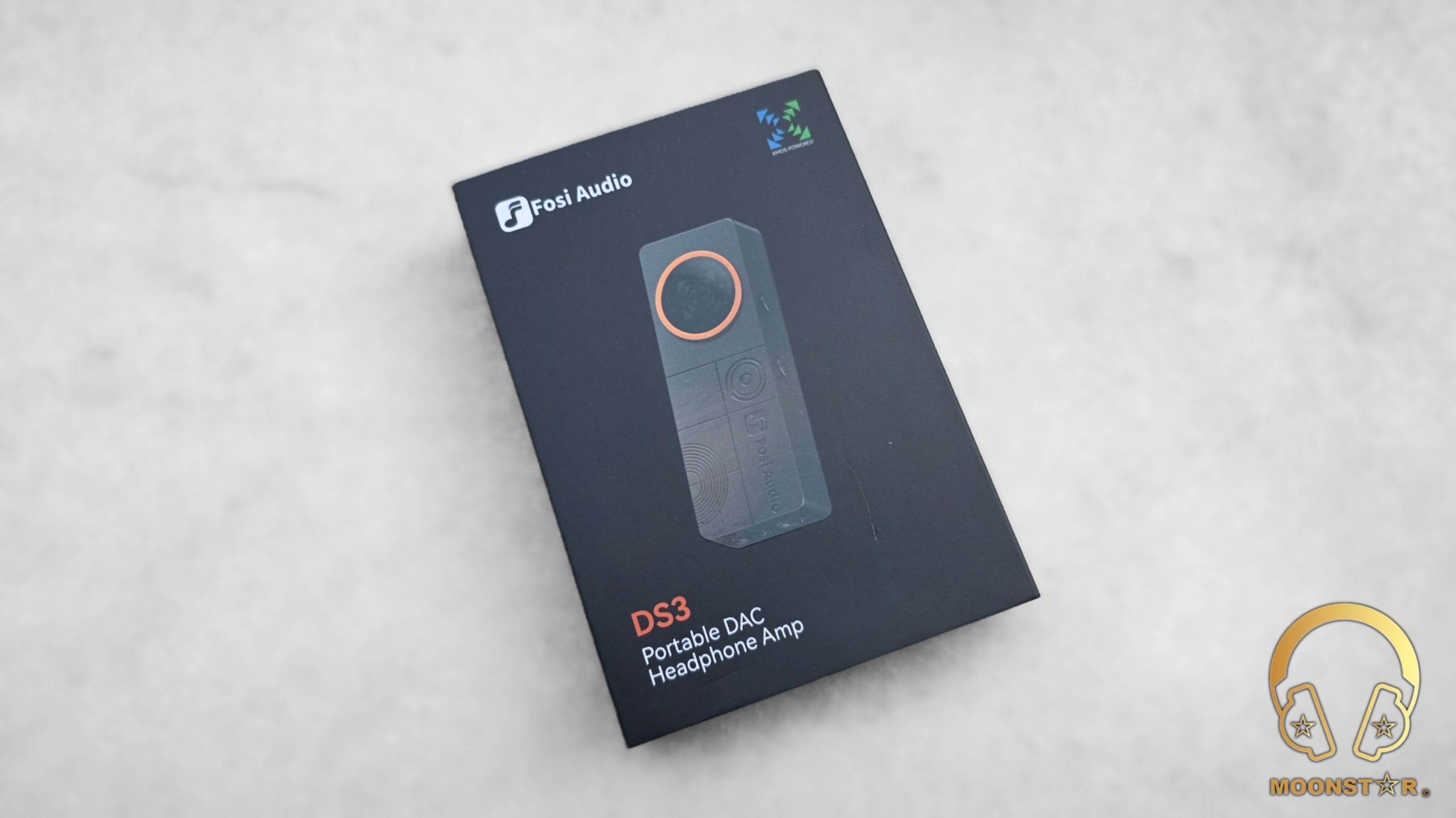

The full package includes:
- 1 x Fosi Audio DS3 USB-C DAC/AMP Dongle
- 1 x USB Type-C to USB Type-C Cable (OTG)
- 1 x USB Type-C to USB Type-A Adapter
- 1 x Quick Start Guide

The OTG cable handles connection to phones, tablets, Nintendo Switch, and PS5. The USB-A adapter covers desktop and laptop use, which is the context where the DS3’s gaming features are most relevant. There is no carrying case, no protective sleeve, and no cable clip, which is consistent with a 16-gram device that is small enough to remain attached to whatever it is connected to during use rather than being stored separately. The package is lean in a way that suits the product rather than in a way that feels like a shortcoming.

Design & Build Quality:
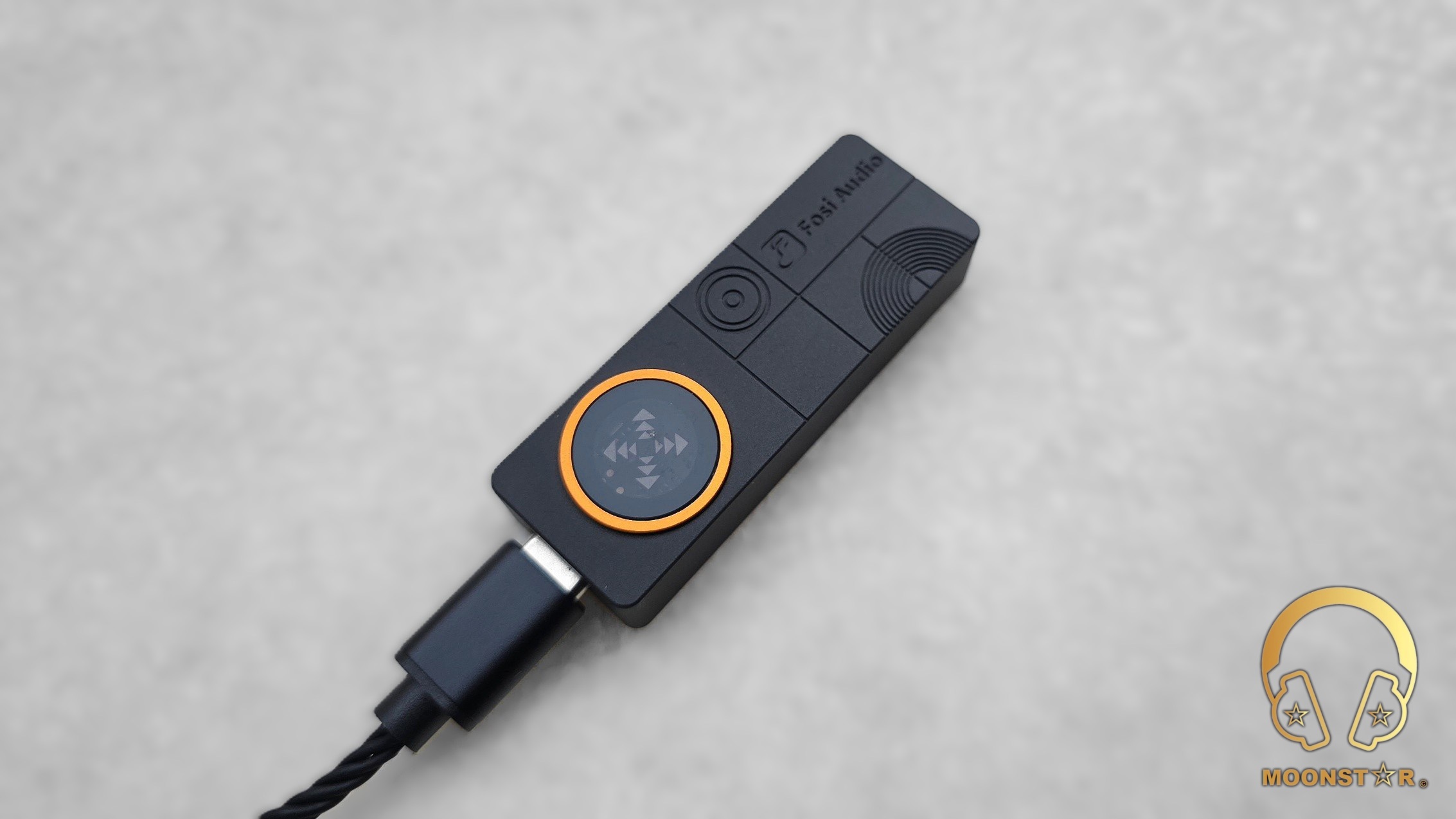
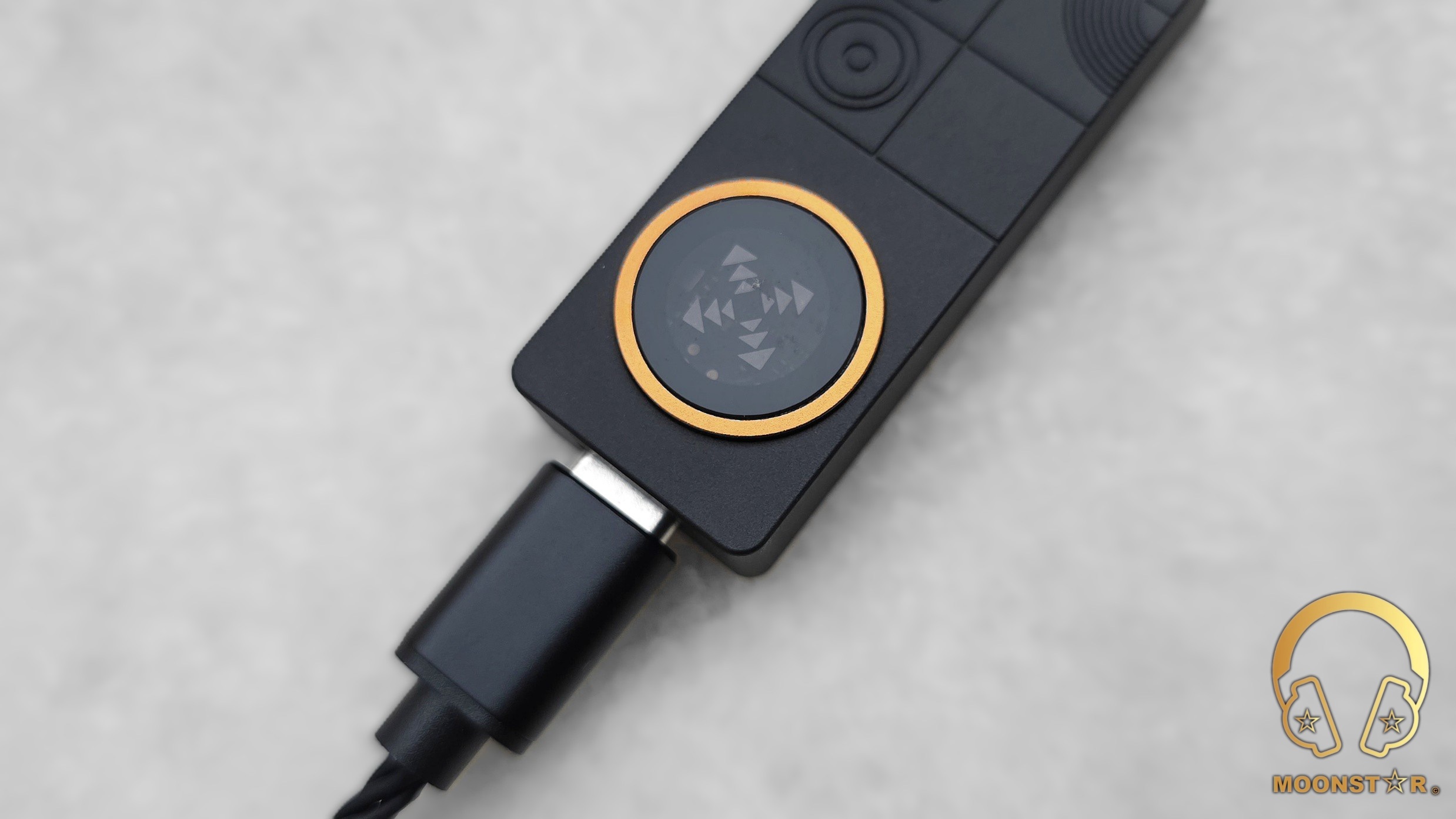
The DS3 is visually distinctive in a way that most dongle DACs are not, and that distinction comes from a deliberate and confident design decision: the skylight. A transparent window runs across the upper face of the CNC-milled aerospace aluminum chassis, allowing direct visibility of the internal PCB, the ES9039Q2M, and the XMOS chips within. The device measures 55x20x11mm and weighs 16 grams. Because the circuitry is genuinely worth showing, this tempered glass skylight panel combined with the CNC aluminum body achieves a quality of material finish that reads as premium for its weight class.

The transparent skylight panel dominates the top face of the DS3 and is the feature that most clearly separates it visually from every other dongle in its price bracket. The internal PCB is visible in organized, geometric detail, with the gold-on-green circuit traces and the silver component housings forming a coherent visual pattern rather than a random arrangement. In the Galaxy colorway, a deep dark blue PCB treatment gives the internals a space-themed character that suits the name. The Obsidian version uses a classic matte black treatment for a more understated appearance. The skylight glass sits flush with the aluminum frame around it, and the join between the two materials is precise with no visible gaps or misalignment. The LED indicator is positioned at one end of the top face and illuminates in different colors depending on the current sample rate and operating mode, providing an at-a-glance readout of the audio format currently being processed.

Both headphone outputs are positioned on the front edge of the DS3. The 3.5mm single-ended output occupies the left position and the 4.4mm balanced output sits to its right. The port surrounds are cleanly integrated into the aluminum edge, with a tight tolerance fit that communicates quality manufacturing. Standard 3.5mm and 4.4mm plugs engage and release cleanly without the looseness or excessive friction that budget port machining can produce. The distance between the two jacks is adequate for most plug profiles to be used simultaneously, though bulkier plug housings may come into contact depending on the specific cable.

The USB Type-C input occupies one end of the DS3’s rear edge. A subtle LED indicator adjacent to the input port communicates the device’s power and connection status.

On the same rear edge, two physical buttons provide mode switching and filter selection without requiring the web control panel: one button cycles between HiFi UAC 2.0 and Gaming UAC 1.0 modes with a press-and-hold, while short presses step through the eight digital filter options available in HiFi mode. This button placement keeps the control interface on the cable side of the device where the user’s hand naturally rests during use, which is more ergonomically considered than positioning controls on the face or opposite edge.

At 16 grams, the DS3 is light enough that it never burdens a cable or a phone connection with noticeable downward pull. The CNC aluminum alloy construction provides a surface hardness and edge definition that is visually and tactilely distinct from the molded plastic and thin-sheet metal housing that is common at this price tier. The device handles extended daily use without accumulating the surface marks and wear that softer materials develop. The transparent glass skylight shows no tendency toward loosening or adhesive failure in the review period. Both color options are well-executed, with consistent surface finish and no blemishes in the coating or machining on the review unit. The DS3 is a product that takes its physical presentation as seriously as its technical specification, and the two aspects are genuinely in alignment.

Technical Specifications:
- Model: DS3
- DAC Chip: ESS ES9039Q2M
- USB Processor: XMOS Powered Dual-Core 1.6GHz (world’s first battery-free dongle with XMOS Powered integration)
- Amplifier: 4 x ES9603Q (fully balanced configuration)
- PCM Decoding: Up to 32-bit/768kHz
- DSD Support: Native DSD512
- 3.5mm Single-Ended Output Power: 220mW at 32 Ohms
- 4.4mm Balanced Output Power: 220mW at 32 Ohms (shared maximum; see notes)
- SNR: 122dB or higher
- THD+N: below 0.0003%
- Supported Headphone Impedance: 16 to 300 Ohms
- Output Impedance: below 1 Ohm
- Digital Filters: 8 selectable (HiFi mode)
- PEQ: 8-band hardware-level parametric EQ via web-based control panel
- Operating Modes: HiFi (UAC 2.0) and Gaming (UAC 1.0)
- Gaming Features: Hardware 7.1 Spatial Audio, FPS Sound Enhancement (footstep, reload, gunfire localization)
- Platform Compatibility: PC (Windows/macOS, no driver required for UAC 1.0; UAC 2.0 driver-free on macOS, driver optional on Windows), Android, iOS, PS5, Nintendo Switch
- Input: USB Type-C
- Weight: 16g
- Dimension: 55x20x11mm
- Chassis: CNC-Milled Aerospace Aluminum with Tempered Glass Skylight
- Colors: Galaxy, Obsidian
Features & Connectivity:
The XMOS Powered processor at the heart of the DS3’s USB interface is not simply a premium USB bridge. It is a programmable, high-throughput processing engine that handles the complete signal chain from USB packet reception through to the DAC’s digital input with a level of clock precision and data integrity management that generic USB audio controllers cannot approach. The 1.6GHz dual-core architecture ensures that the ES9039Q2M DAC is fed a stable, jitter-minimized bitstream even when the source device is under CPU load, which is directly relevant for gaming use cases where the computer is simultaneously rendering graphics, processing game audio, and running system tasks. On the music playback side, the same precision delivers accurate DSD512 native decoding and 32-bit/768kHz PCM handling without the throughput limitations that have prevented cheaper dongles from genuinely utilizing the ES9039Q2M’s full capability.
The dual operating mode structure is one of the DS3’s most practically useful organizational decisions. UAC 1.0 (Gaming mode) limits audio to 24-bit/96kHz maximum but requires no driver installation on any supported platform, including PS5 and Nintendo Switch, which do not support third-party USB audio drivers. It also activates the hardware spatial audio and FPS enhancement features that are exclusive to this mode. UAC 2.0 (HiFi mode) unlocks the full 32-bit/768kHz and native DSD512 capability and removes the gaming processing. Switching between the two modes is a single long-press on the mode button with an LED color change confirming the transition. Volume memory is retained independently in each mode, which means the listener does not need to readjust the volume level when switching.

The 8-band hardware-level PEQ is accessed through a web browser rather than a dedicated app. Connecting to the DS3’s control panel URL displays a clean interface with per-band frequency, gain, and Q adjustment across all eight bands. Because the EQ is implemented at the hardware level within the XMOS processor rather than through software DSP in an app, the EQ curves are applied with no additional latency and no dependency on a running app. They are stored on the device itself and persist between connections and across different source devices. This architecture suits users who want to set their preferred curve once and then connect the DS3 to multiple devices over time without reconfiguring. The web panel also provides firmware update access and mode configuration options in a single unified interface.
The gaming features are worth addressing as a distinct category given how rarely audiophile dongles offer anything in this space. The 7.1 spatial audio converts multichannel game audio to headphone playback through Fosi’s in-house algorithm, redistributing the front-center, front-left, front-right, rear-left, rear-right, side-left, side-right, and LFE channels into a binaural presentation. The FPS mode applies frequency-specific processing to enhance the localization of directional audio cues, amplifying transient sounds associated with footsteps and reloading while keeping environmental audio at a normal level. These features are specifically for gaming contexts and have no application in music listening, where they remain disabled in HiFi mode. For users who genuinely split their listening time between music and competitive gaming, the DS3 removes the need for two separate devices to cover both contexts.
Equipment Used for This Review:
- DAC/AMP Dongles : Fosi Audio DS3, Hidizs S9 Pro Plus Martha, Cayin RU3
- IEMs : Hidizs MP145 Pro, ZiiGaat x Fresh Reviews Arete II

Albums & Tracks Used for this Review:
Vocal Jazz / Smooth Jazz
- Norah Jones – Come Away With Me (Flac 24bit/96kHz)
- Diana Krall – So Wonderful (DSF)
- Barry White – Just The Way You Are (Flac 24bit/48kHz)
- Isaac Hayes – Walk On By (Flac 16bit/44.1kHz)
- Sting – Englishman in New York (Flac 24bit/48kHz)
- Otto Liebert & Luna Negra – The River (Flac 24bit/192kHz)
- Ferit Odman – Look, Stop & Listen (Flac 24bit/192kHz)
- Charly Antolini – Duwadjuwandadu (Flac 24bit/192kHz)
Soul / R&B
- Aretha Franklin – I Say A Little Prayer (Flac 24bit/96kHz)
- Adele – My Little Love (Apple Lossless)
- George Michael – Don’t Let the Sun Go Down on Me (Flac 24bit/192kHz)
- Eric Clapton – Wonderful Tonight (Flac 24bit/96kHz)
Pop / Rock Classics
- Michael Jackson – Billie Jean (Flac 24bit/96kHz)
- Elton John – Rocket Man (Flac 24bit/96kHz)
- David Bowie – Heroes (Flac 24bit/192kHz)
- U2 – Sunday Bloody Sunday (Flac 16bit/44.1kHz)
- Lorde – Royals (Flac 24bit/48kHz)
- Dave Gahan – Kingdom (Apple Lossless)
Electronic / Experimental
- Daft Punk – Instant Crush (Flac 24bit/96kHz)
- Daft Punk – Doin’ it Right (Flac 24bit/96kHz)
- Bro Safari, UFO! – Drama (Apple Lossless)
- Armin Van Buuren – Vini Vici (Flac 16bit/44.1kHz)
- Yosi Horikawa – Bubbles (Apple Lossless)
- Toutant – Rebirth (Apple Lossless)
Alternative / Indie / Art Rock
- Radiohead – Live in Berlin “Album” (Apple Lossless)
- Radiohead – Pyramid Song (Apple Lossless)
- Muse – Hysteria (Flac 24bit/96kHz)
- Red Hot Chili Peppers – Nobody Weird Like Me (Flac 24bit/48kHz)
- Lunatic Soul – The Passage (Flac 16bit/44.1kHz)
- Portishead – It Could Be Sweet (Apple Lossless)
- Gogo Penguin – Raven (Flac 24bit/192kHz)
- Gogo Penguin – Murmuration (Flac 24bit/192kHz)
- Massive Attack – Angel (Flac 24bit/48kHz)
- Bear McCreary – Valkyries (Apple Lossless)
Classical / Orchestral
- Max Richter – On the Nature of Daylight (Flac 24bit/96kHz)
- Chopin – Nocturne No. 20 in C-Sharp Minor (Flac 16bit/44.1kHz)
- Clair de Lune – Claude Debussy (Apple Lossless)
- Tchaikovsky – Symphony No. 5 (Flac 16bit/44.1kHz)
- Vivaldi – Le Quattro Stagioni “The Four Seasons” (Apple Lossless)
- Fazıl Say – Nazım Oratoryosu (Live) (Flac 16bit/44.1kHz)
Jazz / Instrumental
- Miles Davis – So What (Apple Lossless)
World / Traditional
- Sertap Erener – Aşk (Flac 16bit/44.1kHz)
- Edith Piaf – Non Je Ne Regrette Rien (Flac 16bit/44.1kHz)
Metal / Progressive Rock
- Metallica – Dyers Eve (Flac 24bit/96kHz)
- Metallica – Sad but True (Flac 24bit/96kHz)
- Megadeth – Sweating Bullets (Apple Lossless)
- Opeth – Windowpane (Flac 16bit/44.1kHz)
- Deftones – My Own Summer (Shove It) (Flac 16bit/44.1kHz)
- Rush – Tom Sawyer (Flac 16bit/44.1kHz)
- Slayer – Angel of Death (Apple Lossless)

The Sound:
The DS3’s sonic character is clean, neutral, and transparent, with a very slight tendency toward analytical precision over tonal warmth. The ES9039Q2M chip, in its current implementation at the top of ESS’s 9039 series, has a precision and technical composure that is immediately apparent when comparing it against lower-tier ESS implementations: the noise floor is genuinely quiet, the channel separation is wide, and the rendering of fine detail has an unhurried, unstressed quality that suggests the DAC is operating well within its envelope rather than at the edge of its capability. The XMOS Powered processor’s contribution to timing stability is not directly audible as a single attribute, but its effect on the sense of precision and effortlessness across the frequency range is something that reveals itself cumulatively over extended listening sessions.
All sound impressions were formed in HiFi UAC 2.0 mode via the 4.4mm balanced output with the default digital filter, unless otherwise noted. The 8-band PEQ was left flat throughout to assess the device’s native character. Both the Hidizs MP145 Pro and the ZiiGaat x Fresh Reviews Arete II were used across all critical listening sessions, and direct comparisons against the Hidizs S9 Pro Plus Martha and the Cayin RU3 were conducted through matched volume levels

Bass:
Bass from the DS3 is linear, controlled, and extends with good authority into the sub-bass region. The presentation is not warm or bass-forward; it is a flat, honest rendering of low-frequency content that communicates what the recording contains without adding tonal body or bloom beyond it. Sub-bass extension reaches down into the lower registers with a sense of definition and structure that is more clearly articulated than the Hidizs S9 Pro Plus Martha achieves at its 180mW balanced output ceiling. Electronic music with layered deep bass content communicates the individual elements within the low-end mix with useful clarity, where each bass layer retains its own identity rather than merging into a generalized pressure.
Mid-bass has a tight, fast character that suits recordings where rhythmic precision and bass clarity are more important than physical warmth and density. Kick drums arrive with a defined attack and a clean, dry decay that accurately communicates the mechanical character of the instrument. Bass lines on acoustic double bass in jazz contexts carry appropriate pitch definition and string resonance, with the textural information within each note present and readable. The DS3 does not add the mid-bass warmth that makes bass-heavy or acoustically recorded material feel physically engaging in the way that warmer-tuned dongles produce, and listeners who prefer a fuller, more bodied low end may want to use the PEQ to add a modest lift in the 80 to 150Hz range. This is not a deficiency: it is the natural consequence of honest, low-coloration conversion at the DS3’s frequency point of the tuning spectrum.
With the Hidizs MP145 Pro, the DS3’s linear bass character aligns well with the planar driver’s own inherently fast and controlled low-end presentation. The combination produces a bass that is defined, extended, and precise without the warmth that some listeners might prefer from a planar IEM. With the Arete II, whose bass switch adds a meaningful sub-bass lift when engaged, the DS3 serves as a tonally neutral platform from which the Arete II’s own tuning switch does its work without additional coloration from the source. In both cases, the DS3 communicates the character of the transducer rather than contributing its own layer of tonal personality.
Midrange:
The midrange of the DS3 is where the ES9039Q2M’s technical refinement is most clearly audible and most relevant to the practical listening experience. It is transparent, detailed, and free of the upper-midrange grain or brightness that cheaper DAC implementations introduce in the 3 to 6kHz region. Voices, both female and male, are rendered with good tonal accuracy and a sense of presence that is forward enough to be engaging without being artificially elevated. The midrange does not add warmth or tonal richness beyond what the recording contains, which means that the quality of the DS3’s midrange is best evaluated in terms of what it does not add rather than what character it introduces.
Female vocals in the mezzo-soprano and soprano registers are reproduced with clean, natural presence and a good sense of breath and dynamic variation within phrases. Upper-midrange energy is present and defined without crossing into the sibilant or analytical hardness that some ESS chip implementations have been associated with in less careful designs. The XMOS processor’s timing precision contributes to the sense that transient events within vocal performances, the attack of consonants, the beginning and end of sustained notes, are rendered as distinct, correctly-timed events rather than slightly smeared or rounded approximations of them. This precision is not the same as brightness or forward energy; it is more accurately described as accuracy in the temporal domain, which gives voices a clear and present quality without sounding artificially emphasized.
Male vocals from bass-baritone through tenor receive the same honest treatment. Deep voices have their correct fundamental tonal character and the harmonic overtones that give them their individual quality, rendered without the lower-midrange thickening that warmer sources apply. Mid-baritone voices sit at a natural level in the mix with good intelligibility and definition. The DS3’s midrange does not flatter recordings that were mixed with a lean or slightly clinical character; it communicates them as they are. Equally, it does not flatter poorly recorded or compressed material. What it does consistently well is serve recordings that were made with care, where the DS3’s transparency allows the recording’s own tonal character to be heard without interference.
Acoustic instrumental midrange is reproduced with accuracy and good tonal definition. Acoustic guitar carries natural string resonance and body. Piano in classical and jazz contexts retains key weight and harmonic content with an evenhandedness across the keyboard range. Strings in orchestral settings sit in a realistic tonal register without the artificial warmth or the analytical hardness that represent the two failure modes of midrange DAC tuning. The MP145 Pro’s forward, analytically inclined midrange is communicated by the DS3 without additional emphasis, which keeps the combination honest and suits critical listening. The Arete II’s more balanced midrange character is expressed with similar transparency, with the Knowles BA midrange drivers communicating their tonal quality cleanly through the DS3’s signal path.

Treble:
Treble on the DS3 is extended, detailed, and controlled. The ES9039Q2M’s high-frequency performance is among its strongest technical characteristics, and in the DS3’s implementation this translates into a top end that reaches convincingly into the upper registers without the metallic edge or grain that can make some delta-sigma implementations tiring over extended listening. Cymbal transients arrive with defined, accurate leading edges and natural harmonic decay. The texture of metallic percussion instruments is communicated with a physical realism that allows the listener to identify different cymbal types and playing techniques by sound alone, without requiring artificially elevated treble energy to make these distinctions audible.
Upper-frequency string content in orchestral material is handled with a smooth, accurate character that avoids both the rolled-off softness of a deliberately dark treble tuning and the grating hardness of an overly analytical one. Violin passages in their upper registers carry the bowed texture and harmonic content that gives them their physical character, rendered with enough precision to be tonally convincing without introducing the edge that can make sustained string playing uncomfortable over the course of a full movement. The sense of air and space above 10kHz is present and contributes to the spatial openness of recordings with natural acoustic environments, complementing the DS3’s overall clean, spacious presentation.
The eight digital filters offer a genuine range of tonal variation in the treble region. The more aggressive filter options sharpen transient definition and increase the apparent energy at the very top of the frequency range, which suits listeners who prefer a brighter, more forward high-frequency character. The gentler options soften the treble slightly and produce a more relaxed upper-frequency presentation that suits warmer IEMs or sensitive listeners who find extended high-frequency exposure tiring. Sibilance is not a concern in the default filter with the pairings used in this review; the DS3 does not impose sibilance where the recording does not contain it, and the filter selection allows further management of this risk for particularly bright transducers or challenging recordings.

Soundstage and Imaging:
The DS3 presents a soundstage that is wide and well-organized, with a clean background that allows spatial information to emerge clearly. The XMOS processor’s timing accuracy contributes directly to imaging precision: instrument positions are stable and clearly defined, with lateral placement that is consistent and accurate across complex arrangements. The sense of depth in the soundfield is present and realistic, giving recordings with natural acoustic environments a convincing sense of front-to-back layering. With the MP145 Pro, the planar driver’s inherently wide soundstage is fully communicated by the DS3, and the precision of imaging is one of the combination’s most consistently impressive attributes. The Arete II’s soundstage, which has good lateral width and a moderate sense of depth, is equally well-served by the DS3’s clean, uncolored spatial presentation.
Comparisons:
Fosi Audio DS3 versus Hidizs S9 Pro Plus Martha:
The Hidizs S9 Pro Plus Martha is based on the ESS ES9038Q2M, a previous-generation flagship chip that preceded the ES9039Q2M in ESS’s lineup. It offers 180mW from the balanced 4.4mm output, six digital filters, physical volume buttons, and an RGB indicator light. It is a well-regarded dongle that represents genuine value at its price point, and its CNC aluminum construction and fourth-generation balanced circuit architecture reflect Hidizs’s engineering investment in the platform.
The sonic comparison between the two is informative about the gap between the ES9038Q2M and ES9039Q2M generations as implemented in these specific products. The S9 Pro Plus Martha has a smooth, clean character that is tonally honest and free of obvious coloration. Midrange is detailed and natural, female and male vocals are reproduced with good presence and tonal accuracy. Treble is extended and sibilance-free. These are genuine virtues, and for IEM-focused listeners whose transducers do not demand more than 180mW, the S9 Pro Plus Martha is a capable and reliable partner. The DS3’s ES9039Q2M brings a measurable improvement in noise floor and a more detailed rendering of fine high-frequency texture that is most audible through revealing transducers like the MP145 Pro’s planar driver. The XMOS Powered processor’s contribution to timing stability becomes audible in direct A/B comparison as a slight improvement in the sense of precision and effortlessness, particularly in complex arrangements where multiple transient events occur simultaneously. The DS3 also offers the 8-band hardware PEQ, the dual HiFi/Gaming mode structure, and the XMOS-based processing features that the S9 Pro Plus Martha does not provide. The Martha’s RGB indicator, physical volume buttons, and filter selection are arguably more immediately accessible for daily use than the DS3’s web-based control approach, which requires opening a browser to access EQ and filter settings beyond the basic on-device button shortcuts.

Fosi Audio DS3 versus Cayin RU3:
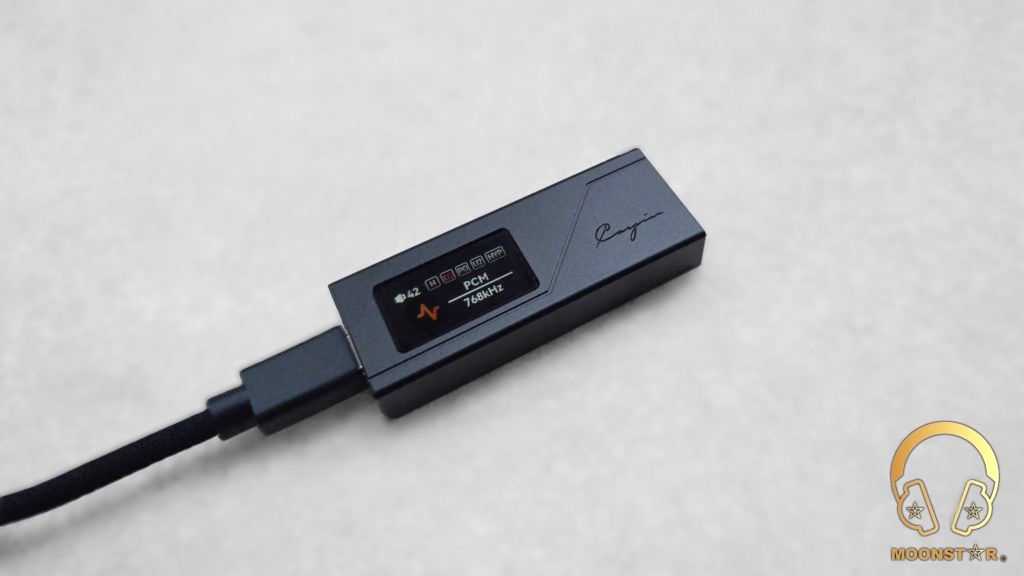
The Cayin RU3 at $99.99 is built around a single ESS ES9069Q configured in a quad-balanced topology, with Texas Instruments OPA1602 and SGM8262 chips handling conversion and amplification. It delivers 560mW from the balanced output in Hyper mode, a substantial headroom advantage over the DS3’s 220mW. It includes a color display, three physical buttons, two gain levels, five digital filters, and a 10-band parametric EQ via its companion app. It is a warmer, more tonally engaging device than the DS3, with a presentation that prioritizes musical involvement over analytical precision.
The comparison between the DS3 and the RU3 is more accurately a comparison of two different sound philosophies than a straightforward quality ranking. The RU3’s warmth and tonal density make it a more immediately enjoyable listen on first contact, particularly for vocal music and acoustic genres where the warmth adds a sense of physical presence. Sustained listening on the RU3 is comfortable and musical. The DS3’s transparency and precision are less immediately flattering but hold up better over extended sessions with varied material, where the absence of added coloration prevents any genre from feeling over-interpreted. For the MP145 Pro specifically, the DS3’s neutral output suits the planar driver’s analytical character more directly than the RU3’s warmth, which can push the combination past balanced toward heavy. For the Arete II, both pairings are satisfying but for different reasons: the RU3 adds warmth that enriches the Arete II’s midrange, while the DS3 lets the Arete II’s own character speak without interference. The RU3’s 560mW output advantage in Hyper mode is meaningful for headphone use beyond IEMs, a context where the DS3’s 220mW starts to be genuinely limiting. For listeners whose needs are strictly IEM-focused, the power advantage of the RU3 is less relevant. For dual-use scenarios involving both IEMs and full-size headphones, the RU3’s higher headroom is the more practical specification.
Conclusion:
The Fosi Audio DS3 is a product that earns its price through precision engineering and functional breadth rather than through tonal character and emotional engagement. The XMOS Powered and ES9039Q2M combination delivers a technically capable signal chain that measures well and sounds clean, with a noise floor and a precision that places the DS3 ahead of most dongles in and around its price tier. The hardware-level PEQ, the web-based control platform, and the dual HiFi/Gaming operating mode structure give it a range of functional flexibility that no competing device in this category currently replicates.
Whether that precision and breadth represents the right trade for a given listener depends on what they are seeking from a dongle. Those who want a tonally engaging, warm, and emotionally involving daily listening companion will find the DS3 honest to the point of being understated. Those who want a precise, customizable, multi-context tool that serves both audiophile music listening and gaming with equal competence will find in the DS3 one of the more thoughtfully designed products the dongle category has produced. Its dual identity is not a compromise; it is a coherent design statement, and it is executed with enough engineering competence to make both identities credible.

Pros & Cons:
- + Precise, extended bass and treble with stable, well-organized soundstage and imaging
- + Transparent, neutral character lets transducer personalities express themselves without source-level coloration
- + 8-band hardware-level parametric EQ stored on-device, accessible via web browser on any platform
- + ES9039Q2M delivers a clean, low-noise signal with below-0.0003% THD+N and 122dB SNR
- + Dual HiFi UAC 2.0 and Gaming UAC 1.0 modes with hardware 7.1 spatial audio and FPS processing
- + Single button press to switch between modes; volume memory retained independently per mode
- + 8 selectable digital filters in HiFi mode
- + CNC aerospace aluminum with tempered glass: durable and premium in hand for its 16-gram weight
- + PS5 and Nintendo Switch compatible without driver installation in Gaming mode
- + Below 1 Ohm output impedance preserves tonal accuracy with sensitive multi-driver IEMs
- – 220mW maximum output: sufficient for IEMs and sensitive headphones, limiting for high-impedance or low-sensitivity full-size headphones
- – No app: EQ access requires opening a web browser, which is less convenient than a dedicated companion app
- – Neutral, analytical character may feel understated to listeners accustomed to warm or tonally engaging sources
- – Web control panel requires a connected device to access; no standalone operation beyond saved presets
- – Gaming spatial audio features are exclusive to UAC 1.0 mode, which caps audio quality at 24-bit/96kHz
Thank you for the Read!