Hidizs MY LIN Special Edition Review

Hidizs MY LIN Special Edition Review
Introduction:
Hidizs has been steadily expanding its IEM lineup beyond its well-regarded planar magnetic offerings, and the MY LIN Special Edition represents one of its most deliberately personal releases to date. Built on the engineering foundation of the MS2 Pro, the MY LIN carries the same core hardware: a 10.2mm dual-magnetic circuit, dual-cavity dynamic driver paired with Hidizs’s custom Silvercore balanced armature, the same ZA12 zinc alloy shell architecture, and the same pneumatic tuning nozzle system. What Hidizs has changed is the tuning direction and the visual identity, both substantially.
The MY LIN is explicitly positioned as the more relaxed, more musical sibling of the MS2 Pro. Where the MS2 Pro leans into midrange clarity and analytical detail, the MY LIN is re-voiced for warmth, controlled bass, intimate vocals, and a smoother, more forgiving treble presentation that invites extended daily use without fatigue. The carbon fiber faceplate and the exclusive accessories, including an acrylic character standee and emoji stickers, complete a release that is aimed at listeners who want a genuinely enjoyable everyday IEM at an accessible price rather than a technically aggressive one. Priced at $89 USD, the MY LIN makes a straightforward value proposition: hybrid driver performance, meaningful tuning flexibility via interchangeable nozzles, and a comfortable, warm character at a price that invites use rather than careful handling.

Disclaimer:
I would like to thank Hidizs for providing the MY LIN Special Edition as a review sample. I am not affiliated with Hidizs beyond this review, and these words reflect my true and unaltered opinions about the product.
Price & Availability:
The Hidizs MY LIN Special Edition is priced at $89 USD. It is available through the official Hidizs website and authorized dealers worldwide.
Package & Accessories:
The MY LIN arrives in a compact, cleanly designed box with the character illustration of Lin (Ruo Xue Lin) printed on the outer face alongside the product name and key specifications. The presentation is casual and friendly rather than premium-austere, which suits the product’s identity well. Inside, the IEMs are nestled in a shaped cardboard tray with the accessories arranged around them. One immediate observation is that the MY LIN does not include a hard carrying case, instead relying on the soft protective pouch that Hidizs uses across several of its lower-priced releases. For an IEM with a metal shell this is a practical limitation, though the pouch is functional and the MY LIN’s compact size makes it easier to protect in daily carry than a larger IEM would be.

The full package includes:
- 1 pair x Hidizs MY LIN Special Edition In-Ear Monitors (with Charm Red nozzle installed)
- 1 x Detachable Earphone Cable with either 3.5mm Single-Ended or 4.4mm Balanced Termination (as chosen at purchase)
- 3 pairs x Pneumatic Sound Tuning Filters: Charm Red (Balanced), Midnight Black (Low Frequency), Crystal Clear (High Frequency)
- 3 pairs x Ergonomic Silicone Ear Tips, Black (Balanced) (S, M, L)
- 3 pairs x Ergonomic Silicone Ear Tips, White (High Frequency) (S, M, L)
- 1 x Hidizs Protective Pouch
- 1 x MY LIN Exclusive Emoji Sticker Sheet
- 1 x MY LIN Special Edition Acrylic Standee (Lin character)
- 1 x MY LIN Microfiber Cloth
- 1 x User Manual and Warranty Card

The three interchangeable tuning nozzles are a genuinely meaningful inclusion at this price point, each producing a distinct and audible change in tonal balance rather than a cosmetic variation. The two ear tip types, Black Balanced and White High Frequency, add another layer of sound customization without requiring any additional purchase. The MY LIN Exclusive accessories, including the acrylic character standee and the emoji sticker sheet, reflect the product’s identity as something more than a purely functional audio tool.

These will resonate differently depending on the listener’s inclinations, but they add personality to the package without displacing anything practically useful. The cable is well-made for the price, though the choice between 3.5mm and 4.4mm must be made at the time of purchase since no modular system is included here. The microfiber cloth is a useful addition for maintaining the carbon fiber faceplate’s appearance. The soft pouch, as noted, is the one area where the package shows its price tier most clearly.


Design & Build Quality:
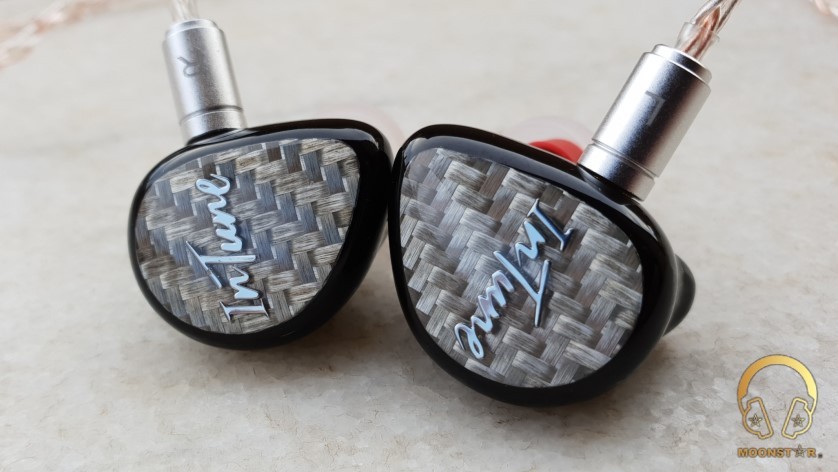
The MY LIN is a compact, well built IEM that carries a noticeably different visual identity from the MS2 Pro despite sharing the same fundamental shell architecture. The ZA12 zinc alloy construction gives both IEMs their structural density and acoustic stability, but the MY LIN replaces the mirror finish leather panel design with a carbon fiber faceplate and a cleaner exterior. The result is an IEM that looks genuinely contemporary and restrained for its price. At approximately 8 to 9 grams per earpiece, the shell carries a satisfying density without becoming heavy during wear. The ergonomic contour helps it settle into position without requiring repeated repositioning.

The carbon fiber faceplate is the MY LIN’s most visually distinctive feature. The weave pattern is rendered with consistent clarity across both earpieces, featuring a subtle gloss coat that polished appearance under light without being excessively reflective. A small Hidizs logo is positioned cleanly at the lower rear of each faceplate in a low contrast treatment. Beyond aesthetics, the carbon fiber material is marginally lighter than a comparable metal panel while maintaining structural rigidity and resisting scratches from daily use.

The main body of the shell is formed from ZA12 zinc alloy through an integrated molding process. Unlike the mirror polish of previous models, the MY LIN carries a subtler metallic surface that resists fingerprints more effectively. The shell shape follows a biomimetic ergonomic geometry with a contoured inner face designed to conform naturally to the ear. A pneumatic pressure relief vent is integrated into the shell body, helping to equalize ear canal pressure and contributing to comfort during long listening sessions.

The nozzle of the MY LIN uses specialized acoustic technology where interchangeable nozzles shape the frequency response through controlled airflow damping. This system features three included nozzles that produce genuinely distinguishable differences in tonal balance, essentially providing three distinct listening configurations. The Charm Red nozzle serves as the balanced default configuration used for the primary impressions in this review. In contrast, the Midnight Black option deepens the bass response and softens upper frequencies to add weight and warmth, while the Crystal Clear nozzle increases upper frequency presence and air for a more open top end character. The nozzle swap mechanism is straightforward as the components unscrew from the body with a half turn and reattach securely without the risk of cross threading.

The cable connector uses a standard 0.78mm 2 pin socket positioned on the upper rear face of each shell. The connector is flush mounted, which ensures broad compatibility with standard aftermarket cables. The connection between the stock cable and each shell is firm and free of play, with no audible microphonic transmission during movement. L and R channel identification is marked on both the shells and the cable connectors, and the over ear preformed hook of the stock cable holds its position reliably during extended wear.

Cable
The stock cable supplied with the MY LIN is a silver-plated high-purity OFC construction, consistent with the cables Hidizs supplies across several of its current IEM lineup. The cable is available in either 3.5mm single-ended or 4.4mm balanced termination at the time of purchase, and since no modular termination system is included, this choice is a permanent one for listeners who wish to use the stock cable rather than purchasing an aftermarket alternative.

The cable handling is good for the price: it is supple and lightweight, drapes naturally from the ear without pulling, and generates minimal microphonic noise from cable movement against clothing. The hardware at the Y-splitter, chin slider, and plug housing is finished in a brushed metal treatment. The over-ear hook section has a moderate memory retention that holds its shape during use without becoming stiff. One practical note is that the cable is noticeably thinner than what accompanies higher-priced IEMs, which is a normal characteristic at this price tier rather than an indication of compromised durability.
Fit, Comfort & Isolation:
The MY LIN is one of the more comfortable IEMs to live with across extended daily use, and this is partly a consequence of its compact shell geometry and partly a result of the pneumatic pressure relief vent that prevents the ear canal pressure buildup that makes some sealed IEMs uncomfortable after thirty minutes or so.
The shell sits naturally in the concha without the outer body pressing aggressively against the ear, and the weight, distributed evenly between the compact metal shell and the lightweight cable, produces no perceptible downward pull during typical activity. For listeners with average or smaller ears, the MY LIN is a considerably easier fit than the larger IEMs that dominate the mid-tier hybrid market.
Ear tip selection has a meaningful effect on both comfort and sound character. The Black Balanced tips are the more acoustically neutral of the two included types and produce a deeper, more secure insertion for most ear shapes. The White High Frequency tips have a slightly wider bore and shallower profile that reduces insertion depth and brings the high-frequency filter nozzle’s effect into more prominence.
Rolling through the provided sizes is worthwhile before committing to a configuration, as the MY LIN’s nozzle diameter and length are well-suited to standard silicone tip sizing. Passive isolation is good once a proper seal is achieved. The zinc alloy shell and a well-fitted ear tip together provide useful attenuation of typical ambient noise, making the MY LIN practical for commuting, office use, and moderate-noise environments. Those who require very high isolation for air travel or louder work environments may find the attenuation adequate but not exceptional.
Technical Specifications:
- Model: MY LIN Special Edition
- Driver Configuration: 1 Dynamic Driver + 1 Balanced Armature (1DD + 1BA Hybrid)
- Dynamic Driver: 10.2mm Dual-Magnetic Circuit, Dual-Cavity, Aerospace-Grade PU+PEEK Composite Diaphragm with Nano-Scale DLC Coating, N52-Grade Internal and External Dual-Magnetic Circuits
- Balanced Armature: Custom Hidizs Silvercore BA Driver (High-Frequency)
- Tuning System: Hidizs Pneumatic Sound Tube Technology, 3 Interchangeable Nozzles: Charm Red (Balanced), Midnight Black (Low Frequency), Crystal Clear (High Frequency)
- Frequency Response: 20Hz to 40kHz
- Impedance: 17 Ohms
- Sensitivity: 111 dB/Vrms at 1kHz
- Dynamic Range: 109 dB
- Shell Material: ZA12 Zinc Alloy Integrated Molding
- Faceplate: Carbon Fiber
- Connector: Standard 0.78mm 2-Pin (Flush Mount, Upper Rear Face)
- Cable: High-Purity Silver-Plated OFC, approx. 1.2m
- Termination: 3.5mm Single-Ended or 4.4mm Balanced (selected at purchase, non-modular)
- Passive Isolation: Up to 20dB
- Target Curve: H-2019 (MY LIN Warm-Balanced Tuning)
Drivability & Pairing:
At 17 ohms impedance and 111dB sensitivity, the MY LIN is exceptionally easy to drive and delivers its full performance from virtually any source, including smartphones, tablet headphone outputs, and basic dongle DACs. There is no background hiss with any of the sources used in this review, and the volume required for comfortable listening levels is well within the usable range of most outputs. The low impedance does mean the MY LIN is mildly susceptible to output impedance mismatch with sources whose output impedance exceeds approximately 1.5 ohms, which can cause a subtle shift in the bass response due to the electrical interaction between the source and the hybrid driver combination. This is rarely an issue with modern DAPs and dongles but is worth noting for those using older portable equipment.
The primary sources used for this review were the Hidizs AP80 Pro MAX and the iFi Go Blu Air. The AP80 Pro MAX, a compact Android-based DAP from the same brand, delivered a clean, slightly warm character that paired comfortably with the MY LIN’s own warm-balanced tuning. The combination produces a sound that is cohesive and musical, with the DAP’s measured character allowing the MY LIN’s tonal personality to express itself without additional emphasis in any particular region.
The iFi Go Blu Air, a compact Bluetooth DAC/amplifier, was used for portable wireless listening sessions. Its clean, neutral output and MQA decoding capability made it a useful reference for evaluating the MY LIN’s wireless performance, and the combination produced a consistently enjoyable result that demonstrated the MY LIN’s compatibility with a wide range of portable sources. Both pairings confirmed that the MY LIN is a straightforward and forgiving match for well-implemented portable sources, with no tendency to expose noise or grain from upstream equipment.

Equipment Used for This Review:
- IEMs: Hidizs MY LIN Special Edition, Hidizs MS2 Pro, Twistura Woodnote, KEFINE Quatio
- DAPs/DACs: Hidizs AP80 Pro MAX, iFi Go Blu Air
Albums & Tracks Used for this Review:
Vocal Jazz / Smooth Jazz
- Norah Jones – Come Away With Me (Flac 24bit/96kHz)
- Diana Krall – So Wonderful (DSF)
- Barry White – Just The Way You Are (Flac 24bit/48kHz)
- Isaac Hayes – Walk On By (Flac 16bit/44.1kHz)
- Sting – Englishman in New York (Flac 24bit/48kHz)
- Otto Liebert & Luna Negra – The River (Flac 24bit/192kHz)
- Ferit Odman – Look, Stop & Listen (Flac 24bit/192kHz)
- Charly Antolini – Duwadjuwandadu (Flac 24bit/192kHz)
Soul / R&B
- Aretha Franklin – I Say A Little Prayer (Flac 24bit/96kHz)
- Adele – My Little Love (Apple Lossless)
- George Michael – Don’t Let the Sun Go Down on Me (Flac 24bit/192kHz)
- Eric Clapton – Wonderful Tonight (Flac 24bit/96kHz)
Pop / Rock Classics
- Michael Jackson – Billie Jean (Flac 24bit/96kHz)
- Elton John – Rocket Man (Flac 24bit/96kHz)
- David Bowie – Heroes (Flac 24bit/192kHz)
- U2 – Sunday Bloody Sunday (Flac 16bit/44.1kHz)
- Lorde – Royals (Flac 24bit/48kHz)
- Dave Gahan – Kingdom (Apple Lossless)
Electronic / Experimental
- Daft Punk – Instant Crush (Flac 24bit/96kHz)
- Daft Punk – Doin’ it Right (Flac 24bit/96kHz)
- Bro Safari, UFO! – Drama (Apple Lossless)
- Armin Van Buuren – Vini Vici (Flac 16bit/44.1kHz)
- Yosi Horikawa – Bubbles (Apple Lossless)
- Toutant – Rebirth (Apple Lossless)
Alternative / Indie / Art Rock
- Radiohead – Live in Berlin “Album” (Apple Lossless)
- Radiohead – Pyramid Song (Apple Lossless)
- Muse – Hysteria (Flac 24bit/96kHz)
- Red Hot Chili Peppers – Nobody Weird Like Me (Flac 24bit/48kHz)
- Lunatic Soul – The Passage (Flac 16bit/44.1kHz)
- Portishead – It Could Be Sweet (Apple Lossless)
- Gogo Penguin – Raven (Flac 24bit/192kHz)
- Gogo Penguin – Murmuration (Flac 24bit/192kHz)
- Massive Attack – Angel (Flac 24bit/48kHz)
- Bear McCreary – Valkyries (Apple Lossless)
Classical / Orchestral
- Max Richter – On the Nature of Daylight (Flac 24bit/96kHz)
- Chopin – Nocturne No. 20 in C-Sharp Minor (Flac 16bit/44.1kHz)
- Clair de Lune – Claude Debussy (Apple Lossless)
- Tchaikovsky – Symphony No. 5 (Flac 16bit/44.1kHz)
- Vivaldi – Le Quattro Stagioni “The Four Seasons” (Apple Lossless)
- Fazıl Say – Nazım Oratoryosu (Live) (Flac 16bit/44.1kHz)
Jazz / Instrumental
- Miles Davis – So What (Apple Lossless)
World / Traditional
- Sertap Erener – Aşk (Flac 16bit/44.1kHz)
- Edith Piaf – Non Je Ne Regrette Rien (Flac 16bit/44.1kHz)
Metal / Progressive Rock
- Metallica – Dyers Eve (Flac 24bit/96kHz)
- Metallica – Sad but True (Flac 24bit/96kHz)
- Megadeth – Sweating Bullets (Apple Lossless)
- Opeth – Windowpane (Flac 16bit/44.1kHz)
- Deftones – My Own Summer (Shove It) (Flac 16bit/44.1kHz)
- Rush – Tom Sawyer (Flac 16bit/44.1kHz)
- Slayer – Angel of Death (Apple Lossless)

The Sound:
The interchangeable nozzles allow for significant tonal adjustments: Charm Red provides a balanced and versatile default profile, Midnight Black deepens the bass response while softening upper frequencies for added warmth, and Crystal Clear increases upper frequency presence to enhance air and top end transparency.
The MY LIN’s overall character is warm balanced, featuring a notably elevated bass presence relative to a neutral target and a forward, intimate vocal range. The treble presentation prioritizes smoothness and long session comfort over sparkle and extension. This is not a reference oriented IEM; instead, it is tuned for the pleasure of daily listening, rewarding extended wear and genres where warmth and emotional engagement matter more than clinical accuracy.
Sound impressions were formed after approximately 50 hours of burn in, using the stock cable with 4.4mm balanced termination and the Charm Red nozzle as the primary balanced configuration. The Hidizs AP80 Pro MAX served as the primary source, while additional sessions used the iFi Go Blu Air along with the Midnight Black and Crystal Clear nozzle configurations for comparative evaluation.

Bass:
The bass is the first and most defining characteristic of the MY LIN’s sound signature. Hidizs has made a deliberate and audible choice to give the low end more body and weight than the H-2019 target alone would dictate. The 10.2mm dynamic driver, featuring a dual-magnetic circuit and dual-cavity structure, is well equipped for this task. The resulting low end is full, present, and physically engaging without losing control, maintaining a clear distinction between sub-bass extension and mid-bass punch.
Sub-bass extension is solid, reaching into the lower registers with a sense of pressure and physical resonance. In electronic music and cinematic soundtracks, the sustained low-frequency foundation carries genuine weight and atmospheric density. Synthesized bass layers communicate their intended impact and depth without blurring the boundaries between distinct elements. Even in complex compositions where low-frequency texture is central, the MY LIN renders sub-bass content with enough differentiation to track individual elements within a dense arrangement.
Mid-bass carries the most prominent emphasis of the MY LIN’s character. Kick drums land with a rounded, slightly warm impact that prioritizes fullness over surgical precision. Bass guitars exhibit a body and bloom that makes them feel physically present within the mix. In vocal forward or acoustic contexts, the bass lines have an enveloping, room-filling quality that adds a sense of weight and ease to the recordings. On more rhythmically demanding material, the mid-bass holds together well, though the leading edge of hits carries a slightly rounder attack than a tighter-tuned hybrid would produce. This consistent property of the warm character rewards listeners who find clinical, fast-decaying presentations less satisfying.

Midrange:
The midrange of the MY LIN is its most emotionally engaging quality and a primary reason the tuning succeeds for daily listening. The Silvercore balanced armature contributes the clarity and speed necessary to render vocal detail with definition, while the warm bass foundation and the H-2019 inspired curve ensure the midrange feels inviting and natural. Voices are rendered with a sense of closeness and warmth that gives them presence without pushing them too far forward at the expense of other elements.
Female vocals are a particular strength. High-frequency female performances carry a warm, intimate quality and a genuine naturalness. The balanced armature effectively tracks fine dynamic movements within a sustained vocal phrase, bringing through the breath and vibrato of female singers with clarity and weight. Even in recordings with strong upper midrange character, the projecting vocal style is handled with appropriate projection without tipping into harshness or thinness.
Male vocals benefit equally from the warm lower-midrange character. Deep male baritones exhibit the tonal depth and physical body required by the arrangements, sitting at a natural prominence without the low-mid muddiness that can occur when bass emphasis extends too far upward. The relaxed, warmly produced character of soul influenced tracks is delivered with a tonal honesty that suits the material, while modern male vocal productions retain their precision and clarity.
Instrumental midrange reproduction reflects the balanced armature’s contribution clearly. Acoustic guitars carry natural body and string resonance with a warmth that complements the recording. Piano reproduction shows appropriate tonal depth and key weight, allowing the harmonic content of each note space to develop naturally. The MY LIN does not pursue an analytical transparency that reveals the furthest edges of detail; instead, it prioritizes a presentation that sounds true to the character of the recordings rather than forensically precise.

Treble:
The treble of the MY LIN is tuned for smoothness, long-session comfort, and freedom from fatigue. The Silvercore balanced armature extends the high-frequency range with sufficient energy to keep the presentation from sounding closed or dark, yet the tuning deliberately avoids the upper-treble emphasis that often attracts immediate attention. The result is a treble that feels composed and settled, contributing to the spatial character of recordings and communicating the essential texture of cymbals and strings without asserting itself unnecessarily.
Cymbal reproduction is clean and controlled. Ride cymbal and hi-hat patterns arrive with natural metallic texture and appropriate shimmer in the decay, lacking the sharp leading edge that can cause fatigue on brighter IEMs. In jazz and acoustic recordings, the percussion sits at a comfortable level in the mix, remaining audible and defined without dominating the lower or midrange elements. Even in busier electronic arrangements, hi-hat patterns retain their rhythmic articulation and textural identity.
Extension into the upper air frequencies above 10kHz is present but modest. Upper strings in orchestral material are communicated with a natural, slightly rounded character that avoids any sense of grating or stridency, making these recordings comfortable for extended sessions. While the default configuration does not seek to maximize sparkle, the top end remains supportive of the overall coherence. Sibilance is not a concern with the MY LIN; across recordings with known potential for harshness, no uncomfortable instances emerged. This attribute makes it a reliable daily companion for those who find brighter IEMs cause ear fatigue during long commutes or work sessions.
Soundstage and Imaging:
The soundstage is moderately wide and has a comfortable, cohesive sense of space. The presentation communicates the spatial character of recordings with natural proportions that keep the sound from feeling congested. Jazz ensembles occupy a believable physical space with clear separation between instruments. Live recordings communicate the ambient scale of the venue with a sense of appropriate acoustic distance.
Imaging precision is adequate for this price tier. Instrument positions are stable and clear, though the warm bass emphasis and smooth treble reduce the analytical sharpness of positional cues compared to more neutrally tuned competitors. The background is clean and well controlled, with no audible noise floor from the sources used. Instrument separation remains good, allowing individual voices and instruments in complex arrangements to remain identifiable.
Comparisons:
Hidizs MY LIN vs. Hidizs MS2 Pro:
The MS2 Pro shares the MY LIN’s core hardware, the same 10.2mm dynamic driver, the same Silvercore balanced armature, the same shell, and the same nozzle system. The meaningful differences between the two products lie entirely in the tuning, the faceplate design, and the accessory package. The MS2 Pro is tuned for clarity, analytical detail, and midrange energy, placing it in a different category of listening experience despite their shared foundations.
In the bass region, the MY LIN is noticeably fuller and warmer, with more mid-bass body and a greater sense of physical weight in the low end. The MS2 Pro’s bass is more controlled and linear, with a faster attack and less residual warmth that gives it more precision but less sense of physical engagement on bass-heavy material. For listeners who value bass body and emotional involvement over tonal neutrality, the MY LIN is the stronger choice. For those who prefer a more accurate, controlled low end that stays out of the way of the midrange, the MS2 Pro makes the better case.
The midrange difference is equally clear. The MS2 Pro’s midrange is more forward and analytically transparent, with greater upper-midrange energy that brings instrumental detail and vocal presence into sharper focus. The MY LIN’s midrange is warmer and more relaxed, with a sense of intimacy and tonal richness that feels more forgiving of imperfect recordings and more engaging for long-session listening. Treble follows the same pattern: the MS2 Pro extends with more energy and presence, while the MY LIN is smoother and less prone to fatigue. Physically, the MY LIN’s carbon fiber faceplate replaces the MS2 Pro’s rhino-leather mirror panel design, and the MY LIN’s exclusive accessories add a distinctive character to the package. At the same or similar price, the choice between the two depends entirely on the listener’s preference for analytical clarity versus warm musical engagement.

Hidizs MY LIN vs. Twistura Woodnote:
The Twistura Woodnote at $179 is a single 10mm dynamic driver IEM built around a pressed wood fiber composite dome diaphragm, housed in a CNC-machined aluminum alloy shell with interchangeable tuning nozzles. It sits $90 above the MY LIN and represents a different approach to achieving a warm, natural sound character: where the MY LIN uses a hybrid 1DD+1BA configuration with a deliberately warm tuning, the Woodnote relies on the inherent acoustic properties of its wood diaphragm material and a single dynamic driver to achieve its organic presentation.
In the bass region, the Woodnote carries a warm, rounded character that shares the MY LIN’s preference for physical presence over analytical precision. The Woodnote’s bass is slightly more even in its distribution between sub-bass and mid-bass, while the MY LIN’s bass has a more pronounced mid-bass emphasis that gives it more immediate impact on music with strong rhythmic content. The Woodnote’s single dynamic driver produces a more coherent, seamless low end that transitions naturally into the midrange without the slight crossover boundary that some hybrid designs introduce.
The midrange is where the Woodnote’s single driver advantage is most audible. The Woodnote’s wood diaphragm produces a natural, organic midrange character with a consistency of tone that the MY LIN’s 1DD+1BA crossover cannot fully replicate. The tonal quality of acoustic instruments, piano and guitar in particular, has a more convincing physical character on the Woodnote. The MY LIN’s Silvercore BA brings more treble clarity and extension than the Woodnote’s single driver achieves, and for listeners who prioritize high-frequency detail and air this remains the MY LIN’s advantage. Soundstage is broadly comparable between the two, with the Woodnote perhaps offering marginally more natural depth. Build quality is similar, though the Woodnote’s CNC aluminum shell and the MY LIN’s zinc alloy construction both communicate a solid, quality character. At a $90 premium, the Woodnote is the more refined and tonally coherent product for acoustic, jazz, and vocal-focused listening; the MY LIN is the more versatile and feature-rich package at a more accessible price.
Hidizs MY LIN vs. KEFINE Quatio:
The KEFINE Quatio at $129 is a four-driver hybrid combining a 10mm DLC dynamic driver, an 8mm PU+LCP dynamic driver, and two balanced armature drivers in a CNC-machined aluminum shell with a three-way crossover system. It occupies the $40 price gap between the MY LIN and the Twistura Woodnote and represents a more complex driver configuration aimed at a bold, musically engaging sound with wide soundstage performance.
In the bass region, the Quatio delivers more overall bass quantity and a stronger sense of visceral impact than the MY LIN, driven by the combined output of its dual dynamic driver configuration. The sub-bass rumble on electronic material is more prominent and physically engaging on the Quatio, and its mid-bass punch is more assertive. The MY LIN’s bass, while warm and full in its own right, is more measured in comparison and serves a wider range of musical genres without dominating the overall balance. For bass-first listeners, the Quatio’s low end is the more immediately satisfying option.
The midrange comparison is more nuanced. The Quatio’s 10mm DLC driver provides a full-range midrange foundation with a sense of natural coherence, while the dual BA drivers add treble energy and extension that give the Quatio a livelier, more energetic top end. The MY LIN’s Silvercore BA is a single driver handling all high-frequency duties, producing a simpler but smooth and well-integrated treble character. The Quatio’s wider soundstage and more holographic spatial presentation are among its strongest attributes and give it a clear advantage for orchestral and live recording material. The MY LIN offers a more intimate, warmer presentation that suits vocal-centric and acoustic listening more naturally. Build quality is similarly solid between the two, with both using metal shells and competent stock cables. The Quatio’s more complex driver configuration, wider soundstage, and stronger bass impact make it the more technically ambitious product at $40 more; the MY LIN is the warmer, smoother, and less fatiguing choice for extended daily listening.
Conclusion:
The Hidizs MY LIN Special Edition is a well-engineered hybrid IEM that rebalances the MS2 Pro’s foundation into a warm, musically engaging performer. Utilizing a 10.2mm dynamic driver and a Silvercore balanced armature, it prioritizes long-term listening comfort and musicality over clinical analysis. The inclusion of three interchangeable nozzles provides practical tonal adjustment, while the carbon fiber faceplate offers a premium visual identity. Sonically, the MY LIN delivers full-bodied bass, intimate vocals, and smooth, fatigue-free treble within a coherent soundstage, making it a natural fit for relaxed, extended sessions.
While the package is highly functional, it includes a few modest trade-offs such as a soft pouch instead of a hard case and a non-modular cable. The tuning is intentionally smooth, which means it trades some high-frequency air and surgical detail for its signature warmth. However, these choices feel purposeful rather than accidental. At $89, it stands as a straightforward recommendation for listeners who want an honest, engaging, and comfortable daily driver that focuses on a cohesive musical experience.
Pros & Cons:
- + Warm-balanced tuning is genuinely enjoyable across a wide range of genres and source material
- + Full, physically engaging bass with good sub-bass extension and natural mid-bass body
- + Intimate, natural midrange with convincing vocal presence for both male and female voices
- + Smooth, fatigue-free treble with no sibilance across extended listening sessions
- + Three interchangeable tuning nozzles produce meaningful and practically useful tonal adjustments
- + Exclusive MY LIN accessories add personality and character to the package
- + Coherent, natural hybrid crossover integration with no audible driver mismatch
- – No hard carrying case included; soft protective pouch only
- – Cable termination is non-modular; 3.5mm or 4.4mm choice must be made at purchase
- – Treble lacks upper-octave extension and air compared to brighter-tuned alternatives at the same price
- – Warm character is less suited for critical listening or highly analytical source pairings
Thank you for the Read!