iBasso DC-Tonfa Review
iBasso DC-Tonfa Review
Introduction:
iBasso’s DC series has built its reputation on squeezing desktop grade thinking into dongle sized enclosures, and the DC-Tonfa pushes that philosophy further than any of its siblings. Rather than leaning on a chip based DAC or the tube and solid state hybrid formula used in the Nunchaku, the Tonfa is built around a discrete, 24-bit, 8-channel fully differential R2R resistor ladder architecture, assembled from 312 Viking low drift metal film resistors and backed by a 60-resistor hardware compensation network. Co-developed with the Japanese specialist retailer e☆イヤホン (e-earphone), the Tonfa was tuned with a specific brief in mind: more output power and a more emotionally engaging presentation than iBasso’s earlier chip based dongles. It supports PCM up to 32-bit/768kHz and native DSD512, offers a NOS mode alongside four proprietary digital filters, and drives up to 800mW+800mW at 32Ω from its 4.4mm balanced output, power figures that put many desktop amplifiers to shame. This review examines whether the Tonfa’s discrete R2R approach delivers a genuinely different, and genuinely better, listening experience than the delta sigma dongles most of us are used to.
Now, let’s dive into a more detailed review.

Disclaimer:
I would like to extend my gratitude to iBasso for providing the DC-Tonfa USB DAC/Amplifier dongle as a review sample. I have no affiliation with iBasso beyond this review, and the opinions expressed here are my honest and unbiased thoughts about the product.
Price & Availability:
The iBasso DC-Tonfa carries an MSRP of $339.99 USD, positioning it just above the Nunchaku in iBasso’s dongle lineup. Depending on region and retailer, street pricing has occasionally crept closer to $359 due to demand and shipping factors.
Package & Accessories:
The DC-Tonfa arrives in the same tidy, brand consistent packaging iBasso has used across its recent dongle launches. Inside the box, you’ll find:
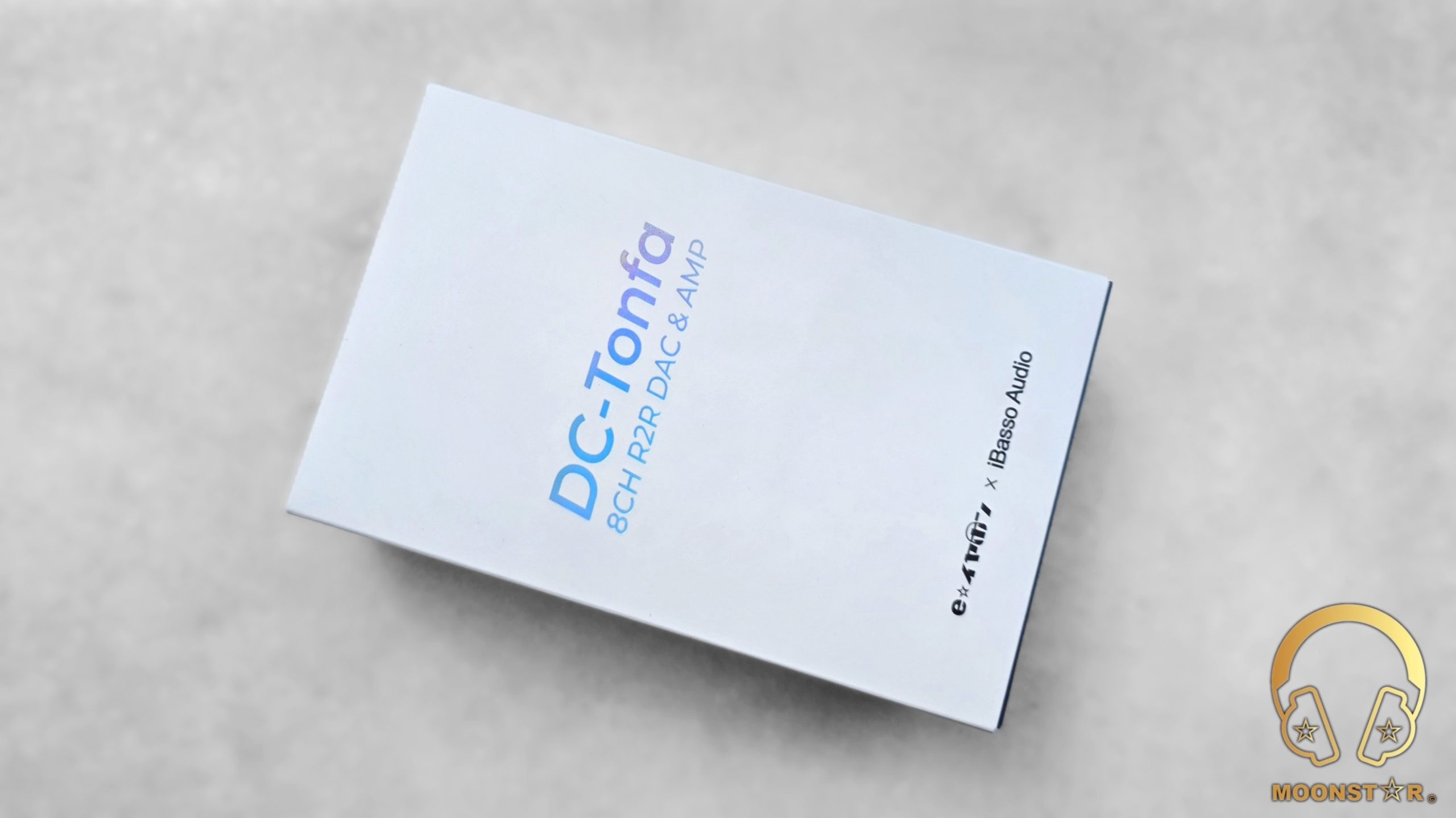
- 1 x iBasso DC-Tonfa USB DAC/Amplifier Dongle
- 1 x USB Type-C to USB Type-C Cable
- 1 x USB Type-C to Lightning Cable
- 1 x USB Type-C to USB-A Adapter
- 1 x Cable storage pouch
- 1 x MagSafe-Compatible Protective Case
- 1 x User Manual and Warranty Card

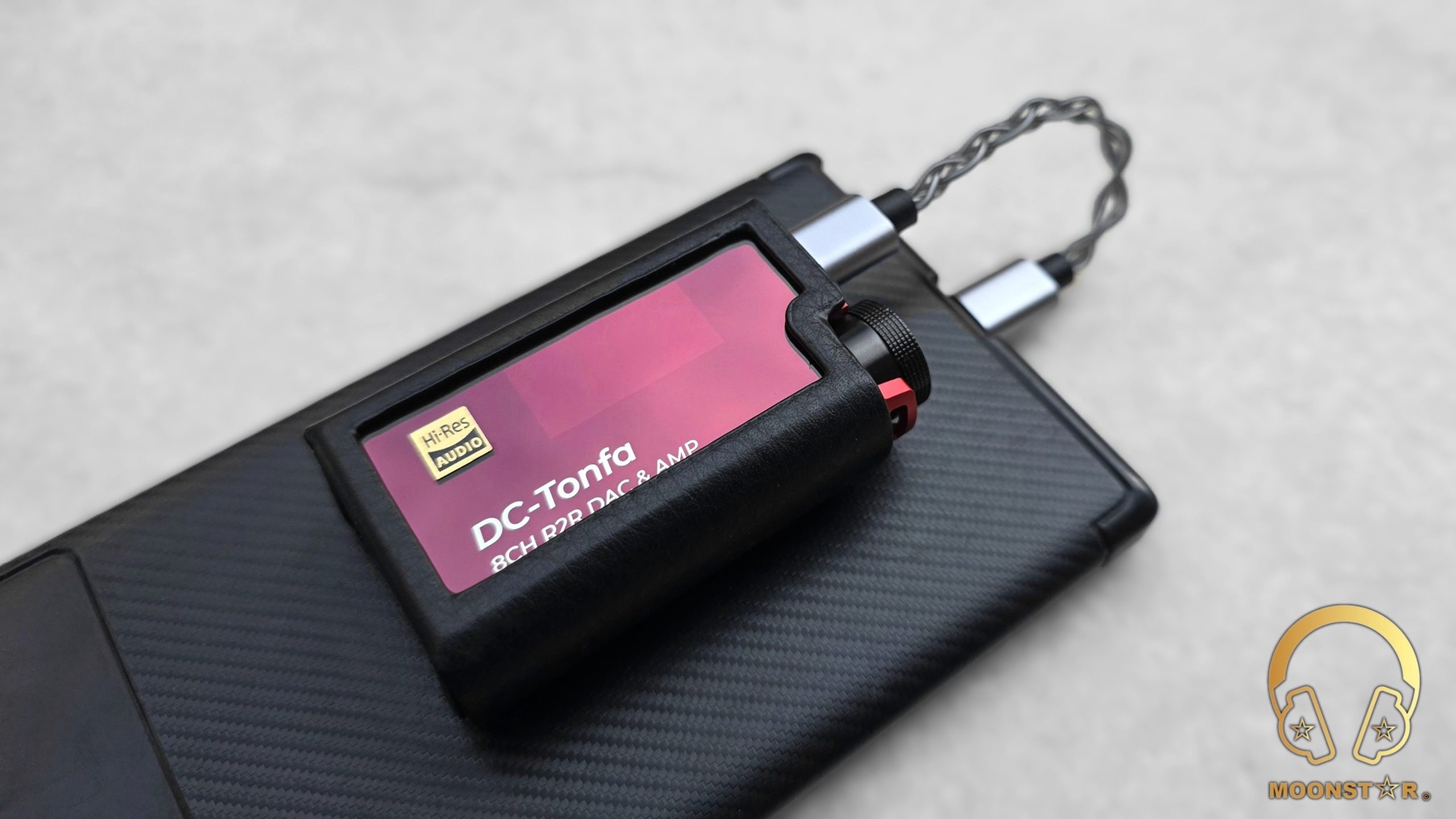
The MagSafe compatible case is a genuinely practical inclusion rather than a gimmick. It is cut so the OLED display remains visible and lets the Tonfa snap directly onto the back of a MagSafe equipped phone, keeping the whole stack tidy during commutes.


Design & Build Quality:
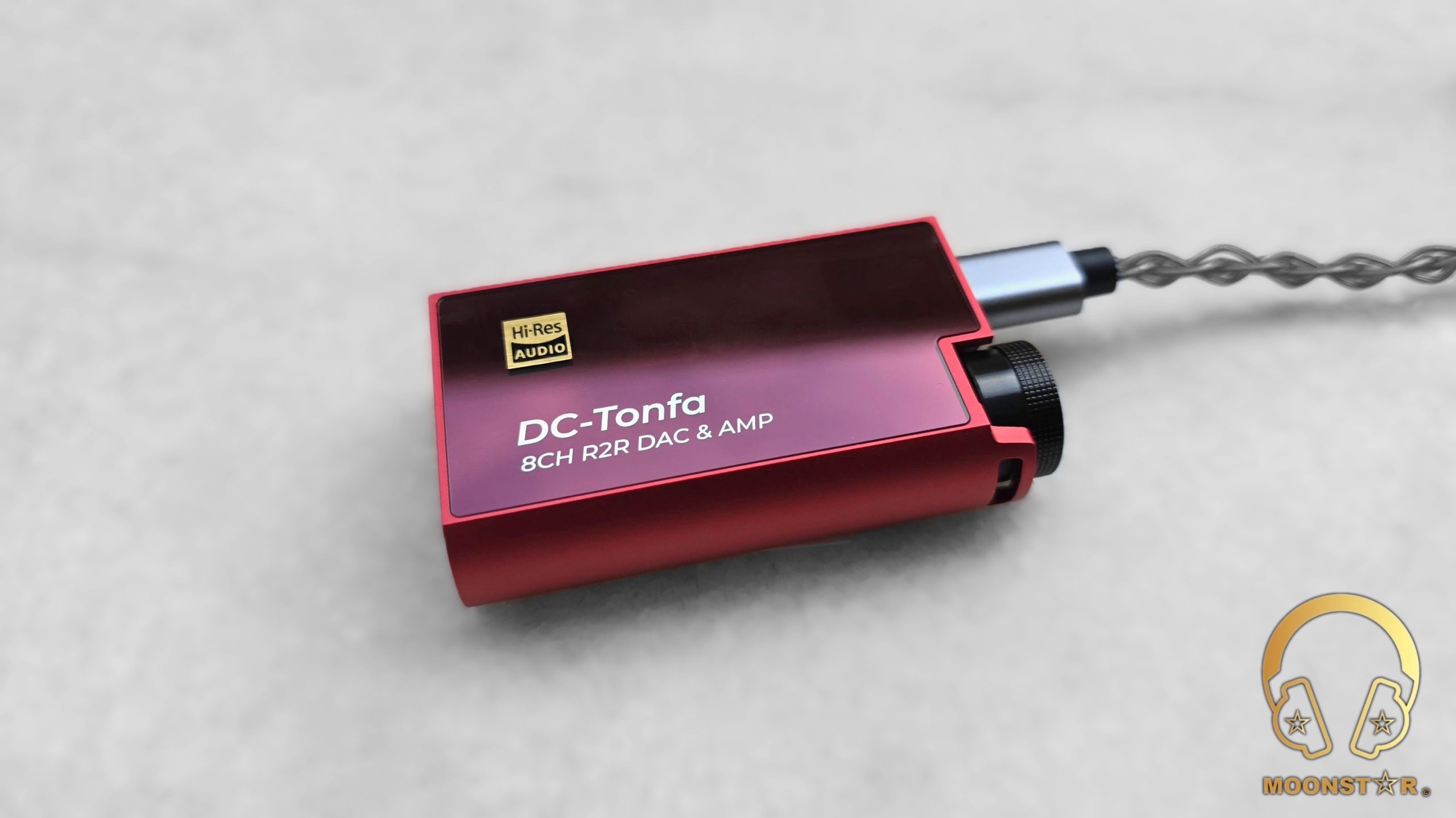
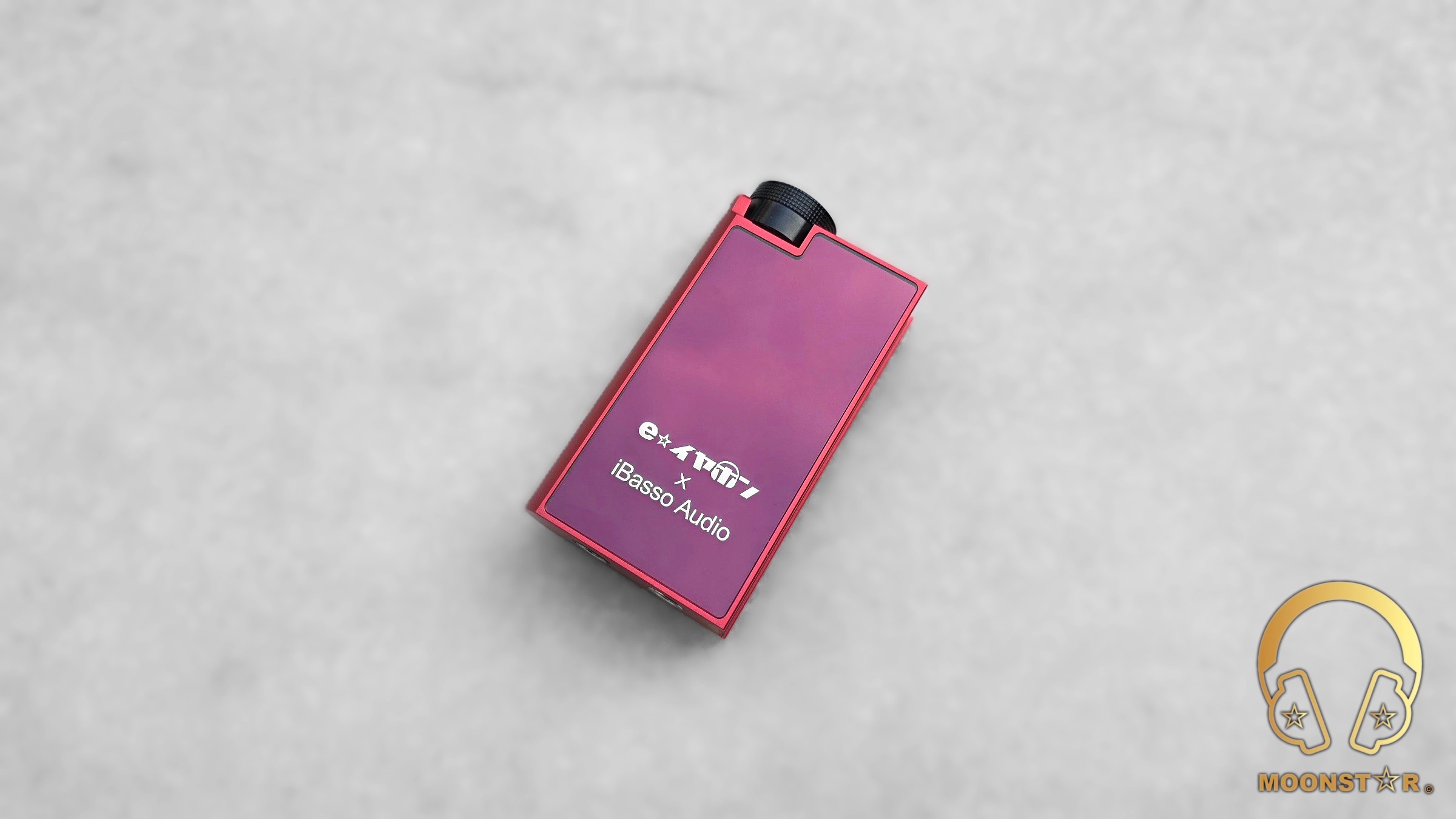
The iBasso DC-Tonfa immediately establishes its place within the digital audio family the moment you unbox it, sharing an unmistakable visual language while quietly signaling a radical internal departure. The chassis is CNC-machined from a single block of aluminum alloy and finished in a satin texture that resists fingerprints far more effectively than a glossy alternative. The review unit arrived in a striking red finish that looks genuinely gorgeous, injecting significantly more personality onto a desktop or into a mobile rig than more subdued designs.

The Tonfa might feel slightly substantial compared to some ultra-minimalist dongles, yet it retains a remarkably compact form factor, weighing just 45 grams and measuring 61mm by 34.6mm by 15mm so it easily slips into your pocket. Every detail, from the materials to the layout, reflects iBasso’s commitment to crafting a device that is as much a joy to hold as it is to listen through, serving as a blend of modern tech and subtle artistry that feels both practical and special.

iBasso offers the DC-Tonfa in three color options, black, red, and blue. Tolerances are tight, there is no rattle anywhere in the housing, and the whole enclosure gives the impression it was designed around the electronics rather than the other way around.

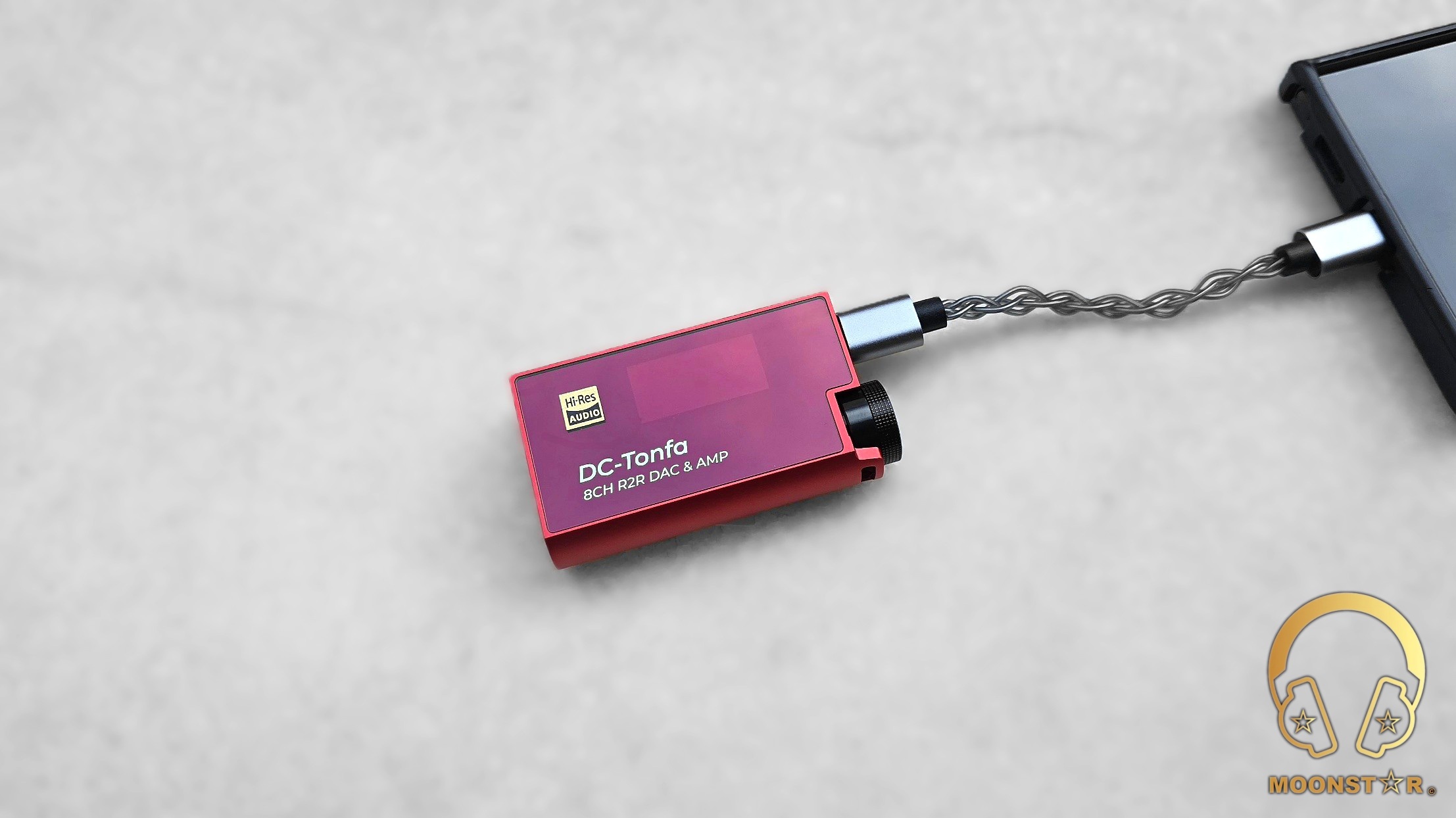
The front face houses a crisp 0.96-inch OLED display, remaining exceptionally legible in bright daylight and clear enough at a glance to verify sampling rate, gain status, active filter, and NOS mode without strain. iBasso maintains a disciplined layout where no extraneous icons or clutter crowd the small panel, ensuring that only the telemetry critical to active listening is prioritized on screen.

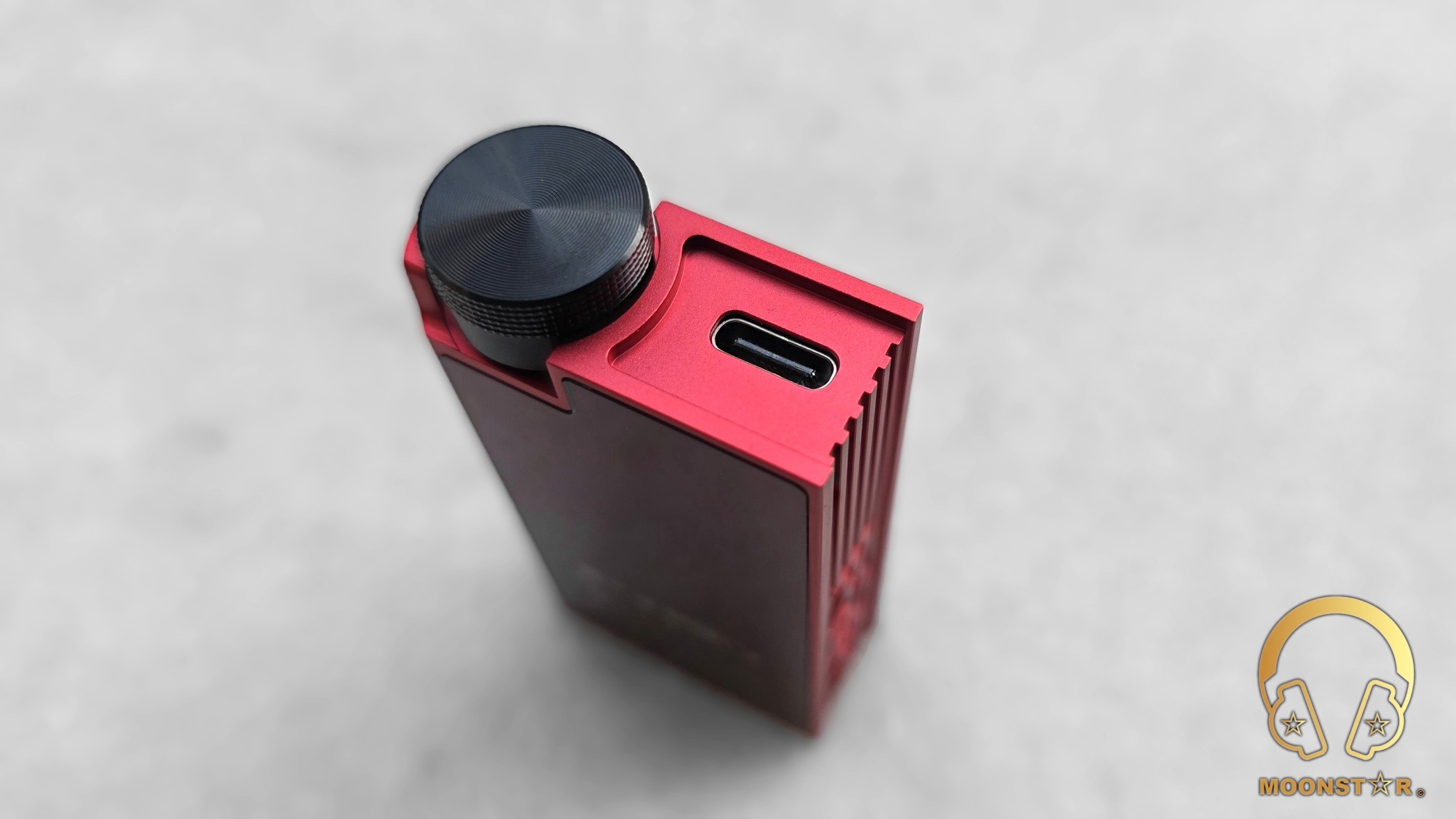
Physical controls are streamlined into a single multi-function rotary dial mounted on the top edge adjacent to the USB Type-C port. The dial features a knurled grip edge and moves with a smooth detented rotation, offering superior volume granularity compared to a stepped attenuator.
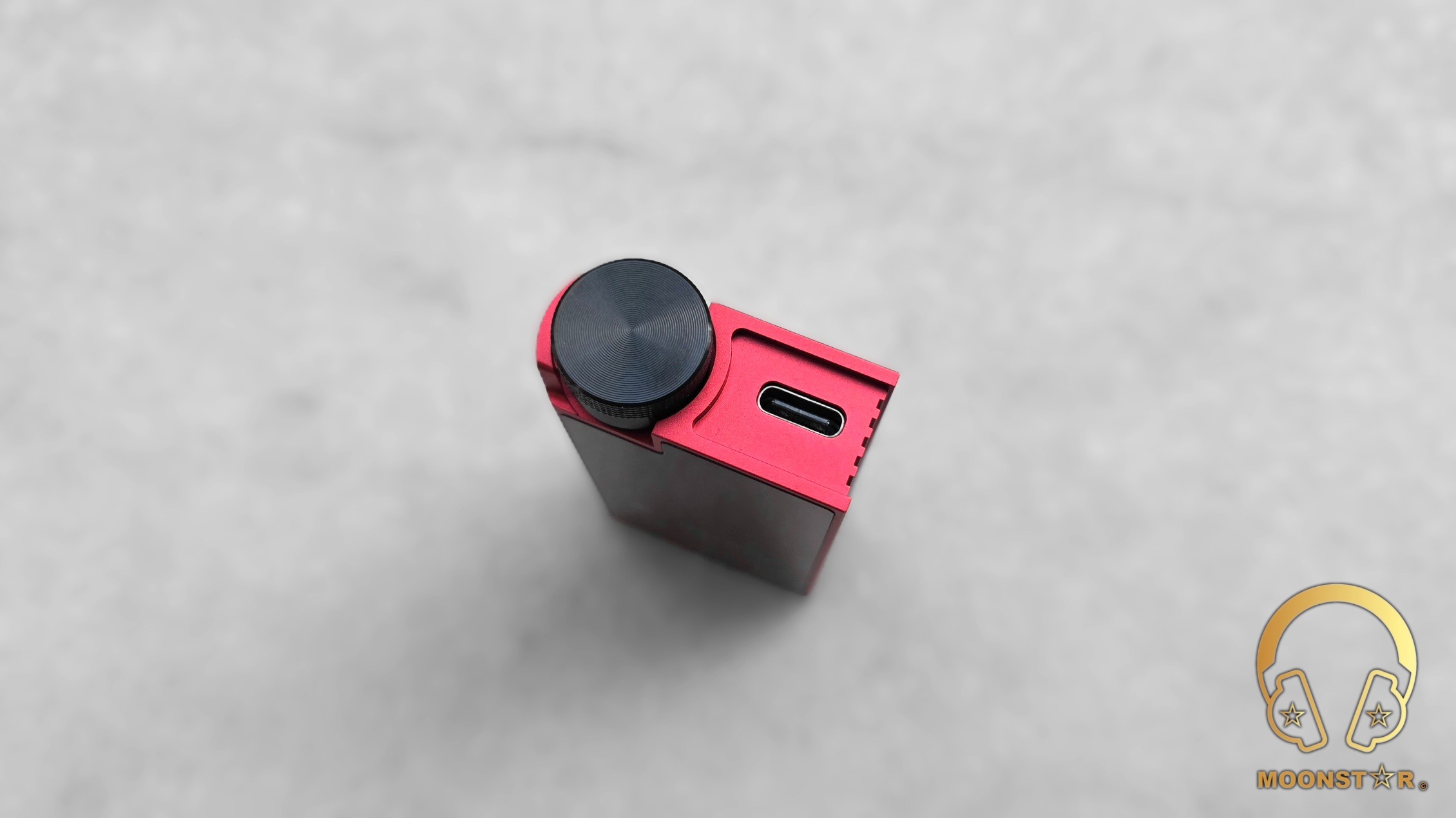
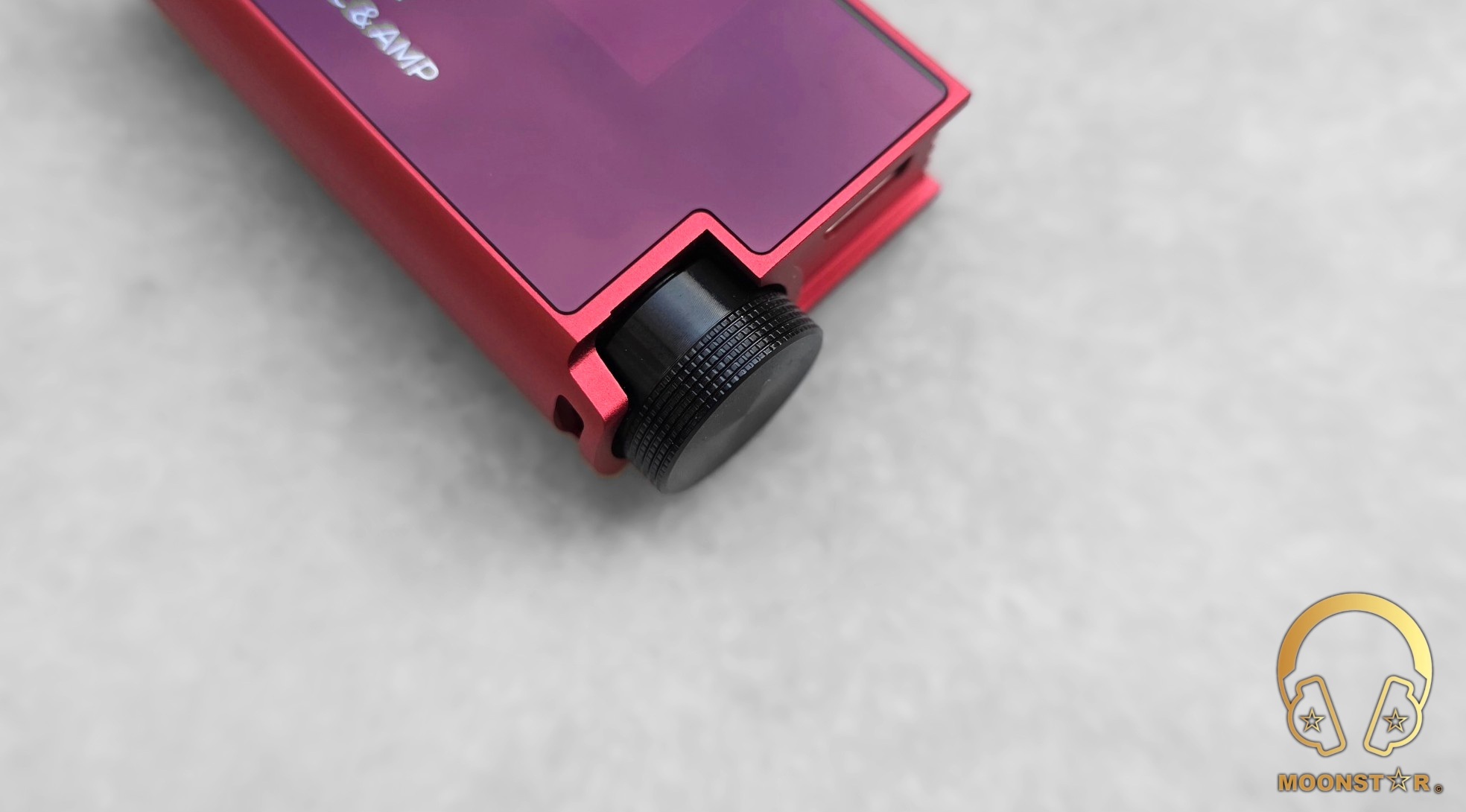
A short press cycles through digital filters and NOS mode, while a long press engages the settings menu. This tactile interaction feels deliberate and responsive, remaining easily operable even with gloved fingers during a cold commute.

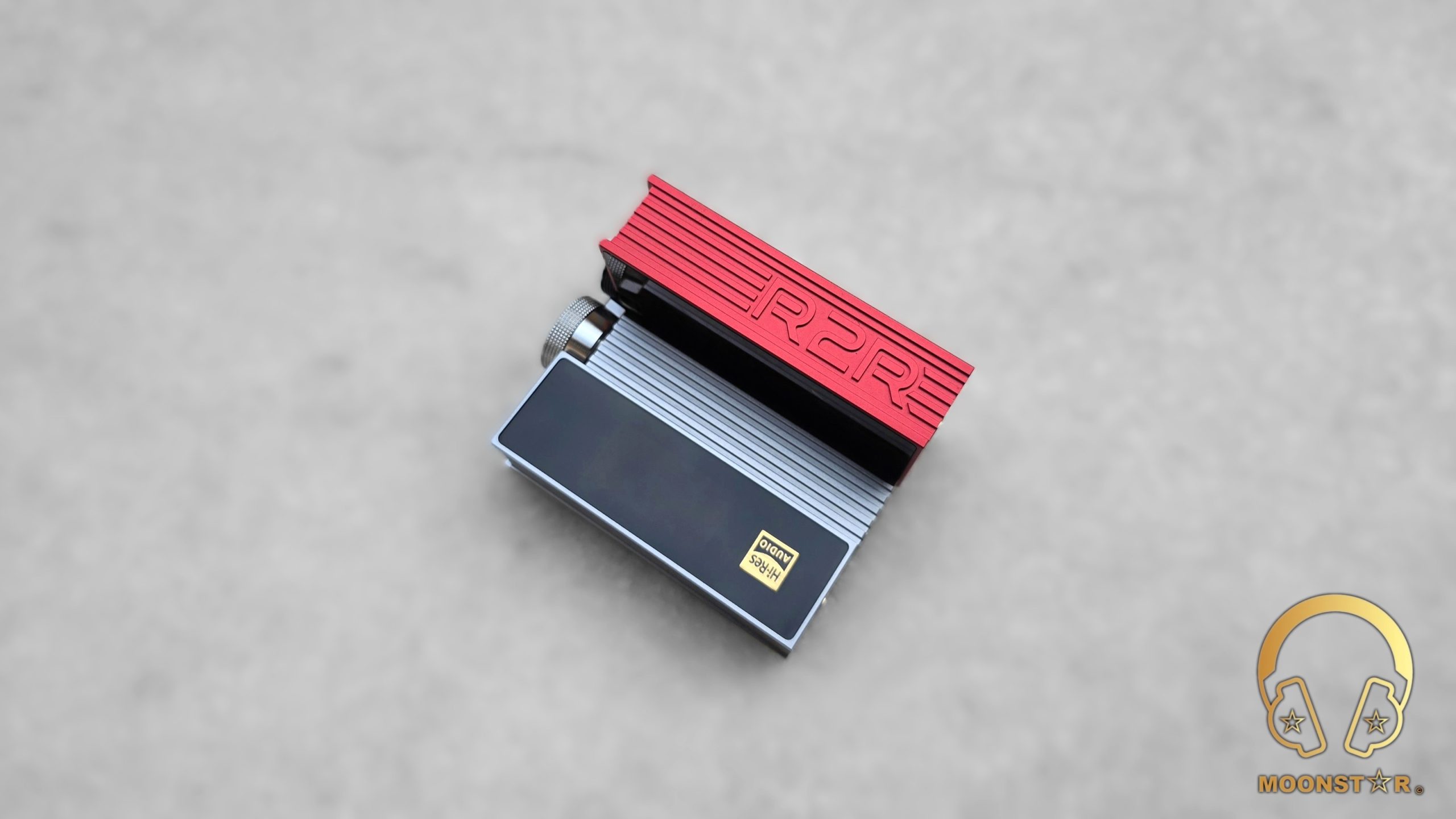
Adding heavily to its distinct aesthetic is the cleverly integrated side panel design. This section features a meticulously machined, ribbed structure housing a bold, raised R2R emblem that gives the chassis a tactile and industrial flair, offering a striking visual signature that immediately communicates the discrete architecture packed inside.

The bottom edge accommodates both output ports side by side, consisting of a 4.4mm balanced jack and a 3.5mm single-ended jack that doubles as a coaxial S/PDIF output when toggled via the menu. Both connectors are recessed precisely enough to maintain a secure plug interface without placing undue mechanical strain on the housing, providing a thoughtful touch for hardware destined to undergo multiple daily cycles of plugging and unplugging with mobile sources.

Build quality consistently mirrors the high standards iBasso has established across its recent portable lineup. Tolerances are exceptionally tight with zero structural rattle, creating the distinct impression that the enclosure was meticulously engineered around the internal electronics rather than vice versa.
Technical Specifications:
- Model : DC-Tonfa
- DAC Architecture : Discrete 24-bit, 8-Channel Fully Balanced R2R (312 Viking Metal Film Resistors + 60-Resistor Compensation Network)
- PCM : up to 32bit/768kHz
- DSD : Native DSD64, DSD128, DSD256, DSD512
- Weight : 45 grams
- Size : 61mm*34.6mm*15mm
4.4mm BAL Output
- Output Power: 800mW+800mW@32Ω (High Gain); THD < 0.5%
- Output Voltage: 2.6Vrms (Low Gain) / 5.2Vrms (High Gain)
- SNR: 122dB AES17-20k A-wt
- Dynamic Range: 123dB
- Channel Separation: 124dB
- THD+N: 0.004%
- Output Impedance: 0.5Ω
- Frequency Response: 10Hz–22kHz (±0.3dB) / 10Hz–40kHz (±0.8dB)
3.5mm SE Output
- Output Power: 219mW+219mW@32Ω; THD < 0.1%
- Output Voltage: 1.3Vrms (Low Gain) / 2.6Vrms (High Gain)
- SNR: 118dB
- Dynamic Range: 115dB
- Channel Separation: 121dB
- THD+N: 0.0056%
- Output Impedance: 0.2Ω
Hardware & Software Features:
Digital to Analog Converter & Amplification:
At the core of the DC-Tonfa is a true 24-bit, 8-channel, fully differential R2R ladder network, a discrete resistor based approach rather than a delta sigma chip. iBasso’s proprietary FPGA algorithms continuously correct for individual resistor tolerances, while dual Accusilicon femtosecond clock oscillators handle timing to keep jitter in check. Unlike the Nunchaku, there is no tube stage and no Tube/Class AB switch here. Instead, the Tonfa offers a dedicated NOS (non-oversampling) mode alongside four custom digital filters, letting you tilt the presentation from a smoother, more analog leaning character toward a faster, more resolving one entirely in the digital domain.
The amplification stage pairs two Texas Instruments dual op-amps with four BUF634A buffers, an aggressive, player grade configuration that pushes up to 800mW per channel at 32Ω through the 4.4mm balanced output, nearly 1.5 times what the Nunchaku’s Tube mode manages, and comfortably ahead of most dongles at this price. A Linear Technology LT3042 ultra low noise LDO regulator keeps the power rail clean, with iBasso quoting a noise floor as low as 0.8μV. Paired with the iBasso Epitome, an IEM whose 20-driver hybrid array is unforgiving of any hiss, the noise floor stayed genuinely black on both the MSI Vector GP68 HX laptop and the Samsung Galaxy S25 Ultra, which was a meaningfully cleaner result than either the Nunchaku or the Beta Xi2 managed with the same phone.
Supported Sampling Rates:
The DC-Tonfa handles PCM from 16-bit/44.1kHz up to 32-bit/768kHz and native DSD up to 512x, matching the format ceiling of both the Nunchaku and the Beta Xi2.
Power Supply Technologies & Power Consumption Control:
Despite its considerably higher output ceiling, the Tonfa is efficient in NOS mode, with iBasso quoting current draw below 100mA at 5V for 48kHz material, comparable to the Nunchaku’s Class AB draw despite the Tonfa’s much larger power reserve when it is actually called upon.
Connectivity:
A single USB Type-C port handles both power and data, and the Tonfa switches between UAC 2.0 mode for phones, tablets, and computers, and UAC 1.0 mode for gaming consoles such as the Nintendo Switch 2 and PS5, a use case neither the Nunchaku nor the Beta Xi2 explicitly targets. The 3.5mm output also functions as a coaxial/SPDIF digital out, turning the Tonfa into a compact digital hub for external DACs when needed.
iBasso UAC App:
For Android users, the iBasso UAC app exposes gain, digital filter selection, and channel balance, mirroring the functionality already accessible via the onboard dial and OLED screen. Windows and macOS users get a browser based control panel that requires no separate install, a more convenient implementation than the dedicated desktop software some competitors still require. iOS users, however, lose access to the deep settings menu entirely, since Apple’s platform doesn’t support the UAC app. This is limitation for iPhone only listeners who want to switch NOS mode or filters without a second device on hand.
List of Main Features:
- Discrete 24-bit, 8-Channel Fully Balanced R2R Architecture.
- 312 Viking Metal Film Resistors + 60-Resistor Hardware Compensation Network.
- Dedicated NOS Mode + 4 Custom Digital Filters.
- 2x TI Dual OP-AMPs + 4x BUF634A Buffers.
- Up to 800mW+800mW@32Ω Balanced Output.
- Linear Technology LT3042 Ultra-Low-Noise LDO Regulator.
- Dual Accusilicon Femtosecond Oscillators + iBasso FPGA.
- Support of PCM up to 32bit/768kHz and Native DSD512.
- 96″ OLED Display + Multi-Function Rotary Dial.
- Switchable UAC 2.0 / UAC 1.0 Modes (Console Support).
- 5mm SE Output Doubles as Coaxial/SPDIF Digital Out.
- Aluminum Alloy Chassis with Tempered Glass Front & Back Panels.
- MagSafe-Compatible Protective Case Included.
Equipments used for this review:
- DAC/AMP’s : iBasso DC-Tonfa, iBasso Nunchaku, ONIX Beta Xi2
- USB Source : Samsung Galaxy S25 Ultra, MSI Vector GP68 HX
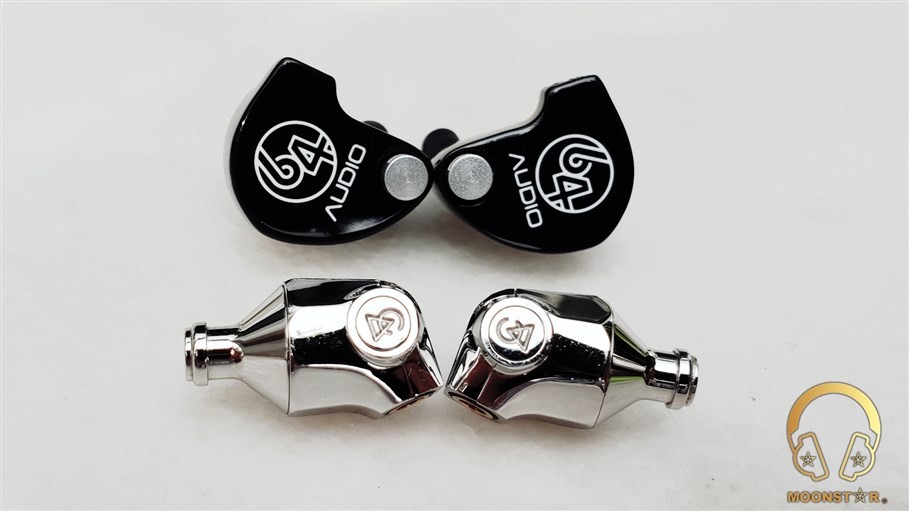
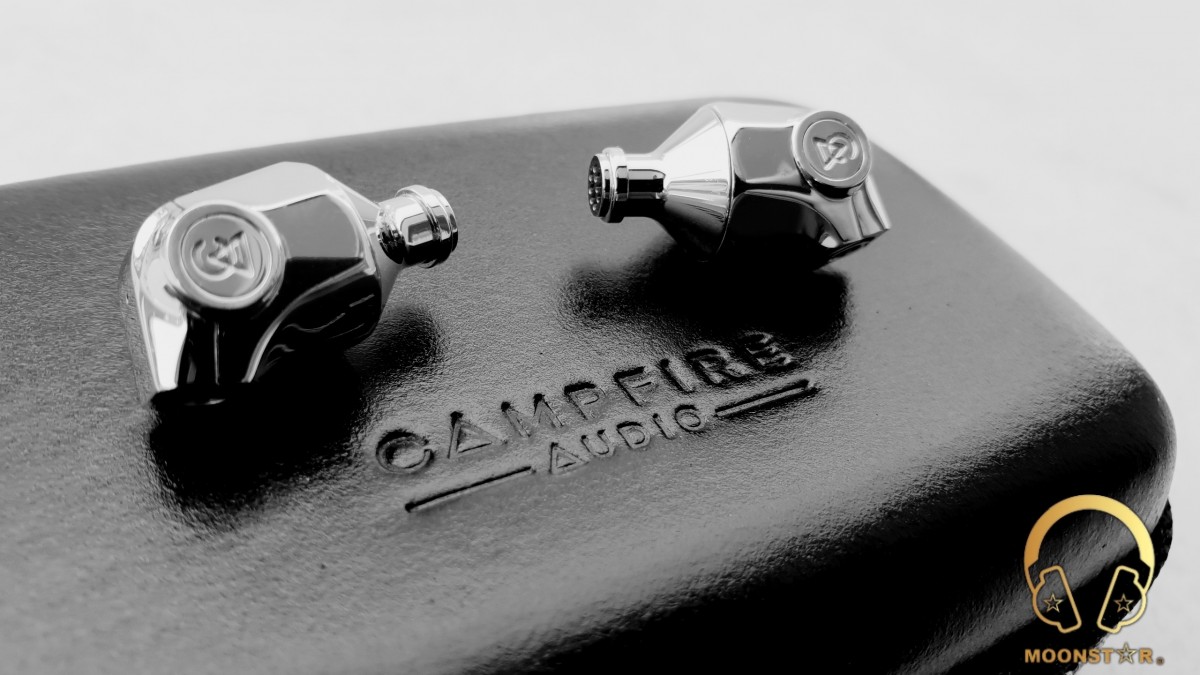
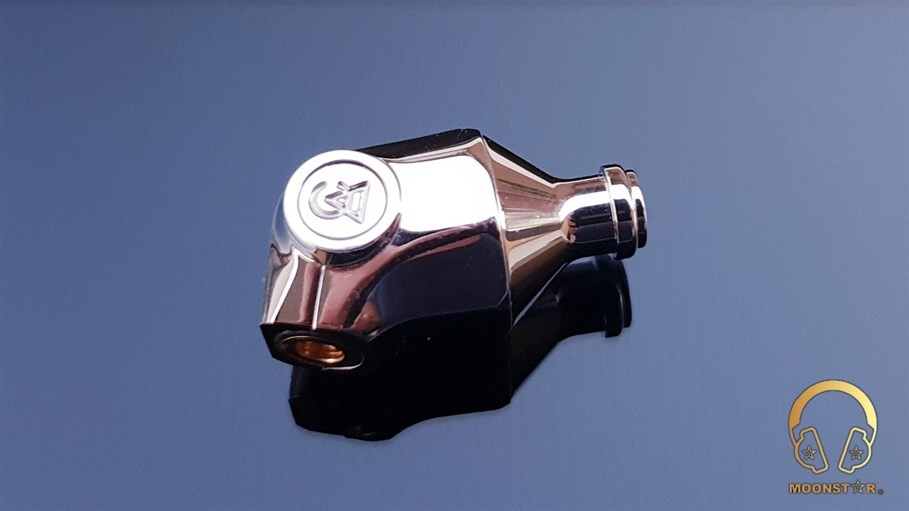
- IEM’s : iBasso Epitome, Campfire Audio Andromeda 10, Oriveti OH700VB
Albums & Tracks Used for This Review:
Vocal Jazz / Smooth Jazz
- Norah Jones – Come Away With Me (Flac 24bit/96kHz)
- Diana Krall – So Wonderful (DSF)
- Barry White – Just The Way You Are (Flac 24bit/48kHz)
- Isaac Hayes – Walk On By (Flac 16bit/44.1kHz)
- Sting – Englishman in New York (Flac 24bit/48kHz)
- Otto Liebert & Luna Negra – The River (Flac 24bit/192kHz)
- Ferit Odman – Look, Stop & Listen (Flac 24bit/192kHz)
- Charly Antolini – Duwadjuwandadu (Flac 24bit/192kHz)
Soul / R&B
- Aretha Franklin – I Say A Little Prayer (Flac 24bit/96kHz)
- Adele – My Little Love (Apple Lossless)
- George Michael – Don’t Let the Sun Go Down on Me (Flac 24bit/192kHz)
- Eric Clapton – Wonderful Tonight (Flac 24bit/96kHz)
Pop / Rock Classics
- Michael Jackson – Billie Jean (Flac 24bit/96kHz)
- Elton John – Rocket Man (Flac 24bit/96kHz)
- David Bowie – Heroes (Flac 24bit/192kHz)
- U2 – Sunday Bloody Sunday (Flac 16bit/44.1kHz)
- Lorde – Royals (Flac 24bit/48kHz)
- Dave Gahan – Kingdom (Apple Lossless)
Electronic / Experimental
- Daft Punk – Instant Crush (Flac 24bit/96kHz)
- Daft Punk – Doin’t it Right (Flac 24bit/96kHz)
- Bro Safari, UFO! – Drama (Apple Lossless)
- Armin Van Buuren – Vini Vici (Flac 16bit/44.1kHz)
- Yosi Horikawa – Bubbles (Apple Lossless)
- Toutant – Rebirth (Apple Lossless)
Alternative / Indie / Art Rock
- Radiohead – Live in Berlin “Album” (Apple Lossless)
- Radiohead – Pyramid Song (Apple Lossless)
- Muse – Hysteria (Flac 24bit/96kHz)
- Red Hot Chili Peppers – Nobody Weird Like Me (Flac 24bit/48kHz)
- Lunatic Soul – The Passage (Flac 16bit/44.1kHz)
- Portishead – It Could Be Sweet (Apple Lossless)
- Gogo Penguin – Raven (Flac 24bit/192kHz)
- Gogo Penguin – Murmuration (Flac 24bit/192kHz)
- Massive Attack – Angel (Flac 24bit/48kHz)
- Bear McCreary – Valkyries (Apple Lossless)
Classical / Orchestral
- Max Richter – On the Nature of Daylight (Flac 24bit/96kHz)
- Chopin – Nocturne No. 20 in C-Sharp Minor (Flac 16bit/44.1kHz)
- Clair de Lune – Claude Debussy (Apple Lossless)
- Tchaikovsky – Symphony No. 5 (Flac 16bit/44.1kHz)
- Vivaldi – Le Quattro Stagioni “The Four Seasons” (Apple Lossless)
- Fazıl Say – Nazım Oratoryosu, Live (Flac 16bit/44.1kHz)
Jazz / Instrumental
- Miles Davis – So What (Apple Lossless)
World / Traditional
- Sertap Erener – Aşk (Flac 16bit/44.1kHz)
- Edith Piaf – Non Je Ne Regrette Rien (Flac 16bit/44.1kHz)
Metal / Progressive Rock
- Metallica – Dyers Eve (Flac 24bit/96kHz)
- Metallica – Sad but True (Flac 24bit/96kHz)
- Megadeth – Sweating Bullets (Apple Lossless)
- Opeth – Windowpane (Flac 16bit/44.1kHz)
- Deftones – My Own Summer, Shove It (Flac 16bit/44.1kHz)
- Rush – Tom Sawyer (Flac 16bit/44.1kHz)
- Slayer – Angel of Death (Apple Lossless)

The Sound:
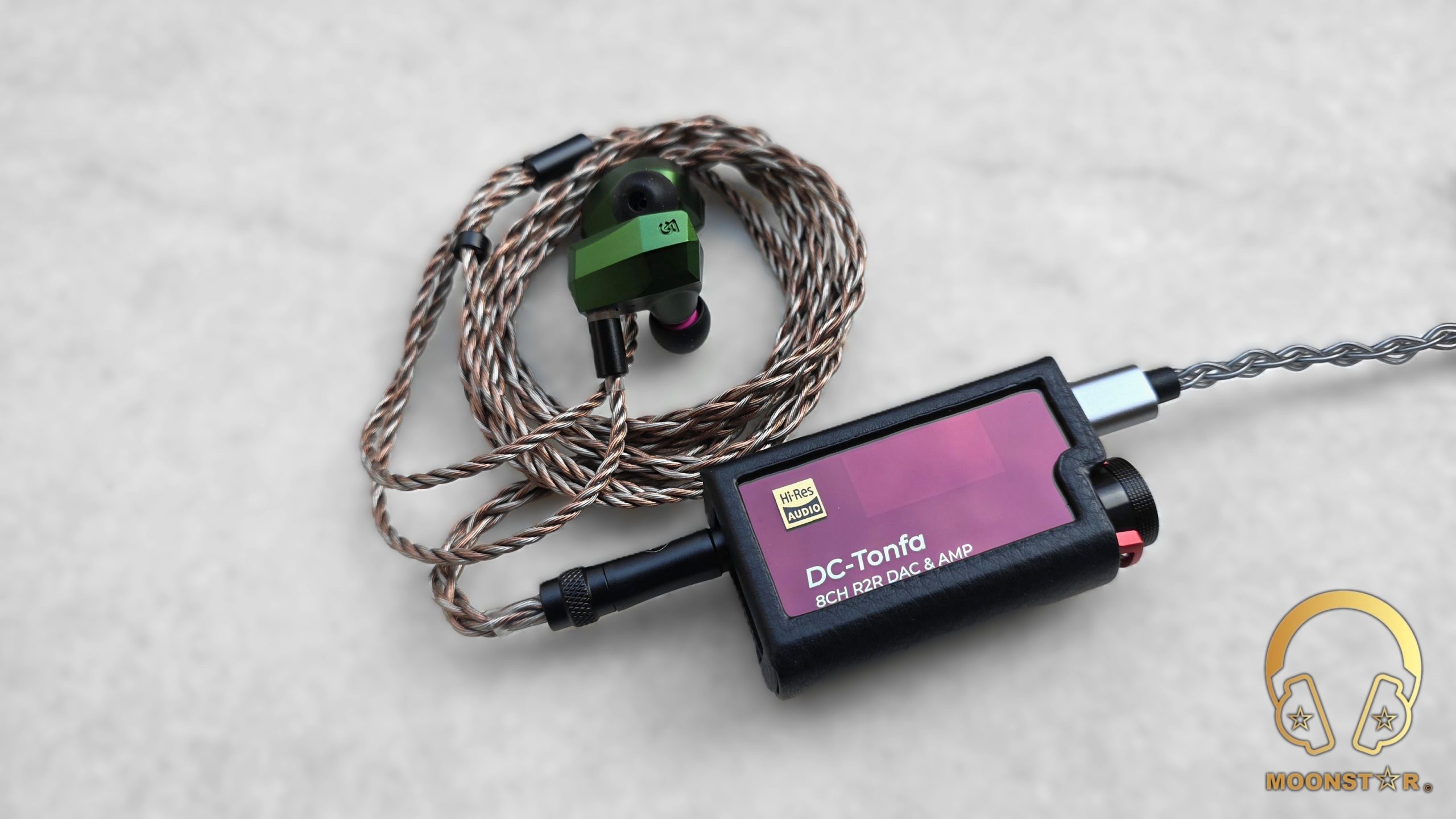
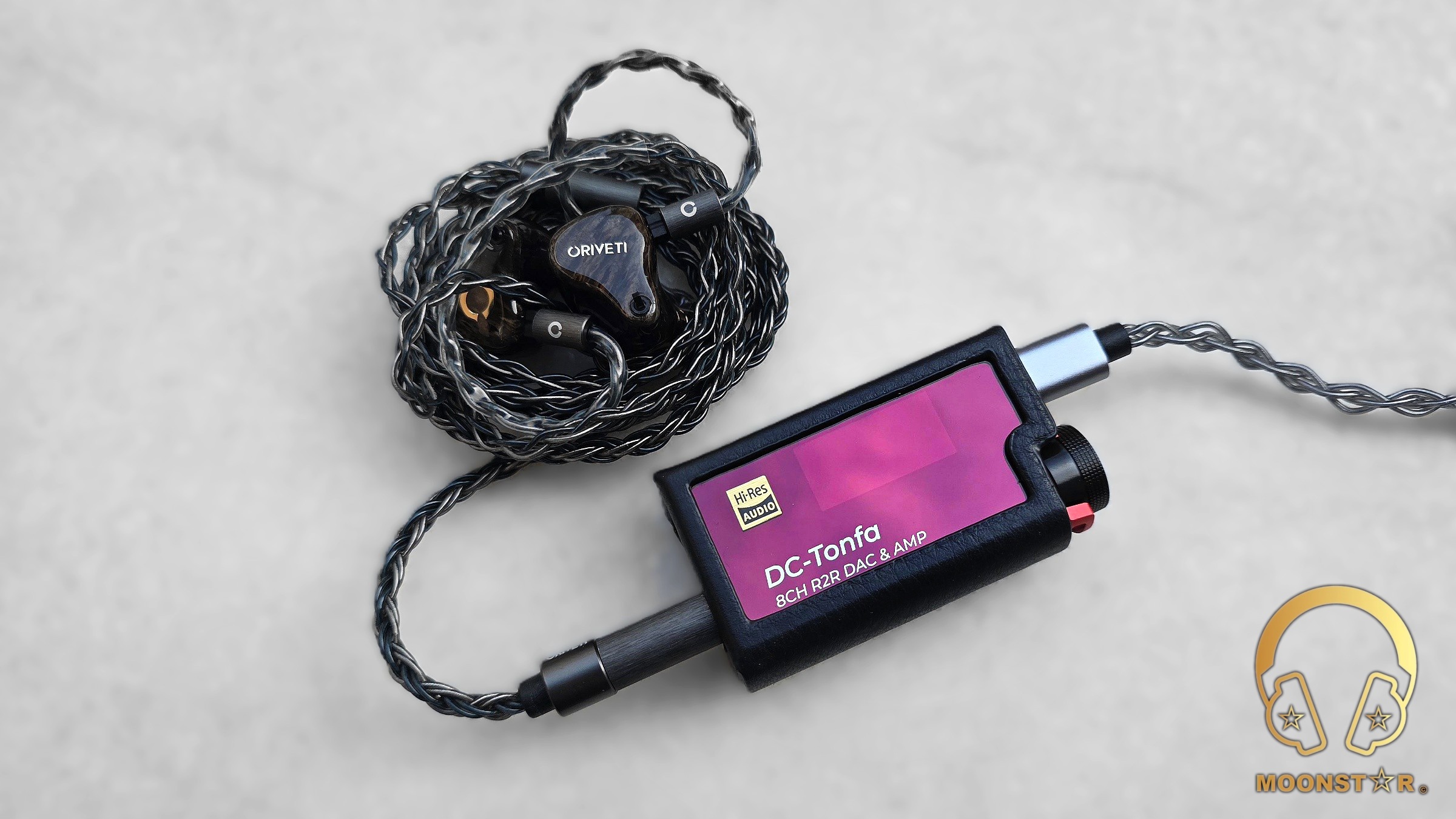
Sound impressions were formed after roughly 100 hours of use, sourced primarily from the MSI Vector GP68 HX laptop with the Samsung Galaxy S25 Ultra used for cross referencing throughout the process. Main impressions come from the iBasso Epitome, Campfire Audio Andromeda 10, and Oriveti OH700VB, cycling extensively between the four digital filters and NOS mode to understand how much of the Tonfa’s character comes from the R2R ladder itself and how much is shaped by the digital filtering stage sitting in front of it.
The DC-Tonfa signature is immediately distinct, relying purely on a discrete R2R ladder network to deliver an organic, analog-adjacent musicality paired with exceptional resolution and micro-detail retrieval that sits closer to what iBasso’s own digital audio player line achieves than to typical dongles. Backed by an 800mW amplification stage, it projects a sense of authority and effortless headroom that handles dynamic swings with a settled composure, preventing compression or flattening during complex orchestral and heavily layered electronic passages.
Switching between filters introduces genuinely audible shifts rather than minor cosmetic tweaks. NOS mode leans soft and organic, trading a small fraction of top-end extension for a smoother and more relaxed presentation resembling a desktop R2R DAC while maintaining impressive textural nuance. The fastest filter sharpens transients noticeably for added percussive immediacy, while the intermediate options offer a smooth and useful spectrum between those extremes without ever sounding clinical or thin. The detailed impressions below default to the second filter, which struck the best overall balance across the widest range of material during testing.

Bass:
The Tonfa’s low end is controlled and well extended rather than emphasized, displaying a natural, organic warmth rooted directly in its resistor ladder architecture. Paired with the Oriveti OH700VB, an IEM whose adjustable bass ports let it flex between a neutral and a bass forward character, the Tonfa’s default filter revealed intricate micro-details and texture in the sub-bass without letting it bloom into the midrange. On Isaac Hayes’ Walk On By, the bass guitar retained its plucked texture and note to note definition even as the double bass line moved quickly underneath the horns, and switching the OH700VB’s ports fully open on Barry White’s Just The Way You Are showed the Tonfa has plenty of current in reserve to keep that extra low end weighty and controlled rather than sloppy or smeared. Massive Attack’s Angel is a particularly telling test for this kind of control, since the track’s sustained low drone can easily turn into a formless rumble on a weaker amplification section, and through the Tonfa it held its shape throughout, with the decay of each pulse remaining clearly resolved rather than folding into the one that followed.
Against the iBasso Epitome’s 20-driver array, the midbass had a tautness, speed, and dimensional resolution that traditional topologies struggle to match. Metallica’s Sad But True is a useful benchmark here, and the kick drum’s leading edge arrived with a real sense of impact through the Epitome, with the Tonfa’s fastest filter adding just enough extra bite and textural clarity to make each hit feel deliberate rather than blunted. The same held true on Dyers Eve, where rapid kick patterns stayed distinct rather than blurring into a single low frequency mass, something that speaks directly to the amplification stage’s transient speed. Electronic material pushed this further still. On Armin Van Buuren’s Vini Vici, sub-bass sweeps had a physical sense of pressure without ever losing their resolving edges, and on Daft Punk’s Instant Crush the bassline’s synth pulses were rendered with a crisp, well defined attack that avoided any hint of bloat while preserving fine harmonic details.
There is a sense that the Tonfa’s 800mW ceiling is doing real work here, giving low notes a cleaner start and stop while preserving the organic warmth inherent to the design. The Campfire Audio Andromeda 10, with its just north of neutral tuning, showed the Tonfa’s bass at its most linear on Bear McCreary’s Valkyries, where the low string and percussion textures stayed present and richly detailed, but never editorializing or reaching for drama that wasn’t already in the recording.
Midrange:
This is where the R2R architecture’s character comes through most clearly, blending an organic, analog-adjacent warmth with exceptional resolution and micro-detail retrieval. Vocals through the Andromeda 10’s ten-BA array had a directness and cleanliness that felt genuinely nuanced, supported by the natural timbral richness of the resistor network. Aretha Franklin’s voice on I Say A Little Prayer carried real body and grain with authentic musicality rather than clinical dryness, and the effect was one of supreme accuracy where backing vocals stayed distinct and fully resolved rather than folding into a single mass behind her. Adele’s My Little Love pushed this further, since the track leans on close, intimate vocal recording, and the Tonfa let every subtle catch and inflection in the delivery come through with a naturalness that felt deeply emotive yet technically precise.
On the iBasso Epitome, known for its transparency, the Tonfa’s midrange revealed layering, separation, and micro-texture that felt exceptionally resolving, allowing every nuance of the performance to shine through. David Bowie’s Heroes is a demanding test of midrange composure given how densely the guitar, synth pads, and vocal are layered together, and the Tonfa kept each element in its own spacious and detailed environment rather than letting the mix congeal. Eric Clapton’s Wonderful Tonight showed a similar strength on the instrumental side, with the acoustic guitar’s pick attack, string vibration, and body resonance all audibly distinct without one overshadowing the other.
Switching filters had a subtler effect here than on bass or treble, focusing primarily on transient speed and decay characteristics to tailor the presentation. The Oriveti OH700VB’s more forward mids benefited from this clarity too, with Sertap Erener’s vocal on Aşk and Edith Piaf’s projection on Non Je Ne Regrette Rien both retaining their natural texture, emotional weight, and high resolution without artificial coloring propping either performance up.

Treble:
The Tonfa’s top end is extended, highly detailed, and remarkably transparent, pairing its signature organic warmth with pristine clarity and resolution. String sections and reverb tails were rendered with immense air, micro-detail, and definition, avoiding any harsh digital artifacts while keeping every upper frequency nuance intact. Tchaikovsky’s Symphony No. 5 put this to the test on the Campfire Audio Andromeda 10, whose two high frequency balanced armatures are tuned for extension without harshness, and the massed violin passages retained their precise bite, shimmer, and textural layering without ever turning glassy or thin. Vivaldi’s Le Quattro Stagioni showed a similar composure, with the solo violin’s upper register staying lifelike and fully articulated rather than flattening into a single bright smear.
Percussion heavy material told a similar story. Charly Antolini’s Duwadjuwandadu is built almost entirely around cymbal work and brushed drums, and the Tonfa’s fastest digital filter brought out extraordinary fine detail in the cymbal decay on the iBasso Epitome without tipping into fatigue, while NOS mode rolled things off just slightly for a more relaxed long session listen on the same track while retaining its core resolution. Ferit Odman’s Look, Stop & Listen offered a more restrained jazz kit performance, and the brushwork and ride cymbal texture came through with a naturalness and airiness that made it easy to appreciate every subtle acoustic cue.
Faster material pushed the Tonfa’s treble harder still. Metallica’s Dyers Eve and Slayer’s Angel of Death both rely on rapid, aggressive cymbal work paired with distorted guitars, and even at that pace the Tonfa kept the top end controlled, fast, and fully legible rather than letting it smear into a wash of noise. There is no trace of sibilance across either the Epitome or the OH700VB, and close mic’d vocal material like George Michael’s Don’t Let the Sun Go Down on Me stayed smooth, detailed, and meticulously controlled through all four filter settings.
Soundstage & Imaging:
Imaging precision is a clear strength of the Tonfa, likely aided by its exceptionally high channel separation figures of 124dB balanced. On the iBasso Epitome, individual instrumental layers in Radiohead’s Live in Berlin held distinct, stable positions rather than blurring together, letting the crowd noise, guitar, and vocal each occupy their own space even as the recording’s natural venue ambience filled in around them. The background between notes stayed genuinely quiet, which made it easier to trace where each element sat within the room.
The soundstage itself is wide rather than cavernous. It doesn’t chase the same sense of enveloping grandness that the Nunchaku’s Tube mode delivers, favoring instead a more precisely delineated presentation where width, depth, and placement all feel deliberate. The Andromeda 10’s inherently spacious tuning benefited from this the most, with Vivaldi’s Le Quattro Stagioni rendered with a convincing sense of front to back layering that made it easy to separate the solo violin from the supporting strings behind it.

Comparison:
iBasso DC-Tonfa versus iBasso Nunchaku:
The most fundamental difference between these two iBasso dongles is architectural. The Nunchaku is a hybrid design built around dual Cirrus Logic CS43198 delta-sigma DACs with a genuine vacuum tube stage, while the Tonfa abandons tubes entirely in favor of a discrete 8-channel R2R ladder network. In practice, this means the Nunchaku’s Tube mode offers a specific kind of harmonic richness. If you want that exact tube glow, the Nunchaku’s dual JAN6418 tubes still do it best. What the Tonfa offers instead is its own organic, analog-adjacent warmth rooted naturally in its R2R architecture, paired with a less overtly colored midrange and meaningfully more power, delivering 800mW compared to the Nunchaku’s 525mW in Tube mode or 450mW in Class AB. On the iBasso Epitome, that extra headroom translates into a more effortless and less strained presentation on complex, dynamic material.
Bass on the Nunchaku’s Tube mode is relaxed and textured with a distinctly analog decay. The Tonfa’s low end is tighter, faster, and wonderfully organic across all its filter settings, closer in character to the Nunchaku’s own Class AB mode but backed by greater authority and physical weight. The Tonfa’s midrange remains more consistently clean regardless of filter choice, while the Nunchaku’s midrange character shifts dramatically between its two modes, appearing lush and forward in Tube mode and drier and more analytical in Class AB mode. Treble follows a similar pattern. The Tonfa stays composed and extended throughout, while the Nunchaku’s treble character swings between the Tube mode’s gentle roll-off and the Class AB mode’s added sparkle.
Soundstage on the Nunchaku, particularly in Tube mode, is the wider and more atmospheric of the two, trading some imaging precision for a sense of scale. The Tonfa’s soundstage is comparatively more compact but noticeably more precisely imaged, featuring instrument separation that benefits from its higher channel separation figures. Neither dongle is strictly better. A listener drawn to explicit tube glow and grand scale should lean toward the Nunchaku, while one who wants a cleaner, more powerful, and more format-flexible dongle that still delivers an organic, musical warmth alongside console compatibility via UAC 1.0 will find the Tonfa the more capable all-rounder.
iBasso DC-Tonfa versus ONIX Beta Xi2:
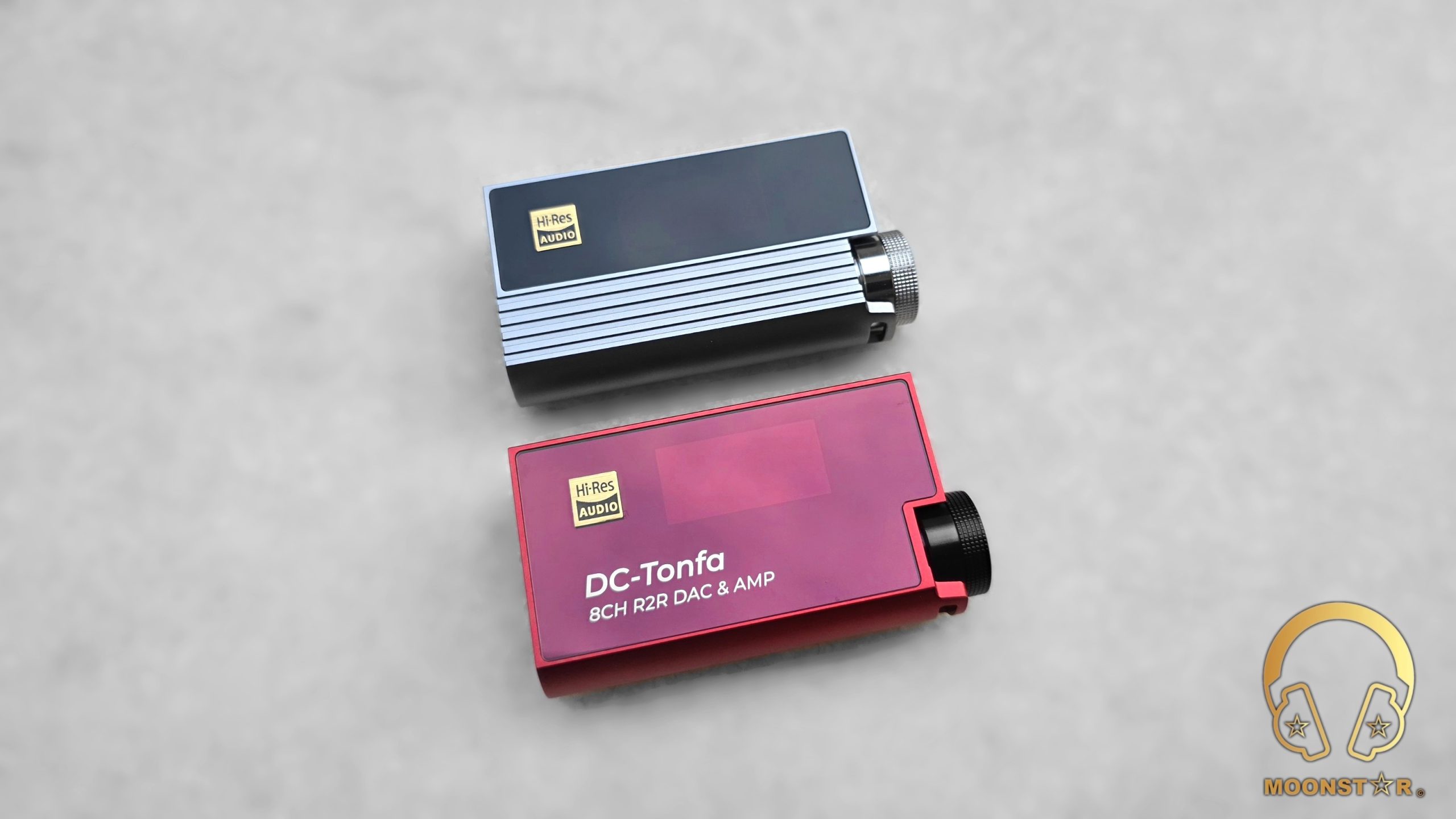
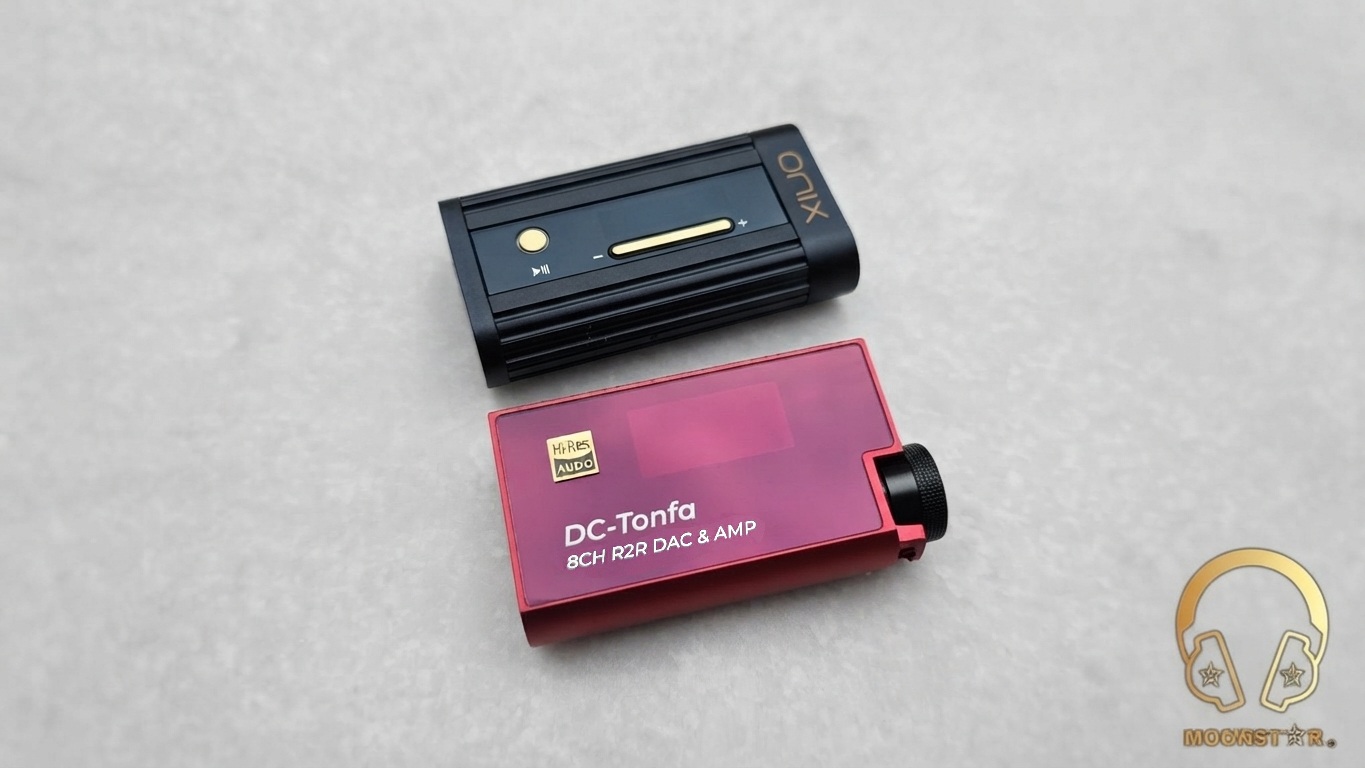
The Beta Xi2 features a tube and solid-state hybrid design utilizing dual JAN6418 tubes and dual CS43198 DACs, sharing structural similarities with other hybrid models while incorporating Shanling’s unique tuning approach. The Tube mode delivers a smooth and intimate midrange with slightly recessed lower mids for a distinct flavor of warmth, whereas the Tonfa maintains a more neutral and resolving midrange across all of its digital filters. In Transistor mode, the Beta Xi2 improves in cleanliness and control through its quad BUF634A buffers, yet its 550mW output ceiling falls short of the Tonfa’s 800mW limit, a power delta that translates into superior composure from the Tonfa when driving demanding loads like the Campfire Audio Andromeda 10 at elevated volumes.
Bass response in the Beta Xi2 Tube mode offers notable weight and extended decay well suited for vocal tracks, while the Tonfa delivers a tighter and more textured low end consistently across the board without requiring mode switches. Treble performance is where the Beta Xi2 Transistor mode remains highly competitive, providing sparkle and control that closely matches the fastest filter setting of the Tonfa, though the Tonfa still edges ahead in retrieving fine details without adding digital harshness. While the vertical form factor of the Beta Xi2 grants it an enhanced sense of vertical soundstage height, the Tonfa secures the advantage in raw imaging precision.
The Beta Xi2 holds practical advantages in everyday ergonomics, as its three physical hardware buttons enable slightly faster mode and volume adjustments than the single knob layout of the Tonfa, alongside its striking industrial design featuring visible tube glow. However, for listeners prioritizing raw technical performance, extended power headroom, and broader device compatibility, the DC-Tonfa ultimately emerges as the more capable and well-rounded choice overall, while the Beta Xi2 remains a compelling alternative specifically for those drawn to the harmonic richness of a hybrid tube architecture.
Conclusion:
The iBasso DC-Tonfa is a genuinely different proposition from its own stablemate, and it makes its case convincingly. By trading the Nunchaku’s specific tube driven warmth for a discrete 8-channel R2R architecture that instead provides its own organic, analog-adjacent musicality paired with exceptional resolution and micro-detail retrieval, iBasso has produced a dongle with a cleaner midrange, meaningfully more amplification headroom, and the added flexibility of console ready UAC 1.0 switching. At $339.99, it offers a genuinely distinct sonic character within iBasso’s own dongle lineup. It won’t replicate the exact visual or harmonic tube glow that draws people to the Nunchaku or Beta Xi2’s tube modes, and iOS users lose some settings menu convenience without the UAC app, but for listeners who want R2R warmth combined with superior technical resolution and real power behind it, the DC-Tonfa is one of the most compelling all-rounders in iBasso’s current dongle lineup.
Pros & Cons:
- + Genuinely distinct and organic R2R musicality paired with exceptional resolution and micro-detail retrieval
- + Exceptional output power for the category (800mW balanced)
- + Excellent channel separation and imaging precision
- + NOS mode + 4 filters offer real tuning flexibility
- + UAC 1.0 support for gaming consoles (Switch 2, PS5)
- + MagSafe-compatible case is a thoughtful, practical inclusion
- – No tube-mode warmth for listeners who specifically want that character
- – iOS users lose access to the UAC app’s deep settings menu
- – Single knob is slightly slower for quick mode changes than button-based rivals
Thank you for the Read!