
iBasso DC04 Ultra Review
iBasso DC04 Ultra Review
Introduction:
iBasso has built a consistent reputation in the dongle DAC/amp category through methodical refinement rather than dramatic reinvention. The DC03 Pro and DC04 Pro both earned respect by combining iBasso’s in-house FPGA audio algorithms with Cirrus Logic’s flagship DAC chips, producing a level of technical competence that consistently outperformed what the form factor and price implied. The DC04 Ultra is a more substantive step. It retains the dual CS43198 chip configuration of its predecessor but raises the output power from approximately 400mW to 980mW per channel through the balanced 4.4mm output, a nearly 2.5x increase that shifts the DC04 Ultra from the category of capable IEM dongles into the broader territory of genuine headphone amplification from a pocket-sized device.
The DC04 Ultra also introduces a 0.96-inch multi-color display, three physical buttons for on-device control without requiring an app, a DRE (Dynamic Range Enhancement) mode for eliminating 0dB distortion, support for 3.5mm microphone input for calls, and a 10-band parametric EQ accessible through the iBasso UAC app for Android. The stainless steel CNC-machined chassis and dual femtosecond oscillator clock architecture carry forward the construction standards established in previous DC-series products. The result is a dongle that arrives with a meaningful specification advantage over its predecessor and over most of its immediate competition, packaged in a form factor that remains genuinely pocketable.
Disclaimer:
I would like to thank iBasso for providing the DC04 Ultra as a review sample. I am not affiliated with iBasso beyond this review, and these words reflect my true and unaltered opinions about the product.
Price & Availability:
The iBasso DC04 Ultra is priced at $119 USD. It is available through the official iBasso website and authorized dealers worldwide.
Package & Accessories:
The DC04 Ultra arrives in a compact box consistent with iBasso’s current presentation style. The packaging is clean and product-focused without unnecessary embellishment, which suits a device that derives its value from engineering rather than presentation. Inside, the dongle and its accessories are arranged in a straightforward layout.

The full package includes:
- 1 x iBasso DC04 Ultra Portable DAC/AMP
- 1 x USB Type-C to USB Type-C Cable (OTG, short)
- 1 x USB Type-C to USB Type-A Adapter
- 1 x User Manual and Warranty Card
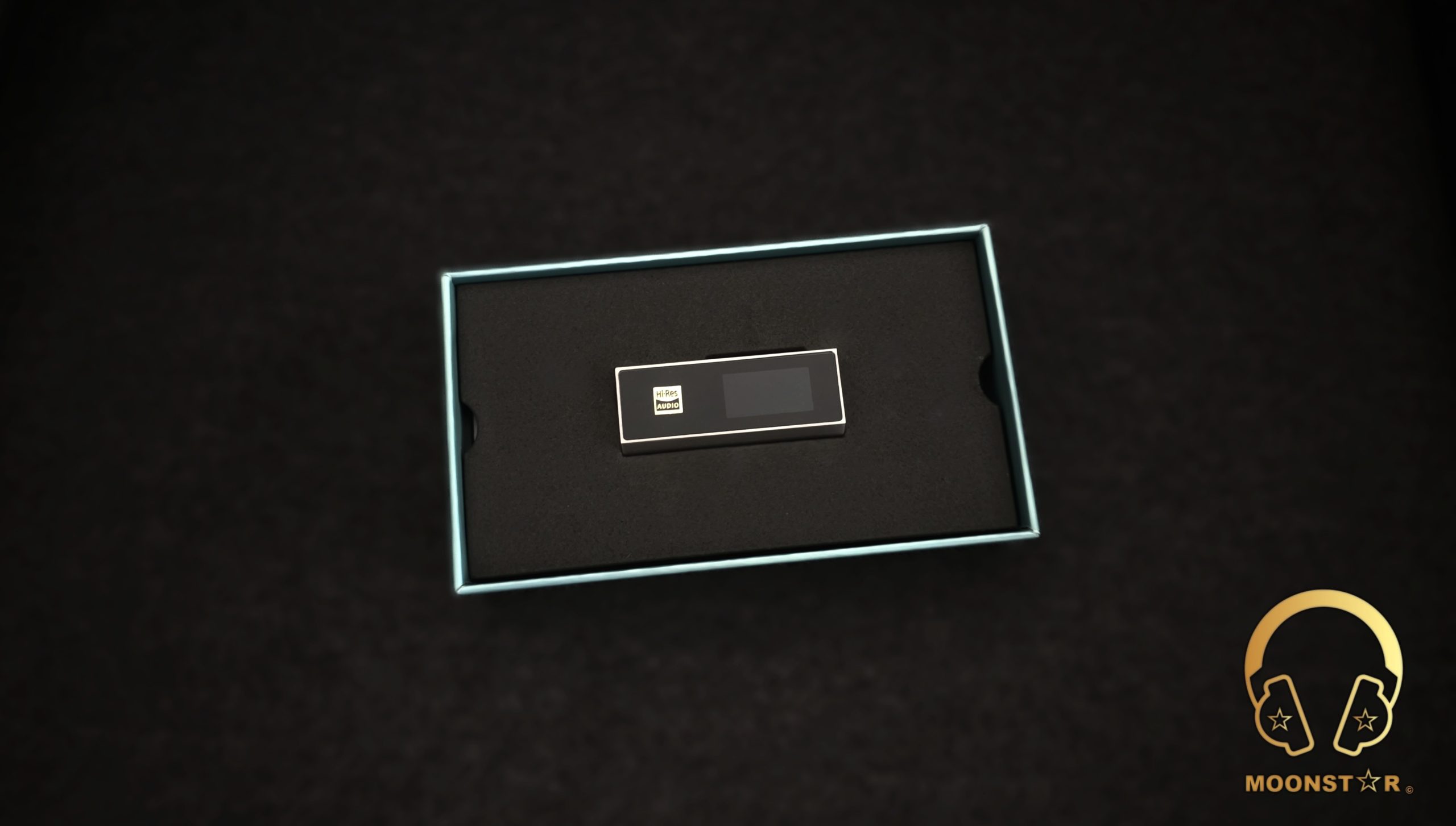
The accessory package is minimal by the standards of competitors at this price. There is no protective case, no cable clip, and no USB-C to Lightning adapter for iOS users. The short OTG cable is of adequate quality and connects securely to the DC04 Ultra’s input port. The USB-A adapter covers desktop and laptop use cases where a Type-C port is not available.
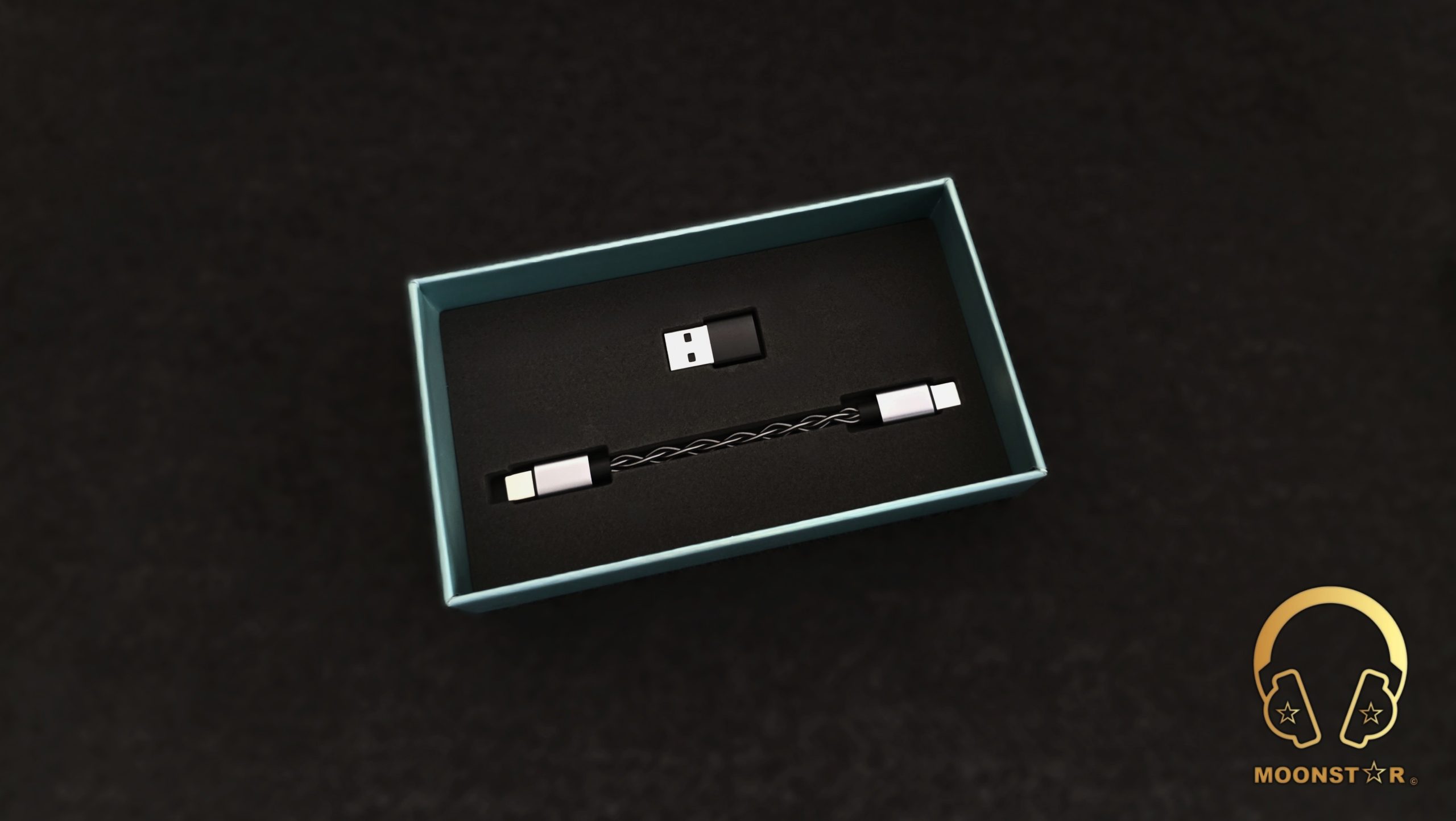
For a device that frequently travels in a pocket alongside a smartphone, the absence of any form of protective pouch is a practical gap that aftermarket solutions will need to address. The bundle is honest about its priorities: everything provided is necessary, and nothing unnecessary has been included to inflate the perceived value of the package.
Design & Build Quality:
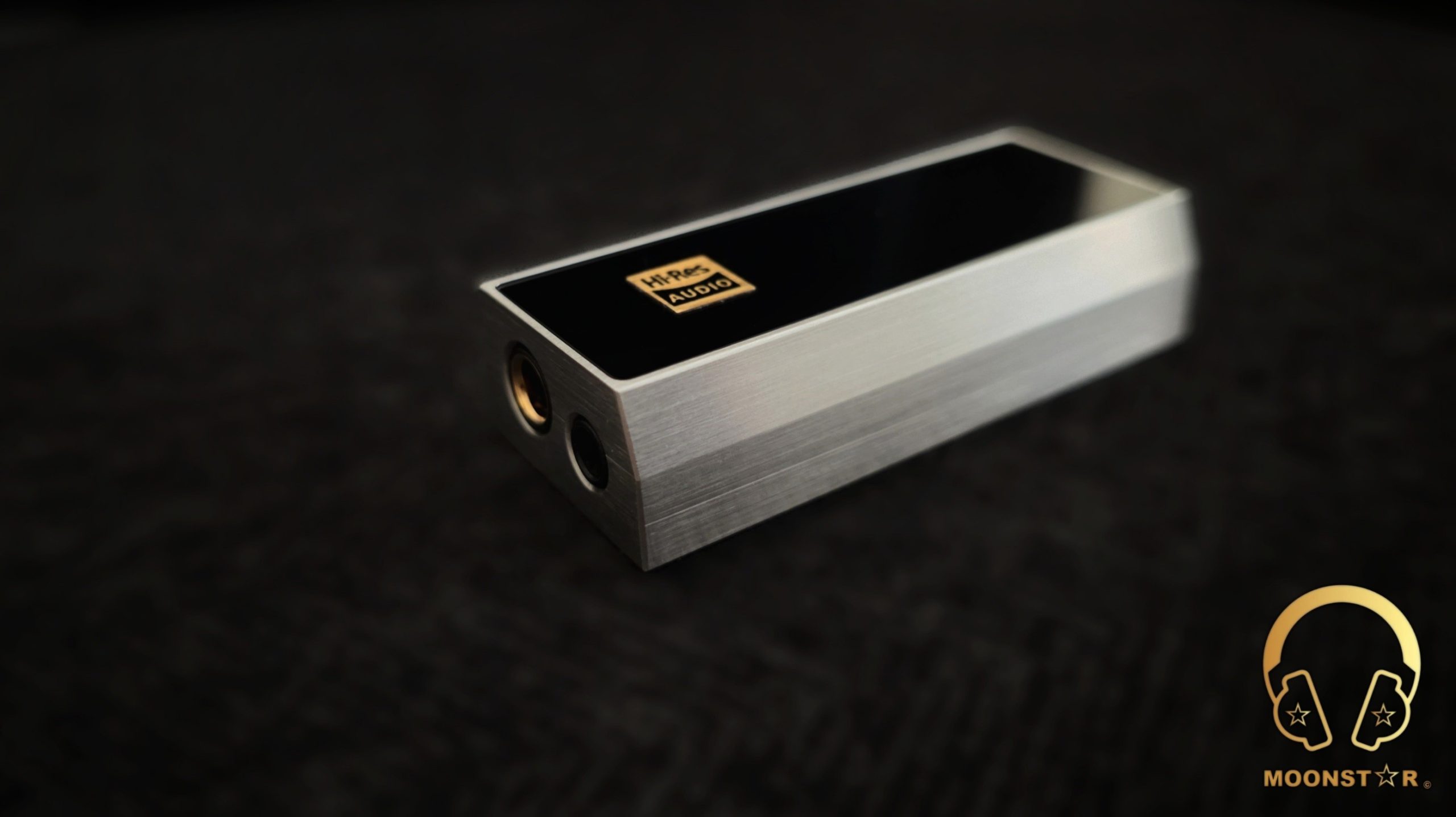
The DC04 Ultra presents a significantly more purposeful physical identity than the more subdued DC04 Pro. The stainless steel chassis has a heft and density that reads immediately as premium, and the material’s resistance to surface scratching and deformation gives the device a sense of long-term durability that aluminum dongles in the same price category cannot fully replicate. At approximately 37.2 grams, the DC04 Ultra is noticeably heavier than comparable aluminum-bodied competitors, which communicates quality in hand but does also mean that when connected to a lighter smartphone the dongle hangs with more physical presence than a plastic or thin-metal competitor would.
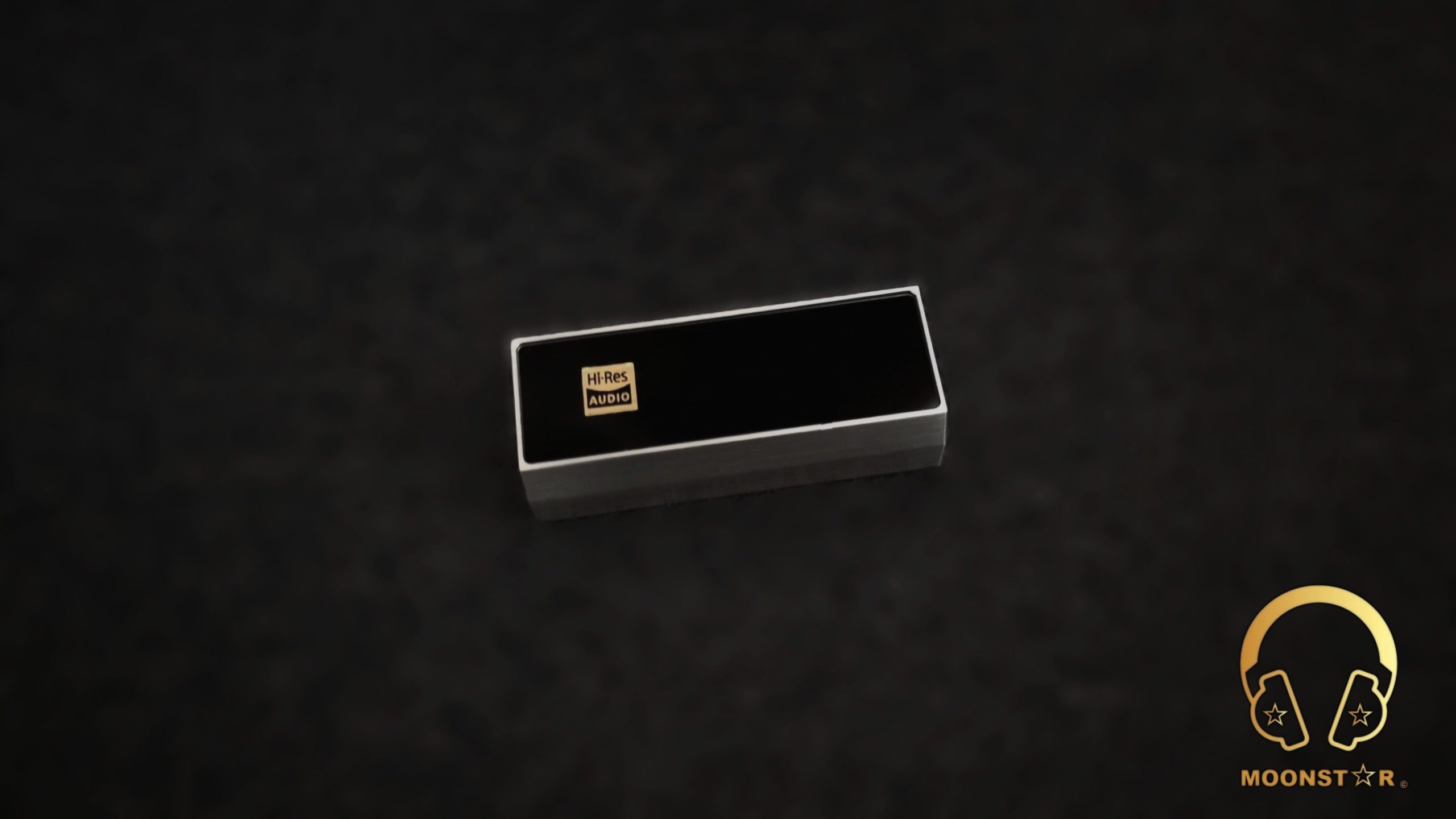
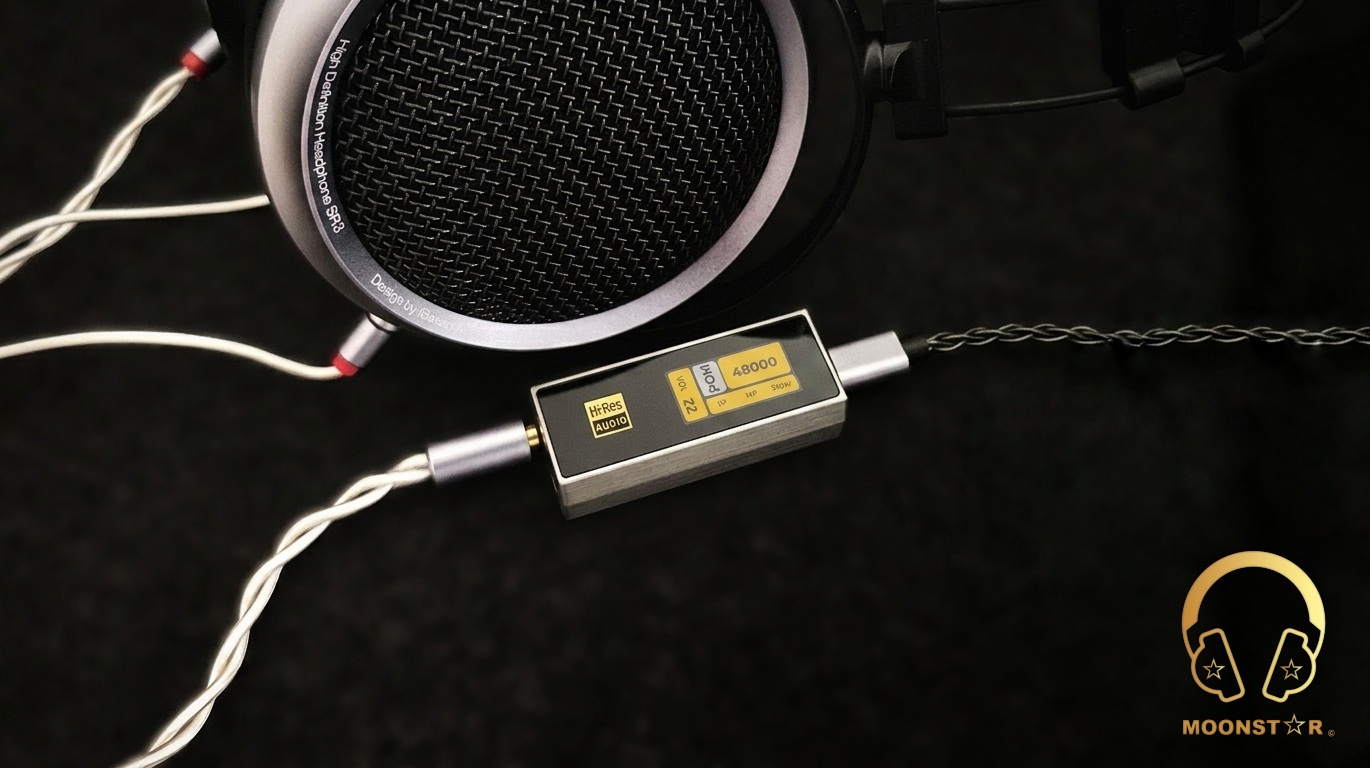
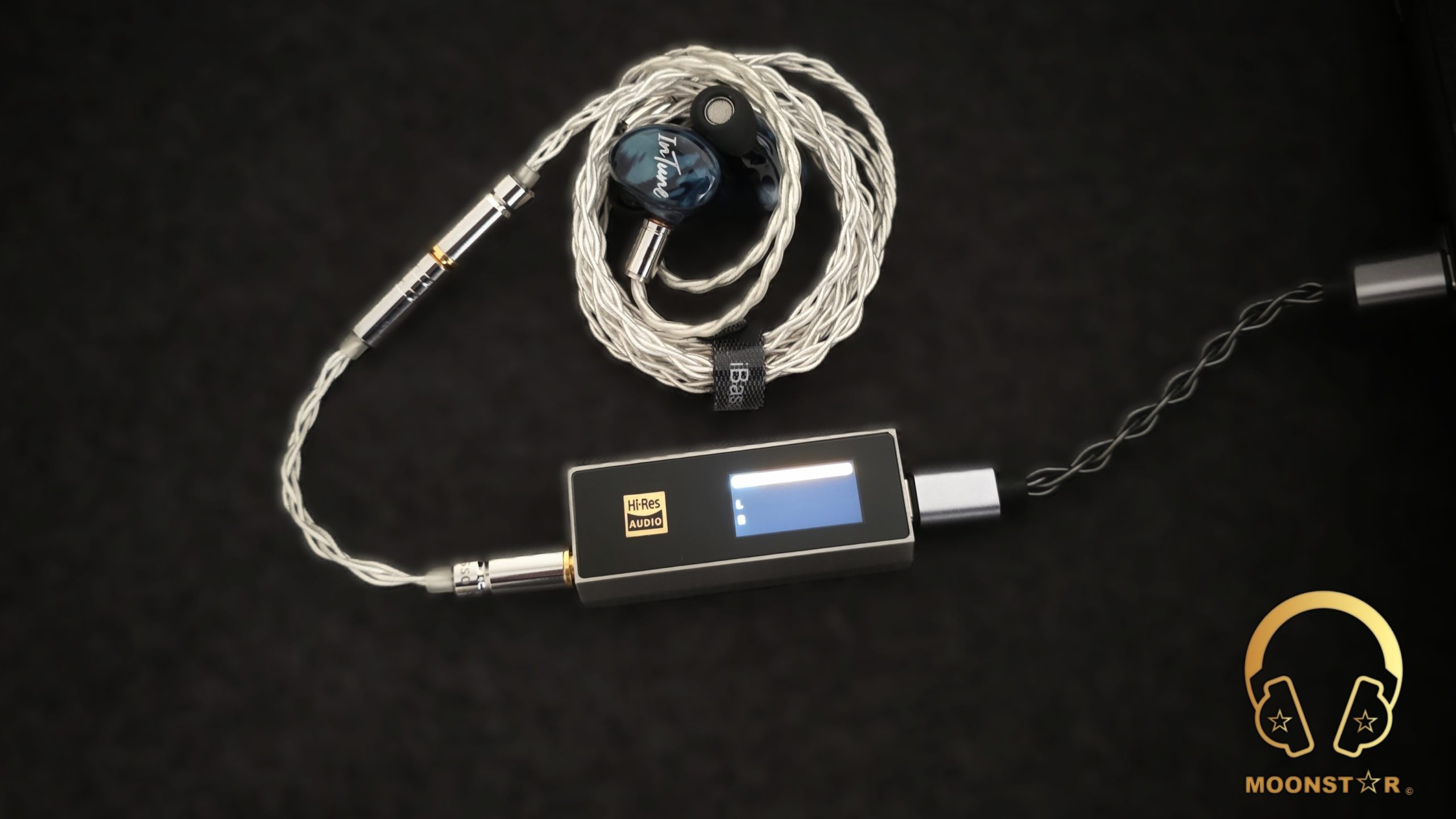
The front face of the DC04 Ultra is dominated by the 0.96-inch multi-color display, which occupies the upper half of the face panel. The display is bright and readable in typical indoor and shaded outdoor conditions, cycling through a dynamic visualization that changes color and pattern while audio is playing. Seven selectable display color themes are available through the settings menu. The screen serves a practical purpose beyond aesthetics: it shows the current sample rate, bit depth, gain mode, and filter selection at a glance, which removes the need to open an app for basic operational awareness. Text is small given the display size but remains legible for the key information it communicates. The dynamic visualization itself is a considered design choice rather than a gimmick; it provides immediate confirmation that the device is processing audio without requiring any button interaction.

Three physical buttons are positioned on the left side of the DC04 Ultra, arranged vertically in a volume up, multifunction center, and volume down sequence. The volume buttons provide 100-step hardware-level volume adjustment, and a long press on the center button enters the settings menu where gain mode, digital filter, DRE activation, and channel balance are all accessible without connecting to any app. The button travel is short and the click is well-defined, with enough tactile distinction between the three buttons to allow reliable operation by feel alone. The settings navigation uses a single-button-press progression through menu items and a long-press selection, which is functional but requires brief familiarization before becoming intuitive. For users who prefer phone-based control, the iBasso UAC Android app exposes all functions and the 10-band parametric EQ in a more accessible interface.
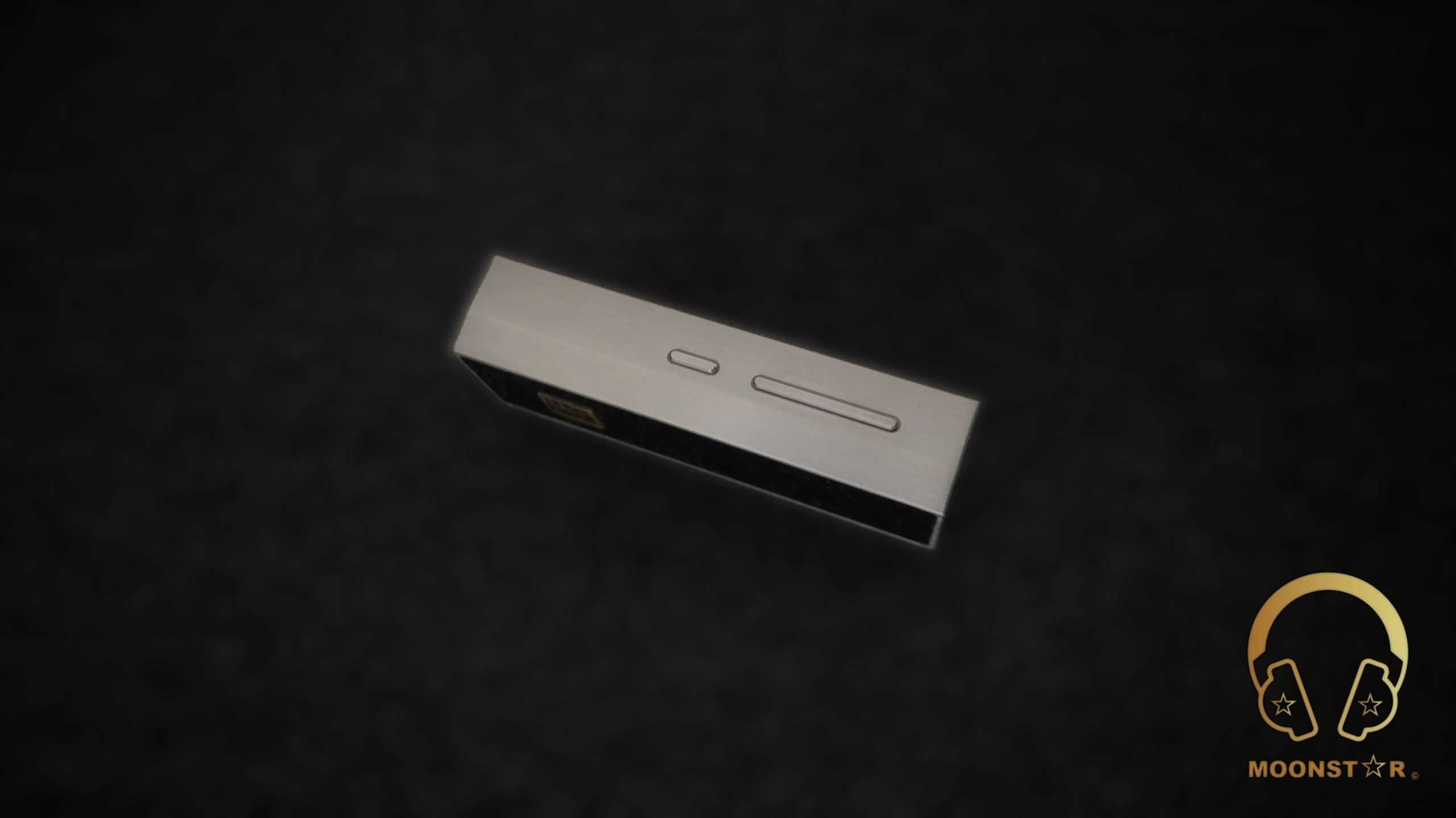
The USB Type-C input is located at the top edge of the DC04 Ultra. The port fits the included OTG cable and standard aftermarket Type-C cables without play or looseness, and the connection is mechanically secure without requiring excessive force. The 4.4mm balanced headphone output and the 3.5mm single-ended output are both positioned on the bottom edge, with clear labeling between them. The 3.5mm output also doubles as a microphone input for calls and voice communication in gaming contexts, a combination function that is practical for users who want a single device to serve both audio playback and communication duties. The 3.5mm jack can additionally function as a coaxial S/PDIF output when used with appropriate adapters, extending the DC04 Ultra’s utility as a digital transport for external DAC connections.
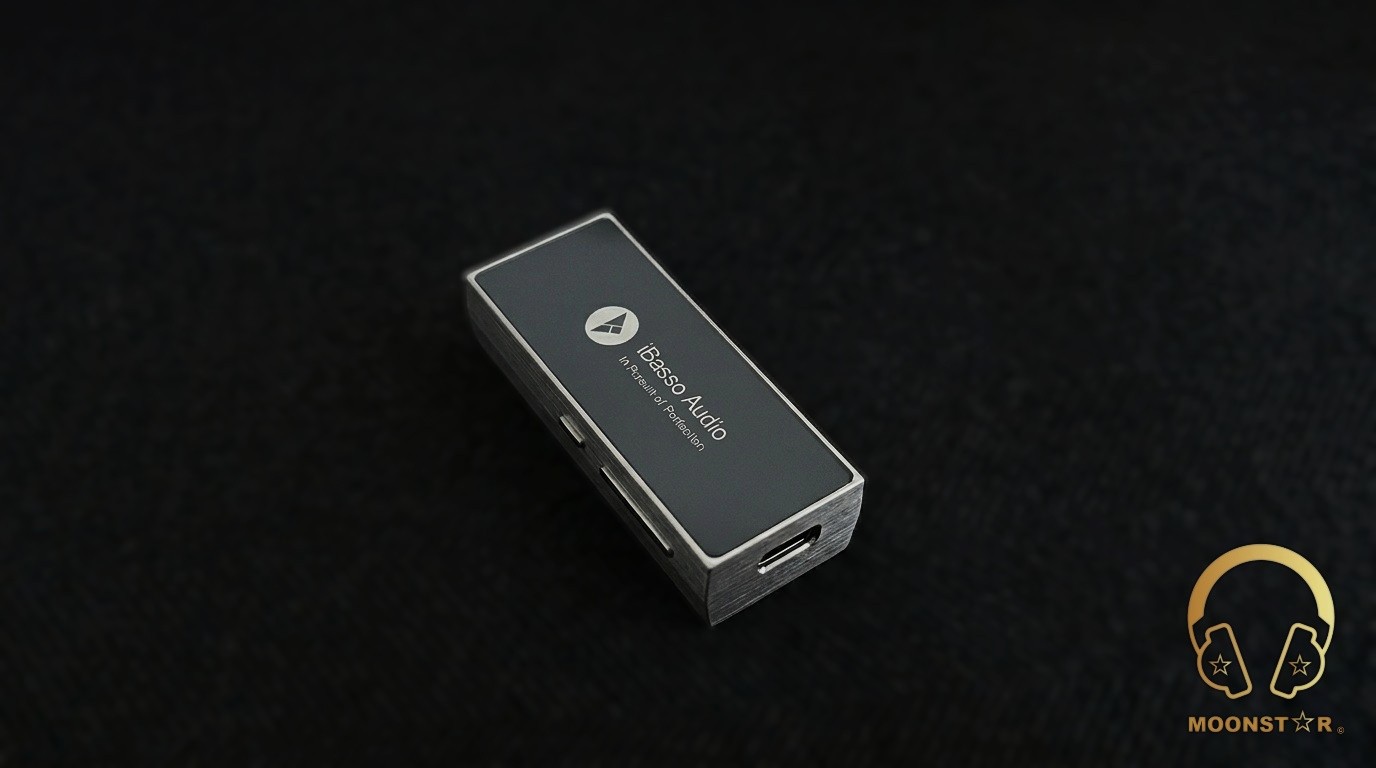
The rear panel of the DC04 Ultra uses a tempered glass surface on both sides of the stainless steel chassis, giving the device a two-material character that contrasts the metal edges with the glass faces. The glass is smooth and consistent in finish, and its reflective quality makes the DC04 Ultra visually distinctive compared to matte-finish aluminum competitors. Fingerprints accumulate on the glass surfaces during handling, which is a cosmetic characteristic rather than a functional concern. The overall construction is tight and rattle-free, with no give between the glass panels and the steel body and no audible resonance when the device is tapped. It is a physically confident product that communicates its build quality through material density and assembly precision rather than through decorative complexity.
Technical Specifications:
- Model: DC04 Ultra
- DAC Chips: Dual Cirrus Logic CS43198 (Four-Channel True Balanced Circuit)
- Clock: iBasso FPGA Audio Algorithms + Dual Femtosecond Crystal Oscillators
- Decoding: PCM up to 32-bit/768kHz; Native DSD512
- 4.4mm Balanced Output Power: 980mW + 980mW at 32 Ohms (THD+N under 1%)
- 3.5mm Single-Ended Output Power: 280mW + 280mW at 32 Ohms
- THD+N: -119dB (0.00011%)
- SNR: 132dB (Balanced)
- Dynamic Range: 132dB
- Noise Floor: below 0.1 Ohm output impedance
- Amplifier Supply Voltage: Adjustable plus/minus 4V to plus/minus 6V in 0.1V increments
- Volume Control: 100-step hardware volume
- Gain Modes: 3 (Low, Mid, High)
- Digital Filters: 5 selectable
- DRE Mode: Yes (Dynamic Range Enhancement, CS43198 true mode)
- Display: 0.96-inch multi-color IPS, 7 selectable color themes
- Physical Controls: 3 side buttons (volume up, multifunction/menu, volume down)
- Microphone Support: Yes, 3.5mm port doubles as mic input
- Coaxial Output: Yes, via 3.5mm port with adapter
- Input: USB Type-C
- Platform Compatibility: Android, Windows, macOS (iOS with appropriate adapter)
- App: iBasso UAC (Android, 10-band PEQ, all settings accessible)
- Chassis: CNC-Machined Stainless Steel with Tempered Glass Panels
- Weight: approx. 37.2g
Features & Connectivity:
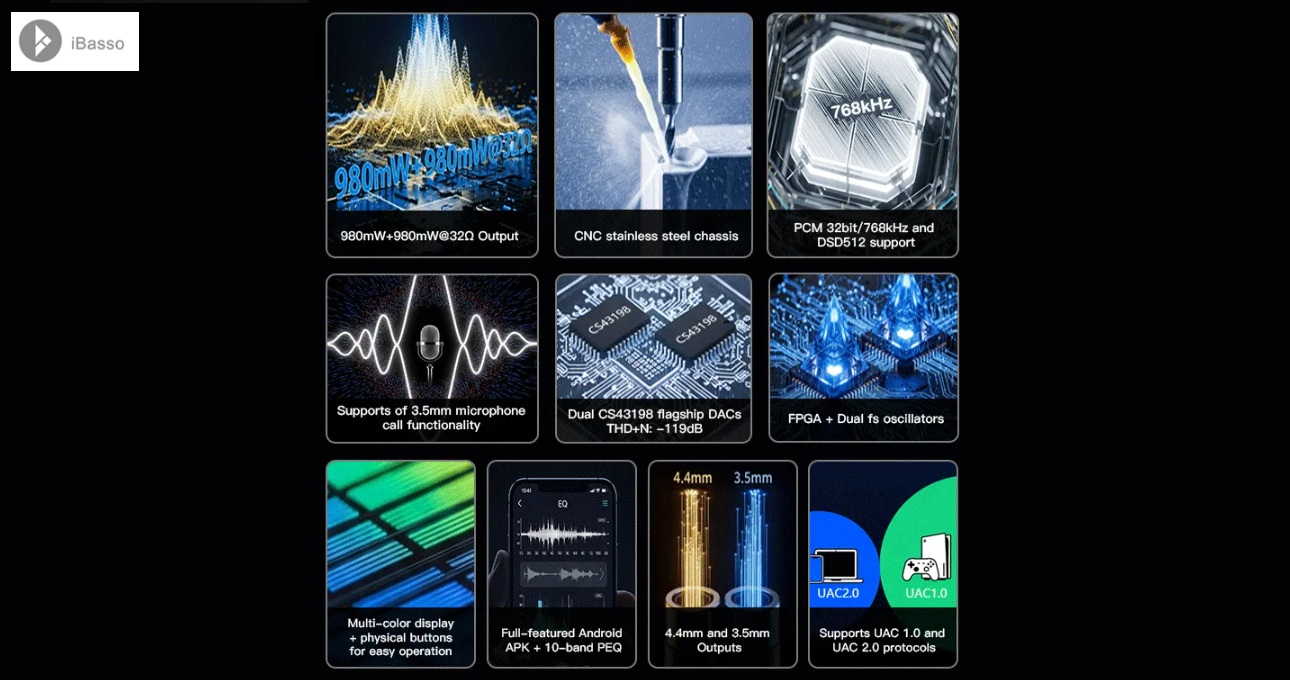
The DC04 Ultra’s dual CS43198 configuration creates a true four-channel balanced circuit from the point of digital conversion, with each chip dedicated to a single channel rather than sharing processing duties across the stereo image. This arrangement improves channel separation and allows the balanced 4.4mm output to benefit from the full independent signal path that genuine balanced architecture provides rather than the electronic balancing that some devices apply to a fundamentally single-ended output stage. The FPGA audio algorithm that iBasso has developed internally, combined with the dual femtosecond oscillators, manages jitter reduction and signal timing with a precision that exceeds what an off-the-shelf USB audio chipset would provide in the same application.
DRE mode addresses a specific technical limitation of the CS43198 chip: at 0dB input levels, the chip’s modulator can produce distortion artifacts that are audible in certain recording contexts. DRE engages iBasso’s processing to eliminate this distortion, and the mode is recommended for maximum performance rather than as a power-saving alternative. The device does consume more power in DRE mode, which increases drain on the connected source device, but the technical benefit of operating the CS43198 in its cleanest condition is audible on demanding material with source recordings that approach 0dB peaks.

The amplifier voltage adjustment is a practically significant feature that sets the DC04 Ultra apart from simpler dongle designs. Rather than a fixed gain structure, the amplifier supply voltage can be set in 0.1V increments between plus/minus 4V and plus/minus 6V, allowing the listener to optimize the power delivery curve for their specific transducer. Sensitive IEMs benefit from the lower voltage setting, which provides a finer volume control resolution and reduces the noise floor contribution from the amplifier stage. Demanding headphones with lower sensitivity or higher impedance benefit from the higher voltage settings, where additional headroom becomes relevant during transient peaks. This level of per-transducer optimization is genuinely unusual in the dongle DAC category.
The 10-band parametric EQ available through the iBasso UAC app provides meaningful customization without requiring an outboard EQ processor. Each band allows independent frequency center, gain, and Q adjustment, and up to three custom profiles can be saved alongside seven factory presets. The app interface is functional and clear, though Android-only compatibility means iOS users are limited to the on-device controls for all adjustments. The device operates without any driver installation required on Android and macOS; Windows users need to download the iBasso Windows driver for full functionality.

Equipment Used for This Review:
- DAC/AMP Dongles : iBasso DC04 Ultra, Cayin RU3, Shanling UA6
- IEM : iBasso IT07, NOBLE Knight
- Headphone : iBasso SR3
Albums & Tracks Used for this Review:
Vocal Jazz / Smooth Jazz
- Norah Jones – Come Away With Me (Flac 24bit/96kHz)
- Diana Krall – So Wonderful (DSF)
- Barry White – Just The Way You Are (Flac 24bit/48kHz)
- Isaac Hayes – Walk On By (Flac 16bit/44.1kHz)
- Sting – Englishman in New York (Flac 24bit/48kHz)
- Otto Liebert & Luna Negra – The River (Flac 24bit/192kHz)
- Ferit Odman – Look, Stop & Listen (Flac 24bit/192kHz)
- Charly Antolini – Duwadjuwandadu (Flac 24bit/192kHz)
Soul / R&B
- Aretha Franklin – I Say A Little Prayer (Flac 24bit/96kHz)
- Adele – My Little Love (Apple Lossless)
- George Michael – Don’t Let the Sun Go Down on Me (Flac 24bit/192kHz)
- Eric Clapton – Wonderful Tonight (Flac 24bit/96kHz)
Pop / Rock Classics
- Michael Jackson – Billie Jean (Flac 24bit/96kHz)
- Elton John – Rocket Man (Flac 24bit/96kHz)
- David Bowie – Heroes (Flac 24bit/192kHz)
- U2 – Sunday Bloody Sunday (Flac 16bit/44.1kHz)
- Lorde – Royals (Flac 24bit/48kHz)
- Dave Gahan – Kingdom (Apple Lossless)
Electronic / Experimental
- Daft Punk – Instant Crush (Flac 24bit/96kHz)
- Daft Punk – Doin’ it Right (Flac 24bit/96kHz)
- Bro Safari, UFO! – Drama (Apple Lossless)
- Armin Van Buuren – Vini Vici (Flac 16bit/44.1kHz)
- Yosi Horikawa – Bubbles (Apple Lossless)
- Toutant – Rebirth (Apple Lossless)
Alternative / Indie / Art Rock
- Radiohead – Live in Berlin “Album” (Apple Lossless)
- Radiohead – Pyramid Song (Apple Lossless)
- Muse – Hysteria (Flac 24bit/96kHz)
- Red Hot Chili Peppers – Nobody Weird Like Me (Flac 24bit/48kHz)
- Lunatic Soul – The Passage (Flac 16bit/44.1kHz)
- Portishead – It Could Be Sweet (Apple Lossless)
- Gogo Penguin – Raven (Flac 24bit/192kHz)
- Gogo Penguin – Murmuration (Flac 24bit/192kHz)
- Massive Attack – Angel (Flac 24bit/48kHz)
- Bear McCreary – Valkyries (Apple Lossless)
Classical / Orchestral
- Max Richter – On the Nature of Daylight (Flac 24bit/96kHz)
- Chopin – Nocturne No. 20 in C-Sharp Minor (Flac 16bit/44.1kHz)
- Clair de Lune – Claude Debussy (Apple Lossless)
- Tchaikovsky – Symphony No. 5 (Flac 16bit/44.1kHz)
- Vivaldi – Le Quattro Stagioni “The Four Seasons” (Apple Lossless)
- Fazıl Say – Nazım Oratoryosu (Live) (Flac 16bit/44.1kHz)
Jazz / Instrumental
- Miles Davis – So What (Apple Lossless)
World / Traditional
- Sertap Erener – Aşk (Flac 16bit/44.1kHz)
- Edith Piaf – Non Je Ne Regrette Rien (Flac 16bit/44.1kHz)
Metal / Progressive Rock
- Metallica – Dyers Eve (Flac 24bit/96kHz)
- Metallica – Sad but True (Flac 24bit/96kHz)
- Megadeth – Sweating Bullets (Apple Lossless)
- Opeth – Windowpane (Flac 16bit/44.1kHz)
- Deftones – My Own Summer (Shove It) (Flac 16bit/44.1kHz)
- Rush – Tom Sawyer (Flac 16bit/44.1kHz)
- Slayer – Angel of Death (Apple Lossless)
The Sound:
The iBasso DC04 Ultra’s overall character is best described as transparent-leaning with a slight warmth. It is not a tonally colored presentation in the way that R2R implementations can be, but neither is it clinically flat in the manner of the most analytically inclined delta-sigma designs. The CS43198 chips, in iBasso’s specific implementation, produce a sound that has genuine tonal body without imposing a warmth that the recording does not contain. There is a sense of ease and dynamic confidence that the 980mW output headroom contributes even in listening situations that do not approach the device’s power ceiling, because adequate headroom in amplification reduces compression behavior during transient peaks regardless of the volume position on the dial.
All sound impressions were formed using the 4.4mm balanced output in DRE mode (CS43198 true mode) with the default digital filter unless otherwise stated. The iBasso IT07, a ten-driver tribrid IEM with a known and consistent character, and the iBasso SR3 open-back dynamic driver headphone were used across all listening sessions to provide complementary reference points across both IEM and full-size headphone contexts. Volume was matched by ear between devices before direct comparisons were made.

Bass:
The bass of the DC04 Ultra is the region where the step up in output power from previous DC-series dongles is most directly audible. Sub-bass extension is full and controlled, with a sense of physical depth in recordings that have genuine low-frequency content. Electronic music with sustained bass lines communicates their intended resonance and pressure without the slight compression and softening that less powerful dongles introduce when the amplifier stage is operating closer to its limits. The decay of deep bass notes resolves cleanly, and the separation between sub-bass and mid-bass content is maintained with good clarity.
Mid-bass punch is tight and well-defined. Kick drums land with a natural impact that has a clear leading edge and a controlled decay rather than the rounded, slightly bloomed character that comes from an underpowered amplifier adding its own distortion to a demanding transient. Driven from the 4.4mm balanced output at a sensible gain setting, the iBasso SR3 receives a bass presentation that is noticeably better controlled and more dynamically convincing than the same headphone produces from less powerful sources. The SR3’s dynamic driver, which benefits from genuine current delivery rather than a voltage-optimized output, produces a bass quality from the DC04 Ultra that sits meaningfully above what the headphone delivers from simpler dongle sources.
With the IT07, the bass is clean, well-extended, and free of the hash and grain that IEMs with balanced armature bass drivers can expose from sources with elevated noise floors. The IT07’s bass driver configuration responds to the DC04 Ultra’s low output impedance and low noise floor with a precision that keeps sub-bass texture clearly resolved and mid-bass tight without the artificial sharpness that some analytically inclined sources introduce.
Paired with the Noble Audio Knight, the 10mm dynamic driver delivers deep, textured and controlled bass with good sub-bass extension and natural warmth. The DC04 Ultra allows the Knight’s dynamic driver to express its full weight and resonance while maintaining excellent control and speed, resulting in a more musical and physical bass presentation compared to the more neutral-technical IT07.

Midrange:
The midrange of the DC04 Ultra is honest, transparent, and free of the colorations that make some dongles engaging on first listen but fatiguing over extended sessions. The CS43198 chip’s conversion, as implemented through iBasso’s FPGA processing chain, produces a midrange that neither adds warmth beyond what the recording contains nor strips it away in pursuit of analytical precision. What is in the recording is presented without meaningful addition or subtraction, which means that the quality of the DC04 Ultra’s midrange is most correctly evaluated not by how it sounds in isolation but by how faithfully it communicates the character of the transducer connected to it.
Female vocals are rendered with clarity, presence, and good tonal definition across both pairings. Through the IT07, the multi-driver configuration’s midrange character is communicated directly, with the Sonion and Knowles balanced armature drivers in the IT07’s crossover expressing their respective tonal contributions cleanly. Upper-midrange presence on female vocals sits at a natural level that gives voices a forward, engaged quality without the brightness that can cause fatigue. The subtle dynamic variations within a sustained vocal phrase, the breath and tonal color changes between chest and head register, are reproduced with a fidelity that rewards attentive listening. Through the SR3, female vocals gain a slightly warmer, more physically rounded character from the dynamic driver’s lower-midrange contribution, and the DC04 Ultra communicates this character accurately without imposing its own tonal bias.
Through the Noble Audio Knight, female vocals benefit from the Sonion BA driver, gaining a richer, smoother and more velvety character while retaining good clarity and emotion. The DC04 Ultra presents this musical midrange faithfully without adding extra coloration.
Male vocals are handled with good tonal body and lower-midrange presence. Deep bass-baritone voices have the appropriate resonance and weight in the lower midrange, with the fundamental pitch and harmonic overtones both contributing to a convincing sense of voice character rather than a technically accurate but tonally thin reproduction of the fundamental alone. Mid-baritone and tenor registers sit at a natural prominence within the mix, neither recessed behind the bass content below nor pushed artificially forward into an analytical clarity. The IT07’s midrange is particularly strong in this register due to its dedicated midrange driver complement, and the DC04 Ultra provides a clean, low-noise signal that allows the IT07’s midrange to express its capability fully.
Instrumental midrange reproduction is accurate across a range of genres and recording styles. Acoustic guitar has natural body and string resonance. Piano retains its key weight and harmonic depth in solo contexts. Strings in orchestral settings sit in a realistic tonal register with a bowed quality that sounds physical rather than processed. The DC04 Ultra’s midrange does not seek to impose a particular tonal identity; it functions as a transparent conduit for the transducer’s own character, and this is the correct behavior for a source device at any price point.
Treble:
Treble on the DC04 Ultra is extended, detailed, and well-controlled. The CS43198 chips contribute a treble character that has genuine high-frequency reach without the metallic edge or grain that cheaper or less carefully implemented delta-sigma converters can introduce in the upper registers. Cymbal textures are communicated with natural metallic shimmer and appropriate transient definition. The leading edge of each cymbal hit is clear and tonally accurate, and the decay trails into the background with a realistic sense of acoustic space rather than cutting off abruptly or blurring with the next transient.
Through the IT07, the balanced armature drivers in the upper frequencies are driven cleanly, providing crisp, precise and well-extended treble with good air and micro-detail. The DC04 Ultra’s low noise floor allows the IT07’s technical treble performance to be fully realized without grain or harshness.
Through the Noble Audio Knight, the piezo super tweeter delivers smooth, refined and shimmering highs with a slightly more relaxed character. The DC04 Ultra supports this musical treble tuning well, resulting in good extension and sparkle while keeping the presentation fatigue-free and cohesive for extended listening.
The five selectable digital filters offer meaningful variation in the treble presentation, ranging from a sharper, more precisely defined high-frequency character in the more aggressive filter settings to a smoother, slightly softer top end in the more relaxed options. The default filter sits in a balanced position that suits most pairings and most listening contexts. Sibilance is not a concern in standard operation with the pairings used in this review; the DC04 Ultra does not emphasize the presence region in a way that pushes sibilance-prone material toward discomfort, though particularly bright IEMs with elevated treble signatures may benefit from the gentler filter settings or from EQ adjustment to manage the interaction.
Soundstage and Imaging:
The soundstage delivered by the DC04 Ultra through both pairings is wide and well-organized, with a genuine sense of depth that goes beyond the flat, two-dimensional presentation that dongle sources sometimes produce when amplifier limitations constrain their spatial rendering. The IT07’s known soundstage capabilities are fully expressed through the DC04 Ultra, with instrument positions clearly defined, stable throughout complex passages, and distributed across both lateral width and front-to-back depth with convincing proportions. The background is notably clean and quiet, with no audible noise floor even with the IT07’s multi-driver configuration at low gain settings. This quiet background is directly relevant to soundstage perception: the absence of noise allows low-level spatial information, the ambient decay of notes, the reverberation character of a recording environment, to emerge clearly rather than being masked.
Through the SR3, the open-back design’s naturally wider and more diffuse soundstage receives the power delivery it needs to project convincingly. The SR3 at 40 ohms impedance and moderate sensitivity benefits noticeably from the DC04 Ultra’s higher output headroom compared to more modest dongle sources, and the result is a spatial presentation that maintains its composure during dynamic peaks rather than compressing slightly as less powerful sources do under transient load.
Comparisons:
iBasso DC04 Ultra vs. Cayin RU3:
The Cayin RU3 at $99.99 is built around a single ESS ES9069Q DAC configured in a quad-balanced topology, with two TI OPA1602 op-amps for I/V conversion and dual SGM8262 chips for headphone amplification. Its maximum output is 560mW per channel through the balanced 4.4mm output in Hyper mode, and its CNC-machined aluminum alloy chassis carries a 0.96-inch IPS color display and three physical buttons in an ergonomically clean package. The RU3 represents excellent value at its price point and offers a well-considered feature set including a 10-band parametric EQ, five digital filters, two gain levels, and Hyper and Standard power modes.
The sonic comparison between the two reveals a meaningful difference in character as well as a quantitative one in output power. The Cayin RU3 has a warm, slightly full-bodied presentation that the ESS chip and TI amplifier combination produce with a consistent musical character. Vocals sit forward and naturally warm. Bass has good texture and body, tipping slightly toward warmth in the mid-bass region. Treble is smooth and non-fatiguing. The RU3 is an enjoyable and engaging listening experience that suits a wide range of IEM pairings and genres. The DC04 Ultra is the more transparent of the two, with less tonal contribution of its own and a cleaner, more controlled presentation that defers more completely to the character of the connected transducer. The DC04 Ultra’s 980mW balanced output is audibly more capable with the iBasso SR3, where its greater headroom provides better bass control and dynamic range. Through the IT07, the difference is less about power and more about the DC04 Ultra’s lower noise floor and cleaner midrange transparency, which allows the IT07’s multi-driver configuration to express itself with greater clarity.
The RU3 generates more heat during extended use, particularly in Hyper mode, which is a manageable characteristic rather than a deficiency but worth noting for users who carry the device in a pocket close to the body. The DC04 Ultra also warms with use but can be generally described as more thermally moderate. Both devices offer on-device control without requiring an app for core functions. The RU3’s aluminum chassis and the DC04 Ultra’s stainless steel and glass construction differ in feel and durability, with the DC04 Ultra’s stainless shell offering superior scratch resistance but at a cost in additional weight.
iBasso DC04 Ultra vs. Shanling UA6:
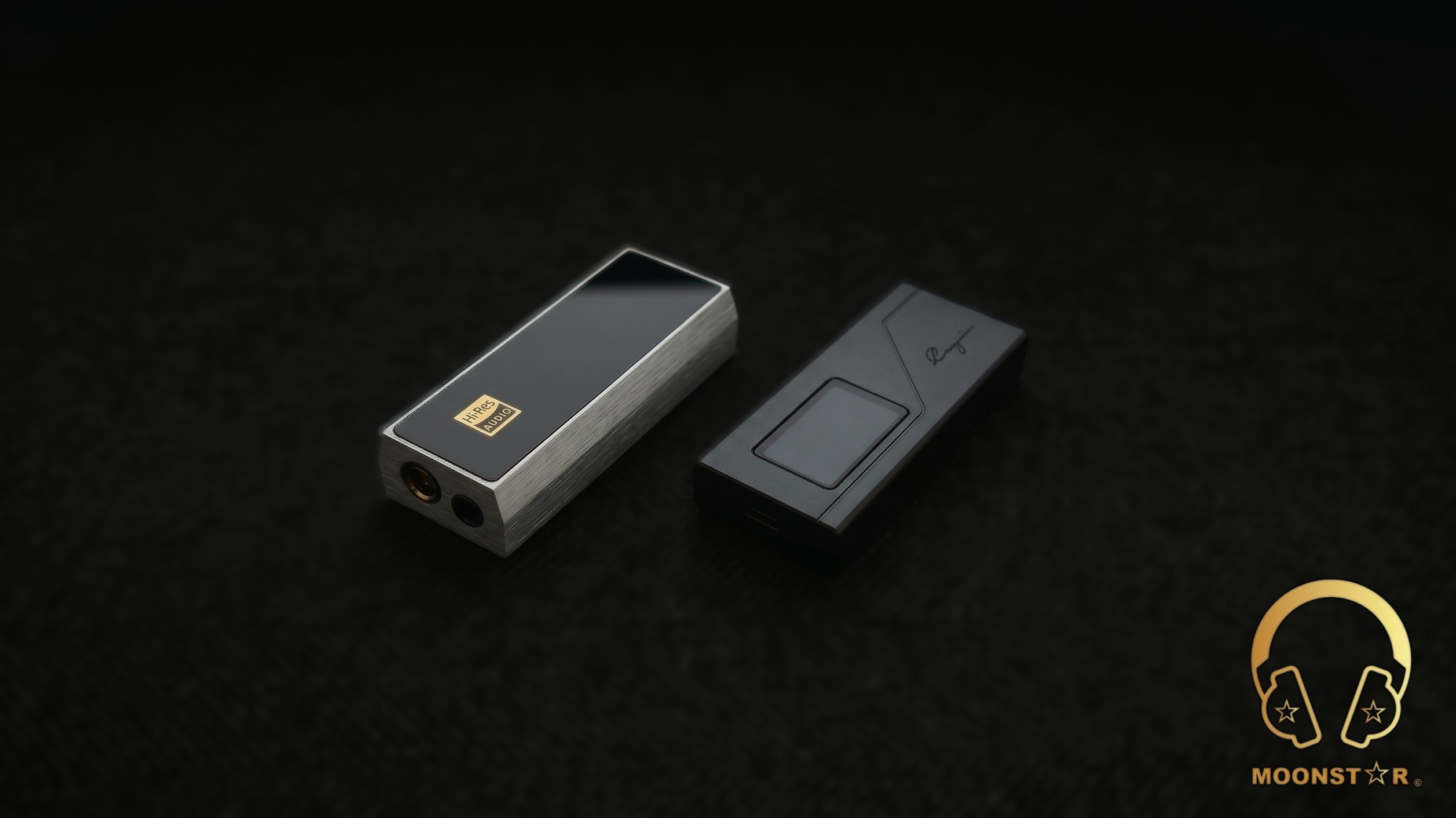
In terms of market positioning, the Shanling UA6 stands as a significant competitor to the DC04 Ultra. It features a quad CS43131 DAC configuration and a specialized hybrid power system. This internal 220mAh battery is designed to stabilize performance by supplementing the USB power draw from the source device. While this effectively addresses power delivery inconsistencies in certain smartphones, it serves more as a functional utility than a performance enhancer when compared to the raw technical capabilities of the iBasso.
The disparity in output power between these two devices is nothing short of massive: while the UA6 provides a respectable 360mW, the DC04 Ultra delivers a staggering 980mW at 32 ohms. This extra headroom is transformative when driving demanding gear like the iBasso SR3. During complex orchestral movements or high energy rock tracks where multiple transients occur simultaneously, the DC04 Ultra maintains a level of dynamic authority, grip, and effortless control that the UA6 simply cannot replicate. Even with sensitive IEMs like the IT07, the DC04 Ultra’s superior engineering shines through; its remarkably low noise floor and the high performance metrics of the CS43198 implementation result in superior fine detail retrieval and a much deeper, “blacker” background.
Sonically, the UA6 departs from the traditional warm Shanling house sound, leaning toward a neutral and slightly analytical presentation. It is somewhat more forward in the upper midrange and crisper at the leading edges of the treble. In contrast, the DC04 Ultra offers a more sophisticated and natural tonal balance. It remains exceptionally transparent yet manages to be smoother and more organic, providing a fatigue free listening experience without sacrificing any technical precision.
While the UA6’s battery system is a practical feature for users with power limited sources, the DC04 Ultra is the definitive performance leader. Its immense driving power, higher resolution, and refined musicality place it in a higher tier of portable audio. Furthermore, while the UA6’s aluminum and glass chassis is aesthetically pleasing, the DC04 Ultra’s stainless steel construction offers superior physical durability and a more premium, substantial feel in the hand.

Conclusion:
The iBasso DC04 Ultra makes a clear and well-executed argument for a specific kind of portable audio listener: one who needs a dongle DAC with the output power to drive a genuine range of headphones and IEMs without external amplification, combined with the technical competence to match that power with clean, transparent conversion and a comprehensive set of on-device controls. The 980mW balanced output, the dual CS43198 FPGA implementation, the adjustable amplifier voltage, and the 10-band parametric EQ together make the DC04 Ultra one of the most capable and complete dongle DAC products currently available at its price point.
The sound is transparent, dynamically confident, and tonally honest. Bass has the depth and control that the output power headroom enables. The midrange is clean and direct, communicating the character of connected transducers without meaningful coloration. Treble is extended and detailed without harshness. The soundstage is wide and well-organized, with a quiet background that allows low-level spatial information to emerge clearly. Through both the iBasso IT07 and the iBasso SR3, the DC04 Ultra performs at a level that genuinely represents these transducers’ capabilities rather than limiting them.
While the stainless steel chassis adds a bit of weight and the device can warm up during high demand use, these are minor trade offs for the performance on tap. For listeners seeking a well designed, technically superior dongle that handles almost any load with ease, the DC04 Ultra is a standout achievement. At $119, it is not just a solid purchase; it is an exceptional value that justifies itself through pure engineering excellence.
Pros & Cons:
- + Excellent, transparency-leaning sonic character with a slight natural warmth across the frequency spectrum
- + Wide and well-organized soundstage with stable instrument placement and distinct front-to-back depth
- + Transparent-leaning sonic character with a slight natural warmth across the frequency spectrum
- + 980mW balanced output provides genuine headphone amplification headroom for demanding IEMs and full-size headphones
- + Dual CS43198 chips in true four-channel balanced configuration deliver excellent technical performance
- + iBasso FPGA algorithm and dual femtosecond oscillators reduce jitter and improve clock precision
- + Adjustable amplifier supply voltage in 0.1V increments allows per-transducer optimization
- + DRE mode eliminates CS43198 0dB distortion for cleaner handling of recordings that approach full scale
- + 0.96-inch color display shows sample rate, gain, and filter settings at a glance
- + Three physical buttons provide full on-device control without requiring any app
- + 100-step hardware volume control with 3 gain modes and 5 digital filters
- + 3.5mm port doubles as microphone input and coaxial S/PDIF output
- + Stainless steel CNC-machined chassis with tempered glass panels: durable and scratch-resistant
- + Low output impedance below 0.1 Ohm ensures tonally accurate performance with sensitive multi-driver IEMs
- – No carrying case or protective pouch included in the package
- – Stainless steel chassis adds weight (approx. 37.2g) compared to aluminum-bodied competitors
- – No USB-C to Lightning adapter included; iOS users need a separate purchase
- – iBasso UAC app is Android-only; iOS users cannot access PEQ or advanced settings
- – Device warms noticeably during extended high-power operation; normal behavior but worth noting for pocket carry
Thank you for the Read!














Great review.
I have a question.
I’m thinking of buying a new dongle dac and currently thinking of 2 dongles.
In terms of sound only, how would you compare the iBasso DC04 Ultra vs FiiO QX13?
Which one do you think has the better sound overall without all the extra features?
Hi John,
Thank you for the kind words about the review! I’m glad you enjoyed it.
Both the iBasso DC04 Ultra and the FiiO QX13 are excellent portable DACs, but they do have slightly different characteristics when it comes to sound performance. Here is a brief comparison to help you choose:
In terms of pure technicalities, the FiiO QX13 is ahead by a very small margin. It offers a slightly wider soundstage and a bit more micro-detail retrieval, especially in the treble region, which feels a touch more extended. The bass response on the QX13 is also slightly tighter and faster.
On the other hand, the iBasso DC04 Ultra performs exceptionally well, especially considering its price point. It has a slightly warmer, more musical mid-range with a very organic presentation. While its soundstage and ultimate separation are just a hair behind the QX13, it offers an incredibly immersive and engaging listening experience.
Overall, while the QX13 takes a very slight lead in absolute sound quality and technical performance, the iBasso DC04 Ultra is highly successful and offers outstanding value for its price. If you want the absolute highest technical capability by a small margin, go for the QX13. However, if price to performance ratio is important to you, the DC04 Ultra is an amazing choice that gets you very close to that top-tier performance.
Hope this helps with your decision!