Noble Audio Knight Review
Noble Audio Knight Review
Introduction:
Noble Audio has spent more than a decade building a reputation at the top end of the IEM market. Founded by Dr. John Moulton, the brand earned considerable respect through flagship products like the Encore, Katana, and Khan, all of which demonstrated what a hand-tuned, carefully engineered in-ear monitor could achieve at premium price points. For years, the entry barrier for Noble’s lineup remained high, leaving budget-conscious listeners largely outside the fold. The Knight changes that. Released at the start of 2025 and priced at $289 USD, it is Noble’s first genuine foray into the sub-$300 segment, and it arrives with a tribrid driver configuration that would have seemed ambitious at this price even a few years ago.
The Knight combines a 10mm dual-magnet dynamic driver, a Sonion 23 Series balanced armature, and a piezoelectric super tweeter, with each driver tasked with a specific frequency range. The goal, according to Noble, is to deliver their signature house sound at an accessible price without compromising on the fundamentals of build quality, tuning, and presentation. Whether that promise holds up in daily use is what this review sets out to address.
Disclaimer:
I would like to thank Noble Audio for providing the Knight for review purposes. I am not affiliated with Noble Audio beyond this review, and these words reflect my true and unaltered opinions about the product.
Price & Availability:
The Noble Audio Knight is priced at $289 USD. It is available directly through the Noble Audio website and authorized dealers worldwide,
Package & Accessories:
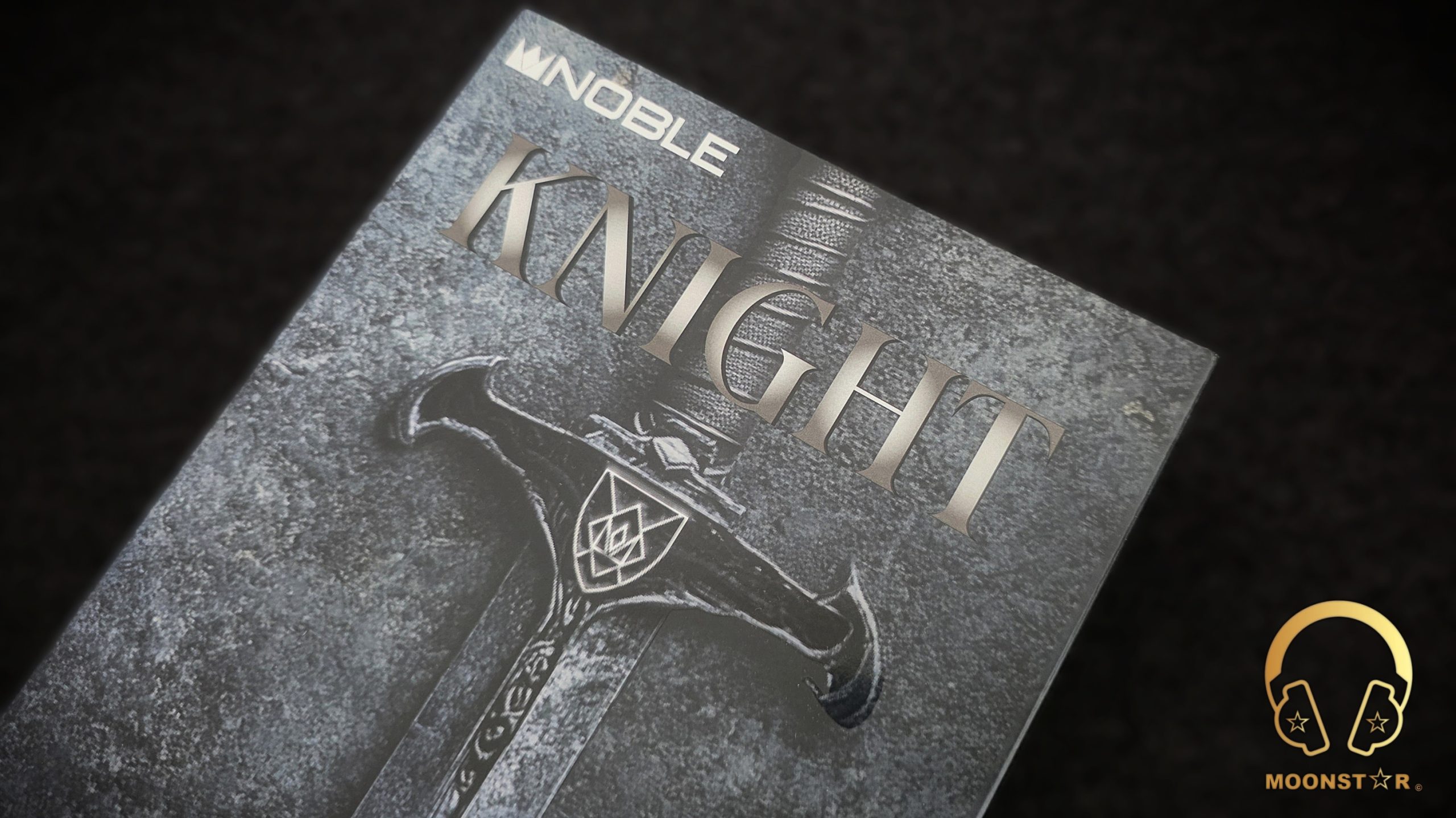
The Knight arrives in packaging that leans into the medieval theme with considerable commitment. The outer slip case features an illustration of a sword with the Noble logo on the hilt and the product name printed across the grip, reading like the cover of a fantasy novel rather than an audio product box.

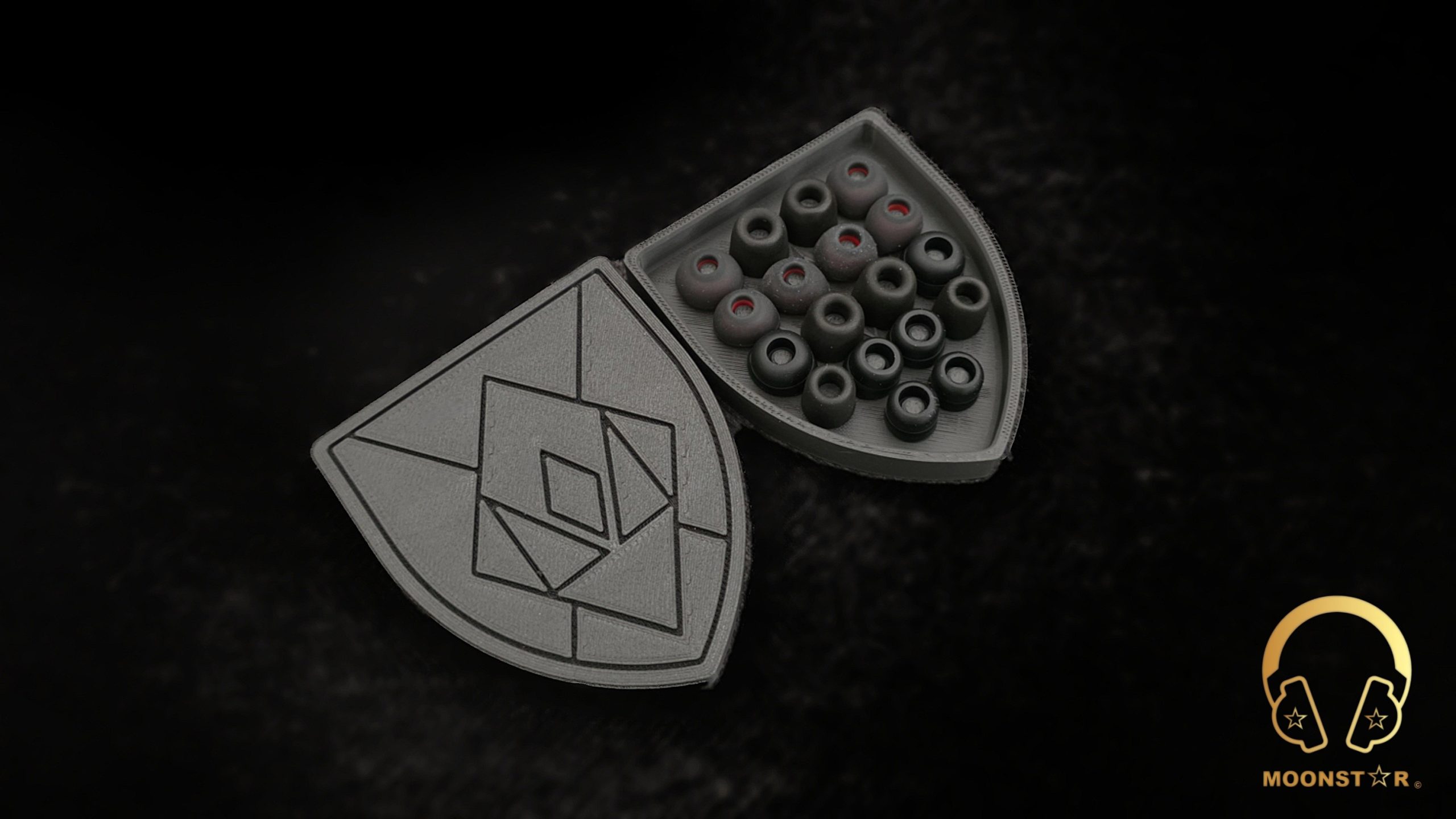
Removing the sleeve reveals a plain matte black inner box that opens from the center outward into three distinct sections, much like a triptych. The IEMs, with the cable attached, sit in a cut-out in the upper section. A shield-shaped container holds the ear tip selection in the middle layer, and a soft velour carrying pouch, cleaning brush, and Noble warranty card occupy the bottom compartment.
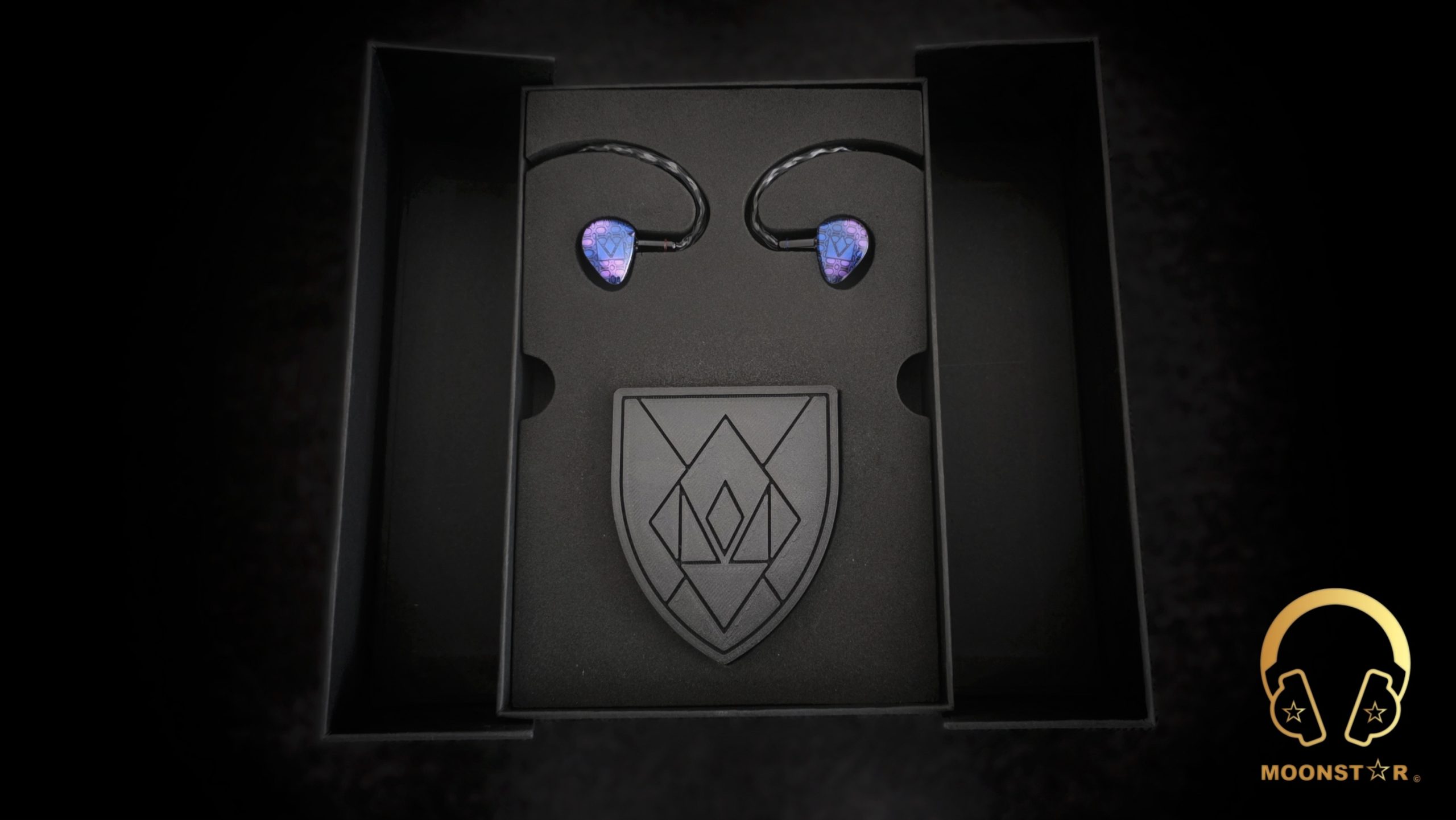
The full package includes:
- 1 pair x Noble Audio Knight In-Ear Monitors
- 1 x 8-core OCC/OFC Silver-Plated Cable with 4.4mm Balanced Termination
- 3 pairs x Medium Bore Grey Silicone Ear Tips
- 3 pairs x Wide Bore Grey Silicone Ear Tips
- 3 pairs x Conical Foam Ear Tips
- 1 x Velour Carrying Pouch
- 1 x Cleaning Brush
- 1 x Warranty Card and Documentation

The overall presentation is sophisticated and makes a positive first impression. The cable bundled with the Knight is particularly noteworthy for the price point: an 8-core silver-plated OCC/OFC cable with a 4.4mm balanced termination is a genuinely premium inclusion that many competing IEMs in this bracket simply do not offer. The three ear tip types, each delivering a noticeably different sonic character, add useful flexibility.

The main shortcoming is the absence of a hard case. The velour pouch works, but for an IEM with metal shells and a nearly $300 price tag, a rigid transport case would have been a more complete solution.

Design & Build Quality:
Noble Audio has made no concessions to the Knight’s entry-level positioning when it comes to physical quality. The construction reflects the brand’s broader commitment to craftsmanship, featuring CNC-machined anodized aluminum shells that feel noticeably more substantial than the 3D-printed resin housings that dominate the sub-$300 market. This material choice brings a meaningful improvement in long-term durability and resonance control compared to resin alternatives. With no visible seam lines, flexing, or rattling, the Knight communicates a level of engineering care that is uncommon at this price point.
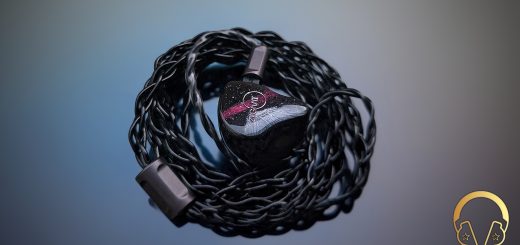
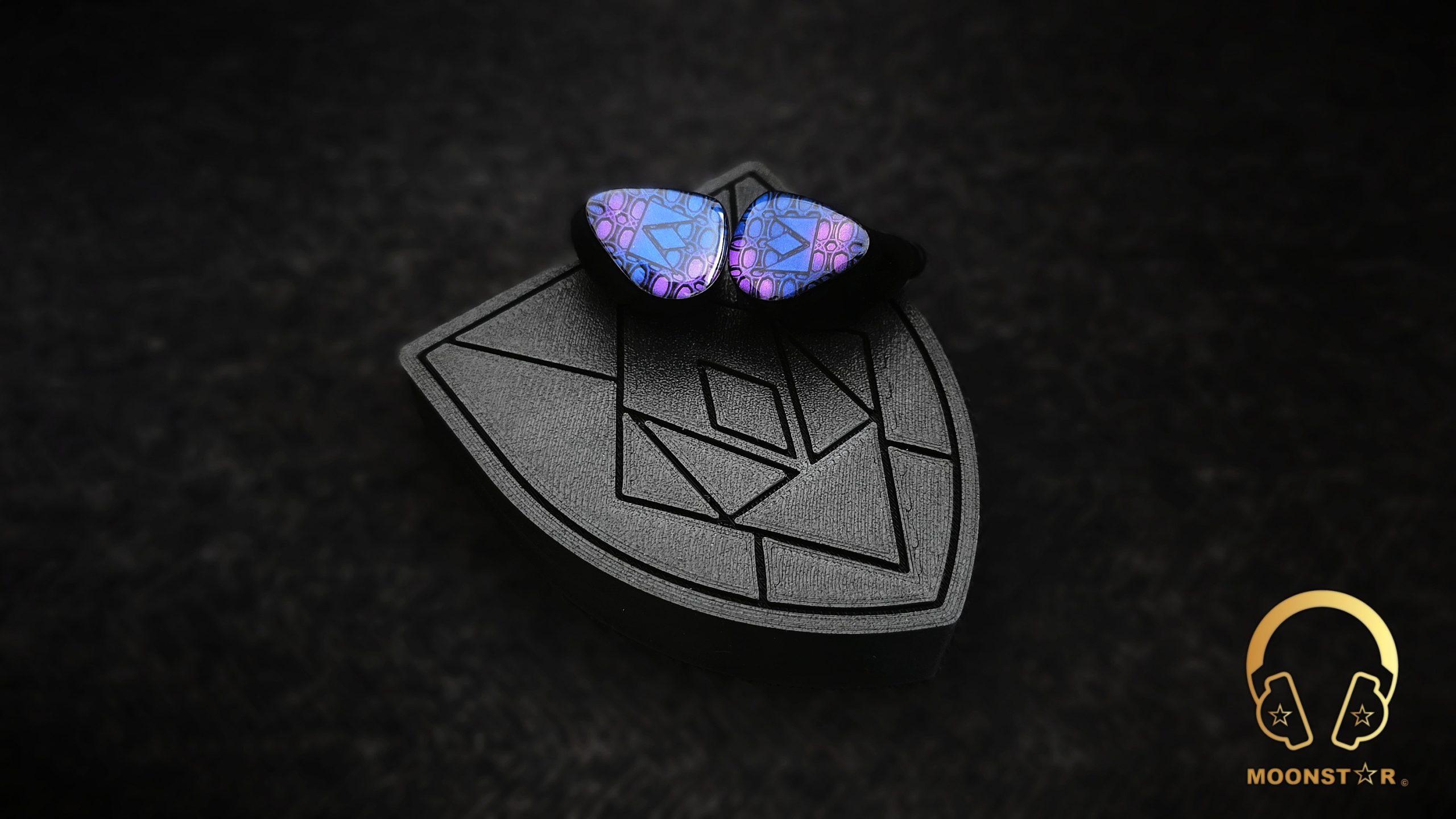
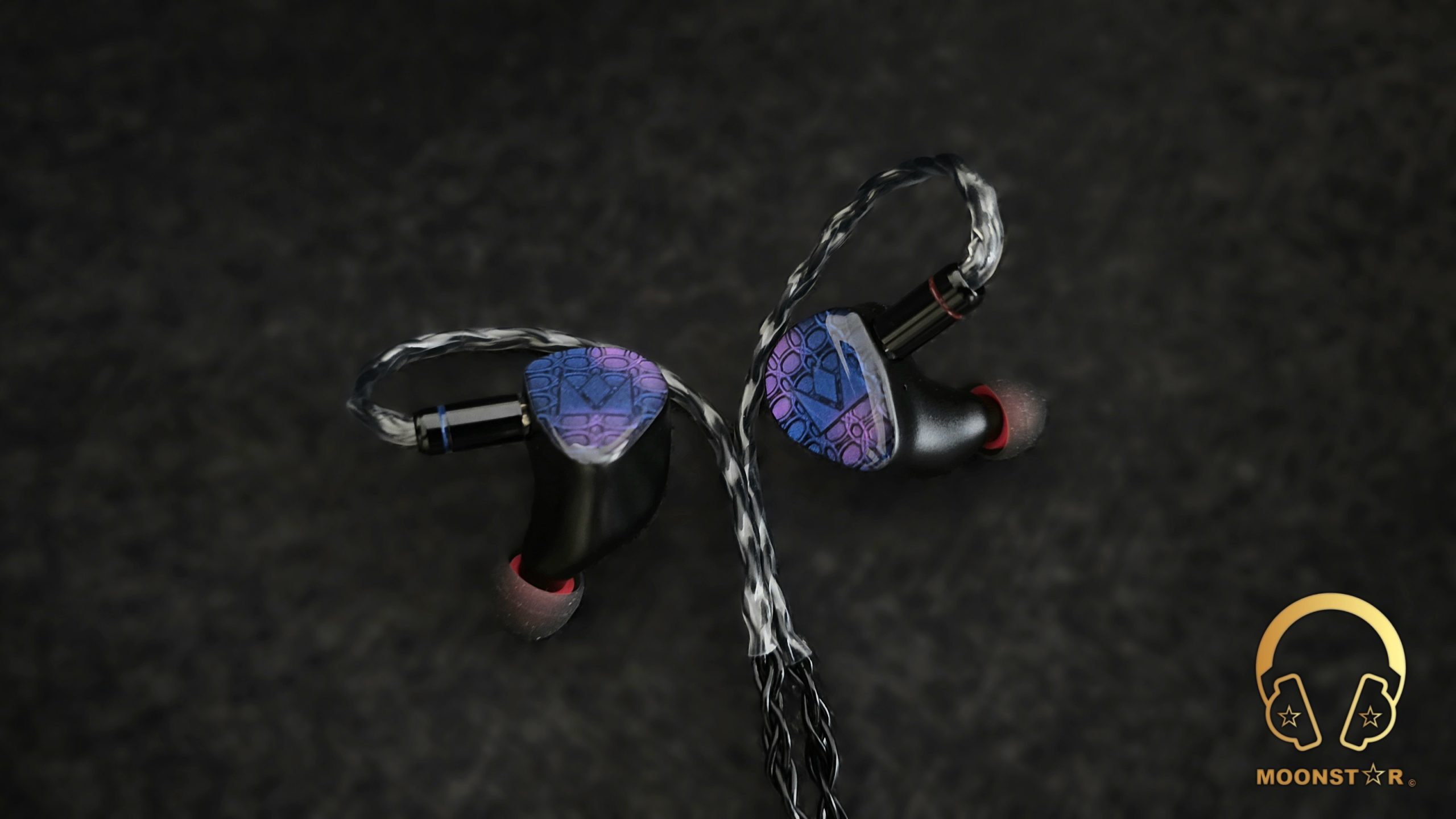
The faceplate is the Knight’s most visually distinctive feature, utilizing a three-dimensional effect acrylic material that layers deep purple and blue hues. The pattern carries a textural impression similar to overlapping scales or chainmail, a deliberate nod to the knightly theme that extends through the entire product identity. On the right earpiece, the Noble logo sits at the upper edge, while a royal crest design replaces it on the left. The iridescent quality of the acrylic shifts character depending on the viewing angle and lighting, providing a premium aesthetic that feels genuinely considered rather than merely cosmetic.
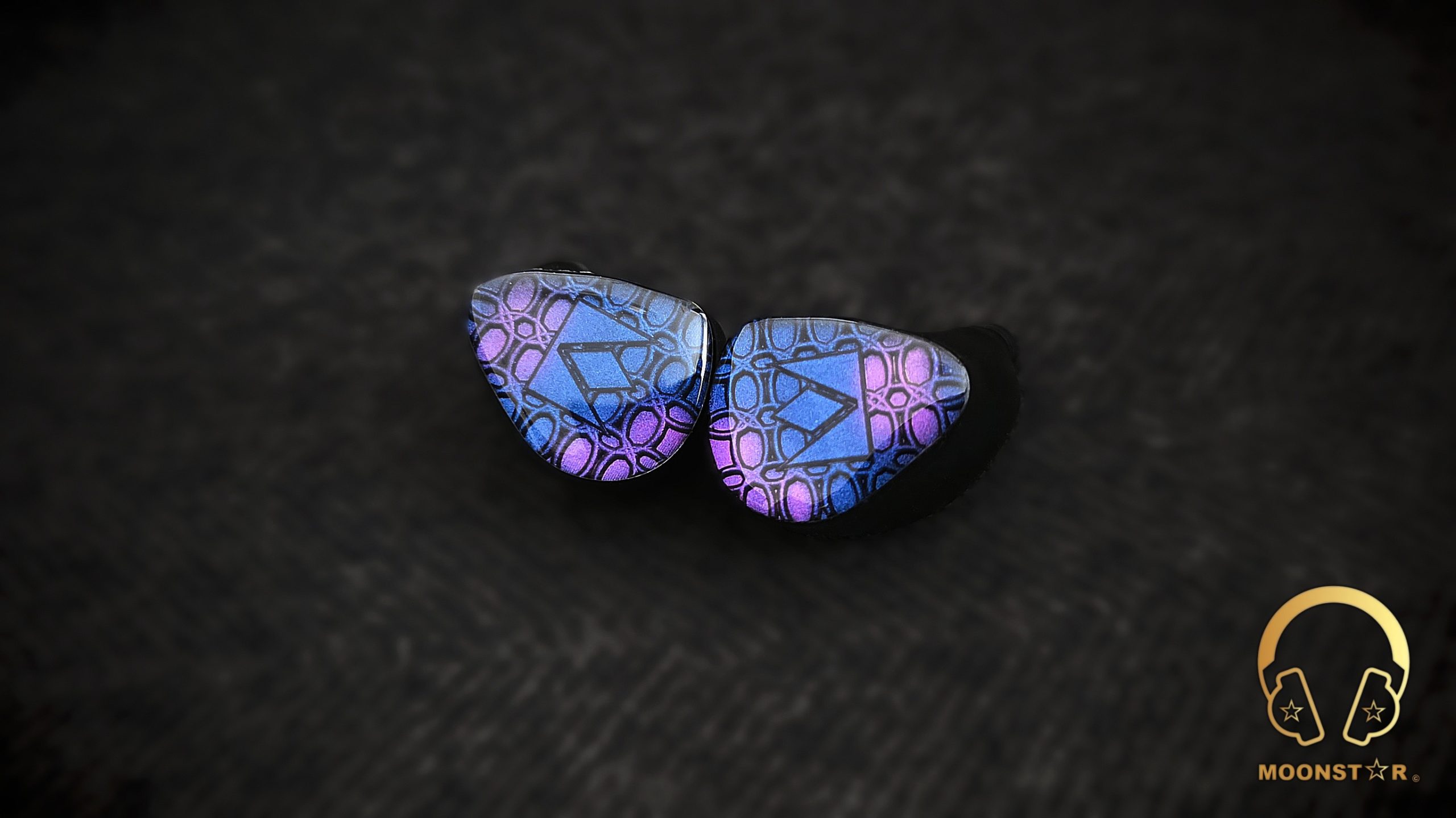
The main body of the shell is finished in matte black anodized aluminum, which effectively resists fingerprints, which is a practical virtue that glossy finishes rarely offer. Noble describes the shell shape as “pseudo-custom,” meaning it is designed to approximate the ergonomic contours of a custom-fit IEM using a universal form. The inner face follows a curve intended to conform to the concha bowl, providing a more intimate and settled fit than flat or rounded shells, while a small ear nub assists with positioning stability.

The nozzle is one area of the design that deserves specific attention, as it is notably longer than what most IEMs in this category use. It projects outward in an extended step-down profile before accepting the ear tip, which has a direct effect on insertion depth. For users with average or larger ear canals, this length allows the tip to sit further from the main shell body, reducing pressure while achieving a secure seal. However, those with smaller canals may need to step down to smaller ear tips than usual. A stainless steel wax guard is fitted at the nozzle opening to protect the driver assembly.

The cable connection utilizes a recessed 0.78mm 2-pin socket. While the recess adds a degree of connector protection, it limits compatibility with hooded or Type-C connectors. Standard 2-pin cables work without issue, and a small pinhole pressure relief vent is located adjacent to the socket to allow for driver equalization. This reduces driver flex and contributes to the controlled bass performance the Knight delivers.

The included 8-core woven cable is one of the strongest stock inclusions Noble could have chosen at this price. It uses silver-plated OCC/OFC copper enclosed in a skin-friendly black PU coating.

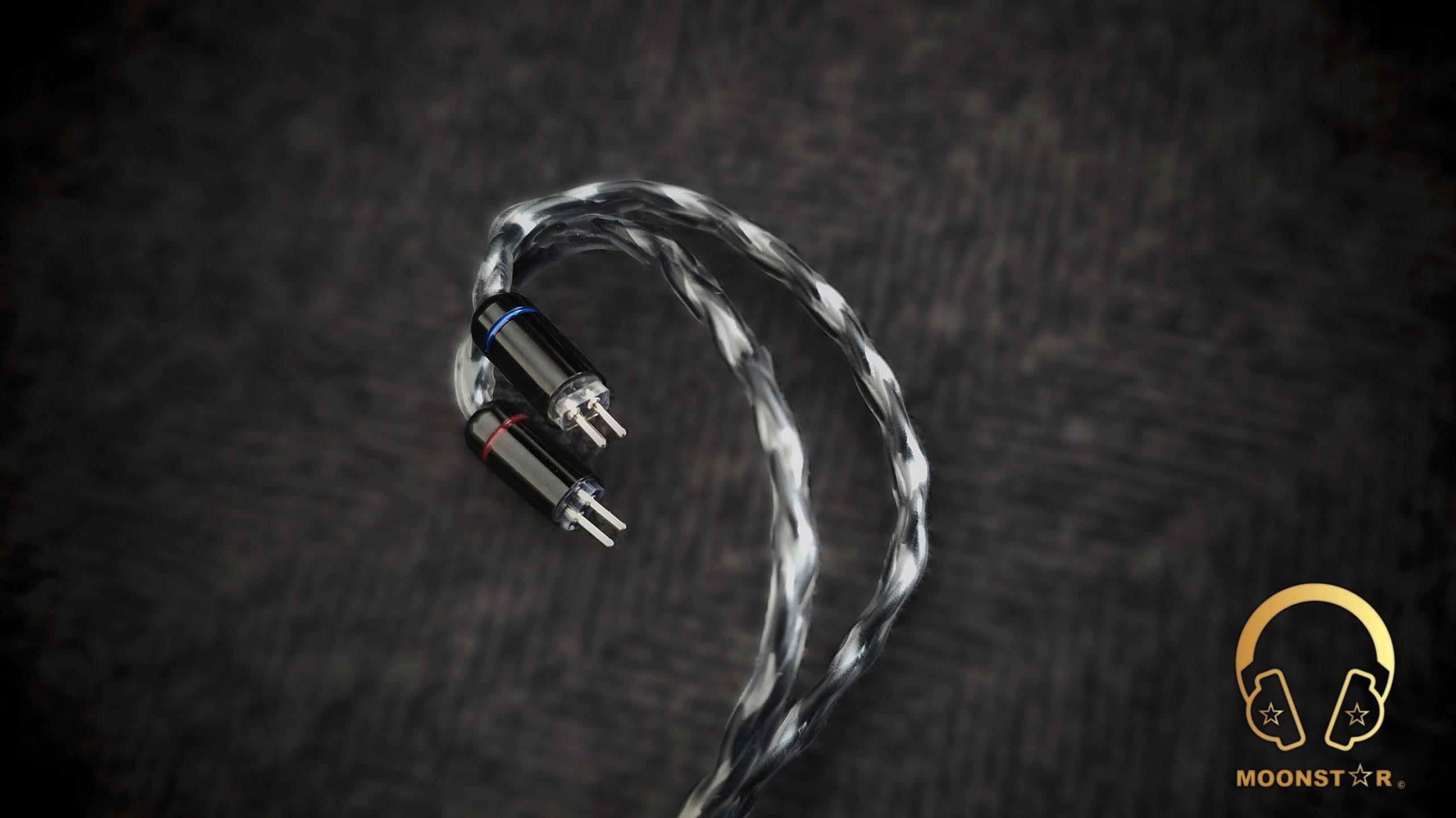
The braid is tight and supple, draping well without significant memory effect or microphonic noise during movement. The Y-splitter and plug housing feature carbon fiber accents, and a smooth metal chin slider is included.

Notably, the cable ships exclusively in a 4.4mm balanced configuration, and no 3.5mm adapter is included in the package.

Fit, Comfort & Isolation:
The Knight sits on the larger side of the universal IEM size spectrum, and this is worth acknowledging honestly. For listeners with average to large ear canals, the pseudo-custom shape and ear nub deliver a stable, settled fit that holds its position through typical head movement and activity. The aluminum shell adds noticeable weight compared to resin-bodied IEMs, and this weight difference is perceptible during an extended session, though it does not rise to the level of discomfort for most users in a reasonable listening period.

The long nozzle requires some attention to tip selection. Medium bore silicone tips in a smaller size than one might expect often produce the best insertion depth and seal for the Knight’s geometry. The foam tips included in the package provide a more secure seal for listeners with irregular ear canal shapes and also produce a different sonic presentation: warmer and more bass-forward compared to the silicone options. Passive isolation is genuinely good once a proper seal is achieved, providing effective attenuation of typical ambient noise such as office hum, traffic, and transit environments. Users with smaller ears may find the Knight’s size less accommodating and should consider an in-store or demo evaluation before committing.

Technical Specifications:
- Model: Knight
- Driver Configuration: Tribrid (1 x 10mm Dual-Magnet Dynamic Driver + 1 x Sonion 23 Series Balanced Armature + 1 x Piezoelectric Super Tweeter)
- Frequency Response: 20Hz to 20kHz
- Impedance: 26 Ohms
- Sensitivity: 104dB SPL/mW
- Shell Material: CNC-Machined Anodized Aluminum with 3D-Effect Acrylic Faceplate
- Cable: 8-Core OCC/OFC Silver-Plated, Black PU Coating
- Connector: 0.78mm 2-Pin (Recessed)
- Termination: 4.4mm Balanced (Gold-Plated)
- Nozzle Filter: Stainless Steel Wax Guard
- Price: $289 USD
Drivability & Pairing:
At 26 ohms impedance and 104dB sensitivity, the Knight occupies an easy-to-drive position on the spectrum. It reaches adequate listening volume from smartphone outputs and dongle DACs without requiring amplification, and it shows no problematic background hiss with typical portable sources. That said, the Knight is responsive to source quality in a way that rewards better upstream equipment. When driven from higher-quality sources, the soundstage gains additional definition, the sub-bass feels tighter, and the transient behavior of the dynamic driver becomes more precise.
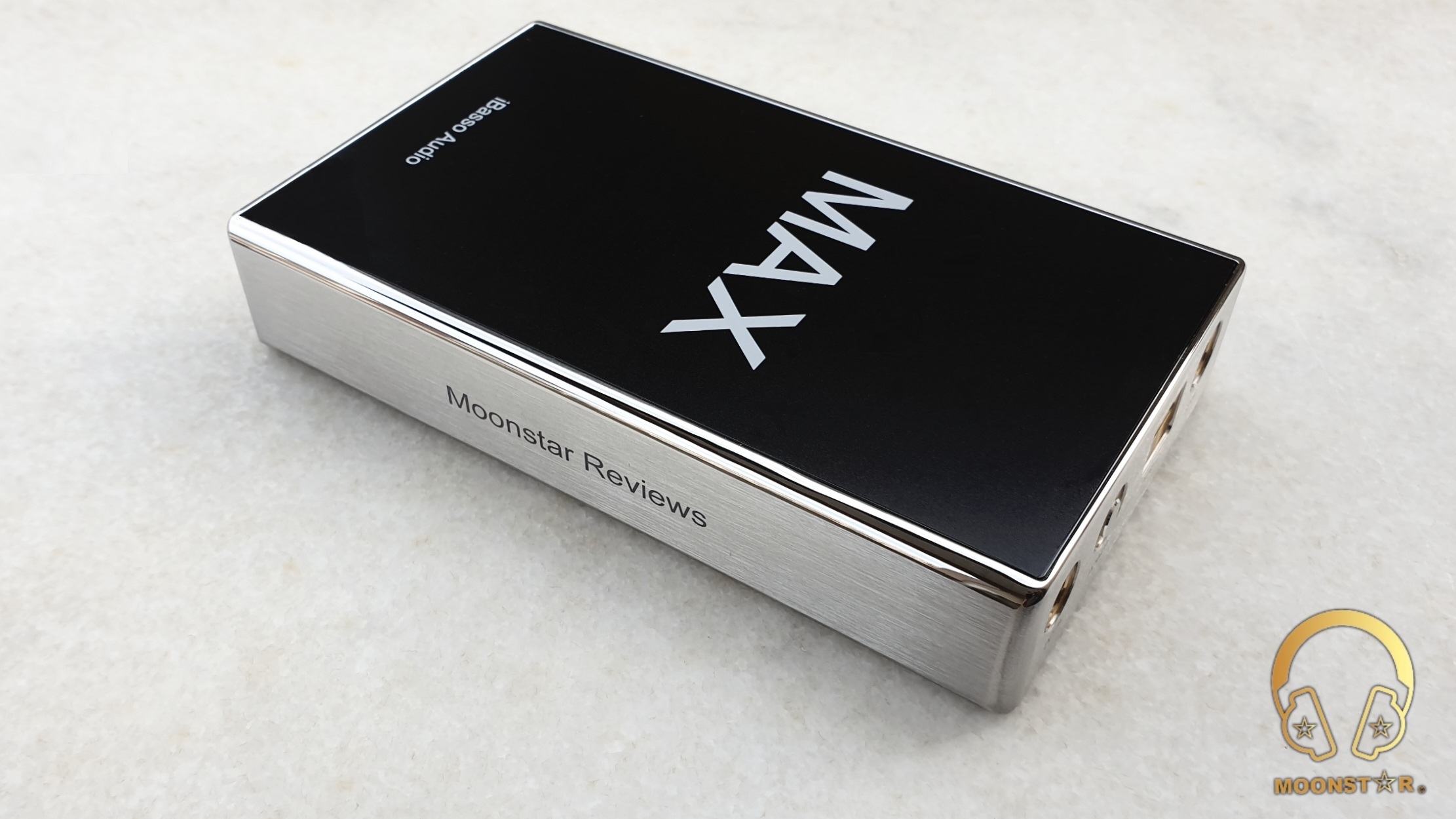
For this review, the primary sources used were the iBasso DX270 R2R Ultra and the FiiO M33 R2R. The DX270, with its proprietary R2R Ultra DAC and FPGA-Master 3.0 controller, presented the Knight with a tonally rich, organically textured signal that paired particularly well with the Knight’s natural midrange character. The R2R architecture’s controlled warmth complemented the Knight’s slightly L-shaped tonal balance without pushing it further into the lower frequencies, resulting in a sound that was full and engaging without losing the BA’s midrange clarity. The FiiO M33 R2R, running its own discrete R2R implementation, delivered a similarly musical presentation with slightly more bass weight and a somewhat more forward lower midrange. Both sources demonstrated that the Knight’s driver configuration is capable of extracting meaningful performance differences between upstream components, making it a worthwhile partner for mid-tier sources as well as entry-level DAPs and dongle DACs.

Equipment Used for This Review:
- IEMs : Noble Audio Knight, PUNCH Audio Portazo, ZiiGaat x Hangout Audio Odyssey 2
- DAPs/DACs: iBasso DX270 R2R Ultra, FiiO M33 R2R

Albums & Tracks Used for this Review:
Vocal Jazz / Smooth Jazz
- Norah Jones – Come Away With Me (Flac 24bit/96kHz)
- Diana Krall – So Wonderful (DSF)
- Barry White – Just The Way You Are (Flac 24bit/48kHz)
- Isaac Hayes – Walk On By (Flac 16bit/44.1kHz)
- Sting – Englishman in New York (Flac 24bit/48kHz)
- Otto Liebert & Luna Negra – The River (Flac 24bit/192kHz)
- Ferit Odman – Look, Stop & Listen (Flac 24bit/192kHz)
- Charly Antolini – Duwadjuwandadu (Flac 24bit/192kHz)
Soul / R&B
- Aretha Franklin – I Say A Little Prayer (Flac 24bit/96kHz)
- Adele – My Little Love (Apple Lossless)
- George Michael – Don’t Let the Sun Go Down on Me (Flac 24bit/192kHz)
- Eric Clapton – Wonderful Tonight (Flac 24bit/96kHz)
Pop / Rock Classics
- Michael Jackson – Billie Jean (Flac 24bit/96kHz)
- Elton John – Rocket Man (Flac 24bit/96kHz)
- David Bowie – Heroes (Flac 24bit/192kHz)
- U2 – Sunday Bloody Sunday (Flac 16bit/44.1kHz)
- Lorde – Royals (Flac 24bit/48kHz)
- Dave Gahan – Kingdom (Apple Lossless)
Electronic / Experimental
- Daft Punk – Instant Crush (Flac 24bit/96kHz)
- Daft Punk – Doin’ it Right (Flac 24bit/96kHz)
- Bro Safari, UFO! – Drama (Apple Lossless)
- Armin Van Buuren – Vini Vici (Flac 16bit/44.1kHz)
- Yosi Horikawa – Bubbles (Apple Lossless)
- Toutant – Rebirth (Apple Lossless)
Alternative / Indie / Art Rock
- Radiohead – Live in Berlin “Album” (Apple Lossless)
- Radiohead – Pyramid Song (Apple Lossless)
- Muse – Hysteria (Flac 24bit/96kHz)
- Red Hot Chili Peppers – Nobody Weird Like Me (Flac 24bit/48kHz)
- Lunatic Soul – The Passage (Flac 16bit/44.1kHz)
- Portishead – It Could Be Sweet (Apple Lossless)
- Gogo Penguin – Raven (Flac 24bit/192kHz)
- Gogo Penguin – Murmuration (Flac 24bit/192kHz)
- Massive Attack – Angel (Flac 24bit/48kHz)
- Bear McCreary – Valkyries (Apple Lossless)
Classical / Orchestral
- Max Richter – On the Nature of Daylight (Flac 24bit/96kHz)
- Chopin – Nocturne No. 20 in C-Sharp Minor (Flac 16bit/44.1kHz)
- Clair de Lune – Claude Debussy (Apple Lossless)
- Tchaikovsky – Symphony No. 5 (Flac 16bit/44.1kHz)
- Vivaldi – Le Quattro Stagioni “The Four Seasons” (Apple Lossless)
- Fazıl Say – Nazım Oratoryosu (Live) (Flac 16bit/44.1kHz)
Jazz / Instrumental
- Miles Davis – So What (Apple Lossless)
World / Traditional
- Sertap Erener – Aşk (Flac 16bit/44.1kHz)
- Edith Piaf – Non Je Ne Regrette Rien (Flac 16bit/44.1kHz)
Metal / Progressive Rock
- Metallica – Dyers Eve (Flac 24bit/96kHz)
- Metallica – Sad but True (Flac 24bit/96kHz)
- Megadeth – Sweating Bullets (Apple Lossless)
- Opeth – Windowpane (Flac 16bit/44.1kHz)
- Deftones – My Own Summer (Shove It) (Flac 16bit/44.1kHz)
- Rush – Tom Sawyer (Flac 16bit/44.1kHz)
- Slayer – Angel of Death (Apple Lossless)

The Sound:
Sound impressions were formed after a 50-hour burn-in period, primarily using the stock cable in balanced 4.4mm configuration and the conical foam tips, with additional comparison using the medium bore silicone tips. The iBasso DX270 R2R Ultra served as the primary source, with the FiiO M33 R2R used for cross-referencing. The Knight’s overall signature leans toward a slightly L-shaped profile with most of its energy concentrated in the low end and lower midrange, transitioning through a well-rendered midrange via the Sonion BA before the piezoelectric driver handles the upper frequencies in a smooth, extended manner. The result is a sound that prioritizes warmth, weight, and engagement over analytical brightness, while still maintaining meaningful technical performance for its price tier.

Bass:
The 10mm dual-magnet dynamic driver in the Knight handles the low end with a character that is considerably more controlled than what its warm, weighty presentation might initially suggest. The bass is not a bir-note slab of low-frequency emphasis: there is actual texture and differentiation between sub-bass extension and mid-bass punch, and the driver manages the transition between those two regions with a coherence that speaks to careful tuning. Sub-bass extension is solid and reaches into the lower registers with a sense of physical substance. Listening to Massive Attack’s Angel, the sustained low drone that underpins the track has genuine weight and presence, conveying the intended atmosphere without the bloom and overhang that poorly controlled bass drivers introduce.
Mid-bass is where the Knight’s low end makes the strongest impression. The impact is punchy and satisfying without crossing into the kind of excessive warmth that muddies the overall presentation. Kick drums on Metallica’s Sad but True arrive with a realistic skin-on-beater authority, the leading edge of each hit clean and the decay controlled. The Knight does not follow the trend of boosting sub-bass and dipping upper bass to create a false impression of tightness; instead, it maintains a balanced approach across the low-end spectrum that gives the bass a fuller, more natural character. Bass guitars on Isaac Hayes’s Walk On By and Barry White’s Just The Way You Are have body and resonance that suits the material well, with the string texture and note definition remaining audible rather than being absorbed into a generalized warmth. The dual-magnet design contributes meaningfully to the transient performance, allowing the driver to recover cleanly between hits on uptempo material like Red Hot Chili Peppers’ Nobody Weird Like Me.

Midrange:
The midrange of the Knight is where the Sonion 23 Series balanced armature takes over, and this is where the tribrid configuration earns its value most convincingly. The midrange arrives with a natural, clean timbre that preserves the tonal character of instruments and voices without imposing a synthetic quality. The transition from the dynamic driver’s lower frequencies to the BA’s operating range is handled smoothly, without an audible discontinuity at the handover point. Vocals are a standout attribute of the Knight’s presentation. The lower midrange has a satisfying fullness that gives male vocals genuine weight and body: Isaac Hayes, Barry White, and David Bowie all benefit from a low-mid richness that makes their voices sound grounded and authoritative.
Female vocals in the upper midrange are handled with care and a good sense of presence without edginess. Norah Jones on Come Away With Me has a warmth and intimacy that suits the Knight’s character well. Sarah McLachlan’s Angel is delivered with emotional weight and a natural breath quality, while Edith Piaf’s projection and Sertap Erener’s resonant quality in Ask are communicated with the articulation one would expect from a quality BA driver. Instrumental textures are reproduced well; acoustic guitars on Eric Clapton’s Wonderful Tonight have a natural body and pick attack, and the piano in Chopin’s Nocturne No. 20 retains a realistic resonance. While the midrange sits in a slightly recessed position relative to the bass energy, it offers a spacious, layered presentation where vocals occupy a natural position within the mix rather than dominating it.
Treble:
The piezoelectric super tweeter handles the upper frequency region of the Knight in a manner that is considerably more refined than many implementations of this driver type in the sub-300 dollar segment. Noble has managed the integration well: the Knight’s treble is extended and detailed without imposing a harsh edge on high-frequency content. The overall character is smooth and slightly toned down relative to the midrange energy below it, which fits the L-shaped profile and contributes to the non-fatiguing nature of the Knight during long listening sessions. Cymbal reproduction on Charly Antolini’s Duwadjuwandadu reveals good transient speed, with the leading edge of each hit having a defined attack and a natural shimmer.
Sibilance is notably absent from the Knight’s treble presentation. Across demanding material from Sting’s catalog and various close-mic’d vocal tracks, no uncomfortable sibilance appeared. Orchestral treble, including violin passages in Tchaikovsky’s Symphony No. 5, is handled with enough resolution to convey harmonic complexity without introducing grating brightness. The upper octave extension gives the Knight a sense of air that adds dimensionality to recordings with spacious environments like Max Richter’s On the Nature of Daylight. While it may fall slightly short of the absolute micro-detail retrieval found in more expensive tribrid configurations, the treble of the Knight is best understood as clean, smooth, and well-extended rather than analytically incisive.

Soundstage & Imaging:
The soundstage of the Knight offers more depth than it does raw width. The presentation is not expansive in a lateral sense, but the sense of front-to-back layering and the placement of elements at varying distances gives the Knight a convincing three-dimensional quality. Imaging precision is a genuine strength: individual instruments on Ferit Odman’s Look, Stop & Listen are rendered with clear, stable positions that do not wander during complex passages. The background is quiet and well-controlled, which allows lower-level spatial information such as room reflections and ambient decay to be retrieved cleanly.
Instrument separation is strong, partly a function of the tribrid configuration. Each driver operating in its specialized frequency range contributes to a cleaner division between bass and midrange content. Spatially complex recordings like Radiohead’s Live in Berlin are rendered with clear delineation between the instrument layers. The soundstage does not collapse during demanding passages, which speaks well of the driver configuration’s coherence. The Knight provides a convincing spatial experience that focuses on precise placement and depth rather than artificial width.

Comparisons:
Noble Audio Knight vs. PUNCH Audio Portazo:
The PUNCH Audio Portazo at $189 represents a fundamentally different tuning philosophy from the Knight. The Portazo is built around a V-shaped, high-energy signature with a massive sub-bass boost and a sparkling treble delivered by dual micro-planar tweeters. The Knight, by contrast, takes a more measured approach, favoring a natural warmth in the low end and prioritizing midrange transparency through the Sonion BA. In direct comparison, the Portazo delivers a more immediately exciting, visceral bass experience: the sub-bass slam and physical impact are more pronounced and more aggressive. The Knight’s bass, while full and satisfying, does not attempt to match the Portazo’s outright impact in the sub-bass region.
Where the Knight pulls ahead clearly is in midrange quality and overall tonal coherence. The Sonion BA brings a level of midrange transparency and vocal accuracy that the Portazo, with its more V-shaped tuning placing the midrange in a relaxed position, does not match. Vocals on the Knight have more presence, more weight, and more detail. Instrument texture in the midrange is more fully resolved. The treble balance also differs: the Portazo’s dual micro-planars deliver faster transients and a brighter top-end sparkle, while the Knight’s piezo tweeter is smoother and more forgiving. For listeners who want an energetic, fun-first experience, the Portazo makes a stronger case at its lower price. For those who prioritize vocal fidelity and a balanced, natural tonal character over bass spectacle, the Knight is the more mature-sounding choice.

Noble Audio Knight vs. ZiiGaat x Hangout Audio Odyssey 2:
The ZiiGaat x Hangout Audio Odyssey 2 at $250 is a meaningful competitor for the Knight, and the comparison between them highlights two different approaches to building a neutral-leaning reference IEM. The Odyssey 2 uses a bio-cellulose composite dynamic driver as its sub-bass woofer, dual Knowles RAF 32873 balanced armatures for the midrange, and a dedicated Knowles RAD 33518 tweeter for the treble, resulting in a 1DD + 3BA hybrid configuration. Its tuning follows a meta-neutral target with added sub-bass quantity and some lower treble energy.
In the low end, the Odyssey 2 and Knight are broadly comparable in bass quantity, but they differ in character. The Odyssey 2’s bio-cellulose driver delivers tighter, more controlled bass with faster recovery and less residual warmth. The Knight’s dynamic driver provides a fuller, more textured bass presentation with more low-mid weight that carries into the lower midrange. Neither is wrong; they suit different listener preferences. In the midrange, both IEMs perform well, but the Knight’s Sonion BA delivers a slightly richer, more saturated vocal character with more body in the lower midrange. The Odyssey 2 presents vocals with greater neutrality and a slightly thinner, more linear lower-midrange profile, which may feel more accurate to some listeners and less engaging to others.
In the treble, the Odyssey 2’s Knowles tweeter provides somewhat more lower treble energy and sparkle than the Knight’s piezo, and the treble quality of the Knowles unit is generally considered a strength at this price range. The Knight’s piezo is smoother and less forward, which makes the Knight the less fatiguing option for extended listening but also the less analytically precise one in the top octave. Soundstage on the Odyssey 2 is wider and more spacious, while the Knight offers better imaging precision and a blacker background. In terms of build quality, the Odyssey 2’s metal shell matches the Knight’s aluminum body for durability. The Knight’s included cable and packaging are the stronger of the two, while the Odyssey 2 offers a modular termination system that the Knight does not provide.

Conclusion:
The Noble Audio Knight delivers a genuine taste of Noble’s house sound at a previously inaccessible price point. By utilizing a CNC-machined aluminum shell, a Sonion BA, and a well-integrated piezoelectric tweeter, it avoids the compromises in build or driver quality often seen in this category. The result is an IEM that sounds and feels like it belongs in a higher price tier.
The bass is warm and full, yet remains well-controlled. The midrange is the Knight’s primary strength: transparent, natural, and capable of handling vocals with genuine quality. The treble is smooth and sibilance-free, offering enough extension for air and detail without causing fatigue. While the soundstage focuses on depth and imaging precision rather than raw width, instrument separation is strong for a tribrid at $289. When paired with R2R sources like the iBasso DX270 or FiiO M33, the Knight rewards thoughtful system building with its responsiveness to upstream quality.
The Knight is not without limitations. The shell size may not suit smaller ears, and the absence of a hard case is a missed opportunity. Additionally, the stock cable’s 4.4mm-only termination and the recessed 2-pin connector limit immediate compatibility and cable-rolling options. These are practical considerations for daily usability.
Overall, the Knight represents a well-considered and competitive IEM. it provides an accessible entry point into the Noble Audio sound signature for listeners who have been waiting for an affordable way to experience the brand’s engineering.
Pros & Cons:
- + Excellent midrange clarity and vocal transparency via the Sonion 23 Series BA driver
- + Well-controlled, full-bodied bass with genuine texture and transient definition
- + Smooth, extended treble with no sibilance and good upper-frequency air
- + Precise imaging and good instrument separation, with a convincing sense of soundstage depth
- + CNC-machined aluminum shell: durable, resonance-controlled, and visually distinctive
- 3D-effect acrylic faceplate is genuinely premium-looking for the price
- + Outstanding stock cable: 8-core silver-plated OCC/OFC with 4.4mm balanced termination
- + Non-fatiguing tuning suitable for extended listening sessions
- – Shell size is on the larger end and may not suit listeners with smaller ears
- – No hard carrying case included; velour pouch only
- – Cable ships with 4.4mm termination only; no 3.5mm adapter included
- – Treble detail retrieval in the very top octave is good but not class-leading
Thank you for the Read!