xDuoo Link3 Review
xDuoo Link3 Review
Introduction:
xDuoo is not new to the dongle-style DAC/amplifier category. The original Link launched at $49.99 with a single 3.5mm output, the Link2 Bal and Link2 Bal Max followed with hardware bass boost and soundstage switches built around an ESS9118EC chip, and the keyfob-sized Link10 brought dual CS43131 chips and 300mW of balanced output to a 25 gram body for $99. The Link3 is not another incremental step along that same small, affordable formula. At 70 grams, it represents a clear change in direction for the lineup, trading the compact and battery-sipping approach of its predecessors for a considerably larger, more power-hungry design built around a feature combination that does not have a direct equivalent from any brand at a comparable scope.
It pairs a dual ES9039Q2M DAC architecture, the mobile-tier sibling of the ES9039PRO chip found in desktop DACs costing many times more, with a Class A amplification stage, a topology rarely seen in dongle-sized devices because of the heat and power draw it brings with it. On top of that, the Link3 adds a microSD card slot that can extend a connected phone’s storage by up to 2TB, blurring the line between a dongle DAC and a self-contained digital audio player, a feature none of xDuoo’s earlier Link models attempted.
A dedicated second USB-C port allows external power to be connected to unlock a Super Power Mode that raises output from 700mW to 1000mW per channel, and the whole package is built around a noticeably larger and heavier chassis than the dongle category typically uses, let alone xDuoo’s own past Link releases. None of this is subtle engineering, and that is very much the point: the Link3 is aimed at listeners who want desktop-adjacent output and decoding in a portable shell and are willing to accept the size, weight, and heat that comes with it, a different audience than the one xDuoo’s smaller, cheaper Link models were built for.

Disclaimer:
I would like to thank Shenzhen Audio for providing the xDuoo Link3 for review purposes. I am not affiliated with either company beyond this review, and these words reflect my true, unaltered opinions about the product.
Price & Availability:
The xDuoo Link3 is priced at $219 USD. More information can be found through the link below:
Package & Accessories:
The Link3 ships in a flat grey box with a sliding inner tray, the unit itself nested into cardboard and foam dividers rather than a fitted foam cutout. The presentation is practical rather than showy, which is consistent with a brand that spends its packaging budget on the hardware inside rather than the unboxing experience.
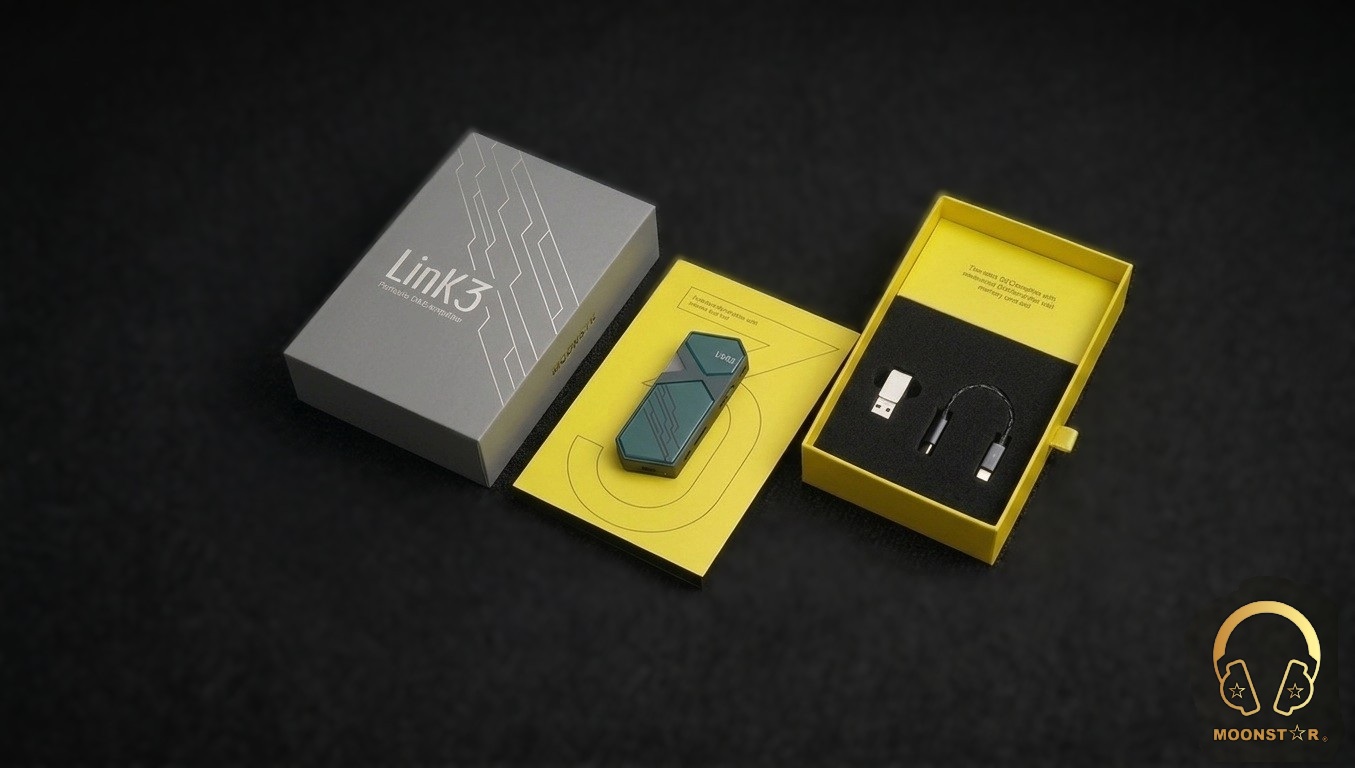
The full package includes:
- 1 x xDuoo Link3 portable USB DAC/amplifier
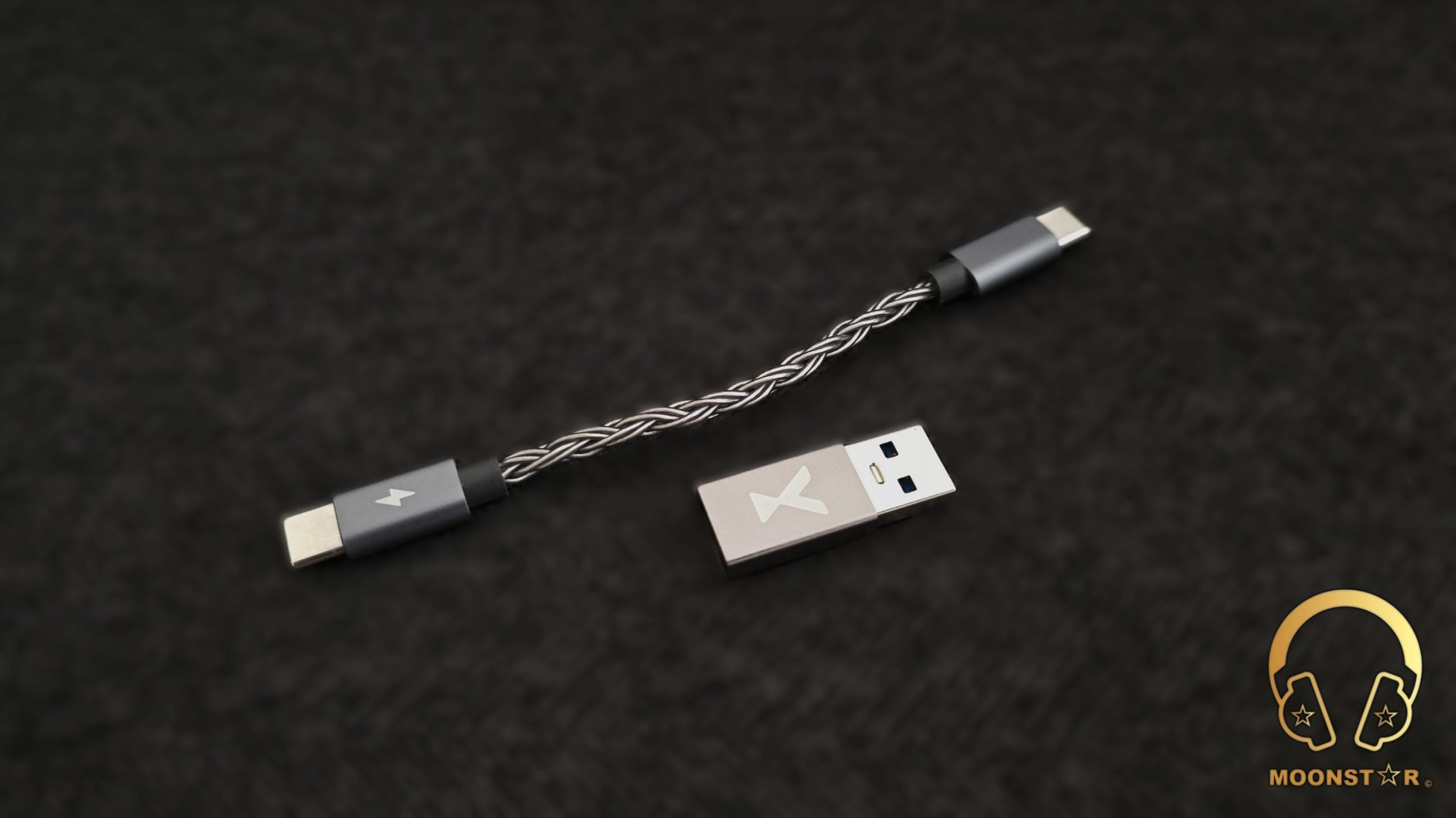
- 1 x detachable 8-core single-crystal copper USB-C to USB-C cable
- 1 x USB-A to USB-C adapter
- 1 x quick start manual

There is no carrying case included, which is a notable omission at this price and given the size of the unit, since a 70 gram aluminum and glass chassis is exactly the kind of thing a protective sleeve would normally accompany. The detachable cable is the more welcome inclusion of the two: most dongles in this category hardwire their USB-C cable directly into the chassis, so being able to replace a damaged cable or swap to a different length without retiring the whole unit is a genuine practical advantage, even if the bundled 8-core single-crystal copper cable is itself well made.
Design & Build Quality:
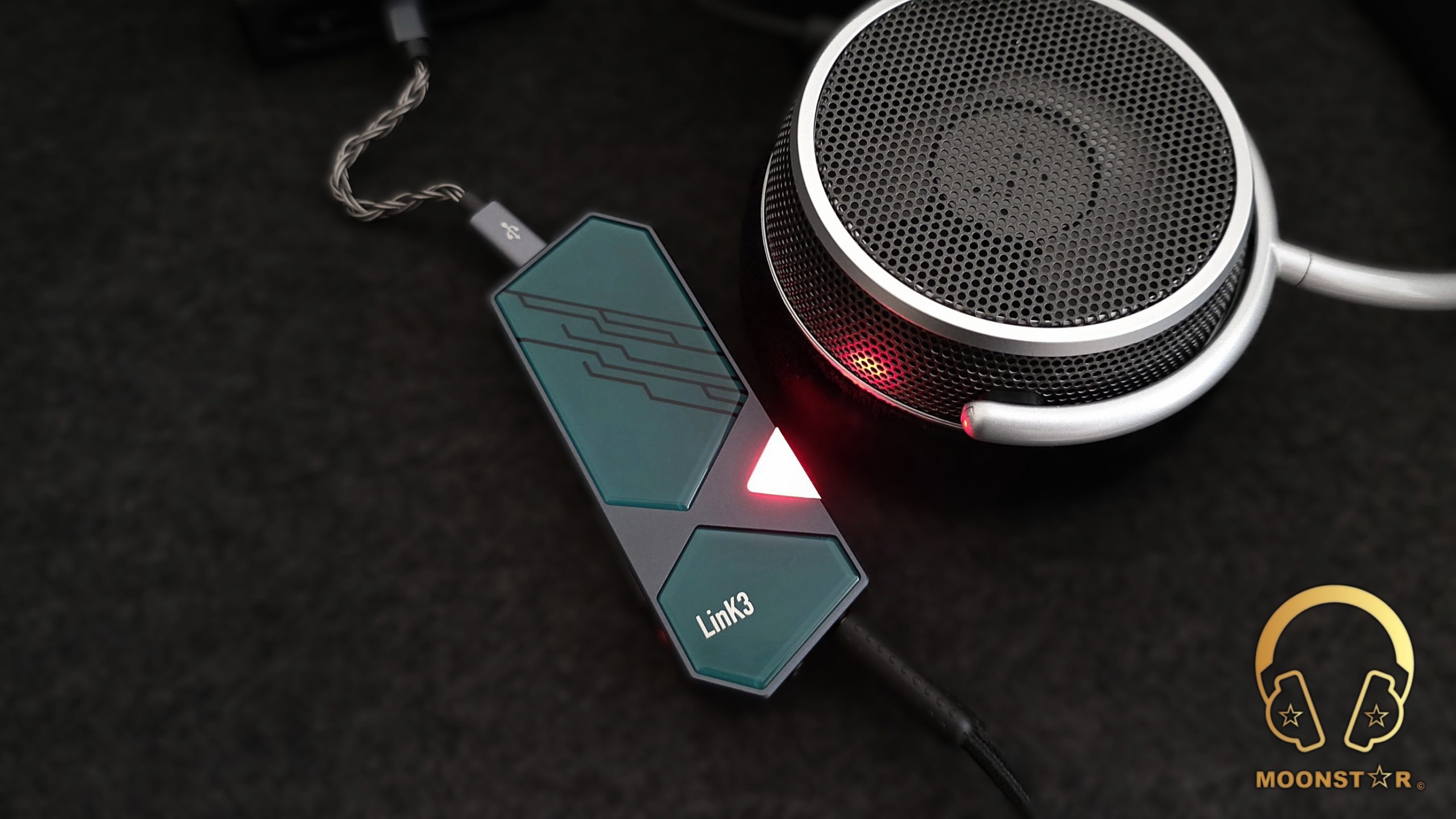
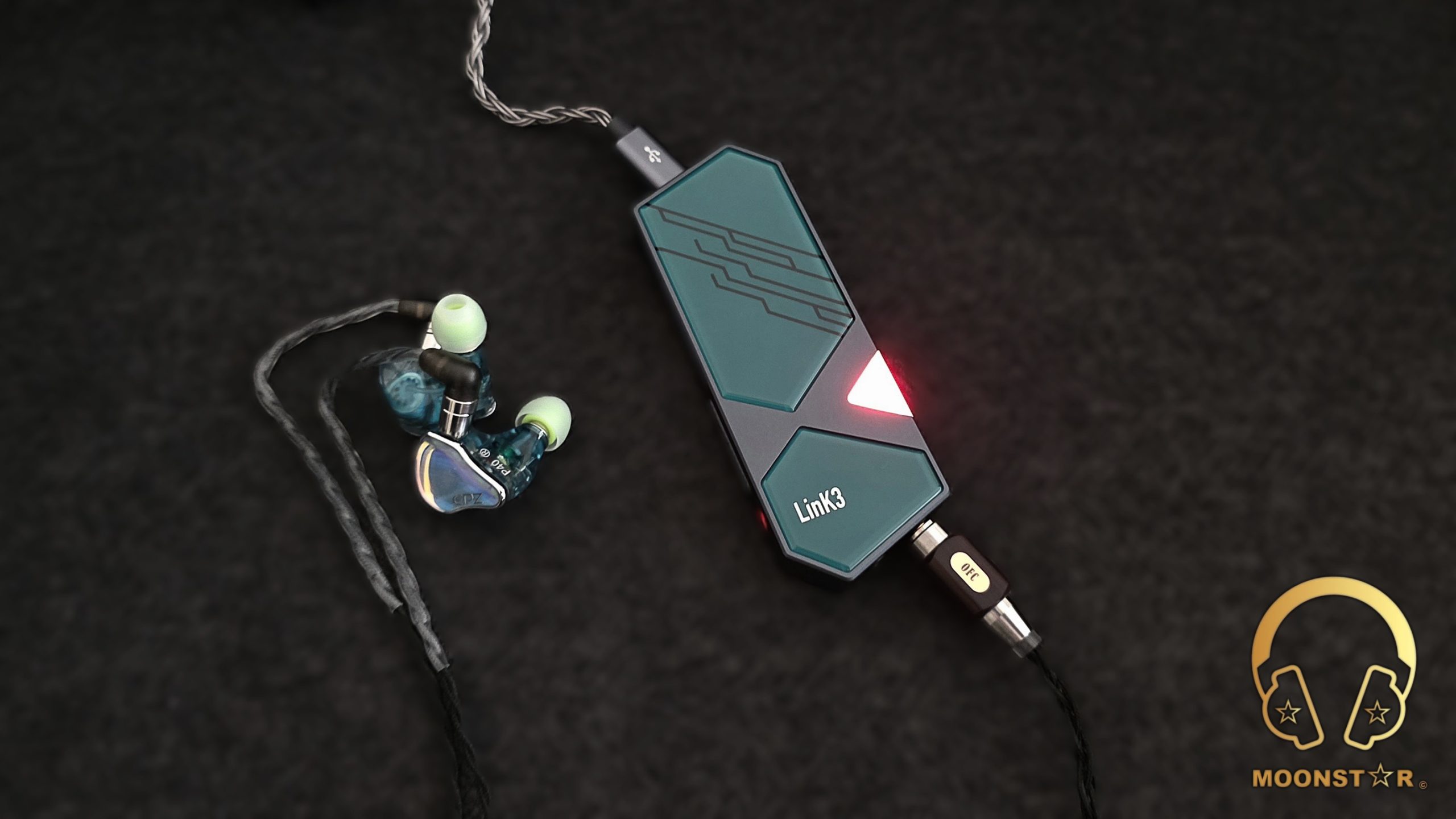
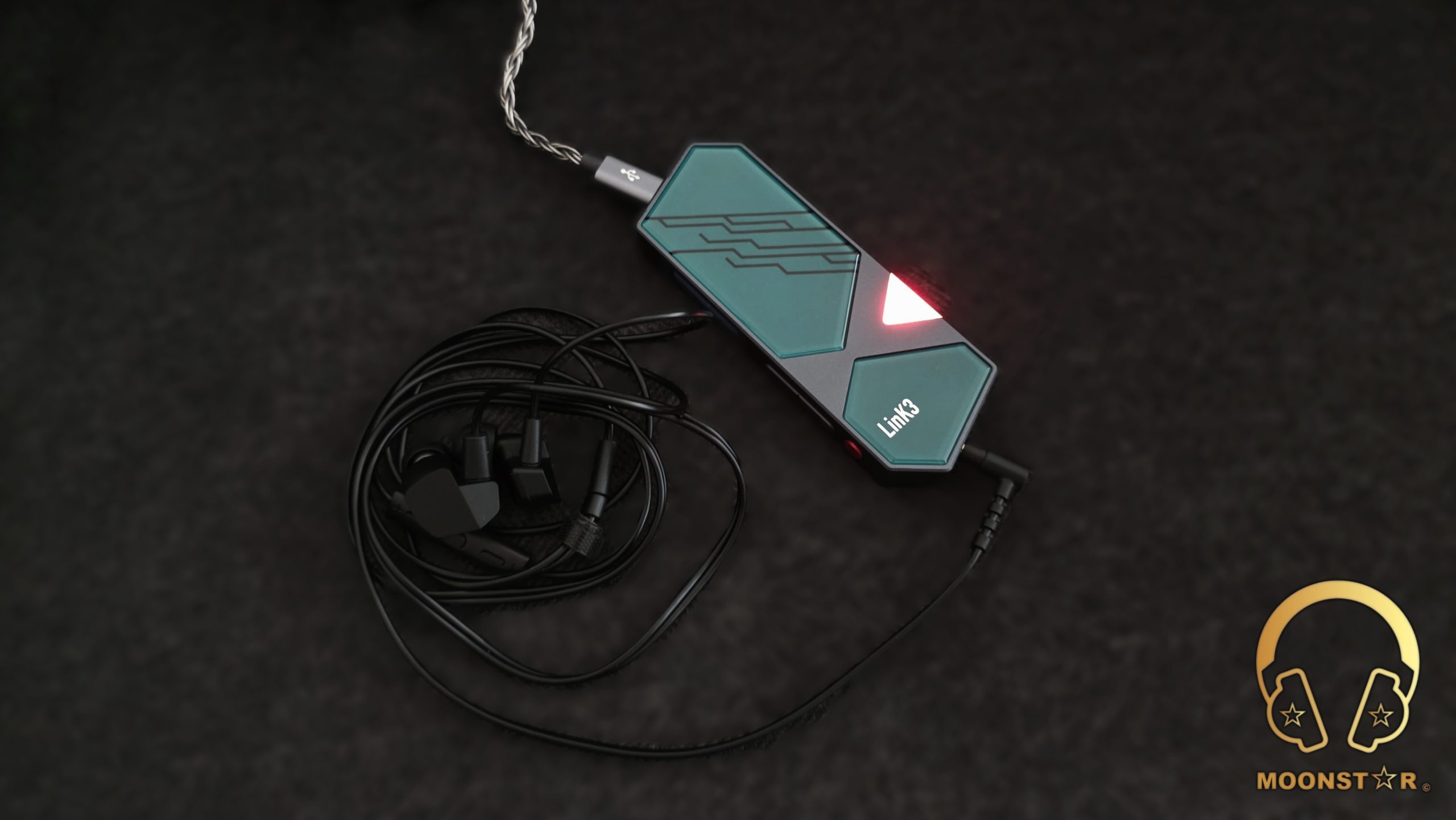
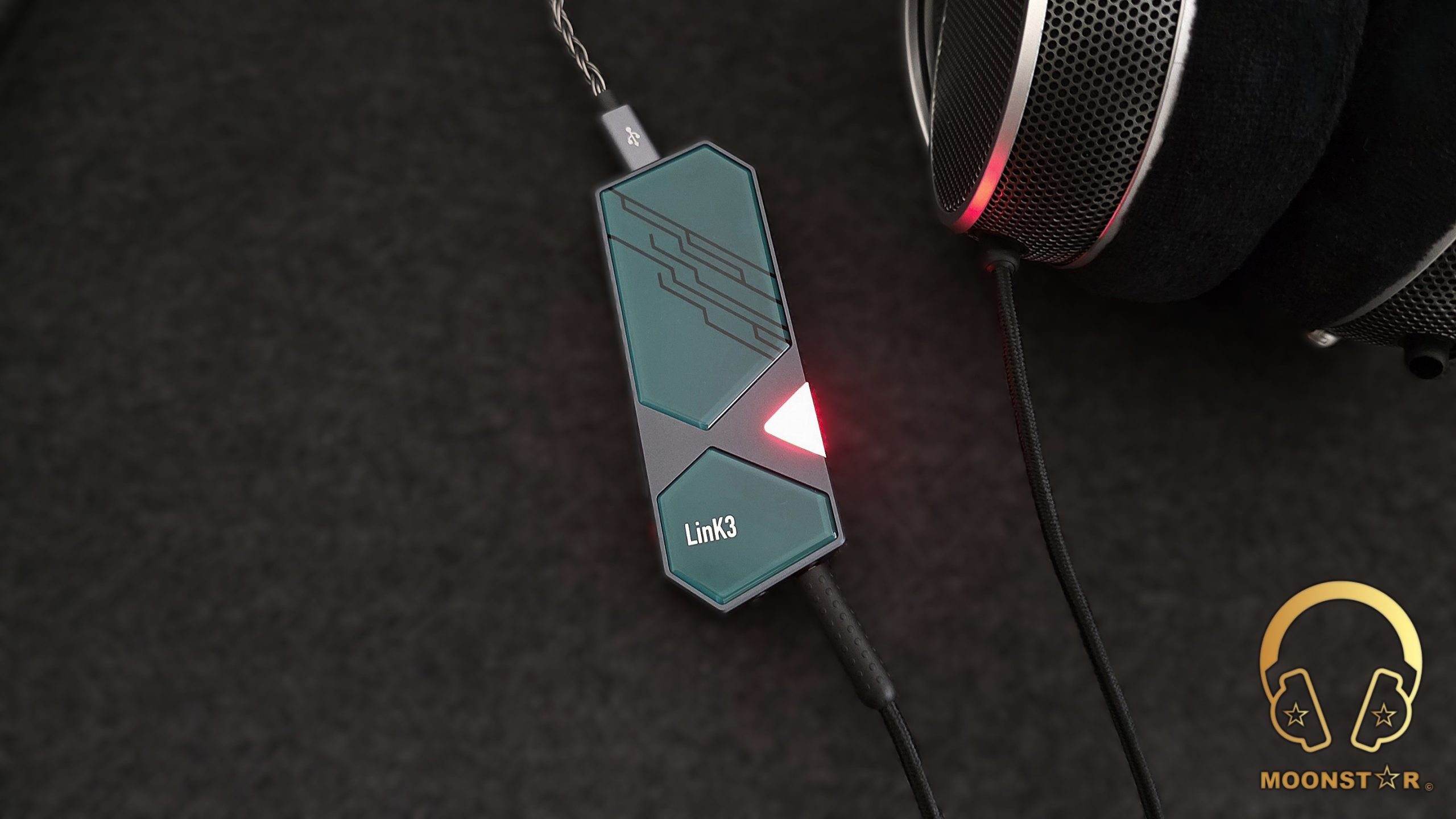
The first thing anyone picking up the Link3 will notice is that it does not behave like a standard dongle. The chassis is CNC machined from a single piece of aluminum alloy, finished in a dark grey anodization, with tempered glass panels covering both the front and rear faces. At 107 by 38 by 15 mm and 70 grams on its own, closer to 75 grams with the cable attached, it sits well outside the 10 to 20 gram range that most USB dongle DACs occupy, more in line with the footprint of a compact DAP than a phone accessory. That size is not an oversight; it is the direct consequence of fitting a dual DAC array, a powerful amplification stage utilizing two SG8262 chips, and a micro SD card mechanism into a single shell, and xDuoo has clearly decided that capability should win out over pocketability here.

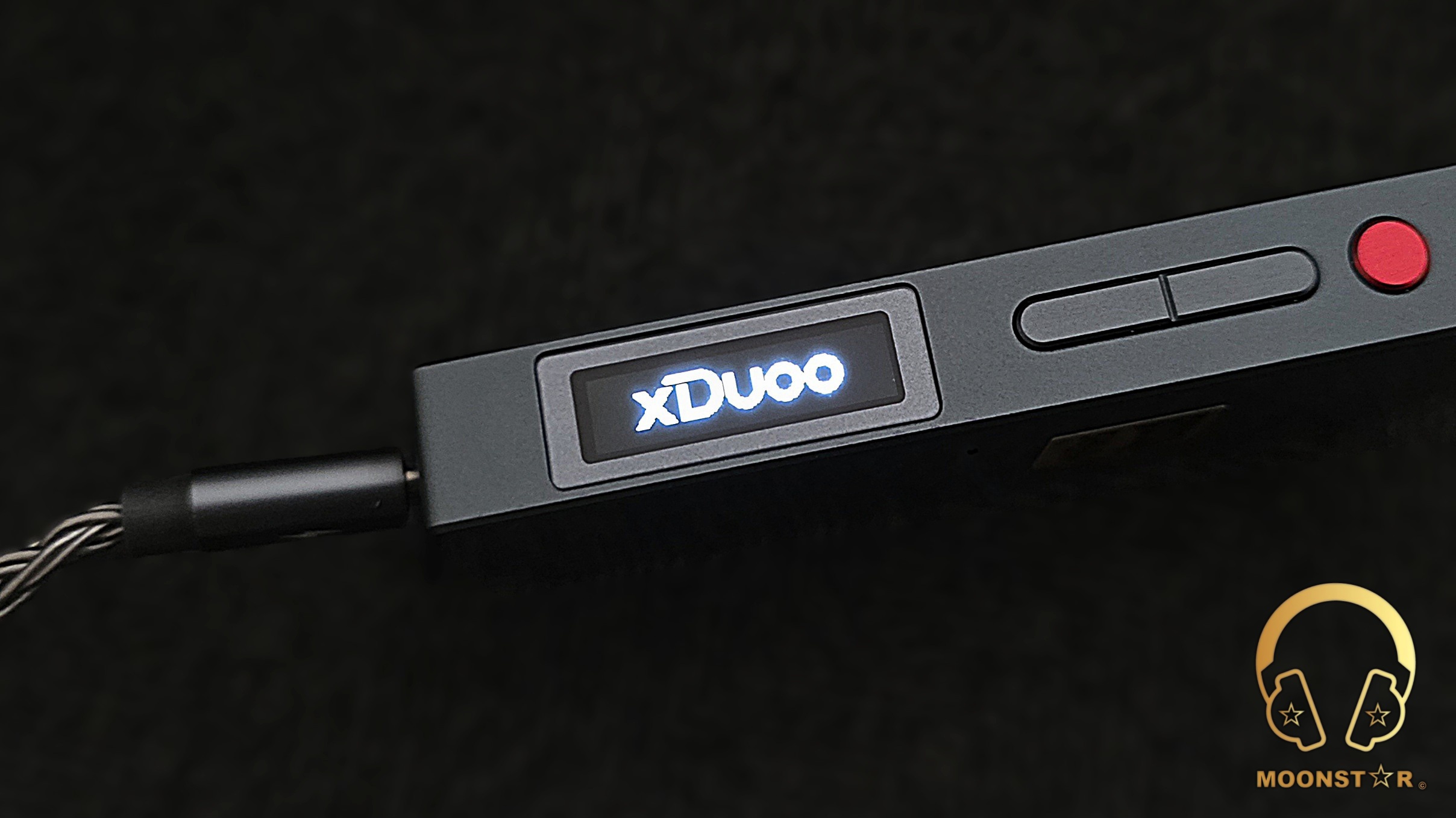
The top long edge is dominated by a small but sharply legible TFT color display, roughly 22 mm by 6 mm, that shows volume, sample rate, gain, filter, and EQ status without needing to dig into a menu. The screen supports seven color themes, including white, orange, yellow, green, violet, cyan, and lime, with five brightness steps, which is a level of cosmetic customization most dongles do not bother offering. Positioned on the front face of the unit, integrated into the geometric design, is a small triangular LED that changes color according to the incoming sample rate, glowing red for standard 44.1 to 48 kHz material, cyan for 88.2 to 96 kHz, yellow for anything from 176.4 kHz up to the full 768 kHz PCM ceiling, and white when playing native DSD from 64 to 512. It is a small touch, but a genuinely useful one for confirming at a glance that a source is actually sending high resolution audio rather than silently resampling it.
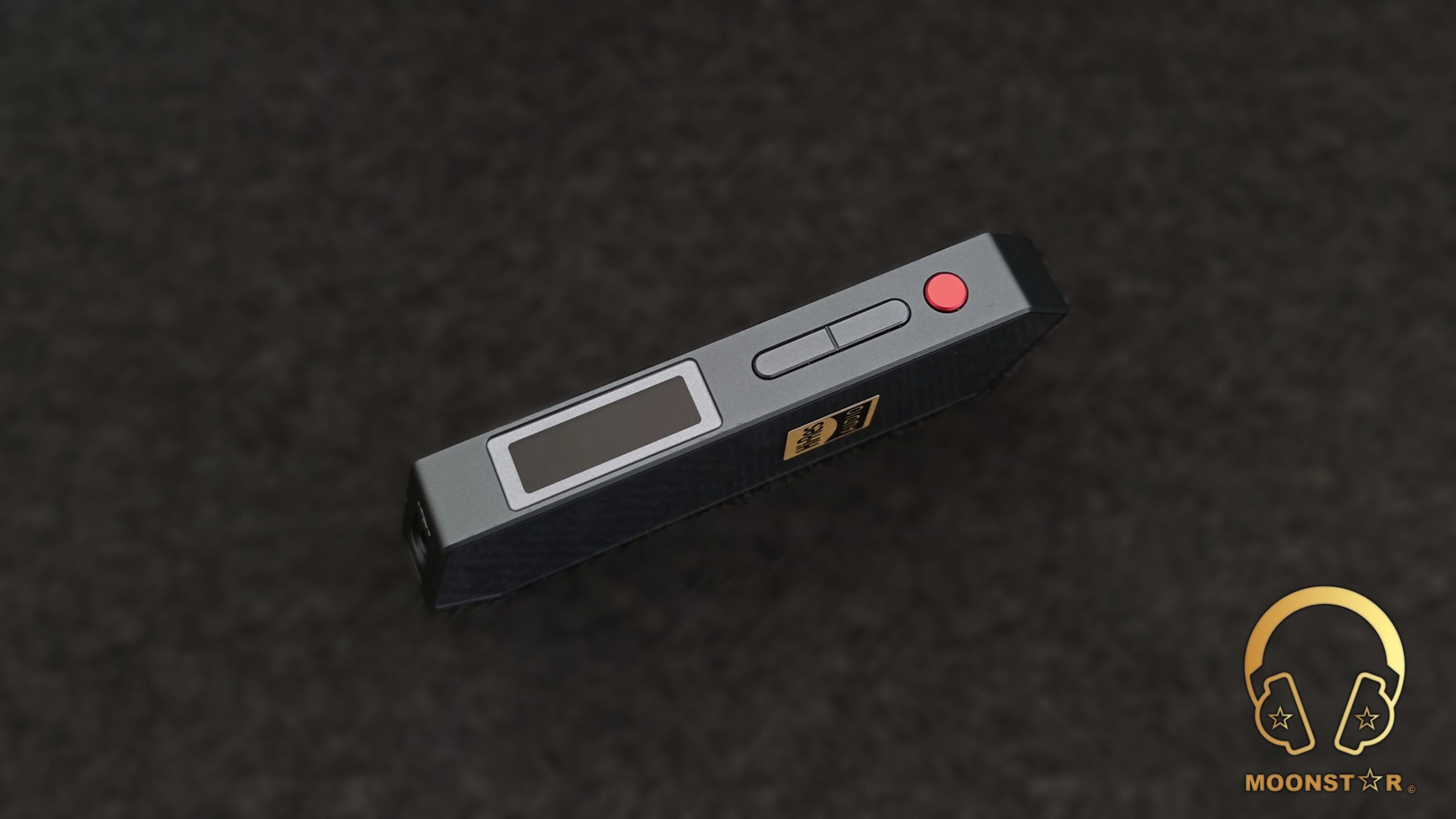
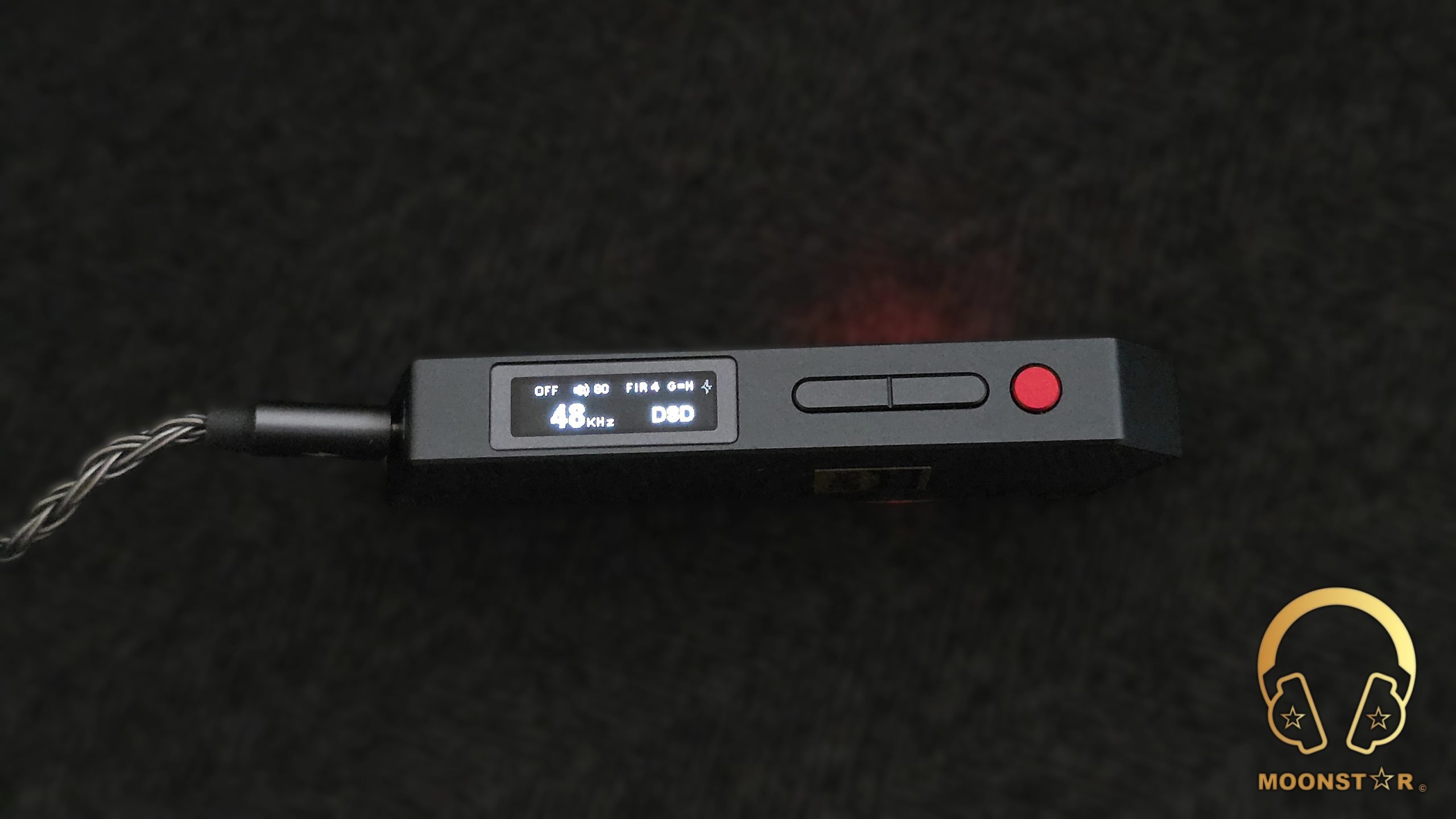
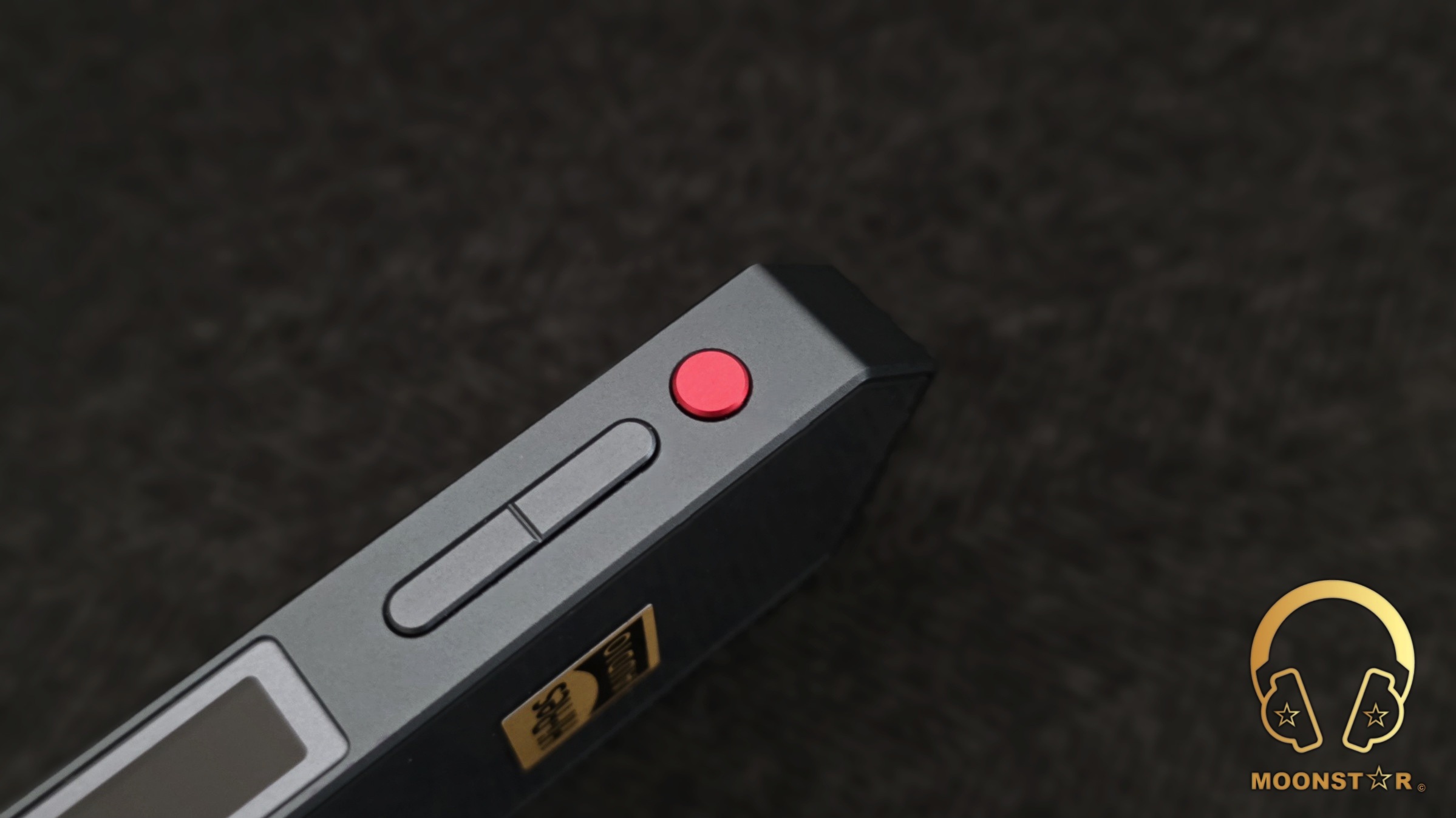
Physical control is handled by dedicated buttons positioned on the long edges of the device. The top edge houses the Volume Plus and Volume Minus buttons alongside the display, while the multifunction and menu buttons are located on the bottom edge. These buttons allow you to control playback, navigate the on screen menu, and confirm selections. It is an intuitive control scheme, and all settings are retained in nonvolatile memory rather than resetting every time the device is unplugged, which is a small detail that saves a real amount of repeated annoyance once gain, filter, and EQ preferences have been dialed in.
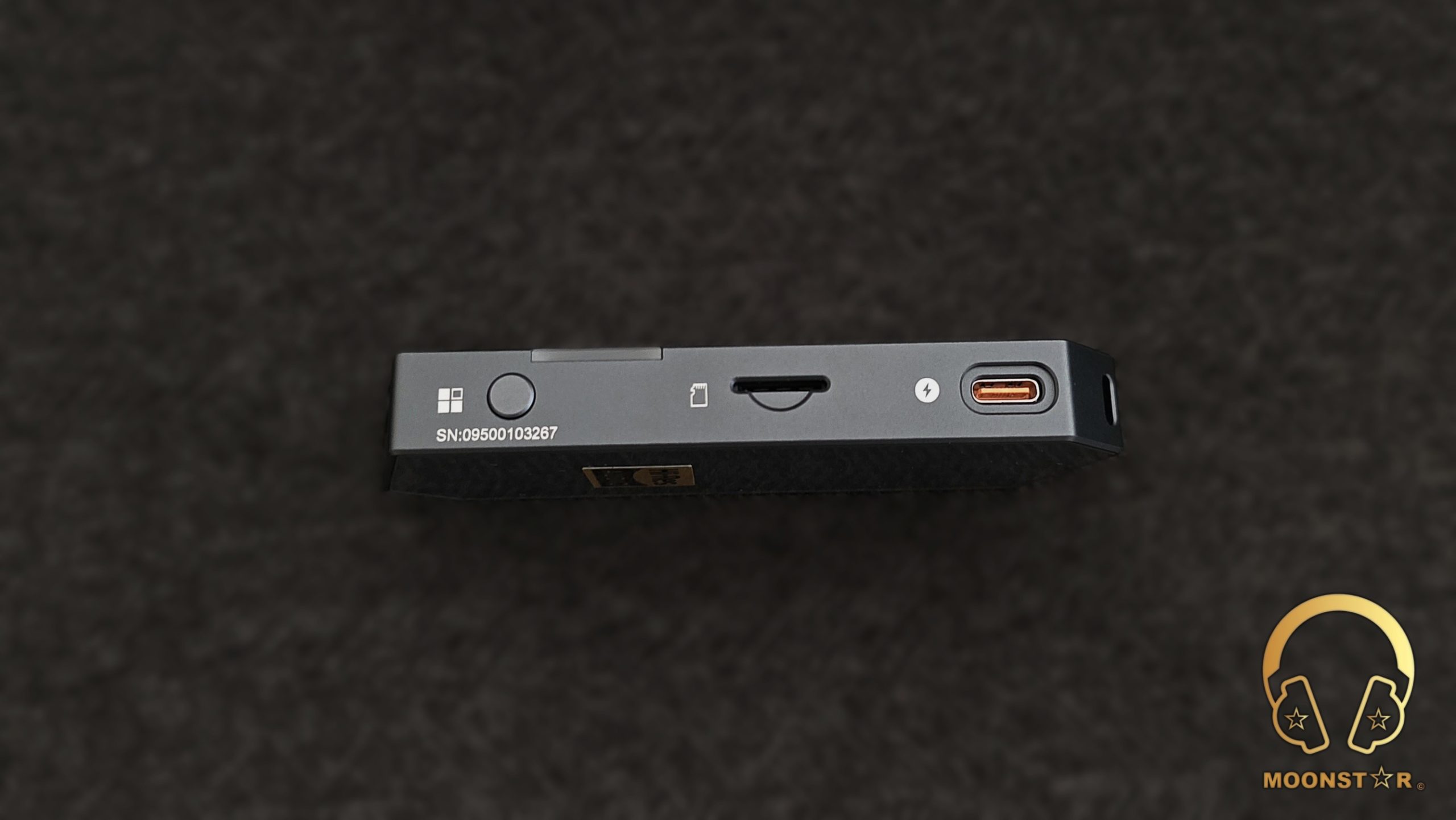
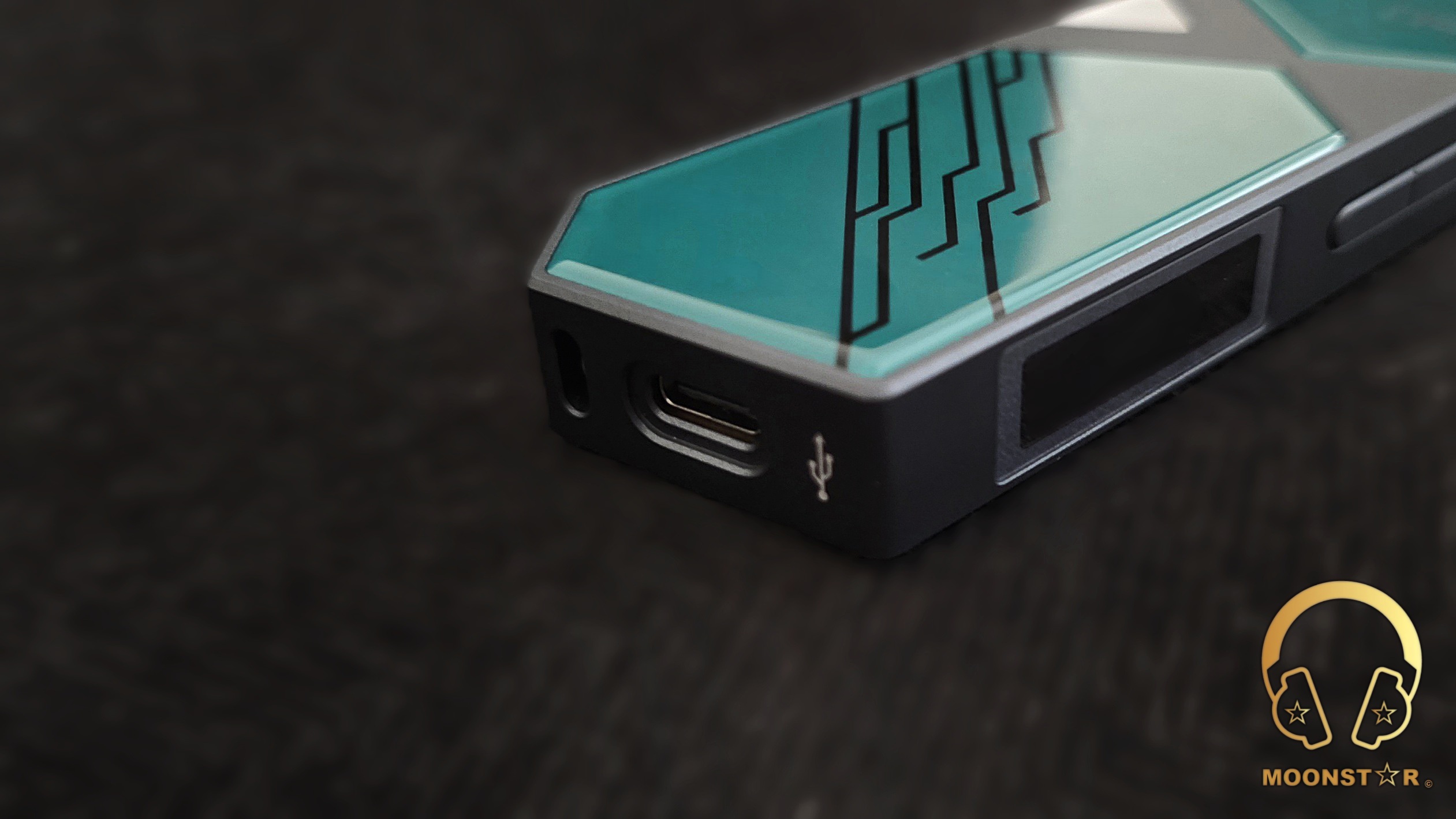
The input and output layout is where the Link3 showcases its unique engineering. The main USB C audio input sits on the right short edge, while the 3.5 mm unbalanced and 4.4 mm balanced headphone jacks are both positioned along the left short edge. The bottom long edge houses both the micro SD card slot and the dedicated Type C external power and charging port. This layout keeps the various connection types clearly separated, making desktop or on the go use much tidier when multiple cables are connected.


Using the micro SD slot requires switching the Link3 into HUB mode from the on screen menu, after which it can read cards of up to 2 TB and present them to the connected phone or computer as expansion storage. Real world transfer speed off a high end 1 TB card topped out at roughly 33 MB per second in independent testing, which is serviceable for browsing and streaming a stored music library but not fast enough to make the Link3 a practical tool for bulk file transfers. xDuoo also states that HUB mode increases power draw to 5V at 0.38A, which is worth knowing if battery life on the connected phone is already a concern.
Phone charging passthrough through the secondary USB C port was inconsistent during testing, mirroring reports from other reviewers: some cable and charger combinations charged the connected phone reliably while passing audio, others charged without passing audio, or passed audio without charging. A handful of specific third party cables were reported elsewhere to resolve this consistently, but out of the box, anyone planning to rely on simultaneous charging and playback during long gaming or travel sessions should test their own cable and charger combination before assuming it will behave predictably.

The rear surface of the device features a matching tempered glass panel that mirrors the front design, capped elegantly with a high-definition “Hi-Res Audio” sticker near the top edge.

Build quality on the unit itself is excellent, with tight tolerances around the glass panels, no flex in the aluminum shell, and buttons that give a firm, confident click rather than a mushy press. The one consistent criticism that surfaces across independent testing, and was reproduced during this review, is heat: the Link3 runs noticeably warm during normal playback and warmer still with a micro SD card inserted. This is a direct consequence of the powerful dual SG8262 amplification stage inside it, a topology that trades efficiency for strong driving capability and runs warmer by design rather than by flaw. It is still worth setting expectations correctly; this is not a device that disappears unnoticed in a pocket during a long session, and anyone sensitive to a warm phone accessory against the leg or hand should factor that in before buying.

xDuoo Link3 – Technical Overview:
Core Specs:
- DAC: ES9039Q2M ×2
- USB Chip: XMOS XU316 (16-core)
- Amplifier Topology: Class A
- Gain Modes: High / Low
- Digital Filters: 4 (FIR 1-4)
Build & Dimensions:
- Chassis: CNC-Machined Aluminum Alloy, Dual Tempered Glass Panels
- Finish: Dark Grey Anodized
- Size: 107 × 38 × 15 mm
- Weight: 70g (Unit Only)
Connections & Controls:
- Inputs: USB-C (Data), USB-C (Dedicated External Power)
- Outputs: 3.5mm Single-Ended, 4.4mm Balanced
- Buttons: 1 Left (Menu), 3 Right (Play/Pause, Skip Forward, Skip Back)
- Display: TFT Color, 7 Themes, 5 Brightness Levels
- Indicators: Sample Rate LED, Volume, Gain, Filter, EQ Status
- Expansion: MicroSD Slot, Up to 2TB (Hub Mode)
Audio Features:
- USB DAC: Up to 768kHz/32bit PCM, Native DSD512
- EQ: 4 Presets (Music, Movie, Game, Off), No Custom EQ
- Digital Volume Control: 100-Step, Independent of Source Volume
- USB Modes: UAC 1.0 (Game Mode), UAC 2.0 (Music Mode)
Power Requirement:
- Power Consumption: 5V / 0.27A (0.3W), 5V / 0.38A in Hub Mode
- External Power: USB-C, Enables Super Power Mode
Performance Summary:
- 5mm Output (Normal Mode): Up to 360mW (32Ω)
- 4mm Output (Normal Mode): Up to 700mW (32Ω)
- 5mm Output (Super Power Mode): Up to 500mW (32Ω)
- 4mm Output (Super Power Mode): Up to 1000mW (32Ω)
- Dynamic Range: 130dB
- THD: -120dB
- SNR: ≥120dB (Single-Ended), ≥130dB (Balanced)
- Crosstalk: ≥75dB (Single-Ended), ≥123dB (Balanced)
- Frequency Response: 20Hz – 20kHz (±0.5dB)
Hardware Features:
At the center of the Link3 sits a dual ES9039Q2M configuration, ESS Sabre’s mobile-oriented derivative of the ES9039PRO chip used in considerably more expensive desktop DACs. Running two of them in a dual-mono arrangement, one chip per channel, is a meaningful design choice rather than a marketing checkbox, since it keeps the left and right signal paths electrically separate from conversion through to output, which is reflected in the device’s published crosstalk figures. A 16-core XMOS XU316 USB receiver handles the incoming signal ahead of the DAC stage, supporting PCM up to 32-bit/768kHz and native DSD up to DSD512 without any resampling.
The amplification stage is where the Link3 distinguishes itself most clearly from competing dongles. Class A amplifier topology biases its output transistors to conduct current continuously rather than switching off during part of the signal cycle, which produces lower crossover distortion and a more linear response at the cost of significantly higher heat output and power draw than the Class AB or Class D designs almost every other dongle DAC uses. That tradeoff is the direct cause of the warmth discussed in the design section above, and it is also very likely the source of the warmer, more analog-leaning tonal character discussed later in this review, since Class A amplification has a long history of being associated with that kind of sound in full-size desktop equipment.
The microSD expansion slot is a genuinely novel addition for this product category. Once the Link3 is switched into Hub mode, a card of up to 2TB becomes visible to the connected phone or computer as expansion storage, which sidesteps a real and growing problem now that flagship phones increasingly ship without expandable storage of their own. Transfer speed off the card is modest by dedicated card reader standards, but more than adequate for browsing and playing a stored lossless library directly, which is the actual use case the feature is built around.
Super Power Mode works by routing power through the second, dedicated USB-C port rather than drawing everything from the connected phone or laptop, which both raises the maximum balanced output from 700mW to 1000mW per channel and removes the host device’s battery from the power equation entirely during playback. xDuoo states the port is compatible with the PD 3.0 fast-charging protocol, allowing a connected phone to charge from the same power source while music keeps playing, though as noted in the design section, real-world consistency of that simultaneous charge-and-play behavior varied across the cable and charger combinations tested for this review.

Compatibility & Connectivity:
The Link3 supports both UAC 1.0 and UAC 2.0 USB audio class protocols, switchable from the on-screen menu, and defaults to UAC 2.0 for maximum bitrate and resolution when paired with a phone, laptop, or DAP. Switching to UAC 1.0 trades some bandwidth for broader compatibility, which matters for gaming consoles and older computers that do not properly support the newer standard. In practice this makes the Link3 a plug-and-play external sound card for the PlayStation 5, Nintendo Switch, and Steam Deck in addition to its more conventional role as a phone or computer dongle, and no drivers were required on any source device tested for this review.
Unlike some competing dongles, the Link3 does not have a companion smartphone or desktop app. Equalization is limited to four fixed on-device presets, Music, Movie, Game, and Off, selected through the same menu system used for gain and filter settings, with no parametric or user-adjustable EQ available. For listeners who like to fine-tune a custom curve through software, this is a genuine limitation compared to dongles that ship with a dedicated control app, though the four presets cover the most common use cases reasonably well and the device’s broad host compatibility is not affected by the absence of an app.
Equipment Used for This Review:
- DAC/AMP’s : xDuoo Link3, Questyle M15i Special Edition (Electro Purple), FiiO QX13
- IEM’s : EPZ P40, Final VR3000 Recable, Noble Audio Knight, HiBy Zeta II
- Headphones : Grell OAE2
- Sources : Samsung Galaxy S25 Ultra, FiiO M33 R2R, MSI Vector GP68 HX

Albums & Tracks Used for this Review:
Vocal Jazz / Smooth Jazz
- Norah Jones – Come Away With Me (Flac 24bit/96kHz)
- Diana Krall – So Wonderful (DSF)
- Barry White – Just The Way You Are (Flac 24bit/48kHz)
- Isaac Hayes – Walk On By (Flac 16bit/44.1kHz)
- Sting – Englishman in New York (Flac 24bit/48kHz)
- Otto Liebert & Luna Negra – The River (Flac 24bit/192kHz)
- Ferit Odman – Look, Stop & Listen (Flac 24bit/192kHz)
- Charly Antolini – Duwadjuwandadu (Flac 24bit/192kHz)
Soul / R&B
- Aretha Franklin – I Say A Little Prayer (Flac 24bit/96kHz)
- Adele – My Little Love (Apple Lossless)
- George Michael – Don’t Let the Sun Go Down on Me (Flac 24bit/192kHz)
- Eric Clapton – Wonderful Tonight (Flac 24bit/96kHz)
Pop / Rock Classics
- Michael Jackson – Billie Jean (Flac 24bit/96kHz)
- Elton John – Rocket Man (Flac 24bit/96kHz)
- David Bowie – Heroes (Flac 24bit/192kHz)
- U2 – Sunday Bloody Sunday (Flac 16bit/44.1kHz)
- Lorde – Royals (Flac 24bit/48kHz)
- Dave Gahan – Kingdom (Apple Lossless)
Electronic / Experimental
- Daft Punk – Instant Crush (Flac 24bit/96kHz)
- Daft Punk – Doin’ it Right (Flac 24bit/96kHz)
- Bro Safari, UFO! – Drama (Apple Lossless)
- Armin Van Buuren – Vini Vici (Flac 16bit/44.1kHz)
- Yosi Horikawa – Bubbles (Apple Lossless)
- Toutant – Rebirth (Apple Lossless)
Alternative / Indie / Art Rock
- Radiohead – Live in Berlin “Album” (Apple Lossless)
- Radiohead – Pyramid Song (Apple Lossless)
- Muse – Hysteria (Flac 24bit/96kHz)
- Red Hot Chili Peppers – Nobody Weird Like Me (Flac 24bit/48kHz)
- Lunatic Soul – The Passage (Flac 16bit/44.1kHz)
- Portishead – It Could Be Sweet (Apple Lossless)
- Gogo Penguin – Raven (Flac 24bit/192kHz)
- Gogo Penguin – Murmuration (Flac 24bit/192kHz)
- Massive Attack – Angel (Flac 24bit/48kHz)
- Bear McCreary – Valkyries (Apple Lossless)
Classical / Orchestral
- Max Richter – On the Nature of Daylight (Flac 24bit/96kHz)
- Chopin – Nocturne No. 20 in C-Sharp Minor (Flac 16bit/44.1kHz)
- Clair de Lune – Claude Debussy (Apple Lossless)
- Tchaikovsky – Symphony No. 5 (Flac 16bit/44.1kHz)
- Vivaldi – Le Quattro Stagioni “The Four Seasons” (Apple Lossless)
- Fazıl Say – Nazım Oratoryosu (Live) (Flac 16bit/44.1kHz)
Jazz / Instrumental
- Miles Davis – So What (Apple Lossless)
World / Traditional
- Sertap Erener – Aşk (Flac 16bit/44.1kHz)
- Edith Piaf – Non Je Ne Regrette Rien (Flac 16bit/44.1kHz)
Metal / Progressive Rock
- Metallica – Dyers Eve (Flac 24bit/96kHz)
- Metallica – Sad but True (Flac 24bit/96kHz)
- Megadeth – Sweating Bullets (Apple Lossless)
- Opeth – Windowpane (Flac 16bit/44.1kHz)
- Deftones – My Own Summer (Shove It) (Flac 16bit/44.1kHz)
- Rush – Tom Sawyer (Flac 16bit/44.1kHz)
- Slayer – Angel of Death (Apple Lossless)

The Sound:
Across all five transducers used for this review, from the budget-friendly EPZ P40 through to the flagship-tier HiBy Zeta II, the Link3 presented a consistent and easily identifiable character: a subtly U-shaped balance, with the bass and lower midrange given a gentle lift, the upper midrange pulled back slightly, and the upper treble given a touch of extra energy to counterbalance that lower-end emphasis. The overall tonality leans warm and somewhat thick rather than lean or clinical, which lines up with the Class A amplification discussed in the hardware section, and at no point did that warmth tip over into the kind of muddiness that can make busier tracks feel congested.
Resolution and detail retrieval sit above average for the price bracket without reaching the very top of what dongle DACs at significantly higher prices can do. The Link3 reads as a device that has deliberately traded a small amount of outright transparency for a thicker, more analog-leaning presentation, rather than one that is simply behind the curve technically, and that distinction matters for setting expectations: listeners chasing maximum resolution and a perfectly neutral baseline will hear the difference against a more reference-tuned source, while listeners who enjoy a fuller, more forgiving sound will likely consider the tradeoff a feature rather than a compromise.

Bass:
Bass output is the first thing that stands out about the Link3, and it remained the standout quality regardless of which IEM or headphone was attached. Low end carries genuine physical presence, with a punchy, well-controlled character that never felt loose or boomy even on the Grell OAE2’s open-back dynamic driver, which has comparatively little to seal against. The bass stays disciplined under pressure rather than running out of breath on demanding, layered low-frequency passages, holding its shape through fast kick drum patterns and sustained sub-bass tones alike.
On the Final VR3000 Recable and the EPZ P40, both of which already carry some midbass emphasis of their own, the Link3’s bass lift stacked on top of that house tuning rather than canceling it out, producing a noticeably bass-forward pairing that suited electronic and bass-heavy material well but occasionally bordered on too much weight for material that wanted a leaner low end. The Noble Audio Knight and HiBy Zeta II, both more technically composed in their own bass tuning, absorbed the Link3’s added lift more gracefully, turning it into extra warmth and density rather than outright excess.
Switching from Normal Power Mode to Super Power Mode added a further degree of authority to the bass rather than meaningfully changing its character, with low-frequency note onset feeling slightly more immediate and full-range dynamic swings holding together a touch more confidently at higher volumes on the harder to drive HiBy Zeta II. The difference was subtle rather than dramatic, more a matter of headroom than of tonal change, which suggests most listeners using sensitive IEMs day to day will not need the external power input to get the full benefit of the Link3’s bass character. Across genres, bass texture stayed more in service of weight and impact than fine micro-detail, favoring the feel of a kick drum or a bass guitar’s pluck over the kind of forensic note-by-note separation a leaner, more analytical source would prioritize.
Midrange:
The midrange is where the Link3’s U-shaped signature becomes most audible as a deliberate coloration rather than a neutral pass-through. Male vocals benefit from the lower-midrange lift, picking up extra body and chest weight that read as warm and inviting rather than boomy, while female vocals and upper-midrange instruments sit a touch further back than they would through a more neutral source, occasionally taking on a faintly subdued or laid-back quality on recordings that are already mixed with a relaxed upper midrange of their own.
This effect was most noticeable through the HiBy Zeta II, whose own tuning already favors a smooth, composed midrange, where the combination occasionally softened female vocal presence slightly more than ideal on quieter passages. Through the Noble Audio Knight and the Grell OAE2, both of which keep a more even midrange balance of their own, the Link3’s coloration read as pleasant warmth rather than recession, reinforcing that this is a source whose character interacts meaningfully with whatever it is paired with rather than imposing an identical signature regardless of load.
Instrument separation within a busy midrange held up reasonably well across genres, with layered guitar and keyboard parts on denser rock and pop material staying distinguishable rather than blending into a single mass, though the added density from the lower-midrange lift did mean that very busy arrangements asked a little more of the listener’s attention than they would through a flatter-voiced source. On sparser jazz and acoustic material, where the midrange carries most of the emotional weight of a recording, the Link3’s added warmth tended to work in its favor, lending solo instruments and closely recorded vocals a sense of presence and intimacy that a more reference-tuned dongle can sometimes render a little dry.
Treble:
Treble carries genuine energy on the Link3, with an upper-frequency lift that exists specifically to balance out the elevated bass rather than to chase outright sparkle for its own sake. Cymbals and upper-register detail come through with reasonable bite and air, and the Link3 never sounded rolled off or dark on top despite its warm overall character. Sibilance control was good across all five transducers tested, with no consistent issue on any pairing, though the added upper treble energy did occasionally edge close to forward on the EPZ P40, which already carries some brightness of its own in that region.
Detail retrieval in the treble is solid without being exceptional, picking out cymbal decay and string harmonics clearly on well-recorded material but not digging quite as deep into the finest textures as a more resolving, less colored source would. This is consistent with the broader resolution picture described above: the Link3 is choosing a warmer, more forgiving overall balance over outright analytical detail, and the treble region reflects that same set of priorities rather than behaving as an isolated exception to it.
The four FIR filter options had a smaller effect on the treble than their naming suggests, with the difference between the linear-phase and minimum-phase settings registering as a marginal change in cymbal smoothness rather than a meaningful shift in overall character, and most of this review’s critical listening settled on the default filter without feeling that another option was being left on the table. Switching to Super Power Mode did not noticeably alter the treble’s energy or extension either, reinforcing that the external power input is mainly a bass and dynamics tool rather than one that reshapes the top end.
Soundstage and Imaging:
Soundstage size sits above average across the board, with respectable width, height, and depth that never felt boxed in on any of the five pairings, though it also never reached the most expansive presentation this reviewer has heard from a portable source. Lateral imaging is a genuine strength, with instruments and effects panning cleanly across the stereo field and maintaining a stable position rather than smearing or collapsing toward the center during busier passages.
Front-to-back layering is similarly competent, placing a lead vocal or solo instrument at a believable distance ahead of supporting parts rather than flattening everything onto a single plane, and center image definition for vocals stayed precise and well-anchored on every pairing tested. Dynamics are a particular strength: the Link3 swings between quiet and loud passages with an energy and headroom that feels closer to a battery-powered desktop amplifier than to a phone dongle, and at no point across any of the five transducers, including the comparatively hard to drive HiBy Zeta II, did the Link3 show any sign of running short on current or compressing dynamics at higher volumes.

Comparisons:
xDuoo Link3 vs. Questyle M15i Special Edition (Electro Purple):
The Questyle M15i Special Edition takes an almost opposite engineering approach to similar real-world output. Where the Link3 leans on a dual ES9039Q2M DAC array and Class A voltage amplification to produce its warm, U-shaped signature, the Electro Purple variant of the M15i uses a single ESS ES9281AC DAC chip paired with two of Questyle’s patented Current Mode Amplification SiP modules, a fundamentally different current-domain amplification topology that the brand has built its entire reputation around, tuned in this Special Edition specifically toward bass-forward electronic and J-pop material rather than left at Questyle’s usual neutral baseline.
In the bass, the comparison is closer than the differing topologies might suggest. The Electro Purple’s hardware-tuned low end is described by Questyle and independent listeners alike as thick, visceral, and non-fatiguing, prioritizing feel over micro-detail, which puts it in a similar emotional register to the Link3’s own bass-forward character, though the Link3’s bass carries a touch more outright physical weight while the Electro Purple’s CMA-driven bass feels faster and slightly better controlled at the leading edge of transients.
The midrange and noise floor are where the Current Mode Amplification design earns its reputation. The M15i Special Edition’s noise floor is exceptionally low even by dongle standards, which keeps fine midrange and ambient detail intact in a way the Link3’s warmer, slightly more colored midrange does not quite match, particularly on more sensitive IEMs like the HiBy Zeta II where background hiss or grain would otherwise be the first thing to give a source away. The tradeoff is that the M15i Special Edition, in either color variant, is voiced for a specific musical lane rather than aiming for the Link3’s broader, U-shaped compromise across genres.
Treble and overall transparency lean in Questyle’s favor as well, with the Current Mode Amplification platform’s long-standing reputation for resolution and a clean top end holding up against the Link3’s warmer, slightly more rolled and forgiving treble character. Where the Link3 pulls ahead decisively is raw output and feature set: 1000mW per channel in Super Power Mode, a microSD expansion slot, and a physically larger chassis built to drive demanding planar and high-impedance headphones with far more headroom than a dongle built around 22.60mW at 300Ω was ever intended to provide. Listeners pairing primarily with sensitive IEMs and prioritizing a clean, detailed, genre-tuned signature will likely prefer the M15i Special Edition, while listeners who need to drive harder loads or want the storage and power flexibility the Link3 offers will find that the more decisive factor.
xDuoo Link3 vs. FiiO QX13:
The FiiO QX13 is the closer match to the Link3 in overall ambition, another oversized, feature-dense dongle built around a single ES9027SPRO DAC chip with an eight-channel architecture, an XMOS XU316 USB receiver shared with the Link3, and a four-channel INA1620 and INA1612 amplification stage rather than Class A topology. Both devices use a dedicated second USB-C port to unlock a higher-power desktop mode, and both ship with prominent color displays, though the QX13’s 1.99-inch LCD is considerably larger and more detailed than the Link3’s compact sample-rate-focused screen.
On raw output figures the QX13 has the edge in its own desktop mode, reaching up to 900mW per channel balanced at 32 ohms against the Link3’s 700mW in normal mode, though the Link3’s Super Power Mode pushes past that to 1000mW once external power is connected. Tonally, the two devices diverge in a similar way to the Questyle comparison above: the QX13’s INA1620-based amplification produces a more neutral, slightly cooler baseline than the Link3’s Class A warmth, with less of the lower-midrange lift and upper-treble energy that defines the Link3’s U-shaped signature, and a midrange that stays more consistently forward rather than occasionally receding on brighter or more sensitive pairings.
Where the QX13 pulls further ahead is software control. FiiO’s parametric EQ, accessible through its Control app on Android and desktop, lets a user dial in a fully custom frequency response, a level of tunability the Link3’s four fixed presets simply cannot match. The QX13 also supports full MQA decoding, which the Link3 does not offer at all. The Link3’s clearest counters are its microSD expansion slot, an addition the QX13 has no equivalent for, and a chassis purpose-built to run a more substantial Class A amplifier, which gives it a more obviously colored but for some listeners more emotionally engaging house sound than the QX13’s more reference-leaning presentation. Buyers who want maximum tunability and the smoothest software experience will lean toward the QX13, while buyers drawn to a warmer, more characterful tonal signature and the practical benefit of expandable storage are the audience the Link3 is built for.

Conclusion:
The xDuoo Link3 is not trying to be the most transparent or the most pocketable dongle DAC on the market, and it does not pretend otherwise. It is a deliberately oversized, deliberately warm-sounding device built around a dual DAC array, a Class A amplification stage, and a microSD expansion slot that solves a real and growing storage problem on modern phones, all wrapped in a chassis that runs hot and asks to be taken seriously as a piece of hardware rather than treated as an afterthought accessory.
That combination will not suit everyone, and listeners who want something small, cool-running, and strictly neutral have plenty of other options to choose from in this price range. For listeners who want genuine desktop-adjacent output, a distinctive and engaging tonal signature, and the practical convenience of expandable storage in a single unit, the Link3 delivers a combination of capabilities that nothing else at its price currently matches.
Pros & Cons:
- + Genuinely powerful output, up to 1000mW per channel in Super Power Mode
- + Distinctive, warm, dynamic sound signature with strong bass and dynamics
- + MicroSD expansion slot solves a real storage limitation on modern phones
- + Detachable USB-C cable rather than a fixed, non-replaceable one
- + Premium CNC-machined aluminum and glass build quality
- + Dual USB mode support makes it plug-and-play on gaming consoles
- – Runs noticeably warm during use, more so with a microSD card inserted
- – Large and heavy for the dongle DAC category, far from pocket-friendly
- – No companion app and only four fixed EQ presets, no custom EQ
- – No carrying case included despite the size and glass panels of the unit
Thank you for the Read!