ddHiFi Memory Pd4.4 Review
ddHiFi Memory Pd4.4 Review
Introduction:
Clarity about which Memory model this review covers is worth establishing from the first paragraph, because ddHiFi currently has three distinct Memory products on the market and they do not share the same design, technology, or intended use case. The original Memory, internally designated E13P, is a USB-C-input earphone that accepts digital audio directly from a phone or computer without requiring a separate DAC. That is not this product. The Memory 4.4 family, launched in May 2026, replaces the USB-C connection with a fixed 4.4mm balanced cable and completely redesigns the acoustic venting and driver implementation to suit conventional balanced analogue source pairing. Within the Memory 4.4 family there are two variants: the Memory AL4.4, built from CNC-machined AL6063 aviation aluminum alloy at $159.99, and the Memory Pd4.4, built from precision-machined pure copper with a palladium-plated finish at $189.99. This review covers only the Memory Pd4.4. The AL4.4 shares the same driver, sensitivity, impedance, and frequency response but differs in housing material, cable conductor quality, weight, passive isolation level, and price. The two are not interchangeable descriptions and should not be treated as the same product with different cosmetics.
The Memory Pd4.4 is a collaboration between ddHiFi and MOONDROP, with MOONDROP contributing a 13mm ultra-linear full-range annular planar driver built around a double-suspension structure and a four-magnet array that ddHiFi and MOONDROP state achieves four times the electro-acoustic conversion efficiency of a comparably sized dynamic driver and ten times that of a conventional 14.5mm planar unit. The earphone sits in a semi-in-ear position, a format that combines elements of a flathead earbud and a conventional IEM: the housing rests partly in the outer ear while a short nozzle delivers the driver’s output into the ear canal. This format has become increasingly common in the planar driver category because it allows the driver’s large diaphragm to operate without the cavity restrictions of a conventional deep-insertion IEM housing.

Disclaimer:
I would like to thank ddHiFi for providing the ddHiFi Memory Pd4.4 as a review sample. I am not affiliated with ddHiFi beyond this review, and these words reflect my true and unaltered opinions about the product.
Price & Availability:
The ddHiFi Memory Pd4.4 is priced at $189.99 USD. The Memory AL4.4 variant, which is not covered in this review, is available separately at $159.99 USD. More information can be found through the link below:
Package & Accessories:
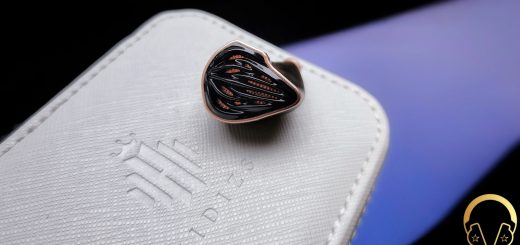
The Pd4.4 ships in a compact retail box, inside which the earphones are nested alongside the CZ120B Retro Cassette Tape-Styled carrying case, a fitting accessory choice for a product line whose design language draws explicitly on analog-era nostalgia. The case is constructed from premium microfiber leather with YKK zipper closures, and the interior has dedicated compartments for the left and right housings rather than a single shared cavity, which keeps the metal shells from contacting each other during transport and protects the palladium-plated finish from the scratching that paired-shell storage can eventually cause. The CZ120B Retro Cassette-Style case can also purchased seperately.


The full package includes:
- 1 pair x ddHiFi Memory Pd4.4 semi-in-ear earphones
- 4 pairs x KIWIEARS KIWIFLEX silicone eartips (S/M/L/XL)
- 1 x CZ120B Retro Cassette Tape-Styled microfiber leather case with YKK zippers
- 1 x user manual

The KIWIEARS KIWIFLEX eartips are a more thoughtful inclusion than the generic-branded silicone sets most IEMs at this price ship with, with a consistent bore diameter and a soft, low-shore-hardness silicone compound that maintains a reliable seal without the progressive ear canal pressure that firmer eartips can introduce during extended sessions. The four sizes cover a reasonable spread of ear canal geometries, though listeners with unusually small ear canals may need to source aftermarket options given the semi-in-ear housing’s relatively large contact surface.

The most significant omission from the package is a balanced-to-single-ended adapter. The Pd4.4’s cable terminates in a fixed 4.4mm balanced plug with no alternative termination available, which means the earphone is unusable on sources without a 4.4mm balanced output unless an adapter is sourced separately. This is a real limitation for listeners whose portable setup centers on a 3.5mm source, and ddHiFi should have included a 4.4mm to 3.5mm adapter in the standard package rather than leaving buyers to track one down independently.


Design & Build Quality:
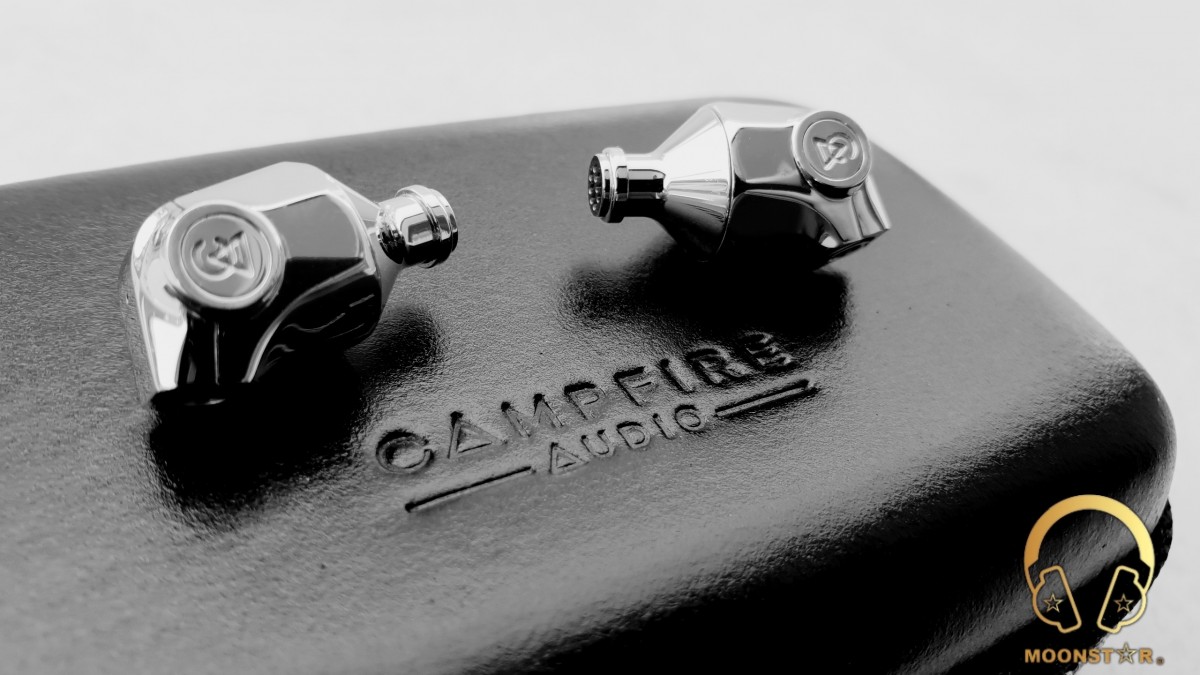
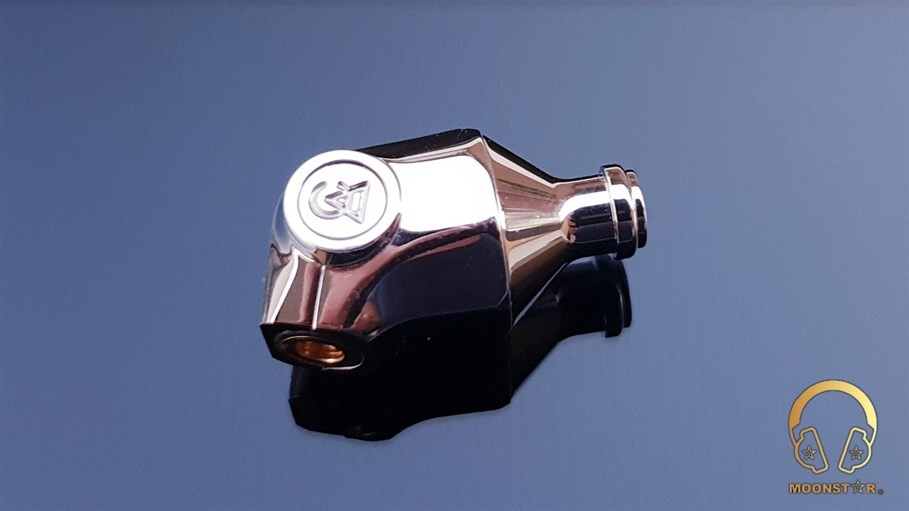
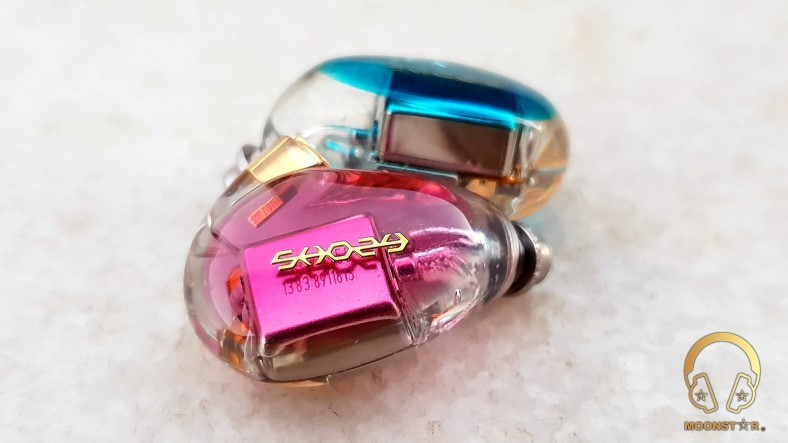
The Pd4.4’s housing is machined from solid pure copper with meticulous wall thickness control, then finished in palladium plating, a combination that produces a noticeably different in-hand and in-ear sensation than the aluminum-housing AL4.4. Copper is considerably denser than aluminum, and the 31 gram weight of the Pd4.4 against the AL4.4’s 25 grams reflects both the material density and the associated sense of solidity: the Pd4.4 feels substantial and premium in a way that similarly priced plastic or aluminum IEMs do not match. The palladium plating adds a cool, matte-chrome surface texture that handles fingerprints and contact marks gracefully, showing less residue than polished chrome finishes of similar visual character.

The semi-in-ear housing geometry positions the earphone so that the body rests in the concha of the outer ear while the nozzle angles gently into the ear canal. A pressure-release venting system is integrated into the housing to prevent the buildup of ear canal pressure during walking and movement, a problem that affects some conventional sealed IEMs and can cause discomfort or even nausea during extended active use.

The venting means the Pd4.4 is not a sealed earphone: some environmental awareness is retained during use, and passive isolation is lower than a conventional deep-insertion IEM design would achieve in the same scenario.

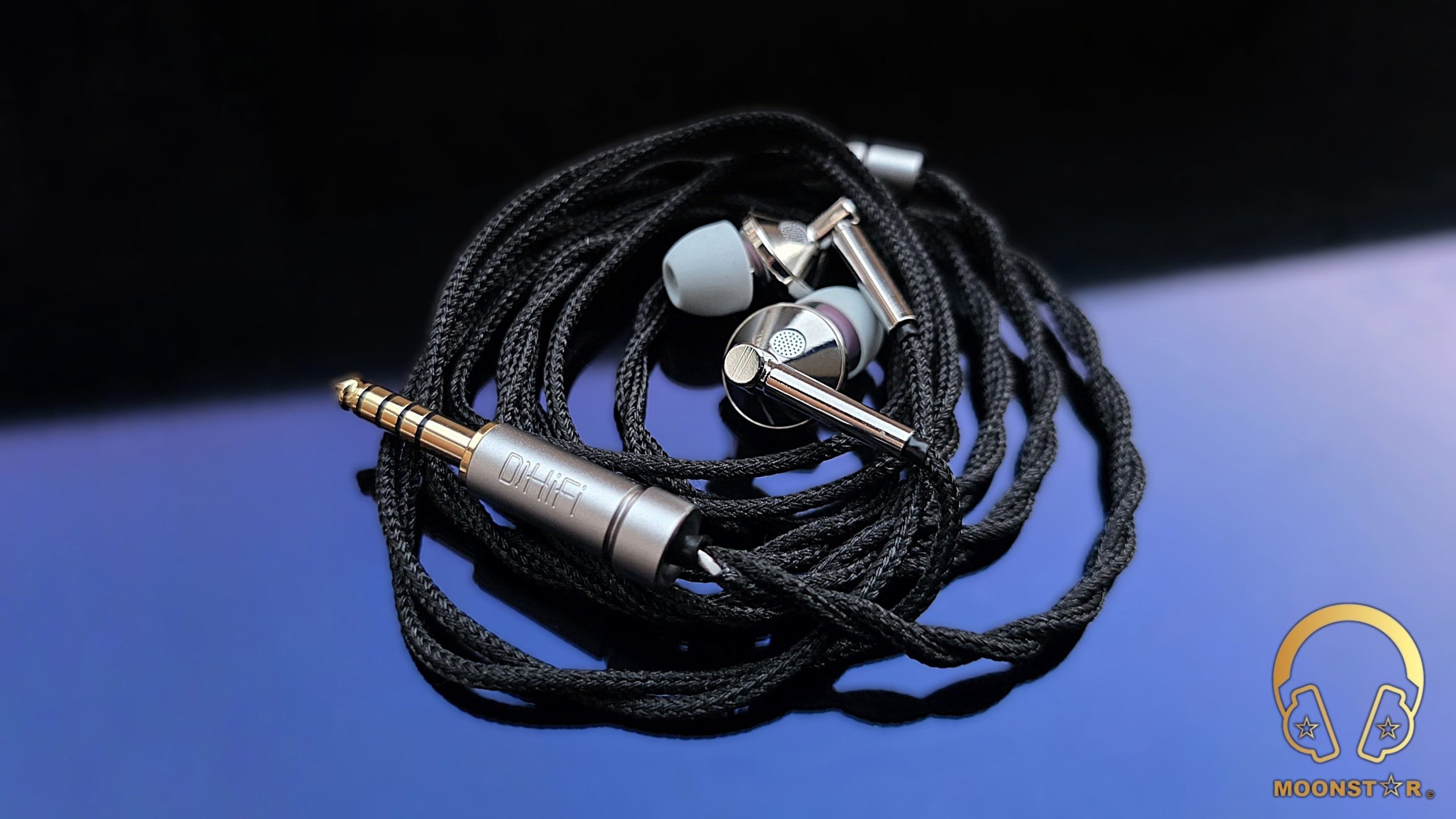
The fixed cable is one of the Pd4.4’s more notable design choices and worth considering before purchase. A 6N OCC copper conductor wrapped in a black braided mesh sheath runs from the housing junction down to the fixed 4.4 mm balanced plug. The cable is well-constructed, with a soft drape that resists memory-effect coiling. Microphonics remain low during seated and desk use but become more noticeable during active movement, as the braided outer mesh can transmit some contact noise from clothing or bag straps.

Build quality on the review unit was excellent throughout. Seam lines between the machined copper body sections were tight with no visible gaps, the nozzle mesh was clean and evenly tensioned, and the cable jacket at the strain relief points showed no signs of stress or deformation after extended use during the review period. The cassette case’s YKK zippers operated smoothly and the microfiber leather panels showed no delamination or peeling at the stitched edges.

Fit, Comfort & Isolation:
The semi-in-ear form factor makes the Pd4.4’s fit experience meaningfully different from a conventional IEM. Rather than inserting to a depth controlled by the nozzle length and eartip seal, the Pd4.4 rests at a shallower depth defined partly by the concha contact of the housing and partly by the eartip’s placement on the nozzle. A medium KIWIFLEX tip on the review unit produced the most consistent and secure seal across different head positions and movement conditions, with the housing staying anchored rather than working progressively loose as the nozzle’s shallower insertion depth might suggest.
Comfort across extended listening sessions was one of the Pd4.4’s more pleasant surprises. Despite the copper housing’s higher density than an equivalent aluminium shell, the semi-in-ear geometry distributes the earphone’s weight against the outer ear rather than relying on the nozzle or eartip to bear it, which avoids the canal pressure that heavier deep-insertion IEMs can introduce over long sessions. The pressure-relief venting does its job: no ear canal pressure buildup was noticed even during hour-long uninterrupted sessions, and the Pd4.4 proved one of the more comfortable longer-session earphones tested for this review irrespective of its physical weight figure.
Passive isolation, as noted, is lower than a sealed IEM would provide in the same environment. In a quiet room this is a non-issue and the Pd4.4 keeps background ambient sound at a comfortable reduction without creating a fully isolated listening bubble. In noisier environments, particularly public transport or open-plan offices, the reduced isolation means listening levels need to climb somewhat to maintain engagement with the music, which is a trade-off to weigh before choosing the Pd4.4 for a commuting use case.

Technical Specifications:
- Driver: 13mm Ultra-Linear Full-Range Annular Planar (co-developed with MOONDROP)
- Driver Construction: Double-Suspension Structure, Four-Magnet Array
- Efficiency: 4x vs similarly-sized dynamic drivers, 10x vs conventional 14.5mm planar units
- Impedance: 16Ω ±15% @ 1kHz
- Sensitivity: 121dB/Vrms @ 1kHz
- THD: ≤0.1% @ 1kHz
- Frequency Response: 20Hz – 20kHz
- Housing: Precision-Machined Pure Copper, Palladium-Plated Finish
- Cable: Black Braided 6N OCC, FIXED (Non-Detachable), 120cm
- Plug: 4.4mm Balanced (Fixed)
- Fit Type: Semi-In-Ear (Outer Ear Contact + Canal Nozzle)
- Venting: Pressure-Relief System
- Weight: Approx. 31g
- Included Eartips: KIWIEARS KIWIFLEX Silicone, 4 Pairs (S/M/L/XL)
- Case: Retro Cassette-Style Microfiber Leather, YKK Zippers, Dual Compartments
Note: Memory AL4.4 vs. Memory Pd4.4 – Key Differences:
- Housing: Pd4.4 = Palladium-Plated Pure Copper | AL4.4 = CNC AL6063 Aviation Aluminium Alloy
- Cable: Pd4.4 = Black Braided 6N OCC | AL4.4 = Grey Braided 5N OCC
- Weight: Pd4.4 = ~31g | AL4.4 = ~25g
- Passive Isolation: Pd4.4 = Superior (denser copper housing) | AL4.4 = Lower
- Price: Pd4.4 = $189.99 | AL4.4 = $159.99
- Driver, Impedance, Sensitivity, THD, Frequency Response: Identical across both variants

Drivability & Pairing:
At 16 ohms and 121dB/Vrms sensitivity, the Pd4.4 is one of the easier loads in the planar IEM category and reached comfortable listening levels from all three sources used in this review with consistent headroom to spare. The high sensitivity figure does raise a practical question about noise floor: at 121dB/Vrms, the Pd4.4 is sensitive enough to make audible any hiss or noise that a source contributes to the amplification chain, and across the review the TC44 Grip’s dual CS43198 and SGM8262-2 implementation, the DX260 MK2’s octa-CS43198 matrix, and the FiiO M33 R2R’s discrete R2R architecture all maintained a completely black background without any audible hiss at any listening volume tested, confirming that each source’s noise floor sits well below the Pd4.4’s sensitivity threshold.

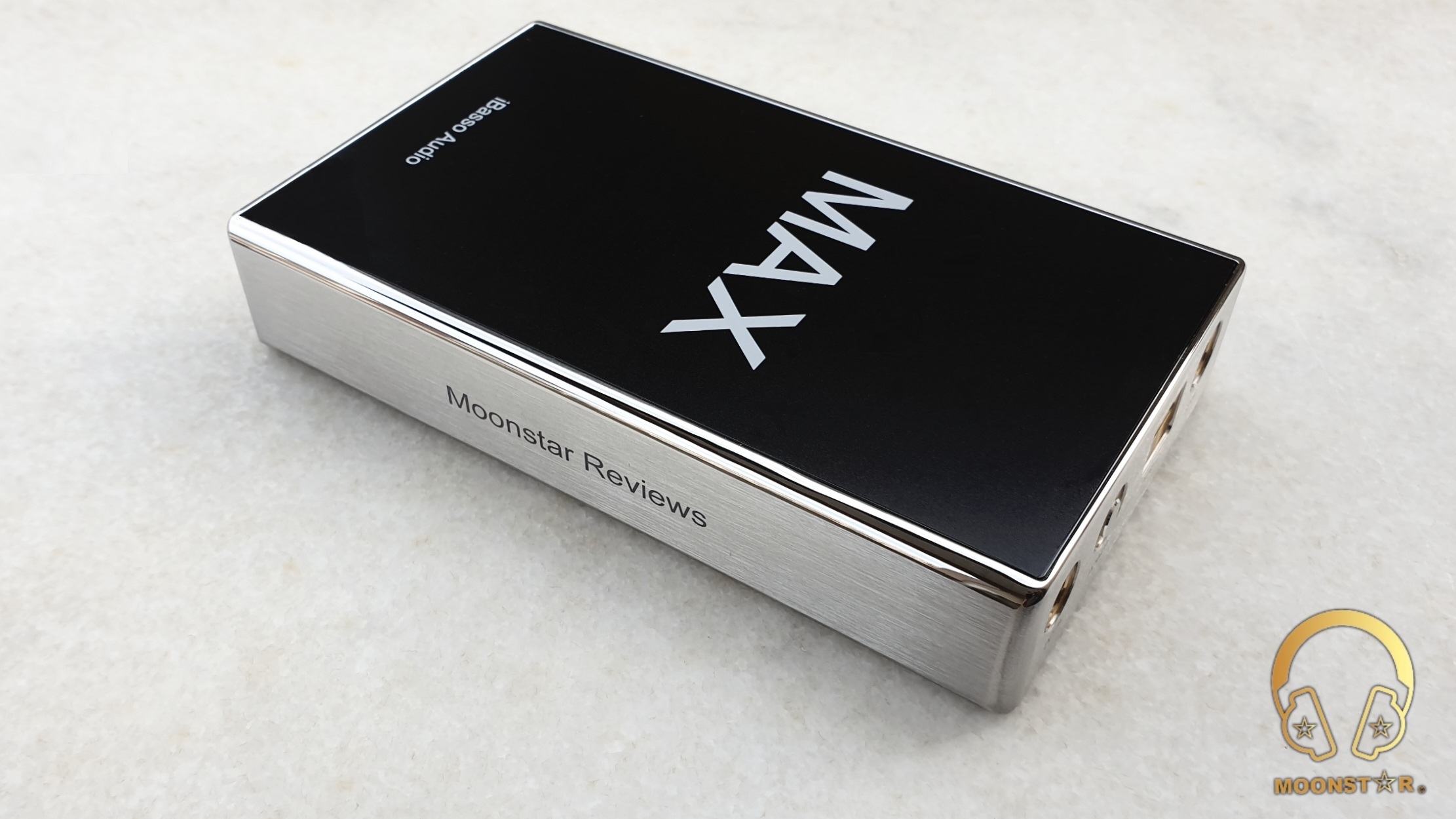
The ddHiFi TC44 Grip was the most practically matched source of the three, being a product from the same brand family as the Pd4.4 and designed with the balanced 4.4mm connection as its primary output. The Grip’s 330mW balanced output from dual CS43198 and SGM8262-2 chips ran the Pd4.4 with a clean, fatigue-free character consistent with the Cirrus Logic DAC’s established personality, and the magnetic phone-attachment form factor made it a natural everyday companion for the Memory Pd4.4’s retro-lifestyle positioning. The iBasso DX260 MK2 at $949, built around eight CS43198 chips in an octa-DAC matrix with FPGA-Master 2.0 clock control and 1015mW per channel balanced, delivered the most analytically transparent and dimensionally spacious presentation of the three sources, pairing well with the Pd4.4’s neutral character to produce a forensically revealing combination that suited critical listening of well-recorded material. The FiiO M33 R2R’s discrete R2R ladder architecture added the most warmth and analog character of the three, smoothing the Pd4.4’s naturally neutral signature into a fuller, more emotionally engaging presentation that worked particularly well on acoustic and vocal-heavy material.

Equipment Used for This Review:
- IEM’s : ddHiFi Memory Pd4.4, DUNU Titan 6
- Sources : ddHiFi TC44 Grip, iBasso DX260 MK2, FiiO M33 R2R
Albums & Tracks Used for This Review:
Vocal Jazz / Smooth Jazz
- Norah Jones – Come Away With Me (Flac 24bit/96kHz)
- Diana Krall – So Wonderful (DSF)
- Barry White – Just The Way You Are (Flac 24bit/48kHz)
- Isaac Hayes – Walk On By (Flac 16bit/44.1kHz)
- Sting – Englishman in New York (Flac 24bit/48kHz)
- Otto Liebert & Luna Negra – The River (Flac 24bit/192kHz)
- Ferit Odman – Look, Stop & Listen (Flac 24bit/192kHz)
- Charly Antolini – Duwadjuwandadu (Flac 24bit/192kHz)
Soul / R&B
- Aretha Franklin – I Say A Little Prayer (Flac 24bit/96kHz)
- Adele – My Little Love (Apple Lossless)
- George Michael – Don’t Let the Sun Go Down on Me (Flac 24bit/192kHz)
- Eric Clapton – Wonderful Tonight (Flac 24bit/96kHz)
Pop / Rock Classics
- Michael Jackson – Billie Jean (Flac 24bit/96kHz)
- Elton John – Rocket Man (Flac 24bit/96kHz)
- David Bowie – Heroes (Flac 24bit/192kHz)
- U2 – Sunday Bloody Sunday (Flac 16bit/44.1kHz)
- Lorde – Royals (Flac 24bit/48kHz)
- Dave Gahan – Kingdom (Apple Lossless)
Electronic / Experimental
- Daft Punk – Instant Crush (Flac 24bit/96kHz)
- Daft Punk – Doin’ it Right (Flac 24bit/96kHz)
- Bro Safari, UFO! – Drama (Apple Lossless)
- Armin Van Buuren – Vini Vici (Flac 16bit/44.1kHz)
- Yosi Horikawa – Bubbles (Apple Lossless)
- Toutant – Rebirth (Apple Lossless)
Alternative / Indie / Art Rock
- Radiohead – Live in Berlin “Album” (Apple Lossless)
- Radiohead – Pyramid Song (Apple Lossless)
- Muse – Hysteria (Flac 24bit/96kHz)
- Red Hot Chili Peppers – Nobody Weird Like Me (Flac 24bit/48kHz)
- Lunatic Soul – The Passage (Flac 16bit/44.1kHz)
- Portishead – It Could Be Sweet (Apple Lossless)
- Gogo Penguin – Raven (Flac 24bit/192kHz)
- Gogo Penguin – Murmuration (Flac 24bit/192kHz)
- Massive Attack – Angel (Flac 24bit/48kHz)
- Bear McCreary – Valkyries (Apple Lossless)
Classical / Orchestral
- Max Richter – On the Nature of Daylight (Flac 24bit/96kHz)
- Chopin – Nocturne No. 20 in C-Sharp Minor (Flac 16bit/44.1kHz)
- Clair de Lune – Claude Debussy (Apple Lossless)
- Tchaikovsky – Symphony No. 5 (Flac 16bit/44.1kHz)
- Vivaldi – Le Quattro Stagioni “The Four Seasons” (Apple Lossless)
- Fazıl Say – Nazım Oratoryosu (Live) (Flac 16bit/44.1kHz)
Jazz / Instrumental
- Miles Davis – So What (Apple Lossless)
World / Traditional
- Sertap Erener – Aşk (Flac 16bit/44.1kHz)
- Edith Piaf – Non Je Ne Regrette Rien (Flac 16bit/44.1kHz)
Metal / Progressive Rock
- Metallica – Dyers Eve (Flac 24bit/96kHz)
- Metallica – Sad but True (Flac 24bit/96kHz)
- Megadeth – Sweating Bullets (Apple Lossless)
- Opeth – Windowpane (Flac 16bit/44.1kHz)
- Deftones – My Own Summer (Shove It) (Flac 16bit/44.1kHz)
- Rush – Tom Sawyer (Flac 16bit/44.1kHz)
- Slayer – Angel of Death (Apple Lossless)

The Sound:
The Memory Pd4.4’s tonal signature is neutral with a slight warmth concentrated in the midrange rather than in the bass, which is an unusual balance for a planar IEM at this price: most competing planar earphones at or below this tier either chase a Harman-adjacent curve with elevated bass and treble or aim for a strict reference-neutral flat response, and the Pd4.4 occupies a position that is closer to neutral than either of those but tilts just enough toward the midrange to give vocals and close-instrument presentations a sense of intimacy and warmth that neither strictly V-shaped nor measurement-neutral alternatives typically produce. The planar driver’s low-distortion, double-suspension construction contributes a cleanness and control across the frequency range that is immediately noticeable coming from conventional dynamic driver IEMs in the same price bracket.

Bass:
Bass from the Pd4.4 is quick, controlled, and extended rather than warm or physical in character, behaving as a well-executed planar low end rather than as a dynamic driver substitute. Sub-bass extension is deeper than the nominal 20Hz specification would strictly imply, with a palpable sense of low-frequency weight on demanding material that reinforces that the driver’s efficiency specification is accurate rather than conservative. Mid-bass is kept deliberately restrained, stopping well short of the midbass lift that many planar and dynamic IEMs use to add perceived impact, which keeps the low end from bleeding upward into the lower midrange and is directly responsible for the clarity of the vocal range above it.
The TC44 Grip’s Cirrus Logic-based output added a fractional amount of additional warmth to the bass compared to the DX260 MK2’s octa-DAC matrix, which produced the tightest and most precisely defined low end of the three sources by a meaningful margin. The FiiO M33 R2R’s R2R architecture landed between the two, with the bass gaining a texture and density from the R2R processing that suited darker, acoustic-heavy recordings well but occasionally felt like a small addition on fast, rhythmic material that the Pd4.4’s driver handled with convincing control even without the added character.
Listeners whose primary expectation of a $189 IEM is strong, physically satisfying bass impact will find the Pd4.4’s low end measured rather than emphatic. The trade-off is clear and deliberate: the restrained mid-bass is a direct contributor to the Pd4.4’s exceptional vocal clarity, and a listener who prioritizes midrange honesty over low-end weight will find it the correct trade rather than a deficit.

Midrange:
The midrange is the undisputed center of the Pd4.4’s presentation and the aspect of the earphone’s tuning that most clearly communicates the design goal behind the warm-neutral signature. Male vocals sit with natural body and chest weight, positioned at an intimate distance that makes performances feel close and personal rather than reproduced from a stage at arm’s length. Female vocals are clear and present without the upper-midrange push that Harman-adjacent tuning tends to introduce, sitting at a natural distance ahead of the lower-register instruments behind them and remaining free of the shoutiness or artificial brightness that planar IEMs with less careful crossover-region management can exhibit in this register.
Instrument timbre in the midrange is one of the Pd4.4’s clearest achievements relative to competing planar IEMs at this price. Acoustic guitar, piano, and string instruments carry a tonal honesty that communicates the character of the instrument and the recording rather than a filtered or amplified version of it, and the double-suspension planar driver’s low THD of less than 0.1 percent is directly audible here as an absence of the slight smearing or compression that higher-distortion drivers can introduce on complex polyphonic passages with overlapping midrange energy.
The DX260 MK2 paired with the Pd4.4 produced the most transparent and detail-retrieving midrange of the three source combinations, with individual vocal nuances and instrument textural details resolved more precisely than the TC44 Grip’s more compact and less powerful output managed on the same material. The FiiO M33 R2R added the most emotional warmth to the midrange, giving male vocals in particular a fuller, richer character that suited long sessions on acoustic and vocal-centric material, where the R2R architecture’s analog-leaning presentation complemented the Pd4.4’s own intimacy-focused tuning rather than adding redundant warmth on top of it.

Treble:
Treble through the Pd4.4 is smooth, well-extended, and notably free of the artificial shimmer or metallic edge that some planar IEMs produce in the upper frequency range from diaphragm resonances that have not been adequately controlled. Cymbal decay resolves with a natural texture and a sense of air that extends cleanly into the upper registers without drawing attention to itself through emphasis or brittleness, and high-frequency transients on snare drums and plucked strings arrive with the right weight and decay curve rather than the exaggerated presence that a treble-forward tuning would produce.
Long listening sessions produced no consistent fatigue from the treble region on any of the three source combinations tested for this review, which is a practically meaningful distinction from competing planar IEMs in this price range that achieve their sense of detail through treble emphasis rather than through driver control. Sibilance on recordings with pronounced sibilant content in the female vocal range was communicated as it existed in the source material rather than amplified, confirming that the Pd4.4’s smooth treble character comes from the driver’s actual performance rather than from a deliberate rolloff that sacrifices extension to avoid the issue.
The DX260 MK2’s highly analytical octa-DAC output produced the most extended and best-resolved treble of the three sources, with the finest textural detail in cymbal decay and string harmonics registering more clearly than through the TC44 Grip’s more compact implementation. The M33 R2R’s output softened the top end very slightly relative to the DX260 MK2, trading a small amount of outright extension for a smoother, more organic presentation that proved the most comfortable option on already bright recordings.

Soundstage and Imaging:
Soundstage is the Pd4.4’s technical headline achievement and the area where the semi-in-ear design’s vented architecture does its most audible work. Width is notably generous for a sealed- or semi-sealed IEM at this price, with instruments placed clearly outside the head rather than compressed into the inner-head space that deep-insertion IEMs with tight seals can sometimes reinforce. The sense of lateral width is complemented by a convincing front-to-back depth that gives the presentation three-dimensional plausibility rather than placing everything on a flat horizontal plane at equal distance from the listener.
Imaging precision is a consistent strength, with individual instrument positions stable and clearly defined across a wide range of material complexity. The double-suspension driver’s low distortion and the four-magnet array’s tight mechanical control contribute directly to this: instrument positions do not wander during dynamic changes or loudness increases, and the center image for vocals stays anchored rather than diffusing under pressure from denser arrangements. The iBasso DX260 MK2 produced the most expansive and spatially precise staging of the three sources, adding a holographic sense of depth that the TC44 Grip’s more compact implementation did not fully replicate, while the FiiO M33 R2R produced the most three-dimensionally textured mid-stage, giving close-miked performances a sense of physical presence and depth that the DX260 MK2’s more analytical staging did not prioritize in the same way.

Comparisons:
ddHiFi Memory Pd4.4 vs. DUNU Titan 6:
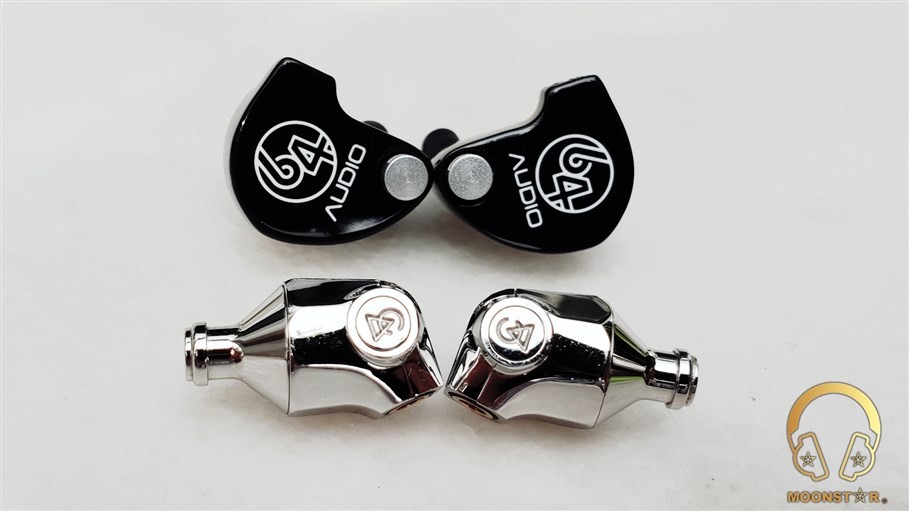
Comparing the Memory Pd4.4 to the DUNU Titan 6 is instructive precisely because the two earphones approach their respective price points from completely different design philosophies rather than simply competing on specification sheets. The Titan 6 uses a 12.6 mm beryllium-coated single dynamic driver in a CNC-machined aluminum-magnesium alloy housing with a detachable MMCX cable, tuned to a warm, V-shaped signature with bold low-frequency presence and a forgiving, smooth treble. The Pd4.4 uses a 13 mm planar driver co-developed with MOONDROP in a palladium-plated copper housing with a fixed 4.4 mm balanced cable, tuned to a neutral signature with a slight midrange warmth. The two earphones share a general price tier and little else.
In the bass, the Titan 6 is the more impactful and physically engaging of the two. Its 12.6 mm beryllium dynamic driver delivers a bold, elastic low end with noticeable midbass emphasis that gives kick drums satisfying physical weight and bass guitar lines a warm, resonant fullness. The Pd4.4 does not try to match that sense of visceral impact. Instead it offers tighter sub-bass control, faster transient response, and cleaner note-to-note separation. For listeners who prioritise precision and definition over sheer physical punch, the planar approach is the more refined solution. Those who want bass that hits harder will still prefer the Titan 6.
The midrange is where the Pd4.4 pulls decisively ahead. The Titan 6’s V-shaped tuning recesses the midrange relative to its bass and treble, keeping the presentation energetic but pushing both male and female vocals slightly further back in the mix. The Pd4.4’s neutral-warm tuning places vocals at the front of the stage, giving male voices natural body and chest weight while keeping female vocals clear, precise and free of the softened, slightly withdrawn quality that the Titan 6 can introduce on vocal-centric material. This is the Pd4.4’s most consistent and significant advantage.
Treble performance is closer. Both earphones are smooth and non-fatiguing, yet the Pd4.4 extends a little further and resolves fine cymbal and string detail with greater precision, benefiting from the planar driver’s lower distortion in the upper registers. The Titan 6 remains pleasant and controlled, but it does not quite match the Pd4.4’s resolving power or sense of air.
Soundstage is another clear Pd4.4 strength. The Titan 6 produces a respectable and comfortable stage for a vented dynamic-driver IEM, but it does not reach the Pd4.4’s noticeably wider and more three-dimensionally layered presentation, which stems from the planar driver’s radiation characteristics and the semi-in-ear housing’s acoustic design.
On the practical side the Titan 6 holds a genuine advantage: its MMCX connector allows cable upgrades and easy replacement, and aftermarket cables give it broad compatibility across 3.5 mm, 2.5 mm and 4.4 mm terminations. The Pd4.4’s fixed 4.4 mm balanced cable is less flexible. Listeners who value long-term cable versatility should weigh this difference carefully. Even so, for pure sonic performance, particularly midrange presence, detail retrieval, soundstage and overall refinement, the Pd4.4 emerges as the more accomplished of the two.

Conclusion:
The ddHiFi Memory Pd4.4 delivers a tuning approach that is rarer and more deliberate than its price tier would typically produce: a neutral-warm planar signature that places vocal intimacy and midrange honesty at the center of the presentation rather than chasing the Harman-curve bass and treble emphasis that most budget planar IEMs use to create immediate impact. The 13mm MOONDROP-developed driver’s low distortion, the palladium-plated copper housing’s passive isolation advantage over the AL4.4 variant, the KIWIEARS KIWIFLEX eartip set, and the overall material quality position the Pd4.4 convincingly at its price point in terms of what it puts in the box and how it sounds.
The fixed 4.4mm cable and the absence of an adapter are the product’s two most practically limiting decisions, and both will narrow the audience for the Pd4.4 to listeners who already use a 4.4mm balanced source regularly rather than treating balanced output as an occasional option. For that listener, particularly one drawn to vocal-forward, detail-retrieving, long-session-comfortable planar sound rather than dynamic driver warmth or V-shaped excitement, the Memory Pd4.4 offers a technically distinctive and convincing presentation in a compact, premium-feeling package.

Pros & Cons:
- + 13mm MOONDROP-developed planar driver delivers a neutral-warm, low-distortion presentation that competes convincingly against IEMs at higher price points
- + Vocal intimacy and midrange clarity are the strongest performing characteristics, with natural male and female vocal reproduction at a comfortable, immediate distance
- + Palladium-plated pure copper housing provides a premium feel and superior passive isolation over the AL4.4 variant
- + Semi-in-ear design with pressure-relief venting prevents ear canal pressure buildup during extended use
- + KIWIEARS KIWIFLEX eartips are a noticeably high-quality inclusion rather than a generic accessory
- + CZ120B Retro Cassette Tape-Styled carrying case
- + Soundstage width and imaging precision punch clearly above the price bracket
- – Fixed 4.4mm balanced cable with no detachable option
- – Slightly cable microphonics during movement are noticeable due to the braided mesh outer sheath
- – Passive isolation is moderate
Thank you for the Read!