SIVGA Lyrebird Review
SIVGA Lyrebird Review
Introduction:
SIVGA has built a reputation for combining distinctive wood finishes with accessible performance, and the Lyrebird continues that approach while stepping into more complex hybrid territory. The Lyrebird packs a quad-driver configuration that pairs a 10 mm polymer composite dynamic driver with a balanced armature, a micro-planar driver, and a 9.2 mm multilayer piezoelectric ceramic driver. The goal is a cohesive, easy-to-listen-to presentation that balances warmth, clarity, and detail without the fatigue sometimes associated with more aggressive multi-driver designs. Stabilized wood faceplates and CNC aluminium housings give the Lyrebird a premium look and feel that stands out in its price class.
This review examines how successfully the ambitious driver arrangement comes together in real-world listening.

Disclaimer:
I would like to thank SIVGA and JackRabbit Media for providing the Lyrebird as a review sample. I am not affiliated with SIVGA or JackRabbit Media beyond this review, and these words reflect my true and unaltered opinions about the product.
Price & Availability:
The SIVGA Lyrebird is priced at £149 / $149 / €167. It is available through the official SIVGA store, Amazon, and selected retailers. Further details can be found on the SIVGA website.
Package & Accessories:
The SIVGA Lyrebird comes in a compact two-tone box with a pastel top and a dark, patterned lower section. The front displays line-art illustrations of the earphones alongside gold-foil branding and lettering.

The full contents include:
- 1 x SIVGA Lyrebird IEMs
- 1 x Hybrid detachable cable (0.78 mm 2-pin to 4.4 mm balanced)
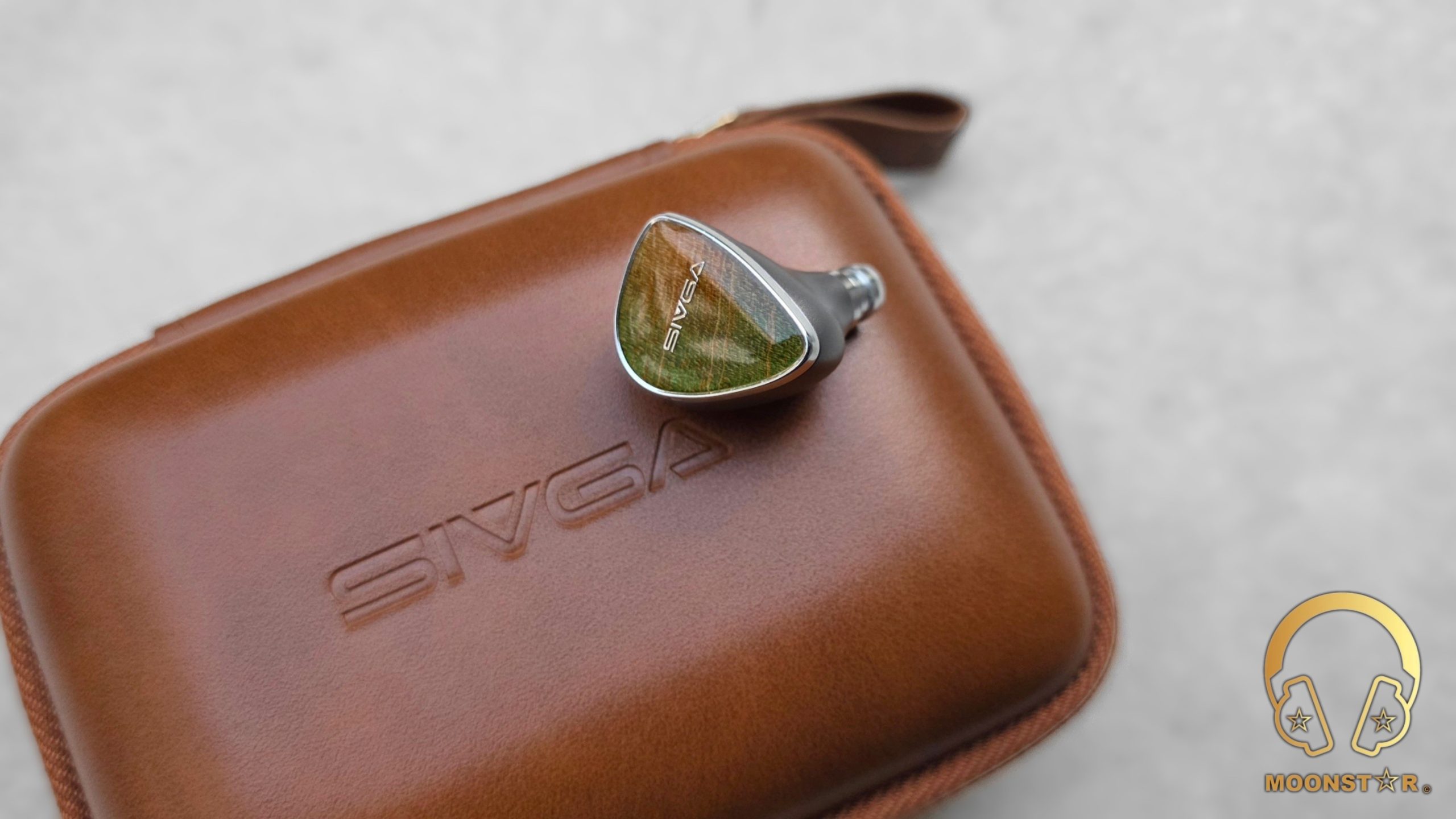
- 1 x Crazy Horse leather carrying case
- Multiple pairs of silicone ear tips in different sizes
- Documentation and warranty card

The leather case is a practical and attractive inclusion that offers good protection for daily use. The stock cable is a hybrid design using Furukawa OFC, silver-plated copper, and gold-plated silver-copper strands, terminated in a 4.4 mm balanced plug. Overall the accessory set is appropriate for the price and prioritises usable quality over excess.


Design & Build Quality:
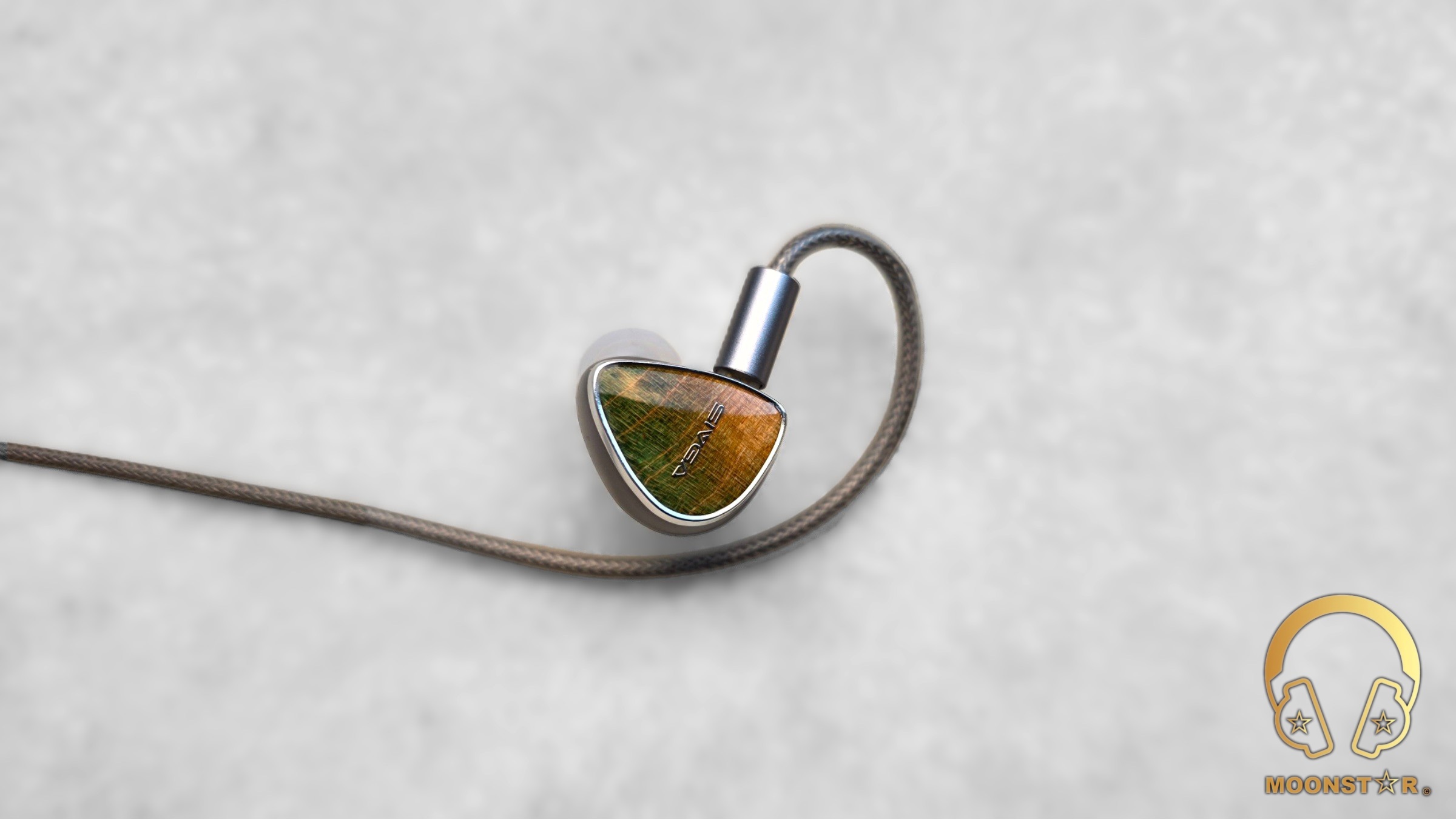
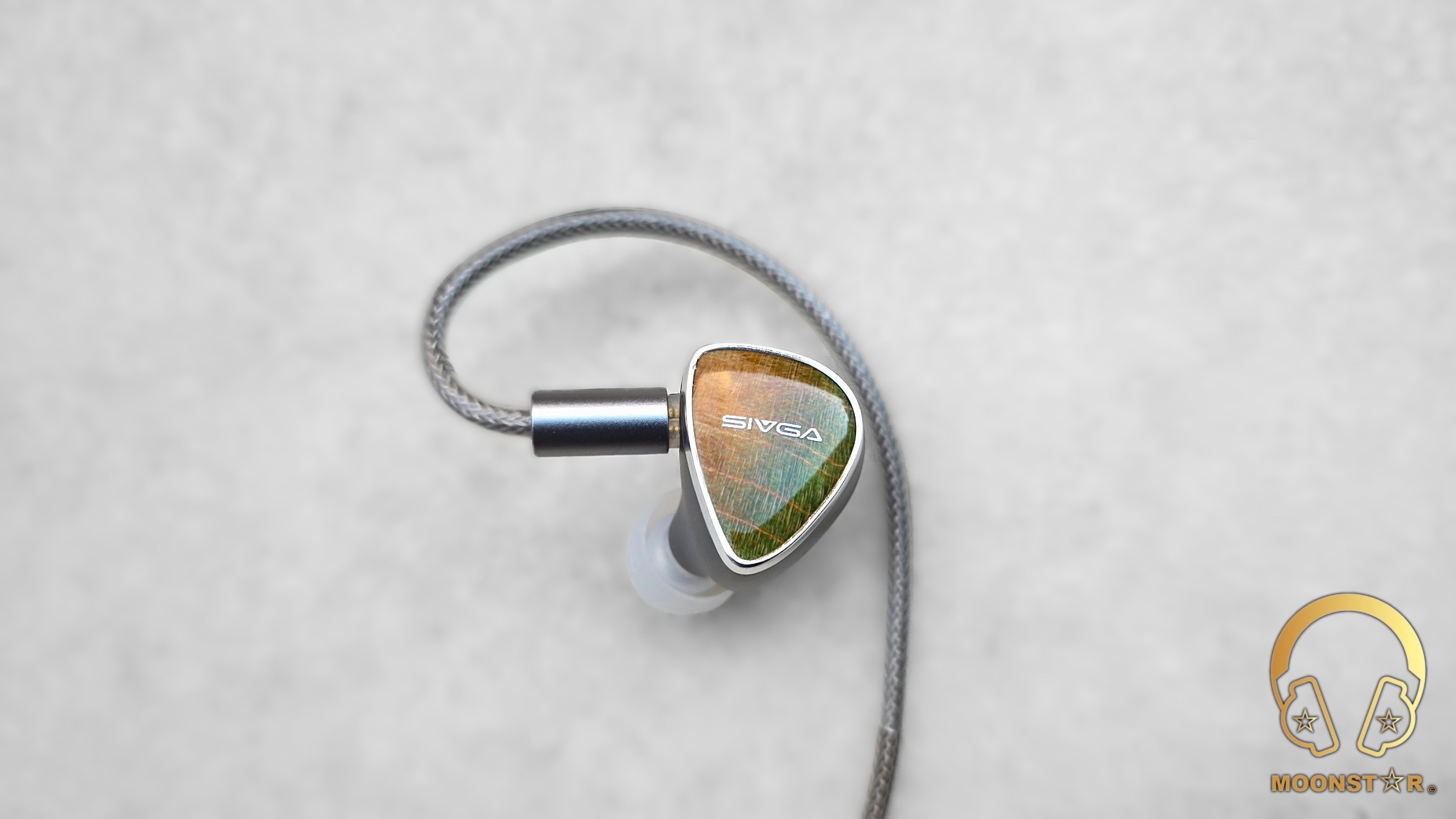
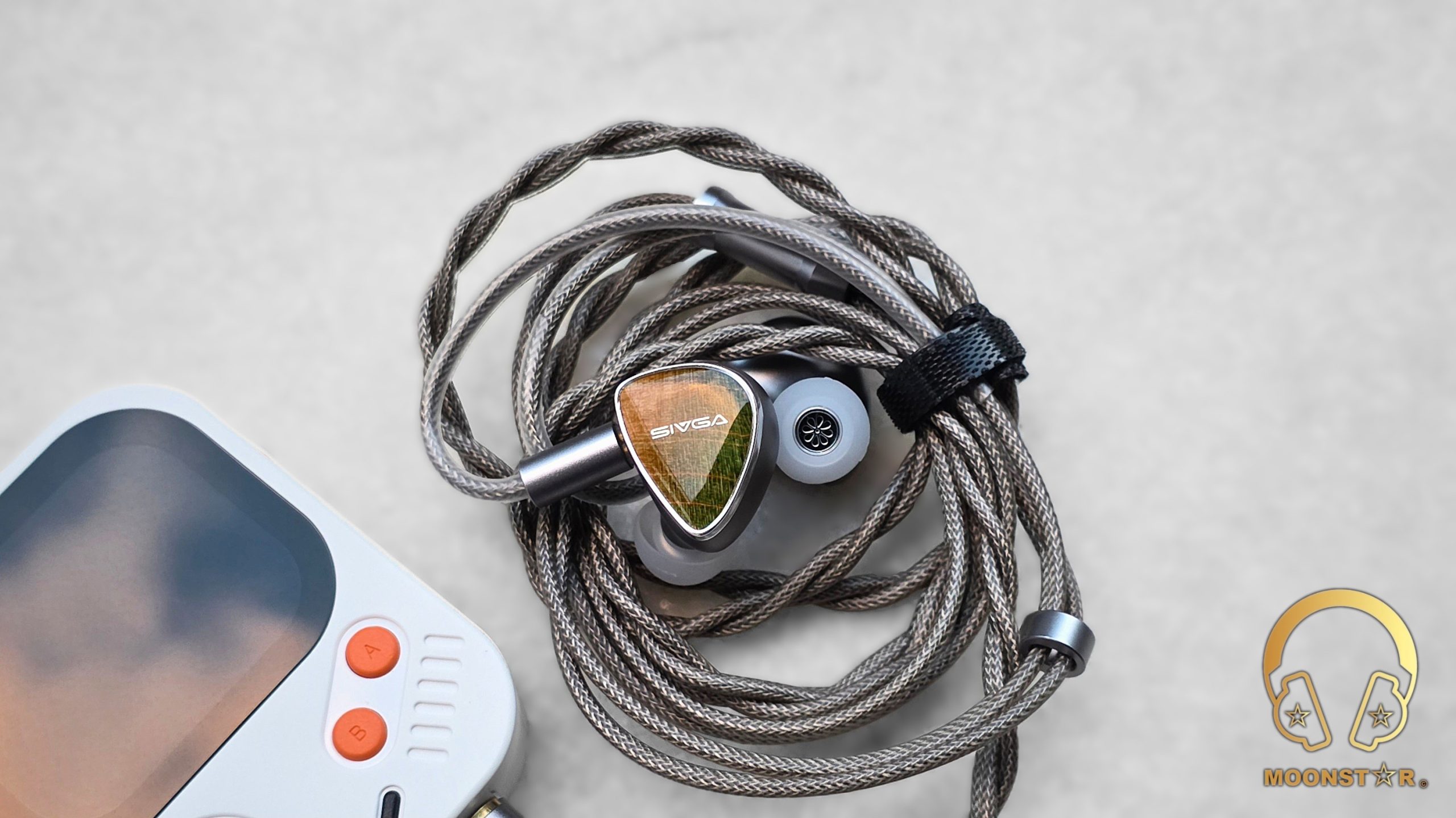
The Lyrebird shells combine CNC-machined aviation-grade aluminium alloy housings with handcrafted stabilized wood faceplates. Each faceplate is unique, carrying a natural grain pattern that varies from pair to pair; no two units share an identical appearance.

The wood is resin-treated to improve durability, resist moisture, and help control unwanted resonance within the shell. The aluminium body is precisely machined, with clean edges, consistent surface finishing, and a solid, reassuring density in the hand. The contrast between the warm, organic texture of the wood and the cool, technical precision of the aluminium gives the Lyrebird a distinctive visual identity that stands out among more conventional resin or metal-only designs at this price.

Looking more closely, the faceplates sit flush with the aluminium body, forming a continuous and well-executed surface with no visible gaps or uneven joins. The overall shape is compact and ergonomically contoured for average ear anatomy, supporting a stable over-ear cable routing without excessive bulk.
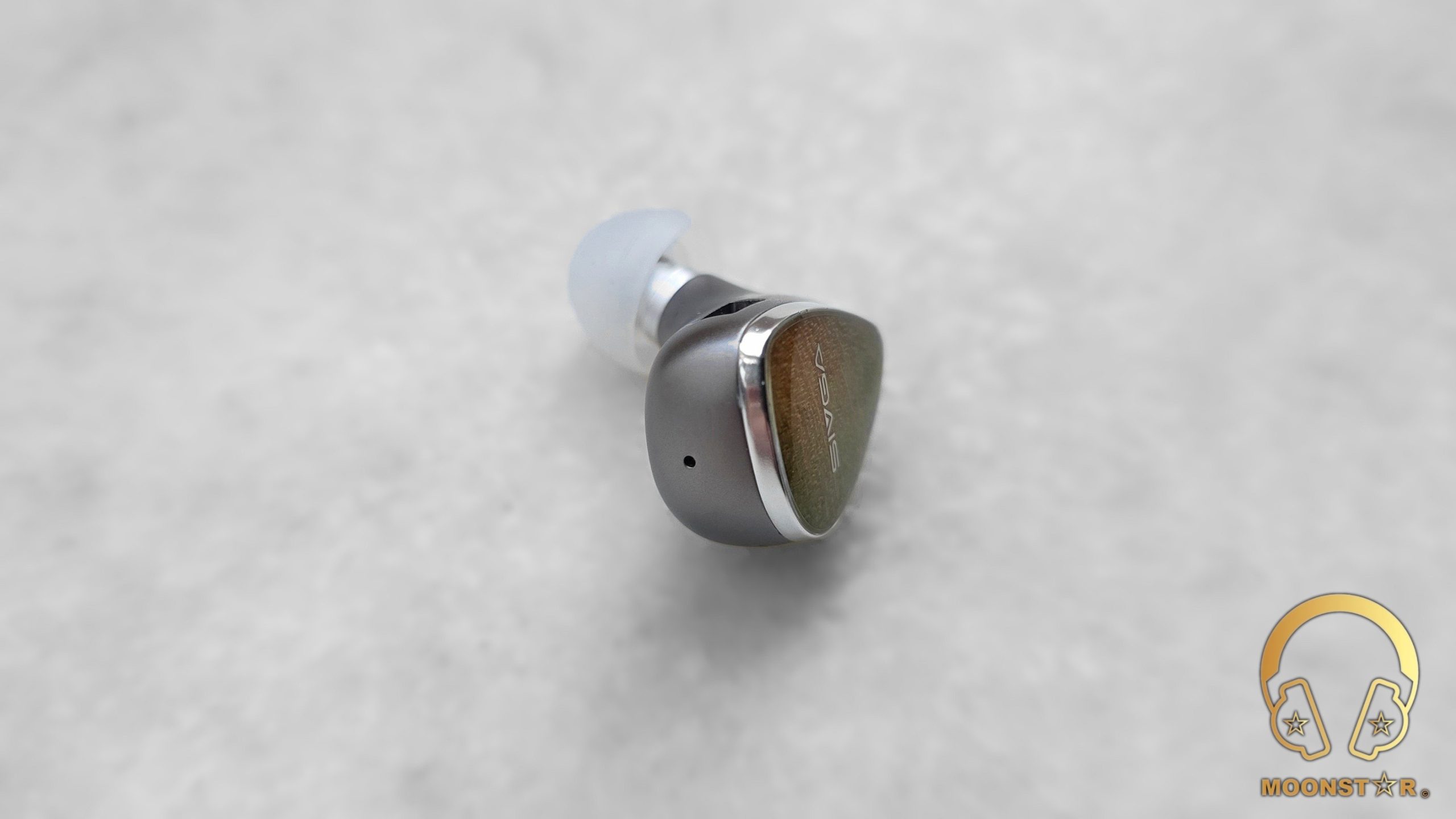
The nozzles are of moderate length and diameter, compatible with a wide range of third-party tips, and are protected by a fine mesh.

The 0.78 mm 2-pin sockets are cleanly integrated into the rear of the shells on a stable platform, providing a secure mechanical connection. From every angle the design avoids sharp edges or rough transitions; the machining and finishing quality are high for the asking price and contribute to a premium tactile impression.

Build quality overall is impressive in this segment. The combination of CNC aluminium and stabilized wood produces a product that feels both solid and carefully considered. Weight is well managed for multi-hour wear, and the attention paid to surface treatment, faceplate integration, and mechanical details exceeds what is commonly found on mass-produced hybrids at a similar cost. The Lyrebird does not attempt to look flashy; instead it relies on material contrast, precise execution, and the individual character of the wood grain to create a refined and personal appearance.
Cable:
The stock cable is a hybrid construction consisting of 30-core Furukawa OFC, 10-core silver-plated copper, and 10-core enamelled gold-plated silver-copper. It measures approximately 120 cm and is terminated in a fixed 4.4 mm balanced plug.

The cable is soft, relatively low-memory, and resists tangling in daily use. The 0.78 mm 2-pin connectors are standard and provide a secure fit.

While the exclusive 4.4 mm termination prioritises balanced sources and may require an adapter for single-ended use, the overall build quality and material choice of the cable are above average for the price and complement the boutique character of the IEMs.

Driver Technology:
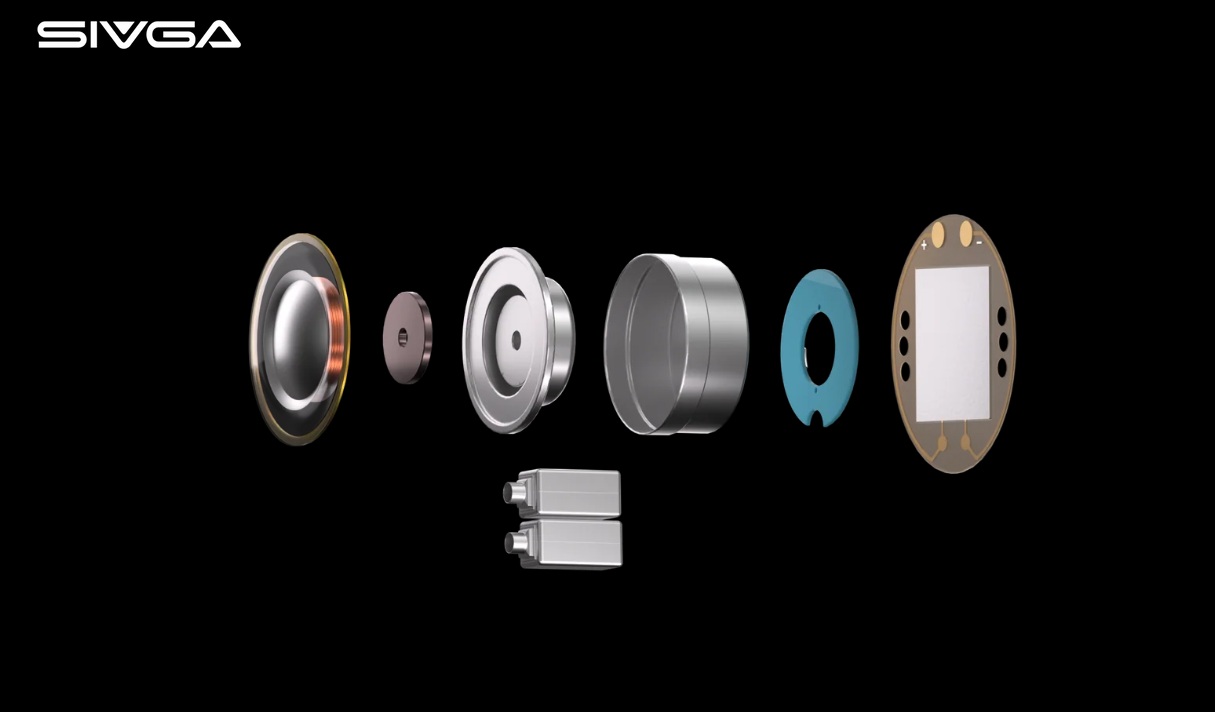
The Lyrebird employs a true quad-driver hybrid architecture, with each transducer assigned a specific portion of the frequency range. A 10 mm polymer composite dynamic driver is responsible for the low frequencies, chosen for its ability to move air efficiently while maintaining control. A dedicated balanced armature driver handles the midrange, selected for its speed, clarity, and ability to reproduce vocal and instrumental detail with precision. High-frequency duties are shared between a micro-planar driver and a 9.2 mm multilayer piezoelectric ceramic driver. The micro-planar element is intended to provide smooth extension and low distortion in the treble, while the piezoelectric ceramic driver is designed to address the uppermost registers and contribute additional high-frequency resolution. The four drivers are integrated through a multi-way crossover network engineered to maintain phase coherence and minimise discontinuity between the different transducer technologies. This combination of dynamic, balanced-armature, micro-planar and piezoelectric elements represents an ambitious technical approach at the Lyrebird’s price point, aiming to combine the strengths of each driver type within a single, compact shell.
Fit, Comfort & Isolation:
The Lyrebird is comfortable for extended sessions. The ergonomic aluminium shells sit securely without excessive pressure, and the weight is well distributed. Isolation is good for a vented hybrid design and is sufficient for most daily environments. Tip selection affects both seal and tonal balance; the included silicone tips provide a reliable starting point, though many listeners will experiment with aftermarket options for fine-tuning.
Technical Specifications:
| Model | SIVGA Lyrebird |
| Driver Configuration | Quad-driver hybrid – 10 mm polymer composite dynamic + balanced armature + micro-planar + 9.2 mm multilayer piezoelectric ceramic |
| Impedance | 14 Ω ±15% @ 1 kHz |
| Sensitivity | 108 ±3 dB @ 1 kHz |
| Frequency Response | 20 Hz – 20 kHz |
| THD | ≤1% @ 1 kHz |
| Connector | 0.78 mm 2-pin |
| Cable | Hybrid (Furukawa OFC + SPC + gold-plated), 4.4 mm balanced |
| Housing | CNC aviation-grade aluminium + stabilized wood faceplate |
| Fit | Universal, ergonomic over-ear |
Drivability & Pairing / Source Synergy:
With an impedance of 14 Ω and sensitivity of 108 dB the Lyrebird is easy to drive from a wide range of sources. It reaches satisfying volume from portable players and dongles without strain. The primary sources used for this evaluation were the FiiO M33 R2R and the Hidizs AP30 Music Boy.
Paired with the FiiO M33 R2R, the Lyrebird takes on a warmer, more organic character. The R2R’s natural midrange density and rounded transients complement the Lyrebird’s already engaging presentation, adding body to vocals and a pleasant richness to the low end. Bass gains a bit more weight and the overall tone becomes smoother and more cohesive, making this pairing especially enjoyable for acoustic, vocal, and relaxed listening.
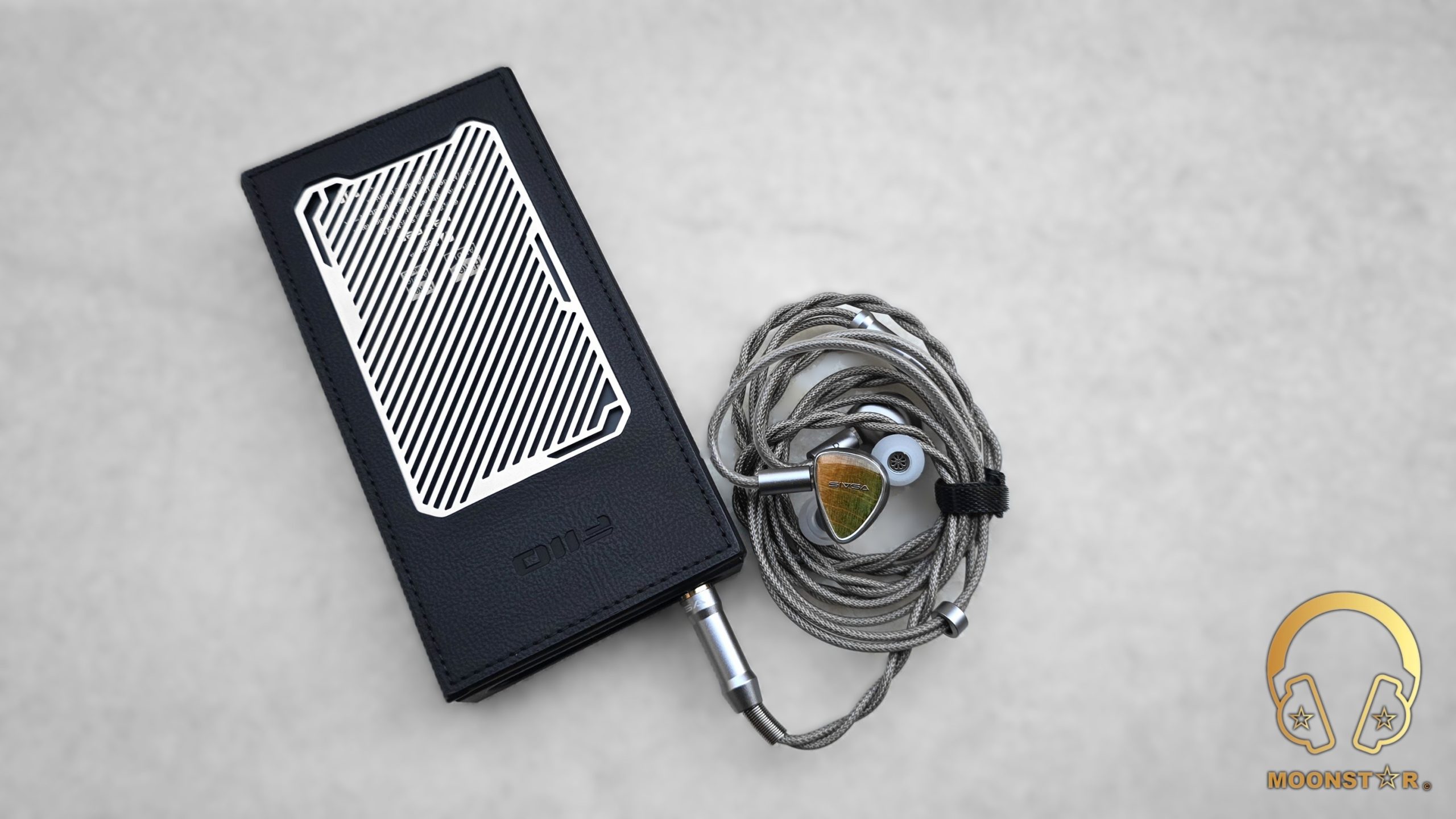
The Hidizs AP30 Music Boy provides a cleaner, more neutral-leaning drive. In this combination the Lyrebird’s midrange clarity and treble detail become more apparent, and separation improves. The presentation feels a touch more resolving and airy while retaining the fundamental musicality of the hybrid design. Both sources work well; the M33 R2R emphasises warmth and flow, while the AP30 leans toward clarity and definition.

Equipment Used for This Review:
- Sources: FiiO M33 R2R, Hidizs AP30 Music Boy
- Comparison References: EPZ P40, Punch Audio Portazo
Albums & Tracks Used for This Review:
Vocal Jazz / Smooth Jazz
- Norah Jones – Come Away With Me (Flac 24bit/96kHz)
- Diana Krall – So Wonderful (DSF)
- Barry White – Just The Way You Are (Flac 24bit/48kHz)
- Isaac Hayes – Walk On By (Flac 16bit/44.1kHz)
- Sting – Englishman in New York (Flac 24bit/48kHz)
- Otto Liebert & Luna Negra – The River (Flac 24bit/192kHz)
- Ferit Odman – Look, Stop & Listen (Flac 24bit/192kHz)
- Charly Antolini – Duwadjuwandadu (Flac 24bit/192kHz)
Soul / R&B
- Aretha Franklin – I Say A Little Prayer (Flac 24bit/96kHz)
- Adele – My Little Love (Apple Lossless)
- George Michael – Don’t Let the Sun Go Down on Me (Flac 24bit/192kHz)
- Eric Clapton – Wonderful Tonight (Flac 24bit/96kHz)
Pop / Rock Classics
- Michael Jackson – Billie Jean (Flac 24bit/96kHz)
- Elton John – Rocket Man (Flac 24bit/96kHz)
- David Bowie – Heroes (Flac 24bit/192kHz)
- U2 – Sunday Bloody Sunday (Flac 16bit/44.1kHz)
- Lorde – Royals (Flac 24bit/48kHz)
- Dave Gahan – Kingdom (Apple Lossless)
Electronic / Experimental
- Daft Punk – Instant Crush (Flac 24bit/96kHz)
- Daft Punk – Doin’ it Right (Flac 24bit/96kHz)
- Bro Safari, UFO! – Drama (Apple Lossless)
- Armin Van Buuren – Vini Vici (Flac 16bit/44.1kHz)
- Yosi Horikawa – Bubbles (Apple Lossless)
- Toutant – Rebirth (Apple Lossless)
Alternative / Indie / Art Rock
- Radiohead – Live in Berlin “Album” (Apple Lossless)
- Radiohead – Pyramid Song (Apple Lossless)
- Muse – Hysteria (Flac 24bit/96kHz)
- Red Hot Chili Peppers – Nobody Weird Like Me (Flac 24bit/48kHz)
- Lunatic Soul – The Passage (Flac 16bit/44.1kHz)
- Portishead – It Could Be Sweet (Apple Lossless)
- Gogo Penguin – Raven (Flac 24bit/192kHz)
- Gogo Penguin – Murmuration (Flac 24bit/192kHz)
- Massive Attack – Angel (Flac 24bit/48kHz)
- Bear McCreary – Valkyries (Apple Lossless)
Classical / Orchestral
- Max Richter – On the Nature of Daylight (Flac 24bit/96kHz)
- Chopin – Nocturne No. 20 in C-Sharp Minor (Flac 16bit/44.1kHz)
- Clair de Lune – Claude Debussy (Apple Lossless)
- Tchaikovsky – Symphony No. 5 (Flac 16bit/44.1kHz)
- Vivaldi – Le Quattro Stagioni “The Four Seasons” (Apple Lossless)
- Fazıl Say – Nazım Oratoryosu (Live) (Flac 16bit/44.1kHz)
Jazz / Instrumental
- Miles Davis – So What (Apple Lossless)
World / Traditional
- Sertap Erener – Aşk (Flac 16bit/44.1kHz)
- Edith Piaf – Non Je Ne Regrette Rien (Flac 16bit/44.1kHz)
Metal / Progressive Rock
- Metallica – Dyers Eve (Flac 24bit/96kHz)
- Metallica – Sad but True (Flac 24bit/96kHz)
- Megadeth – Sweating Bullets (Apple Lossless)
- Opeth – Windowpane (Flac 16bit/44.1kHz)
- Deftones – My Own Summer (Shove It) (Flac 16bit/44.1kHz)
- Rush – Tom Sawyer (Flac 16bit/44.1kHz)
- Slayer – Angel of Death (Apple Lossless)
The Sound:
After adequate burn-in the Lyrebird settles into a warm-leaning, engaging presentation that prioritises musical enjoyment and coherence over strict neutrality. The quad-driver arrangement is surprisingly well integrated for a design that combines four different transducer technologies; there is little sense of the drivers fighting one another or of abrupt transitions between frequency bands. The overall balance sits slightly above neutral in the low frequencies, maintains a clear and present midrange, and keeps the treble smooth and non-fatiguing. It is neither a strictly neutral monitor nor a heavily V-shaped party set. Instead it aims for a versatile, easy-to-like hybrid character that works across a wide range of genres without demanding constant attention or causing listening fatigue. The presentation feels cohesive and purposeful rather than analytical, which makes the Lyrebird particularly well suited to extended sessions and everyday listening.

Bass:
The 10 mm polymer composite dynamic driver delivers a punchy, elastic mid-bass with good texture and control. Impact is satisfying on kick drums and bass lines, giving the low end a sense of physical presence and rhythmic drive without tipping into excess. The low frequencies have enough body and weight to feel engaging, yet they remain relatively well controlled and do not become bloated or loose even on denser tracks.
Sub-bass extension is present and audible, but it is not the deepest or most atmospheric in its class; the emphasis clearly sits more in the mid-bass region, which contributes energy and punch rather than pure rumble. Pitch definition is adequate for the quantity on offer, allowing bass guitars and electronic lines to retain identifiable character. Decay is relatively clean and well-managed, so the bass does not significantly cloud the midrange or reduce clarity in busy arrangements. Source pairing has a noticeable effect: on the FiiO M33 R2R the low end gains additional warmth, density and a slightly more rounded character, while on the Hidizs AP30 Music Boy it tightens, becomes a little more defined, and recovers with greater speed. In both cases the bass remains musical and supportive rather than dominant, serving the overall presentation without drawing undue attention to itself.
Midrange:
The balanced armature handles the midrange with clarity and good focus, forming one of the more successful aspects of the Lyrebird’s tuning. Vocals sit in a natural, slightly forward position with solid note weight and intelligible diction, making both male and female voices easy to follow and emotionally engaging. Male vocals carry adequate body and resonance without becoming thick or congested; the lower midrange supplies enough foundation for baritone and tenor voices to sound grounded rather than thin.
Female vocals are clear, articulate and free from excessive edge or sibilance in most recordings, with a pleasing sense of presence that does not tip into shoutiness. Instrumental timbre is generally convincing across acoustic guitars, pianos and strings, retaining a sense of natural texture and harmonic complexity rather than sounding overly processed or thin. Piano notes carry appropriate weight and decay, while string instruments avoid the plasticky character sometimes associated with less refined multi-driver implementations.
Separation within the midrange is one of the Lyrebird’s stronger points: individual instruments remain distinct even in denser mixes, and the presentation avoids the smearing or congestion sometimes heard in less coherent hybrids. Layering is handled competently, allowing supporting elements to remain audible without competing with the primary focus. The transition from the dynamic driver’s low end into the balanced-armature midrange is smooth enough that the multi-driver nature of the design rarely draws attention to itself. Overall the midrange character is warm-leaning and musical rather than clinical or hyper-analytical, prioritising listenability, tonal coherence and emotional connection over microscopic dissection.

Treble:
The micro-planar driver and the 9.2 mm multilayer piezoelectric ceramic driver share the treble. The result is a smooth, reasonably extended top end that supplies enough sparkle, air and transient definition to keep the presentation lively without introducing harshness, sibilance or listening fatigue. Cymbal work arrives with natural metallic texture, defined leading edges and controlled decay, avoiding both the overly soft and the overly sharp extremes. Hi-hats and upper percussion retain articulation rather than becoming smeared or glassy.
Upper-frequency detail retrieval is good for the price and contributes meaningfully to instrument separation, ambient cues and a general sense of openness. That said, the very highest registers are not the most airy, extended or resolving in the broader mid-tier segment; the treble prioritises smoothness, natural decay and integration over maximum air or analytical brilliance. Importantly, the treble integrates cleanly with the midrange and does not sit as a separate or spotlighted layer on top of the presentation. Across extended sessions it remains easy and non-fatiguing, which aligns well with the Lyrebird’s overall musical and approachable character and makes it suitable for long listening without the need for frequent breaks.

Soundstage and Imaging:
The soundstage is wider than average for a closed hybrid at this price, offering a pleasing sense of lateral spread that gives complex arrangements room to breathe. Depth is moderate yet clearly present, allowing a degree of front-to-back layering that makes live and acoustic recordings feel more spatially believable than on many similarly priced competitors. The stage does not feel artificially inflated; instead it presents a natural and well-proportioned sense of space. Imaging is stable and well organised; instruments occupy distinct and consistent positions across the stage, and there is little tendency for the presentation to collapse or become diffuse during dynamic passages. Positional accuracy remains reliable even when the mix becomes busy. Separation is a clear strength of the Lyrebird: even in denser mixes it remains relatively easy to follow individual lines and to distinguish overlapping elements without strain.

Comparisons:
SIVGA Lyrebird vs. EPZ P40
The EPZ P40 offers a different balance, often presenting a cleaner or more neutral-leaning signature depending on tip and source configuration. Against it the Lyrebird sounds noticeably warmer and more mid-bass focused, with a denser, more colourful midrange and a smoother, less analytical treble. The P40 tends to retrieve slightly more micro-detail and air in the upper registers and can sound a touch more resolving and transparent in complex passages. In contrast, the Lyrebird counters with greater musical cohesion, more engaging and physical low-end impact, and a more relaxed long-term listenability that avoids the slight edge some neutral sets can introduce. Vocals on the Lyrebird carry more body and warmth, while the P40 keeps them cleaner and more precise. The choice ultimately depends on whether the listener prioritises neutrality, resolution and a more reference-oriented presentation, or prefers the Lyrebird’s warmer, more cohesive and easier-going musical character.

SIVGA Lyrebird vs. Punch Audio Portazo:
The Punch Audio Portazo tends toward a more energetic or mildly V-shaped presentation with stronger sub-bass emphasis and a more aggressive sense of impact. The Lyrebird, by comparison, is more mid-centric and controlled in the low end, with better midrange clarity, denser vocal body and a noticeably less aggressive treble. Where the Portazo can feel more exciting and physically imposing in the deepest bass and on high-energy tracks, the Lyrebird offers superior instrumental separation, a more natural and coherent vocal presentation, and significantly less risk of fatigue over longer sessions. The Portazo’s low end digs deeper and hits harder, but it can occasionally trade some midrange refinement and treble smoothness in the process. The Lyrebird keeps the frequency balance more even and prioritises cohesion and listenability. Listeners seeking maximum bass impact and a more lively, exciting signature may prefer the Portazo; those who want a more balanced, refined and fatigue-free hybrid experience will likely favour the Lyrebird.

Conclusion:
The SIVGA Lyrebird is a well-executed quad-driver hybrid that successfully combines an ambitious driver configuration with attractive materials and an accessible price. Its strengths lie in coherent integration of the four drivers, punchy yet controlled mid-bass, clear and engaging midrange, and smooth, non-fatiguing treble. The stabilized wood faceplates and aluminium housings give it a distinctive and premium appearance, while comfort and isolation support extended listening. It pairs especially well with the FiiO M33 R2R for a warmer, more organic presentation and with the Hidizs AP30 Music Boy for greater clarity and definition. At $149 the Lyrebird represents strong value for listeners seeking a musical, versatile, and well-built hybrid without stepping into higher price tiers.
Pros & Cons:
- + Ambitious yet coherent quad-driver hybrid configuration
- + Punchy, elastic mid-bass with good control
- + Clear, warm-leaning midrange with strong vocal presentation
- + Smooth, non-fatiguing treble
- + Attractive stabilized wood faceplates and solid aluminium build
- + Good soundstage and separation for the price
- + Comfortable for long sessions
- + Strong value at $149
- – Sub-bass extension is moderate rather than deep
- – Stock cable is 4.4 mm only (adapter may be needed)
- – Not the most resolving or airy treble in class
- – Less ideal for listeners seeking neutral/reference tuning or heavy sub-bass emphasis
Thank you for the Read!